

Details
Description
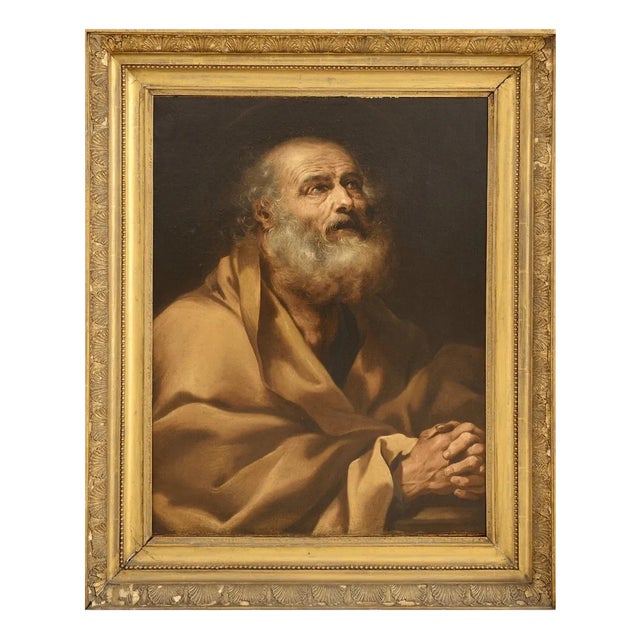
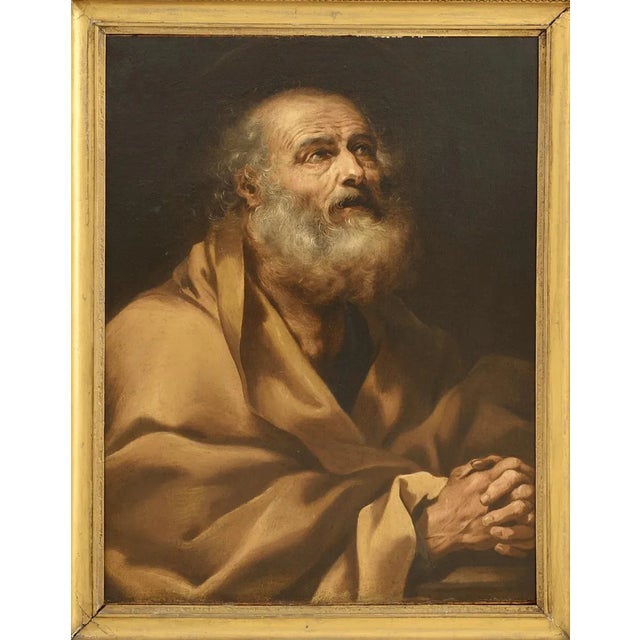
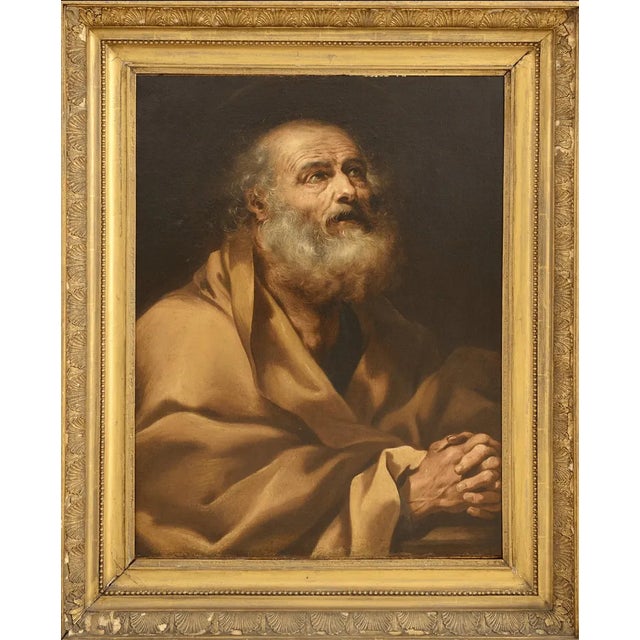
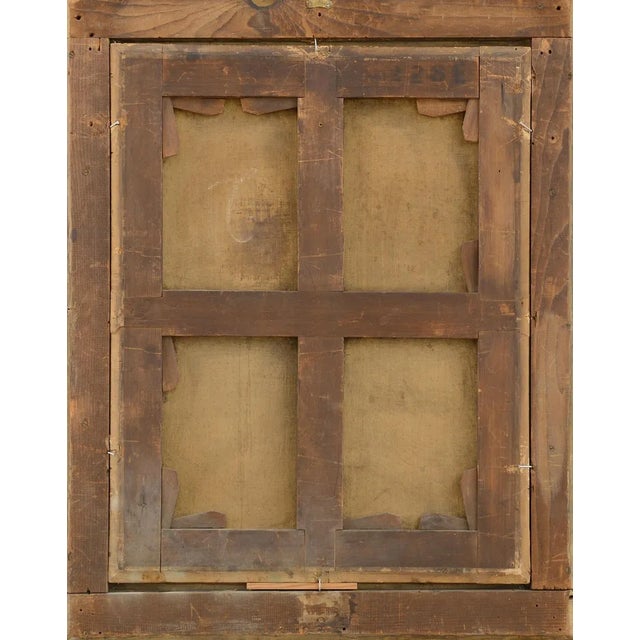
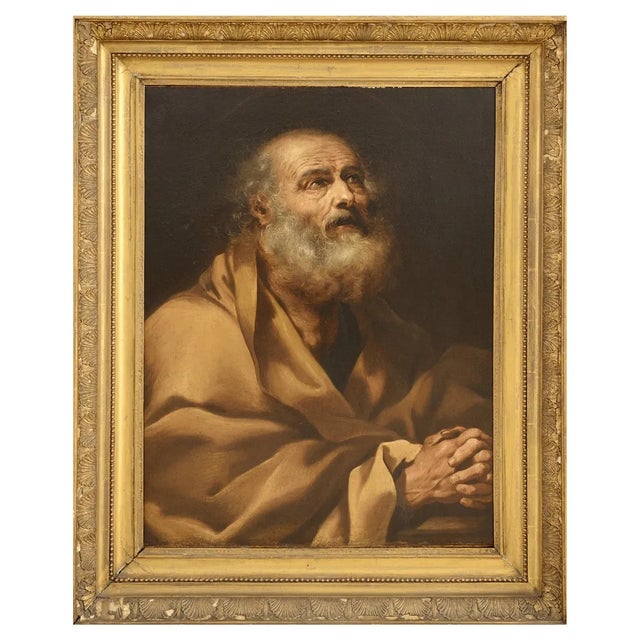
Aureliano milani (attributed) (bologna, 1675 - rome, 1749) "the repentance of saint peter" oil on canvas, 75x58.5 cm without frame …
Read more
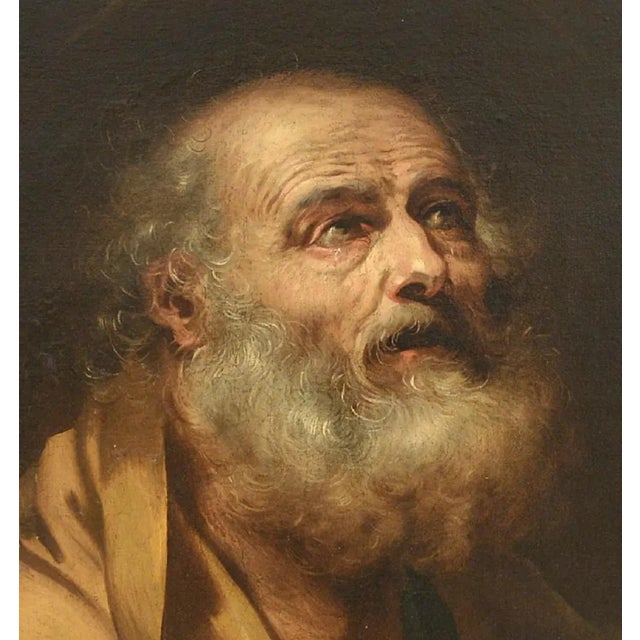
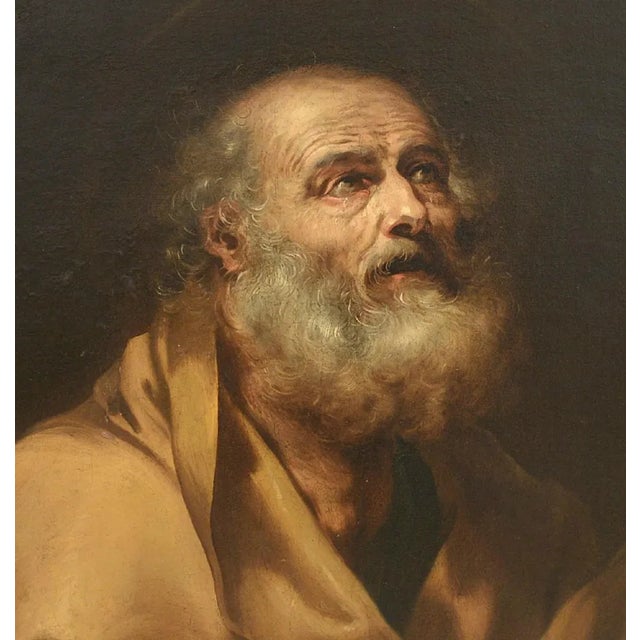
Aureliano milani (attributed) (bologna, 1675 - rome, 1749) "the repentance of saint peter" oil on canvas, 75x58.5 cm without frame 85cm x 68.5cm with frame aureliano milani (bologna, 1675 - rome, 1749), italian painter active during the late baroque period. The painting is a refined product of 17th century bolognese painting. The scene shows the repentance of saint peter, a theme that enjoyed great popularity during the counter-reformation. The saint, presented from the waist up, has his hands together in an attitude of intimate conversation and looks up to heaven while tears wet his cheeks. A thick white beard frames the saint's face, while his half-open mouth and disheveled curls make the image more lively. The light coming from the left illuminates the saint's face, which is also notable for the ochre tone of his cloak. The intensity of the saint's face and the powerful dosage of chiaroscuro reveal the work of a painter of great calibre, well acquainted with guido reni's essays on the subject. The theme of the weeping saint peter was frequently tackled by artists of the carracci school in the first two decades of the century. The intimate and pathetic tone of the work brings it close to the style of aureliano milani, a high-level bolognese artist who, in the choice of warm colours and in the expressive force of the figures, renews the strength of the carracci painting, especially that of ludovico. Stylistically, the figure does not seem very far removed from those of st. Luke and st. Pellegrino in the basilica dei servi in bologna, painted before his departure for rome in 1719. Although he began his training as a pupil of his uncle giulio cesare milani and later lorenzo pasinelli and cesare gennari, his style as an artist moved away from that of these masters. He consciously tried to approach the carracci way of doing things. He conscientiously studied the frescoes that annibale and agostino carracci had executed in the magnani and fava palaces almost eighty years earlier. The patronage of count alessandro fava allowed him full access to these works. He made copies of the most famous works of the carracci, trying to emulate the vigorous male figures that the brothers had included in their great compositions. However, he was never a great colourist, and his contemporaries criticised him for this. Milani eventually settled in rome (1719), although he left his large family in bologna. In the capital of the popes he obtained numerous commissions and established relationships with other artists such as domenico maria muratori and donato creti. In bologna he left numerous disciples, such as antonio gionima and giuseppe marchesi, il sansone. In the fresco decoration of the galleria del palazzo doria pamphili in rome he left his own version of carrara art, done with grace and ease. This piece is attributed to the mentioned designer/maker. It has no attribution mark and no
official proof of authenticity,
however it is well documented in design history. I take full responsibility for any authenticity
issues arising from misattribution
See less
Returns & Cancellations
Return Policy - All sales are final 48 hours after delivery, unless otherwise specified in the description of the product.
Cancellation Policy - Prior to shipping or local pickup, buyers may cancel an order for up to 48 hours, unless otherwise specified.
Related Collections
- Ed Ruscha Paintings
- Ralph Lauren Paintings
- Photorealism Canvas Paintings
- Photorealism Paintings in New York
- Karen Offutt Paintings
- Richard Serra Paintings
- Silk Velvet Paintings
- Jeff Slemmons Paintings
- Black Photorealism Paintings
- Herman Miller Paintings
- Cassina Paintings
- Vienna Secession Paintings
- Jaanika Peerna Paintings
- Photorealism Paintings in Los Angeles
- BDDW Paintings
- Louise Nevelson Paintings
- Jo Baskerville Paintings
- Lee Reynolds Paintings
- Mid-Century Modern Paintings
- Abstract Paintings
- Nautical Paintings
- Velvet Paintings
- Landscape Paintings
- 19th Century Oil Paintings
- Oil Paintings