

Details
Description
This exceptional vintage Kars kilim runner from the 1970s exemplifies the rugged artisanal heritage of Eastern Anatolia. While the region …
Read more
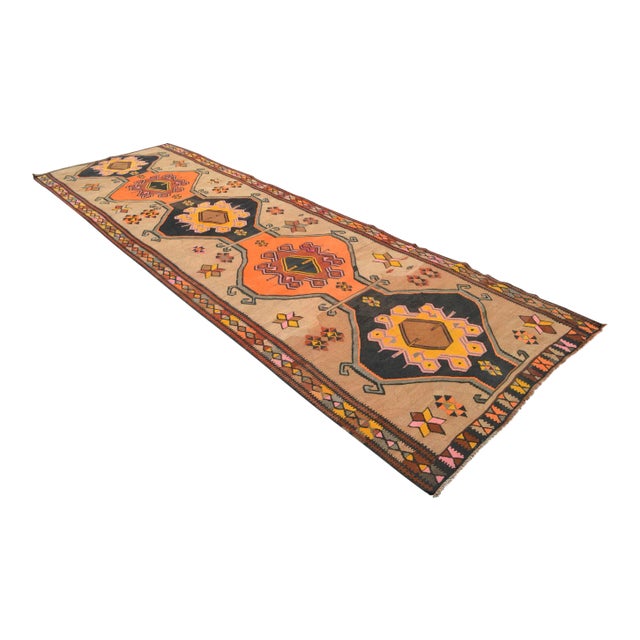
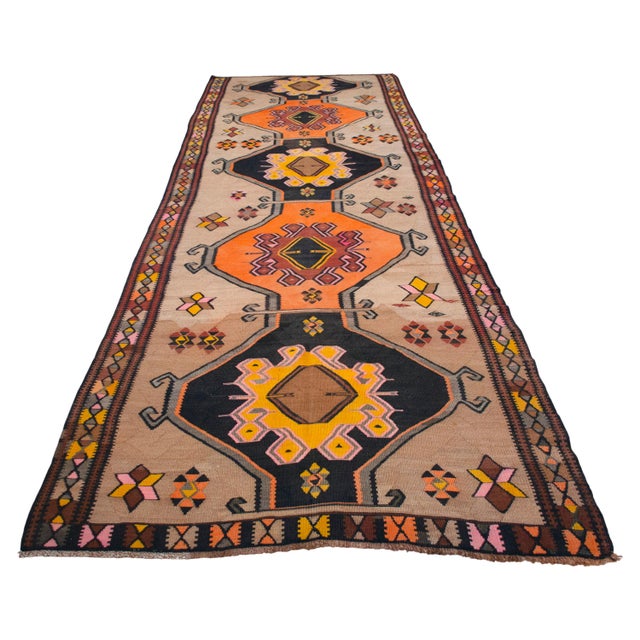
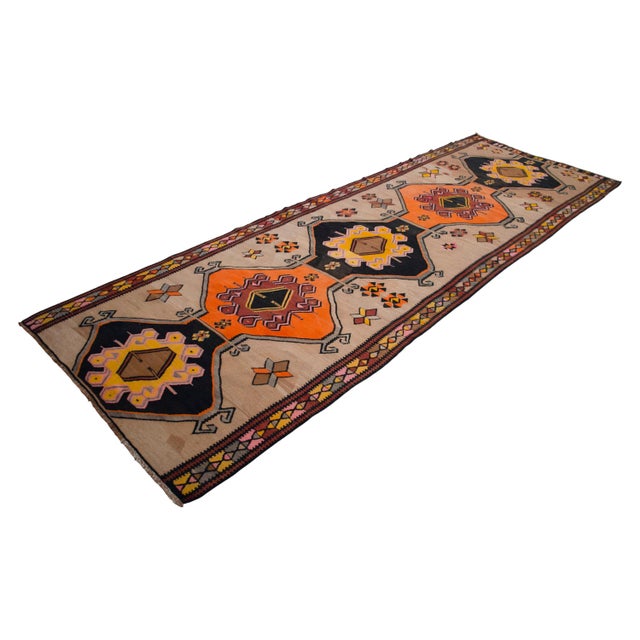
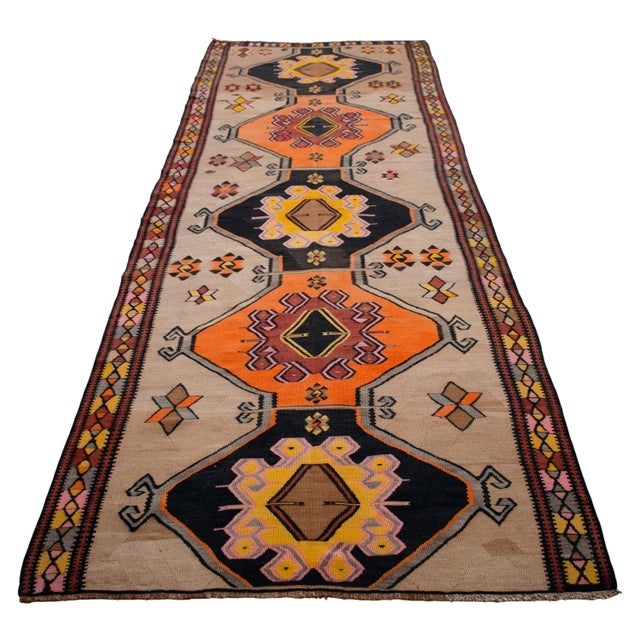
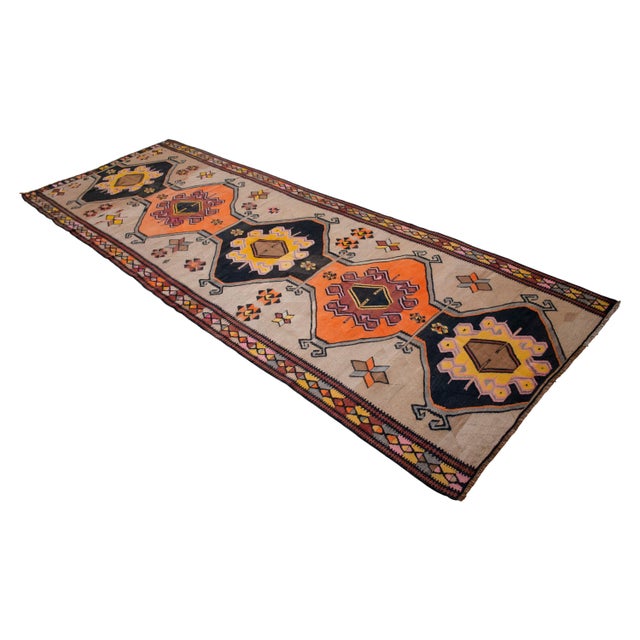
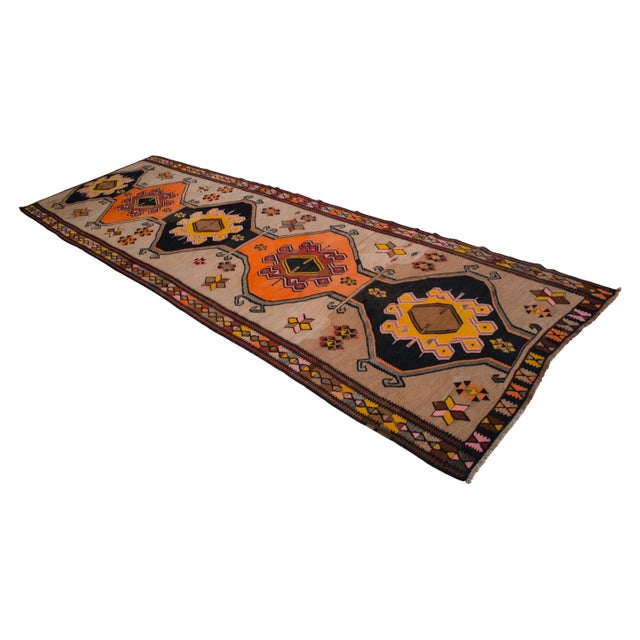
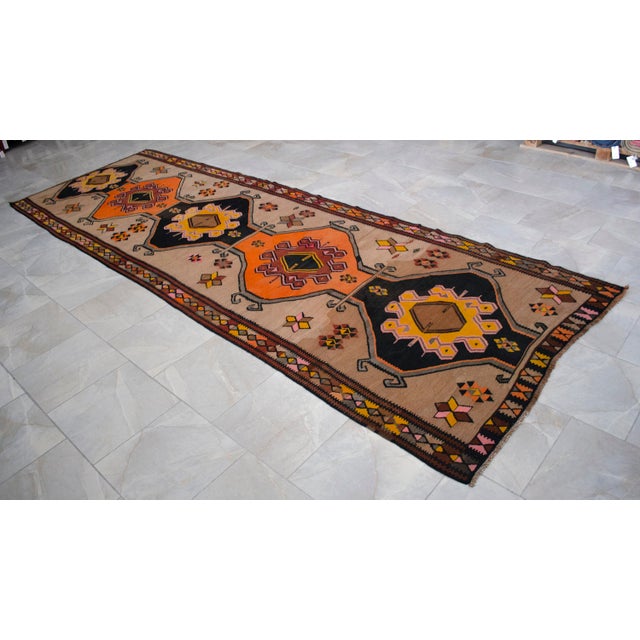
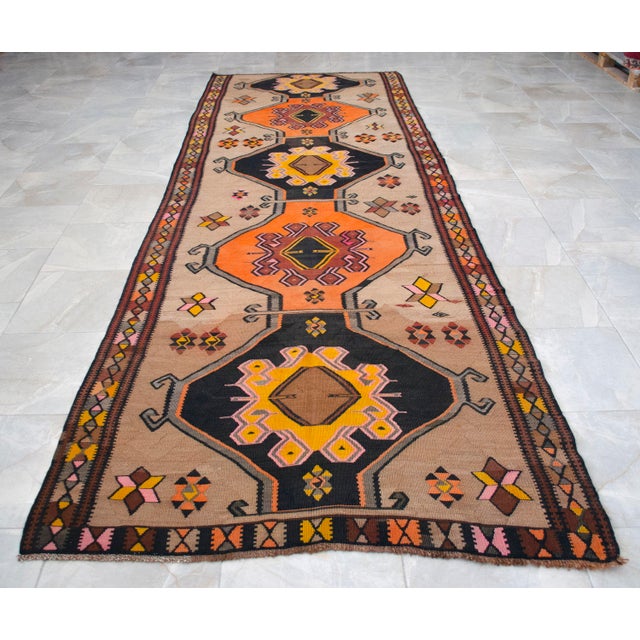
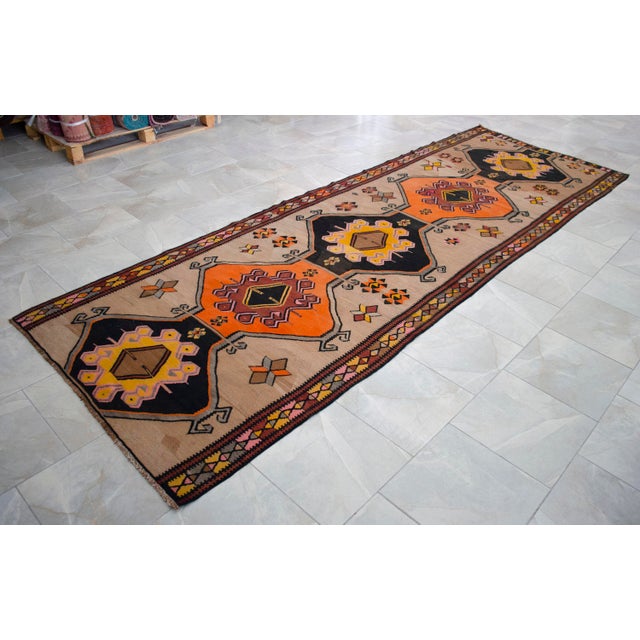
This exceptional vintage Kars kilim runner from the 1970s exemplifies the rugged artisanal heritage of Eastern Anatolia. While the region is traditionally known for its deep, saturated tones, this particular example features a rare luminous field of undyed cream and beige wool. Originally crafted for a village family’s dowry chest, the textile showcases a sequence of bold, geometric medallions that provide a rhythmic architectural presence.
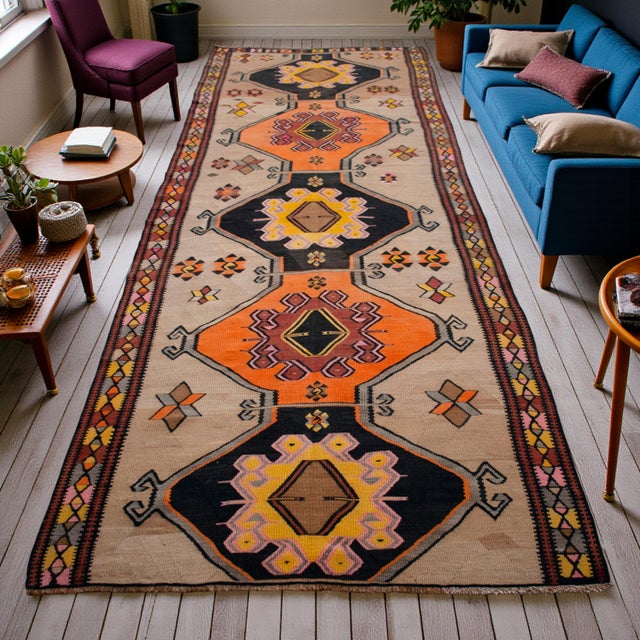
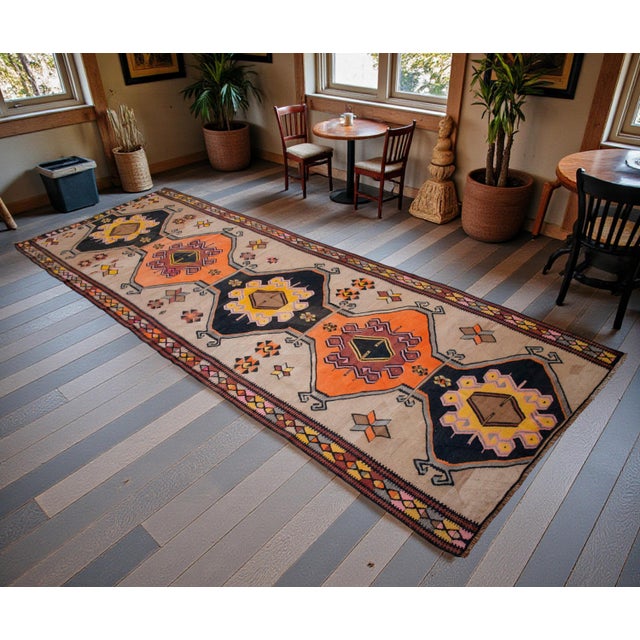
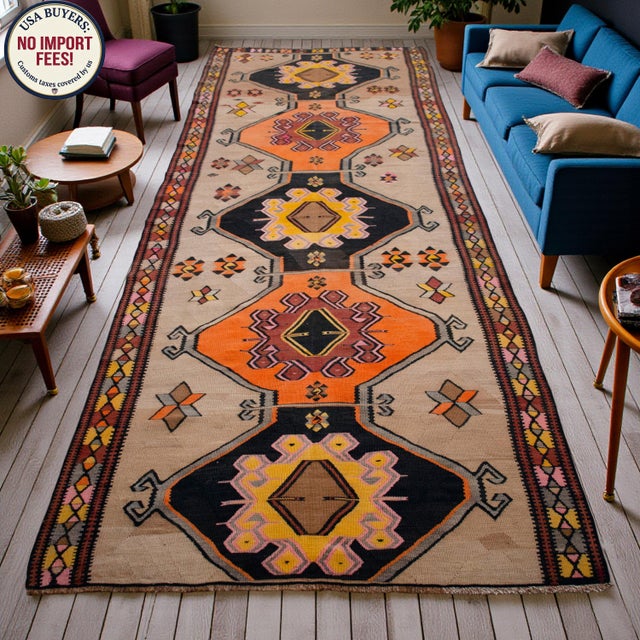
Its elongated gallery proportions and flat-weave construction make it an ideal choice for grand entryways or modern hallways. The neutral palette, punctuated by terracotta and charcoal accents, allows it to integrate seamlessly into a variety of high-end interiors, ranging from Organic Modern and Japandi to curated Mid-Century Modern spaces.
◆ Rug Details:
- Dimensions: 4'4" x 12'10" (52.0 in. x 153.5 in. / 132 cm x 390 cm)
- Materials: Organic wool on organic wool
- Technique: Flat weave
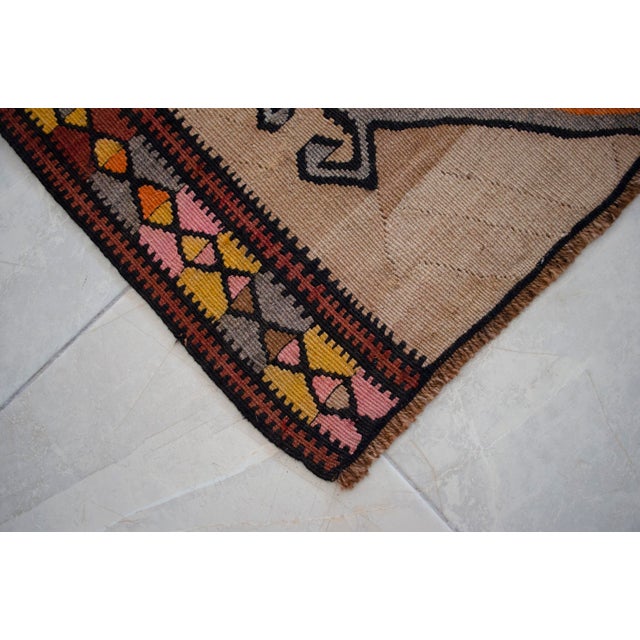
- Dyeing Process: Natural dyes; brown, black, gray, and beige tones are the sheep's own natural wool colors.
- Period: 1970s
- Origin: Kars, Eastern Anatolia
- Style: Organic Modern, Mid-Century Modern, Boho-Chic.
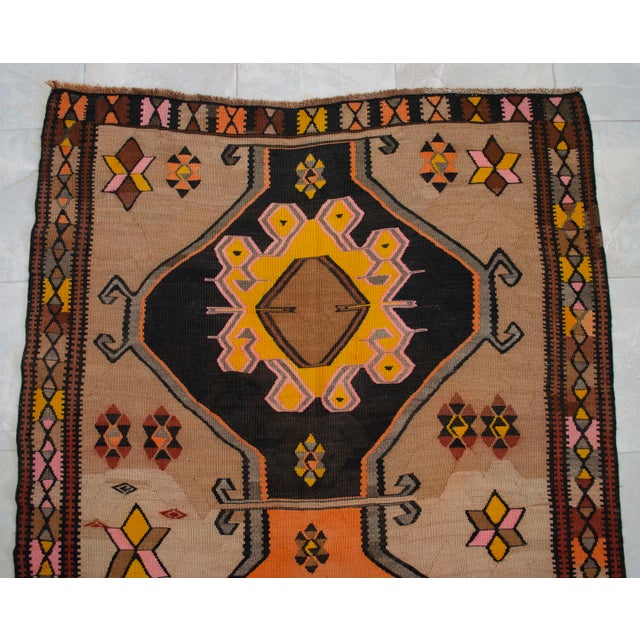
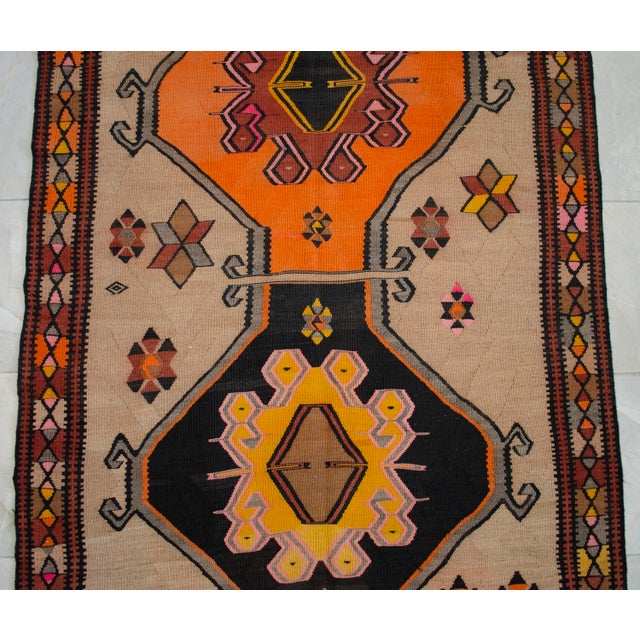
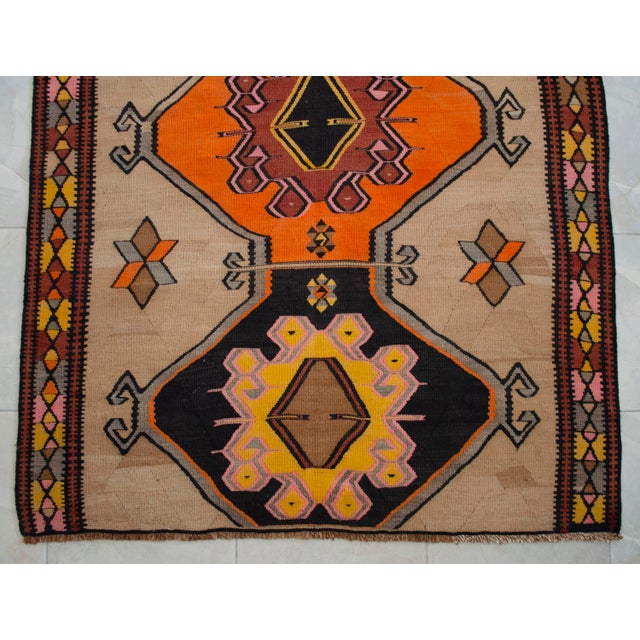
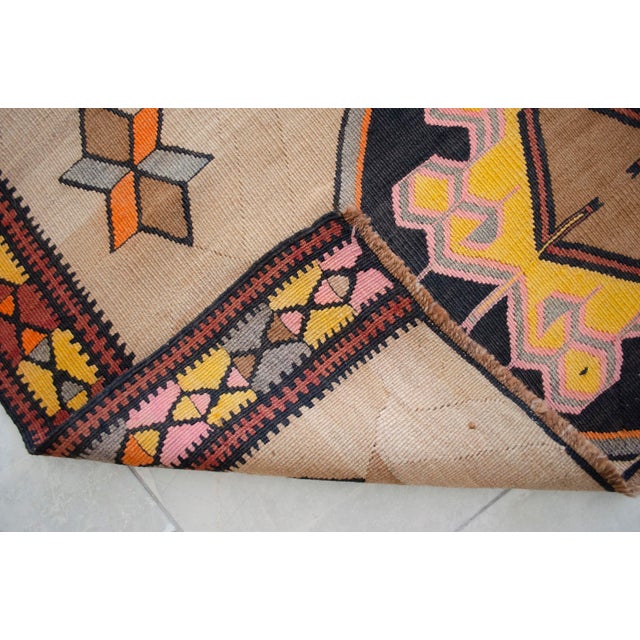
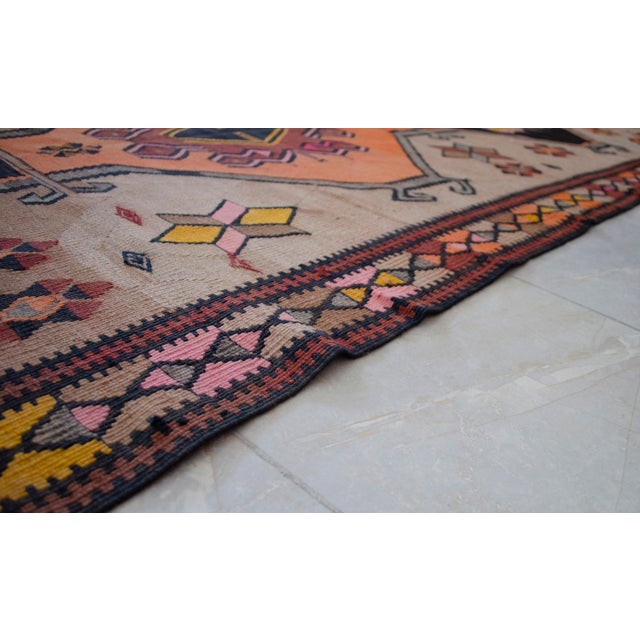
- Condition: This unused vintage rug is in very good condition, having been professionally cleaned and maintained without the need for repairs. It is completely odorless and exhibits character-rich irregularities typical of authentic Anatolian handcrafting—please review photos carefully.
- Weight: ~17 lbs (7.5 kg)
◆ Color Palette & Design Insight:
A sophisticated balance of raw, undyed wool and vibrant tribal accents.
(Primary colors: Cream, Charcoal Black, Terracotta Orange)
• Natural cream field derived from light undyed sheep wool.
• Graphic charcoal black used for the bold medallion borders.
• Warm terracotta orange providing a lively, rhythmic energy.
• Subtle dusty rose and chocolate brown accents throughout the geometry.
◆ Motifs & Symbolism:
The large diamond medallions, characteristic of Kars tribal weaving, are central symbols of protection and the preservation of the family unit. The stepped "hooks" surrounding these medallions are ancient talismans meant to ward off misfortune and invite abundance into the home. The rhythmic progression of patterns along the elongated field creates a visual narrative of continuity, a common theme in village dowry textiles. These geometric forms reflect the rugged landscape of the Anatolian plateau, translating nature into a structured textile art form.
◆ Color Disclaimer & Photography:
All images shown are real photographs of the actual rug you will receive, captured by us indoors under natural daylight conditions on a clean, hygienic floor in our physical showroom using a professional camera. We’ve done our very best to present the most accurate visuals possible. (Some interior or exterior lifestyle images you may see are AI-generated for styling purposes.) Please note that colors may vary from screen to screen, and therefore the tones you see on your device might appear slightly different from the rug’s true colors.
◆ Shipping Information:
We ship all of our rugs via expedited, trackable carriers and take great care to package each item securely and carefully. Most shipments arrive in the buyer’s country within just a few days. However, please understand that customs clearance and courier delays are beyond our control, and we kindly ask for your patience should such situations occur.
◆ Customs Notice:
U.S. Buyers – Relax and Shop with Confidence: All customs duties and import taxes for U.S. shipments are fully covered by us.
◆ Heritage & Value:
Each Turkish rug or kilim is a unique masterpiece of nomadic and village art, representing centuries of Anatolian tradition. Unlike machine-made alternatives, these hand-knotted treasures are made with organic wool and natural vegetable dyes, ensuring they age beautifully. Buying a vintage Turkish rug is not just a home decor choice; it is an investment in a sustainable, eco-friendly piece of history that gains character and value over time.
search terms: kars kilim runner, vintage turkish runner, 4x13 runner rug, cream neutral runner, orange tribal runner, geometric flatweave, 1970s vintage rug, organic modern rug, japandi hallway rug, mid century modern kilim, long gallery rug, handmade wool rug, bohemian runner rug, anatolian kilim runner, foyer rug large, entryway wool rug, tribal medallion rug, cream and charcoal rug, terracotta runner rug, handwoven turkish kilim, rustic gallery rug, farmhouse hallway rug, antique style runner, natural wool kilim, luxury turkish runner.
Buyer please note : Rug have some ABRASH.
What is the abrash :
Anyone who looks closely at the photographs of rugs in this web site will notice that, in many of them, colors change in horizontal bands throughout the rugs. A band of darker red, for instance, may lie between larger areas of lighter red. That kind of color-variation is called abrash. Most often abrash is caused by variation in dyelots and is most often encountered when rugs are woven in relatively primitive conditions where each dyelot may consist of only 20 or 30 gallons- as opposed to dye mixed in cities that may consist of 500 or 1000 gallon batches. But there are other causes of abrash as well. There can be large differences in the kind and the natural color of wool used in one rug, and each wool absorbs dye a little differently. Also, when wool is spun by hand, the tension of the spin varies and consequently so does the capacity of the wool to absorb dye. That band of darker blue that we cited above may result from a batch of loosely spun wool that absorbed a lot of dye.
Is abrash a flaw?
The answer lies in the eyes of the beholder. Germans, by and large, don’t like abrash. Other people enjoy the character that abrash seems to add to oriental rugs. We would like to suggest that strong abrash is not appropriate to finely knotted rugs and carpets made in city workshop conditions—rugs like Kashans and Nains that seem to aim for a kind of perfection. On the other hand, in tribal and village rugs, abrash often looks good and is by no means a flaw. But you, the connoisseur, are the final judge.
See less
- Dimensions
- 4′4″ × 12′10″ and 0.1″ thick
- Rug Construction
- Hand Knotted
- Pattern
- Medallion/Crest
- Period
- 1970s
- Country of Origin
- Turkey
- Item Type
- Vintage, Antique or Pre-owned
- Materials
- Wool
- Condition
- Good Condition, Original Condition Unaltered, Some Imperfections
- Color
- Cream
- Condition Notes
- This unused vintage rug is in very good condition, having been professionally cleaned and maintained without the need for repairs. … moreThis unused vintage rug is in very good condition, having been professionally cleaned and maintained without the need for repairs. It is completely odorless and exhibits character-rich irregularities typical of authentic Anatolian handcrafting—please review photos carefully. less
Questions about the item?
Returns & Cancellations
Return Policy - All sales are final 48 hours after delivery, unless otherwise specified in the description of the product.
Cancellation Policy - Prior to shipping or local pickup, buyers may cancel an order for up to 48 hours, unless otherwise specified.
Related Collections
- Seagrass Rugs
- Bamboo Fabric Rugs
- Cashmere Rugs
- Beaux-Arts Rugs
- Josef Albers Rugs
- Classical Greek Rugs
- Rugs in Chicago
- Moroccan Rugs
- Rugs in New York
- Persian Rugs
- Scandinavian Rugs
- Art Nouveau Rugs
- Rugs in Dallas
- Spanish Rugs
- Rugs in Los Angeles
- Early American Rugs
- Rugs in Washington DC
- Karastan Rugs
- Rugs in San Francisco
- Khotan Rugs
- Art Deco Rugs
- Rya Rugs
- Rugs in Philadelphia
- French Rugs
- Wool Rugs