

Details
Description
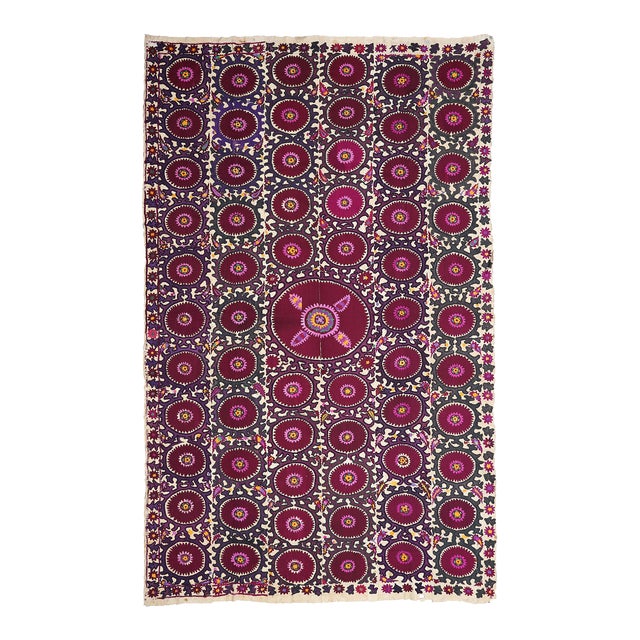
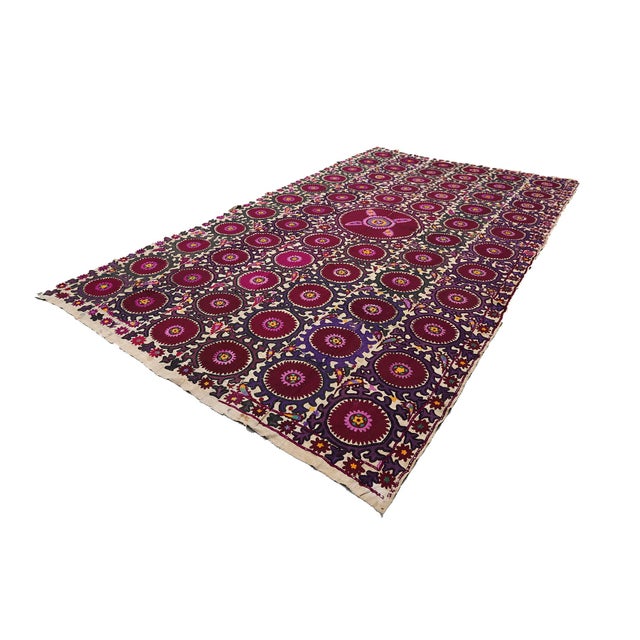
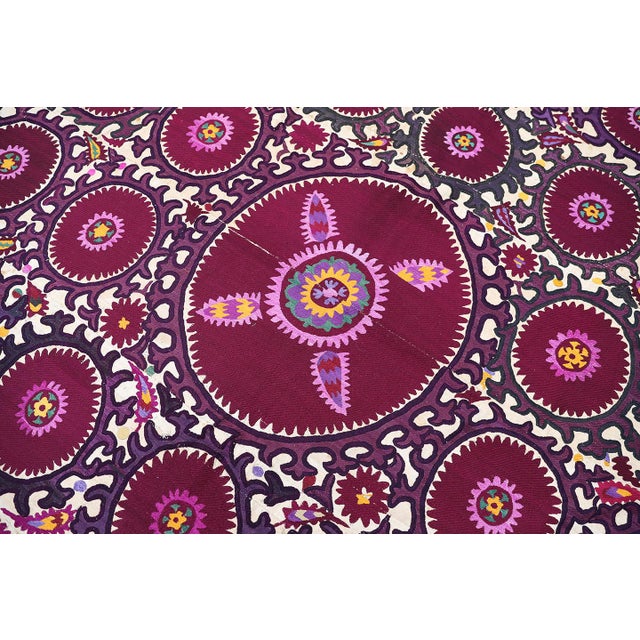
Suzani from Khojent, a city in Northern Tajikistan, closely resemble Tashkent embroidery with their strict rows of rosettes-circles in wide …
Read more
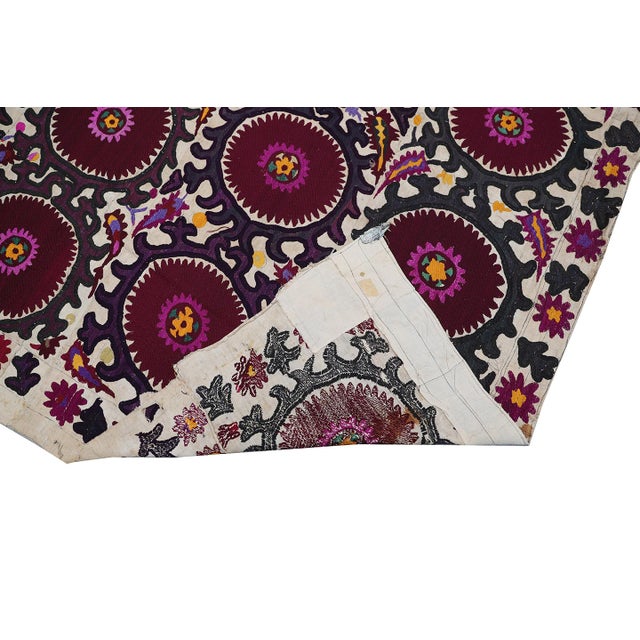
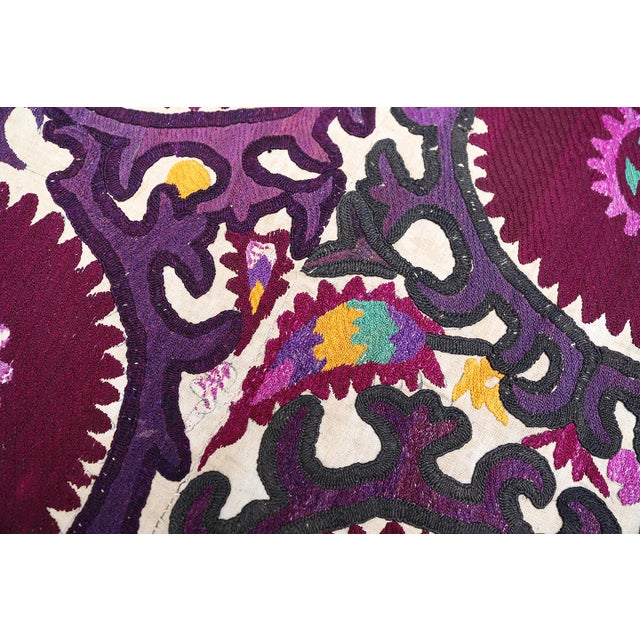
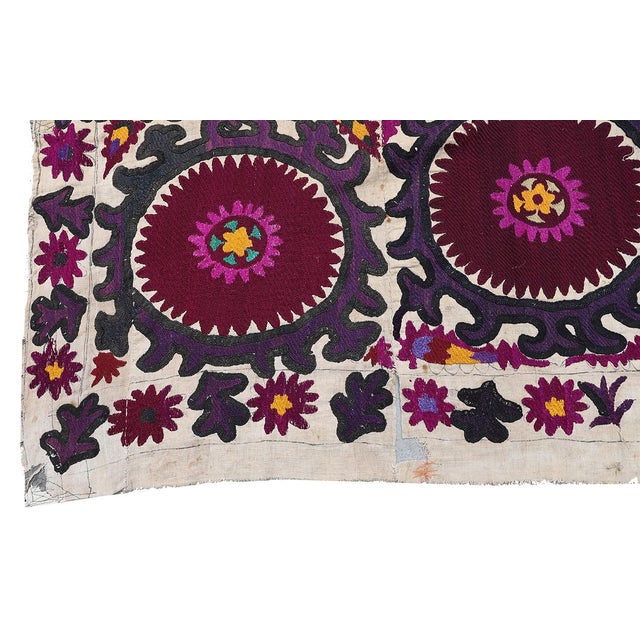
Suzani from Khojent, a city in Northern Tajikistan, closely resemble Tashkent embroidery with their strict rows of rosettes-circles in wide leafy frames. However, distinctive features include a central rosette-star, large floral palmettes, and a diverse array of floral forms. The suzani's unique color palette combines calm burgundy-purple rosettes with black-dark blue palmettes.
These suzani, rich in vegetal ornaments, symbolize the abundance of life and nature's splendor, reflecting the folk concept of the Garden of Eden. Traditionally, wedding suzani were believed to protect the bride and groom from evil and bring good luck. Floral patterns carried symbolic meanings of fertility and magical protection, while the white background signified protection and future well-being.
Craftswomen often included intentional "mistakes," such as misshapen contours or blank spaces, to ward off the evil eye. In the 19th and early 20th centuries, suzani were essential in weddings, holidays, and home decoration, integral to any woman's life.
Dimensions: 8'8" x 14'8"
See less
Questions about the item?
Returns & Cancellations
Return Policy - All sales are final 48 hours after delivery, unless otherwise specified in the description of the product.
Cancellation Policy - Prior to shipping or local pickup, buyers may cancel an order for up to 48 hours, unless otherwise specified.
Related Collections
- Loloi Rugs Textile Art
- Louis XIII Textile Art
- Workaday Handmade Textile Art
- Chanel Textile Art
- Antique Gold Finish Textile Art
- Kenneth Ludwig Chicago Textile Art
- Resin Textile Art
- Mid-Century Modern Textile Art
- Chinese Textile Art
- Japanese Textile Art
- Tapestry
- Framed Scarves
- Scandinavian Textile Art
- Aubusson Tapestry
- Märta Måås-Fjetterström Textile Art
- Surrealism Textile Art
- Space Age Textile Art
- Cardboard Textile Art
- Pablo Picasso Textile Art
- Ralph Lauren Textile Art