


Details
Description
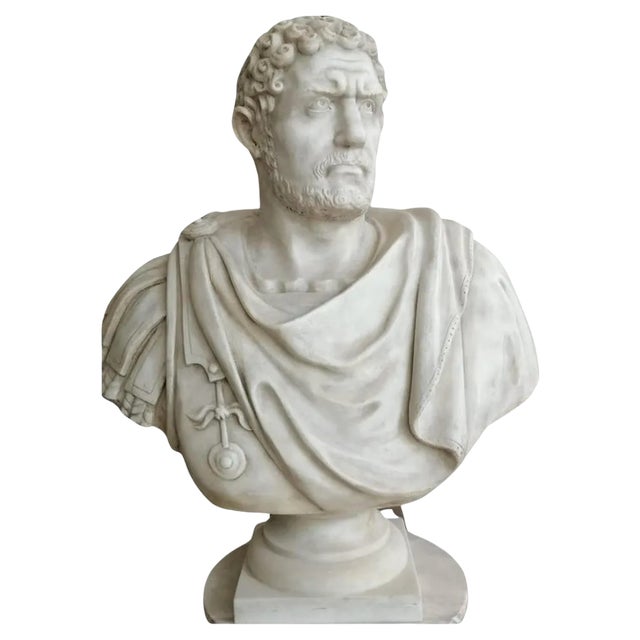
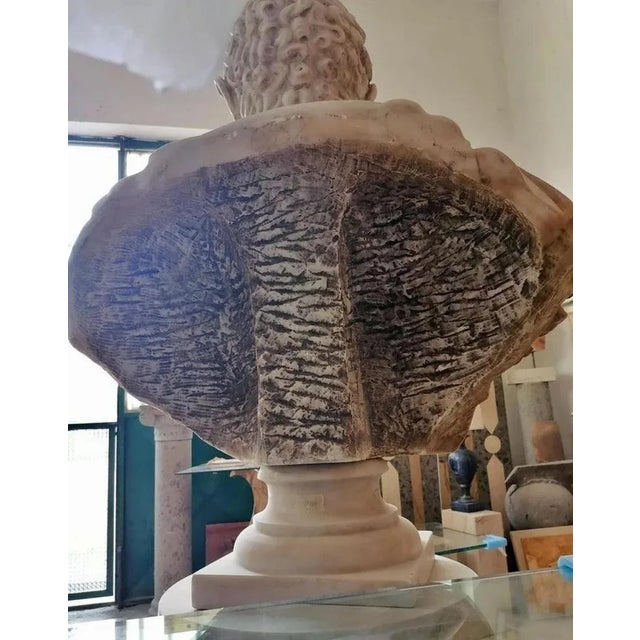
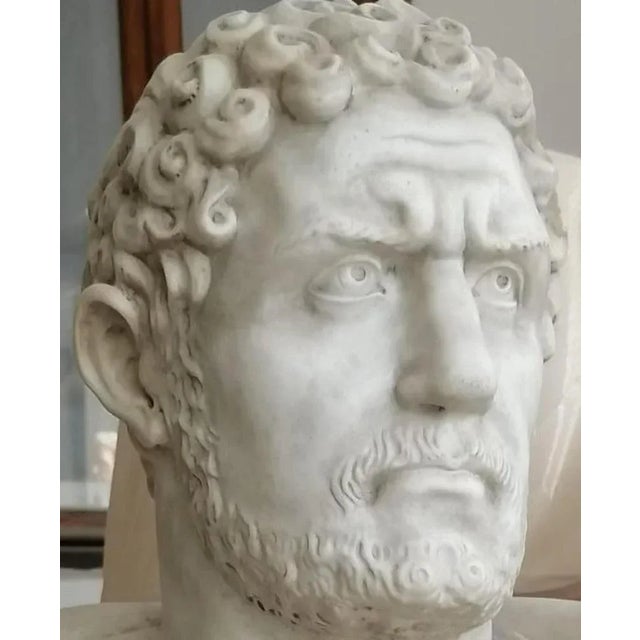
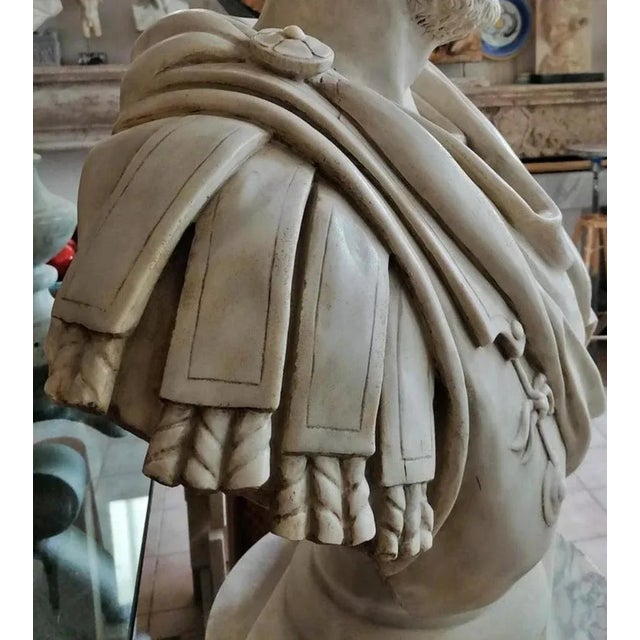
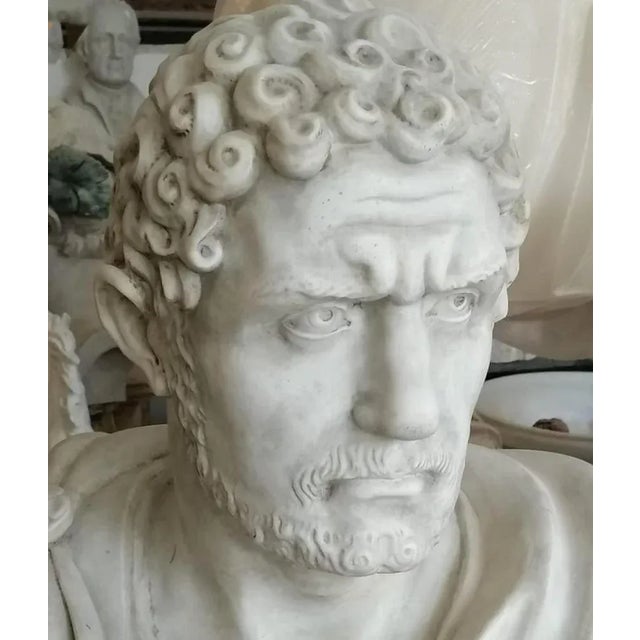
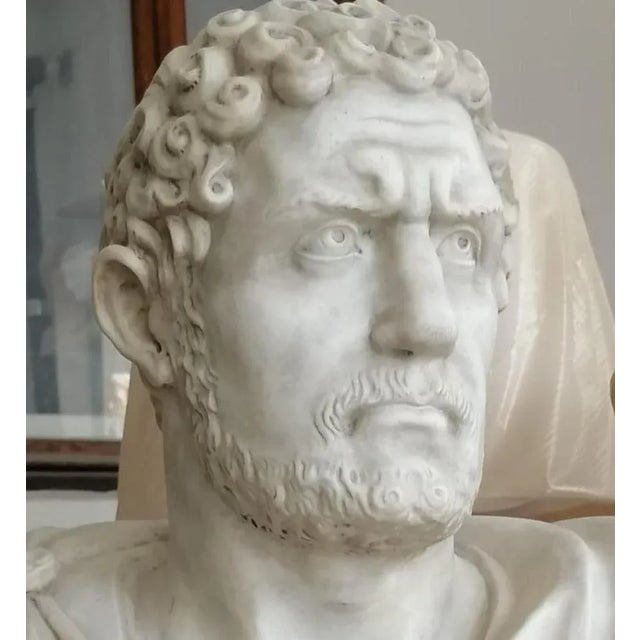
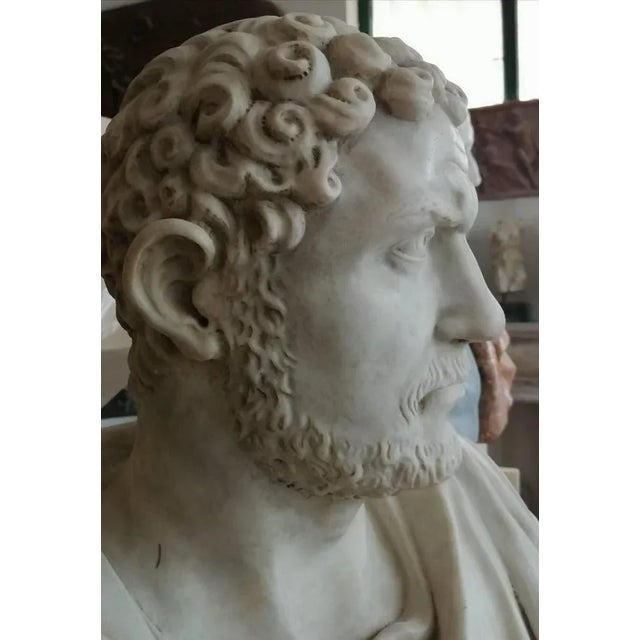
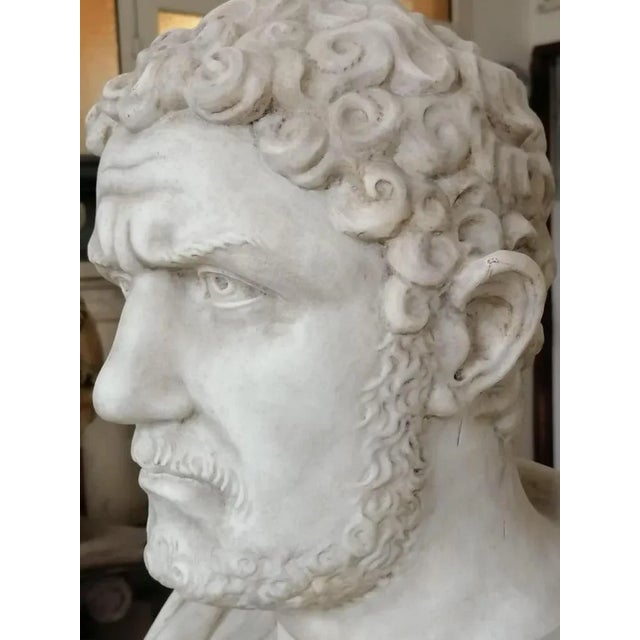
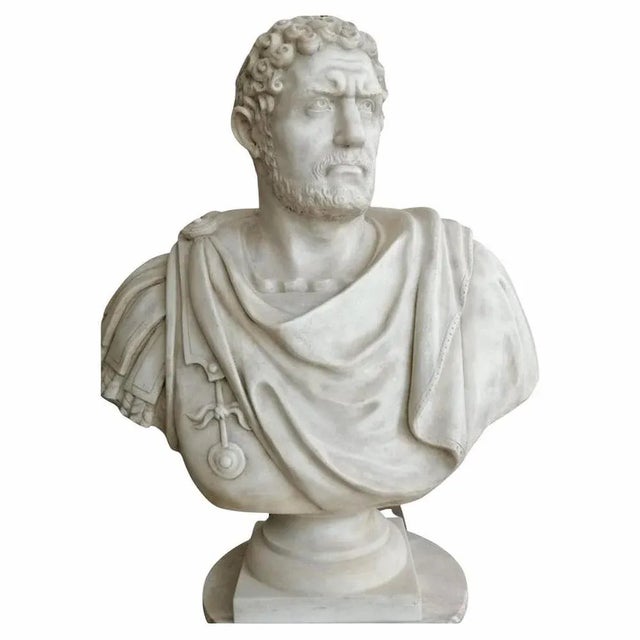
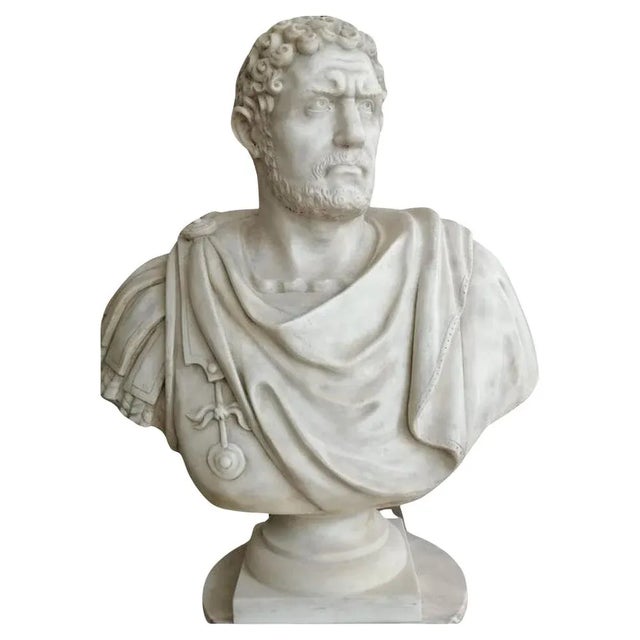
Marcus Aurelius Antoninus Caracalla. Italian Carrara marble sculpture. Measure: height 81cm. Beginning of the 20th century. Perfect conditions. Marcus Aurelius …
Read more
Marcus Aurelius Antoninus Caracalla. Italian Carrara marble sculpture. Measure: height 81cm. Beginning of the 20th century. Perfect conditions. Marcus Aurelius Antoninus "Caracalla" ( 4 April 188 – 8 April 217) was Roman emperor from 198 to 217. He was a member of the Severan dynasty, the elder son of Emperor Septimius Severus and Empress Julia Domna. Proclaimed co-ruler by his father in 198, he continued to reign with his brother Geta, co-emperor from 209, after their father's death in 211. His brother was murdered by the Praetorian Guard later that year, supposedly under orders from Caracalla himself, who then reigned afterwards as sole ruler of the Roman Empire. Caracalla found administration to be mundane, leaving those responsibilities to his mother. Caracalla's reign featured domestic instability and external invasions by the Germanic peoples. Caracalla's reign became notable for the Antonine Constitution (Latin: Constitutio Antoniniana), also known as the Edict of Caracalla, which granted Roman citizenship to all free men throughout the Roman Empire. The edict gave all the enfranchised men Caracalla's adopted praenomen and nomen: "Marcus Aurelius". Domestically, Caracalla became known for the construction of the Baths of Caracalla, which became the second-largest baths in Rome; for the introduction of a new Roman currency named the antoninianus, a sort of double denarius; and for the massacres he ordered, both in Rome and elsewhere in the empire. In 216, Caracalla began a campaign against the Parthian Empire. He did not see this campaign through to completion due to his assassination by a disaffected soldier in 217. Macrinus succeeded him as emperor three days later. The ancient sources portray Caracalla as a tyrant and as a cruel leader, an image that has survived into modernity. Cassius Dio (circa 155 – circa 235) and Herodian (circa 170 – circa 240) present Caracalla as a soldier first and an emperor second. In the 12th century, Geoffrey of Monmouth started the legend of Caracalla's role as the king of Britain. Later, in the 18th century, the works of French painters revived images of Caracalla due to apparent parallels between Caracalla's tyranny and that ascribed to Louis XVI of France (r. 1774–1792). Modern works continue to portray Caracalla as an evil ruler, painting him as one of the most tyrannical of all Roman emperors. This piece is attributed to the mentioned designer/maker. It has no attribution mark and no
official proof of authenticity,
however it is well documented in design history. I take full responsibility for any authenticity
issues arising from misattribution
See less
- Dimensions
- 19.69ʺW × 19.69ʺD × 31.89ʺH
- Country of Origin
- Italy
- Item Type
- Vintage, Antique or Pre-owned
- Materials
- Marble
- Condition
- Unknown, Some Imperfections
- Color
- Black
Returns & Cancellations
Return Policy - All sales are final 48 hours after delivery, unless otherwise specified in the description of the product.
Cancellation Policy - Prior to shipping or local pickup, buyers may cancel an order for up to 48 hours, unless otherwise specified.
Related Collections
- Richard Ginori Models and Figurines
- Kjell Engman Models and Figurines
- Pastel Models and Figurines
- Egyptian Models and Figurines
- Otagiri Company Models and Figurines
- Ardalt Models and Figurines
- Serpentine Models and Figurines
- Vienna Secession Models and Figurines
- Enesco, Apparence Models and Figurines
- Wildwood Models and Figurines
- Rose Quartz Models and Figurines
- Brass Models and Figurines
- Ceramic Cats
- Bird Figurines
- Dog Figurines
- Staffordshire Dog Figurines
- Elephant Figurines
- Jade Models and Figurines
- Antique Model Ships
- Murano Glass Models and Figurines
- Herend Models and Figurines
- Porcelain Birds
- Cat Figurines
- Japanese Models and Figurines
- Horse Figurines