




Details
Description
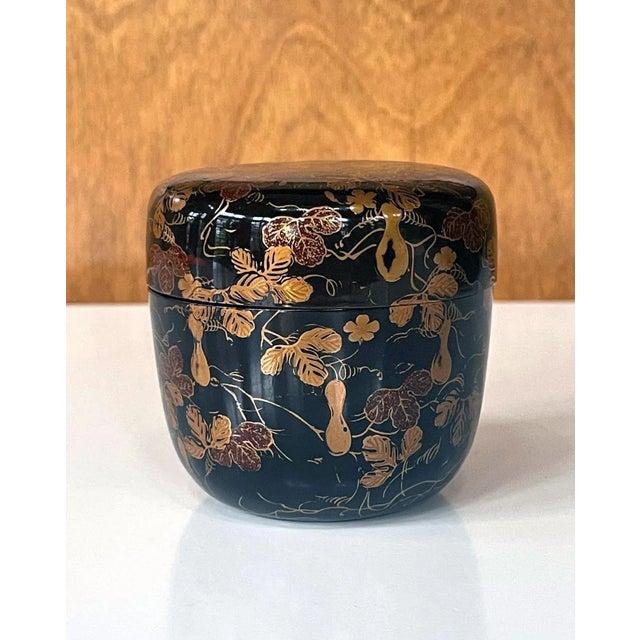
A Japanese lacquered tea caddy (known as Natsume) with fine Maki-e decoration circa 18-19th century Edo to Meiji period. The … Read more A Japanese lacquered tea caddy (known as Natsume) with fine Maki-e decoration circa 18-19th century Edo to Meiji period. The large-sized natsume with a fitted lid, sometimes also called usuchaki, was traditionally used to store tea powder for ceremonial Chado. The surface is decorated in maki-e of fine scrolling vines with hanging guards. The decorative style of the surface was in a typical style called "Kodaiji style" originated in the 16th century during Momoyama period from the Kodaiji, a Zen Buddhism temple located in Kyoto. The characteristics of this style include the following: a pure black background on which various shades and thickness of shimmering gold maki-e were applied, creating a beguiling contrast. The design tends to be simple but elegant with emphasis on motif repetition and geometrical forms, with the favorite subjects being the floral patterns of the fall. The technique used was revolutionary for the time with nashiji being used for part of the design instead of as background. This is called e-nashiji. Often there are outlines of the floral that was executed with dense gold powder (as seen in alternate leaves infill with gold powder on this piece). It is noted that the black background has faded into a deep brown due to the light exposure, indicating the age of this piece. There are also patina and wears inside the container apparently from use. The natsume comes with a worn storage wood box (tomobako) with kanji ink inscription on the lid but they have faded and become partially illegible. We can make out the word maki-e large natsume and possible the name of the Natsume "Dusk". Under the tomobako, it was clearly marked "Jisho-in Holding". Jisho-ins are temples for Buzan sect of Shingon Buddhism and origin place for the famous Japanese cat Jizo. There are many Jisho-ins across Japan, so it is not possible to know which temple this natsume used to belong to. See less
- Dimensions
- 3ʺW × 3ʺD × 3ʺH
- Styles
- Japanese
- Period
- 19th Century
- Country of Origin
- Japan
- Item Type
- Vintage, Antique or Pre-owned
- Materials
- Lacquer
- Wood
- Condition
- Good Condition, Unknown, Some Imperfections
- Color
- Black
- Condition Notes
- Good Wear consistent with age and use. Fine condition with mellow patina due to exposure to light, minor rubbing on … moreGood Wear consistent with age and use. Fine condition with mellow patina due to exposure to light, minor rubbing on the higher part of the maki-e (gourds), minor wear on the base and interior bottom. Tomobako is worn and repaired on the base. less
Questions about the item?
Returns & Cancellations
Return Policy - All sales are final 48 hours after delivery, unless otherwise specified in the description of the product.
Cancellation Policy - Prior to shipping or local pickup, buyers may cancel an order for up to 48 hours, unless otherwise specified.
Related Collections
- Alessandro Albrizzi Boxes
- Enzo Mari Boxes
- Polyester Boxes
- Tony Duquette Boxes
- Anthony Redmile Boxes
- Abaca Boxes
- Violet Boxes
- Acacia Wood Boxes
- Ettore Sottsass Boxes
- Bright Green Boxes
- Port 68 Boxes
- Zitan Boxes
- Jewelry Boxes
- Burlwood Boxes
- Hat Boxes
- Silver Boxes
- Japanese Boxes
- Pill Boxes
- Maitland - Smith Boxes
- Cigar Boxes
- Porcupine Quill Boxes
- Tool Boxes
- Alabaster Boxes
- Porcelain Boxes
- Brass Boxes