

Details
Description
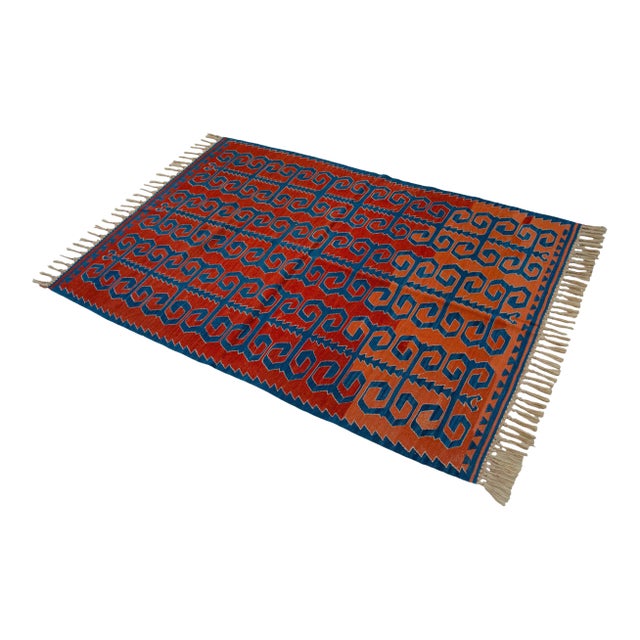
Finely woven Yüncü kilim from Balıkesir with crisp geometry, unused condition, and versatile small-room proportions—ideal for design lovers and collectors.
…
Read more
Finely woven Yüncü kilim from Balıkesir with crisp geometry, unused condition, and versatile small-room proportions—ideal for design lovers and collectors.
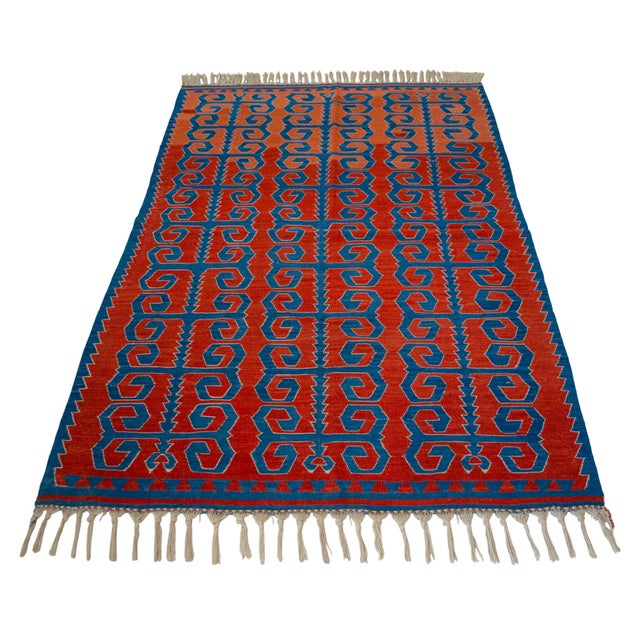
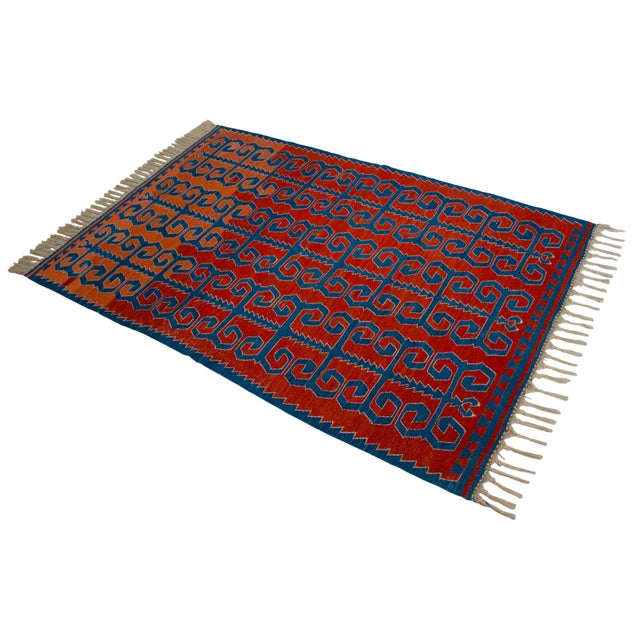
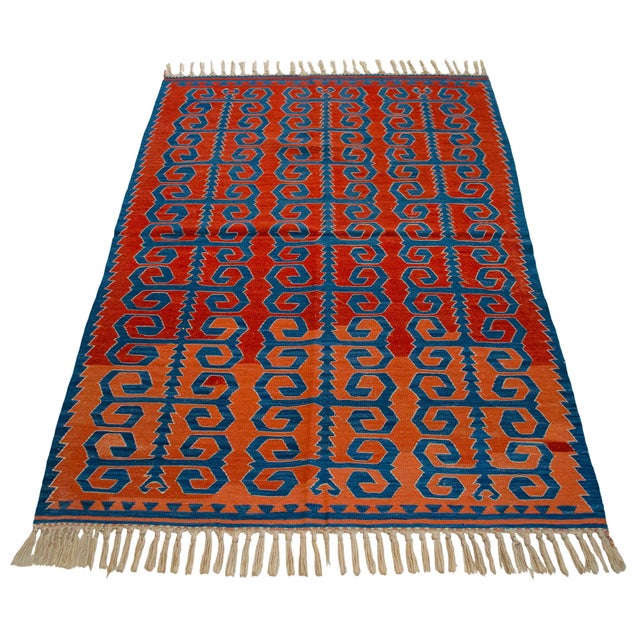
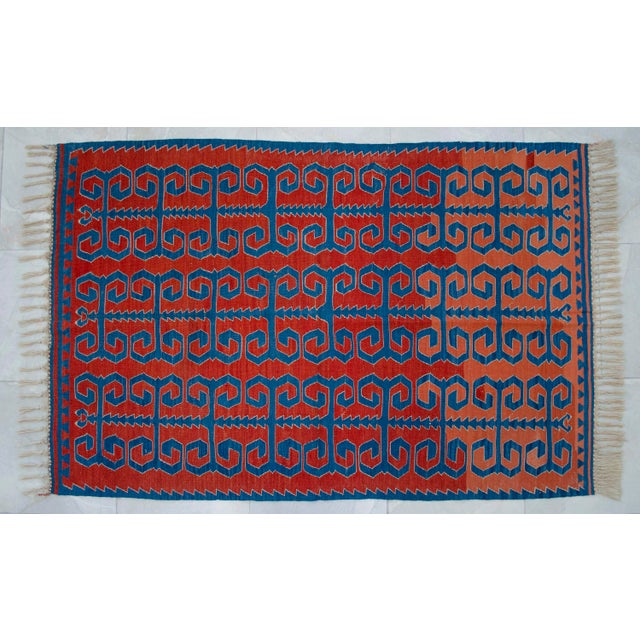
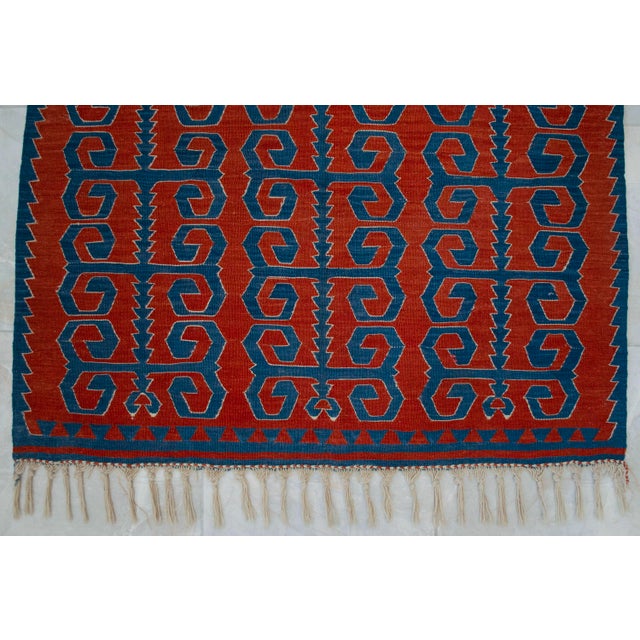
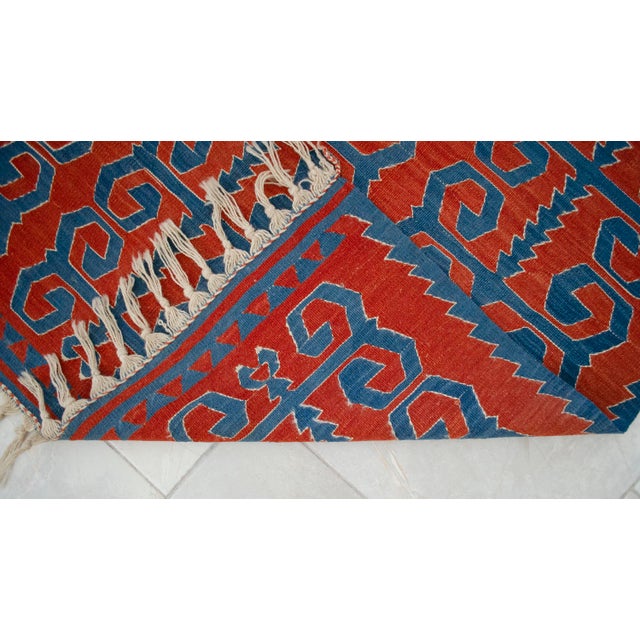
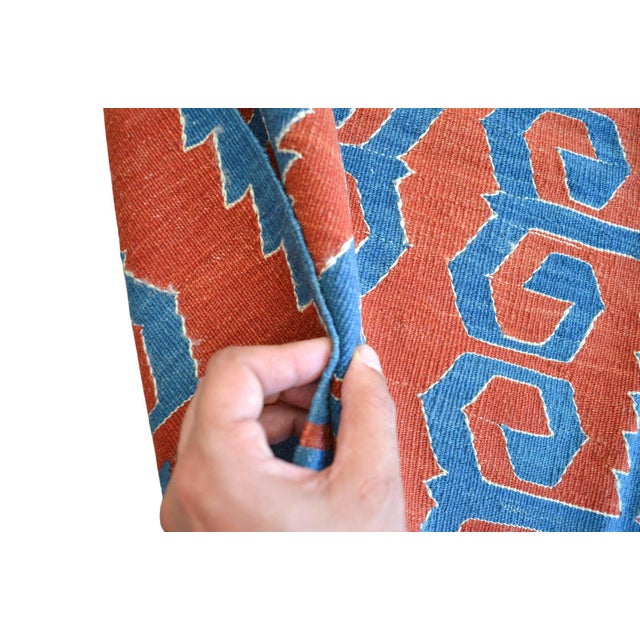
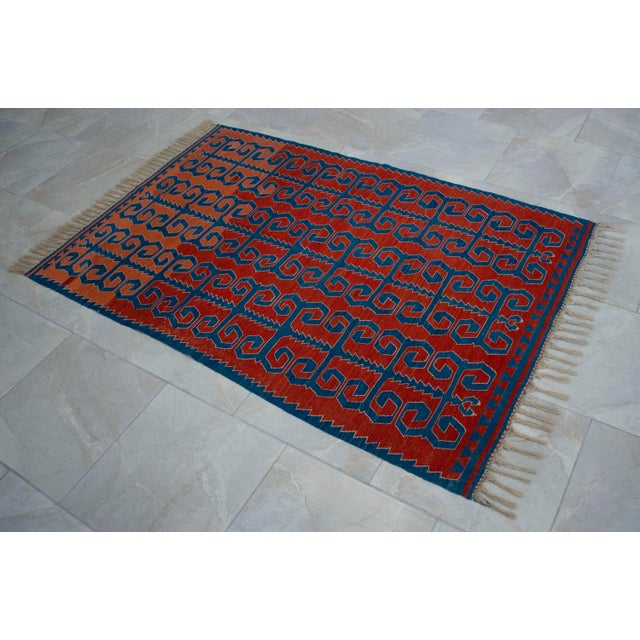
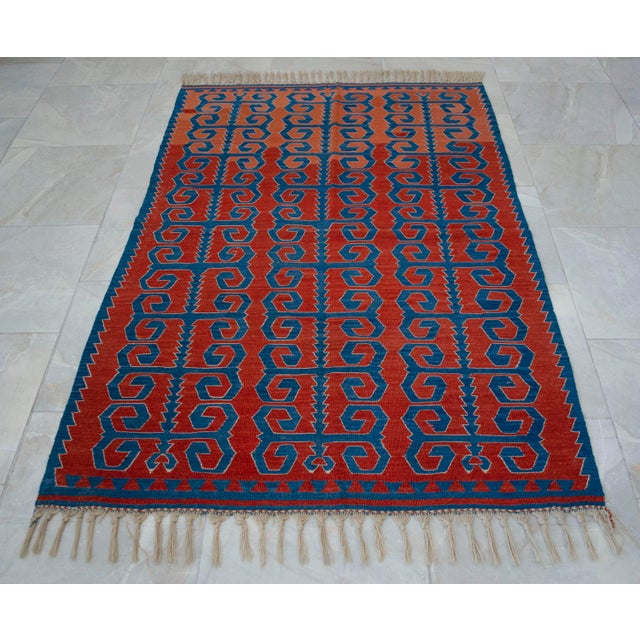
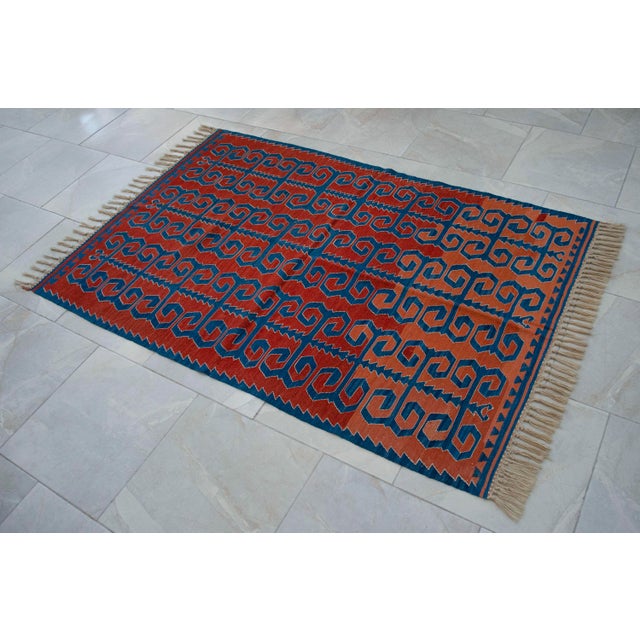
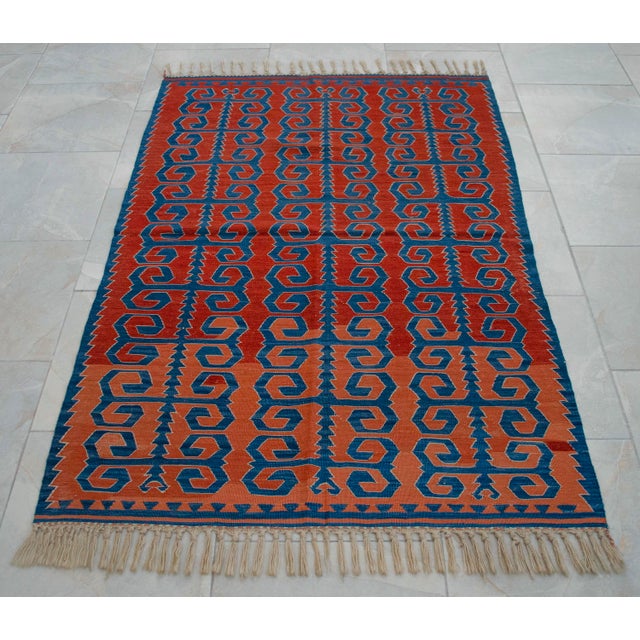
Graphic lattice repeats with superb symmetry, razor-clean outlines, and a deep, characterful abrash across the field. The handle is supple and thin, showing the disciplined, even tension characteristic of master village weavers.
Woven by Yüncü villagers in Balıkesir for personal household use, this piece represents the workshop’s “super-fine” quality tier—yarn spun to a slimmer gauge, longer weaving time, and heightened precision. As the yarn becomes finer, the weave tightens, contours sharpen, and the textile reads almost architectural. This example is unused, professionally cleaned, and ready for immediate placement.
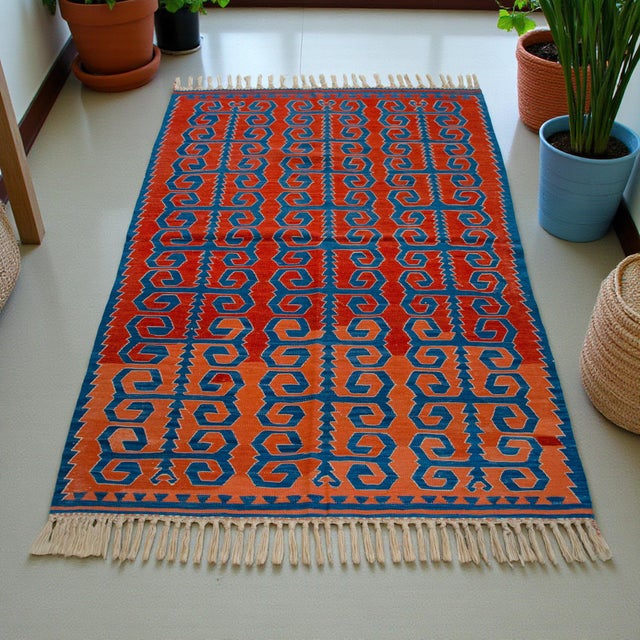
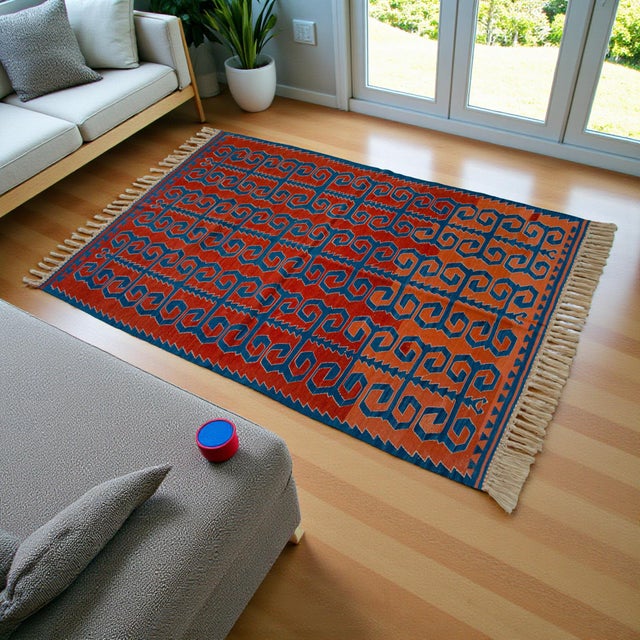
Where it works. Small spaces where a refined flat weave shines: entry/foyer, beside a daybed or reading chair, in front of a console, or layered under a coffee table in a compact living area.
Technical Details
Measurements: 3 ft 5 in × 5 ft 3 in (41 × 63 cminches — size excludes fringes
Weight: 4.0 lbs
Weave Type: Flat-weave kilim
Region / Origin: Balıkesir (Yüncü), Western Türkiye
Period: 1970s (50+ years old)
Materials: Wool on wool
Dyeing Process: Vegetable-dyed (evidence-based)
Condition: Vintage, unused; professionally cleaned; odorless
Motifs & Symbolism
Ram’s-horn lattice (koçboynuzu): strength, prosperity, and continuity expressed through interlocking hooked forms.
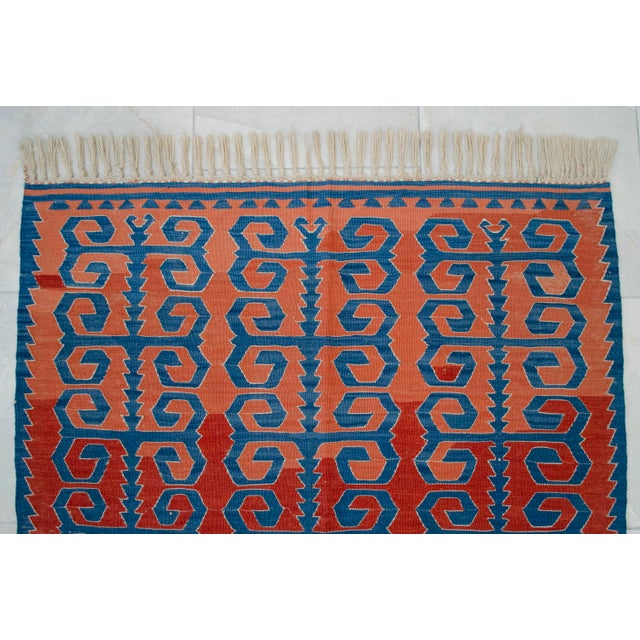
Serrated spines: protective energy and movement along the central stems of each repeat.
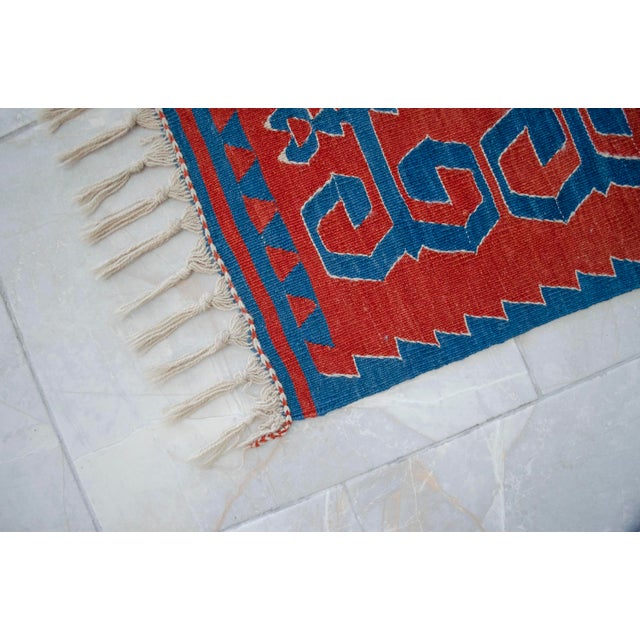
Reciprocal saw-tooth inner border: rhythmic framing that keeps the eye circulating across the field.
Color Palette & Design Insight
Madder brick
Indigo blue
Light apricot abrash
Ivory outlines
The disciplined drawing, knife-edge outlines, and balanced negative space typify Yüncü work. Natural abrash adds depth without disrupting the strict repeat, giving the kilim both graphic clarity and lived-in character.
Color Disclaimer & Photography
Color Disclaimer & Photography:
All images shown are real photographs of the actual rug you will receive, captured by us indoors under natural daylight conditions on a clean, hygienic floor in our physical showroom using a professional camera. We’ve done our very best to present the most accurate visuals possible. (Some interior or exterior lifestyle images you may see are AI-generated for styling purposes.) Please note that colors may vary from screen to screen, and therefore the tones you see on your device might appear slightly different from the rug’s true colors.
International Shipping:
We ship all of our rugs via expedited, trackable carriers and take great care to package each item securely and carefully. Most shipments arrive in the buyer’s country within just a few days. However, please understand that customs clearance and courier delays are beyond our control, and we kindly ask for your patience should such situations occur.
Customs Notice:
U.S. Buyers – Relax and Shop with Confidence: All customs duties and import taxes for U.S. shipments are fully covered by us.
Buyer please note : Rug have ABRASH.
What is the abrash :
Anyone who looks closely at the photographs of rugs in this web site will notice that, in many of them, colors change in horizontal bands throughout the rugs. A band of darker red, for instance, may lie between larger areas of lighter red. That kind of color-variation is called abrash. Most often abrash is caused by variation in dyelots and is most often encountered when rugs are woven in relatively primitive conditions where each dyelot may consist of only 20 or 30 gallons- as opposed to dye mixed in cities that may consist of 500 or 1000 gallon batches. But there are other causes of abrash as well. There can be large differences in the kind and the natural color of wool used in one rug, and each wool absorbs dye a little differently. Also, when wool is spun by hand, the tension of the spin varies and consequently so does the capacity of the wool to absorb dye. That band of darker blue that we cited above may result from a batch of loosely spun wool that absorbed a lot of dye.
Is abrash a flaw?
The answer lies in the eyes of the beholder. Germans, by and large, don’t like abrash. Other people enjoy the character that abrash seems to add to oriental rugs. We would like to suggest that strong abrash is not appropriate to finely knotted rugs and carpets made in city workshop conditions—rugs like Kashans and Nains that seem to aim for a kind of perfection. On the other hand, in tribal and village rugs, abrash often looks good and is by no means a flaw. But you, the connoisseur, are the final judge.
What Is a Turkish Kilim?
A Turkish kilim is a flat-woven textile created by interlacing colored wefts through warps on a loom, producing a lightweight yet durable fabric with no pile. Unlike knotted-pile rugs—where knots build height—kilims achieve pattern purely through the structural placement of colored yarns. This technique yields crisp geometry, reversible use, and a beautifully pliant hand. Historically, kilims served as floor covers, wall hangings, bedding, and storage wraps across Anatolia; their portable nature made them indispensable to nomadic and village life.
Designs encode local identity. Motifs such as the ram’s horn, comb, amulet, and stepped diamonds carry protective and auspicious meanings. Regions develop distinct drawing habits and color recipes—determined by available dyestuffs, wool quality, and workshop tradition. In Western Türkiye, the Yüncü weavers of Balıkesir are respected for disciplined repeats, tense outlines, and a weaving touch that keeps the fabric thin yet strong. Vegetable-dyed wool introduces gentle tonal shifts known as abrash, a hallmark of authenticity that animates large fields without sacrificing clarity.
Collectors value vintage kilims for cultural continuity and craftsmanship you can feel in the hand: even tension, square selvedges, and clean pattern articulation. For interiors, a kilim offers high design with low visual weight—easy to place under furniture, over stone or timber floors, and in layered schemes. Proper care is simple: vacuum with low suction, rotate periodically, and use a quality rug pad for stability and comfort. Kilims age gracefully, recording light, use, and time as a subtle patina that deepens their appeal.
Search terms: yuncu kilim, balikesir rug, turkish kilim small, vintage turkish rug, flat weave rug, wool on wool kilim, vegetable dyed kilim, ram s horn motif, hooked lattice rug, anatolian kilim, yuncu village weaving, 1970s vintage rug, collector grade kilim, thin handle flatweave, boho farmhouse rug, rustic decor rug, entryway kilim, foyer rug small, coffee table rug, handmade kilim turkey, geometric tribal rug, unused vintage rug, fine weave kilim, small area rug, authentic turkish rug
See less
- Dimensions
- 3′5″ × 5′3″ and 0.1″ thick
- Pattern
- Geometric
- Rug Construction
- Flatweave
- Period
- 1970s
- Country of Origin
- Turkey
- Item Type
- Vintage, Antique or Pre-owned
- Materials
- Wool
- Condition
- Good Condition, Original Condition Unaltered, Some Imperfections
- Color
- Burgundy
- Condition Notes
- Condition: Vintage, unused; professionally cleaned; odorless Condition: Vintage, unused; professionally cleaned; odorless less
Questions about the item?
Returns & Cancellations
Return Policy - All sales are final 48 hours after delivery, unless otherwise specified in the description of the product.
Cancellation Policy - Prior to shipping or local pickup, buyers may cancel an order for up to 48 hours, unless otherwise specified.
Related Collections
- Seagrass Rugs
- Bamboo Fabric Rugs
- Cashmere Rugs
- Classical Greek Rugs
- Josef Albers Rugs
- Beaux-Arts Rugs
- Rugs in Chicago
- Moroccan Rugs
- Scandinavian Rugs
- Persian Rugs
- Rugs in New York
- Art Nouveau Rugs
- Rugs in Dallas
- Spanish Rugs
- Early American Rugs
- Rugs in Los Angeles
- Rugs in Washington DC
- Khotan Rugs
- Karastan Rugs
- Rugs in San Francisco
- Art Deco Rugs
- Chinese Rugs
- Rya Rugs
- Wool Rugs
- Rugs in Philadelphia