

Details
Description
Handwoven in western Anatolia’s Oushak region during the 1970s, this vintage flat-weave kilim embodies the sophisticated yet rustic artistry of …
Read more
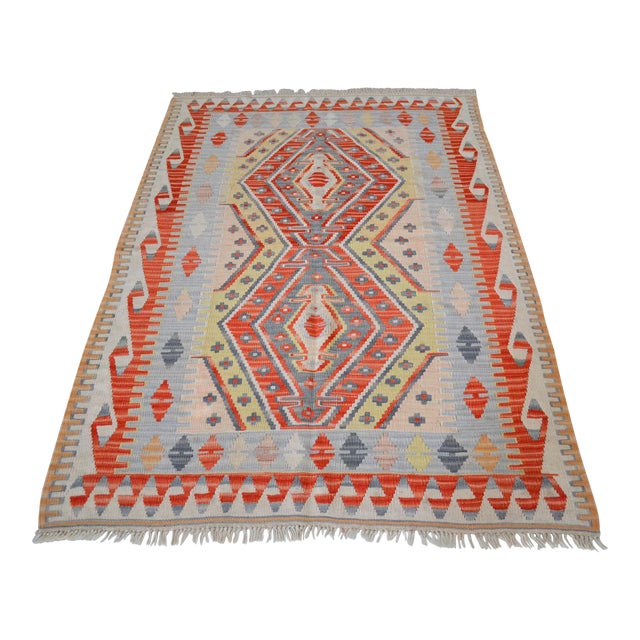
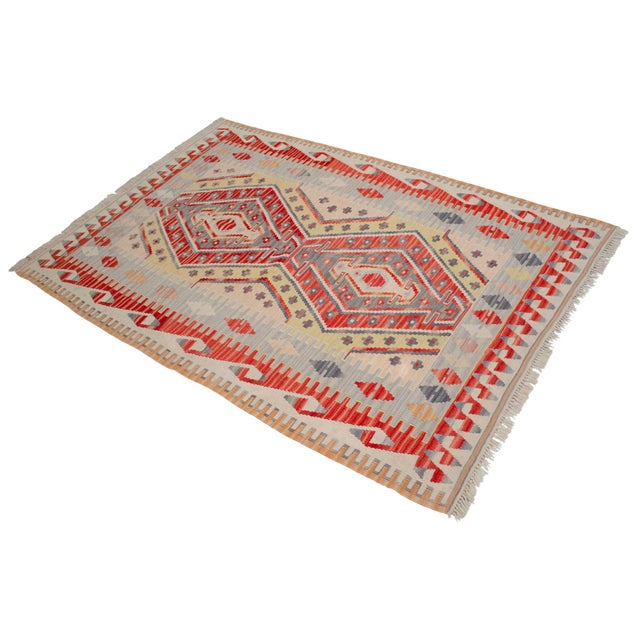
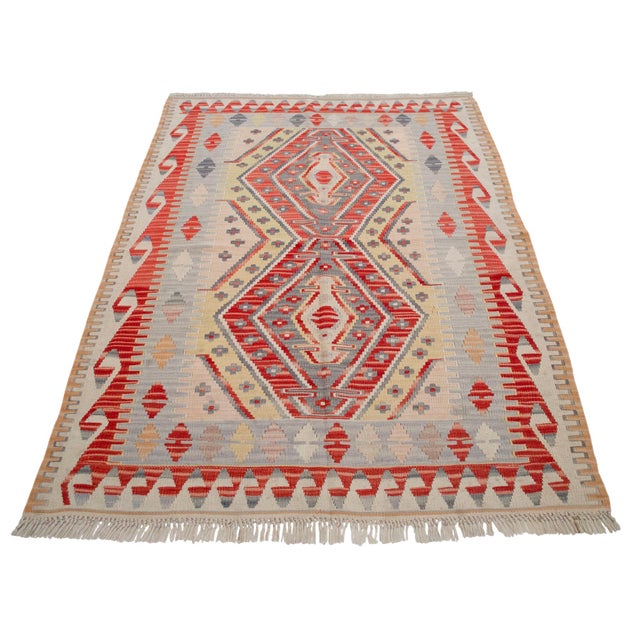
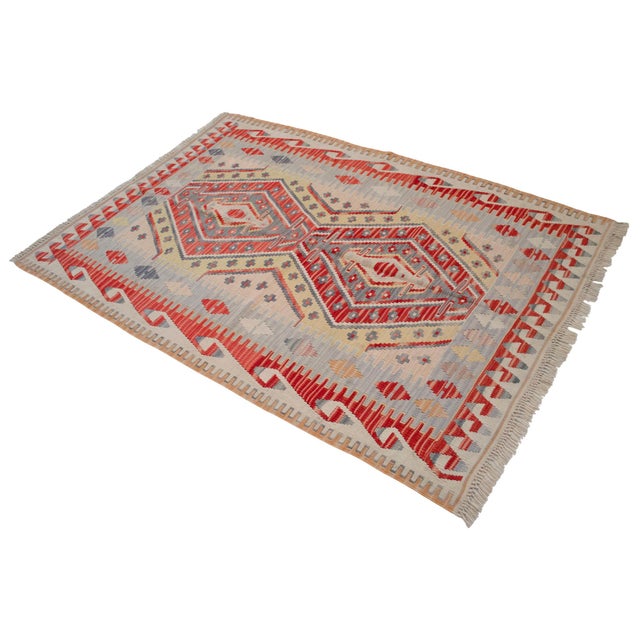
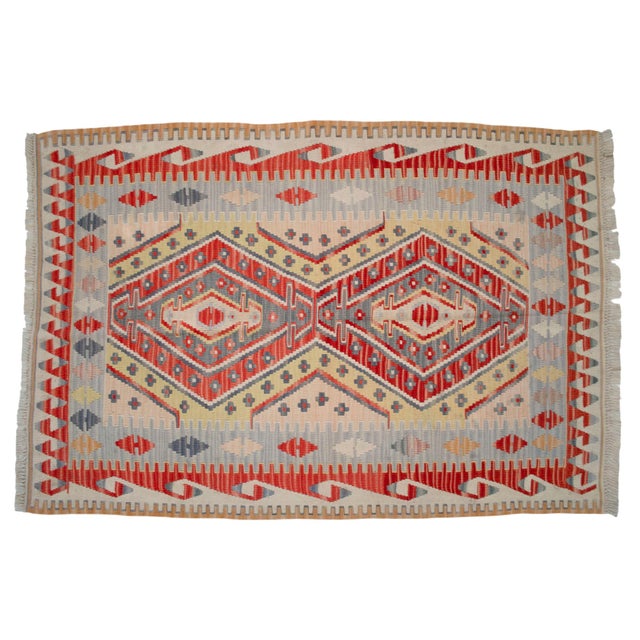
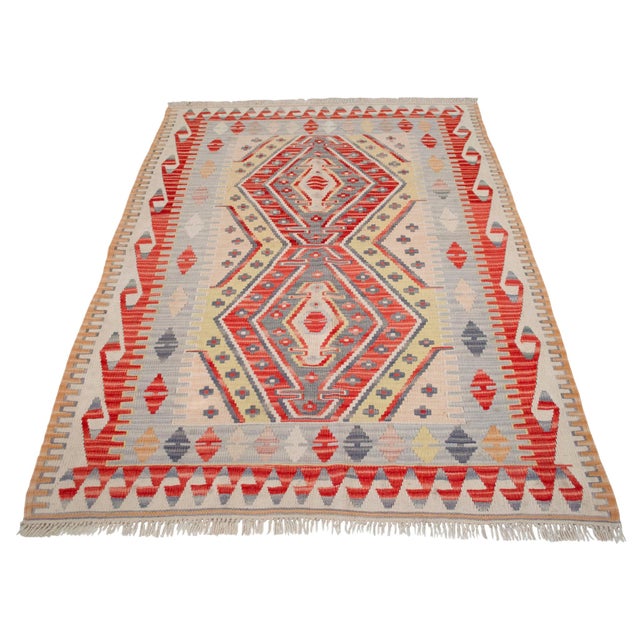
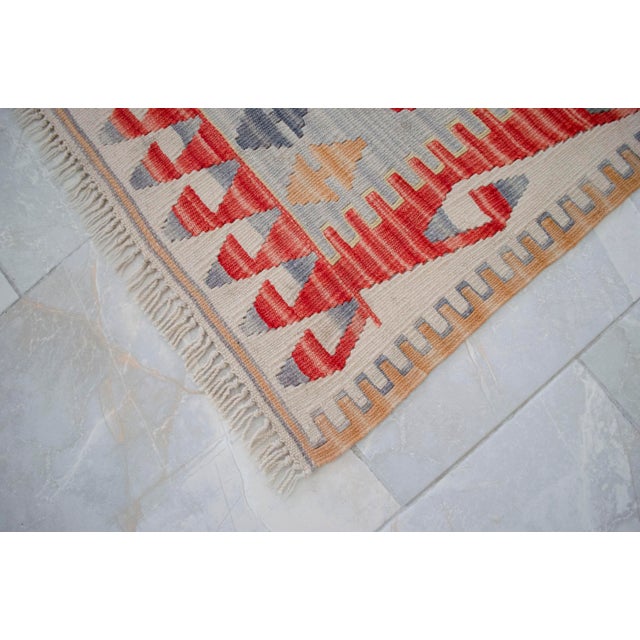
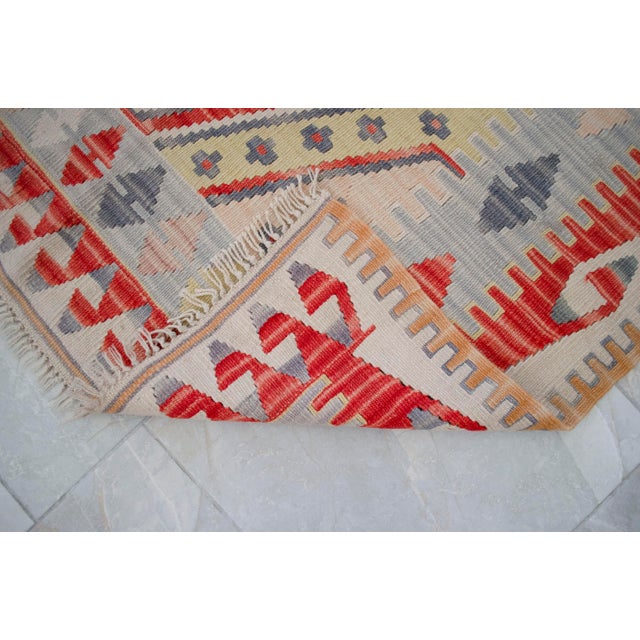
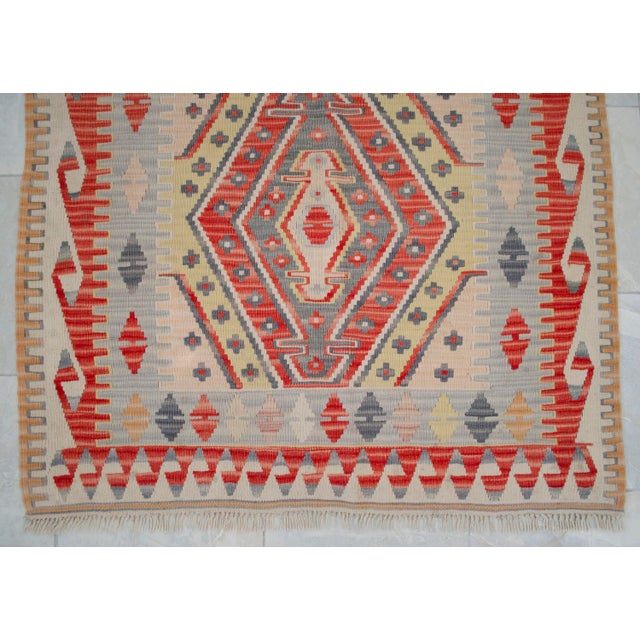
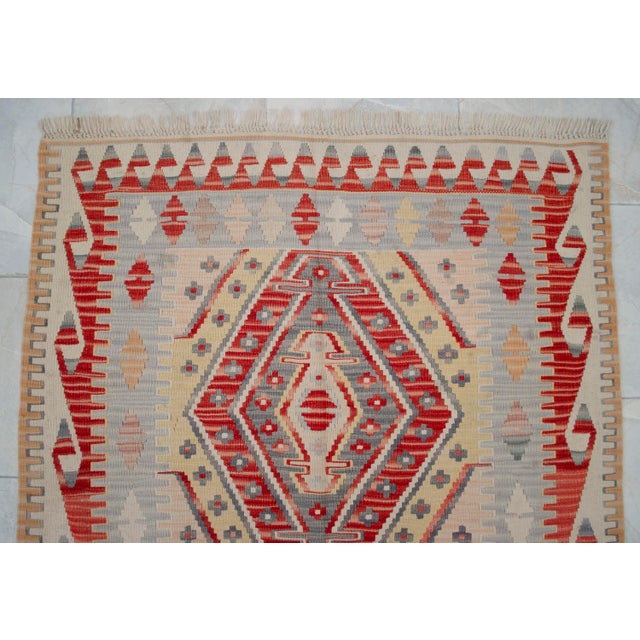
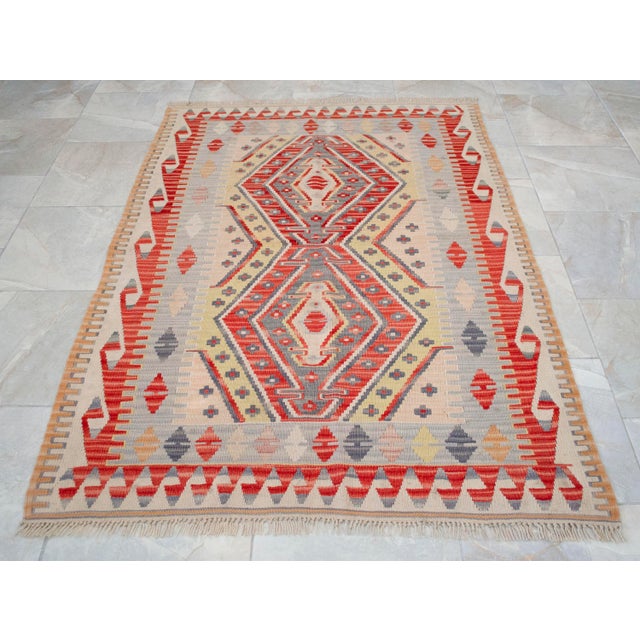
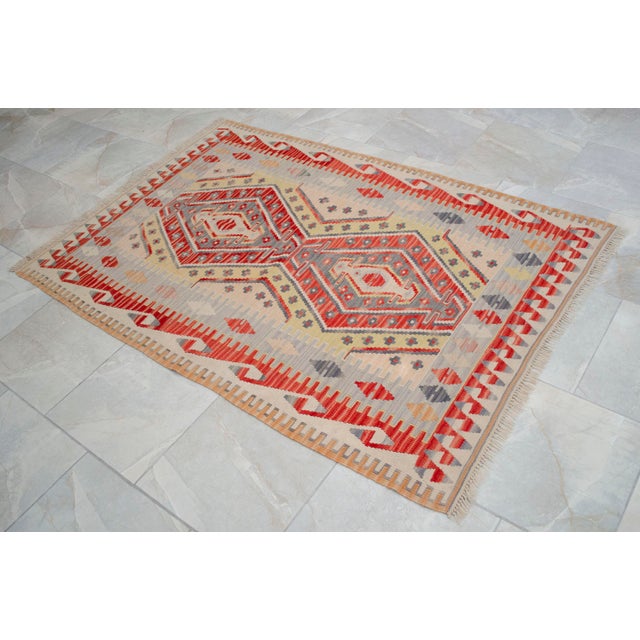
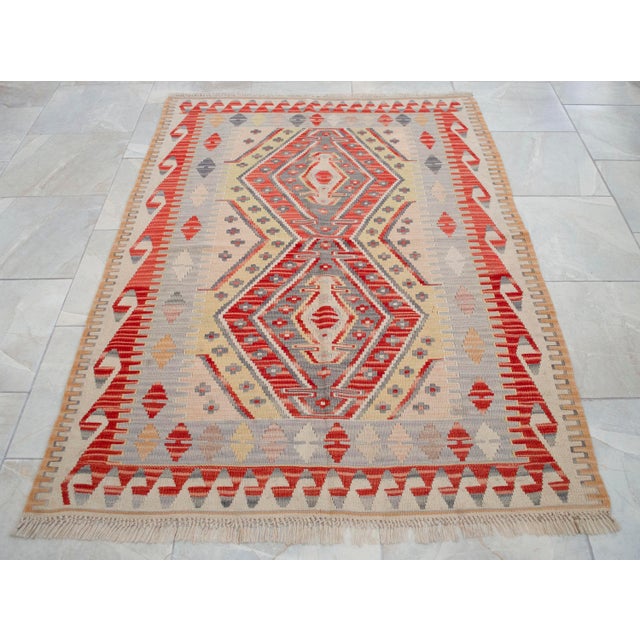
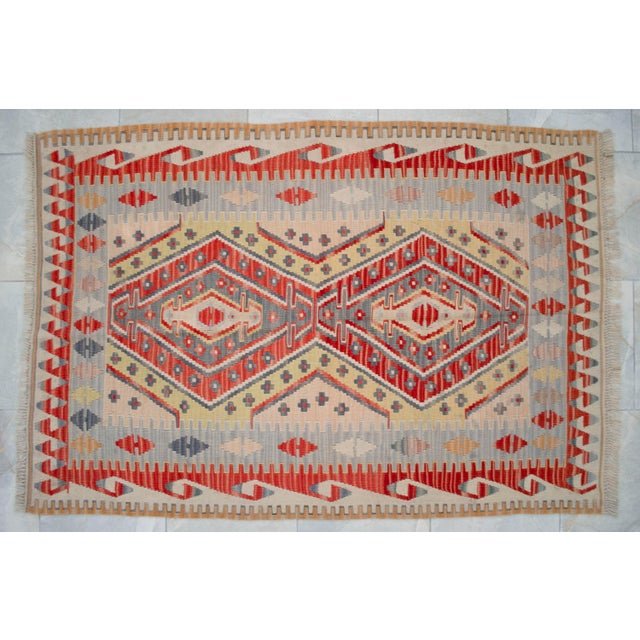
Handwoven in western Anatolia’s Oushak region during the 1970s, this vintage flat-weave kilim embodies the sophisticated yet rustic artistry of Anatolian village weavers. Its double-medallion geometry and rhythmic border sequencing lend balance and symmetry that work seamlessly in boho, farmhouse, and transitional interiors. Crafted entirely from wool and preserved in unused condition, it brings an authentic touch of heritage craftsmanship to contemporary living spaces.
This piece tells the story of a time when local artisans wove limited batches of fine kilims specifically for trade, using high-grade village wool and tightly calibrated looms. The result is a work of folk art that remains remarkably fresh, ready to anchor a curated interior as a collectible textile.
Technical Details:
Design Origin: Ege / Oushak region, Western Anatolia
Construction: Flat-weave kilim technique
Materials: Wool on wool
Dyeing Process: Vegetable dyes
Measurements: 3′11″ x 5′9″ (47 x 69 inches)
Weight: 6.6 lbs
Thickness: ~0.1 in / Flat
Finishing: Original fringes intact
Condition: Unused vintage, professionally cleaned, odorless, no repairs
Suggested Use: Living room, entryway, study, or under a coffee table
Care: Use rug pad; vacuum gently without beater bar; rotate seasonally
Motifs & Symbolism
The paired central medallions reflect the Anatolian duality of protection and unity—closely related to the Göbek or “belly” form symbolizing life’s origin. Repeated diamond shapes along the border stand for the “evil eye” motif, believed to guard against misfortune. These geometric patterns preserve the spiritual storytelling of Turkish nomadic design traditions.
Color Palette & Design Insight
Dusty coral — energizes neutral interiors
Misty sky gray — softens contrast and enhances light
Pale sand beige — balances warmth with neutrality
Golden wheat — adds a gentle glow to rustic settings
Faded lilac — introduces subtle depth and calm
These tones integrate beautifully into farmhouse, bohemian, or coastal-modern spaces, adding texture and visual rhythm while maintaining a soothing equilibrium.
Color Disclaimer & Photography:
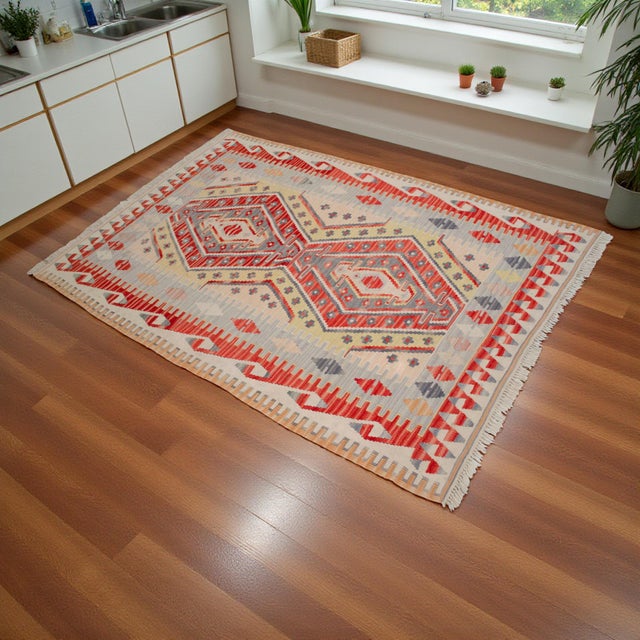
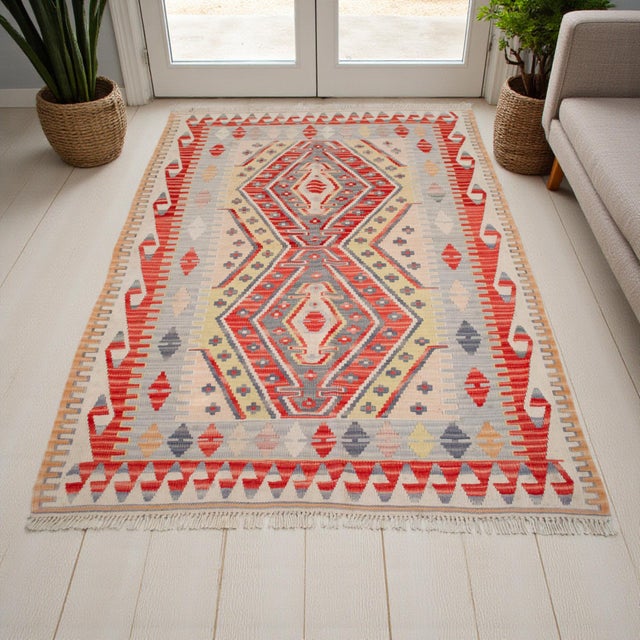
All images shown are real photographs of the actual rug you will receive, captured by us indoors under natural daylight conditions on a clean, hygienic floor in our physical showroom using a professional camera. We’ve done our very best to present the most accurate visuals possible. (Some interior or exterior lifestyle images you may see are AI-generated for styling purposes.) Please note that colors may vary from screen to screen, and therefore the tones you see on your device might appear slightly different from the rug’s true colors.
Shipping Information:
We ship all rugs via expedited, trackable carriers and take great care to package each item securely and carefully. Most shipments arrive in just a few days. However, customs clearance and courier delays are beyond our control, and we kindly ask for your patience should such situations occur.
Customs Notice :
U.S. Buyers – Relax and shop with confidence: All customs duties and import taxes for U.S. shipments are fully covered by us.
What Is a Turkish Rug?
Origins — Turkish rugs trace their roots to nomadic tribes who wove for practical warmth and spiritual symbolism. By the Ottoman era, weaving had evolved into an art practiced from rural tents to imperial palaces. Each region developed distinct palettes, motifs, and structural identities—Oushak being among the most admired for its luminous aesthetic and large-scale geometry.
Symbolism — Motifs such as the Elibelinde (hands-on-hips, symbolizing fertility and creativity), Koçboynuzu (ram’s horn for strength), and Hayat Ağacı (Tree of Life for eternity) turn every rug into a visual narrative of protection and blessing.
Weaving Technique — Turkish rugs are created entirely by hand on horizontal or vertical looms. Flat-woven kilims like this example are lightweight and reversible, made by interlocking weft threads without pile. They differ from knotted pile rugs yet hold the same artistic and cultural value.
Modern Relevance — Today, designers prize Turkish rugs for their timeless geometry and ability to harmonize with both traditional and contemporary interiors. Whether layered beneath a coffee table or used as a wall tapestry, each authentic kilim embodies centuries of Anatolian heritage—functional, beautiful, and enduringly collectible.
Search Terms:
turkish kilim, oushak kilim, vintage flat weave, handwoven rug, anatolian textile, farmhouse rug, boho decor, rustic rug, living room rug, entryway rug, coffee table rug, wool kilim, designer favorite, collectible rug, mid century decor, handmade rug, ethnic pattern rug, geometric rug, tribal design, artisan craft, anatolian rug, turkish flat weave, woven wool rug, heritage decor, folk art rug
See less
- Dimensions
- 3′11″ × 5′9″ and 0.1″ thick
- Rug Construction
- Flatweave
- Pattern
- Geometric
- Period
- 1970s
- Country of Origin
- Turkey
- Item Type
- Vintage, Antique or Pre-owned
- Materials
- Wool
- Condition
- Good Condition, Original Condition Unaltered, Some Imperfections
- Color
- Gray
- Condition Notes
- Unused vintage, professionally cleaned, odorless, no repairs Unused vintage, professionally cleaned, odorless, no repairs less
Questions about the item?
Returns & Cancellations
Return Policy - All sales are final 48 hours after delivery, unless otherwise specified in the description of the product.
Cancellation Policy - Prior to shipping or local pickup, buyers may cancel an order for up to 48 hours, unless otherwise specified.
Related Collections
- Seagrass Rugs
- Classical Greek Rugs
- Bamboo Fabric Rugs
- Cashmere Rugs
- Josef Albers Rugs
- Beaux-Arts Rugs
- Cream Moroccan Rugs
- Blue Moroccan Rugs
- White Moroccan Rugs
- Ivory Moroccan Rugs
- Rugs in Chicago
- Moroccan Rugs
- Scandinavian Rugs
- Persian Rugs
- Art Nouveau Rugs
- Rugs in New York
- Spanish Rugs
- Rugs in Dallas
- Early American Rugs
- Khotan Rugs
- Rugs in Los Angeles
- Rugs in Washington DC
- Chinese Rugs
- Rugs in San Francisco
- Karastan Rugs