





Details
Description
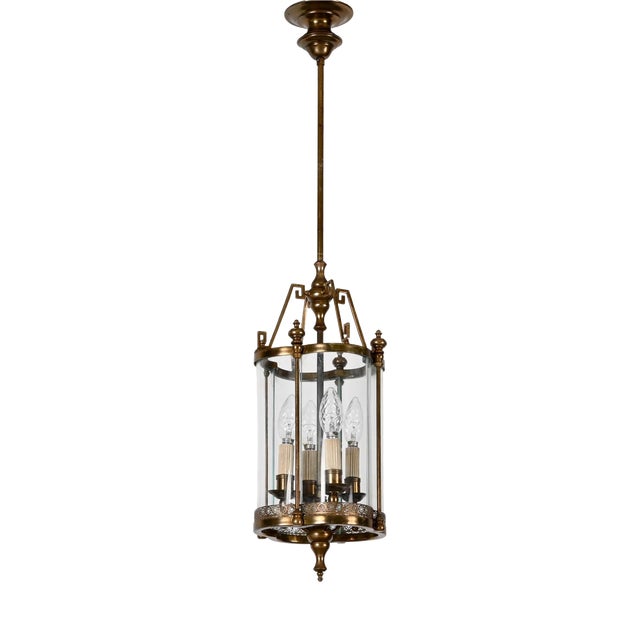
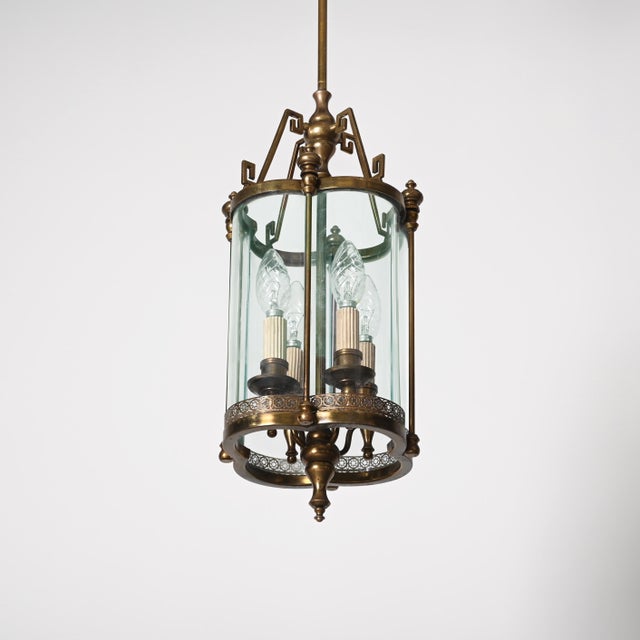
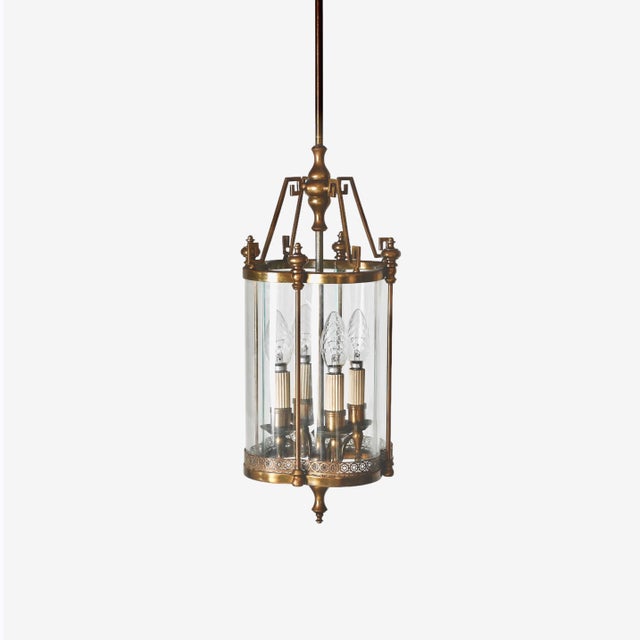
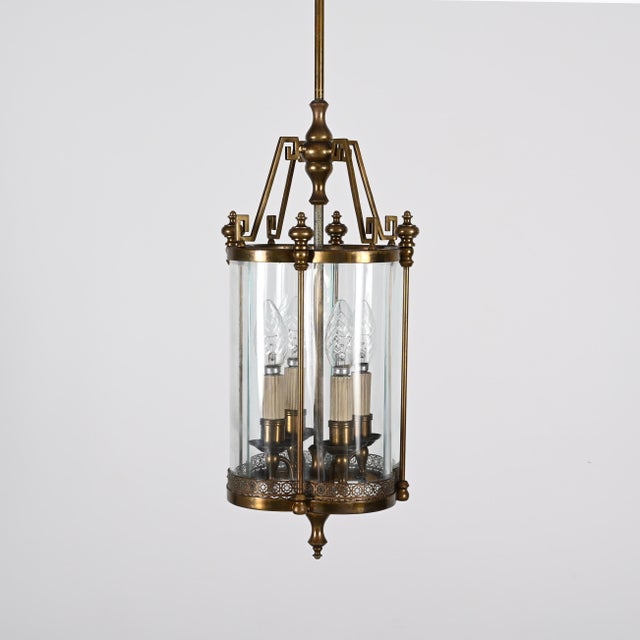
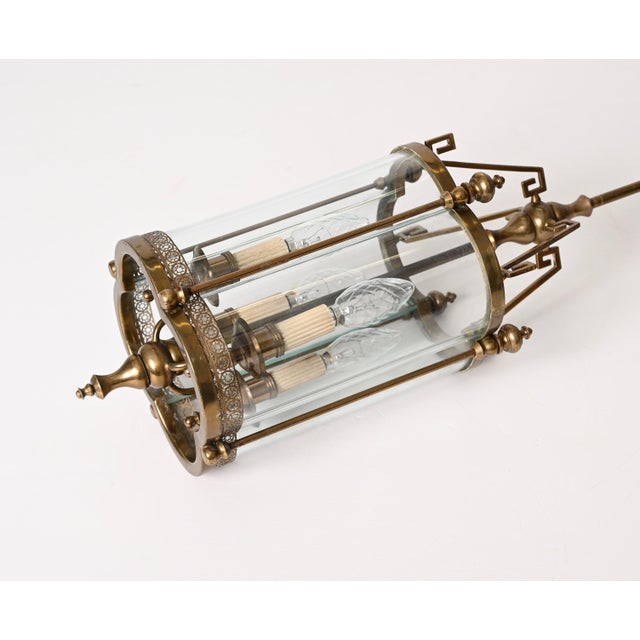
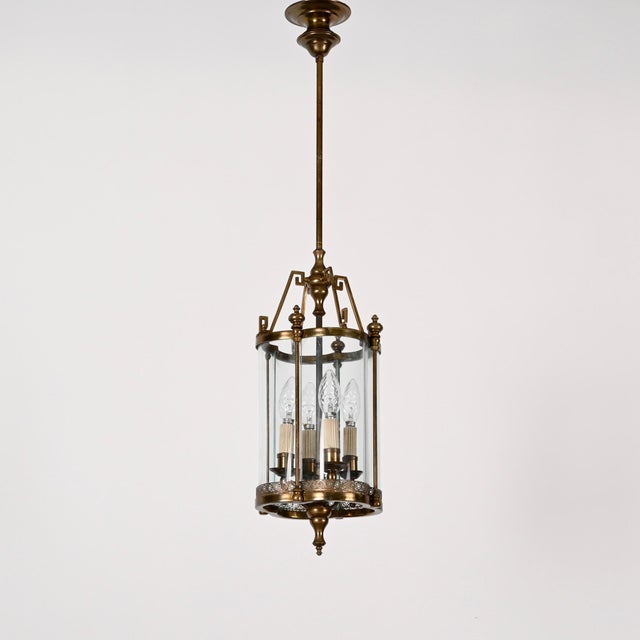
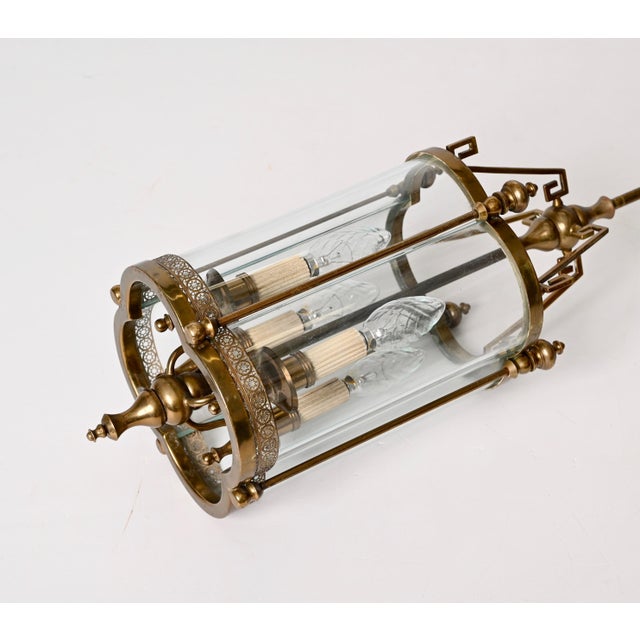
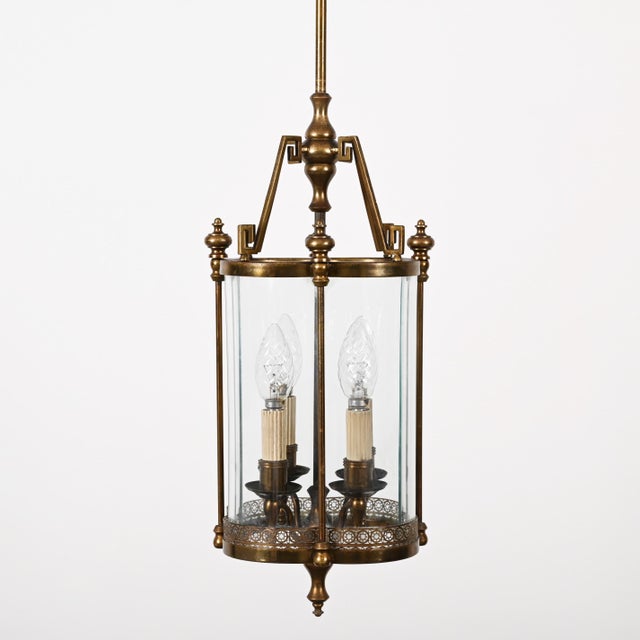
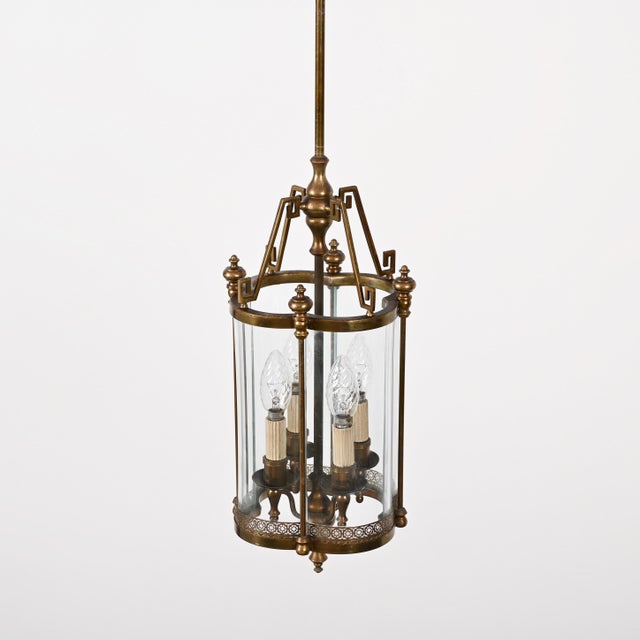
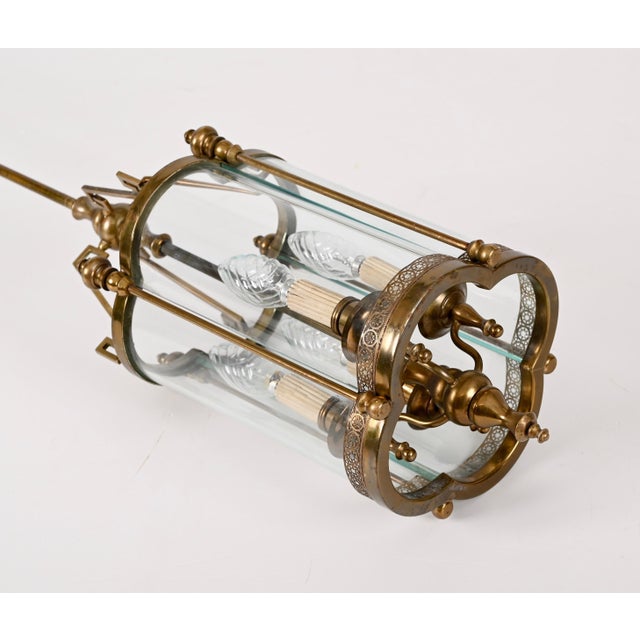
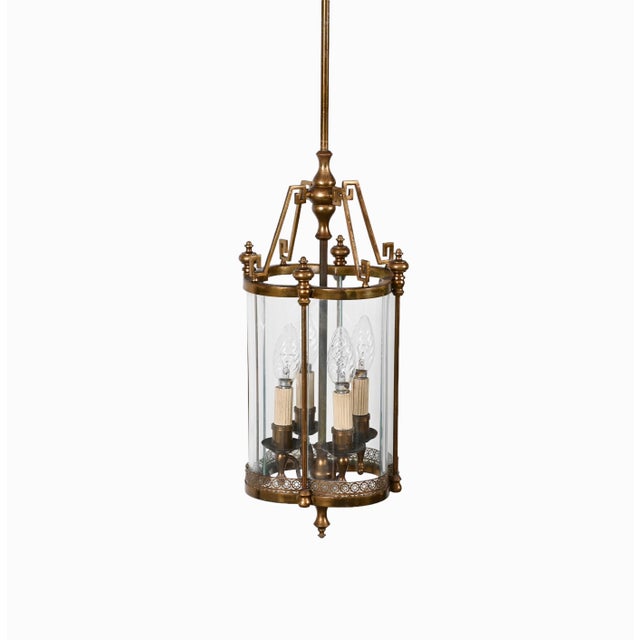
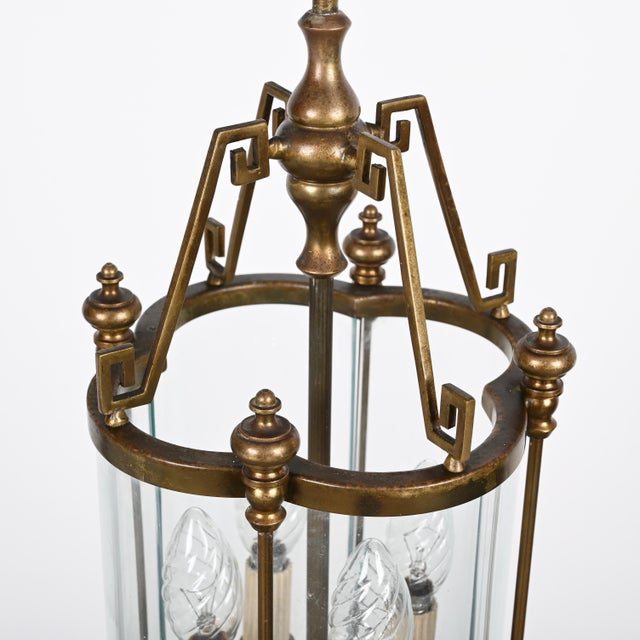
Superb brass and semicircular glass chandelier. This stunning pendant light was designed in Italy and inspired by the work of …
Read more
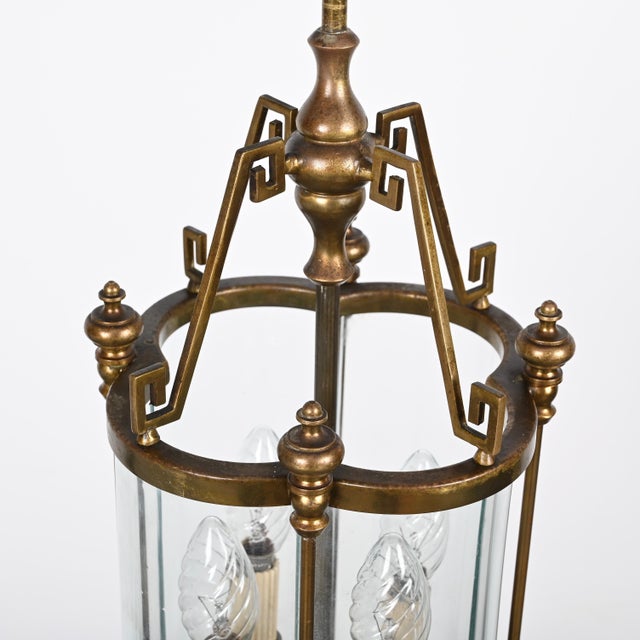
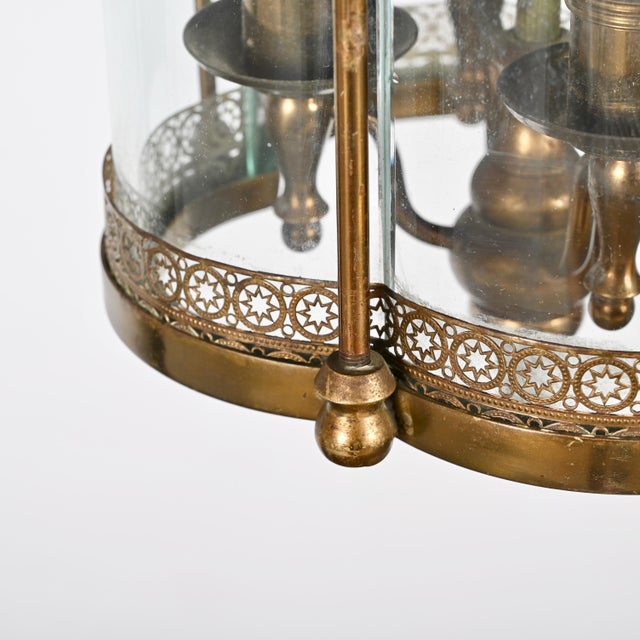
Superb brass and semicircular glass chandelier. This stunning pendant light was designed in Italy and inspired by the work of Adolf Loos in the 1950s. This piece is fantastic thanks to a gorgeous and pure structure that showcases four semi-rounded clear glasses in a brass frame. The item is in excellent condition with some signs of ageing and use, like a brass patina. It mounts four sockets for E14 bulbs. This chandelier is a masterpiece that will be the perfect element for a neoclassical entrance or an art deco living room. Measures (cms): Diameter - 21 Height - 45 Total height - 122 Adolf Loos (December 10, 1870–August 23, 1933) was a European architect who became more famous for his ideas and writings than for his buildings. He believed that reason should determine the way we build, and he opposed the decorative Art Nouveau movement, or, as it was known in Europe, Jugendstil. His notions about design influenced 20th-century modern architecture and its variations. Loos-designed homes featured straight lines, clear and uncomplicated walls and windows, and clean curves. His architecture became physical manifestations of his theories, especially raumplan ("plan of volumes"), a system of contiguous, merging spaces. He designed exteriors without ornamentation, but his interiors were rich in functionality and volume. Each room might be on a different level, with floors and ceilings set at different heights. Loos architecture was in stark contrast with the architecture of his Austrian contemporary Otto Wagner. Representative buildings designed by Loos include many houses in Vienna, Austria—notably the Steiner House, (1910), Haus Strasser (1918), Horner House (1921), Rufer House (1922), and the Moller House (1928). However, Villa Müller (1930) in Prague, Czechoslovakia, is one of his most studied designs because of its seemingly simple exterior and complex interior. Other designs outside Vienna include a house in Paris, France, for the Dada artist Tristan Tzara (1926) and the Khuner Villa (1929) in Kreuzberg, Austria. Loos was one of the first modern architects to use mirrors to expand interior spaces. The interior entry to the 1910 Goldman & Salatsch Building, often called the Looshaus, is made into a surreal, endless foyer with two opposing mirrors. The construction of Looshaus created quite a scandal for pushing Vienna into modernity.
Up to 250V (Europe/UK Standard).The wiring of this item may be original and might need replacement, if not specified otherwise.
See less
- Dimensions
- 8.27ʺW × 8.27ʺD × 48.03ʺL
- Styles
- Mid-Century Modern
- Period
- 1950s
- Item Type
- Vintage, Antique or Pre-owned
- Materials
- Brass
- Glass
- Condition
- Good Condition, Unknown, Some Imperfections
- Color
- Gold
- Condition Notes
- Very Good — This vintage item has no defects, but it may show slight traces of use. Very Good — This vintage item has no defects, but it may show slight traces of use. less
Returns & Cancellations
Return Policy - All sales are final 48 hours after delivery, unless otherwise specified in the description of the product.
Cancellation Policy - Prior to shipping or local pickup, buyers may cancel an order for up to 48 hours, unless otherwise specified.
Related Collections
- Dale Chihuly Pendant Lighting
- Josef Frank Pendant Lighting
- Fritz Hansen Pendant Lighting
- Seagrass Pendant Lighting
- Louis Kalff Pendant Lighting
- Borosilicate Glass Pendant Lighting
- Louis Majorelle Pendant Lighting
- Daum Pendant Lighting
- Gallery L7 Pendant Lighting
- Emile Galle Pendant Lighting
- Burgundy Pendant Lighting
- Avocado Pendant Lighting
- Paper Mache Pendant Lighting
- Behr Pendant Lighting
- Mauri Almari Pendant Lighting
- Moooi Pendant Lighting
- Polished Stainless Steel Finish Pendant Lighting
- Abaca Pendant Lighting
- 1970s Hanging Lamps
- Art Nouveau Pendant Lighting
- Ceramic Pendant Lighting
- Art Deco Pendant Lighting
- Alabaster Pendant Lighting
- Mid-Century Modern Pendant Lighting
- Brutalist Pendant Lighting