

Details
Description
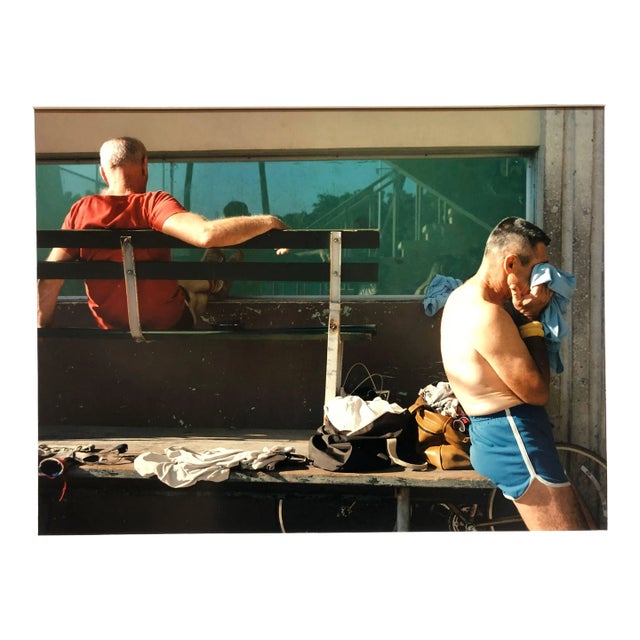
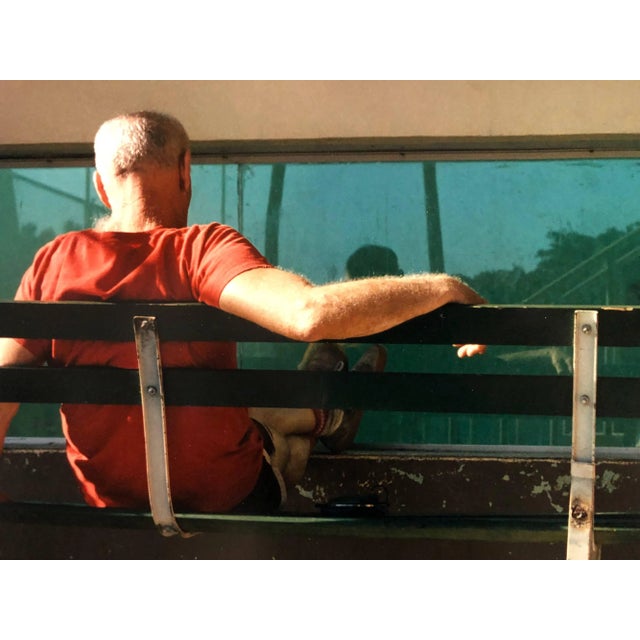
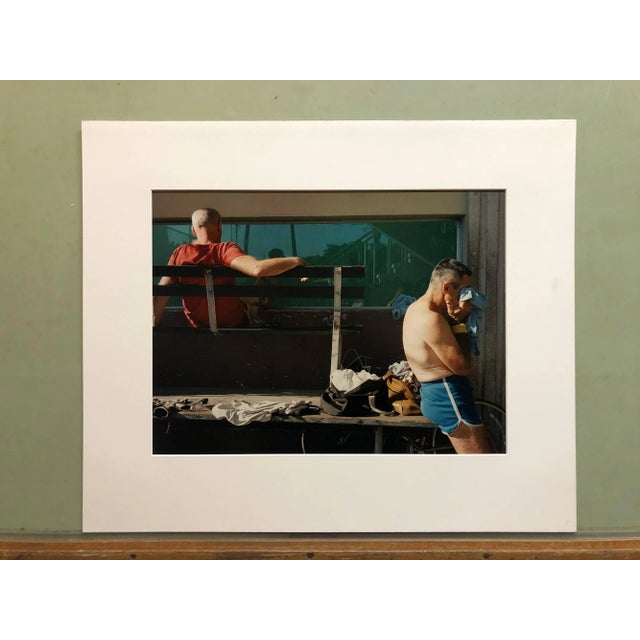
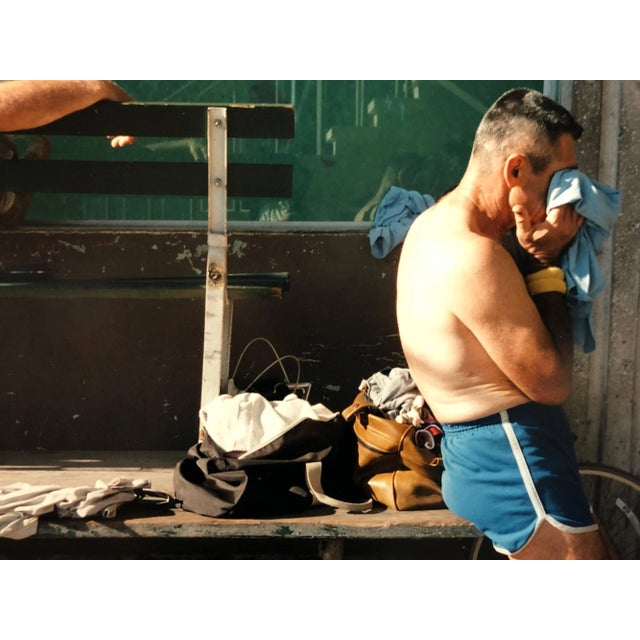
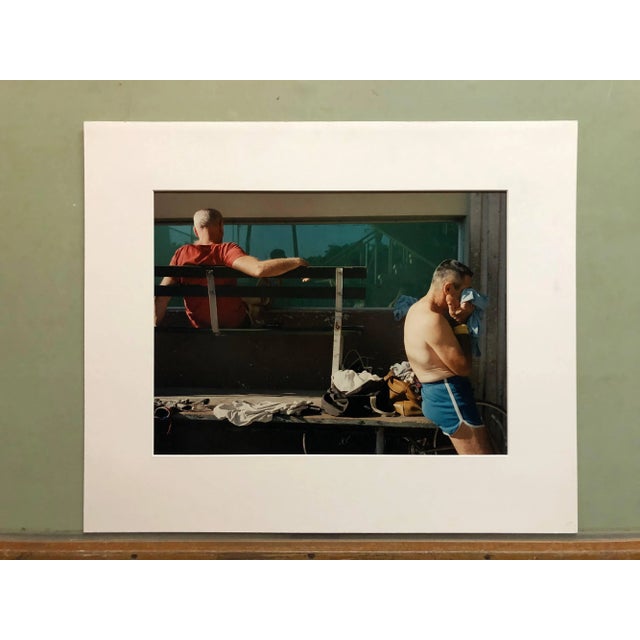
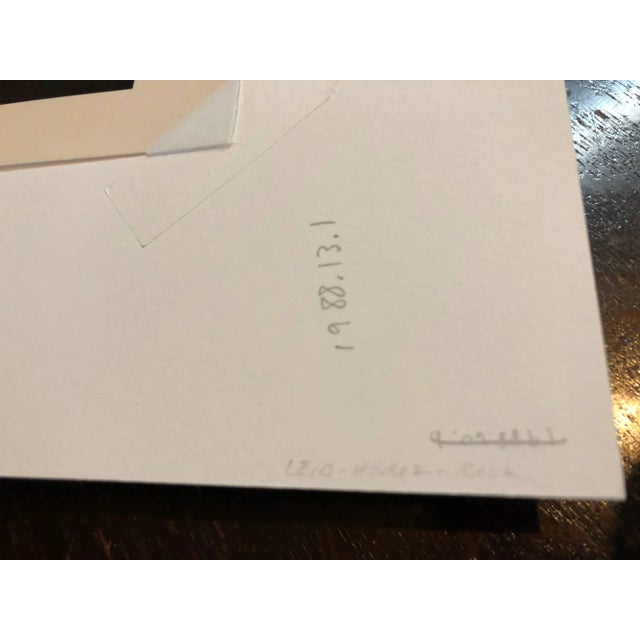
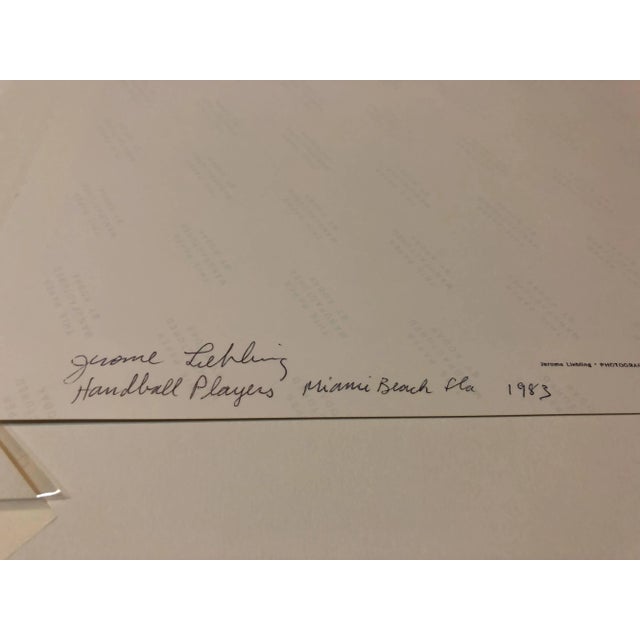
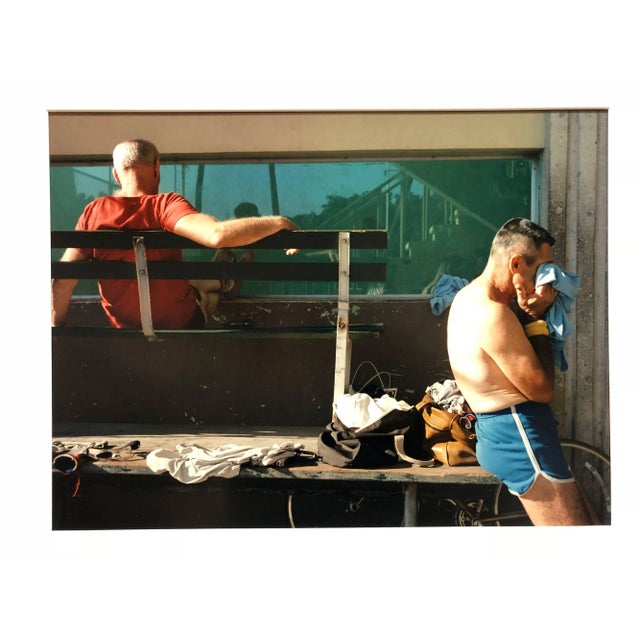
Jerome Liebling (1924-2011) New York, color photograph. Handball Players Miami Beach Florida 1983. Signed on verso. Measures 16" x 20" …
Read more
Jerome Liebling (1924-2011) New York, color photograph. Handball Players Miami Beach Florida 1983. Signed on verso. Measures 16" x 20" Unframed. Deaccessioned from Bass Museum of Art, Miami Beach. Old South Beach.
Jerome Liebling (1924-2011) was born in Harlem and grew up poor in Bensonhurst, Brooklyn. A first-generation son of Jewish immigrants from Europe. In 1942, Liebling quit his first semester at Brooklyn College to enlist in World War II. Liebling returned to Brooklyn College in 1946 to study art under the G.I. Bill. Ad Reinhardt taught a Bauhaus-influenced design classes honed his formal sensibility; documentary photographer Walter Rosenblum opened his eyes to the power of the photographic image.
In 1947, Liebling joined the Photo League, a socially minded collective of photographers, Paul Strand, W. Eugene Smith, Lisette Model and Aaron Siskind, who took to the streets of NYC to focus their lens on hidden corners of urban life in the city. For Liebling, children surviving the rough-and-tumble city streets became a symbol of fortitude. “Their faces could inform all that they felt, from grace, to reflective questioning, to supreme prescience,” he said. “Sometimes there was a hint of defeat, but more often there was improvisation and brilliance.” One Easter morning in Harlem, Liebling encountered a young child dressed in his Sunday best: broken shoe-laces, tattered trousers, a threadbare tweed coat and cap. Hands buried in his pockets, the boy spread his coat open wide, and the click of Liebling’s shutter transformed him into Butterfly Boy. This image of a winged superhero who could soar away from his impoverished world has become a beloved icon, appearing on public posters and billboards in New York, Paris, Amsterdam, Japan and elsewhere. In 1948, he studied motion-picture production at New School for Social Research and worked as a documentary filmmaker. While a professor of film and photography at the University of Minnesota, Liebling began a longtime collaborative relationship with filmmaker Allen Downs; together they produced several award-winning documentaries, including Pow Wow, The Tree Is Dead, and The Old Men. A master of color photography of the 1970s and 80s similat to Ernst Haas and Joel Meyerowitz.
In the late 1970s, Liebling rediscovered the long-lost Brooklyn of his childhood in the oceanside neighborhood known as “Little Odessa” in Brighton Beach. He spent three decades photographing there in brilliant chromogenic color as the old wave of Jewish denizens gave way to the new wave of Russian immigrants. He was rarely caught without his twin-lens Rolleiflex camera, and produced a distinguished six-decade body of work, now held in the permanent collections of many world-renowned museums such as the Museum of Modern Art, the Metropolitan Museum of Art, The Smithsonian American Art Museum, The Boston Museum of Fine Arts, the Fogg Museum in Cambridge, Massachusetts, the Corcoran Gallery of Art in Washington, D.C., The Jewish Museum in New York, and the National Gallery of Canada in Ottawa. and The J. Paul Getty Museum, among many others. Liebling received numerous awards and grants, including two Guggenheim Fellowships, a National Endowment for the Arts Photographic Survey Grant, and a fellowship from the Massachusetts Council on the Arts.
See less
Questions about the item?
Returns & Cancellations
Return Policy - All sales are final 48 hours after delivery, unless otherwise specified in the description of the product.
Cancellation Policy - Prior to shipping or local pickup, buyers may cancel an order for up to 48 hours, unless otherwise specified.