

Details
Description
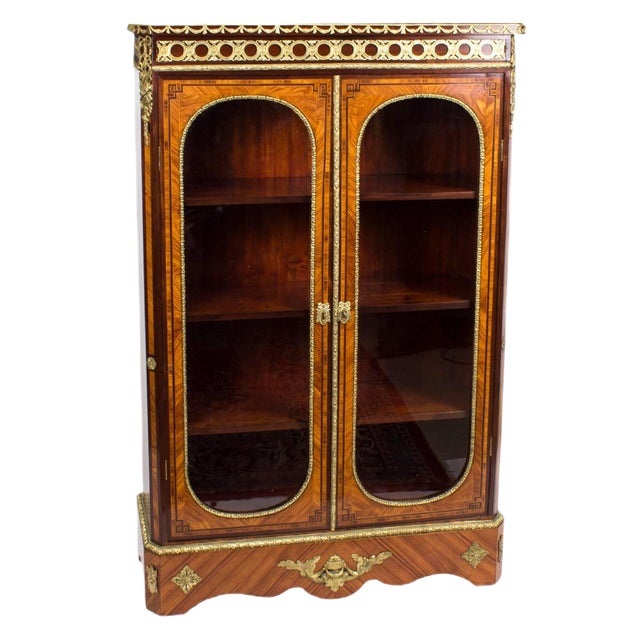
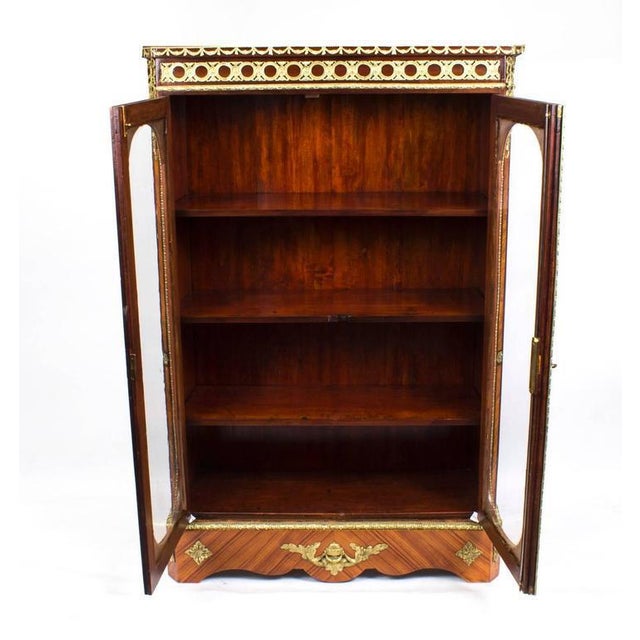
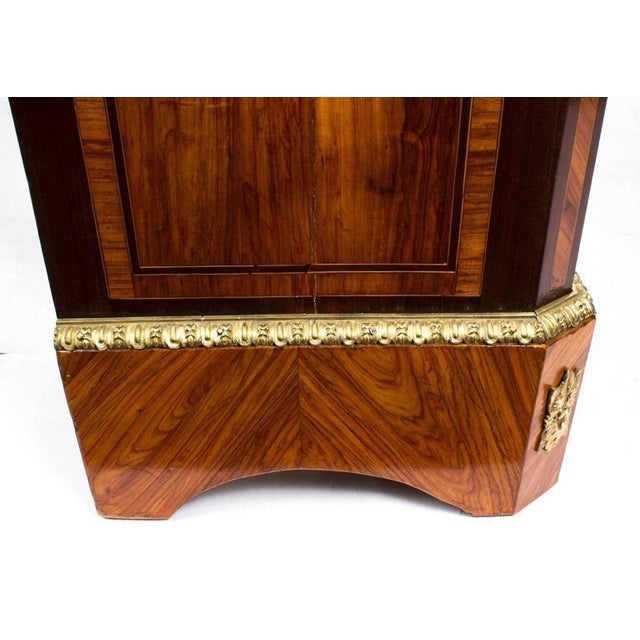
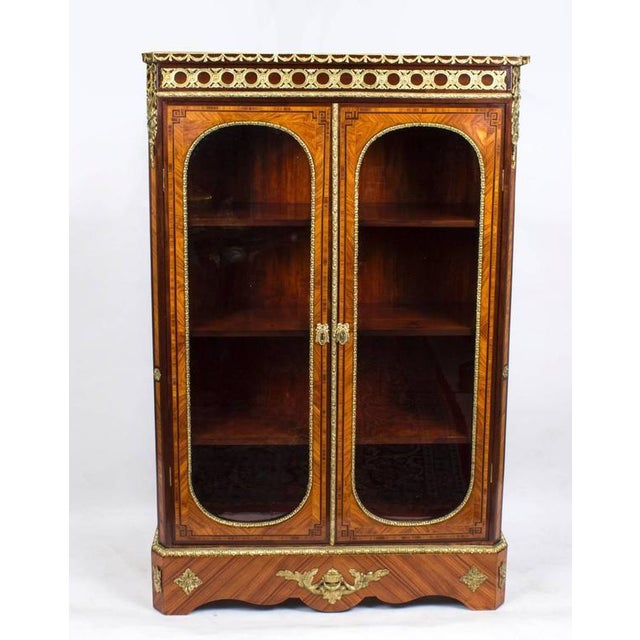
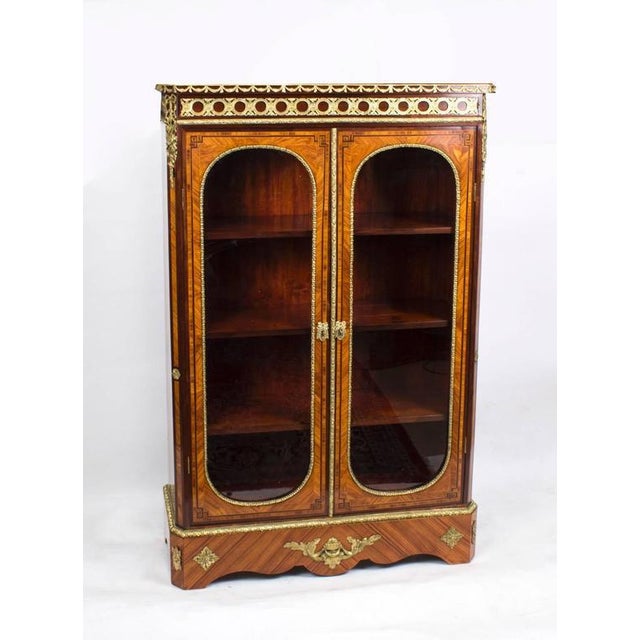
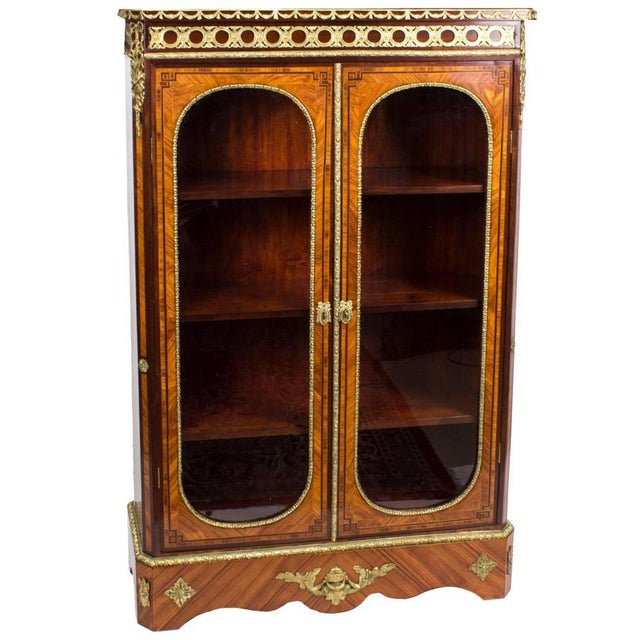
This is a beautiful Victorian burr walnut and tulipwood double door low display cabinet, circa 1860 in date. It has … Read more This is a beautiful Victorian burr walnut and tulipwood double door low display cabinet, circa 1860 in date. It has been accomplished in the very best quality burr walnut with fabulous crossbanded decoration and elegant ormolu mounts. The pair of glazed doors encloses three shelves and the cabinet is raised on an elegant shaped base. With working lock and key. This stunning antique Victorian cabinet is a true rarity because of its fabulous quality. Condition: In excellent condition having been beautifully restored in our workshops, please see photos for confirmation. Dimensions in cm: Height 148 x width 97 x depth 39. Dimensions in inches: Height 4 feet, 10 inches x width 3 feet, 2 inches x depth 1 foot, 3 inches. Tulipwood. Brazilian tulipwood is a classic high-quality wood, it is very dense with a lovely figure. It is used for inlays in furniture and for small turned items. Available only in small sizes, it is rarely used in the solid for luxury furniture. Like other woods with a pronounced figure it is rather strongly subject to fashion. Burr walnut refers to the swirling figure present in nearly all walnut when cut and polished, and especially in the wood taken from the base of the tree where it joins the roots. However the true burr is a rare growth on the tree where hundreds of tiny branches have started to grow. Burr walnut produce some of the most complex and beautiful figuring you can find. Ormolu (from French 'or moulu', signifying ground or pounded gold) is an 18th century English term for applying finely ground, high-carat gold in a mercury amalgam to an object of bronze. The mercury is driven off in a kiln leaving behind a gold-colored veneer known as 'gilt bronze'. The manufacture of true ormolu employs a process known as mercury-gilding or fire-gilding, in which a solution of nitrate of mercury is applied to a piece of copper, brass, or bronze, followed by the application of an amalgam of gold and mercury. The item was then exposed to extreme heat until the mercury burned off and the gold remained, adhered to the metal object. No true ormolu was produced in France after, circa 1830 because legislation had outlawed the use of mercury. Therefore, other techniques were used instead but nothing surpasses the original mercury-firing ormolu method for sheer beauty and richness of color. Electroplating is the most common modern technique. Ormolu techniques are essentially the same as those used on silver, to produce silver-gilt (also known as vermeil). See less
- Dimensions
- 38.19ʺW × 15.35ʺD × 58.27ʺH
- Item Type
- Vintage, Antique or Pre-owned
- Materials
- Walnut
- Condition
- Original Condition Unaltered, Some Imperfections
- Color
- Brown
Returns & Cancellations
Return Policy - All sales are final 48 hours after delivery, unless otherwise specified in the description of the product.
Cancellation Policy - Prior to shipping or local pickup, buyers may cancel an order for up to 48 hours, unless otherwise specified.
Related Collections
- Keller Furniture China and Display Cabinets
- Space Age China and Display Cabinets
- Weiman China and Display Cabinets
- Grosfeld House China and Display Cabinets
- Antique Hutch Cabinets
- Display Cabinets with Glass Doors
- Drexel Heritage China and Display Cabinets
- Victorian China and Display Cabinets
- Ethan Allen China and Display Cabinets
- Thomasville China and Display Cabinets
- Henredon China and Display Cabinets
- Corner Display Cabinets
- Glass Curio Display Cabinets
- Century Furniture China and Display Cabinets
- Drexel China and Display Cabinets
- Broyhill China and Display Cabinets
- Mid-Century Modern China and Display Cabinets
- Baker Furniture Company China and Display Cabinets
- Art Deco China and Display Cabinets
- Chippendale China and Display Cabinets
- Henkel Harris China and Display Cabinets
- Traditional China and Display Cabinets
- Oak China and Display Cabinets
- Curio Display Cabinets
- American of Martinsville China and Display Cabinets