

Starting at 20% Off
Sale Ends November 23rd, 2026 - Shop Now
Details
Description
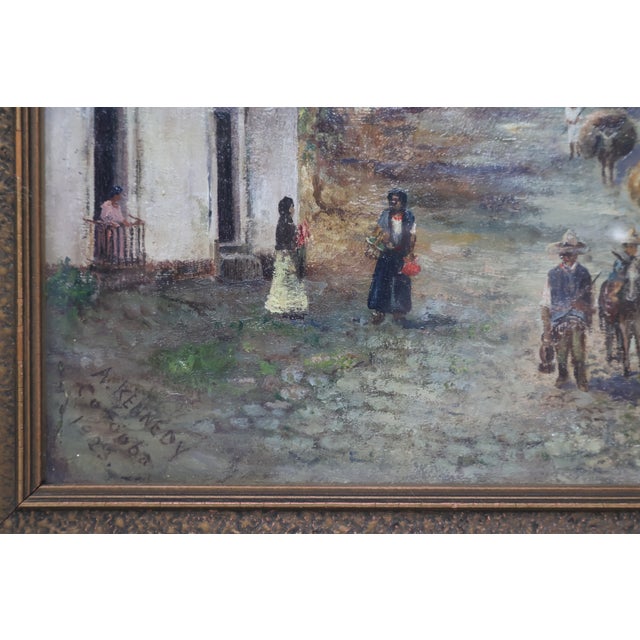
An evocative original oil on canvas painting signed A. Kennedy and dated 1923, depicting a historic street scene in Córdoba, …
Read more
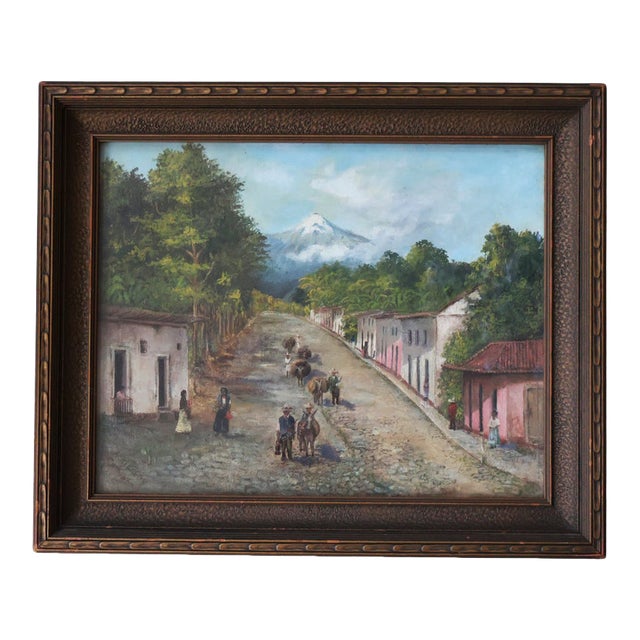
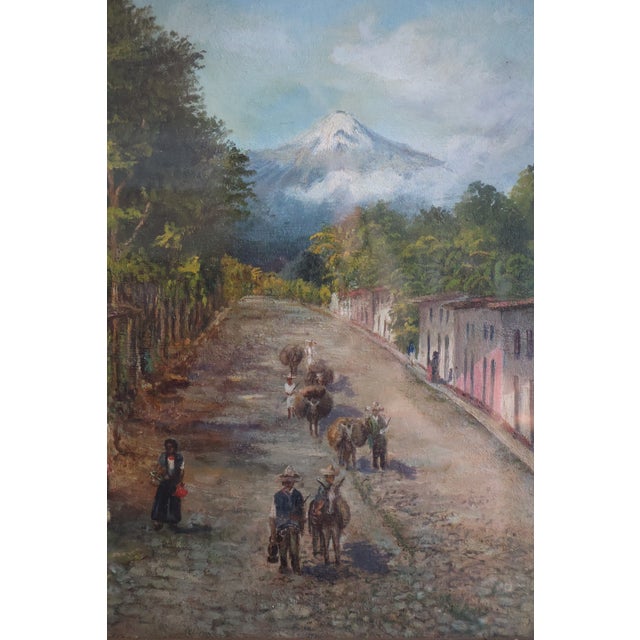
An evocative original oil on canvas painting signed A. Kennedy and dated 1923, depicting a historic street scene in Córdoba, Veracruz, Mexico, beneath the magnificent snowcapped Pico de Orizaba.
Distinguished by its atmospheric landscape, carefully observed architectural details, animated street life, and richly layered color, this compelling early-twentieth-century work captures the intersection of everyday Mexican town life and the extraordinary volcanic landscape of the Veracruz highlands.
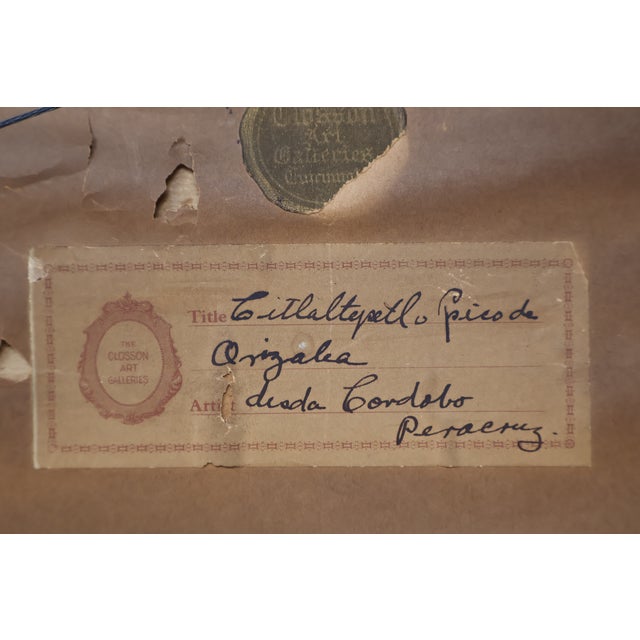
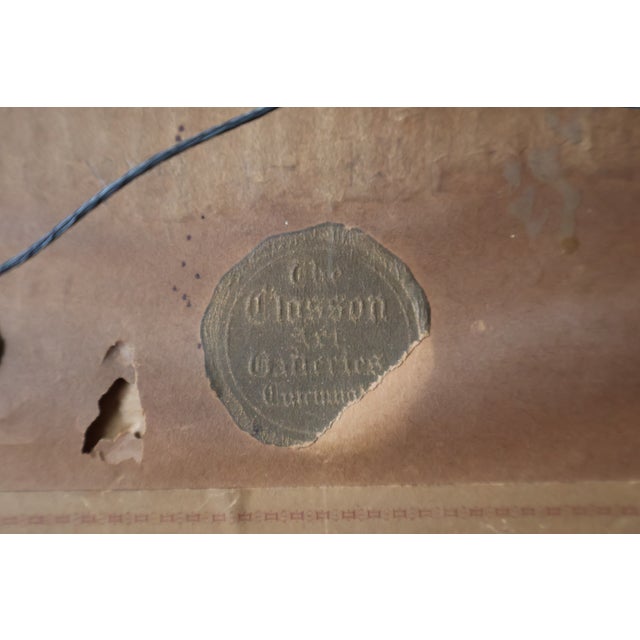
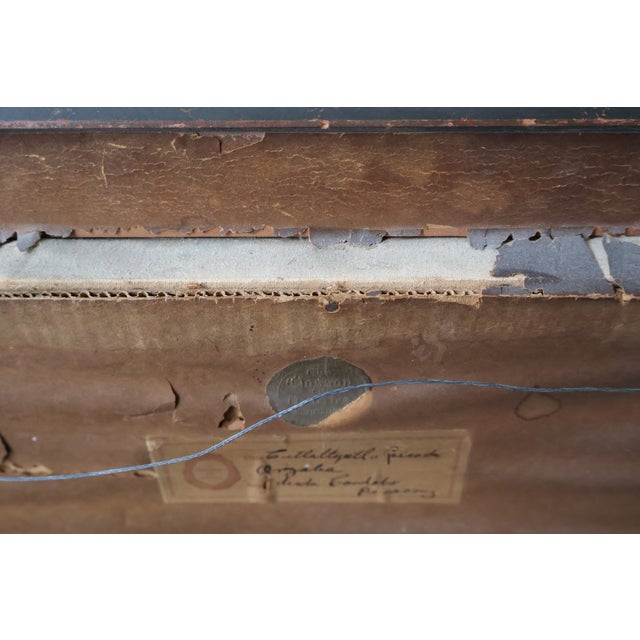
The painting retains a historic identification label from The Closson Art Galleries of Cincinnati, Ohio, bearing a handwritten Spanish description of the mountain and its location. Preserved within an ornate antique gold- and bronze-toned frame, the work offers an engaging combination of historical subject matter, original artistic expression, and surviving gallery documentation.
Córdoba, Veracruz — A Historic Mexican Streetscape
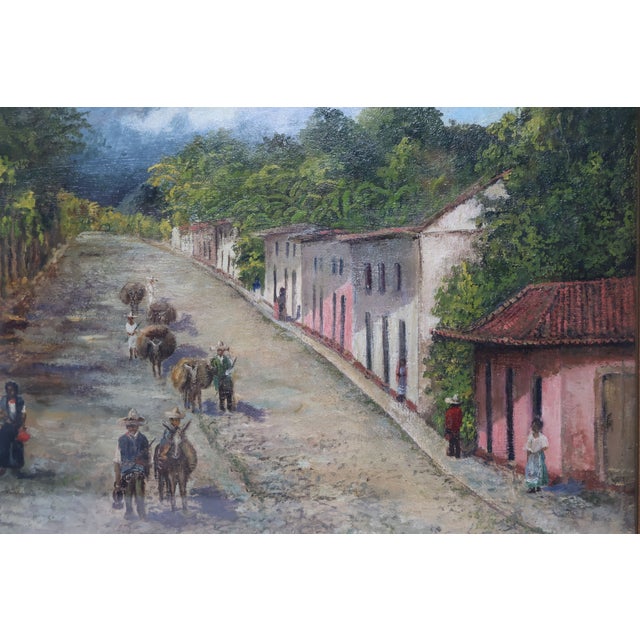
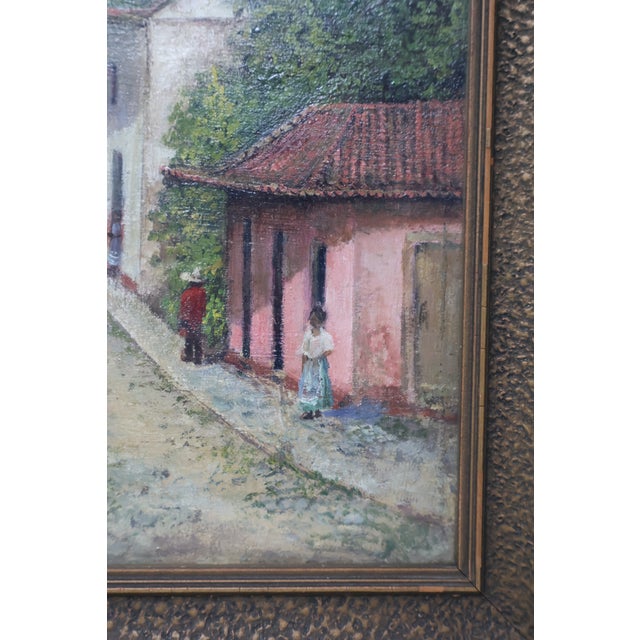
The composition unfolds along a gently ascending cobblestone road bordered by traditional whitewashed buildings, shaded doorways, and richly colored architectural façades.
A particularly charming rose-pink building with a traditional red clay-tile roof anchors the right side of the scene, its warm terracotta tones contrasting with neighboring ivory-colored structures and lush tropical vegetation.
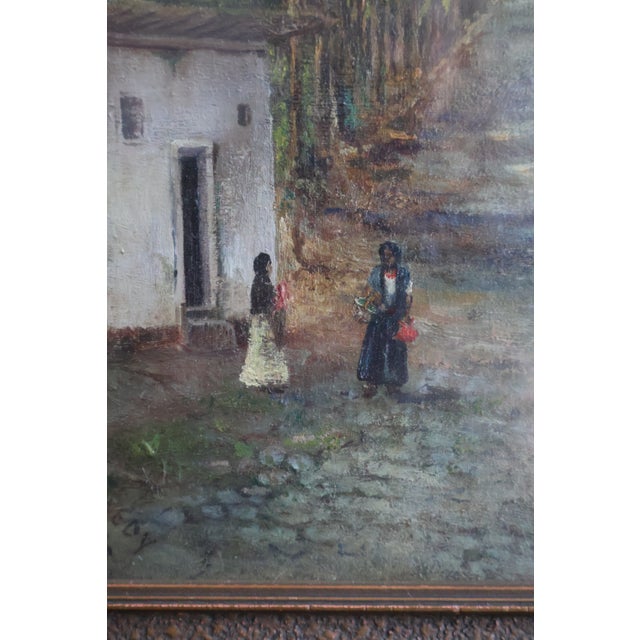
Small figures gather near the buildings and along the road, their brightly colored clothing and subtle gestures introducing a sense of everyday life.
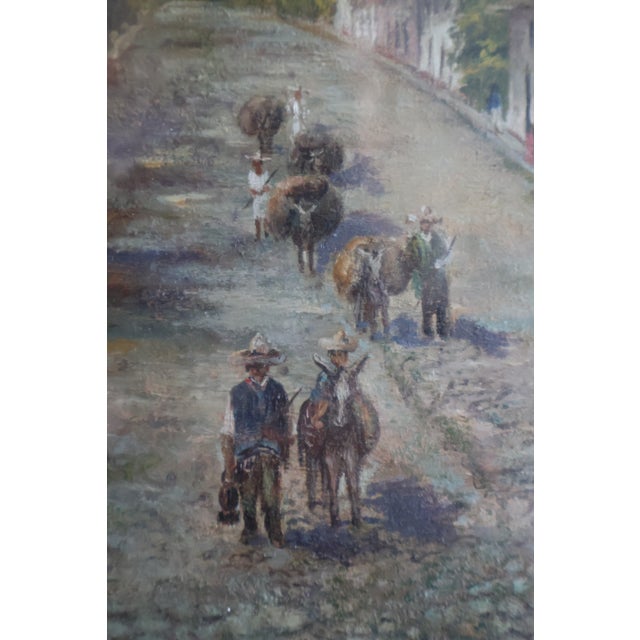
In the foreground, a traditionally dressed traveler wearing a broad-brimmed hat walks beside a donkey or mule, while additional figures guide heavily laden pack animals farther uphill.
The procession creates a compelling narrative of traditional transportation and local commerce, evoking the movement of people and goods through a Mexican community during the early twentieth century.
Through carefully developed perspective, the figures and animals diminish in scale as the road rises toward the distant countryside, drawing the viewer's eye naturally into the landscape.
Pico de Orizaba — Citlaltépetl
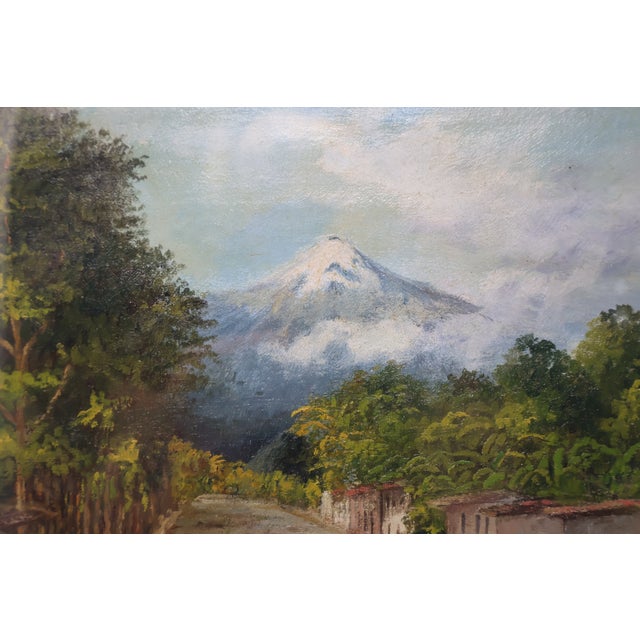
Dominating the distant landscape is the magnificent snow-capped Pico de Orizaba, also known by its Nahuatl name, Citlaltépetl.
Situated along the border of Veracruz and Puebla, Pico de Orizaba is Mexico's highest mountain and one of the country's most recognizable natural landmarks.
The artist renders its towering summit in luminous ivory, pale lavender, and cool blue-gray tones, with soft clouds drifting across the mountain's lower slopes.
The contrast between the cool volcanic landscape and the warmly colored village below creates a striking sense of atmospheric depth.
Dense trees and tropical foliage frame the scene, with layered moss, olive, forest-green, and golden-yellow tones guiding the eye toward the distant summit.
The mountain provides both a dramatic geographical landmark and an elegant visual counterpoint to the intimate street scene.
Painterly Detail & Artistic Composition
The work combines representational landscape painting with expressive, impressionistic brushwork.
The architecture is carefully articulated through layered ochre, ivory, terracotta, and muted rose tones, while the irregular cobblestone road is rendered through short, textured strokes that suggest worn stones, earth, and shifting light.
Small figures and pack animals introduce movement and human interest throughout the composition.
The artist uses more defined details in the foreground and progressively softer handling in the distance, creating a convincing sense of perspective and atmosphere.
The sky and snowcapped mountain are painted with delicate transitions of color, contrasting beautifully with the richly textured vegetation and sun-warmed buildings below.
The resulting composition offers both the intimacy of a historic town portrait and the grandeur of an expansive volcanic landscape.
A Painting From Post-Revolutionary Mexico
The painting is dated 1923, placing it within a significant period of cultural change and artistic development following the Mexican Revolution.
During the early 1920s, Mexico experienced renewed interest in national identity, regional traditions, historical subjects, and scenes of everyday life.
Under Education Minister José Vasconcelos, the post-revolutionary government supported an ambitious program of public art that helped establish the Mexican muralist movement.
Although no direct association between A. Kennedy and this government-sponsored initiative has been documented, the painting belongs chronologically to this culturally significant period.
Its portrayal of traditional architecture, local commerce, townspeople, and the landscape of Veracruz offers an engaging visual connection to the atmosphere of Mexico during the early twentieth century.
Artist — A. Kennedy
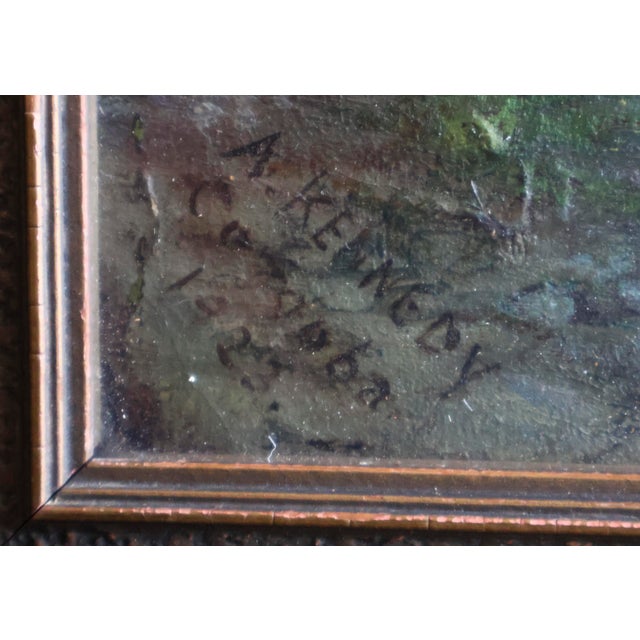
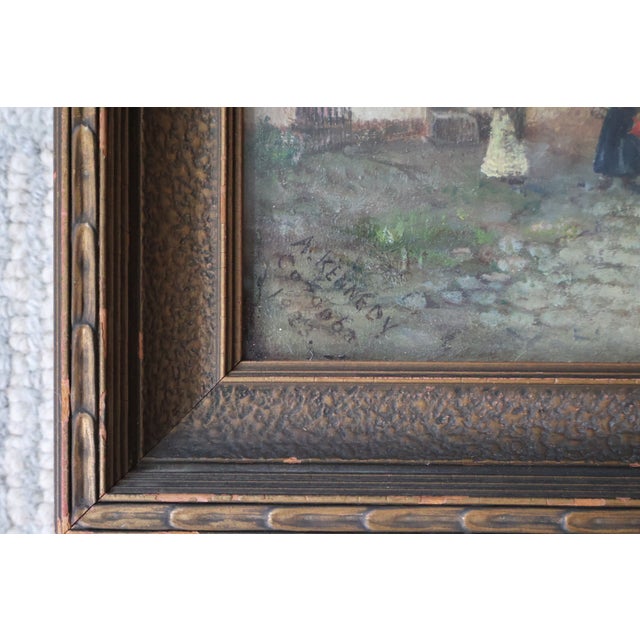
The original estate catalog identifies the work as an original oil on canvas signed A. Kennedy and dated 1923.
A handwritten inscription near the lower-left corner of the painting appears consistent with the cataloged artist identification and date.
The artist's full identity, nationality, and biographical history have not yet been independently established.
The painting's compelling subject, historical date, painterly detail, and surviving gallery documentation provide a meaningful foundation for its identification and appreciation.
Historic Provenance — The Closson Art Galleries, Cincinnati
Of particular historical interest is the surviving printed identification label from The Closson Art Galleries of Cincinnati, Ohio, an established American fine-art dealership active during the late nineteenth and early twentieth centuries.
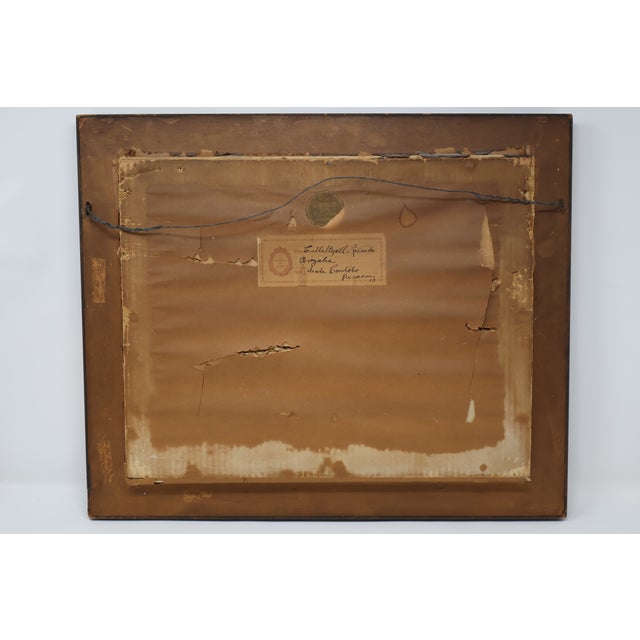
The label retains the handwritten Spanish title:
Citlaltépetl, Pico de Orizaba, desde Córdoba, Veracruz.
Translated, the inscription identifies the subject as Pico de Orizaba, or Citlaltépetl, viewed from Córdoba, Veracruz, Mexico.
This historical label provides direct documentation of the painting's geographic subject, complementing the estate catalog's identification of the original oil painting, artist, and 1923 date.
The Closson business occupied an important place in Cincinnati's historic art market, with its professional activities and correspondence represented in American art-history and archival collections.
A separate aged circular seal also survives on the reverse, adding another distinctive element to the painting's historical presentation. Its inscription has not been fully deciphered.
The surviving gallery label establishes an association with The Closson Art Galleries, although the precise date and circumstances of the gallery's handling of the painting have not been established.
Together, the artist inscription, historical gallery identification, and original estate documentation create a compelling documentary record for this early-twentieth-century Mexican landscape.
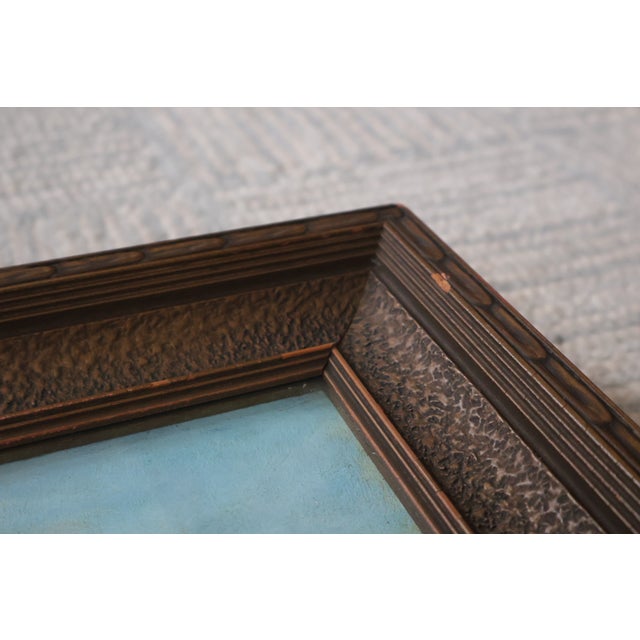
Ornate Antique Gold & Bronze Frame
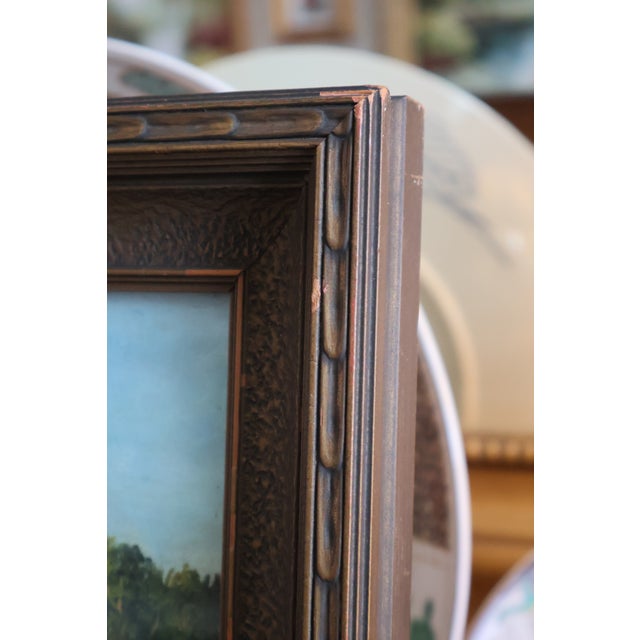
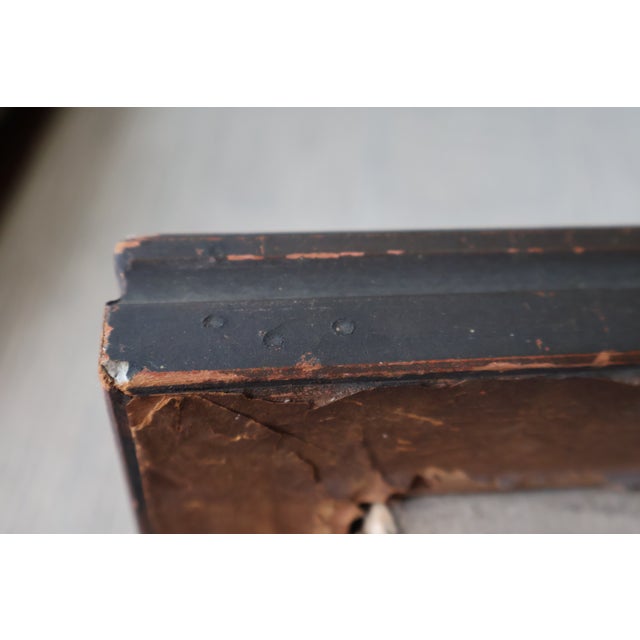
The painting is presented within a substantial antique frame featuring richly layered architectural moldings and elaborate classical ornamentation.
A broad textured inner band is bordered by raised decorative moldings, while the outer edge incorporates a repeating elongated oval motif reminiscent of traditional bead-and-reel ornament.
Warm aged-gold highlights contrast with deep bronze-brown recesses and subtle copper-colored tones, creating a distinguished presentation that complements the painting's earthy landscape palette.
The frame's classical ornamentation enhances the work's historic character while giving it a substantial decorative presence.
For the Collected Interior
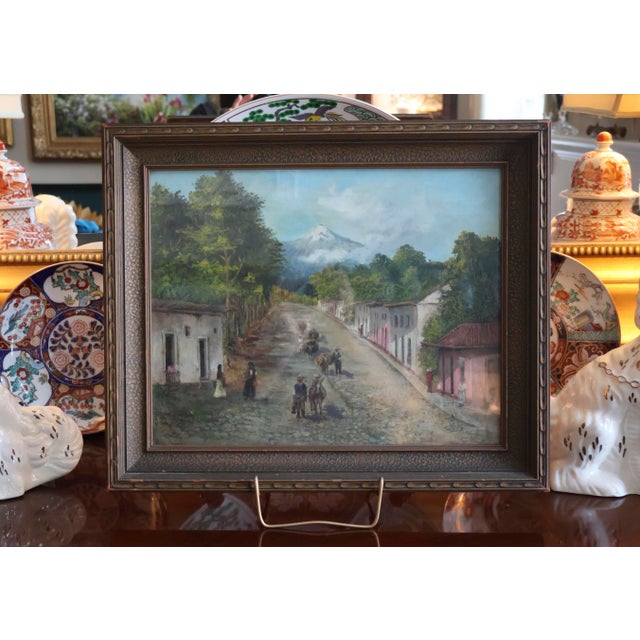
A compelling addition to a traditional library, intimate sitting room, antique-filled study, or carefully curated gallery wall, this original painting brings atmosphere, historical interest, and a distinctive sense of place to a collected interior.
The warm architectural colors, muted greens, dramatic volcanic landscape, and aged metallic frame pair beautifully with antique walnut and mahogany furniture, dark leather upholstery, traditional textiles, brass accessories, and decorative objects with historic character.
Especially suited to Spanish Colonial Revival, traditional, English Country, and richly layered eclectic interiors, the painting offers an elegant focal point without overwhelming a space.
Its geographically identifiable subject also makes it particularly appealing to collectors of Mexican landscapes, historic travel paintings, early-twentieth-century townscapes, and original works depicting the architecture and natural beauty of Veracruz.
Original Estate Documentation
Acquired through an estate and documented as:
“A. Kennedy Artist Signed Original Street Scene from Cordoba, Mexico Oil on Canvas Dated 1923, in Antique Frame.”
The estate catalog additionally identifies the snowcapped mountain as Pico de Orizaba, or Citlaltépetl.
The painting retains its historic Closson Art Galleries identification label and an additional circular seal on the reverse.
Dimensions
Approximately 19½ inches wide × 16¼ inches high × 2½ inches deep, including frame, according to the original estate catalog.
Artist: A. Kennedy, as signed and estate cataloged
Date: 1923, as cataloged
Medium: Original oil on canvas
Subject: Córdoba, Veracruz, Mexico, with Pico de Orizaba
Frame: Ornate antique gold- and bronze-toned frame
See less
- Dimensions
- 19.5ʺW × 2.5ʺD × 16.25ʺH
- Frame Type
- Framed
- Period
- 1920s
- Item Type
- Vintage, Antique or Pre-owned
- Materials
- Canvas
- Glass
- Gold Leaf
- Metal
- Oil Paint
- Paper
- Wood
- Condition
- Good Condition, Unknown, Some Imperfections
- Color
- Forest Green
- Condition Notes
- Good antique presentation, with a richly atmospheric original oil landscape, detailed architectural and figural elements, and an ornate gold- and … moreGood antique presentation, with a richly atmospheric original oil landscape, detailed architectural and figural elements, and an ornate gold- and bronze-toned frame. The painted surface displays visible texture, fine surface irregularities, scattered minor specks, and age-related variations in appearance. No obvious major canvas tear or extensive paint loss is apparent in the supplied photographs, although the complete canvas condition and any previous conservation have not been independently verified. The antique frame retains its layered decorative moldings and warm aged metallic finish, with small nicks, scuffs, minor finish losses, and wear along portions of the raised ornamentation and corners. The reverse retains its historic Closson Art Galleries identification label, an additional aged circular seal, and traditional picture-hanging wire. The protective brown paper backing exhibits substantial age-related deterioration, including tears, punctures, abrasions, lifting, and areas of loss along the edges. A small section of underlying woven fabric is visible through the deteriorated paper. This condition relates to the protective backing and does not independently establish damage to the painting's canvas. Please review all detailed photographs for the painted surface, frame, historic labels, and reverse condition. less
Starting at 20% Off
Sale Ends November 23rd, 2026 - Shop Now
Questions about the item?
Returns & Cancellations
Return Policy - All sales are final 48 hours after delivery, unless otherwise specified in the description of the product.
Cancellation Policy - Prior to shipping or local pickup, buyers may cancel an order for up to 48 hours, unless otherwise specified.
Related Collections
- Photorealism Canvas Paintings
- Ed Ruscha Paintings
- Richard Serra Paintings
- Photorealism Paintings in New York
- Soicher Marin Paintings
- Herman Miller Paintings
- James McCray Paintings
- Louise Nevelson Paintings
- Karen Offutt Paintings
- Johannes Andersen Paintings
- Pedro Friedeberg Paintings
- Laddie John Dill Paintings
- Nicola Simbari Paintings
- Joseph Stella Paintings
- Red Abstract Paintings
- BDDW Paintings
- Cassina Paintings
- George Condo Paintings
- Margaret Kennedy Paintings
- Jaanika Peerna Paintings
- Milton Avery Paintings
- Jeff Slemmons Paintings
- Fernando Botero Paintings
- Synthetic Paintings
- Hans Andersen Paintings