

Details
Description
Hjalmar Rönnbäck (1896–1984)
Swedish Artist and Sculptor – The Boden School
A Life Devoted to Art Against the Odds
Hjalmar …
Read more
Hjalmar Rönnbäck (1896–1984)
Swedish Artist and Sculptor – The Boden School
A Life Devoted to Art Against the Odds
Hjalmar Rönnbäck (1896–1984) was a Swedish painter and sculptor associated with the Boden School (Bodenskolan), an important artistic movement that emerged in northern Sweden during the twentieth century.
His remarkable life tells the story of an artist whose creative ambitions endured despite decades of demanding physical labour, family obligations, and limited opportunities for formal artistic education.
Born in 1896 in Svartbjörnsbyn, a small rural community outside Boden in the northern Swedish province of Norrbotten, Rönnbäck grew up surrounded by forests, agricultural landscapes, and the distinctive natural environment of northern Scandinavia.
As the son of a farmer, his future appeared predetermined. He was expected to continue the family agricultural tradition, and the responsibilities of the farm left little room for pursuing an artistic career.
Yet from an early age, Rönnbäck demonstrated a profound interest in art.
In 1925, at the age of 29, he finally travelled to Stockholm to study painting under the distinguished Swedish artist Carl Wilhelmson (1866–1928), one of the country’s notable painters and art educators.
His opportunity proved painfully brief. After only one month, Rönnbäck was called back to the family farm, bringing his formal artistic education to an abrupt end.
For many aspiring artists, such an interruption might have meant abandoning their ambitions entirely. For Rönnbäck, however, it marked the beginning of a different and deeply personal artistic journey.
He continued to work as a farmer while dedicating whatever spare time he could find to painting, drawing, and eventually sculpture.
During periods of forestry work, he spent his evenings carving traditional wooden drinking vessels, known in Swedish as kåsor. His interest in woodcarving gradually developed into a broader sculptural practice, influenced in part by the celebrated Swedish folk sculptor Axel Petersson, widely known as Döderhultarn.
Over time, sculpture became an increasingly important part of Rönnbäck’s artistic identity.
Working primarily in wood and later iron, he created expressive figures of people and animals. His sculptures often drew inspiration from the natural shapes and irregularities of his materials, transforming them into recognisable forms through careful observation and imaginative interpretation.
His paintings reveal another dimension of his artistic vision.
Working in oil, watercolour, and pastel, Rönnbäck repeatedly returned to the landscapes of his native Norrbotten. Forests, mountains, rural surroundings, and the changing atmosphere of northern Sweden provided a lasting source of inspiration.
His compositions frequently employed warm, muted colours, broad brushstrokes, and an impressionistic sensitivity to light and atmosphere.
Rather than pursuing idealised representations, Rönnbäck developed an artistic language rooted in his direct experience of the natural world.
The Boden School and Swedish Art History
Rönnbäck became associated with Bodenskolan, or the Boden School, a group of artists whose work helped establish a distinctive artistic identity in northern Sweden during the middle decades of the twentieth century.
Although the artists differed in their individual approaches, they shared a connection to the region and contributed to a growing cultural movement outside Sweden’s traditional artistic centres.
Rönnbäck’s position within this circle is particularly compelling because of his unconventional career.
Unlike artists who could devote their early adulthood entirely to formal training and professional development, Rönnbäck pursued his creative interests alongside the practical demands of rural life.
His artistic development was therefore shaped by independence, experimentation, and a close relationship with the materials and landscapes surrounding him.
In 1948, Swedish Radio recorded an interview with Rönnbäck in which he spoke about his life as a farmer and his longing to work as an artist full-time.
The recording provides a rare historical insight into the personal circumstances behind his artistic achievements.
Only after retirement was he finally able to devote himself fully to his creative practice.
Despite these obstacles, Rönnbäck achieved recognition during his lifetime.
He held solo exhibitions in Stockholm, Lund, and at Norrbotten Museum, while his works entered several important regional and public collections.
His art is represented in the collections of Norrbotten Museum, the City of Kiruna, and the municipalities of Boden, Luleå, and Gällivare, among others.
His public sculptures also became part of the cultural landscape of northern Sweden, reflecting the lasting importance of his artistic contribution.
In 1970, Rönnbäck received the Lion Trophy in recognition of his social and cultural contributions. Two years later, in 1972, he was awarded a grant from the Royal Swedish Academy of Fine Arts.
These distinctions acknowledged an artistic career developed through extraordinary persistence and personal dedication.
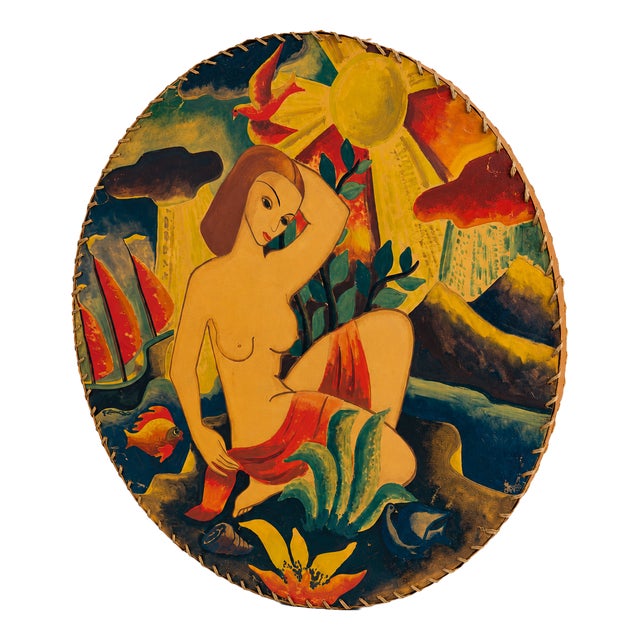
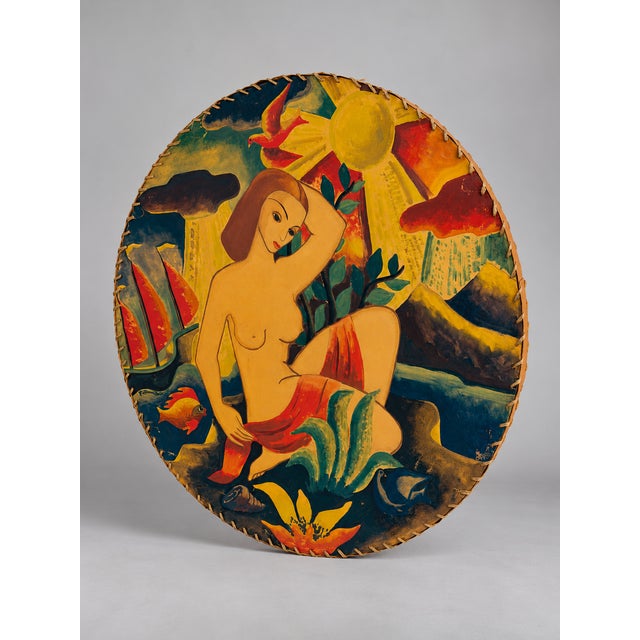
An Artwork from 1946
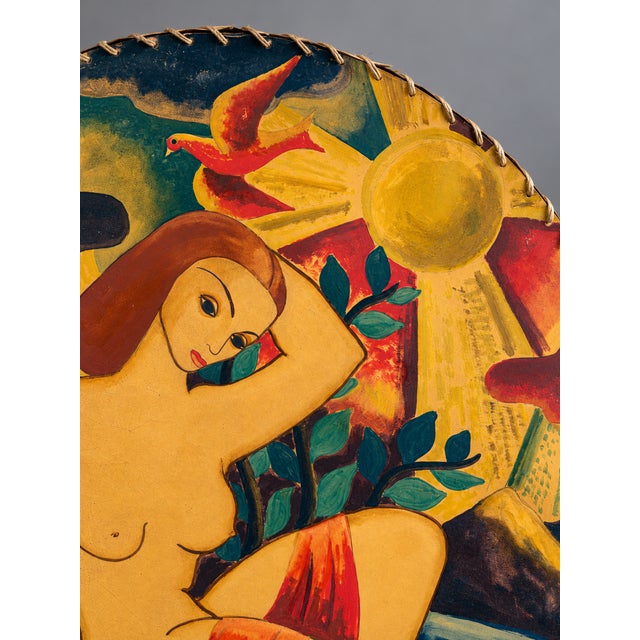
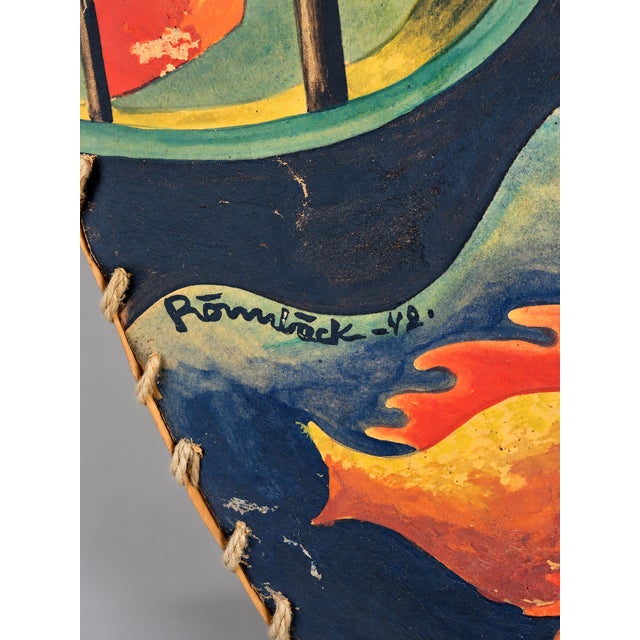
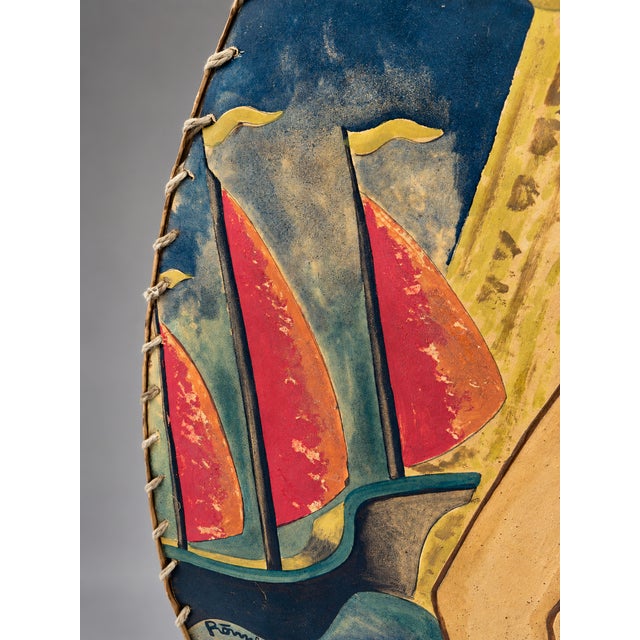
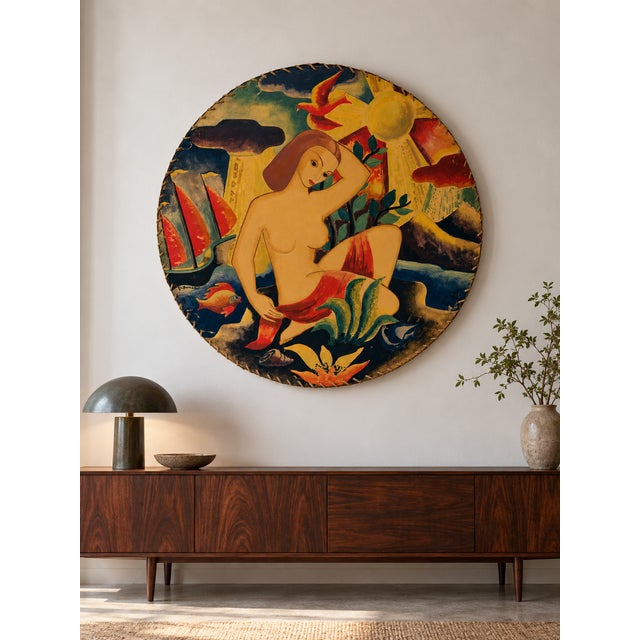
The present work, signed and dated 1946, belongs to an especially interesting period in Rönnbäck’s artistic life.
Created when the artist was approximately 50 years old, it dates from a time when he was still balancing his creative ambitions with the responsibilities of farming.
The year also places the work within the formative postwar period of modern Swedish art, when regional artistic communities were developing increasingly independent identities.
The signature and date provide a direct connection to the artist and to a chapter of Swedish cultural history that has received comparatively limited international attention.
An Enduring Artistic Legacy
Hjalmar Rönnbäck died in 1984, leaving behind a body of paintings and sculptures that reflect a lifetime of observation, experimentation, and devotion to art.
His story is not simply that of a regional painter or sculptor. It is the story of an individual who maintained his creative identity despite circumstances that repeatedly demanded his attention elsewhere.
Today, his work offers collectors an opportunity to explore a distinctive chapter of twentieth-century Swedish art, rooted in the northern landscape and the independent artistic traditions of the Boden School.
Rönnbäck’s artistic legacy continues to be recognised through museum collections, public artworks, and exhibitions dedicated to the cultural history of northern Sweden.
His work stands as a testament to the enduring power of artistic conviction — a creative life shaped not by circumstance, but by the determination to create despite it. This piece has an attribution mark,
I am sure that it is completely authentic and take full responsibility for any authenticity
issues arising from misattribution
See less
- Dimensions
- 37.4ʺW × 2.76ʺD × 37.4ʺH
- Art Subjects
- Nude
- Period
- 1930s
- Country of Origin
- Sweden
- Item Type
- Vintage, Antique or Pre-owned
- Condition
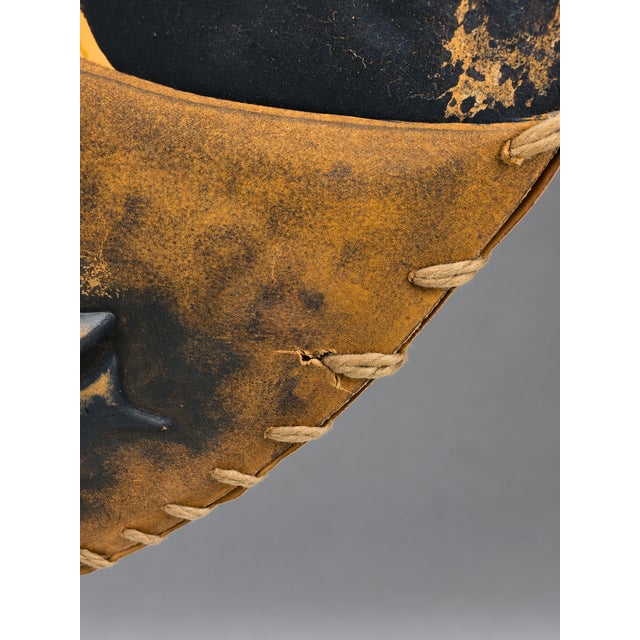
- Good Condition, Unknown, Some Imperfections
- Color
- Orange
- Condition Notes
- Very Good — This vintage item has no defects, but it may show slight traces of use\. good Very Good — This vintage item has no defects, but it may show slight traces of use\. good less
Returns & Cancellations
Return Policy - All sales are final 48 hours after delivery, unless otherwise specified in the description of the product.
Cancellation Policy - Prior to shipping or local pickup, buyers may cancel an order for up to 48 hours, unless otherwise specified.
Related Collections
- Raymond Loewy Photography
- Scarlet Photography
- Stainless Steel Photography
- Soicher Marin Photography
- Photography in Salt Lake City
- Edward S. Curtis Photography
- Cubism Photography
- Nick Mele Photography
- Black and White Photos
- Photography in Minneapolis
- Edwardian Photography
- Violet Photography
- Renaissance Photography