

Starting at 20% Off
Sale Ends November 23rd, 2026 - Shop Now
Details
Description
An exquisite collection of three framed botanical prints depicting aloe, agave, and related succulent specimens in elaborate ornamental urns, after …
Read more
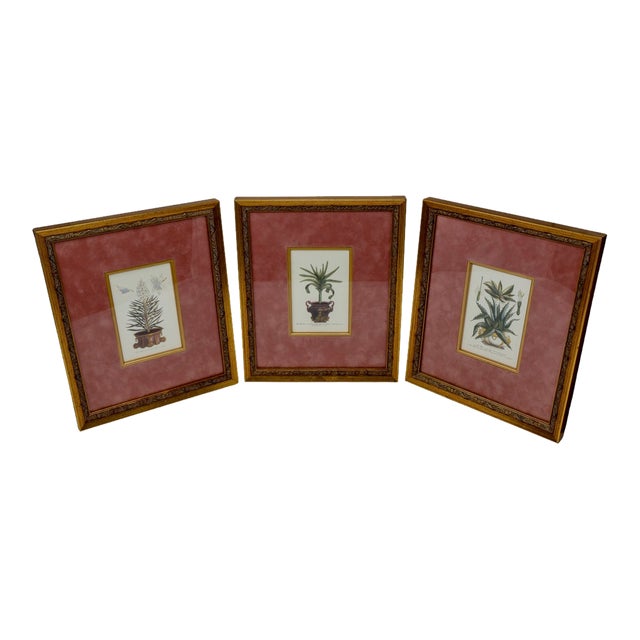
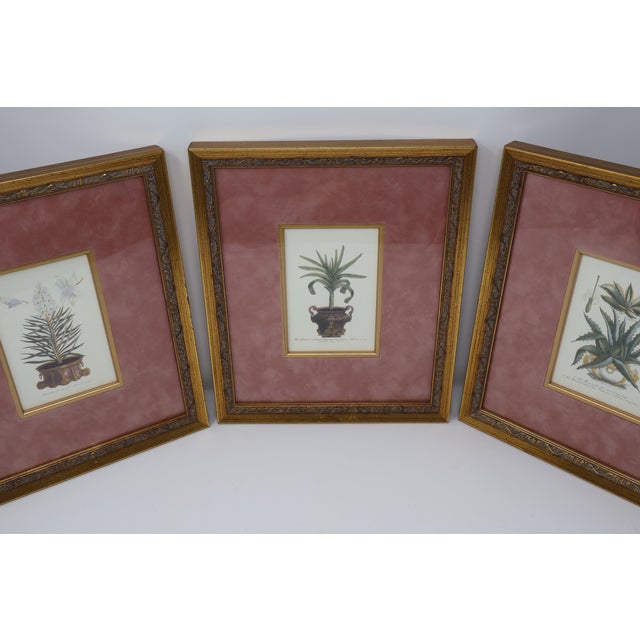
An exquisite collection of three framed botanical prints depicting aloe, agave, and related succulent specimens in elaborate ornamental urns, after historical illustrations associated with Johann Wilhelm Weinmann's celebrated eighteenth-century botanical publication, Phytanthoza Iconographia.
Each composition presents a beautifully detailed botanical study accompanied by traditional Latin nomenclature, combining the precision of European natural-history illustration with the decorative elegance of classical garden art.
The three prints are presented in coordinating gilt frames with raised ornamental detailing, generous dusty-rose matting, and narrow gold inner fillets. The richly layered presentation creates an exceptionally refined collection, evocative of an English country-house library, traditional European garden room, or elegantly collected interior.
THE BOTANICAL ART OF JOHANN WILHELM WEINMANN
Johann Wilhelm Weinmann (1683–1741) was a German apothecary, botanist, and publisher whose monumental botanical work, Phytanthoza Iconographia, was published in Regensburg between approximately 1737 and 1745.
Considered an important achievement in eighteenth-century botanical illustration, the publication brought together more than one thousand detailed plates documenting plants from Europe and beyond.
Weinmann's project involved distinguished artists and printmakers, including Georg Dionysius Ehret, Bartholomäus Seuter, and Johann Jakob Haid, whose contributions helped establish the publication's reputation for scientific observation and decorative sophistication.
Particularly celebrated are the studies of aloe, agave, and related succulent species, often depicted in elaborate Baroque-style planters and accompanied by Latin botanical identifications.
The illustrations represented in this collection reflect that distinctive artistic tradition, in which finely observed natural forms are presented alongside ornamental vessels and classical botanical nomenclature.
THREE DISTINCTIVE BOTANICAL STUDIES
The collection includes three individually framed botanical compositions, each distinguished by its unique plant form, ornamental planter, and historical botanical caption.
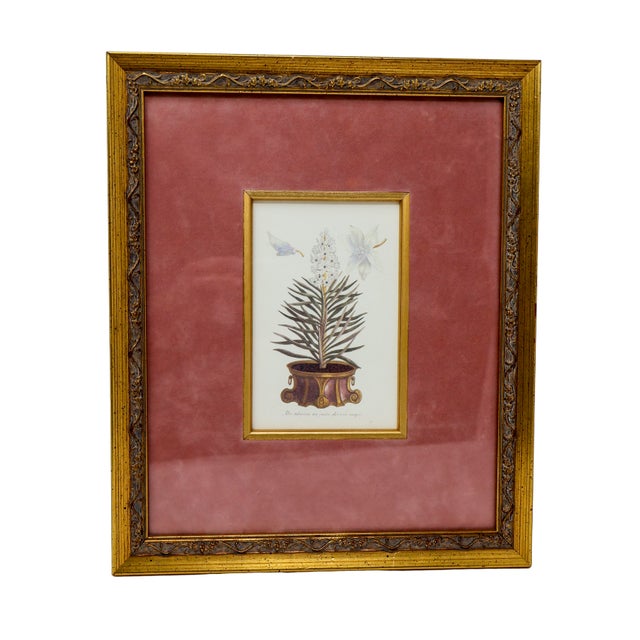
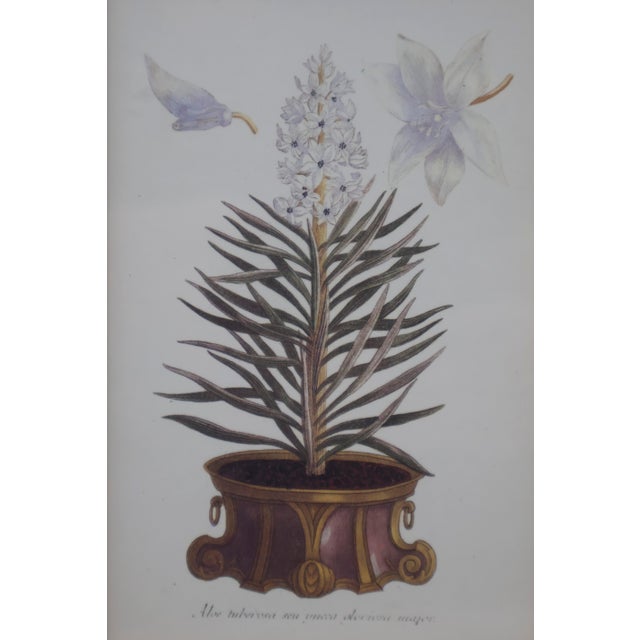
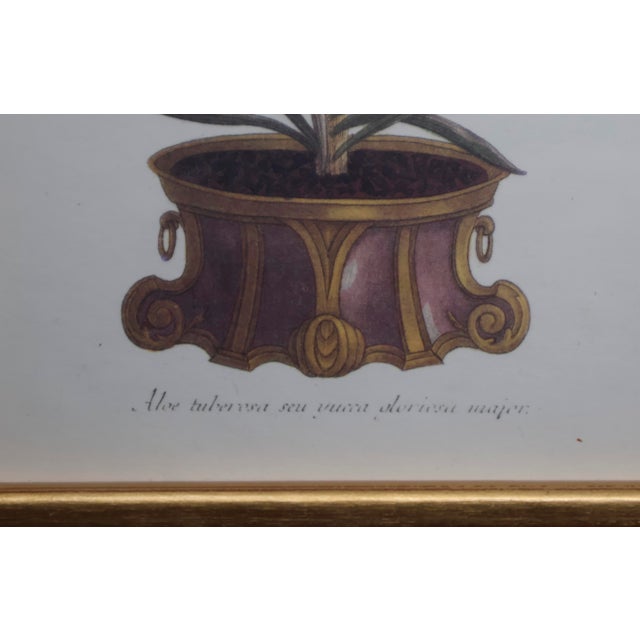
I. FLOWERING ALOE — CLASSICAL REDDISH-BROWN URN
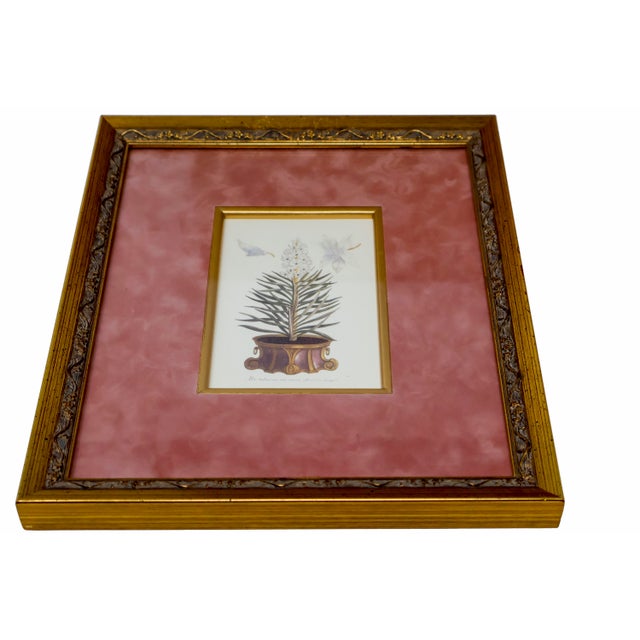
The first illustration depicts a tall, flowering aloe-like succulent with slender, pointed leaves arranged along an upright central stem.
A delicate flowering spike rises above the foliage, accompanied by supplementary botanical details illustrating the plant's floral structures.
The specimen is presented in an elaborate reddish-brown classical urn with curled feet and decorative gold-toned ornament.
Soft botanical greens, muted earth tones, and delicate shading create a beautifully restrained composition, while the fine Latin caption beneath the image preserves the traditional scientific character of the original illustration.
The historical botanical identification begins with the name Aloe barbavica seu yucca africana major, reflecting the nomenclature used in early botanical publications.
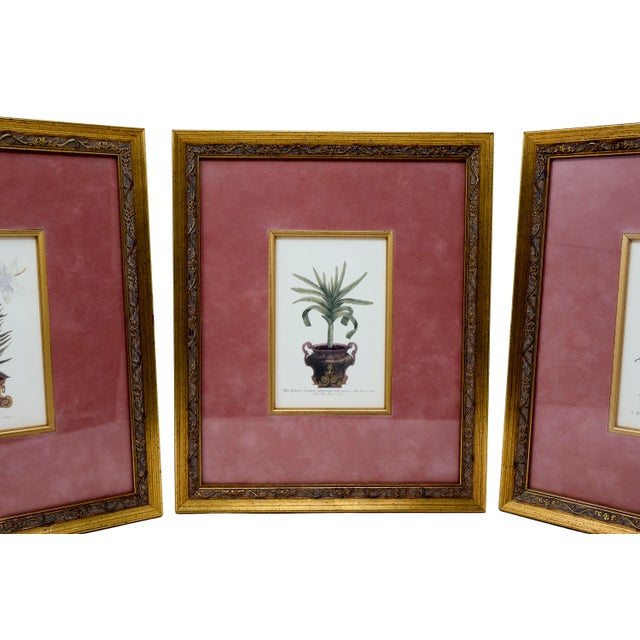
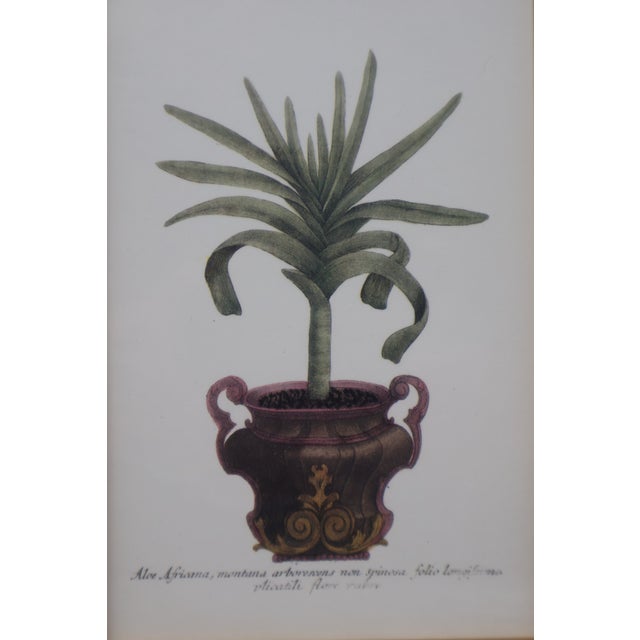
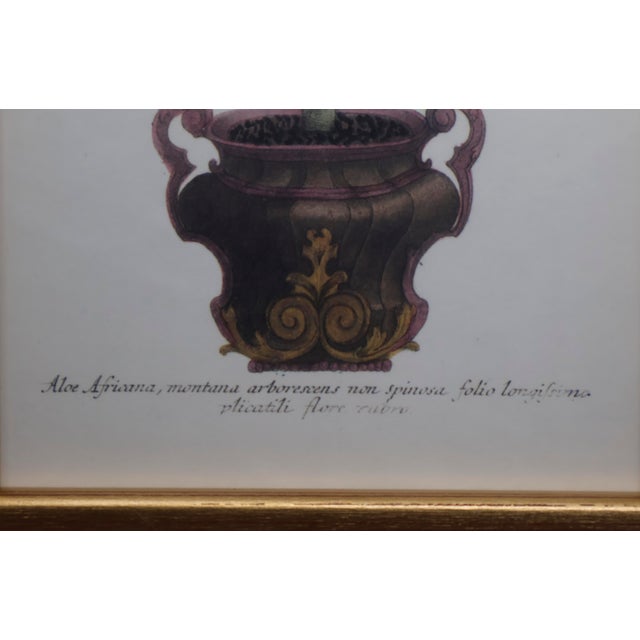
II. ALOE AFRICANA — ORNAMENTAL HANDLED URN
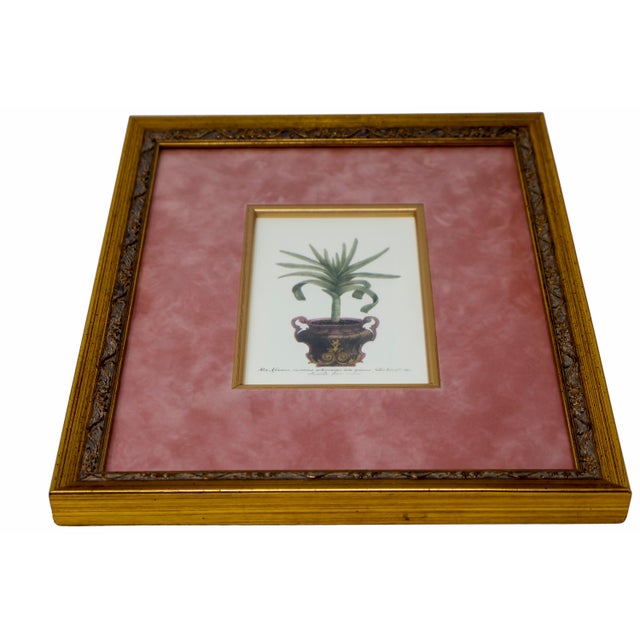
The second botanical study depicts a compact, architectural aloe-like specimen with long, slender leaves radiating from an upright central stem.
Several lower leaves curve gracefully downward, introducing movement to the otherwise structured composition.
The plant rises from a richly ornamented dark reddish-brown urn featuring two curling handles and gilded decorative accents.
The illustration is accompanied by a Latin botanical inscription beginning Aloe Africana, montana arborescens non spinosa, preserving its historical classification.
The combination of sculptural foliage, elegant botanical shading, and Baroque-inspired planter gives the composition particular appeal for traditional interiors and collectors of classical botanical art.
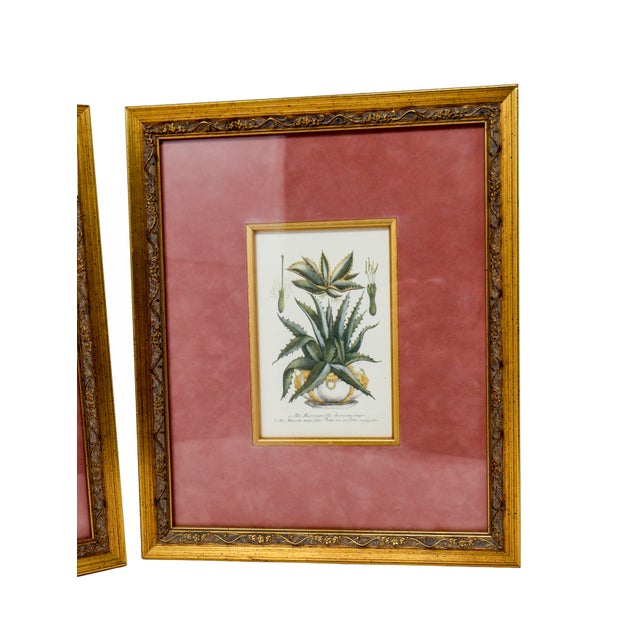
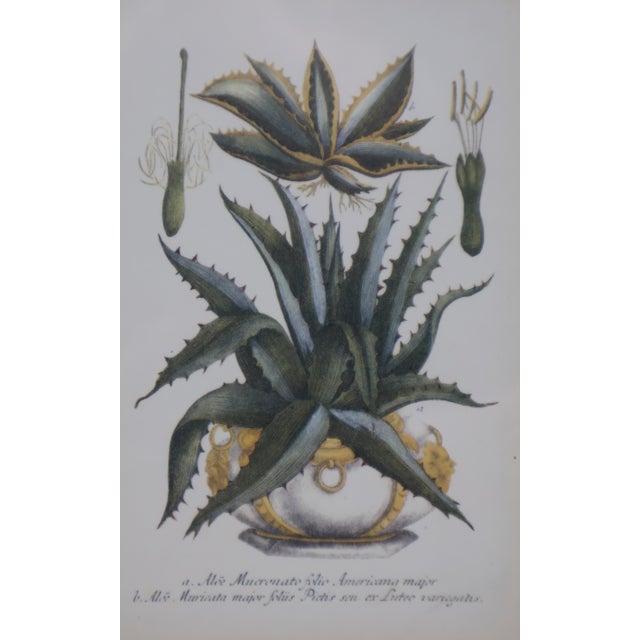
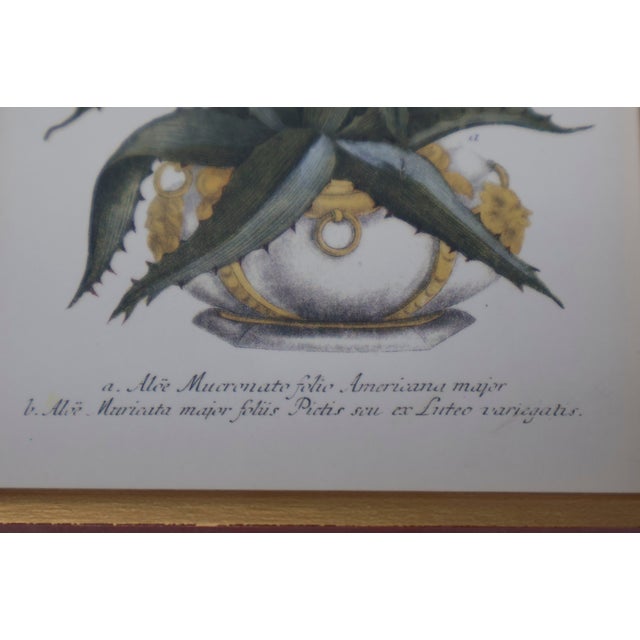
III. ALOE MUCRONATO — ORNAMENTAL BLUE & GOLD PLANTER
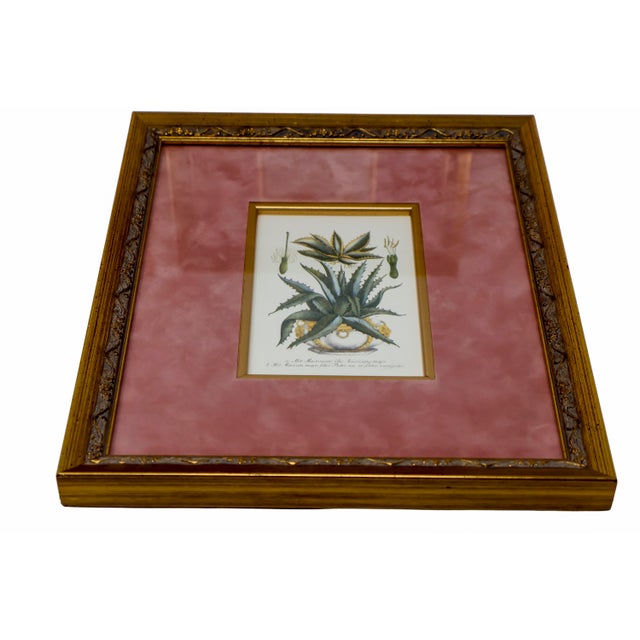
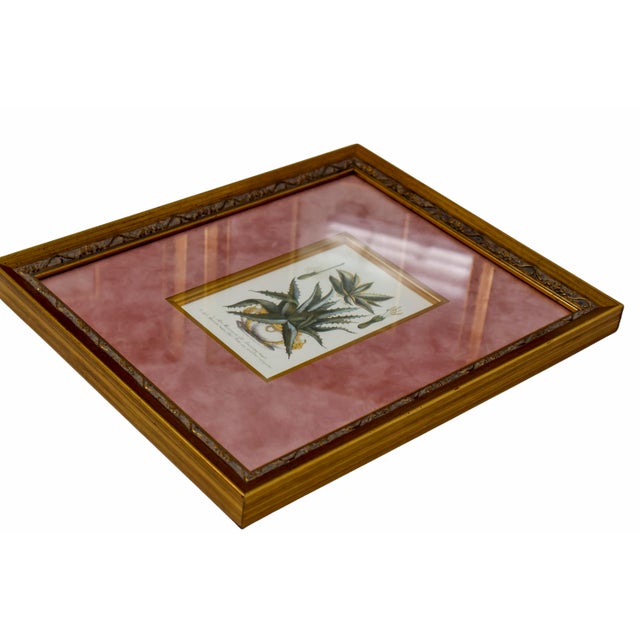
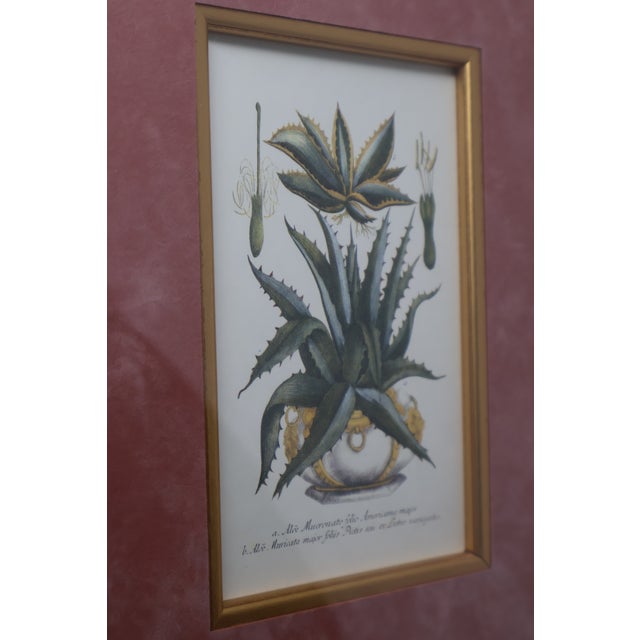
The third illustration corresponds to Johann Wilhelm Weinmann's Aloe Mucronato, Plate 42, from Phytanthoza Iconographia.
The composition features a dramatic succulent with sharply pointed, serrated foliage arranged in a sculptural, architectural form.
Supplementary botanical illustrations appear alongside the principal plant, providing additional detail in the manner of historical natural-history studies.
The specimen is presented in an elegant pale blue ornamental planter with yellow-gold decorative accents.
The Latin inscriptions identify botanical forms historically described as Aloe Mucronato folio Americana major and Aloe Muricata major foliis Pictis, nomenclature associated with early classifications of aloe and agave species.
The richly detailed foliage, delicate botanical illustration, and distinctive blue-and-gold planter make this an especially compelling composition within the set.
HISTORICAL BOTANICAL ILLUSTRATION & PRINT HERITAGE
The three compositions reflect the eighteenth-century European tradition of depicting botanical specimens with scientific precision and decorative refinement.
Weinmann's Phytanthoza Iconographia is particularly celebrated for its extensive studies of exotic and cultivated plants, including varieties of aloe and agave presented within ornamental containers.
One illustration within this collection corresponds to the documented Aloe Mucronato, Plate 42, while the accompanying aloe studies closely follow the same historical botanical tradition.
The original eighteenth-century publication provides the artistic and historical source for these compositions. The printing dates of the three framed examples have not been independently established, and they are offered as decorative prints after historical botanical illustrations rather than authenticated eighteenth-century impressions.
ELEGANT DUSTY-ROSE MATTING & ORNAMENTAL GILT FRAMES
The coordinated framing is an integral part of the collection's decorative appeal.
Each print is surrounded by expansive dusty-rose matting with a softly mottled finish, introducing warmth and subtle texture to the traditional botanical imagery.
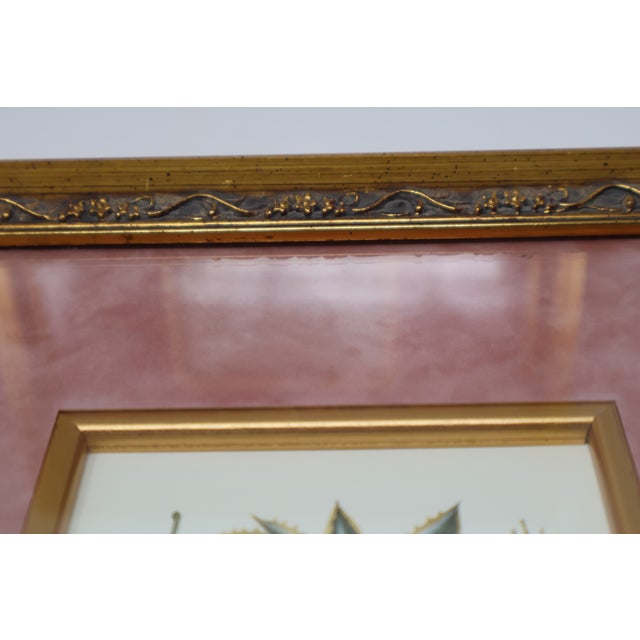
Narrow gilded inner fillets frame the illustrations, while the matching gold-toned outer moldings feature finely raised scrolling ornament and decorative foliate detailing.
The combination of muted pink, antique gold, botanical green, and soft ivory creates an exceptionally harmonious presentation.
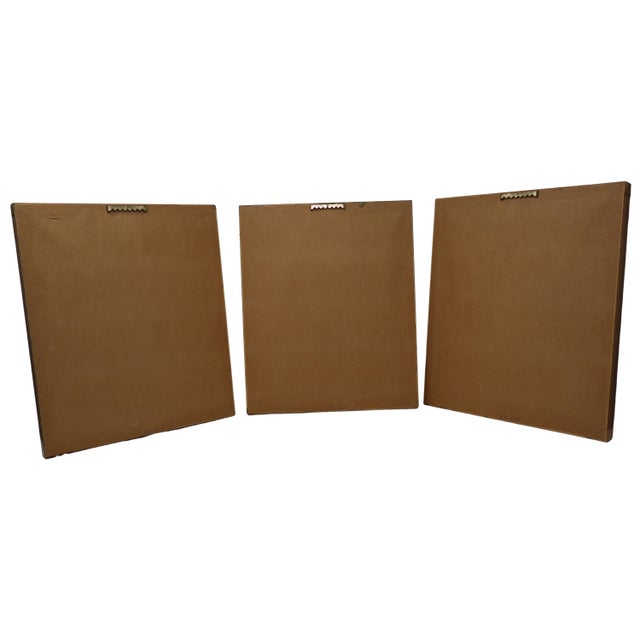
The reverse of each frame retains a coordinating brown backing board and centrally positioned metal sawtooth hanger, allowing the works to be displayed individually or as a complete grouping.
Each framed print measures approximately 12 inches high by 10 inches wide.
THE DESIGNER PERSPECTIVE
A beautifully considered addition to an English Country library, French Country garden room, traditional study, Grandmillennial interior, or richly layered gallery wall.
The architectural forms of the aloe and agave specimens offer an elegant alternative to conventional floral prints, while the elaborate ornamental urns introduce a distinctly classical European character.
The dusty-rose matting adds softness and warmth, pairing particularly well with antique mahogany, gilt mirrors, traditional brass lighting, floral chintz, botanical textiles, and collected decorative objects.
The three works can be displayed horizontally above a console or writing desk, vertically along a narrow wall, or incorporated into a larger collection of antique prints, portraits, and historical artwork.
Their coordinated scale, botanical subject matter, and richly ornamented framing create a cohesive decorative statement while allowing each individual illustration to retain its own distinct character.
An elegant collection celebrating the enduring beauty of European botanical illustration, thoughtfully presented for the traditional and collected interior.
PROVENANCE
Acquired together from an estate collection, where the works were cataloged as three framed botanical prints featuring aloe and agave specimens with Latin botanical captions, coordinating pink matting, and decorative gilt frames.
Subsequent research has connected the imagery to the historical botanical tradition of Johann Wilhelm Weinmann's eighteenth-century Phytanthoza Iconographia, including an identified correspondence with the Aloe Mucronato composition, Plate 42.
The printing dates and original publishers of these particular framed examples remain unverified.
COLLECTION DETAILS
Historical Botanical Source: Johann Wilhelm Weinmann, Phytanthoza Iconographia
Original Publication Period: Approximately 1737–1745
Artwork Type: Botanical prints after historical illustrations
Subjects: Aloe, Agave, and related succulent specimens
Print I: Tall flowering aloe in reddish-brown ornamental urn
Print II: Aloe Africana in decorative handled urn
Print III: Aloe Mucronato, after Plate 42, in pale blue-and-gold planter
Botanical Inscriptions: Latin captions beneath each illustration
Framing: Three matching decorative gilt frames
Matting: Dusty rose / muted pink
Inner Borders: Narrow gold fillets
Print Dates: Not independently established
Dimensions: Approximately 12" H × 10" W each
Hanging Hardware: Metal sawtooth hangers
Quantity: Three framed botanical prints
Provenance: Original estate catalog documentation
Sale Configuration: Offered together as one coordinated collection
See less
- Dimensions
- 10ʺW × 0.5ʺD × 12ʺH
- Frame Type
- Framed
- Art Subjects
- Botanic
- Still Life
- Styled After
- Johann Wilhelm
- Period
- Late 20th Century
- Item Type
- Vintage, Antique or Pre-owned
- Materials
- Glass
- Gold Leaf
- Metal
- Paper
- Printmaking Materials
- Wood
- Condition
- Good Condition, Unknown, Some Imperfections
- Color
- Rose
- Condition Notes
- Good vintage condition with age-related wear consistent with prior display and handling. All three botanical prints are presented in matching … moreGood vintage condition with age-related wear consistent with prior display and handling. All three botanical prints are presented in matching decorative gilt frames with raised ornamental detailing, coordinating dusty-rose matting, and narrow gold inner fillets. The illustrations retain attractive botanical coloration and fine printed detail. The frame finishes exhibit minor surface wear, small marks, and tonal variation. The dusty-rose mats display a softly mottled appearance with subtle variations in coloration. The reverse of each frame retains its brown backing board and metal sawtooth hanging hardware, with minor age-related surface wear. The prints have not been examined outside their frames, and their precise printing dates and paper condition beneath the matting have not been independently established. Please review all photographs for detailed condition and presentation. less
Starting at 20% Off
Sale Ends November 23rd, 2026 - Shop Now
Questions about the item?
Returns & Cancellations
Return Policy - All sales are final 48 hours after delivery, unless otherwise specified in the description of the product.
Cancellation Policy - Prior to shipping or local pickup, buyers may cancel an order for up to 48 hours, unless otherwise specified.
Related Collections
- Patrick Nagel Reproduction Prints
- Serena and Lily Reproduction Prints
- Hable Reproduction Prints
- Dorothy Draper Reproduction Prints
- Reproduction Prints in Panama City, FL
- Joshua Reynolds Reproduction Prints
- William Hogarth Reproduction Prints
- Lauren Ralph Lauren Reproduction Prints
- Jonathan Adler Reproduction Prints
- Sister Parish Reproduction Prints
- Restoration Hardware Reproduction Prints
- Bunny Williams Home Reproduction Prints
- Daylight Dream Editions Reproduction Prints
- William " Billy " Haines Reproduction Prints
- Edward S. Curtis Reproduction Prints
- Reproduction Prints in Mobile
- Sam Francis Reproduction Prints
- Alvar Aalto Reproduction Prints
- Mark D. Sikes Reproduction Prints
- Jute Reproduction Prints
- Leather Reproduction Prints
- Tuscan Reproduction Prints
- Gemstone Reproduction Prints
- Pierre Frey Reproduction Prints
- Miles Redd Reproduction Prints