

Details
Description
Large Folk Tramp Art Chip-Carved Wooden Cross, c.1890–1910
An exceptional and unusually large late 19th to early 20th-century Tramp Art …
Read more
Large Folk Tramp Art Chip-Carved Wooden Cross, c.1890–1910
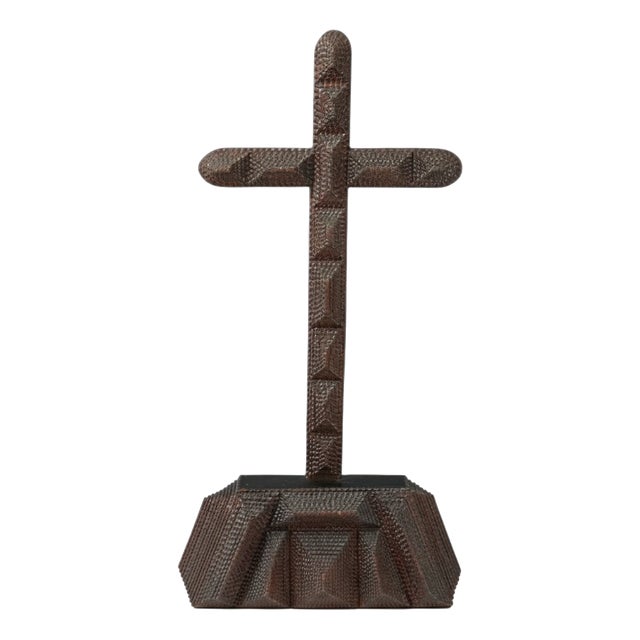
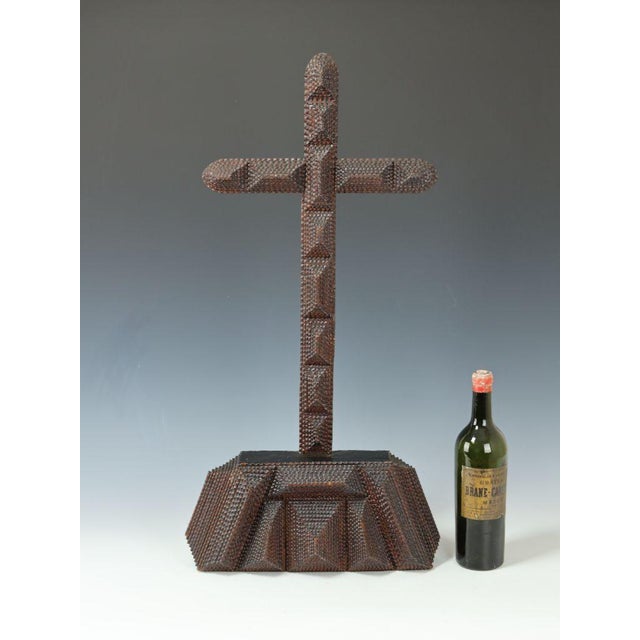
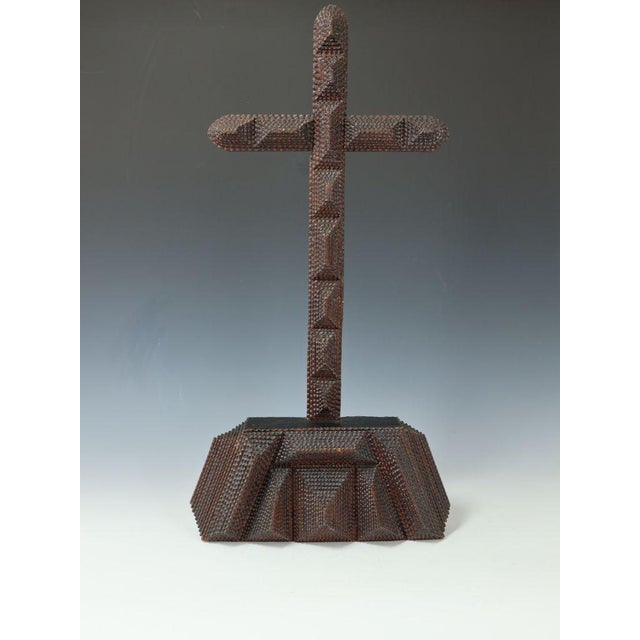
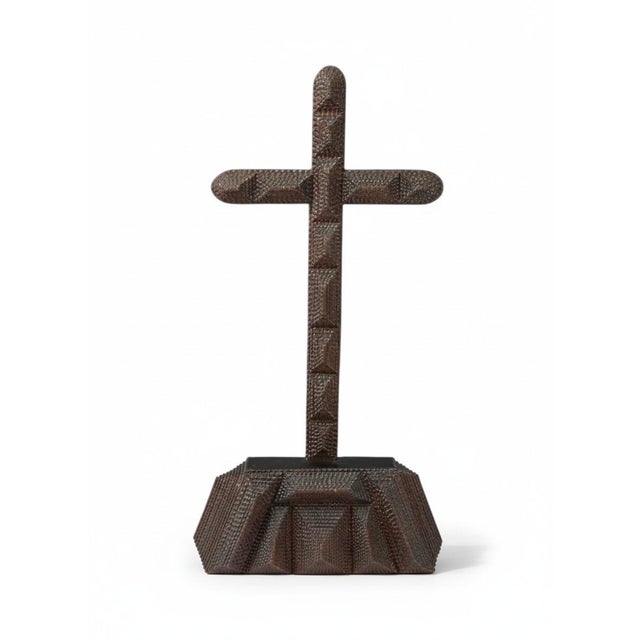
An exceptional and unusually large late 19th to early 20th-century Tramp Art cross, extensively hand chip-carved and constructed in the distinctive layered geometric manner associated with European folk art of the period.
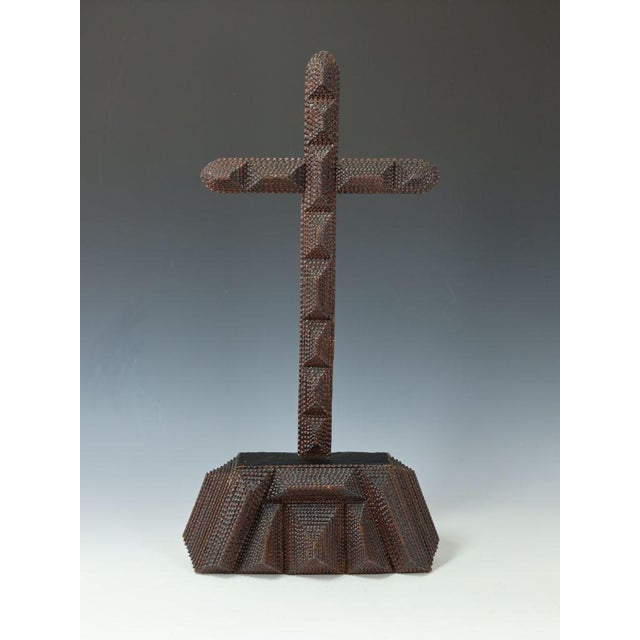
Standing an impressive 78 cm high, the cross has considerable sculptural presence and is particularly notable for the extraordinary amount of repetitive hand-cut decoration covering almost every visible surface.
The upright cross rises from a substantial architectural plinth, creating an object that feels as much like a piece of folk sculpture as a devotional object.
Intricate Chip-Carved Decoration
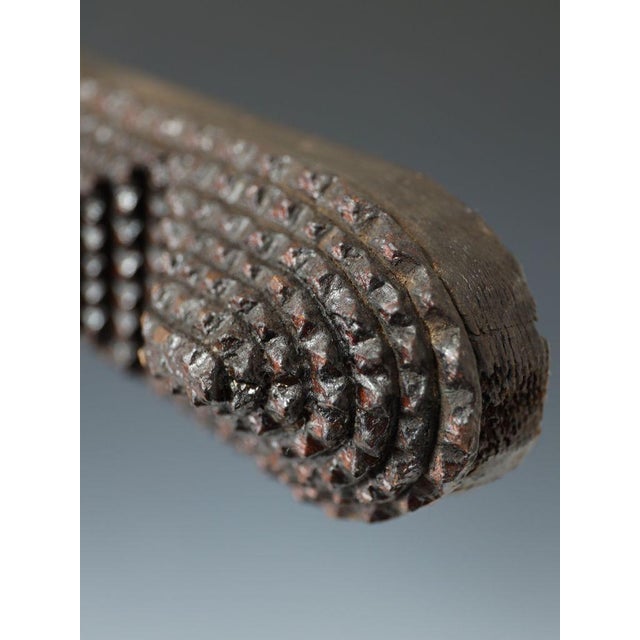
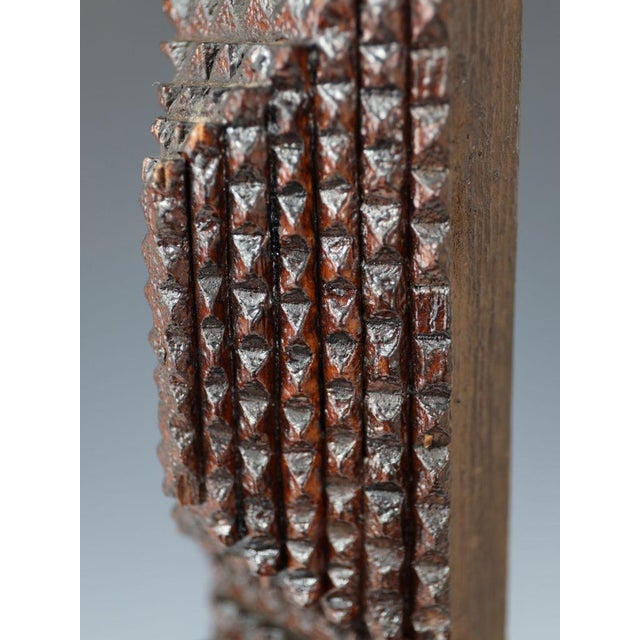
The surface is densely worked with hundreds of individually cut geometric facets.
Small pyramidal and triangular notches have been repeatedly cut into the timber, creating the distinctive rhythmic, almost jewel-like surface associated with Tramp Art.
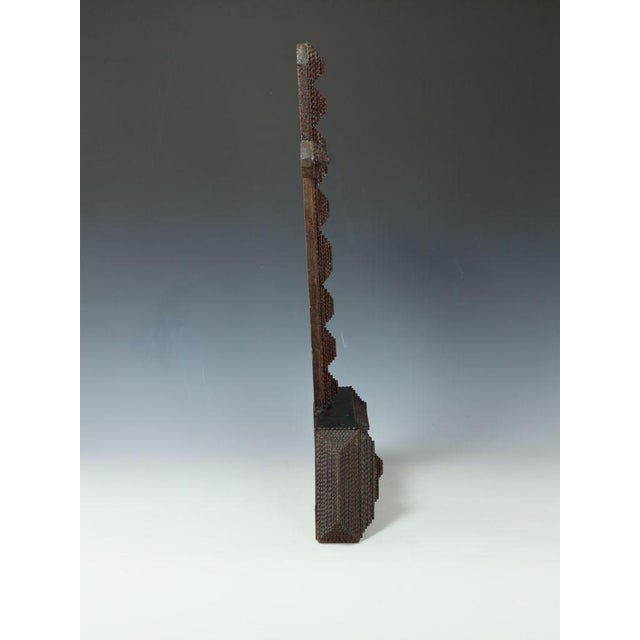
Rather than being carved from a single decorative block, numerous shaped and chip-carved wooden elements have been built up in successive layers, producing considerable depth and complexity.
The cross itself is divided into geometric panels, each densely chip-carved. Its arms terminate in softened rounded ends, while additional stepped and projecting elements create further relief along the upright.
The repeated carving catches the light differently across the surface, revealing glimpses of the warmer reddish-brown timber beneath the very dark aged finish.
Architectural Stepped Base
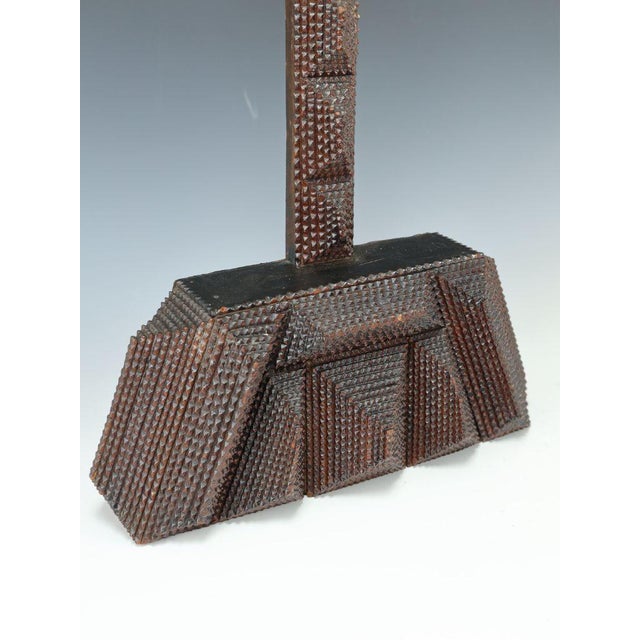
The substantial base is particularly impressive.
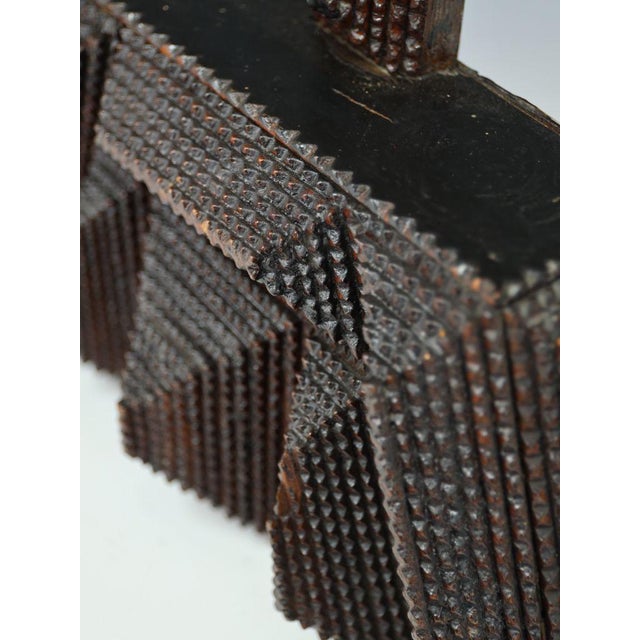
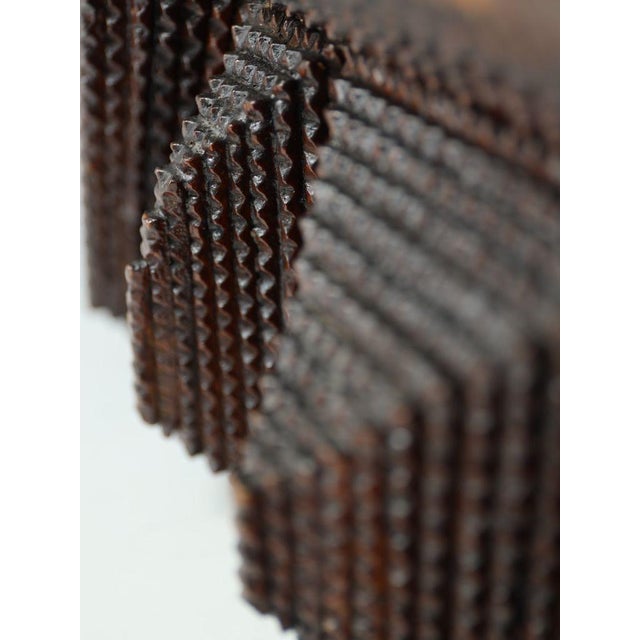
Built in a broad, almost architectural form, it incorporates projecting angled sides and a central stepped arrangement of increasingly recessed rectangular panels.
Each component has been individually chip-carved before being assembled into the larger composition, creating a remarkable interplay of pyramidal facets, saw-tooth edges and geometric planes.
The cross rises directly from the upper platform, giving the whole object the appearance of a small folk-art monument or altar cross.
Its generous 40 cm width and 11 cm depth provide sufficient visual weight to balance the unusually tall cross above.
Tramp Art Tradition
Tramp Art developed during the late 19th and early 20th centuries and is characterised by the transformation of comparatively simple pieces of timber into elaborate decorative objects through repetitive notching, chip carving and layered construction.
Despite the name, the objects were not necessarily produced by itinerant or homeless makers. The Smithsonian notes that craftsmen included travelling printers, carpenters and cigar makers, and describes the characteristic technique as chip-carving the edges of pieces of wood before layering them to create furniture, sculpture and religious objects.
Religious objects form an important part of the tradition. Significantly for this example, the Museum of International Folk Art records a related Tramp Art crucifix made in Germany/Belgium and dated 1894–1900, supporting the presence of this distinctive folk-art tradition in the region around the turn of the century.
The absence of a figure of Christ on the present example gives it an unusually sculptural and graphic quality, allowing the craftsmanship and silhouette of the cross itself to dominate.
Surface & Patina
The timber has developed a wonderfully deep reddish-brown to near-black surface, with the raised points of the carving revealing warmer tones beneath.
This variation gives the hundreds of individually cut facets remarkable definition and emphasises the labour involved in its construction.
I would leave this surface entirely alone. The aged finish and slight irregularities are integral to its folk-art character.
Condition
Presented in very good antique condition, particularly considering the complexity and projecting nature of the chip-carved decoration.
There are age-related knocks, rubbing, scratches and small losses to individual carved points and edges throughout, together with variations in the dark surface finish.
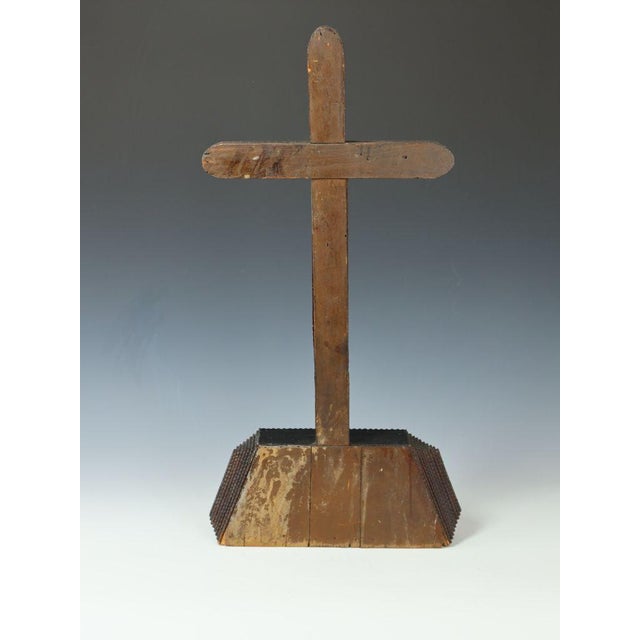
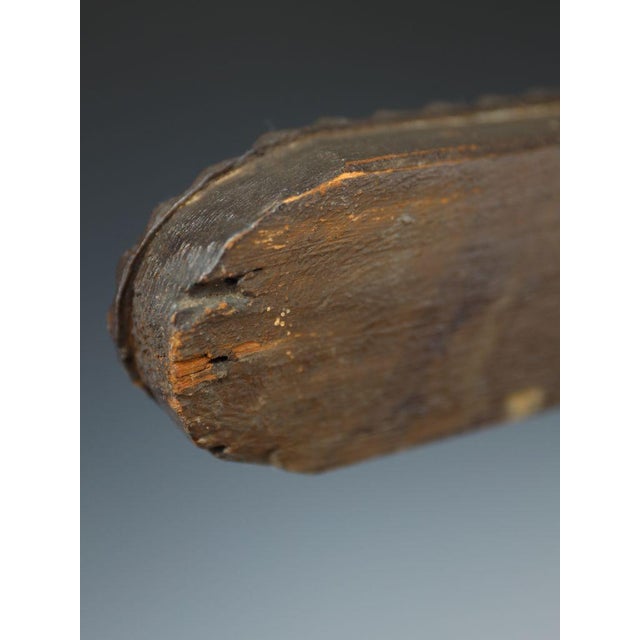
The photographs show some localised splitting and losses to the timber, particularly around the ends and exposed edges, together with occasional historic movement between individual constructed elements.
These are consistent with age and the handmade nature of the piece and do not detract from its overall presentation.
The cross remains structurally sound and stands well upon its substantial base.
No attempt has been made to disguise the age-related wear or over-restore the surface.
Please refer closely to the photographs, which form an important part of the condition .
Measurements
Height: 78 cm / 30.7 inches
Width: 40 cm / 15.7 inches
Depth: 11 cm / 4.3 inches
Weight: 2.9 kg / 6.4 lbs This piece is attributed to the mentioned designer/maker. It has no attribution mark and no
official proof of authenticity,
however it is well documented in design history. I take full responsibility for any authenticity
issues arising from misattribution
See less
- Dimensions
- 15.75ʺW × 4.33ʺD × 30.71ʺH
- Art Subjects
- Abstract
- Period
- Early 20th Century
- Country of Origin
- France
- Item Type
- Vintage, Antique or Pre-owned
- Materials
- Wood
- Condition
- Good Condition, Unknown, Some Imperfections
- Color
- Brown
- Condition Notes
- Patina Consistent with Age and Use Patina Consistent with Age and Use less
Returns & Cancellations
Return Policy - All sales are final 48 hours after delivery, unless otherwise specified in the description of the product.
Cancellation Policy - Prior to shipping or local pickup, buyers may cancel an order for up to 48 hours, unless otherwise specified.
Related Collections
- Fernando Botero Sculpture
- Straw Sculpture
- Roman Bronze Works Sculpture
- Constantin Brancusi Sculpture
- Barovier and Toso Sculpture
- Jute Sculpture
- Blenko Sculpture
- Satinwood Sculpture
- Bakelite Sculpture
- Feliciano Béjar Sculpture
- Medium-Density Fibreboard Sculpture
- Sculpture in Panama City, FL
- René Lalique Sculpture
- Sculpture in Columbus
- Photography Sculpture
- Gold-Plate Sculpture
- Recycled/Repurposed Sculpture
- Waylande Gregory Sculpture
- Gourd Sculpture
- Watercolor Sculpture
- Antique Iron Finish Sculpture
- Flavio Poli Sculpture
- Polished Brass Finish Sculpture
- Far Pavilions Sculpture
- Emmanuel Villanis Sculpture