

Details
Description
Item description
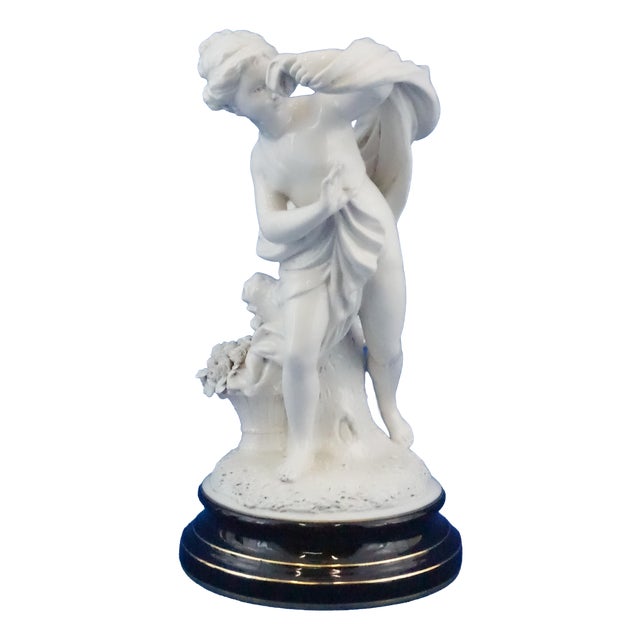
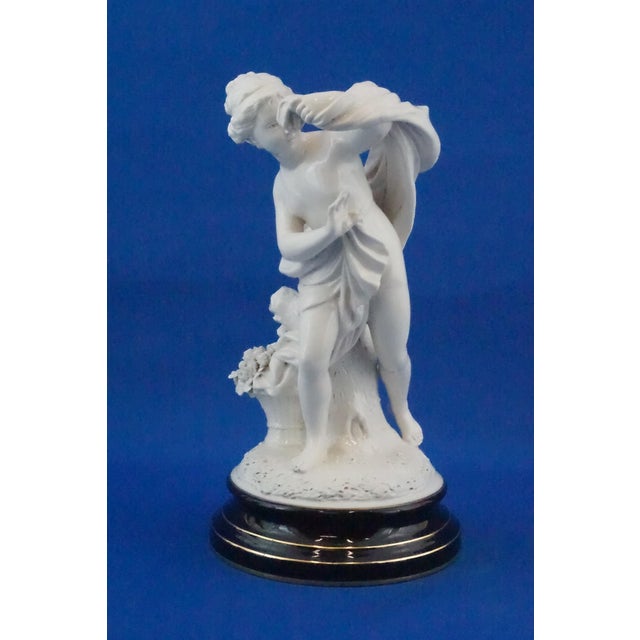
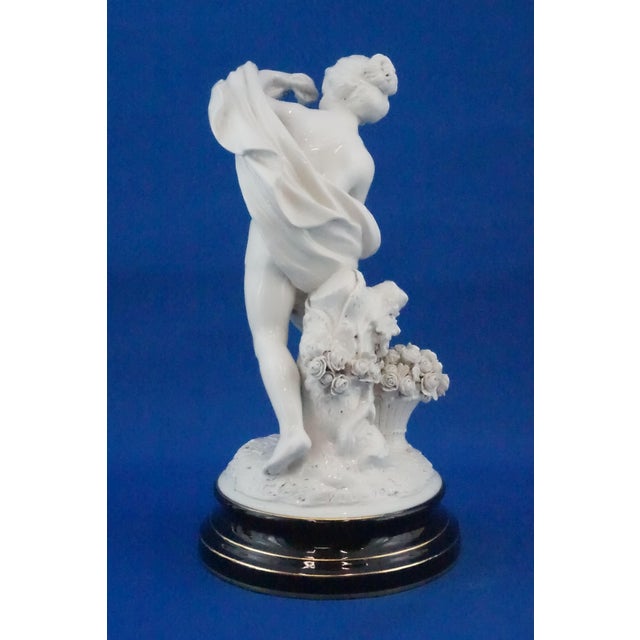
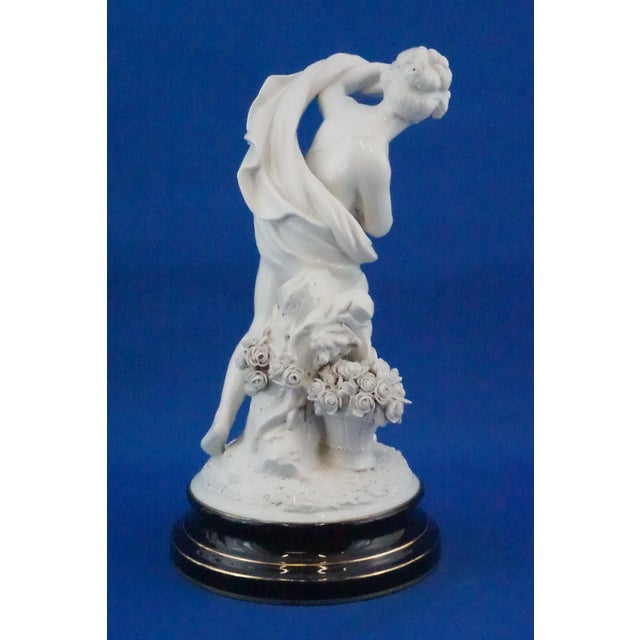
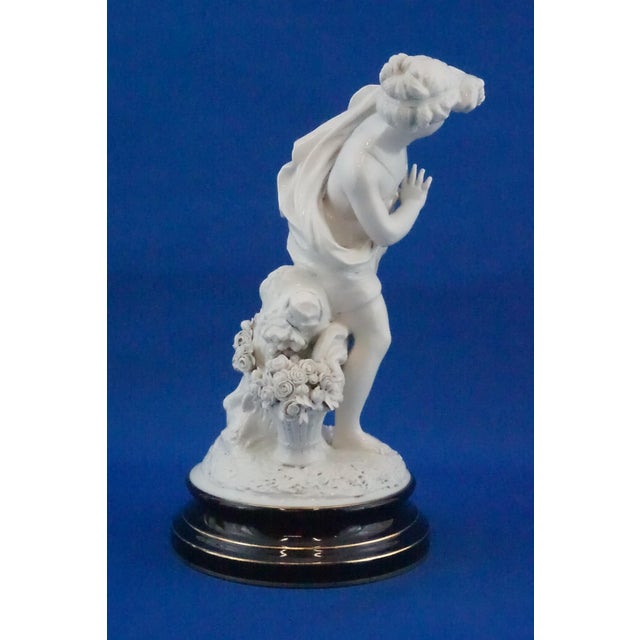
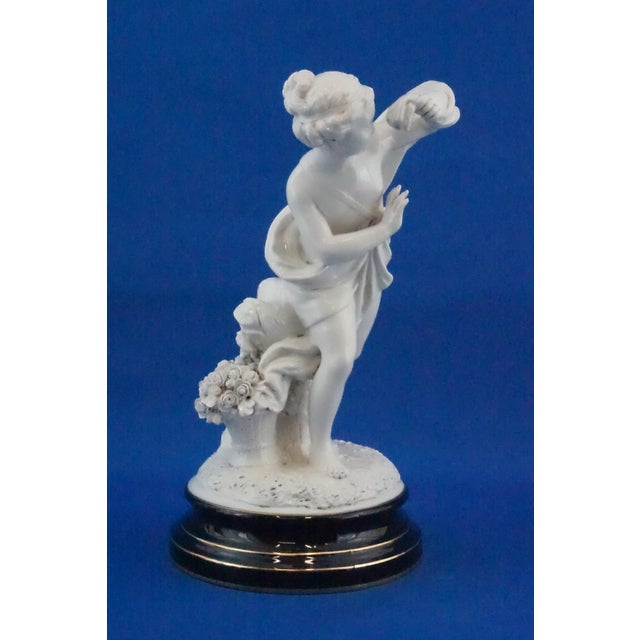
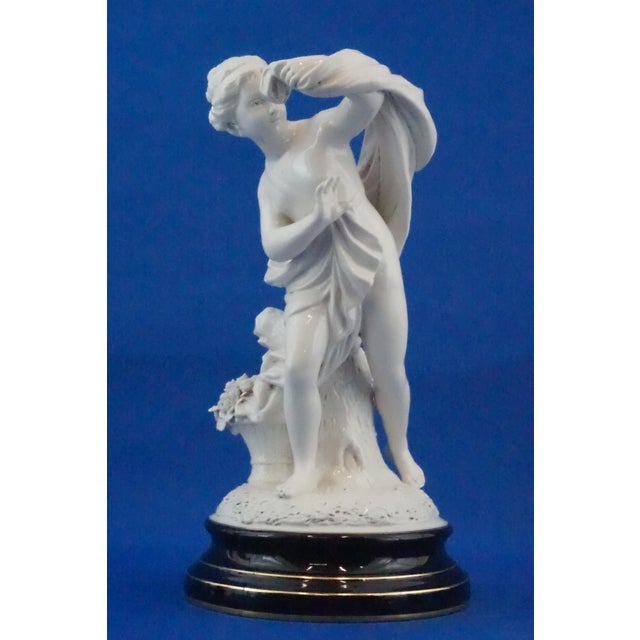
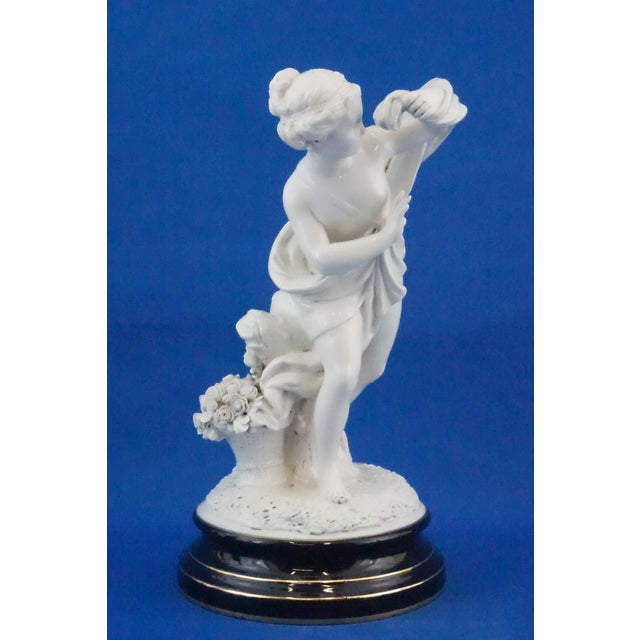
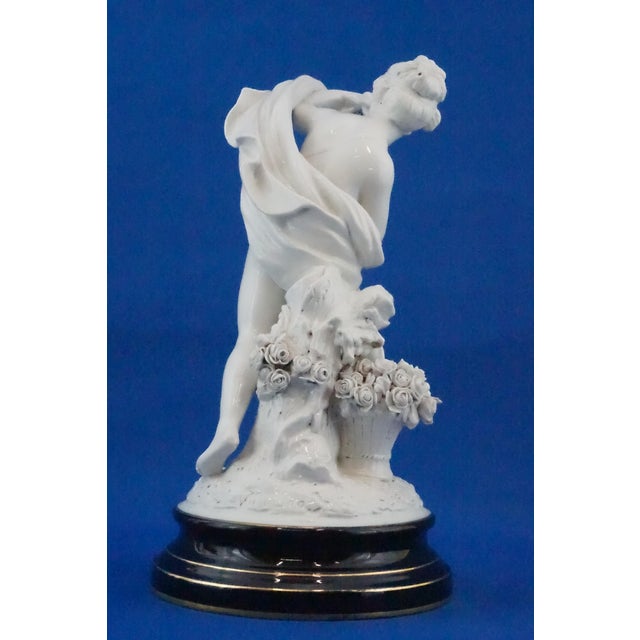
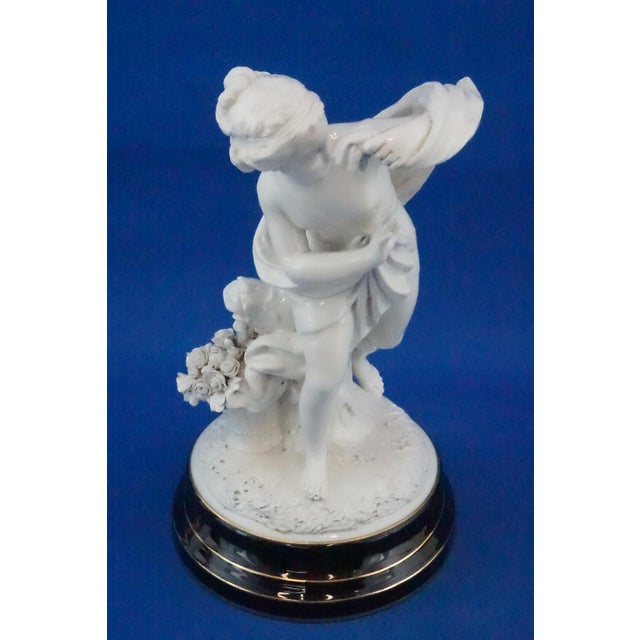
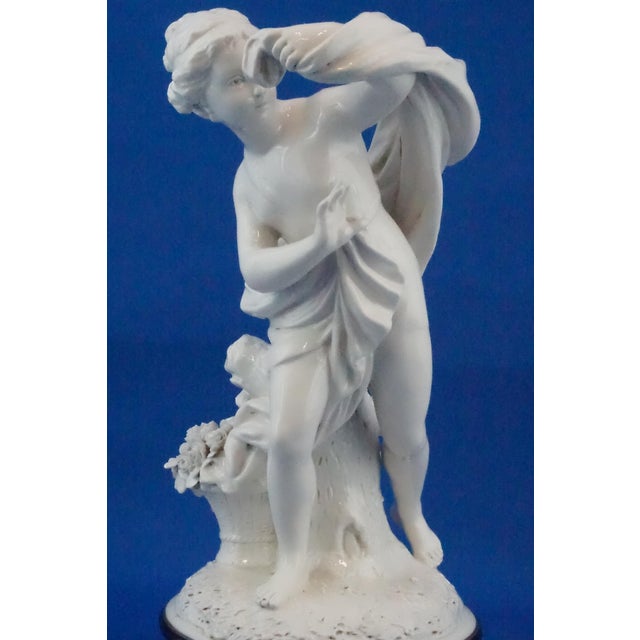
an elegant white glazed porcelain sculpture depicting psyche in her classical iconography, with a veil raised over her …
Read more
Item description
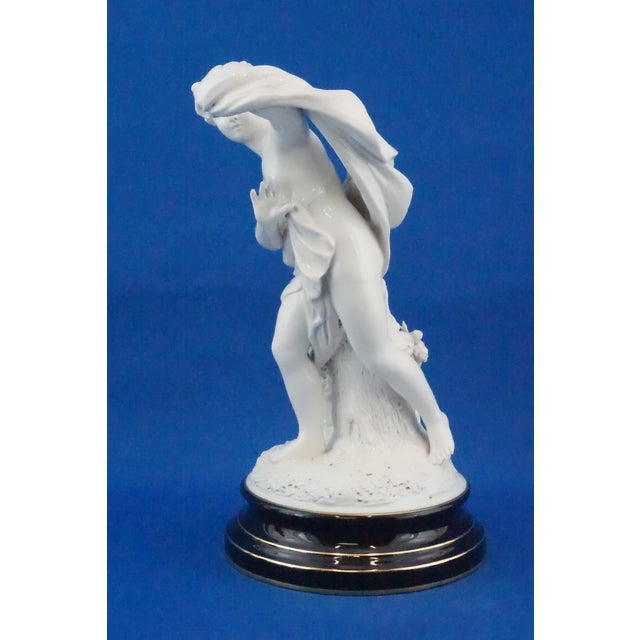
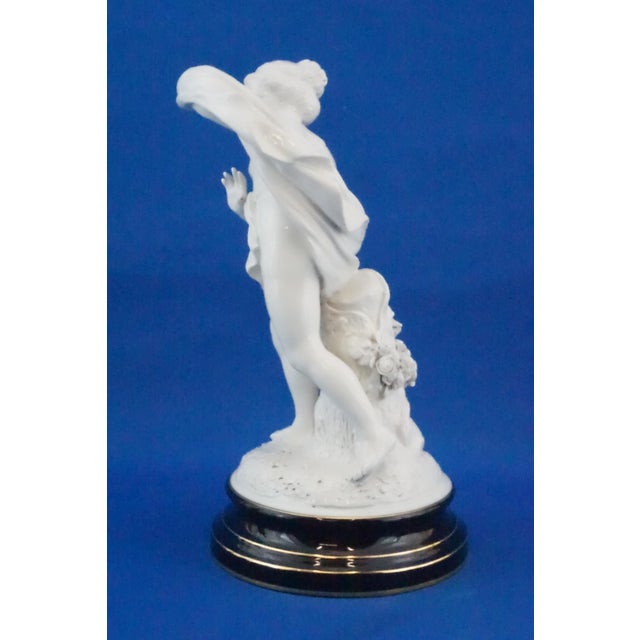
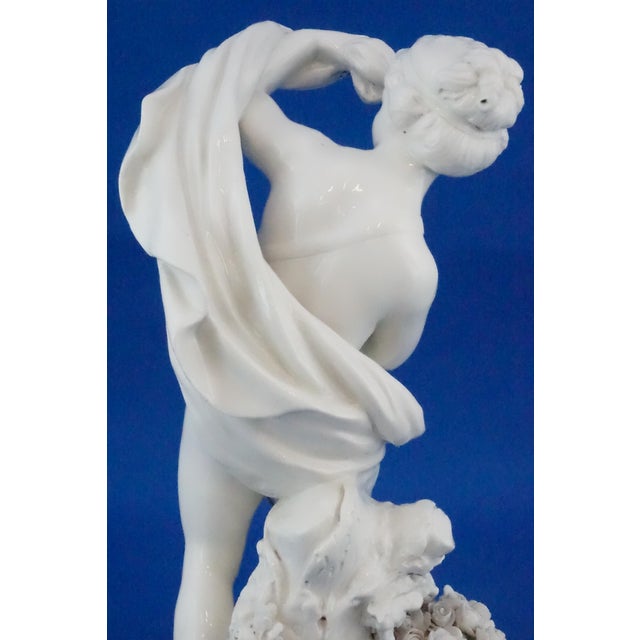
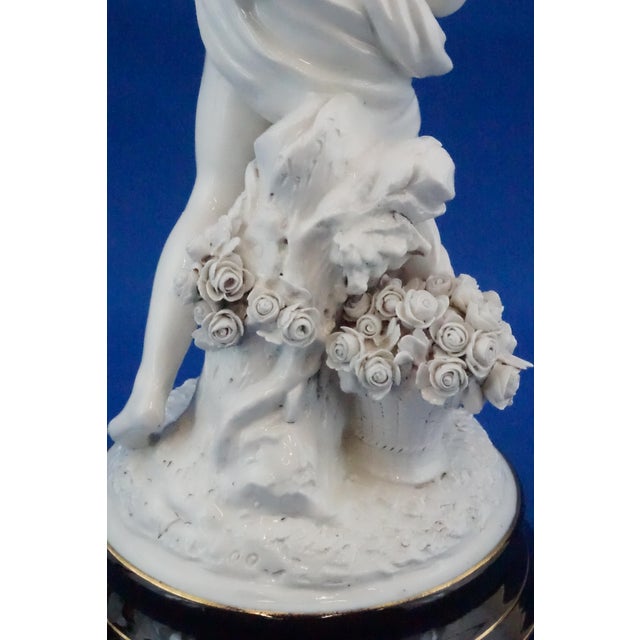
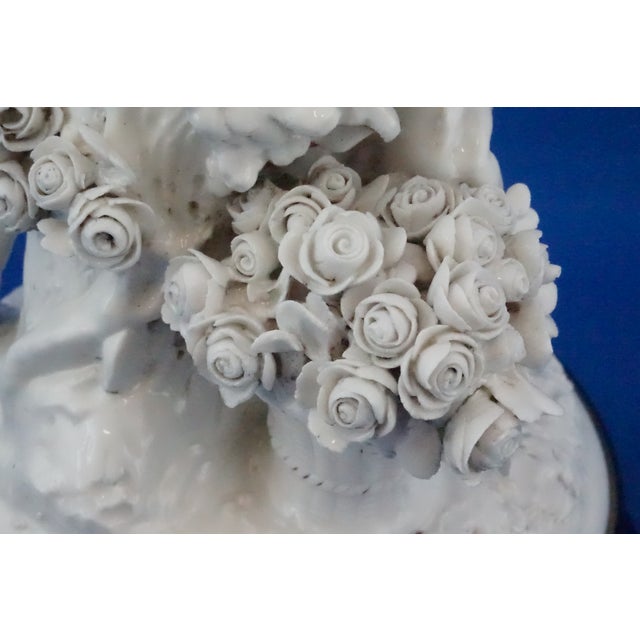
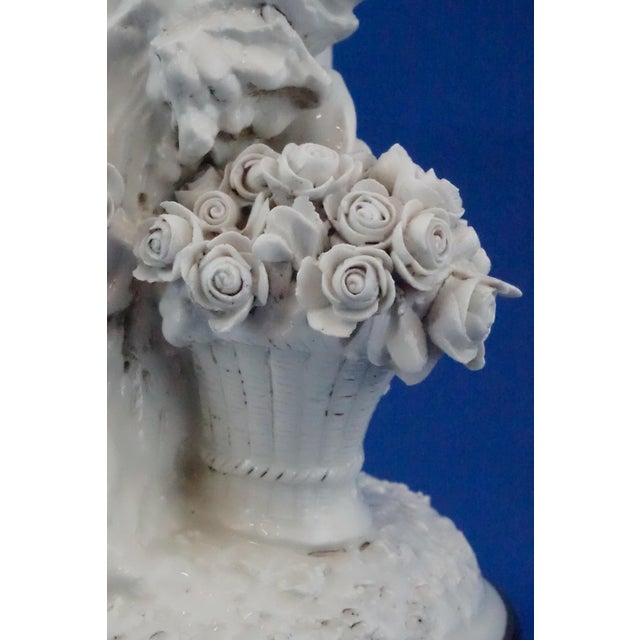
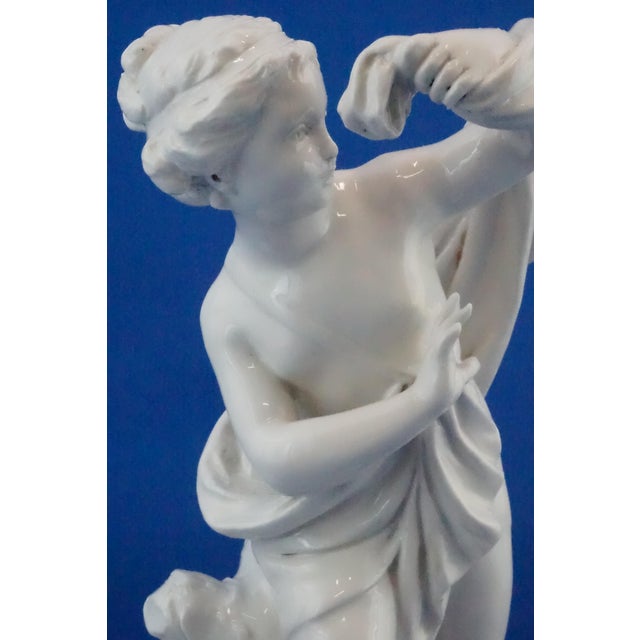
an elegant white glazed porcelain sculpture depicting psyche in her classical iconography, with a veil raised over her face and a large vase of flowers at her feet. Psyche is the personification of the human soul and the emblem of eternal and spiritual love. Mounted on a classic cobalt blue porcelain base with gold trim, sévrès porcelain was made in france in the second half of the 19th century, most likely by the famous sévrès factory, although it bears no factory mark. Inspired by the compositions of the french painter charles-andré van loo and likely based on a model by the french sculptor simon-louis boizot, although it is not signed. The 19th-century porcelain origins are evident in the extremely fluid and milky porcelain mix, the holes on the back to allow heat to escape during firing—a characteristic of older porcelain, which was typically much thicker and more compact than that of the 1900s—and the sculpture's weight, which is very heavy compared to its volume. The figure, captured in a lively spiral movement, raises a large veil billowing in the wind with one arm, shielding her face, while the other holds the drape wrapped around her hips. Her hair, gathered in an elegant hairstyle, her soft body, and the flowing folds of the fabric are rendered with meticulous and dynamic modeling. Behind her, next to a tree trunk, a woven basket overflows with small roses, shaped and applied by hand petal by petal, according to the most refined technique of italian decorative porcelain, while other roses climb up the trunk. The glossy whiteness of the porcelain is enhanced by the contrast with the deep cobalt blue base, highlighted by gold trim. The signature "van loo" is impressed on the base of the mold, indicating the reference model, inspired by the allegories and mythological figures so dear to the painter and the french rococo style of the 18th century. It is in excellent overall condition, with some scattered firing pitting, typical of the workmanship.
information about the artist and/or manufacturer
louis-simon boizot was the son of antoine boizot, a tapestry designer who worked for the gobelins manufactory. At sixteen, he entered the royal academy of painting and sculpture and worked in the studio of sculptor rené-michel slodtz (1705–1764), who also trained jean-antoine houdon. Boizot won first prize for sculpture in 1762, which included a residency at the french academy in rome from 1765 to 1770. Shortly after his return to paris, he married marguerite virginie guibert, niece of the sculptor honoré guibert. He was admitted as a member of the royal academy in 1778 and exhibited his works at the annual salons until 1800. In 1777, he created busts of louis xvi and joseph ii of habsburg-lorraine, on the occasion of the latter's visit to his sister marie-antoinette; the two busts were reproduced in biscuit porcelain by the sèvres manufactory. For the 1781 salon, he created a bust of queen marie-antoinette for the department of foreign affairs. From 1773 to 1800, boizot directed the sculpture works at sèvres, producing a series of figures in white biscuit porcelain in a neoclassical style softened by the voluptuous forms of the rococo. During the revolution, he was a member of the commission on monuments in 1792 and sought to preserve many works of art, which were then being destroyed in large numbers. In 1805, he held a professorship at the école des beaux-arts. In 1808, he created the fountain for the place du châtelet, adapting it to the more grandiose and severe empire style. He celebrated napoleon's return from egypt with a gilded "victory" surmounted by two sphinxes; it is now located in the gardens of the musée carnavalet. This piece is attributed to the mentioned designer/maker. It has no attribution mark and no
official proof of authenticity,
however it is well documented in design history. I take full responsibility for any authenticity
issues arising from misattribution
See less
- Dimensions
- 7.09ʺW × 6.3ʺD × 12.6ʺH
- Art Subjects
- Figure
- Period
- 19th Century
- Country of Origin
- France
- Item Type
- Vintage, Antique or Pre-owned
- Materials
- Porcelain
- Condition
- Good Condition, Original Condition Unaltered, Some Imperfections
- Color
Returns & Cancellations
Return Policy - All sales are final 48 hours after delivery, unless otherwise specified in the description of the product.
Cancellation Policy - Prior to shipping or local pickup, buyers may cancel an order for up to 48 hours, unless otherwise specified.
Related Collections
- Fernando Botero Sculpture
- Straw Sculpture
- Maison Jansen Sculpture
- Roman Bronze Works Sculpture
- Constantin Brancusi Sculpture
- Barovier and Toso Sculpture
- Far Pavilions Sculpture
- Georgian Sculpture
- Jute Sculpture
- Blenko Sculpture
- Satinwood Sculpture
- Bakelite Sculpture
- Feliciano Béjar Sculpture
- Medium-Density Fibreboard Sculpture
- Emmanuel Villanis Sculpture
- Sculpture in Panama City, FL
- Sculpture in Columbus
- Recycled/Repurposed Sculpture
- Photography Sculpture
- Gold-Plate Sculpture
- René Lalique Sculpture
- Flavio Poli Sculpture
- Polished Brass Finish Sculpture
- Waylande Gregory Sculpture
- Antique Iron Finish Sculpture