

Details
Description
A remarkably rare and museum-quality cultural artifact, this authentic antique Korean Gyoui (ancestral ritual altar chair) dates to the late …
Read more
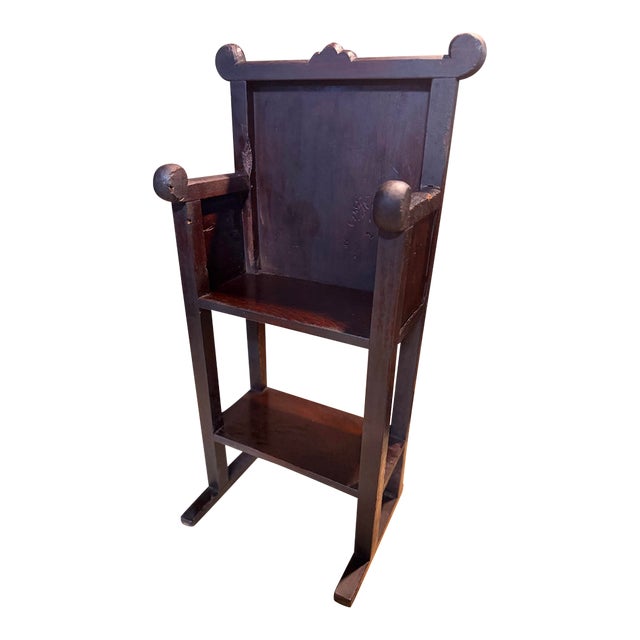
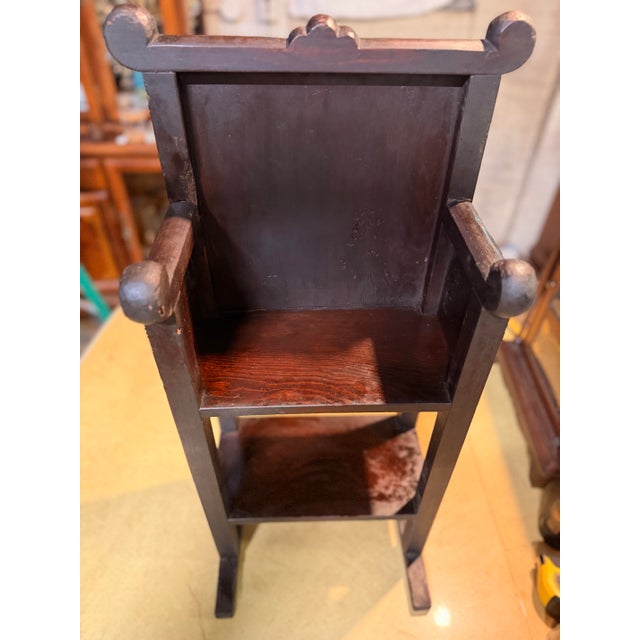
A remarkably rare and museum-quality cultural artifact, this authentic antique Korean Gyoui (ancestral ritual altar chair) dates to the late 19th century (Late Joseon Dynasty, circa 1890–1910). Masterfully hand-crafted using traditional Asian mortise-and-tenon architectural joinery, this 26-inch tall miniature chair of honor historically served as the sacred focal point during Confucian Jesa memorial ceremonies, acting as the symbolic seat of honor to hold and protect a family’s ancestral spirit tablet.
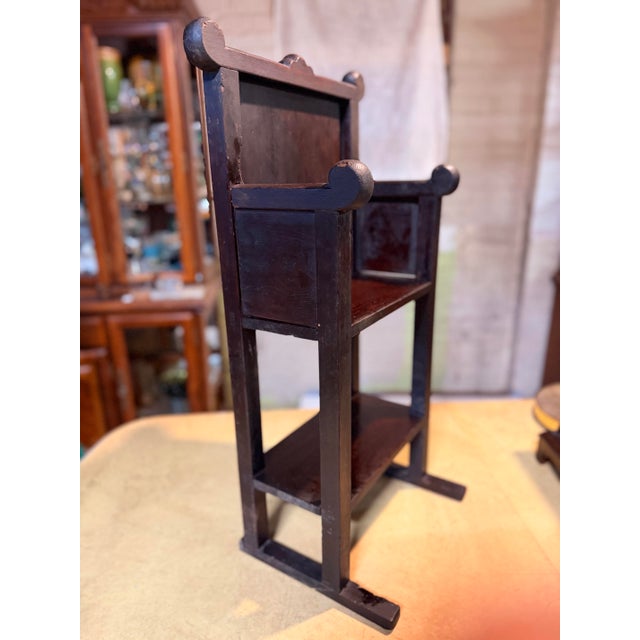
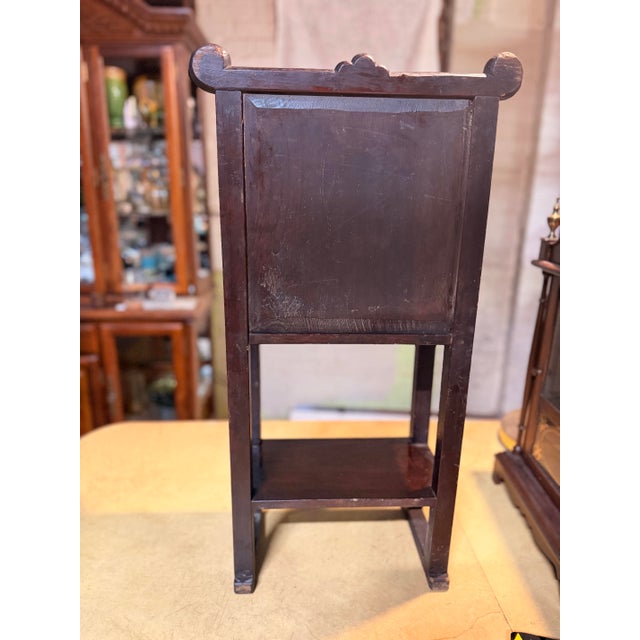
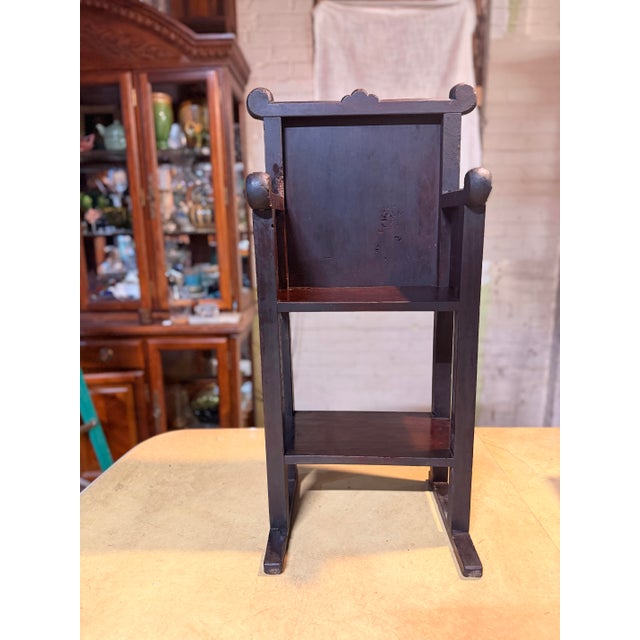
This exceptional example features a robust, clean-lined silhouette emphasizing pure form, scale, and geometry. The scrolled crest rail displays a beautifully hand-carved triple-lobed cloud motif, balancing above a solid back splat. The piece is built with a fixed architectural seat featuring an integrated raised display shelf and a deep, open lower tier.
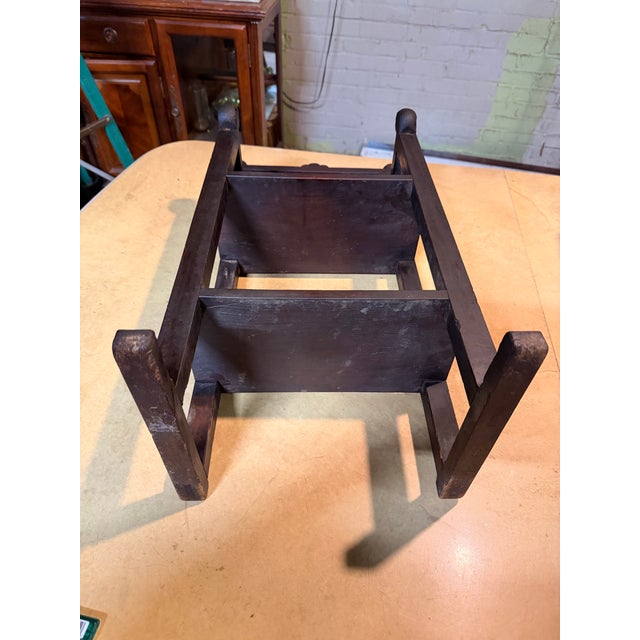
The structural authenticity of this piece is exceptionally well-preserved. The thick structural cross-beams on the underside show primitive, hand-planed tool marks, and the visible tenons pierce directly through the outer leg posts. The deep, rich dark finish has oxidized beautifully over the last century, sinking into the wood grain to create a wonderful, dry, aged texture.
See less
- Dimensions
- 14ʺW × 10ʺD × 27ʺH
- Styles
- Traditional
- Period
- 19th Century
- Item Type
- Vintage, Antique or Pre-owned
- Materials
- Wood
- Condition
- Good Condition, Original Condition Unaltered, Some Imperfections
- Color
- Brown
- Condition Notes
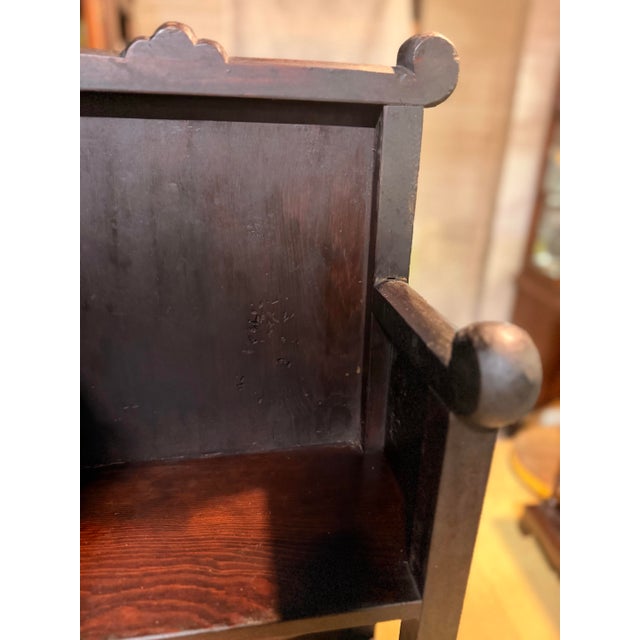
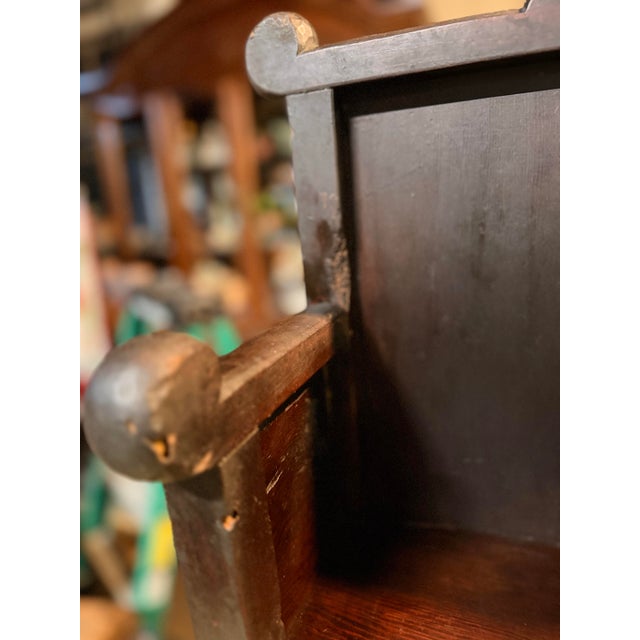
- Good antique condition, structurally sound. As an authentic piece of 19th-century folk furniture, it exhibits several honest characteristics of age … moreGood antique condition, structurally sound. As an authentic piece of 19th-century folk furniture, it exhibits several honest characteristics of age and historical utility: • Joint Stability & Historic Repair: The frame joinery is rock-solid. There is an early, stable historic wooden mend at the rear base runner where a tension split occurred near the leg joint interface, reinforced firmly during its working lifetime (see detail photos). • Surface Wear & Character Marks: The back splat panel shows light cluster indentations, small nail holes, and minor gouges consistent with where an ancestral tablet or name talisman was historically secured or handled over generations. • Wood Loss & Distress: There is an area of older wood erosion and minor material loss along the rear vertical post just above the armrest joint, as well as soft rounding and small chips on the armrest finials. The rich dark finish shows a beautiful, dry, aged texture that has sunk deep into the grain. The piece stands completely sturdy, carries its age beautifully, and is ready for immediate display less
Questions about the item?
Returns & Cancellations
Return Policy - All sales are final 48 hours after delivery, unless otherwise specified in the description of the product.
Cancellation Policy - Prior to shipping or local pickup, buyers may cancel an order for up to 48 hours, unless otherwise specified.
Related Collections
- Ming Plant Stands
- Ficks Reed Plant Stands
- John Salterini Plant Stands
- Maison Jansen Plant Stands
- Plant Stands in Indianapolis
- Wrought Iron Plant Stands
- Brass Plant Stands
- Chinese Plant Stands
- Mid-Century Modern Plant Stands
- Hollywood Regency Plant Stands
- Victorian Plant Stands
- Chinoiserie Plant Stands
- Cherry Wood Plant Stands
- Italian Plant Stands
- Brutalist Plant Stands
- Early American Plant Stands
- Paper Plant Stands
- Maple Plant Stands
- Otto Wagner Plant Stands
- Mother-of-Pearl Plant Stands
- Chelsea House Inc Plant Stands