

Details
Description
A remarkable french art nouveau barbotine majolica cachepot, dating to circa 1890, distinguished by its substantial proportions, highly architectural modeling …
Read more
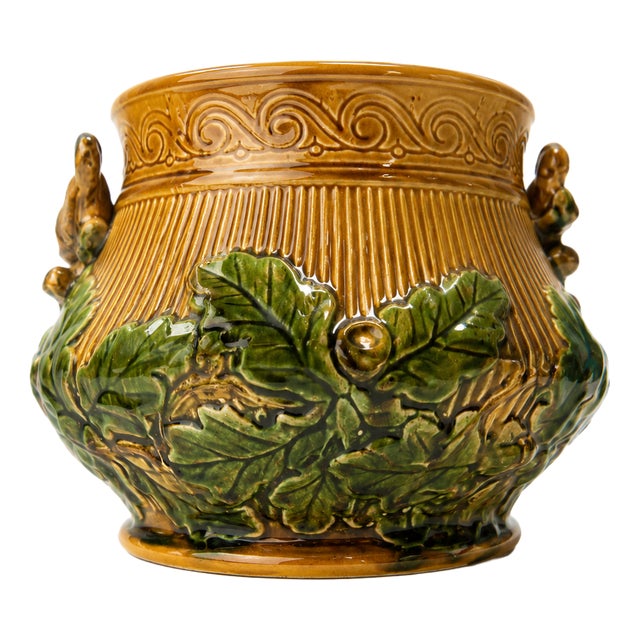
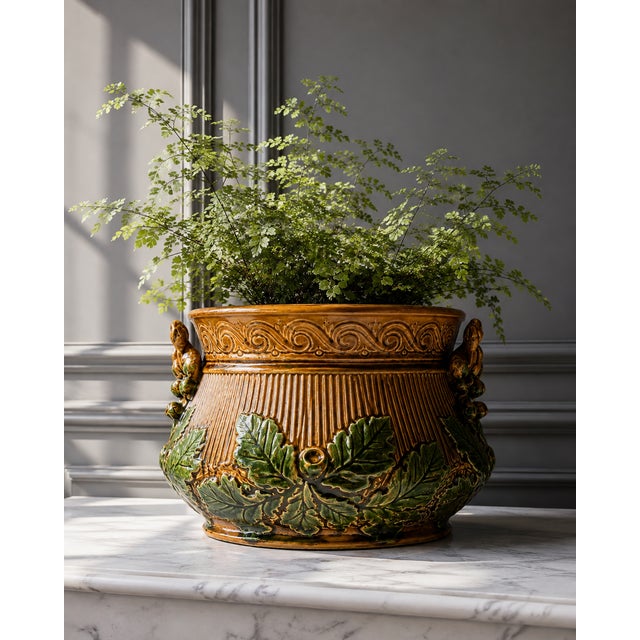
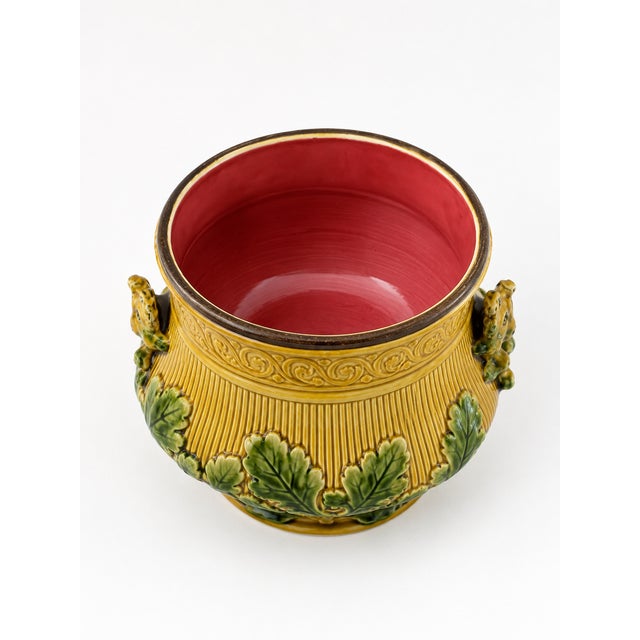
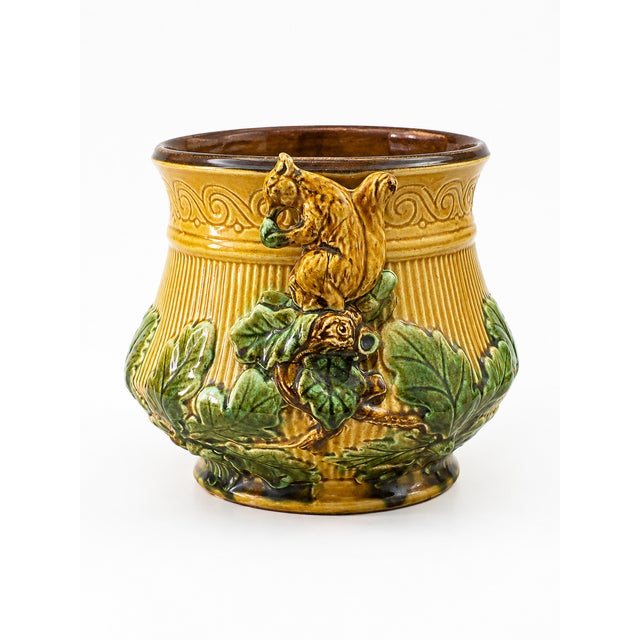
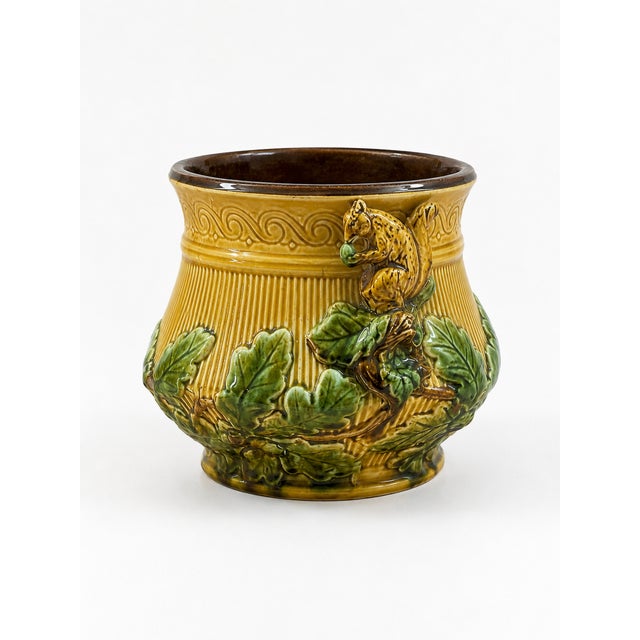
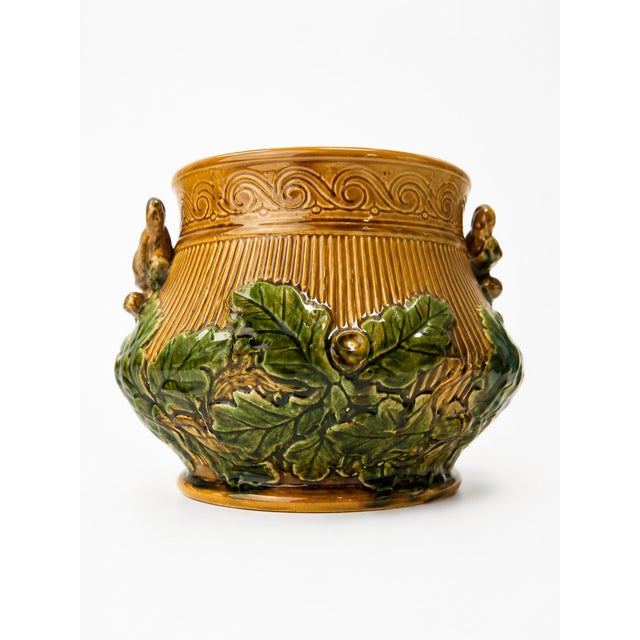
A remarkable french art nouveau barbotine majolica cachepot, dating to circa 1890, distinguished by its substantial proportions, highly architectural modeling and two sculptural squirrel handles, each holding an acorn between its paws. The composition is enriched by deeply molded foliage, ochre-yellow and green glazes and an unexpectedly refined pink-toned interior with brown finishing accents.
france, circa 1890. H 20 cm / 7.9 in.; w 25.5 cm / 10 in.; d 24 cm / 9.4 in.; opening approx. 20 cm / 7.9 in.; weight approx. 2.31 kg / 5.1 lb.
this cachepot is an especially accomplished example of the naturalistic and highly decorative vocabulary that characterized french majolica at the end of the 19th century.
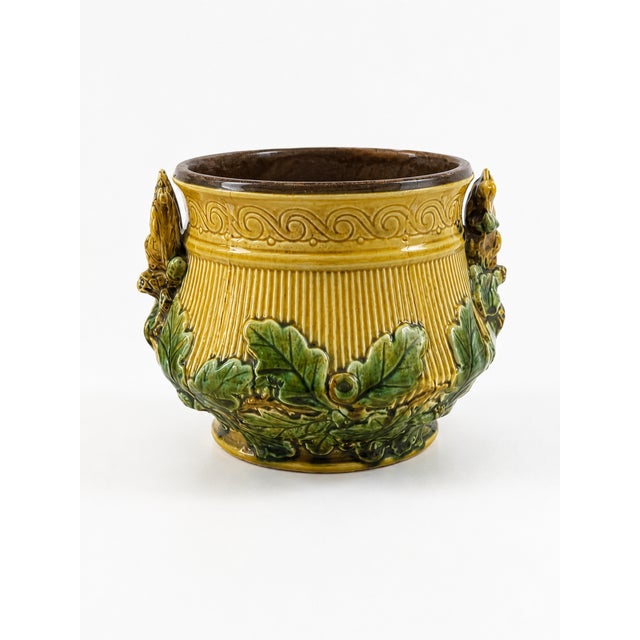
the body is conceived almost architecturally, with a strong and carefully balanced structure. The upper section is defined by vertical fluting and a molded ornamental border, while the lower body opens into a dense composition of raised foliage, branches and acorns, all modeled in pronounced relief.
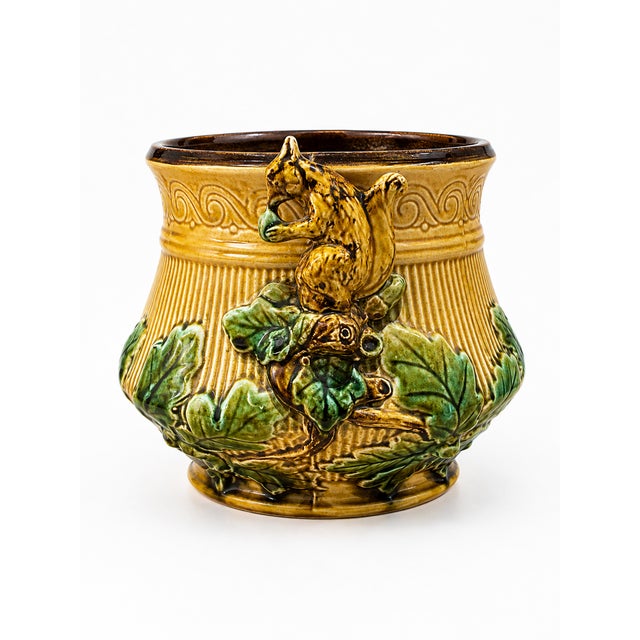
the two squirrels forming the handles are among the most distinctive aspects of the piece. They are not perfectly mirrored: one rises slightly higher than the other, creating a subtle asymmetry that gives the composition greater liveliness and naturalism. The difference is particularly visible in the profile of the ears, with one projecting more prominently above the rim line.
each squirrel is modeled holding an acorn between its front paws, while its body appears to rest against and emerge from a sculpted branch. This creates an unusually coherent decorative narrative in which the animal, the acorn and the surrounding oak foliage form a single continuous composition rather than separate ornamental elements.
the modeling is especially effective in the transition between the handles and the body. Branches and leaves appear to support the squirrels physically, reinforcing the impression that the animals are part of the structure of the vessel itself.
the glaze is equally important to the character of the piece. The exterior combines warm ochre-yellow, honey and amber tones with richly varied greens across the raised foliage. Darker brown accents settle into the recesses and edges of the relief, emphasizing depth and creating a strong visual contrast between the molded surfaces.
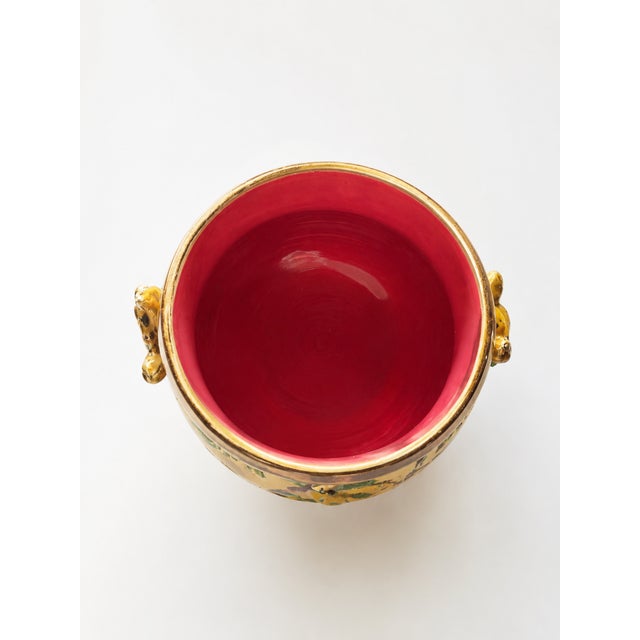
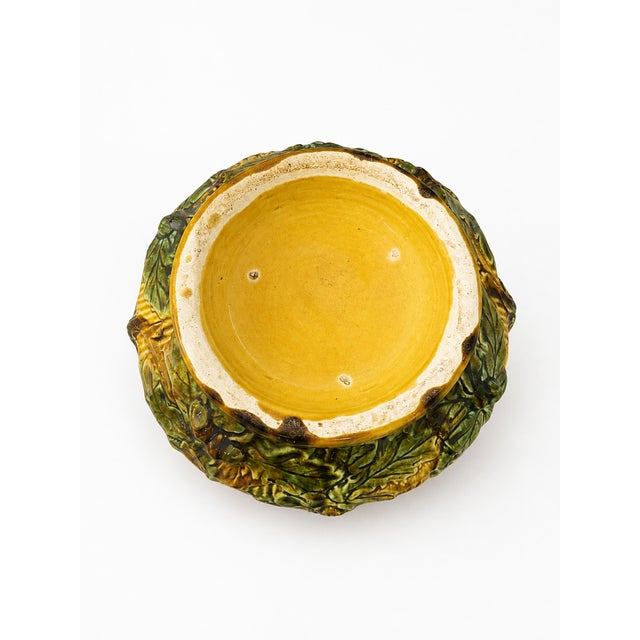
particularly striking is the interior, where visible brushwork introduces soft pink tones enriched by brown finishing strokes and darker accents. This interior treatment is far more nuanced than a simple monochrome glaze and gives the piece an unexpected painterly quality when viewed from above.
the interaction between color and modeling is especially successful. The green foliage, the warm ochre body and the pink-brown interior create a complex but harmonious palette, while the relief catches lateral light across multiple levels, allowing the surface to shift continuously between highlights and shadow.
the cachepot is therefore not merely decorative in its ornamentation: its entire construction is carefully organized around volume, relief, asymmetry and visual rhythm. The squirrels provide vertical movement at the sides, the fluted body gives architectural order to the central section, and the dense lower foliage creates a sculptural foundation.
despite standing only 20 cm high, the piece has considerable physical presence. With a width of 25.5 cm, a depth of 24 cm and a weight of approximately 2.31 kg, it feels substantial and imposing for its scale.
viewed frontally, the composition is dominated by the rich foliage and structured body; from the sides, the squirrels emerge almost as independent sculptures; from above, the delicately painted interior becomes a completely different visual element. It is an object designed to be appreciated fully in the round.
its combination of architectural structure, sculptural handles, naturalistic asymmetry, deeply modeled foliage and sophisticated glaze work makes this an especially notable example of french decorative ceramic production from circa 1890.
condition
the cachepot is in excellent antique condition, particularly remarkable for a ceramic object dating from circa 1890. Minor irregularities and variations in the glaze and modeled surface are consistent with age and hand manufacture and contribute to the individual character of the piece.
See less
- Dimensions
- 9.84ʺW × 9.45ʺD × 7.87ʺH
- Styles
- Rustic
- Period
- 19th Century
- Country of Origin
- France
- Item Type
- Vintage, Antique or Pre-owned
- Materials
- Ceramic
- Enamel
- Condition
- Good Condition, Original Condition Unaltered, Some Imperfections
- Color
- Brown
Returns & Cancellations
Return Policy - All sales are final 48 hours after delivery, unless otherwise specified in the description of the product.
Cancellation Policy - Prior to shipping or local pickup, buyers may cancel an order for up to 48 hours, unless otherwise specified.
Related Collections
- Gladding, McBean Planters
- Planters in Reno/Lake Tahoe
- Planters in Little Rock
- Planters in Columbus
- Salmon Planters
- Planters in Indianapolis
- Planters in Monterey, CA
- Brass Finish Planters
- Elm Planters
- Concrete Planters
- Cast Iron Planters
- Wicker Planters
- Victorian Planters
- Chinoiserie Planters
- Brass Planters
- Chinese Planters
- Urn Planters
- Copper Planters
- Swan Planters
- Italian Planters
- Fish Bowl Planters
- Mid-Century Modern Planters
- Japanese Planters
- Art Deco Planters
- French Planters