

Details
Description
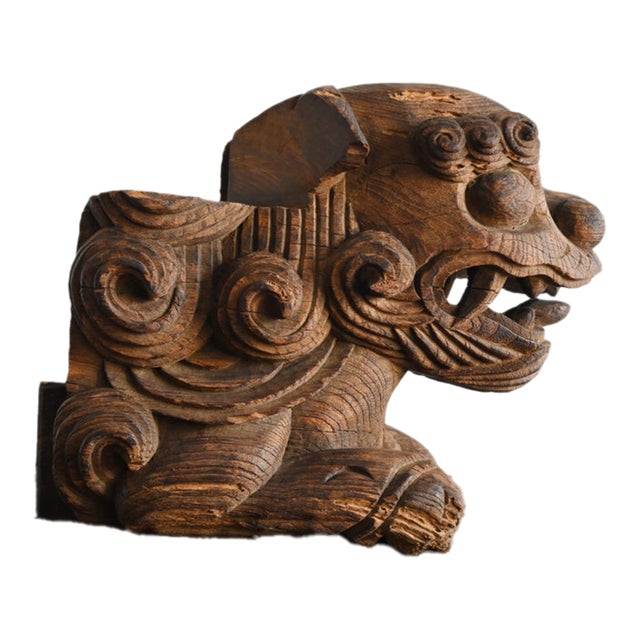
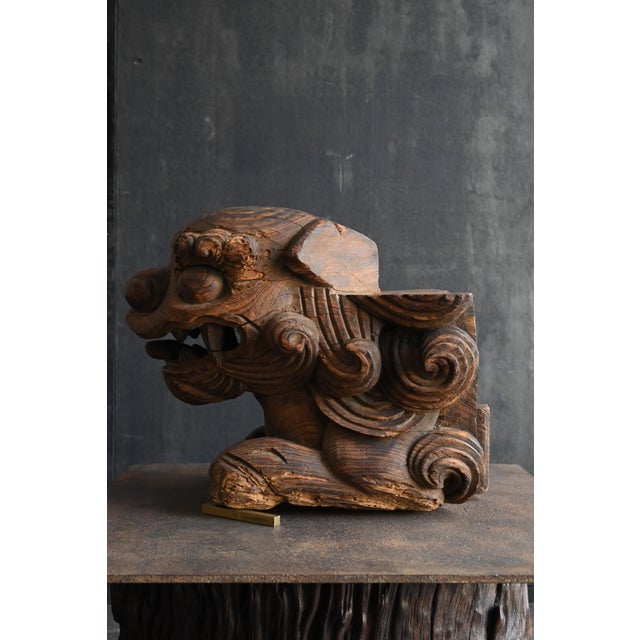
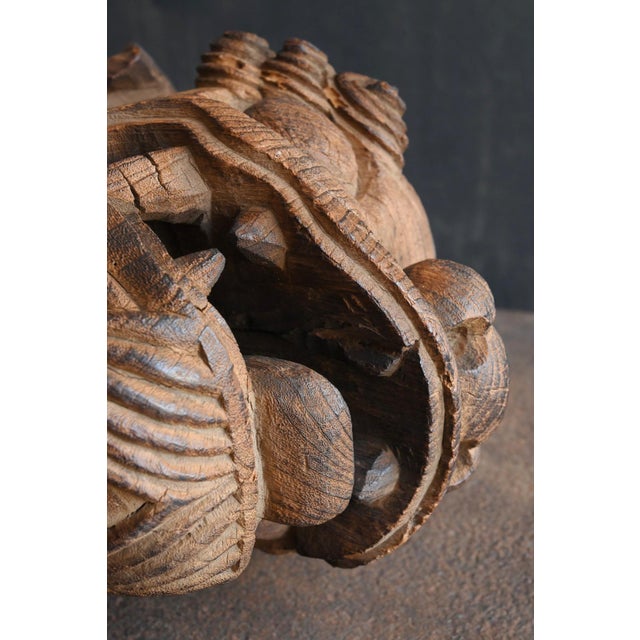
This is thought to be a kibana lion from the middle to late Edo period.
A kibana is a wood …
Read more
This is thought to be a kibana lion from the middle to late Edo period.
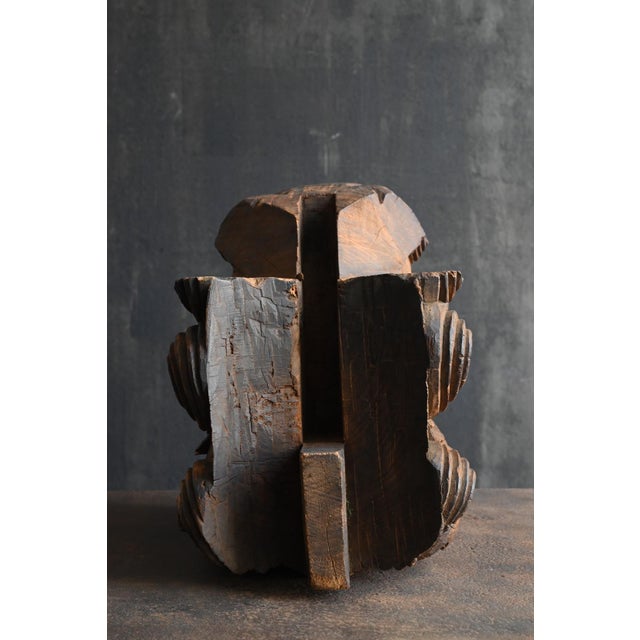
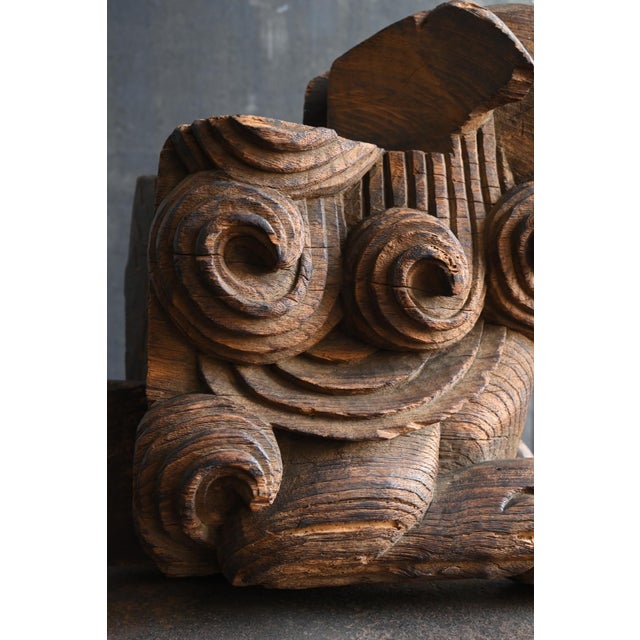
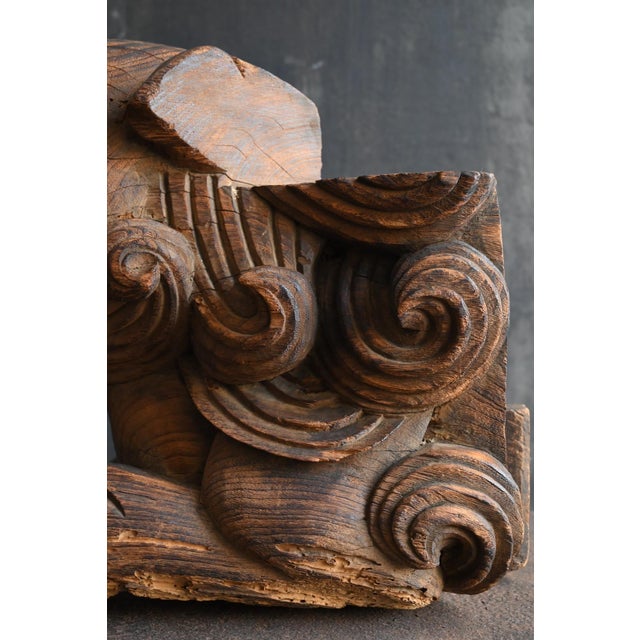
A kibana is a wood carving found on Japanese shrine and temple buildings. In traditional Japanese architecture, the ends of the beams that pass through the pillars project outward. The decorative carving made on the tip of such a beam is called a kibana. Besides lions, elephants, baku (mythical tapir-like creatures), and dragons were also carved. It is said that they also served to protect the building.
The lion is not a creature that originated in Japan. It is said that the form of the lion, which originally existed in distant countries to the west, crossed to China and was then brought to Japan along with Buddhism. Lions have been treasured in Japan as guardian beasts that protect buildings at the entrances of shrines and temples. This kibana lion is one of those lions.
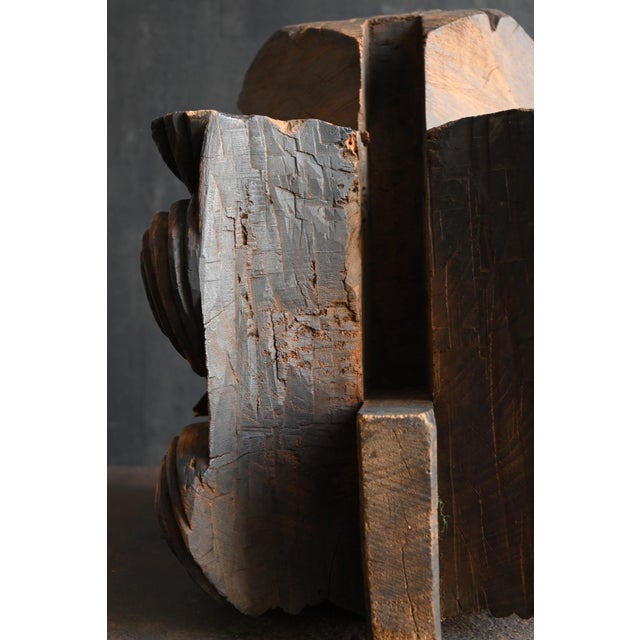
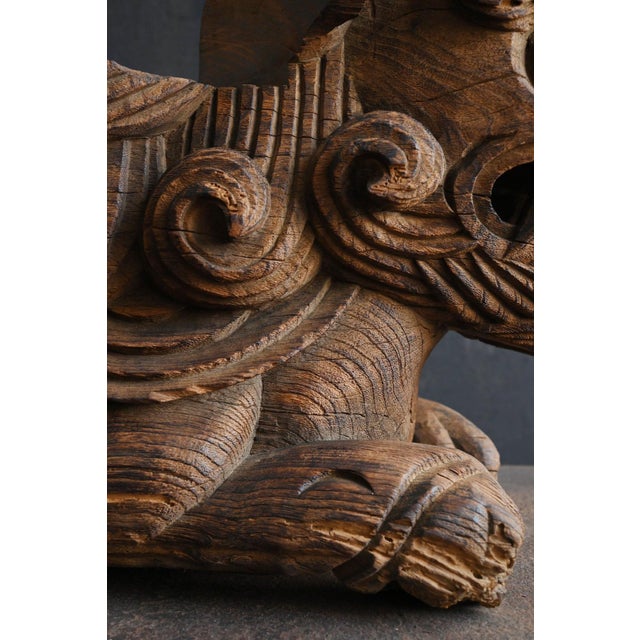
The wood is most likely zelkova (keyaki). Zelkova is a beautiful wood that has often been used for shrines and temples. It has a clear grain and is sturdy.
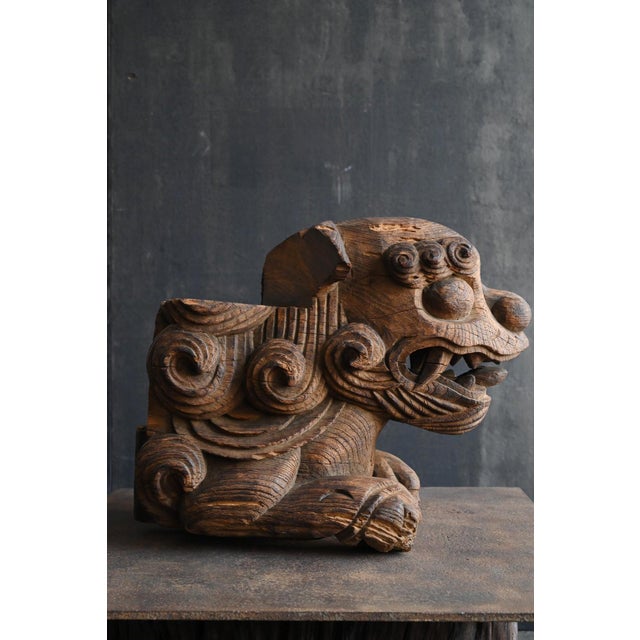
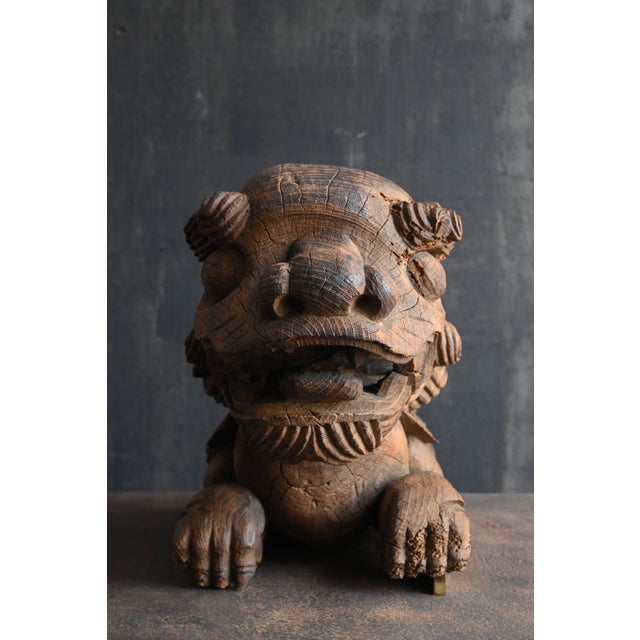
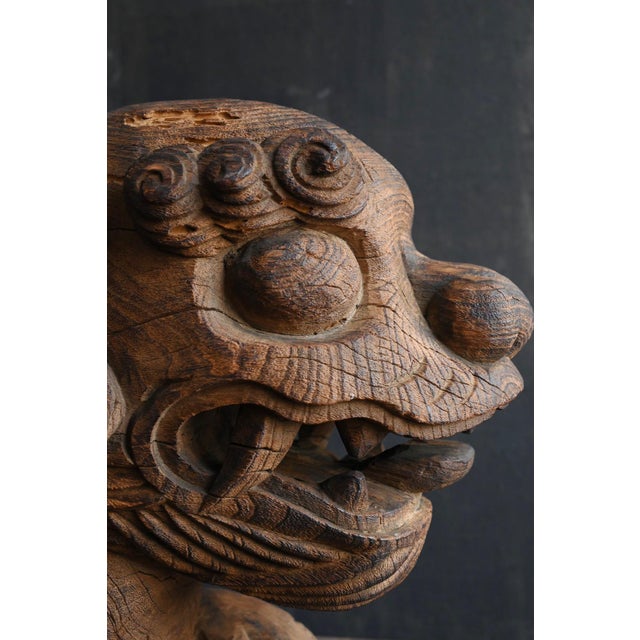
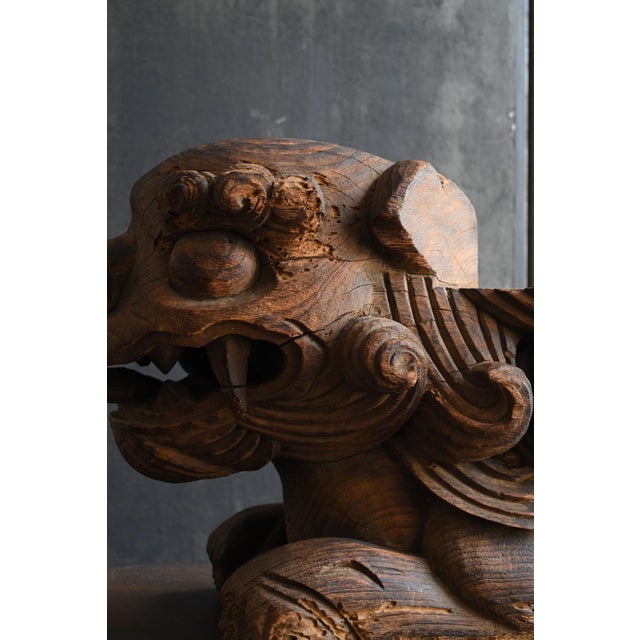
Please take a look at the carving and design as well. The nose is large, and so are the eyes. This kind of expression, seen in lions, appears here and there from the middle to the late Edo period. That is why we believe this lion dates from the middle to late Edo period.
It has a somewhat endearing, soft look. It looks a little like a dog as much as a lion. The large nose has a charm of its own, and is rather cute. Although it is a sacred guardian with dignity, it has a face that feels somehow approachable. It is the kind of expression that makes you want to talk to it.
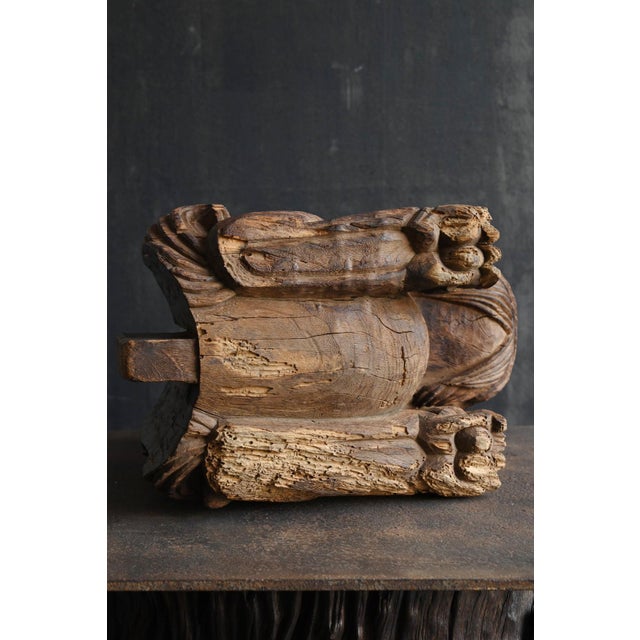
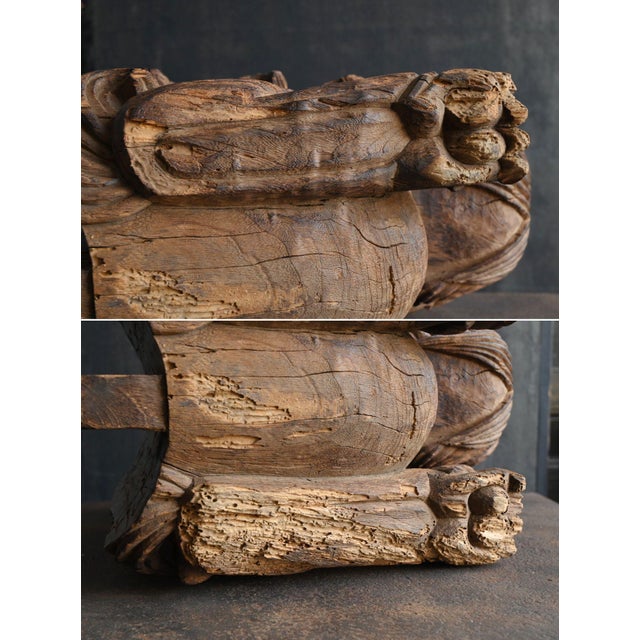
Now, about its condition. We believe it is in relatively good condition. However, the fang on the left side as seen from the front has been chipped. There are also traces of insect damage. There are no insects at present, so please rest assured.
Kibana were often placed under eaves, and because of this, some have turned whitish or taken on a grayish tone. This kibana, however, has not taken on such colors. With the passing of the years, the wood has developed a deep, subdued brown. It is a texture that we personally love very much.
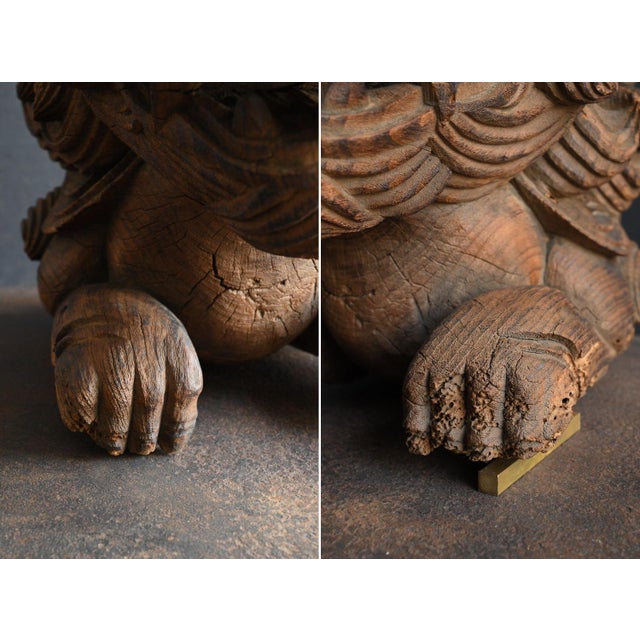
A metal rod appears in the photos from time to time. When the lion is simply placed down, it tilts slightly, so we inserted the rod to level it. When you display it, please place something under it in the same way to keep it level.
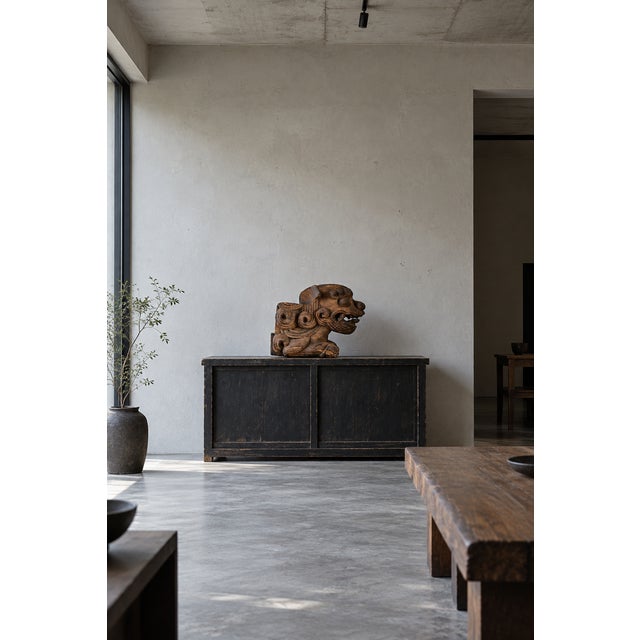
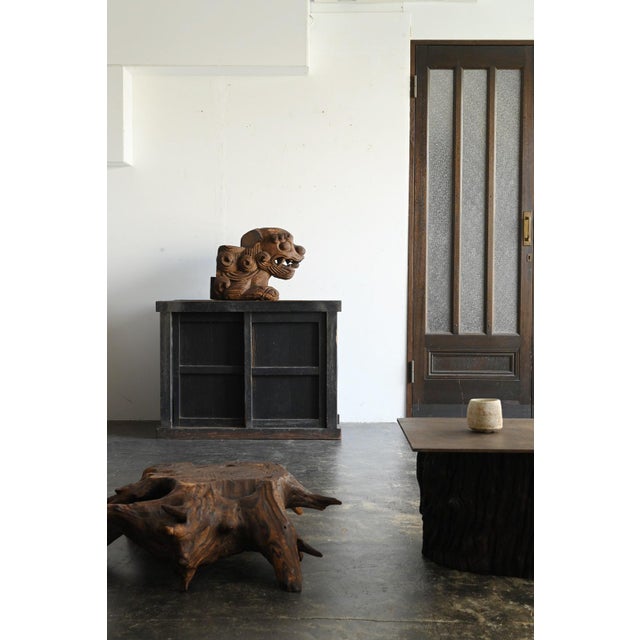
Kibana are originally large pieces, and this lion, too, has a considerable size. It would be a fine idea to display it in the main spot of a room. Placed on a console in an entrance hall or on a shelf, it becomes the star of the space. In front of a white wall, the shadows of the carving stand out crisply. It also blends well with old wooden furniture and black iron stands. It makes a strong accent not only in Japanese-style spaces, but in modern ones as well.
We highly recommend this piece.
※Please note that the images displayed for this item include AI-generated display photos towards the end. The colors and actual size may differ from the images shown, so please consider them as illustrative images to help you visualize how the item would look in your interior.
Size: W44.6cm × D26.5cm × H35cm
Weight: 8.95kg
Item No.: SC179
[Our Social Role]
--------------------------------------------------------------------------------------------------------
We are a specialized team dealing in antiques and vintage items, comprised of stores based on three distinct brands. While focusing on Japanese items, we also offer a carefully curated selection of attractive goods from around the world—each evoking the culture and history of its country of origin.
Unlike the traditional Japanese antique furniture and art that have been appreciated overseas until now, we shine a light on the tools and furniture that were used for many years in ordinary Japanese homes and farmhouses. These objects have gained a unique charm over time, their beauty deepened by the history accumulated through daily life. In today's world, however, many of these precious items are discarded during home demolitions. We are committed to reassessing their value and passing them on to future generations.
Drawing from our extensive experience—having seen tens of thousands of items through direct purchases, markets, and auction houses—we carefully select and present only the most captivating pieces. This is something made possible only through the years of knowledge and expertise we have cultivated.
Rather than focusing on the widely known facets of Japanese art and culture, we highlight the subtle beauty born from the everyday life of common people. It is this rediscovered beauty, steeped in history, that we strive to share with the world.
See less
- Dimensions
- 17.6ʺW × 10.4ʺD × 13.8ʺH
- Styles
- Japanese
- Art Subjects
- Animals
- Period
- 18th Century
- Country of Origin
- Japan
- Item Type
- Vintage, Antique or Pre-owned
- Materials
- Iron
- Wood
- Condition
- Good Condition, Original Condition Unaltered, Some Imperfections
- Color
- Brown
- Condition Notes
- The fang on the left as seen from the front is chipped. There are traces of old insect damage, but … moreThe fang on the left as seen from the front is chipped. There are traces of old insect damage, but no active insects. Please be sure to read the description regarding the condition of the item. less
Questions about the item?
Returns & Cancellations
Return Policy - All sales are final 48 hours after delivery, unless otherwise specified in the description of the product.
Cancellation Policy - Prior to shipping or local pickup, buyers may cancel an order for up to 48 hours, unless otherwise specified.
Related Collections
- Fernando Botero Sculpture
- Straw Sculpture
- Roman Bronze Works Sculpture
- Maison Jansen Sculpture
- Barovier and Toso Sculpture
- Louis XIV Sculpture
- Constantin Brancusi Sculpture
- Flavio Poli Sculpture
- Georgian Sculpture
- Far Pavilions Sculpture
- Jute Sculpture
- Blenko Sculpture
- Satinwood Sculpture
- Bakelite Sculpture
- Polished Brass Finish Sculpture
- Emmanuel Villanis Sculpture
- Feliciano Béjar Sculpture
- Medium-Density Fibreboard Sculpture
- Sculpture in Panama City, FL
- Antique Iron Finish Sculpture
- Gourd Sculpture
- René Lalique Sculpture
- Sculpture in Columbus
- Photography Sculpture
- Gold-Plate Sculpture