

Details
Description
Genre: Latin American
Subject: Abstract
Medium: Mixed Media, sculpture
Country: Mexico
Feliciano Bejar, Mexico (1920-2007). Bejar is best known for …
Read more
Genre: Latin American
Subject: Abstract
Medium: Mixed Media, sculpture
Country: Mexico
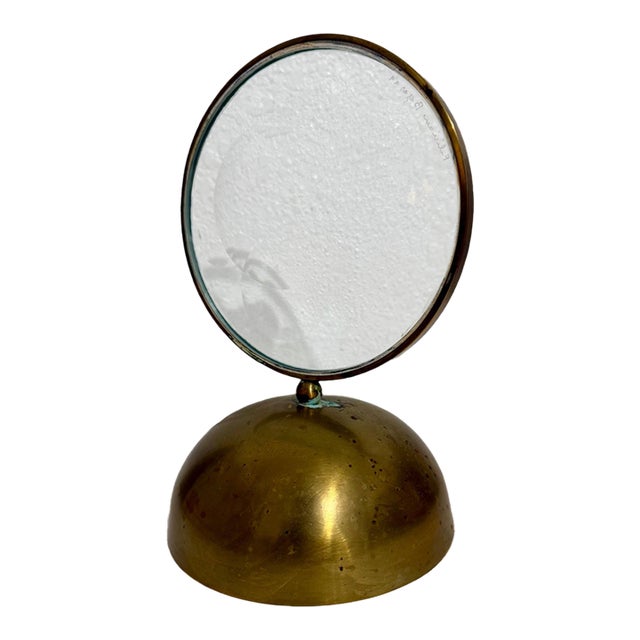
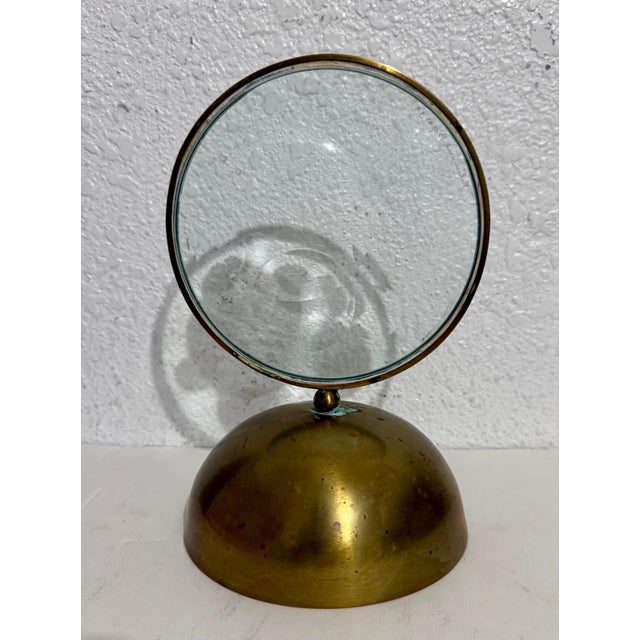
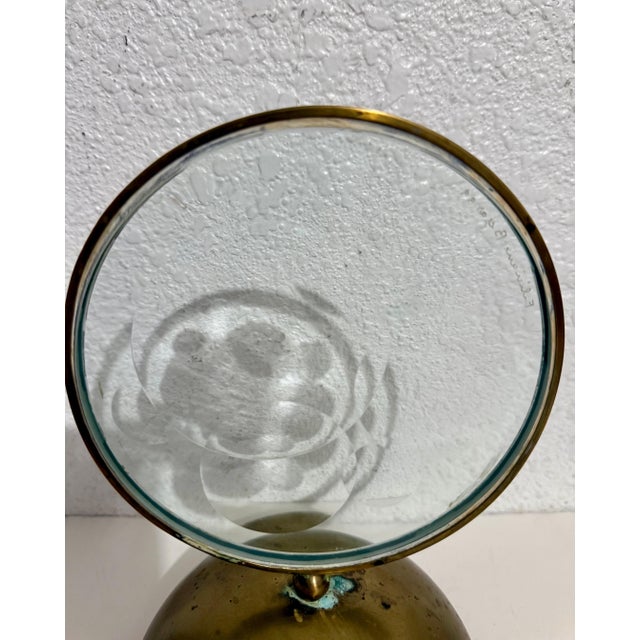
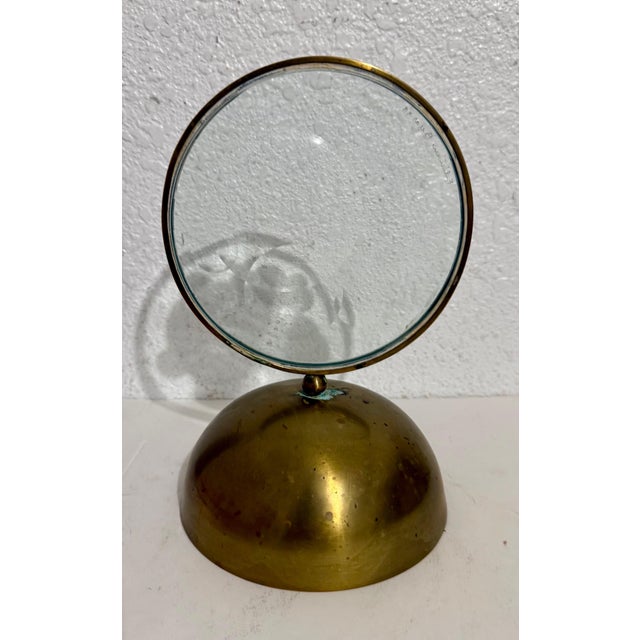
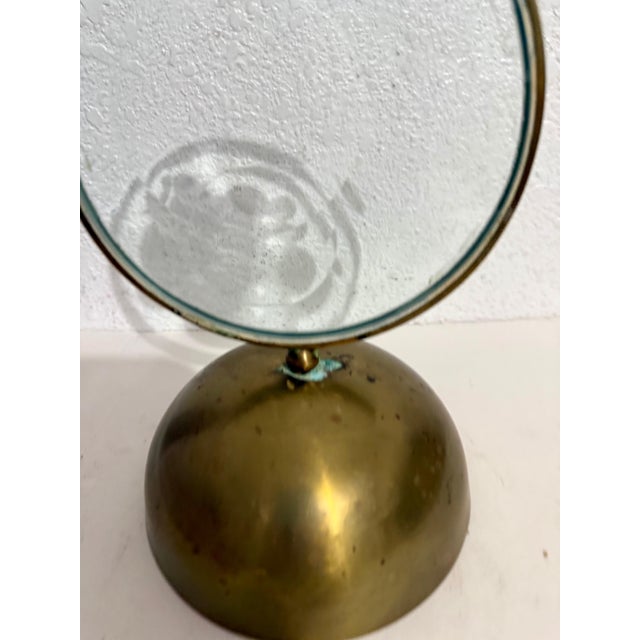
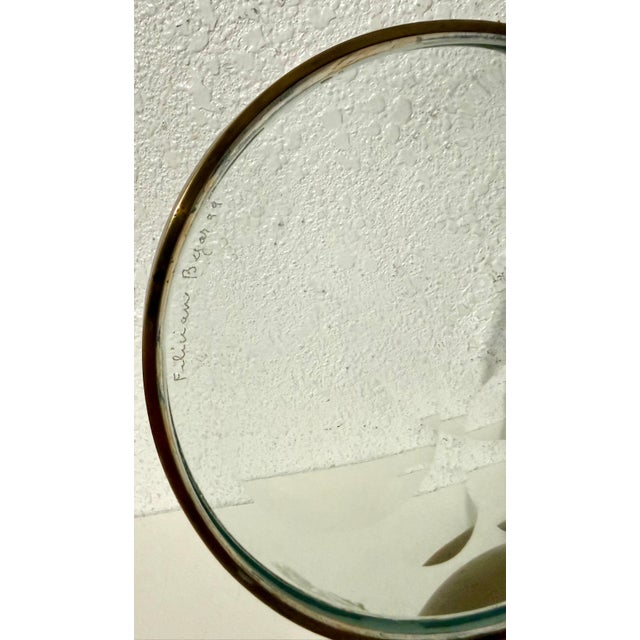
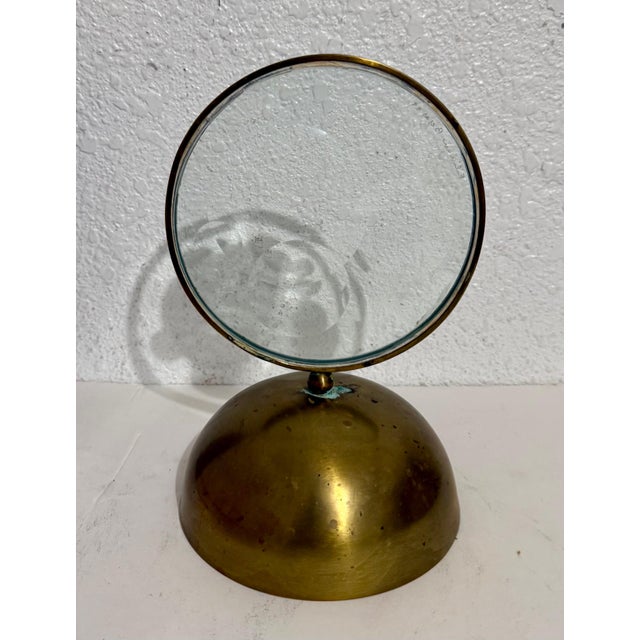
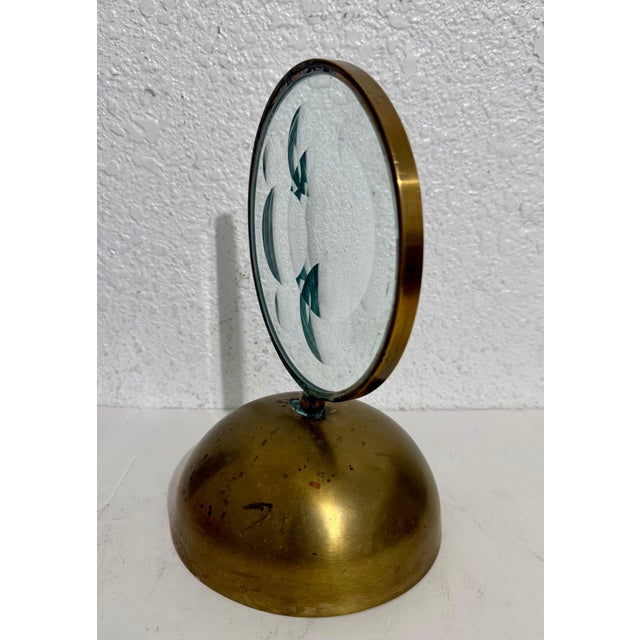
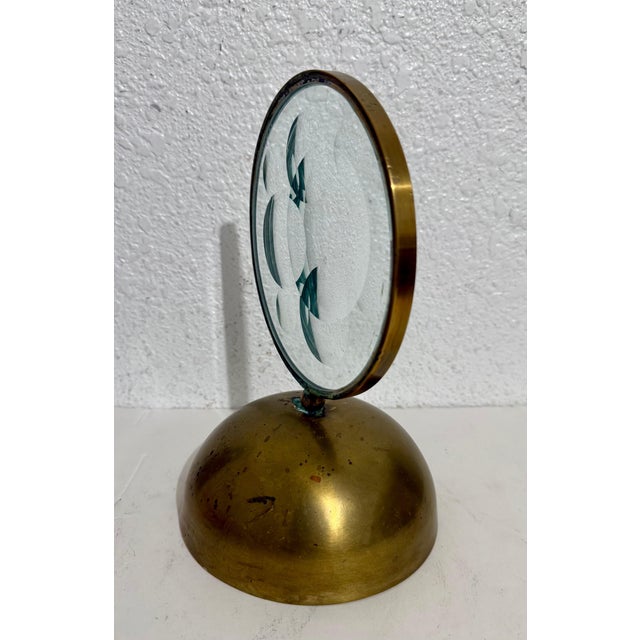
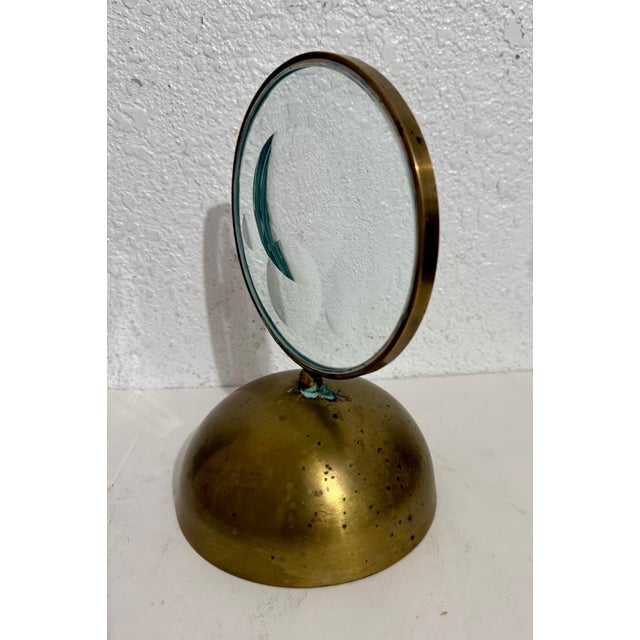
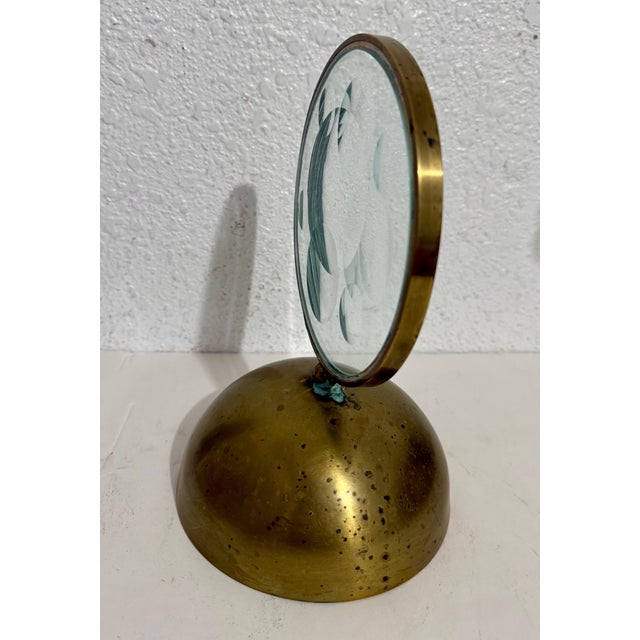
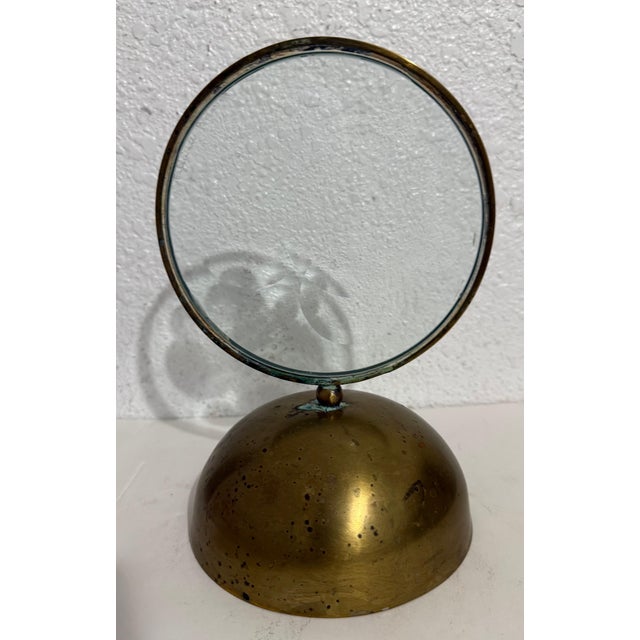
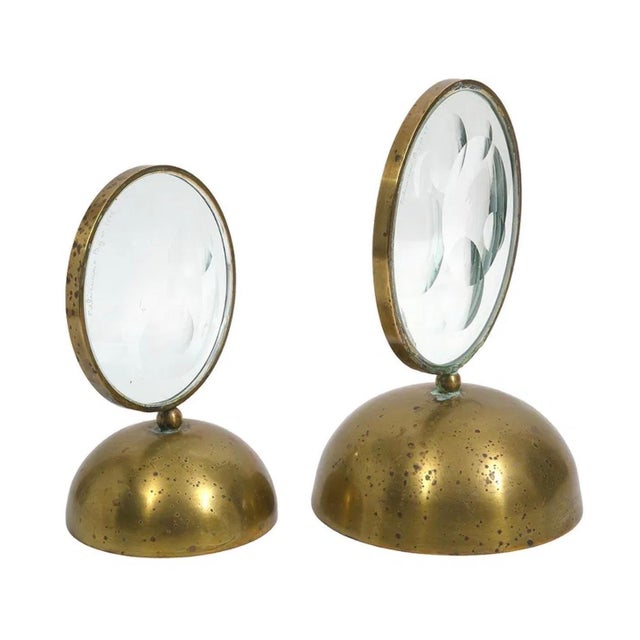
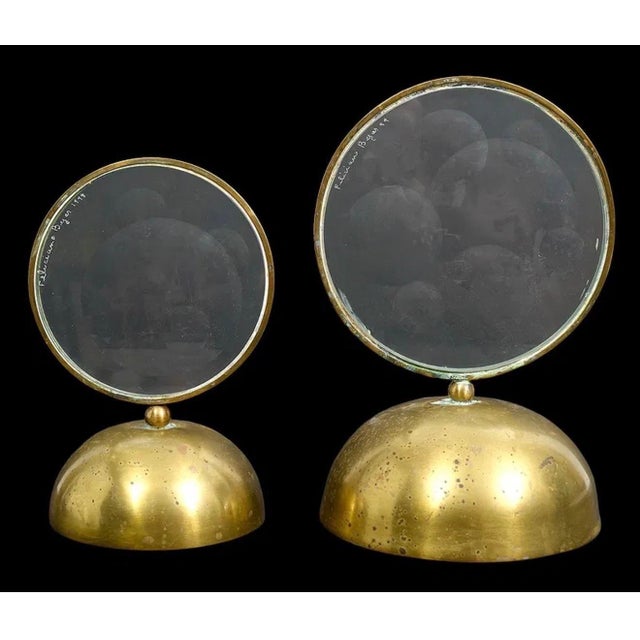
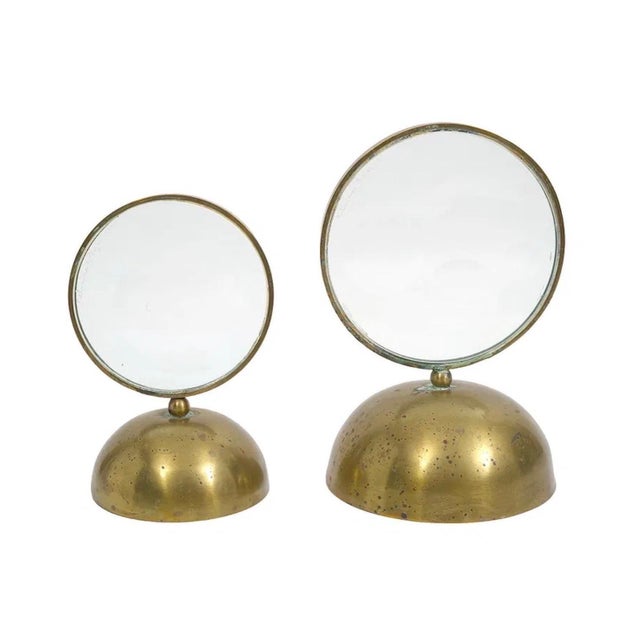
Feliciano Bejar, Mexico (1920-2007). Bejar is best known for a style of sculpture called Magiscopios which involves different materials like crystals, lenses and metals that can create distorted visions and plays with light. This has a circular cut glass lens and is mounted on a hemispherical brass base.
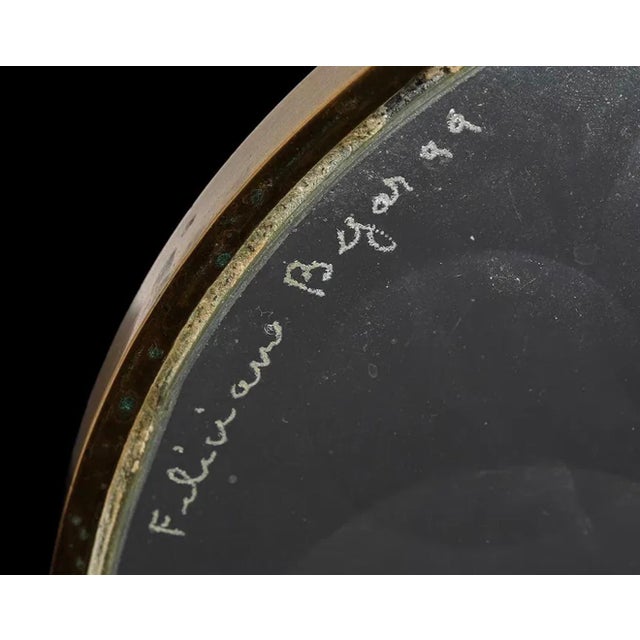
Hand signed with etched signature.
Dated 1999.
This is for one of a pair. I am also listing the second and showing photos of them together but this sale is for just this one.
Feliciano Béjar Ruíz (1920 – February 1, 2007)
Mexican Sculptor Painter Printmaker Magiscopio Kinetic Art Op Art Light Sculpture Mixed Media Museum of Modern Art Pompidou Centre Mexican Modernism
Feliciano Béjar Ruíz (1920–2007) was one of the most original and internationally celebrated Mexican artists of the twentieth century — a self-taught sculptor, painter, printmaker, and inventor whose pioneering magiscopio (magiscope) sculptures placed him at the intersection of Kinetic Art, Op Art, Light Art, and Mexican Modernism, and whose work is held in the permanent collections of the Museum of Modern Art in New York, the Pompidou Centre in Paris, the Bibliothèque Nationale in Paris, the Smithsonian Institution in Washington, D.C., Dartmouth College, and more than seventy-five museums across Mexico, Brazil, the United States, Canada, Colombia, France, Israel, and Great Britain. Over the course of a career spanning six decades, Béjar participated in more than 150 solo exhibitions worldwide and became one of the most distinctive voices in Latin American art.
Early Life: Jiquilpan, Polio, and the Encounter with Orozco
Born in 1920 in Jiquilpan, Michoacán, in rural central Mexico, Béjar came from modest origins and received only three years of formal general education at the Colegio Salesiano in Guadalajara (1932–1934) before illness and circumstance curtailed his schooling. At the age of eight he contracted polio, spending nearly five years on crutches — a period during which his mother encouraged him to develop his artistic gifts, setting him on the path that would define his life. During the Cristera War of 1926 to 1929, he was confronted early with the opposing extremes of human nature — the capacity to create and the capacity to destroy — a tension that would animate his art for the rest of his career.
The pivotal encounter of his early formation came in 1940, when the great Mexican muralist José Clemente Orozco — one of the three titans of Mexican Muralism alongside Diego Rivera and David Alfaro Siqueiros — came to Jiquilpan to paint his remarkable murals at the local library. Béjar met Orozco during this period and absorbed from him the conviction that art must be at the service of society — a belief that Béjar described as his mission to “democratize beauty through art.” The influence of Orozco’s monumental, socially committed, Expressionist humanism is visible throughout Béjar’s subsequent career.
New York, Ward Eggleston Gallery, and the Road to Europe
In the early 1940s Béjar moved to New York City, settling in Hell’s Kitchen, where he painted during the day and worked nights in a department store to survive. He frequented the Metropolitan Museum of Art obsessively, educating himself through the permanent collection. In 1947, through a fortuitous encounter — he left some paintings at a frame shop that happened to be patronized by gallery owner Ward Eggleston — he was brought to the attention of the New York art world. Nathaniel Coleman and his wife, art-loving patrons who had befriended Béjar at the department store, helped sponsor his time in Europe and facilitated his introduction to Eggleston, who mounted Béjar’s first solo exhibition at Ward Eggleston Galleries in New York in 1948. This was the first of several solo shows at Ward Eggleston, and marked his entry into the professional American art world.
After his New York debut, Béjar traveled extensively through Europe — cycling through France, Spain, and Italy — absorbing the great traditions of Western art in the museums of Paris and Rome. In Italy, a chance observation changed the direction of his work: watching a boy playing in puddles that reflected the sun’s light in Rome, Béjar became captivated by the properties of light, reflection, and refraction — the direct origin of what would become his defining invention, the magiscopio.
The Magiscopio: Invention, Light, and a New Sculptural Form
Beginning in 1964 and 1965, Béjar developed the sculptural form that would make him internationally famous: the magiscopio (also spelled magiscope or magiscopo). Assembled from industrial and found materials — scrap metal, machine parts, steel, glass lenses, crystals, resin, acrylic, and polished optical glass — the magiscopios are instruments of vision as much as objects of art. Through the precise arrangement of lenses, prisms, and reflective surfaces within a structural armature, each magiscopio captures, bends, multiplies, and transforms light — creating shifting, kaleidoscopic, and sometimes surreal visual fields for the viewer. Béjar described them as “instruments to see magically, to see the magic and poetry that exists all around us all the time, but that our indifferent eyes do not wish to perceive.”
The magiscopios connect Béjar to several of the most significant art movements of the 1960s and 1970s: Kinetic Art, in the tradition of Alexander Calder, Jean Tinguely, and Jesús Soto; Op Art, in dialogue with Victor Vasarely and Bridget Riley; Light Art, alongside artists such as Dan Flavin, James Turrell, and Larry Bell; and the broader Latin American Constructivist and Kinetic tradition that includes Venezuelan artists Carlos Cruz-Diez and Gego. His work also resonates with the Surrealist and fantastic traditions in Mexican art — connecting him, in spirit, to artists such as Leonora Carrington, Remedios Varo, and the broader world of Mexican Magical Realism.
Major Exhibitions and Institutional Recognition
Béjar’s magiscopios were first exhibited publicly in 1966 at the Instituto Nacional de Bellas Artes in Mexico City — the most prestigious fine arts institution in Mexico — and simultaneously at the Mappin Art Gallery in Sheffield, England, marking an immediate international debut. In 1967 his work was featured in a solo exhibition at the A.E. Hills Gallery at the City Museum and Art Gallery in Birmingham, England. In 1970, he had a landmark solo exhibition — Feliciano Béjar: Magiscopes — at the Grosvenor Gallery in London, one of the most respected galleries for international modern and contemporary art in Britain, which sold his magiscopios to major European collectors. In 1965, Béjar’s work was featured in the Mexican Pavilion at the New York World’s Fair. In 1964, UNESCO produced the documentary film The World of Feliciano Béjar, a testament to his international stature at that relatively early stage of his career.
He exhibited in England, France, Norway, Holland, Switzerland, Canada, El Salvador, and Australia, as well as throughout the United States and Mexico. In 1972 and 1974 he was an invited artist at the British Print Biennale. He also exhibited at Galerie des Artistes in Puerto Vallarta, Mexico. Over the course of his career Béjar held more than 150 solo exhibitions worldwide.
Public Commissions and Monumental Works
Béjar’s public sculpture practice was as ambitious as his gallery work. His monumental El Sol y La Luna (The Sun and the Moon) — two large glass spheres set on rotating metal frames — is permanently installed at the Plaza del Parque Hundido in Mexico City. His studio-home in San Ángel, Mexico City — a piece of land he landscaped himself, filled with sculptures, constructions, open-air theatre spaces, and multiple studios — became one of the most celebrated artists’ environments in Mexico. In his later years he also restored a ranch in the State of Mexico, where he retreated for a period of sixteen years beginning in the early 1980s before returning to the art world in 1998 with a major retrospective in Mexico City.
Awards and Honors
Béjar received the National Prize for Arts and Sciences in the Fine Arts category in Mexico in 1996 — the highest honor the Mexican government bestows on an artist — in recognition of his lifetime contribution to Mexican art and culture.
Museum Collections
Feliciano Béjar’s sculpture, paintings, and prints are held in the permanent collections of the Museum of Modern Art (MoMA), New York; the Pompidou Centre, Paris; the Bibliothèque Nationale, Paris; the Smithsonian Institution, Washington, D.C.; Dartmouth College; the Instituto Nacional de Bellas Artes, Mexico City; and more than seventy-five museums and institutions across Mexico, Brazil, the United States, Canada, Colombia, France, Israel, and Great Britain.
Legacy
Feliciano Béjar died in Mexico City in 2007, leaving behind one of the most inventive and internationally recognized bodies of work in Mexican art history. A self-taught artist who moved from rural Michoacán to New York to Rome to London to the world stage, Béjar represents the extraordinary vitality of Mexican modernism at its most experimental and internationally connected. His magiscopios — assembled from industrial materials and optical glass, activated by light and the viewer’s gaze — remain among the most original sculptural objects produced by any Latin American artist of the twentieth century, and are actively collected by museums and private collectors worldwide.
Keywords: Feliciano Bejar, Feliciano Béjar, Feliciano Bejar magiscopio, Feliciano Bejar magiscope, Feliciano Bejar sculpture, Mexican sculptor, Mexican modern art, Latin American art, Kinetic Art, Op Art, Light Art, light sculpture, glass sculpture, mixed media sculpture, José Clemente Orozco, Mexican Muralism, Grosvenor Gallery London, Ward Eggleston Gallery New York, Instituto Nacional de Bellas Artes, Museum of Modern Art collection, Pompidou Centre collection, Smithsonian collection, Mexican modernism, Latin American sculpture for sale, magiscope for sale, Feliciano Bejar for sale.
See less
- Dimensions
- 5.5ʺW × 6ʺD × 9.5ʺH
- Styles
- Modern
- Art Subjects
- Other
- Artist
- Feliciano Béjar
- Designer
- Feliciano Béjar
- Period
- 1990s
- Country of Origin
- United States
- Item Type
- Vintage, Antique or Pre-owned
- Materials
- Brass
- Glass
- Condition
- Good Condition, Original Condition Unaltered, Some Imperfections
- Color
- Brass
- Condition Notes
- Good Condition: good condition, wear to brass commensurate with age and use, minor pitting. please see all photos. Good Condition: good condition, wear to brass commensurate with age and use, minor pitting. please see all photos. less
Questions about the item?
Returns & Cancellations
Return Policy - All sales are final 48 hours after delivery, unless otherwise specified in the description of the product.
Cancellation Policy - Prior to shipping or local pickup, buyers may cancel an order for up to 48 hours, unless otherwise specified.
Related Collections
- Straw Sculpture
- Constantin Brancusi Sculpture
- Louis XIV Sculpture
- Fernando Botero Sculpture
- Roman Bronze Works Sculpture
- Gourd Sculpture
- Recycled/Repurposed Sculpture
- Barovier and Toso Sculpture
- Far Pavilions Sculpture
- Maison Jansen Sculpture
- Flavio Poli Sculpture
- Georgian Sculpture
- Antique Iron Finish Sculpture
- Worlds Away Sculpture
- Photography Sculpture
- Jute Sculpture
- Blenko Sculpture
- Satinwood Sculpture
- Bakelite Sculpture
- Medium-Density Fibreboard Sculpture
- Geode Sculpture
- René Lalique Sculpture
- Gold-Plate Sculpture
- Polished Brass Finish Sculpture
- Emmanuel Villanis Sculpture