

Details
Description
Max hünten & georg oeder
paris 1827 – 1902 düsseldorf
aachen 1846 – 1931 düsseldorf
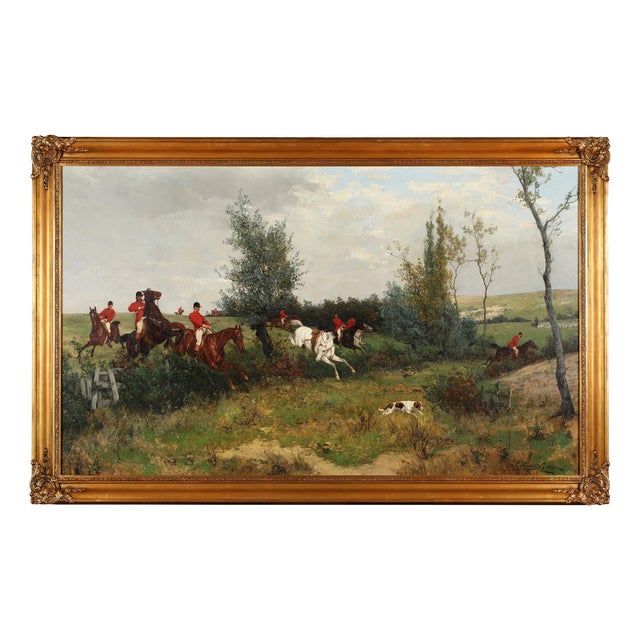
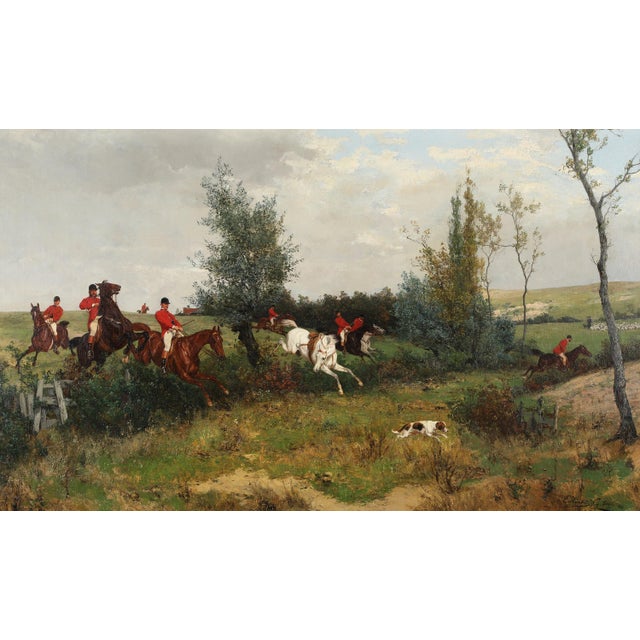
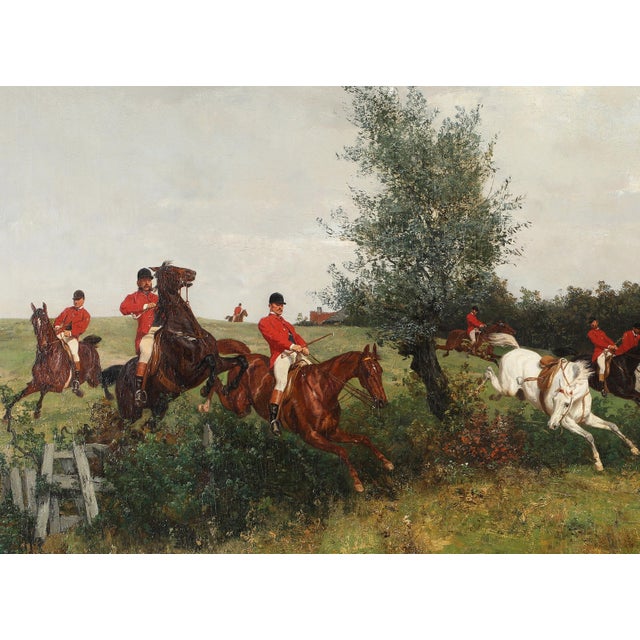
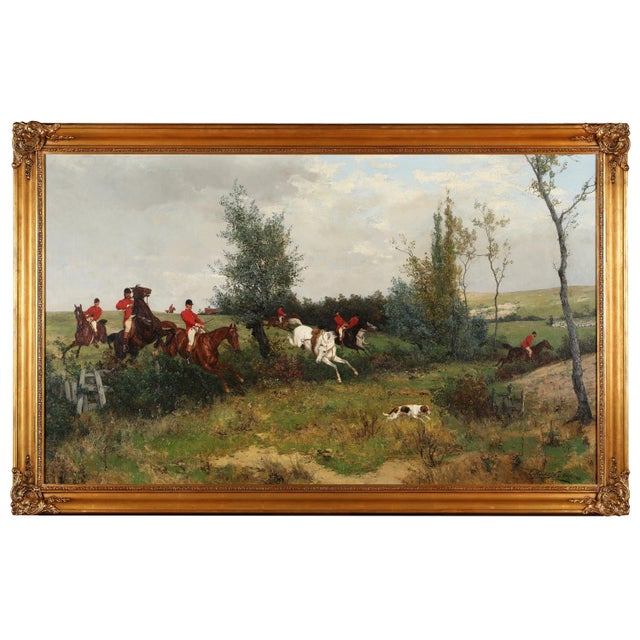
pair hunt, 1876
oil on …
Read more
Max hünten & georg oeder
paris 1827 – 1902 düsseldorf
aachen 1846 – 1931 düsseldorf
pair hunt, 1876
oil on canvas
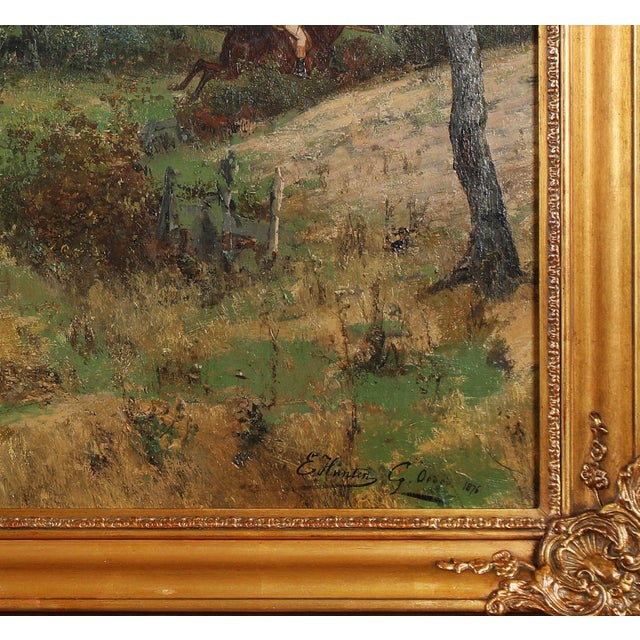
signed and dated 1876 by emil hünten and georg oeder lower right
dimensions: 93 x 155 cm
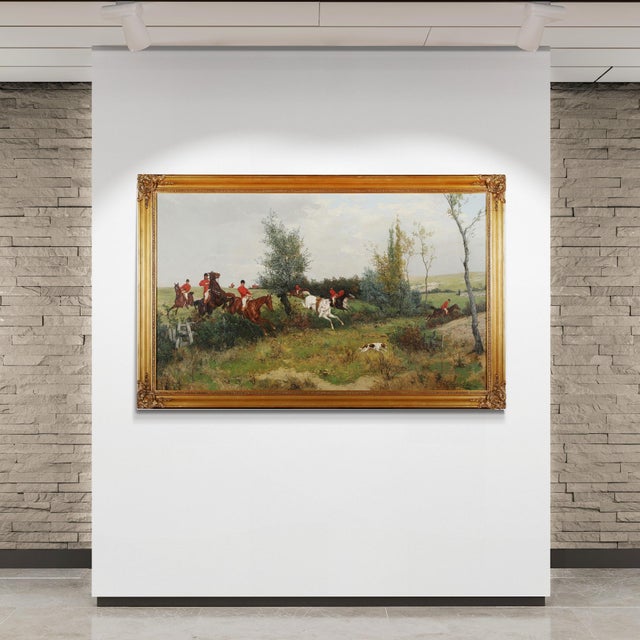
framed: 109 x 171 cm
provenance:
"eduard schulte art salon 1876, dresden art exhibition 1877, and hanover art exhibition 1880"
literature: boetticher, paintings of the 19th century
a rare collaborative work of museum quality by two prominent representatives of the düsseldorf school.
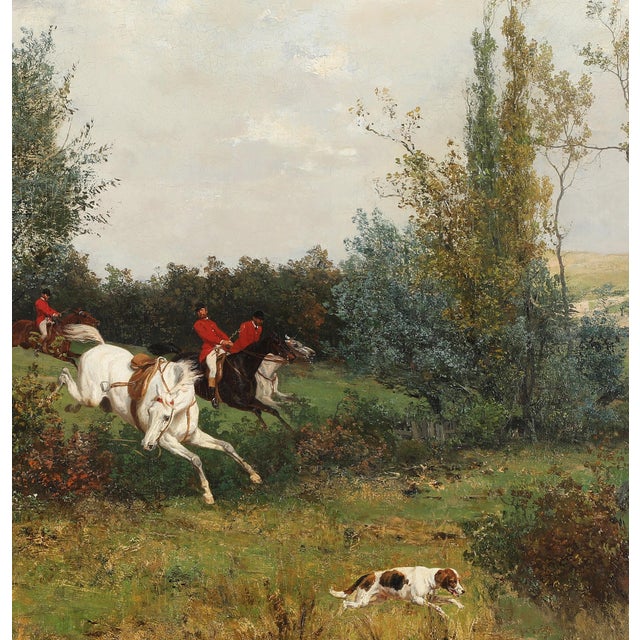
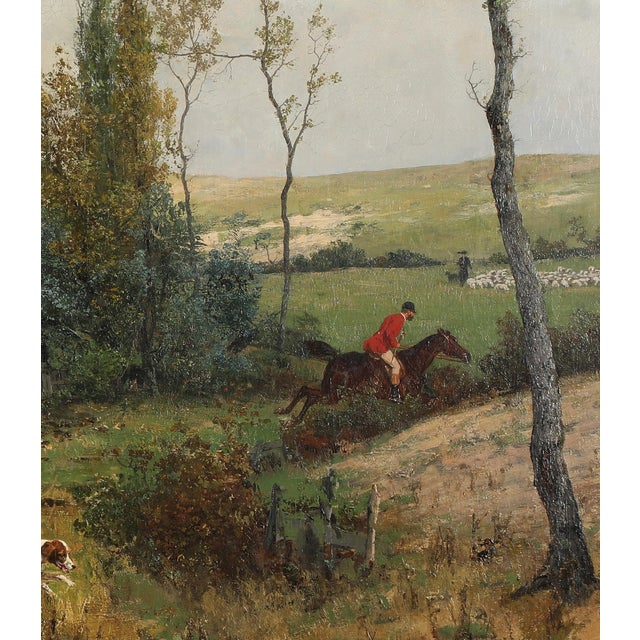
emil hünten was a horse painter and georg oeder a landscape painter; therefore, emil hünten painted the dynamic figures, while georg oeder painted the landscape.
the painting was frequently exhibited publicly in the 19th century.
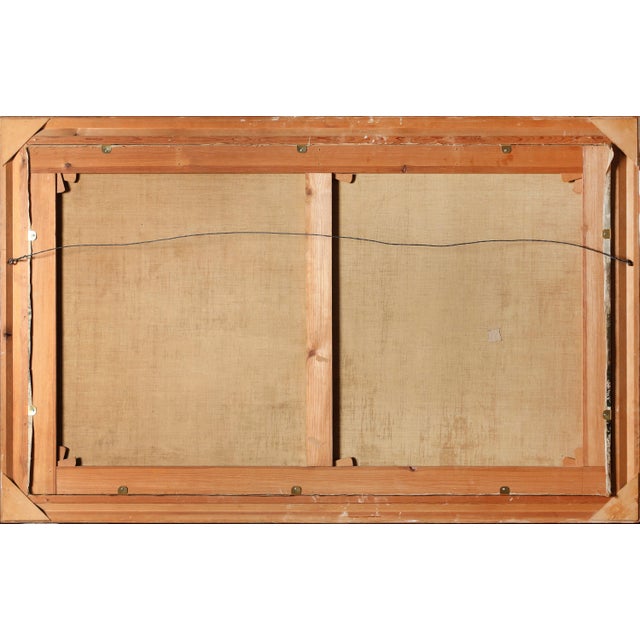
good condition (see photos)
viewing and collection are possible by prior appointment.
authenticity will be confirmed in writing.
johann emil hünten (born january 19, 1827, in paris; died february 1, 1902, in düsseldorf) was a painter, draftsman, and illustrator of the düsseldorf school. His work is exceptionally diverse; during his lifetime, he was primarily known and highly regarded for his historicist depictions of the life of frederick the great, as well as for his genre and history paintings, which reached their zenith in his time. Other important representatives besides hünten included adolph menzel, wilhelm camphausen, and georg bleibtreu. He is considered one of the most important german painters of this era.
naturalistic tendencies existed in many european countries, but it was in france that realism developed into a movement. Hünten, the son of the parisian piano composer françois hünten, began his art studies with hippolyte flandrin and horace vernet at the école des beaux-arts in paris and continued his training in antwerp in 1849 with gustave wappers, josephus laurentius dyckmans, nicaise de keyser, and hendrik leys.
after making his first studies of horses from life while serving in the prussian artillery in koblenz, he settled in düsseldorf in 1854, where he became a student of wilhelm camphausen and a member of the artists' association "malkasten." there he resumed his studies of horses and painted his first large-format work: *cuirassiers from the time of frederick ii attacking across a bridge*. With the painting *battle of krefeld, 1860*, hünten concluded his depictions of historical scenes from the time of frederick ii and turned to contemporary subjects.
initially, he accompanied the austrian brigade during the 1864 campaign in schleswig-holstein. At that time, only the painters camphausen, georg bleibtreu, and louis braun, besides hünten, accompanied the fighting troops; other artists joined them only in later conflicts. Hünten himself had been drafted as a prussian landwehr soldier and personally participated in the fighting. During the war of 1866, he also served as a landwehr officer in the 17th regiment of the main army. In 1870, he was awarded the order of the red eagle by the prussian crown prince, who invited him later that same year to accompany him as a painter on his campaigns. Hünten served on the general staff. During the franco-prussian war of 1870–71, he visited various army camps and battlefields on several occasions. Consequently, his numerous war paintings—both large and small—are characterized by an exceptional realism. At the exhibitions in berlin in 1872 and in vienna in 1873, hünten was awarded medals for his works. In 1878, he became a member of the berlin academy and in 1879 was appointed professor. His students included, for example, the english military painter ernest crofts, the animal painter ludwig fay, and the history painter moritz blanckarts. His collaborators included the painters johann peter theodor janssen, georg oeder, and wilhelm simmler.
georg oeder
attended the gymnasium (grammar school) in duisburg, followed by commercial school in wiesbaden. He then completed a three-year apprenticeship on an estate in westphalia. In 1866, he joined the reserve squadron of the 11th hussar regiment in düsseldorf. During the franco-prussian war of 1870–1871, he served as a reserve officer. After the war, he devoted himself entirely to painting and initially worked as emil hünten's assistant.
as early as 1868, he had begun painting landscapes by attempting studies from nature. Encouraged by eduard bendemann, then director of the düsseldorf art academy, he settled in düsseldorf in 1869, living on jägerhofstraße, but remained self-taught throughout his life. He refined his technique on travels through bavaria, the netherlands, switzerland, austria, italy, france, and great britain.
his paintings are characterized by intimate landscapes of the lower rhine, often depicted in a somber autumnal or wintry atmosphere. The influence of olof jernberg on his painting is frequently noted.
in 1898, on the occasion of the 50th anniversary of the artists' association "malkasten," of which he was an honorary member, georg oeder, albert flamm, and otto erdmann were awarded the prussian order of the red eagle, 4th class.
around 1900, oeder, along with paul clemen, heinrich lueg, and fritz roeber, was one of the initiators of the düsseldorf industrial and trade exhibition of 1902. For this commitment, he was awarded the prussian order of the crown, 3rd class. His significant collection of japanese art was presented in the exhibition palace built in 1902. In 1904, oeder was a member of the art committee and a delegate to the international art exhibition and the great garden exhibition in düsseldorf.
in 1916, on the occasion of a special exhibition of his paintings, he was made an honorary member of the düsseldorf academy of fine arts. On the occasion of his 80th birthday in 1926, the city of düsseldorf conferred upon him honorary citizenship. Furthermore, the city honored him by naming oederallee, near the tonhalle concert hall, after him. This piece has an attribution mark,
i am sure that it is completely authentic and take full responsibility for any authenticity
issues arising from misattribution
See less
- Dimensions
- 67.32ʺW × 3.94ʺD × 42.91ʺH
- Period
- 19th Century
- Country of Origin
- Germany
- Item Type
- Vintage, Antique or Pre-owned
- Condition
- Good Condition, Unknown, Some Imperfections
- Color
- Condition Notes
- Patina Consistent with Age and Use Patina Consistent with Age and Use less
Returns & Cancellations
Return Policy - All sales are final 48 hours after delivery, unless otherwise specified in the description of the product.
Cancellation Policy - Prior to shipping or local pickup, buyers may cancel an order for up to 48 hours, unless otherwise specified.
Related Collections
- Photorealism Canvas Paintings
- Ed Ruscha Paintings
- Photorealism Paintings in New York
- Richard Serra Paintings
- Jo Baskerville Paintings
- Louise Nevelson Paintings
- Karen Offutt Paintings
- Nicola Simbari Paintings
- Herman Miller Paintings
- BDDW Paintings
- Jaanika Peerna Paintings
- Leroy Neiman Paintings
- Jeff Slemmons Paintings
- Vienna Secession Paintings
- Johannes Andersen Paintings
- Pedro Friedeberg Paintings
- Peter Behrens Paintings
- Piet Hein Eek Paintings
- Raphael Paintings
- Carl-Axel Acking Paintings
- Karl-Erik Ekselius Paintings
- Hans Andersen Paintings
- Jean-Paul Barray Paintings
- Cassina Paintings
- Soicher Marin Paintings