

Details
Description
An exceptional Chinese Buddhist devotional sculpture depicting the Infant Buddha, Prince Siddhartha Gautama, standing upon an elaborately cast lotus pedestal. …
Read more
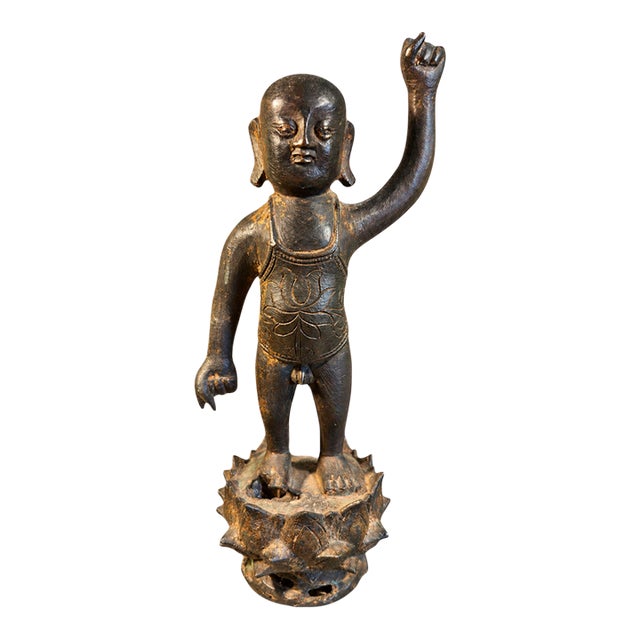
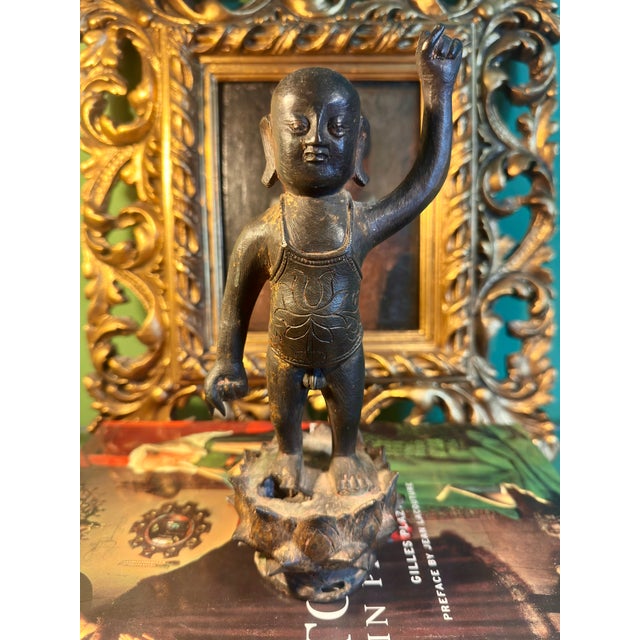
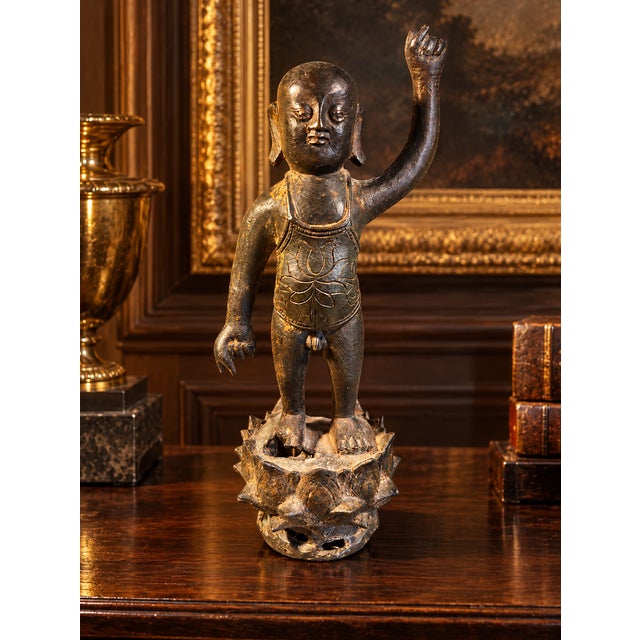
An exceptional Chinese Buddhist devotional sculpture depicting the Infant Buddha, Prince Siddhartha Gautama, standing upon an elaborately cast lotus pedestal. Attributed to the Ming dynasty (1368–1644), this substantial nine-inch figure embodies the celebrated traditions of Chinese Buddhist sculpture, distinguished by its expressive facial modeling, finely ornamented ceremonial apron, and richly textured, dark-patinated surface.
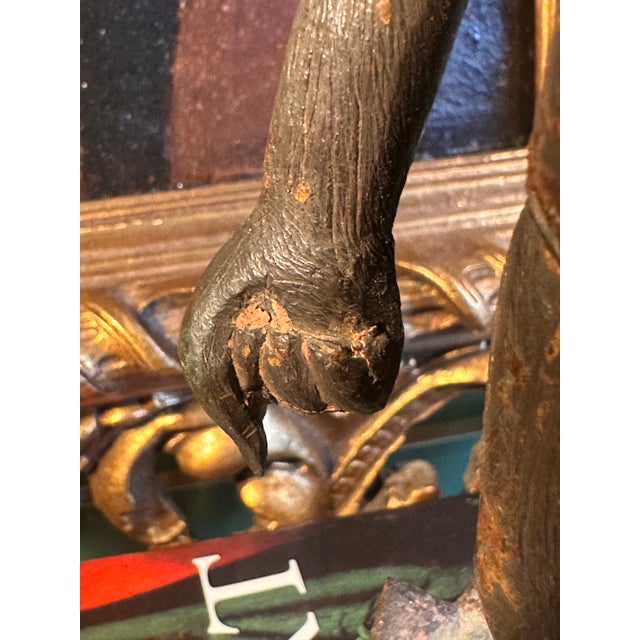
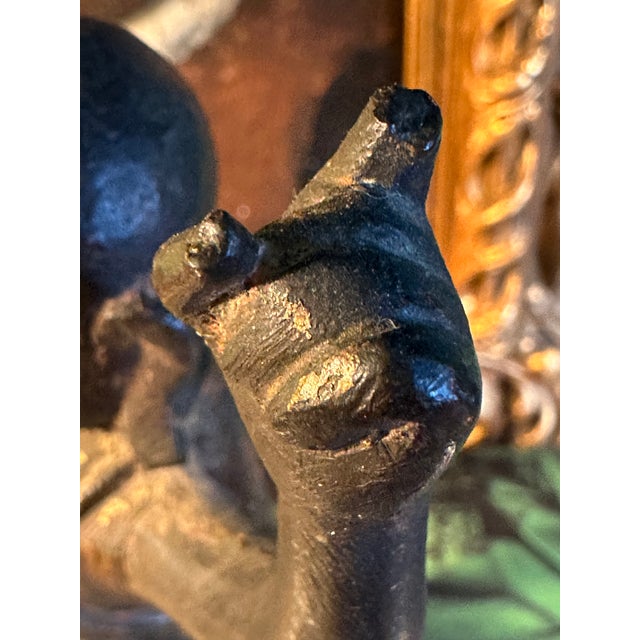
The sculpture portrays one of the most significant moments in Buddhist tradition: the miraculous birth of Prince Siddhartha. According to Buddhist legend, the newborn prince immediately took seven steps, raising one arm toward Heaven and extending the other toward Earth while proclaiming, “Above heaven and below earth, I alone am the World-Honored One.” This distinctive iconography became an enduring subject in Chinese Buddhist devotional art, particularly during the Ming and Qing dynasties.
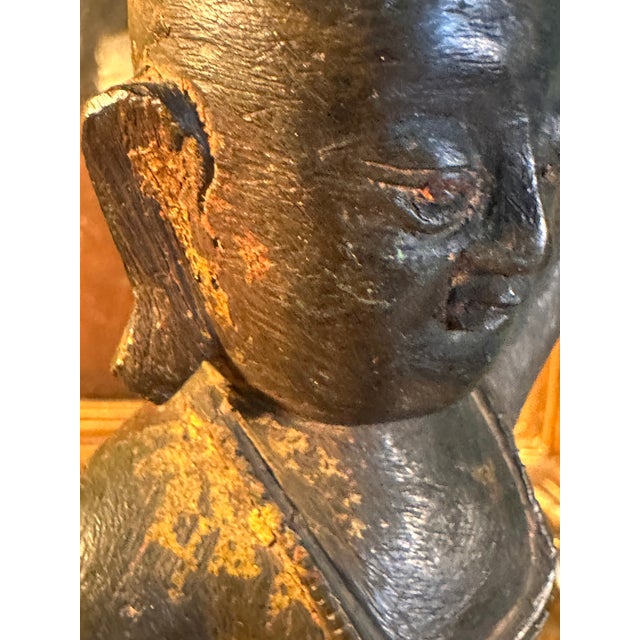
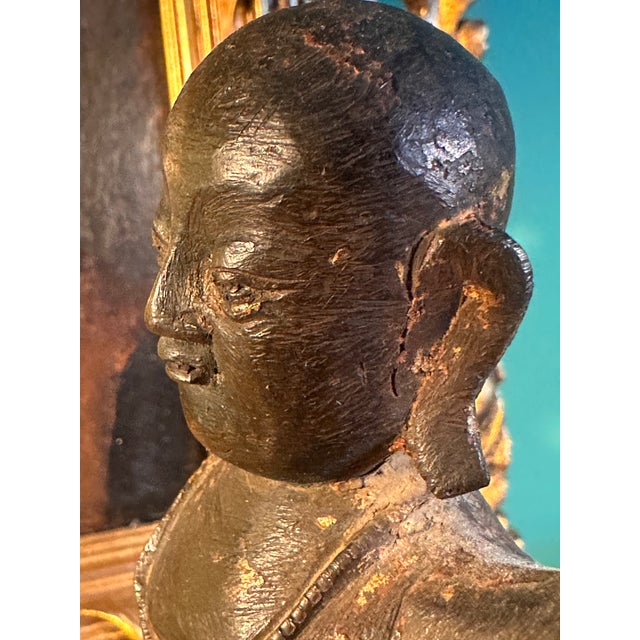
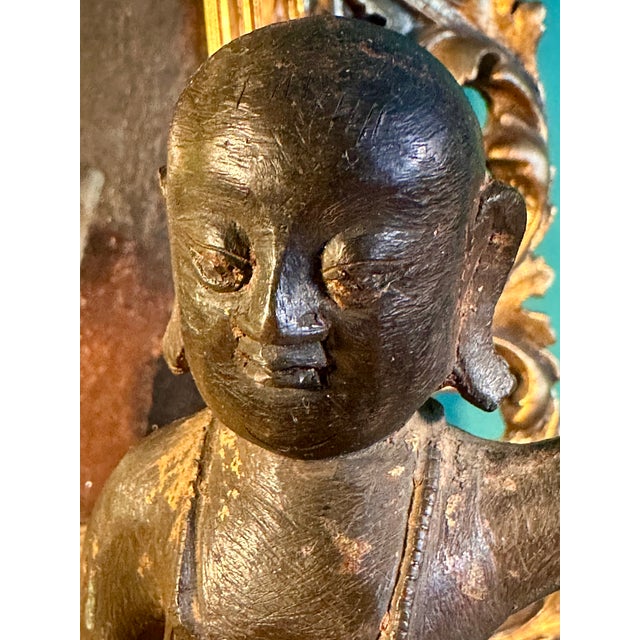
The infant is modeled with a rounded head, elongated earlobes, gently downcast eyes, and a serene, contemplative expression. His youthful torso is adorned with a traditional Chinese child's apron, or dudou, featuring an intricately rendered floral motif recalling the lotus, an enduring Buddhist symbol of purity, spiritual awakening, and enlightenment. The carefully articulated ornamentation provides an elegant contrast to the otherwise restrained modeling of the figure.
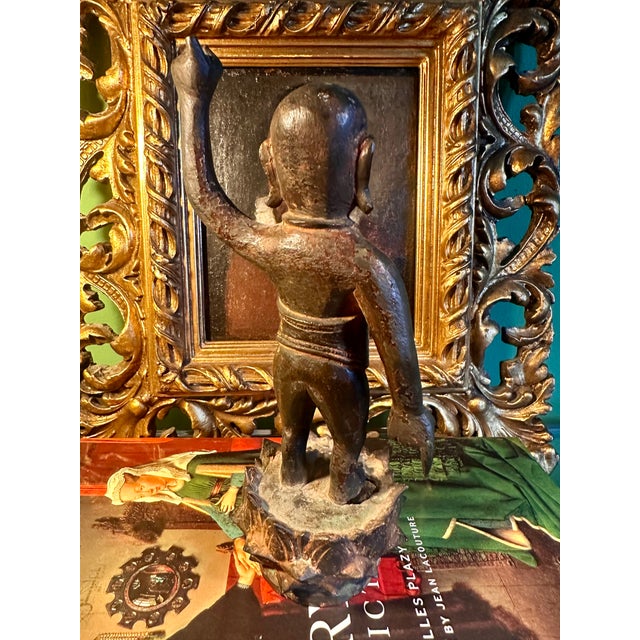
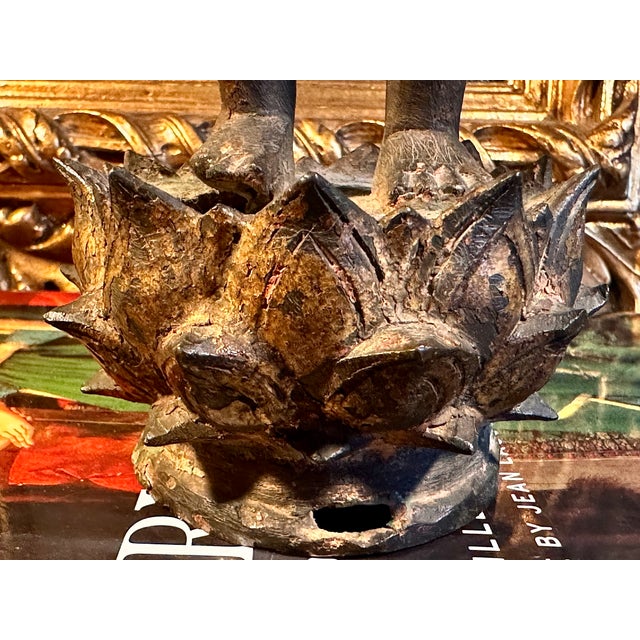
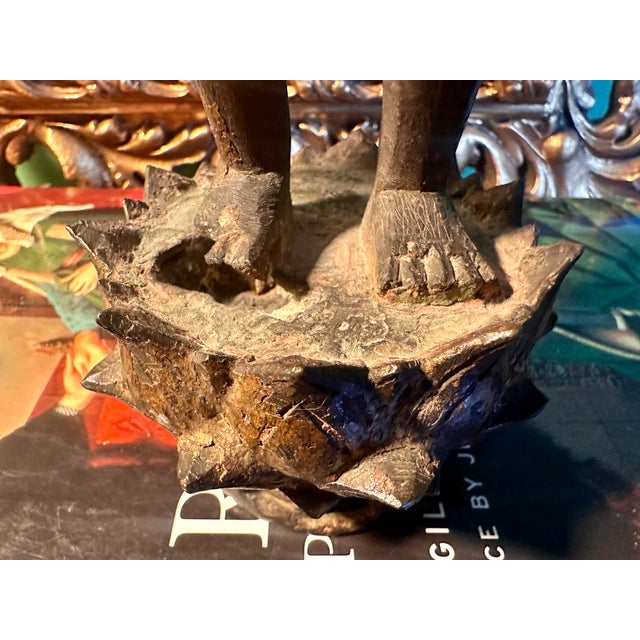
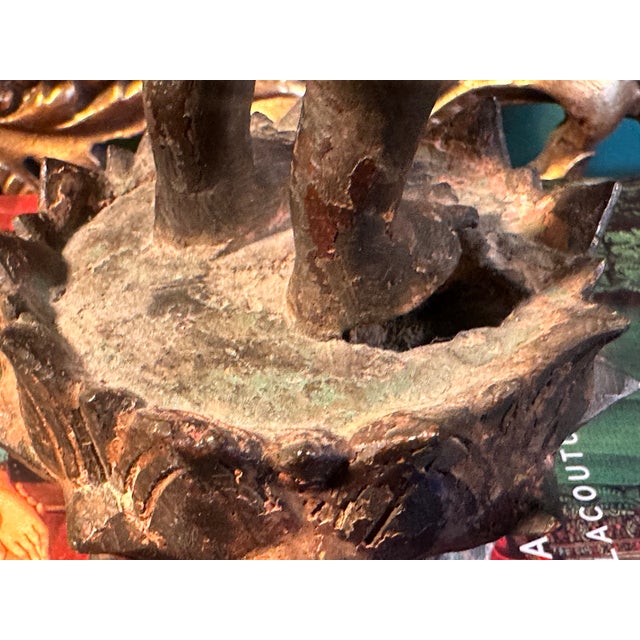
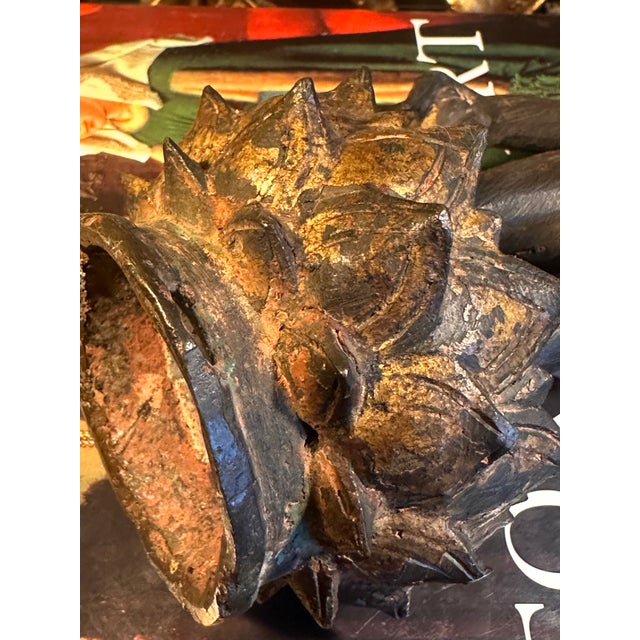
The sculpture stands upon a substantial circular lotus pedestal, its individually defined petals arranged in overlapping tiers. The composition achieves a striking balance between the upward gesture of the raised arm and the opposing downward extension, creating a powerful and immediately recognizable devotional image. The proportions, ornamentation, and architectural treatment of the pedestal are characteristic of the established Chinese Infant Buddha sculptural tradition.
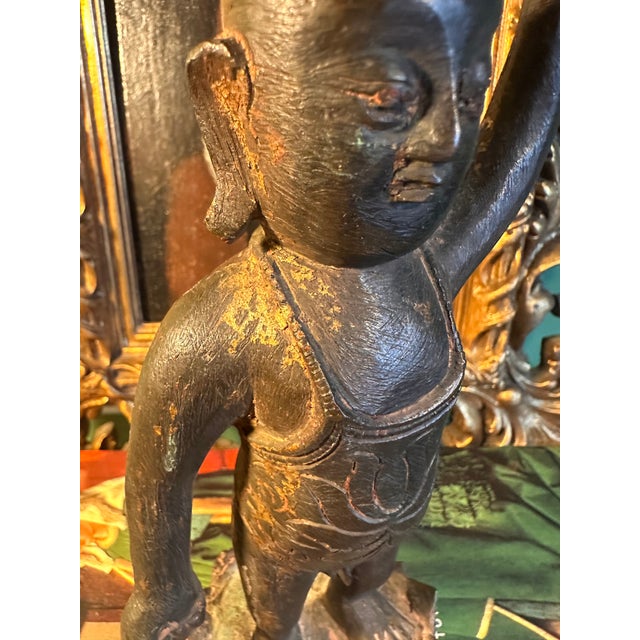
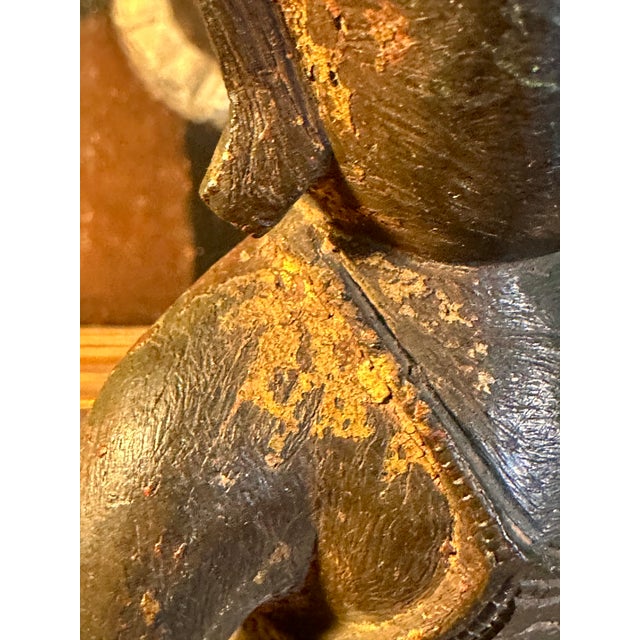
Of particular distinction is the sculpture's remarkable surface character. Deep chocolate-brown and charcoal-black tones are interspersed with warm reddish undertones and scattered traces of golden-colored surface treatment. The richly varied patination, textured recesses, and irregularities throughout the casting lend the sculpture considerable visual depth and an evocative historical appearance. Its darkened surfaces beautifully accentuate the contours of the figure, the decorative apron, and the individually modeled lotus petals.
Historically, sculptures of the Infant Buddha occupied an important ceremonial role during celebrations commemorating the Buddha's birth. During the traditional Bathing of the Buddha ceremony, devotees poured water or fragrant liquid over representations of the newborn prince, symbolizing spiritual purification, renewal, and the cleansing of worldly attachments. Figures of this type served as important devotional objects within Chinese Buddhist religious practice, embodying one of the faith's foundational narratives.
Closely related examples have been documented in the catalogues of Christie's and Sotheby's, including sculptures attributed to the Ming and Qing dynasties. These historical examples demonstrate the remarkable continuity of this distinctive iconographic tradition, particularly the contrasting arm gestures, ornamented apron, expressive facial characteristics, and lotus-form pedestal.
The present sculpture exhibits stylistic characteristics associated with Ming-period Chinese devotional bronzes, particularly examples of the 16th and 17th centuries. The attribution reflects these visual and historical comparisons; the precise period of manufacture has not been independently authenticated, and a later date cannot be excluded.
An evocative example of traditional Chinese Buddhist sculpture, distinguished by its substantial proportions, expressive modeling, intricate ornamentation, and richly textured surface. A compelling addition to a distinguished collection of Asian decorative arts, Buddhist sculpture, or a thoughtfully curated interior emphasizing objects of historical and cultural interest.
Dimensions
Overall Height: 9"
Overall Width: 3" at Base
Overall Depth: 3" at Base
See less
- Dimensions
- 3ʺW × 3ʺD × 9ʺH
- Styles
- Chinese
- Period
- 17th Century
- Country of Origin
- China
- Item Type
- Vintage, Antique or Pre-owned
- Materials
- Bronze
- Condition
- Good Condition, Original Condition Unaltered, Some Imperfections
- Color
- Bronze
- Condition Notes
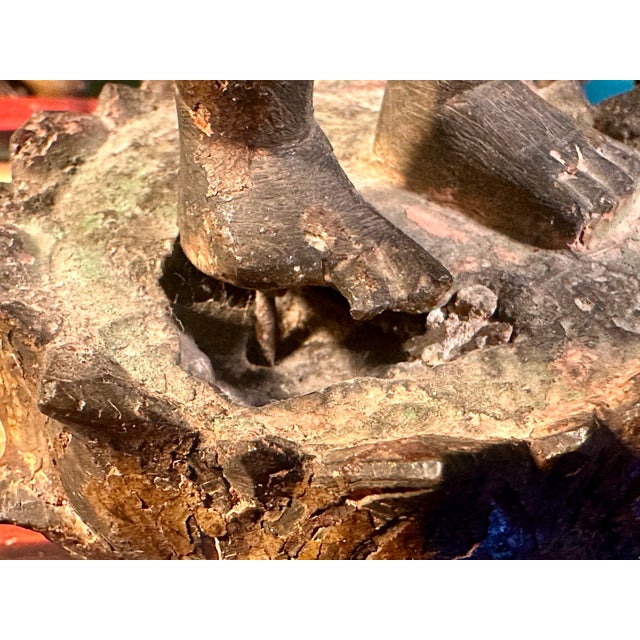
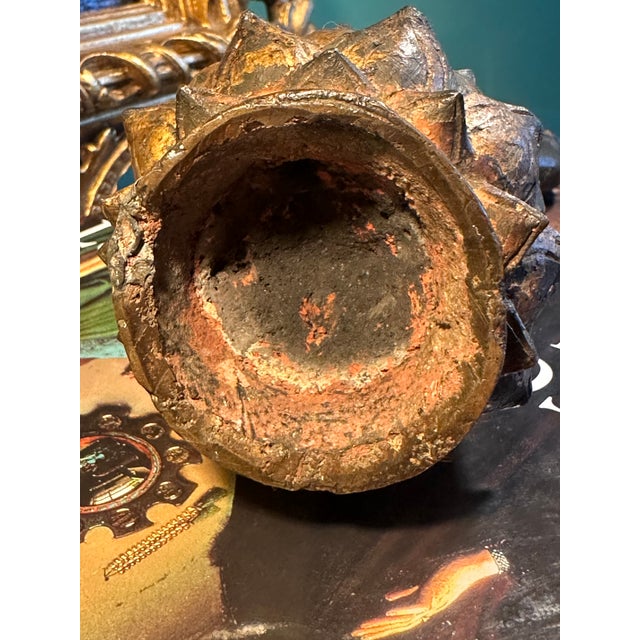
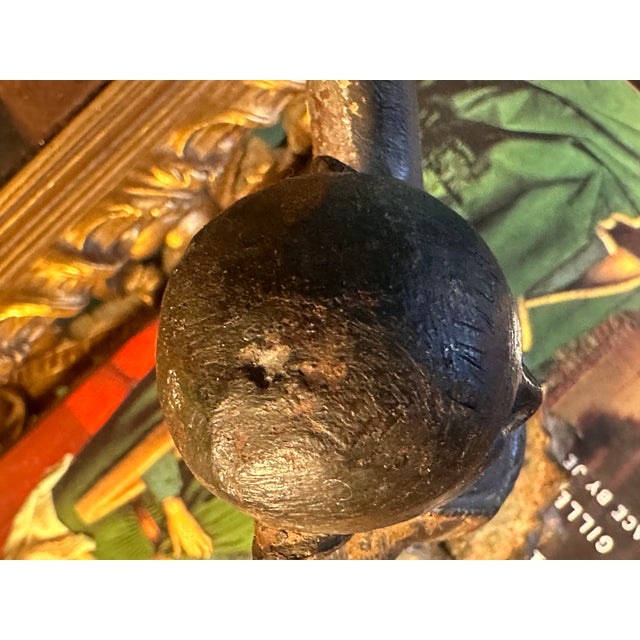
- The sculpture retains a richly textured dark chocolate-brown to charcoal-black surface, displaying extensive variations in color, texture, and patination. Warm … moreThe sculpture retains a richly textured dark chocolate-brown to charcoal-black surface, displaying extensive variations in color, texture, and patination. Warm reddish-brown undertones and scattered traces of golden-colored surface treatment are visible throughout, contributing to its distinctive aged appearance. The composition and age of these surface treatments have not been independently established. The raised hand exhibits loss to the extended index finger. The opposing hand retains its characteristic downward gesture, with localized surface wear and minor irregularities. The facial features, decorative apron, and principal sculptural elements remain clearly defined. The upper surface of the lotus pedestal exhibits an irregular opening adjacent to one foot, accompanied by localized material loss and deterioration. Additional abrasions, surface irregularities, and areas of wear are present along the individually modeled lotus petals and pedestal edges. The underside remains open and hollow, revealing a rough interior with casting irregularities, accumulated deposits, and areas of reddish discoloration. Despite these condition considerations, the sculpture retains its distinctive silhouette, expressive facial characteristics, ornamental apron, contrasting arm gestures, and substantial lotus-form pedestal. The surviving details preserve the integrity of its traditional iconography and contribute to its compelling sculptural presence. The existing surface and finish have been retained. No restoration or conservation history is documented. The sculpture is offered in its present condition, with all visible losses and irregularities represented in the accompanying photographs. less
Questions about the item?
Returns & Cancellations
Return Policy - All sales are final 48 hours after delivery, unless otherwise specified in the description of the product.
Cancellation Policy - Prior to shipping or local pickup, buyers may cancel an order for up to 48 hours, unless otherwise specified.
Related Collections
- Straw Sculpture
- Roman Bronze Works Sculpture
- Constantin Brancusi Sculpture
- Fernando Botero Sculpture
- Louis XIV Sculpture
- Recycled/Repurposed Sculpture
- Gourd Sculpture
- Sculpture in Panama City, FL
- Albert Ernest Carrier-Belleuse Sculpture
- Flavio Poli Sculpture
- Maison Jansen Sculpture
- Georgian Sculpture
- Barovier and Toso Sculpture
- Far Pavilions Sculpture
- Emmanuel Villanis Sculpture
- Geode Sculpture
- Antique Iron Finish Sculpture
- René Lalique Sculpture
- Worlds Away Sculpture
- Photography Sculpture
- Jute Sculpture
- Blenko Sculpture
- Satinwood Sculpture
- Bakelite Sculpture
- Sculpture in Columbus