

Details
Description
JEAN-BAPTISTE CLESINGER
French, 1814-1883
"Dying Lucretia" (1868)
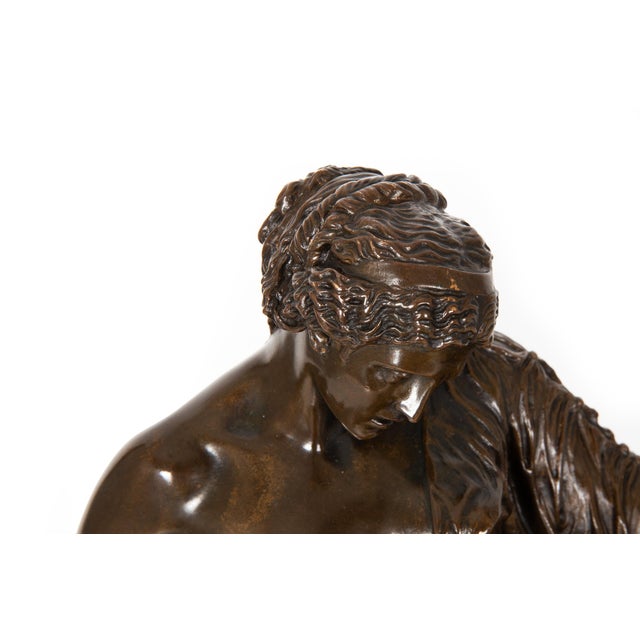
Sand-cast and patinated bronze
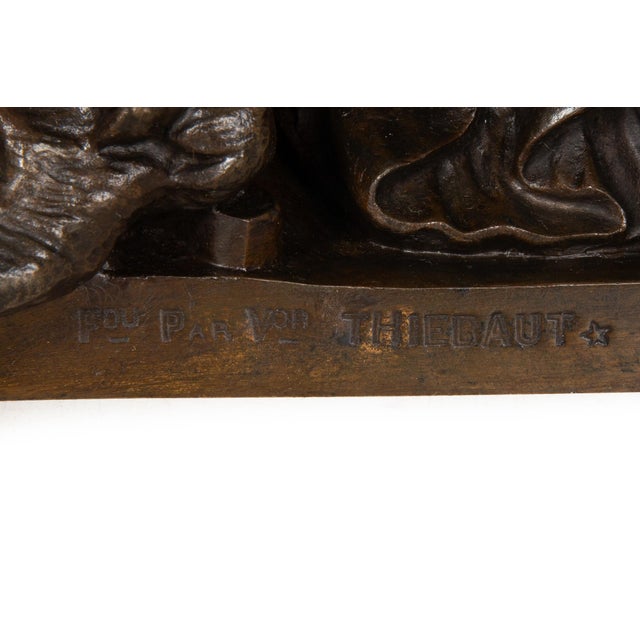
Engraved "Fou Par Vor THIEBAUT *" verso
Unsigned
Conceived …
Read more
JEAN-BAPTISTE CLESINGER
French, 1814-1883
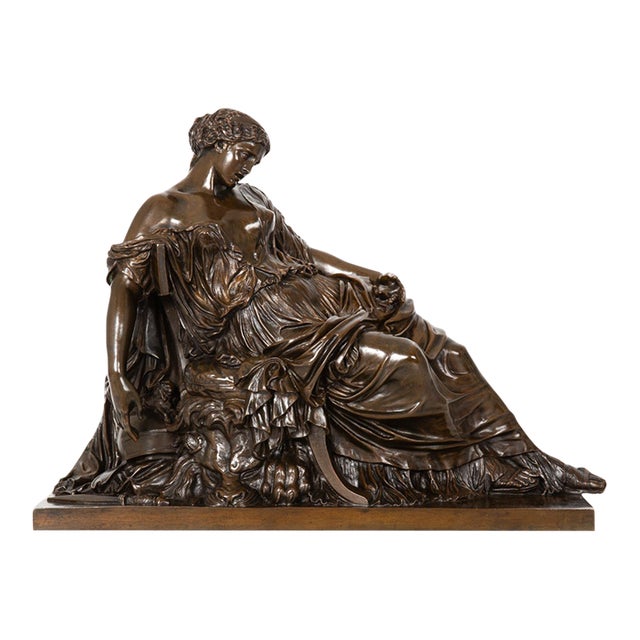
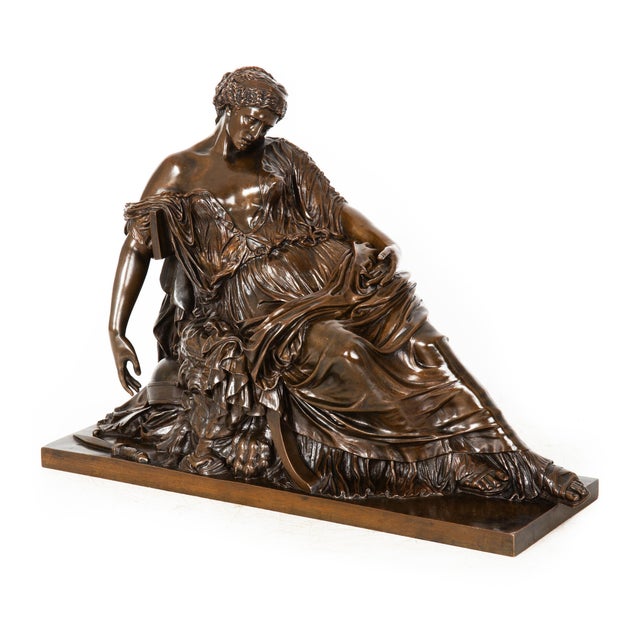
"Dying Lucretia" (1868)
Sand-cast and patinated bronze
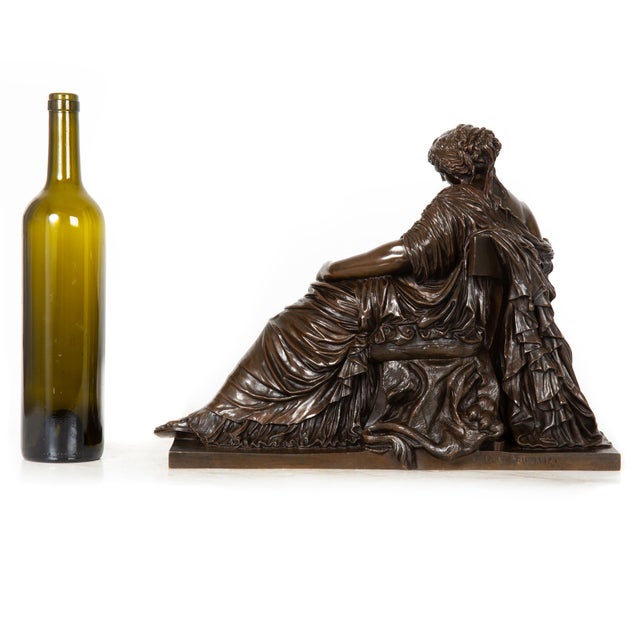
Engraved "Fou Par Vor THIEBAUT *" verso
Unsigned
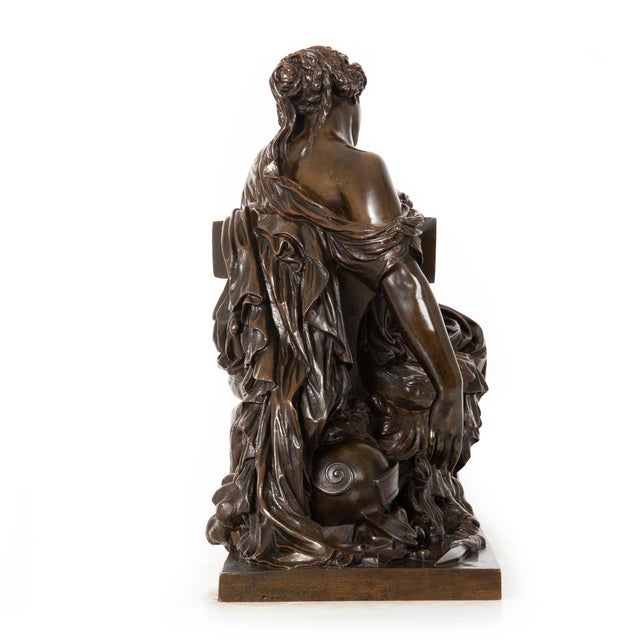
Conceived 1868, cast circa 1870
12 1/2" H x 15 3/4" W x 6" D
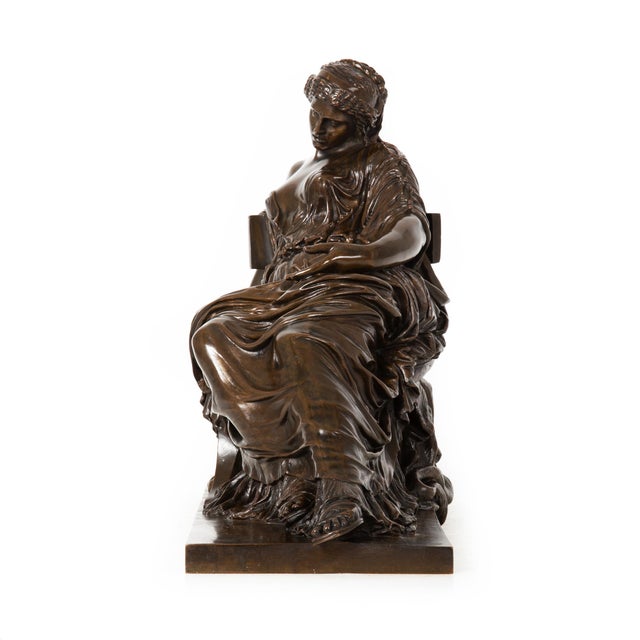
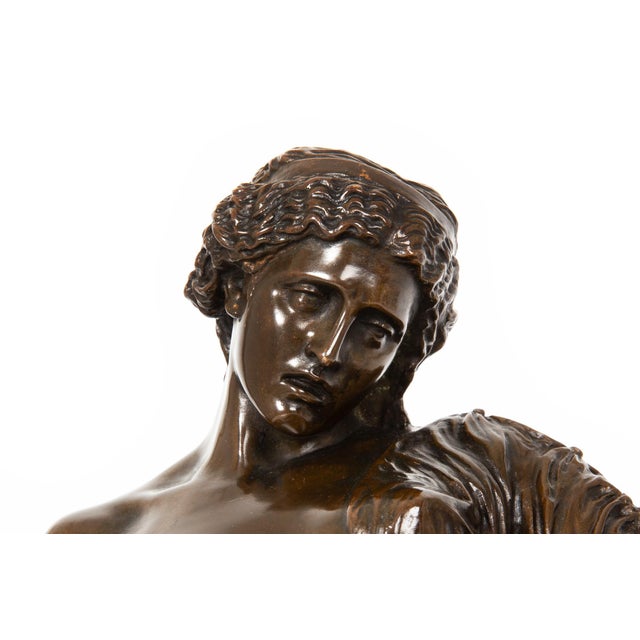
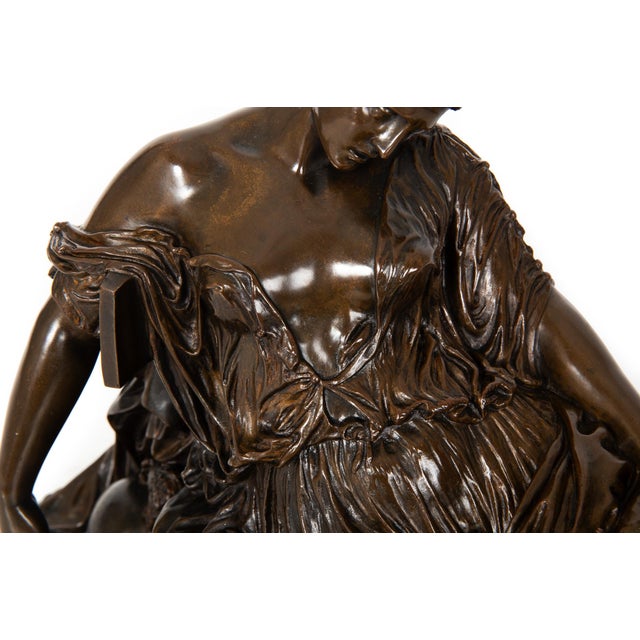
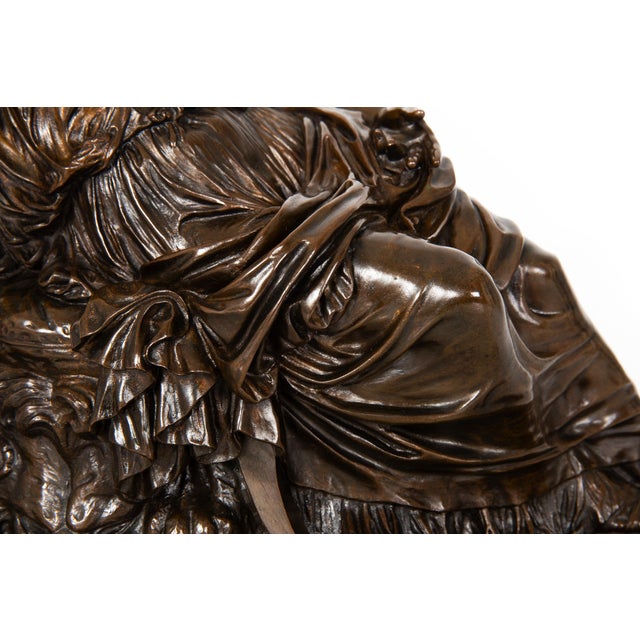
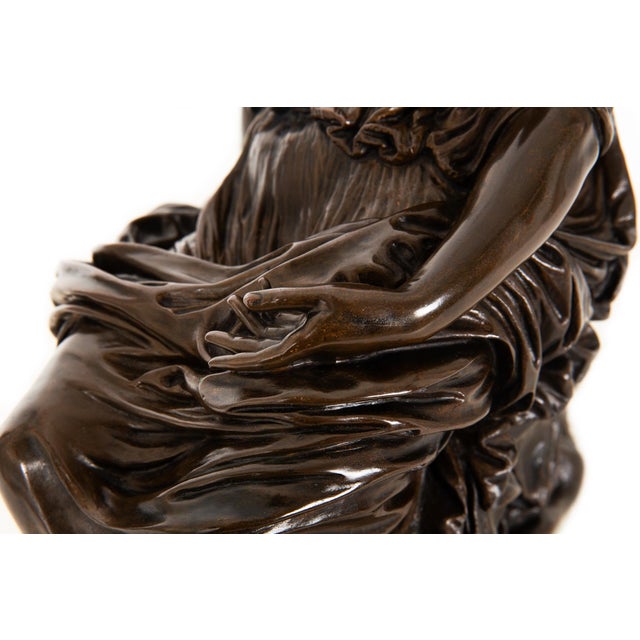
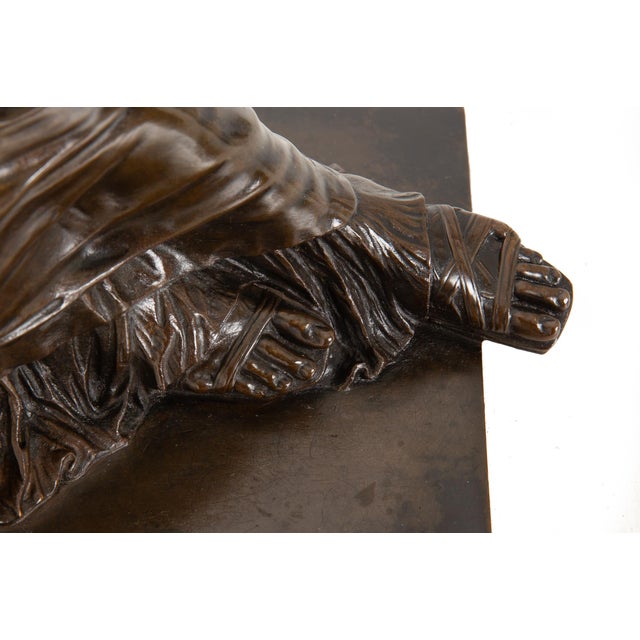
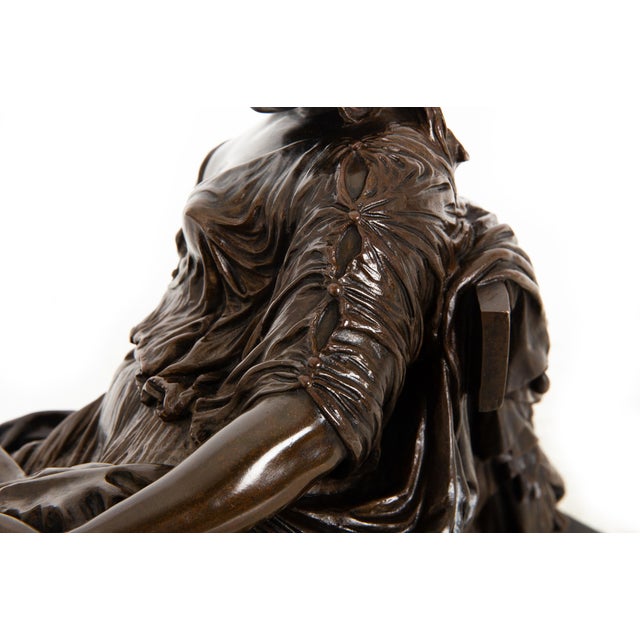
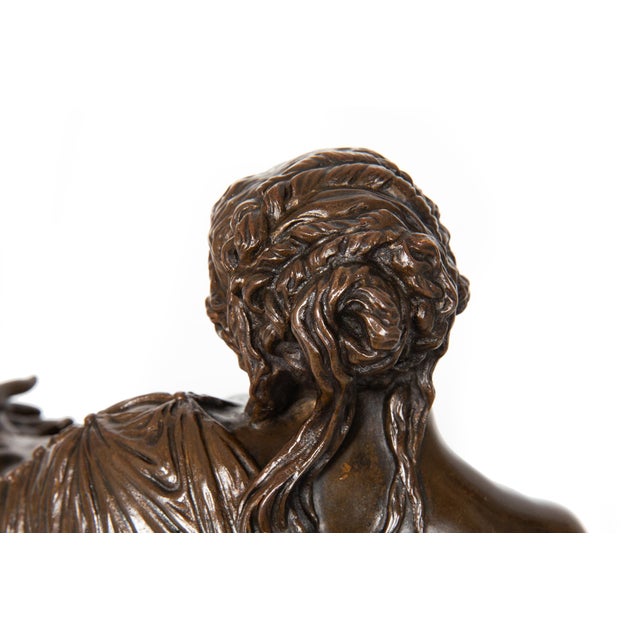
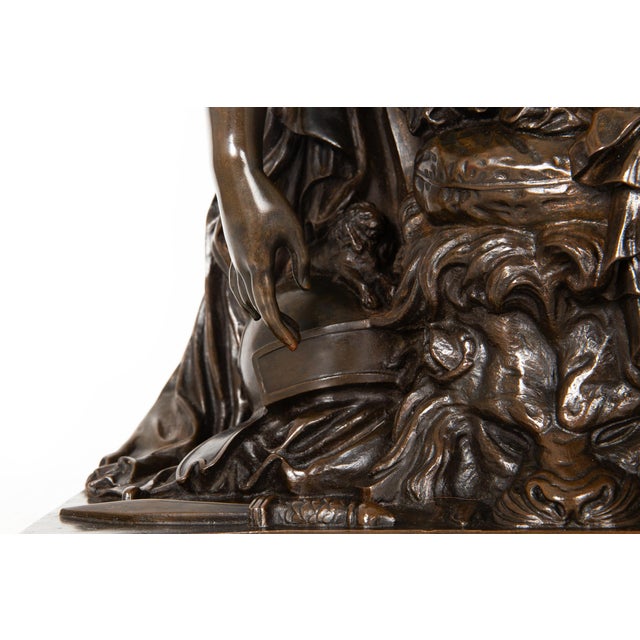
The Dying Lucretia (Lucrèce mourante) was modeled circa 1868 by Jean-Baptiste Auguste Clésinger. Conceived during his years working in Rome, the composition belongs to a series of reclining female figures drawn from classical history and mythology. Clésinger represents Lucretia at the moment of her death, the dagger slipping from her hand, her body reclining against an elaborately carved Roman seat.
According to Roman tradition, Lucretia was a noblewoman known throughout Rome for her beauty and virtue. She was violently assaulted by Sextus Tarquinius, son of Rome's last king, prompting her suicide by plunging dagger into her own heart in the witness of her son and husband. Her death inspired such widespread anger and repulsion that it led to the uprising that overthrew the Roman monarchy and led to the establishment of the Republic in 509 BC. Celebrated in Roman literature as an embodiment of virtue and honor, her story became a recurring subject in European painting and sculpture.
The present cast was executed circa 1870 by the Parisian foundry of Thiebaut, then operated by Victor Theobald Thiebaut. An identical cast is held in the permanent collection of the Museum of Fine Arts in Budapest (acc. no. 56.9.U).
JEAN-BAPTISTE CLESINGER
Jean-Baptiste Clesinger (1814–1883) was a French sculptor whose career bridged Romantic expressiveness and academic classicism in the mid-19th century. Born Jean-Baptiste Clésinger, he later chose to be known professionally as Auguste. He received his earliest training from his father, George-Philippe Clésinger, an academic sculptor, before continuing his studies under Bertel Thorvaldsen, whose neoclassical rigor and idealized subjects exerted a lasting influence on his work. He also studied architecture with Salvi and spent a brief period in the studio of David d’Angers.
Clesinger’s early career was marked by frequent movement between Switzerland, Florence, and Rome before he settled permanently in Paris in 1845. Ambitious and highly conscious of reputation, he worked actively to cultivate patrons, critics, and institutional recognition. This effort culminated in his sensational debut at the Paris Salon of 1847 with Woman Bitten by a Serpent, a sculpture that drew intense attention for its dramatic realism and Romantic sensuality. The work established his public reputation almost overnight.
Official recognition followed quickly. In 1848, Clesinger was awarded a first-class medal at the Salon for Reclining Bacchante, and in 1849 he was named a Chevalier of the Légion d’Honneur. He was promoted to the rank of Officier in 1864. During these years, he produced a wide range of ideal figures, allegorical subjects, and portrait sculpture, often combining classical themes with a heightened psychological and emotional charge characteristic of Romantic sculpture.
Clesinger was also attentive to the commercial circulation of his work. He organized public auctions of his sculptures and, between 1868 and 1870, published a catalogue of his oeuvre with texts by Théophile Gautier. Despite these efforts, much of the casting and distribution of his sculpture was handled by the Ferdinand Barbedienne foundry, which played a central role in promoting his work. Clesinger’s sculptures feature prominently in Barbedienne’s 1867 catalogue, and the majority of bronze casts produced during his lifetime bear that firm’s stamp.
Clesinger remained active until his death in Paris in 1883.
Condition: Rubbing to the highlights, minor discoloration to the patina throughout as expected. Patina appears to be original and untouched. Carefully cleaned and sealed in wax. Ready to place.
ref. 607RZS04P
See less
- Dimensions
- 15.75ʺW × 6ʺD × 12.5ʺH
- Styles
- French
- Art Subjects
- Figure
- Artist
- Jean-Baptiste Clesinger
- Designer
- Jean-Baptiste Clesinger
- Period
- 19th Century
- Country of Origin
- France
- Item Type
- Vintage, Antique or Pre-owned
- Materials
- Bronze
- Condition
- Good Condition, Original Condition Unaltered, Some Imperfections
- Color
- Brown
- Condition Notes
- Rubbing to the highlights, minor discoloration to the patina throughout as expected. Patina appears to be original and untouched. Carefully … moreRubbing to the highlights, minor discoloration to the patina throughout as expected. Patina appears to be original and untouched. Carefully cleaned and sealed in wax. Ready to place. less
Questions about the item?
Returns & Cancellations
Return Policy - All sales are final 48 hours after delivery, unless otherwise specified in the description of the product.
Cancellation Policy - Prior to shipping or local pickup, buyers may cancel an order for up to 48 hours, unless otherwise specified.
Related Collections
- Straw Sculpture
- Roman Bronze Works Sculpture
- Constantin Brancusi Sculpture
- Fernando Botero Sculpture
- Louis XIV Sculpture
- Bakelite Sculpture
- Medium-Density Fibreboard Sculpture
- Polished Brass Finish Sculpture
- Recycled/Repurposed Sculpture
- Gourd Sculpture
- Sculpture in Panama City, FL
- Albert Ernest Carrier-Belleuse Sculpture
- Flavio Poli Sculpture
- Maison Jansen Sculpture
- Georgian Sculpture
- Sculpture in Columbus
- Barovier and Toso Sculpture
- Far Pavilions Sculpture
- Emmanuel Villanis Sculpture
- Geode Sculpture
- Antique Iron Finish Sculpture
- René Lalique Sculpture
- Worlds Away Sculpture
- Photography Sculpture
- Gold-Plate Sculpture