



Details
Description
An extraordinary Italian Renaissance portrait depicting Cesare I Gonzaga (1530–1575), Count of Guastalla, Count of Amalfi, Duke of Ariano, and …
Read more
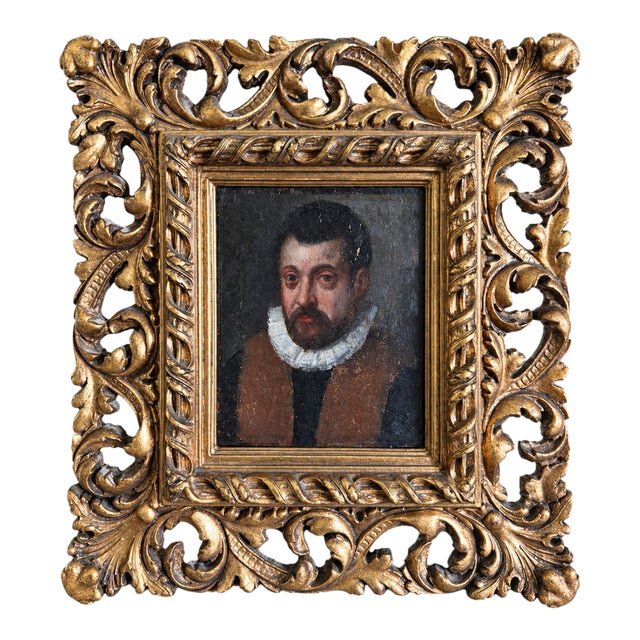
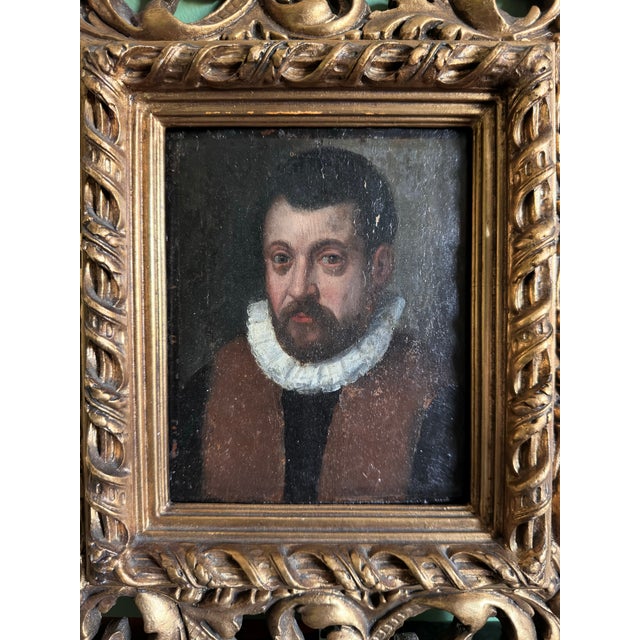
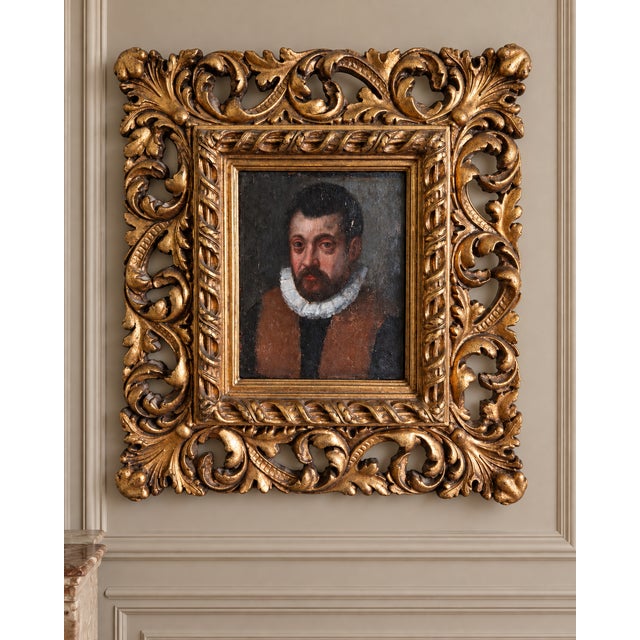
An extraordinary Italian Renaissance portrait depicting Cesare I Gonzaga (1530–1575), Count of Guastalla, Count of Amalfi, Duke of Ariano, and Prince of Molfetta, presented in an elaborate, deeply sculptural gilt frame of Italian Baroque Revival design. Executed in oil on an aged wooden panel, this intimate portrait captures the refinement, authority, and psychological intensity associated with aristocratic portraiture of late 16th-century Northern Italy.
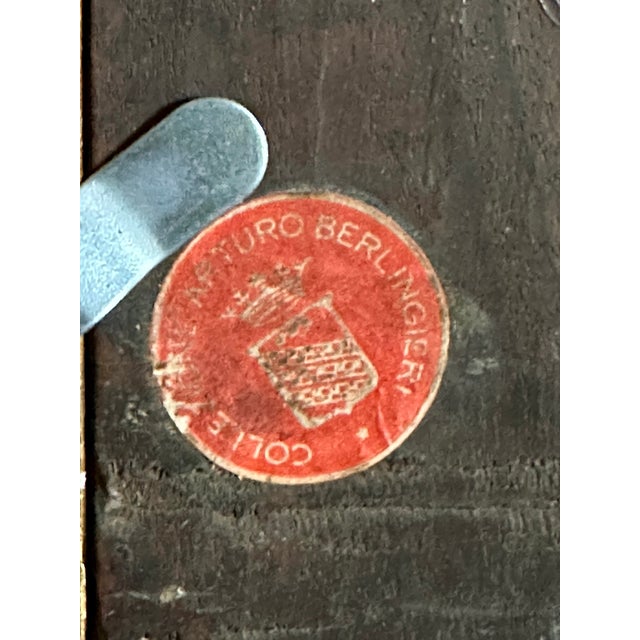
Associated through historical attribution research with the Venetian School and the artistic circle of Jacopo Tintoretto (1518–1594), the painting is distinguished by its accomplished facial modeling, carefully observed expression, finely articulated Renaissance costume, and historically significant reverse markings. Particularly noteworthy is the circular collection seal of the Collezione Arturo Berlingieri, Rome, connecting the portrait to a documented Italian private collection whose holdings were dispersed at auction in 1961.
Historical Identification — Cesare I Gonzaga
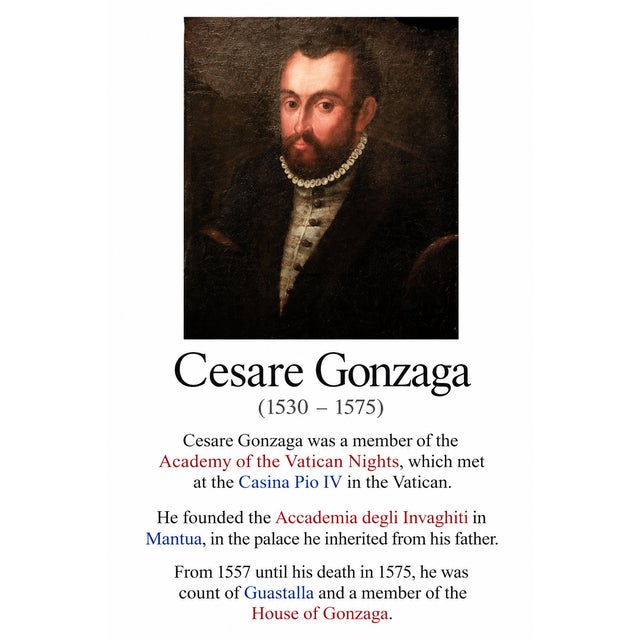
The sitter has been identified through comparative historical research as Cesare I Gonzaga (1530–1575), a prominent Renaissance nobleman, military commander, intellectual patron, and member of the influential House of Gonzaga. Born into one of Northern Italy's most distinguished ruling dynasties, Cesare was the eldest son of Ferrante Gonzaga and Isabella di Capua. He succeeded as Count of Guastalla in 1557 and inherited the additional titles of Count of Amalfi, Duke of Ariano, and Prince of Molfetta. On May 21, 1558, he was appointed commander-in-chief of the troops in Lombardy under Philip II of Spain, placing him among the important military and political figures of his generation. In 1560, Cesare married Camilla Borromeo (1536–1583), sister of Saint Charles Borromeo and niece of Giovanni Angelo de' Medici, who became Pope Pius IV. These relationships connected the Gonzaga family to the highest levels of European aristocratic, ecclesiastical, and political society. Cesare was also an active participant in Renaissance intellectual life. He belonged to the Academy of the Vatican Nights, which met at the Casina Pio IV in the Vatican, and established the Accademia degli Invaghiti in Mantua, fostering literary and scholarly pursuits within his court. During 1567–1568, he transferred his court from Mantua to Guastalla, where he remained until his death in February 1575. The sitter identification is informed by close comparison with surviving historical portraiture of Cesare I Gonzaga, including similarities in facial structure, hairline, eyes, beard, and formal Renaissance dress. This identification has also been presented to Bonhams Old Master Paintings specialists for consideration. Documentation of any independent authentication may be provided to prospective purchasers where available.
Portraiture and Artistic Execution
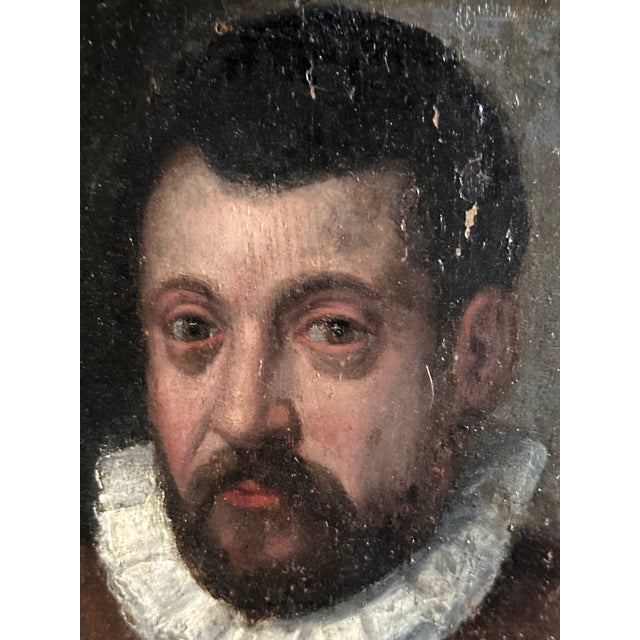
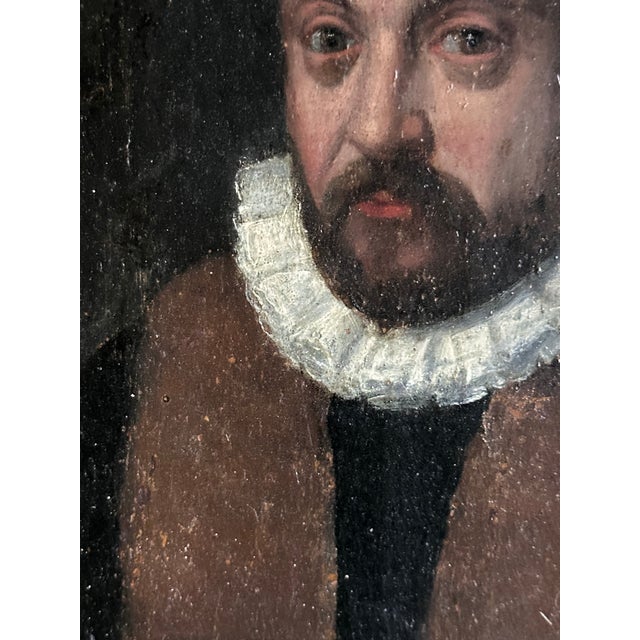
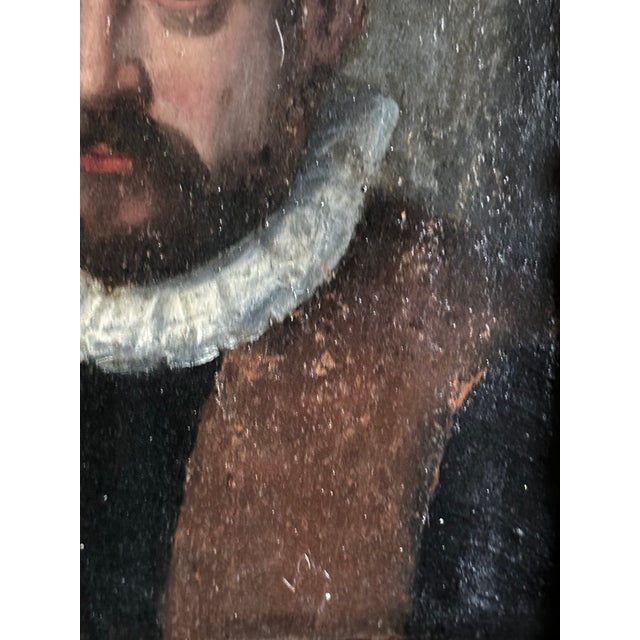
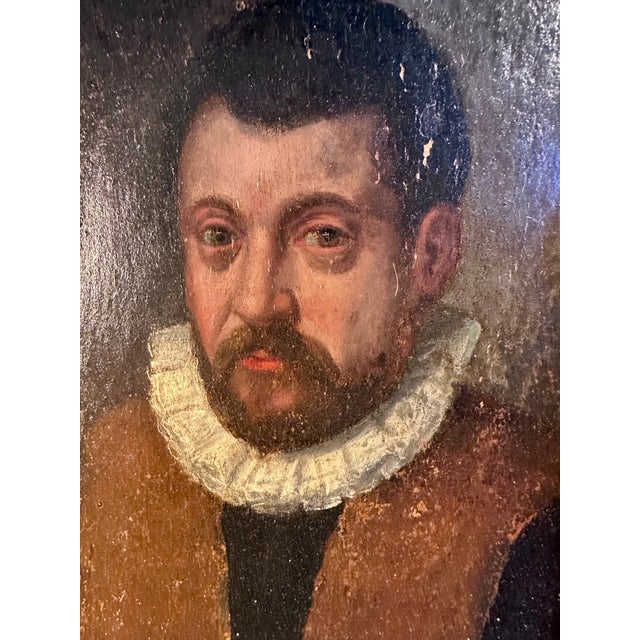
The portrait depicts a dark-haired, bearded gentleman in three-quarter bust-length presentation, facing forward with his head turned subtly toward the viewer. His expression is unusually direct and contemplative. The artist has emphasized the sitter's broad forehead, deep-set brown eyes, pronounced upper eyelids, substantial nose, and carefully modeled cheeks. Soft transitions between warm flesh tones and darker shadows create an impression of dimensionality across the face. The eyes are particularly expressive. Subtle highlights illuminate the irises, while reddish tones along the eyelids and delicate shading beneath the eyes contribute to the individualized character of the portrait. The gaze appears alert, reserved, and psychologically engaging rather than conventionally idealized. The sitter's short, densely painted black hair follows a slightly irregular frontal hairline. His full dark beard and mustache are rendered with variations of brown and black pigment, allowing the underlying facial contours to remain visible. The lips are delicately defined with muted rose and reddish-brown tones. Around the neck is a formal white pleated ruff collar, its overlapping folds carefully articulated through alternating passages of warm white, gray, and soft cream. The collar projects prominently against the darker costume, establishing a strong visual contrast and directing attention toward the sitter's face. His clothing consists of a rich reddish-brown outer garment worn over a dark central doublet. The shoulders are broad and substantial, with subtle tonal variation suggesting the texture of heavy Renaissance fabric. The garment is presented with restraint, avoiding distracting ornamentation and emphasizing the sitter's elevated social standing. The background is dark and atmospheric, painted in muted charcoal, brown, and near-black tones. This restrained setting intensifies the illuminated complexion and establishes the striking intimacy characteristic of Renaissance portraiture. The relatively small scale of the painting further emphasizes its concentrated artistic presentation. Rather than relying upon elaborate architectural surroundings, heraldic symbolism, or extensive costume embellishment, the composition directs the viewer's attention almost entirely toward the sitter's identity and expression.
The Venetian School and Jacopo Tintoretto
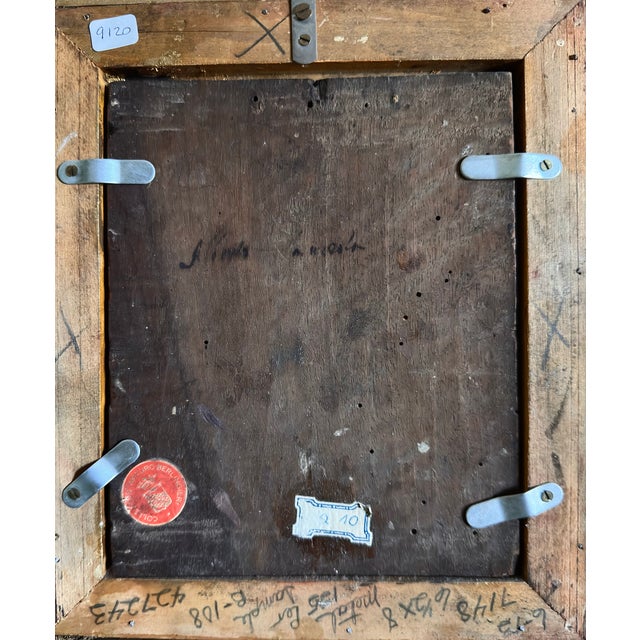
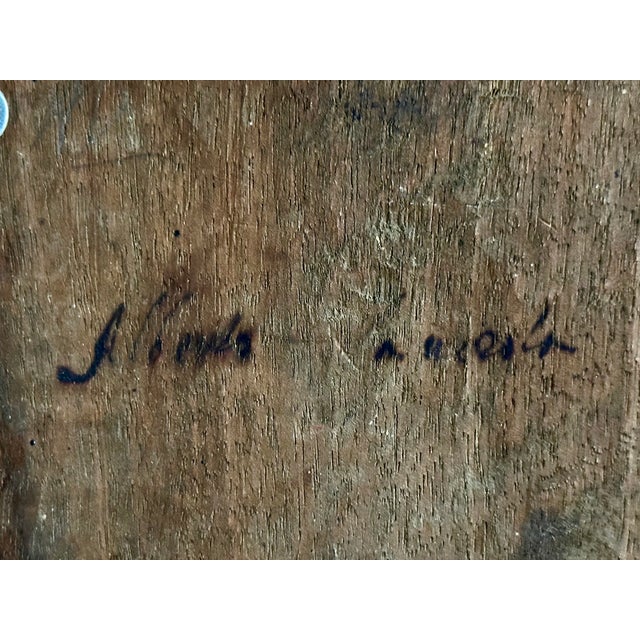
The portrait has been associated with the Venetian School and the circle of Jacopo Tintoretto, one of the most influential painters of the Italian Renaissance. Tintoretto's paintings are celebrated for their dramatic contrasts of light and shadow, vigorous handling of paint, expressive characterization, and ability to communicate the psychological individuality of their subjects. The House of Gonzaga maintained important relationships with leading Renaissance artists, including Tintoretto. His celebrated Gonzaga historical cycle, known as the Fasti Gonzagheschi, commemorates the achievements and military history of the dynasty. The paintings are preserved in the Alte Pinakothek in Munich. The present portrait shares characteristics associated with Northern Italian painting of this period, including carefully modeled flesh tones, expressive facial observation, restrained costume detailing, and pronounced contrasts between illuminated features and a dark background. Of particular interest is a handwritten inscription preserved directly on the reverse wooden panel. A proposed transcription of the inscription reads “I. Tintoreto n. veneto,” potentially referencing Jacopo Tintoretto and his Venetian origin. The abbreviated wording and historical-style cursive lettering are notable features of the painting's attribution history. The inscription has not been independently dated or conclusively transcribed through paleographic examination. Nevertheless, its presence is an important element of the painting's historical documentation and may assist further specialist research concerning its attribution.
Provenance — Collezione Arturo Berlingieri, Rome
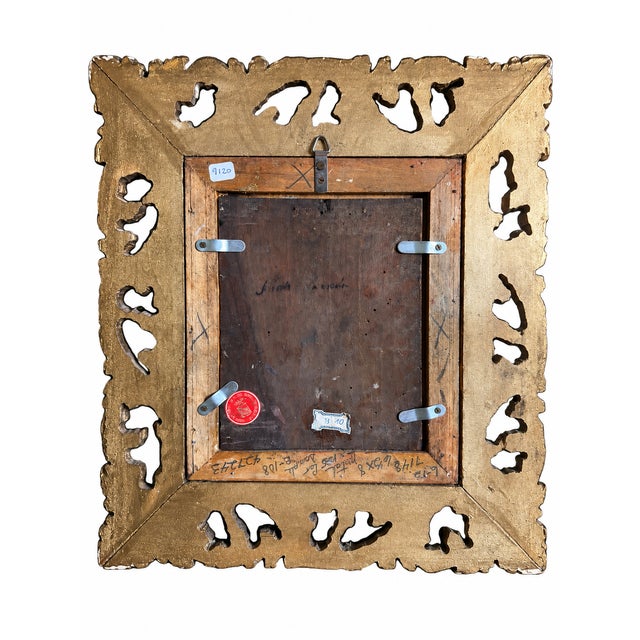
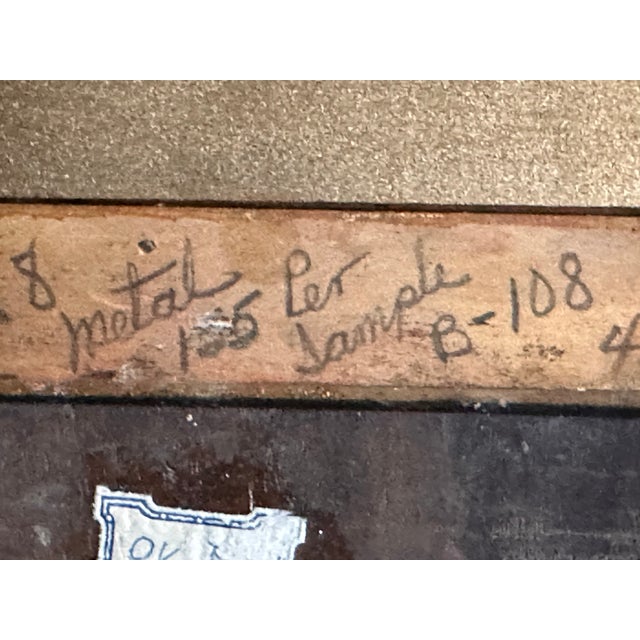
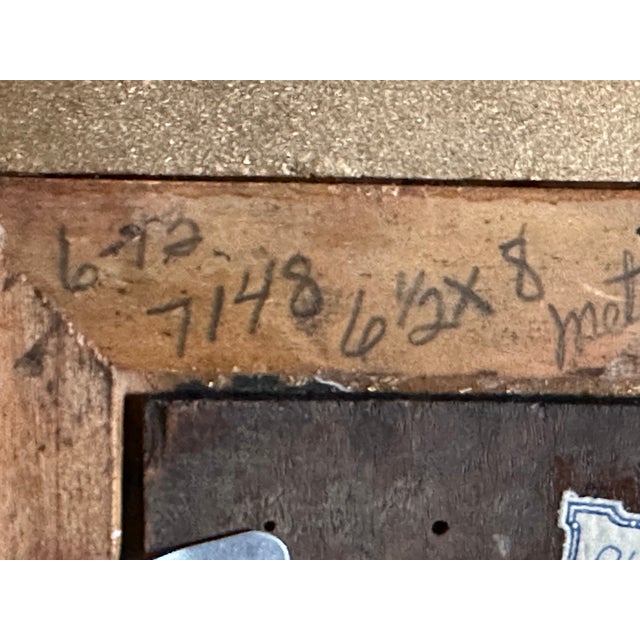
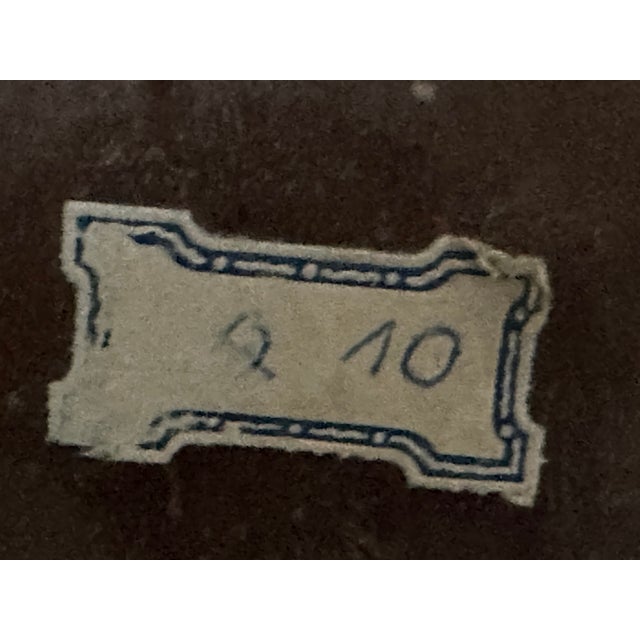
The reverse of the portrait preserves multiple historical markings, collection labels, handwritten inscriptions, and inventory references. Among these is a circular red collection seal bearing the inscription “Collezione Arturo Berlingieri,” identifying an association with the important Italian private collection of Baron Arturo Berlingieri. The Berlingieri collection was dispersed through Galleria L'Antonina in Rome during a documented auction series beginning May 22, 1961, and continuing through June 8, 1961. The auction catalogue, titled “Catalogo delle Collezioni d'Arte e di Arredamento già Appartenute al Barone Arturo Berlingieri,” is recorded in the Fondazione Federico Zeri archive at the University of Bologna under catalogue record 8160. This historical archive provides an independently documented reference for the dispersal of the Berlingieri collection. The collection seal on the present painting offers a tangible connection to that provenance, while identification of the portrait's individual catalogue entry remains an area for further research. The circular red seal displays an heraldic emblem at its center, surrounded by the collection wording. Although the seal exhibits rubbing, abrasions, and localized paper loss, substantial portions of the lettering and central device remain visible. A second paper label, rectangular in shape and decorated with a blue ornamental border, is attached near the lower portion of the panel. This label bears the handwritten notation “n. 10,” suggesting an earlier inventory or collection reference. The label exhibits aged paper coloration, irregular edges, and areas of wear consistent with historical handling. Additional handwritten markings are visible directly on the wooden support. These include the inscription associated with the proposed Tintoretto attribution and scattered smaller marks whose significance has not yet been established. The survival of these physical elements provides important opportunities for continued provenance and attribution research, particularly when considered alongside the independently documented Berlingieri collection history.
Panel Construction and Historical Characteristics
The portrait is executed on a darkened wooden panel with prominent vertical grain and visible surface irregularities. The reverse exhibits naturally occurring variations in wood coloration, ranging from medium brown to deeper near-black areas, together with scattered lighter patches and evidence of prolonged handling and aging. Numerous small, rounded openings are visible across the panel. Their appearance is consistent with historic wood-boring insect activity, a characteristic frequently encountered in older European wooden objects. The panel also exhibits fine longitudinal striations, localized surface abrasions, shallow depressions, and irregular grain patterns. These features are compatible with an aged wooden support, although the precise method and date of preparation have not been established through technical analysis. The reverse retains the historic collection seal, the blue-bordered inventory label, handwritten inscription, and additional marks described above. The painting is secured within its frame by metal retaining tabs visible on the reverse. These fittings are functional mounting components and should not be interpreted as original Renaissance hardware.
Italian Baroque Revival Gilt Frame
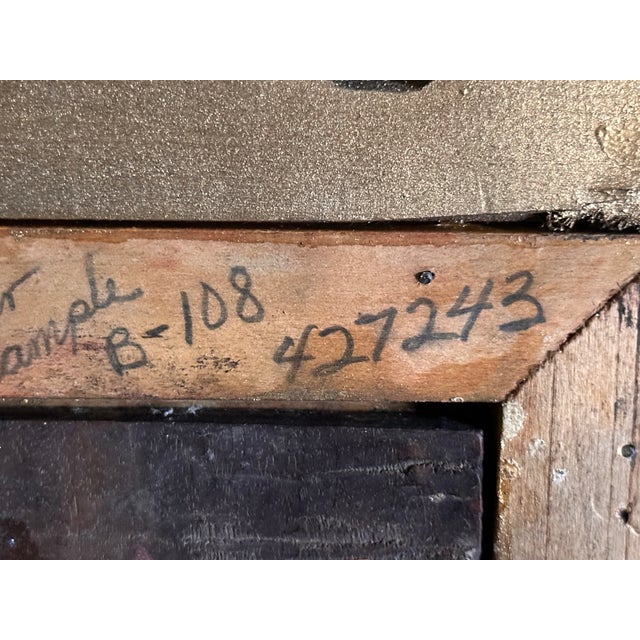
The painting is housed in an exceptionally decorative gilt frame inspired by the exuberant architectural and ornamental traditions of Italian Baroque carving. Its substantial openwork construction incorporates deeply modeled acanthus leaves, elaborate scrolling foliage, pierced botanical passages, boldly projecting corner ornaments, and an intricate inner molding with repeating carved decoration. The gilded surfaces display varying intensities of warm gold, bronze, and darker brown coloration. Raised areas catch the light, while the deeper carved recesses retain darker tones that accentuate the sculptural relief. The inner rectangular molding surrounds the portrait with a richly ornamented border, creating a dramatic contrast between the intimate scale of the painting and the elaborate architectural presentation. The frame's projecting foliage and pierced ornamentation extend beyond the central picture opening, creating an impressive visual silhouette. Handwritten notations on the reverse include references to a “Metal Leaf” finish, “Per Sample B-108,” and several additional numerical markings, including “427243.” These appear to relate to frame finishing, workshop instructions, or inventory practices rather than establishing the painting's original date. The frame is best described as Italian Baroque Revival in style. Its precise manufacture date and decorative leaf composition have not been independently established.
Dimensions
Overall Height: 16.5"
Overall Width: 15"
Overall Depth: 1.5”
Visible Image: 8" H × 5.5" W
See less
- Dimensions
- 15ʺW × 1.5ʺD × 16ʺH
- Frame Type
- Framed
- Art Subjects
- Portrait
- Period
- 16th Century
- Country of Origin
- Italy
- Item Type
- Vintage, Antique or Pre-owned
- Materials
- Oil Paint
- Wood
- Condition
- Good Condition, Original Condition Unaltered, Some Imperfections
- Color
- Black
- Condition Notes
- The portrait survives with considerable visual character and displays multiple surface characteristics consistent with an aged painting on wooden panel. … moreThe portrait survives with considerable visual character and displays multiple surface characteristics consistent with an aged painting on wooden panel. The following assessment is based on close examination of the supplied photographs rather than an in-person conservation inspection. The sitter's facial features remain clearly defined. The eyes, eyebrows, nose, lips, mustache, and beard retain strong visual legibility, preserving the individualized expression that is central to the composition. Across the forehead, cheeks, nose, and areas surrounding the eyes, fine surface texture and scattered small irregularities are visible. The flesh tones remain generally coherent, with subtle tonal transitions between pink, cream, brown, and gray. Minor localized abrasions and small marks are present, particularly around the upper facial areas and near the darker passages adjoining the face. The dark hair exhibits numerous small, light-colored interruptions and scattered paint losses or abrasions, most noticeably toward the upper-right portion of the head. Several narrow, pale marks interrupt the darker painted surface. These areas are visible in close-up photography but do not substantially obscure the sitter's appearance. Within the background, localized surface wear, fine scratches, scattered abrasions, and small pale spots are visible against the dark paint. The upper background exhibits uneven texture and areas of surface sheen that may relate to varnish, accumulated deposits, earlier treatment, or the original paint surface. The white ruff collar remains visually prominent and retains its layered pleated structure. Its raised and recessed passages display subtle variations in cream, warm gray, and white. Minor surface irregularities and darker passages are visible within the folds, particularly where the collar meets the beard and darker clothing. The reddish-brown garment displays fine scattered light-colored points, surface texture, and localized tonal irregularities. These are particularly evident across the shoulder areas. The dark central garment and surrounding shadowed passages retain their compositional integrity, although their darker coloration limits the visibility of fine detail in photographs. The painting exhibits age-related surface texture and possible fine craquelure. The nature and stability of any cracking, together with the presence of possible historical retouching, overpainting, or varnish alteration, cannot be conclusively determined from photography alone. No clear evidence of a major open split through the painted composition is apparent in the provided images. This observation should not be interpreted as a professional determination of structural stability. The reverse wooden panel displays pronounced vertical grain, dark patination, lighter areas of surface abrasion, scattered historic markings, and numerous small circular openings consistent with past wood-boring insect activity. Whether any such activity remains active has not been determined. There is no documented recent insect treatment or structural examination. The Berlingieri collection seal remains substantially legible but exhibits visible wear, surface rubbing, and localized losses. The blue-bordered inventory label is partially worn and irregular at its edges, with its handwritten numbering remaining discernible. The handwritten attribution inscription is faded and uneven in intensity, with portions of the lettering obscured by natural wood grain, discoloration, and surface wear. The elaborate gilt frame displays age-related wear, variations in metallic coloration, darker patination within recessed ornamentation, minor abrasions, and areas of localized finish loss. Small chips and irregularities are visible along some carved and projecting decorative elements. less
Questions about the item?
Returns & Cancellations
Return Policy - All sales are final 48 hours after delivery, unless otherwise specified in the description of the product.
Cancellation Policy - Prior to shipping or local pickup, buyers may cancel an order for up to 48 hours, unless otherwise specified.
Related Collections
- Photorealism Canvas Paintings
- Photorealism Paintings in New York
- Ed Ruscha Paintings
- Richard Serra Paintings
- Louise Nevelson Paintings
- Karen Offutt Paintings
- Nicola Simbari Paintings
- BDDW Paintings
- Joseph Stella Paintings
- Herman Miller Paintings
- Johannes Andersen Paintings
- Pedro Friedeberg Paintings
- Jo Baskerville Paintings
- Jeff Slemmons Paintings
- Vienna Secession Paintings
- Peter Behrens Paintings
- Piet Hein Eek Paintings
- Raphael Paintings
- Carl-Axel Acking Paintings
- Karl-Erik Ekselius Paintings
- Hans Andersen Paintings
- Jean-Paul Barray Paintings
- Soicher Marin Paintings
- Eames Paintings
- Stellar Union Paintings