

Details
Description
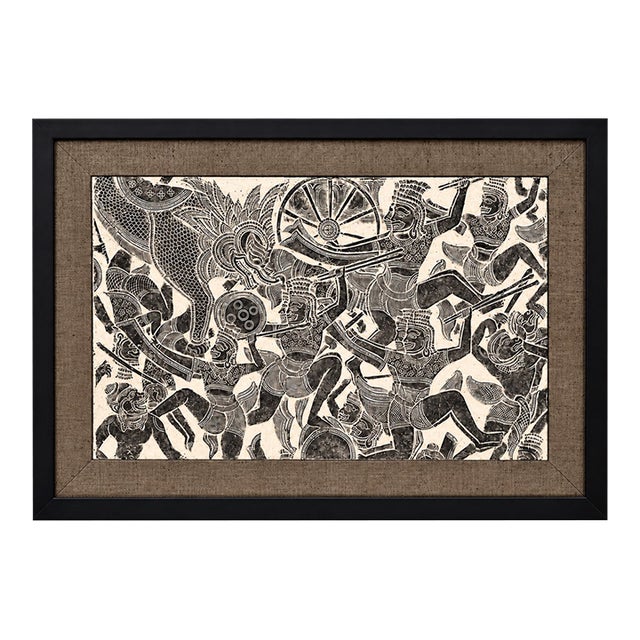
An extraordinary, large-scale mid-century Thai temple rubbing depicting an elaborate mythological battle associated with the Ramakien, Thailand’s national epic. Dating …
Read more
An extraordinary, large-scale mid-century Thai temple rubbing depicting an elaborate mythological battle associated with the Ramakien, Thailand’s national epic. Dating to the 1960s by attribution, this impressive work represents a remarkable example of traditional Southeast Asian relief-rubbing artistry, distinguished by its substantial scale, exceptional narrative complexity, intricate craftsmanship, and surviving original period framing.
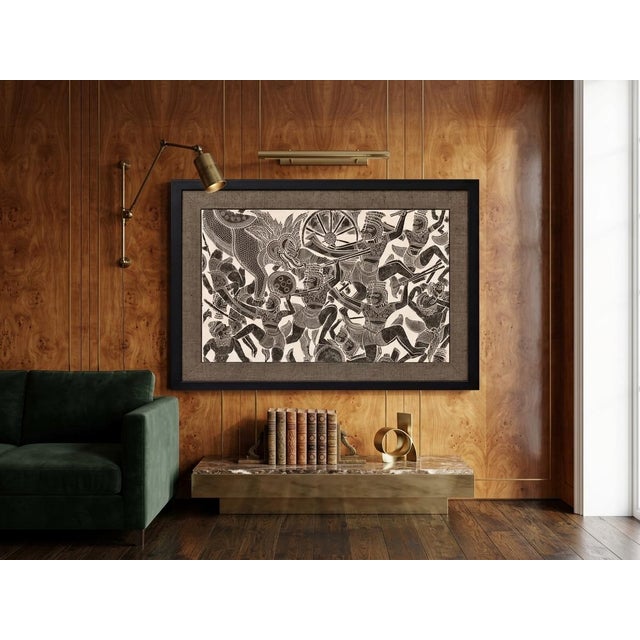
The Ramakien, Thailand’s celebrated adaptation of the ancient Indian Ramayana, chronicles the cosmic struggle between good and evil through the heroic exploits of Prince Rama and his allies. This densely populated composition depicts a dramatic confrontation between elaborately adorned warriors, mythical beasts, and supernatural combatants, rendered with extraordinary precision and theatrical intensity.
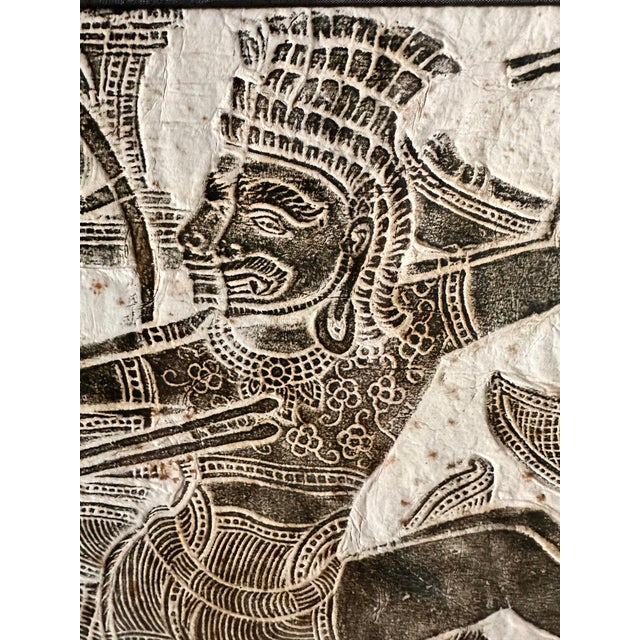
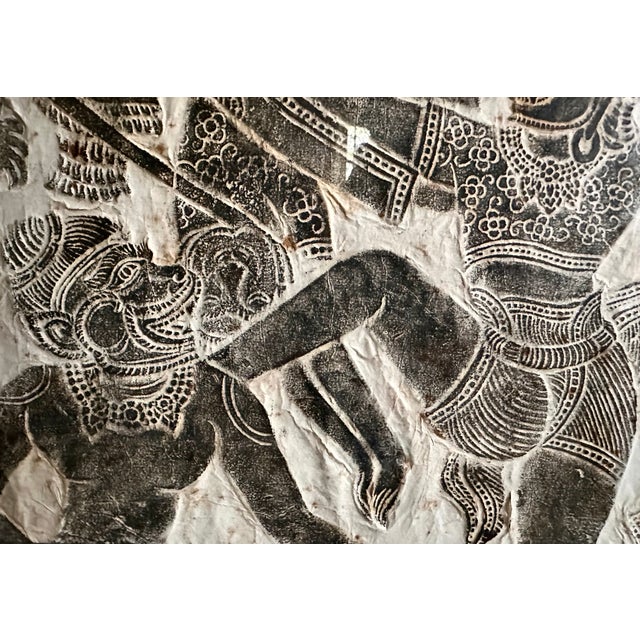
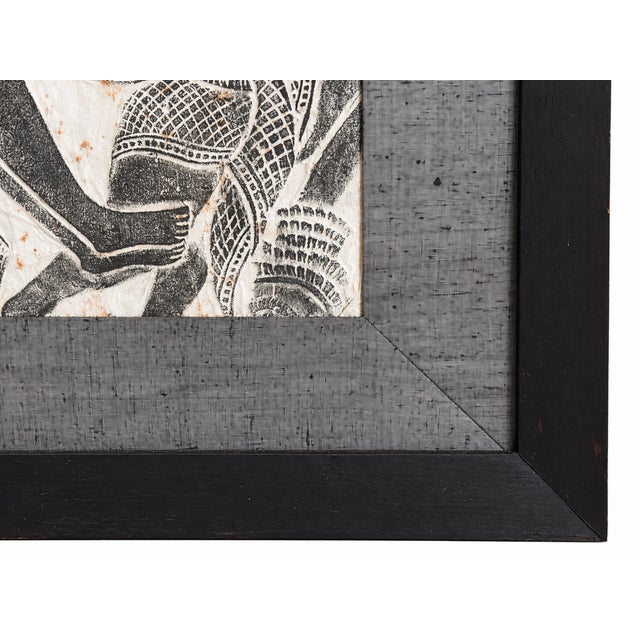
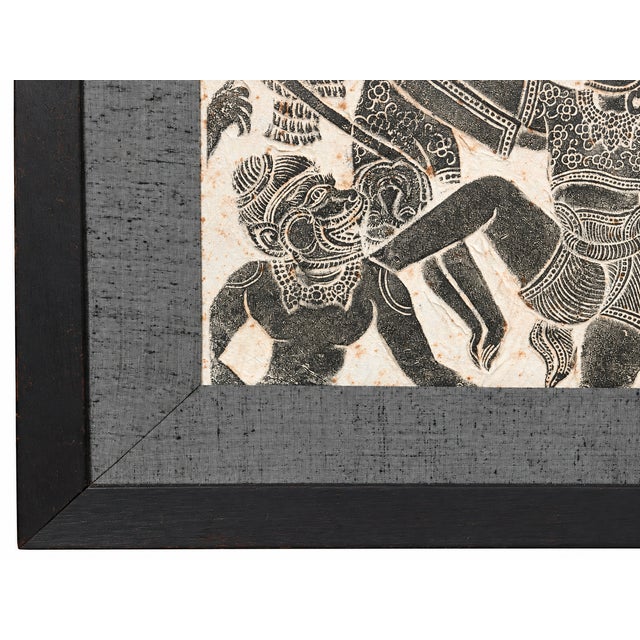
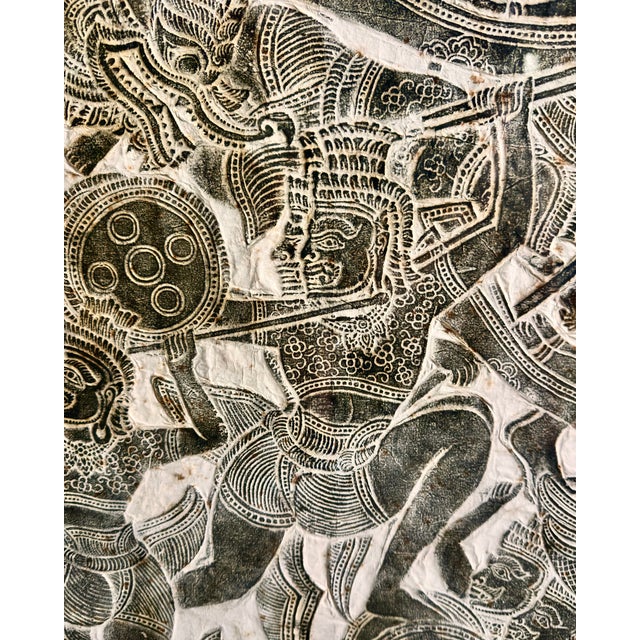
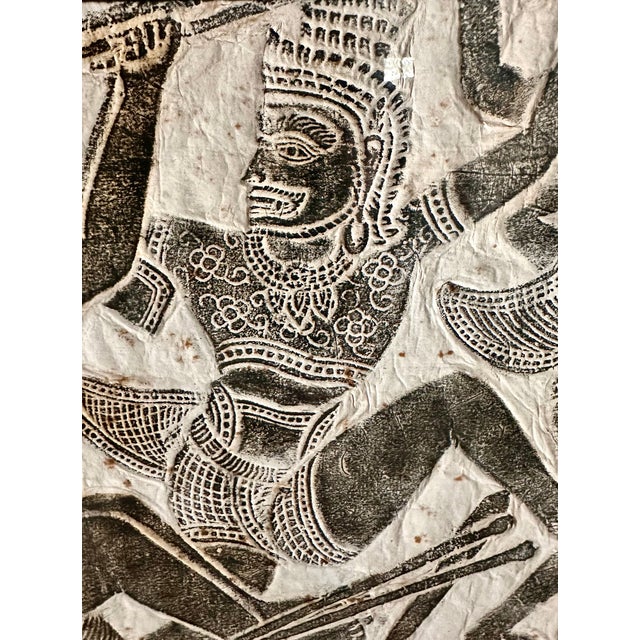
The sweeping horizontal composition features figures resembling the divine monkey warriors associated with Rama’s army and the formidable Yaksha demon warriors. Elaborate Chada-style royal headdresses, ceremonial armor, intricate jewelry, patterned garments, and richly decorated costumes recall the visual traditions of classical Thai court theater and royal dance. Spears, swords, shields, and ceremonial weapons intersect throughout the composition, creating an extraordinary impression of movement, conflict, and dramatic tension.
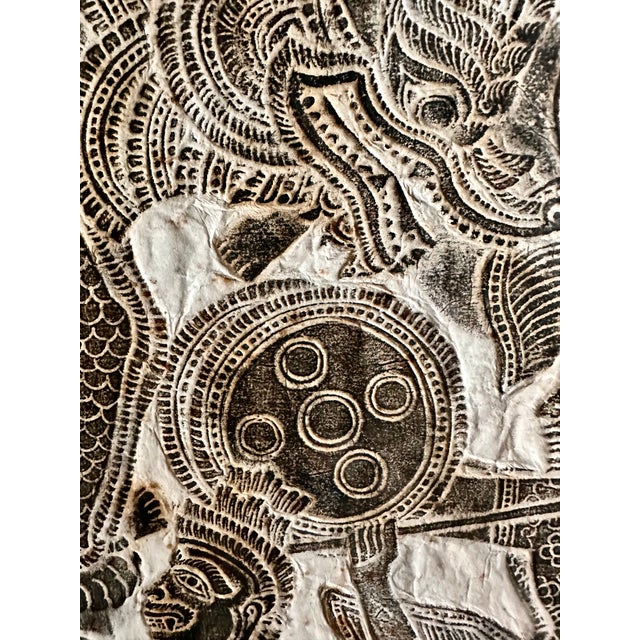
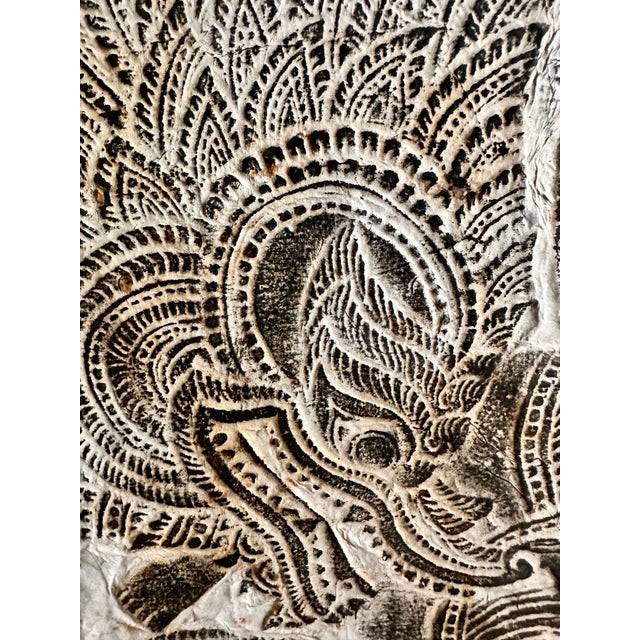
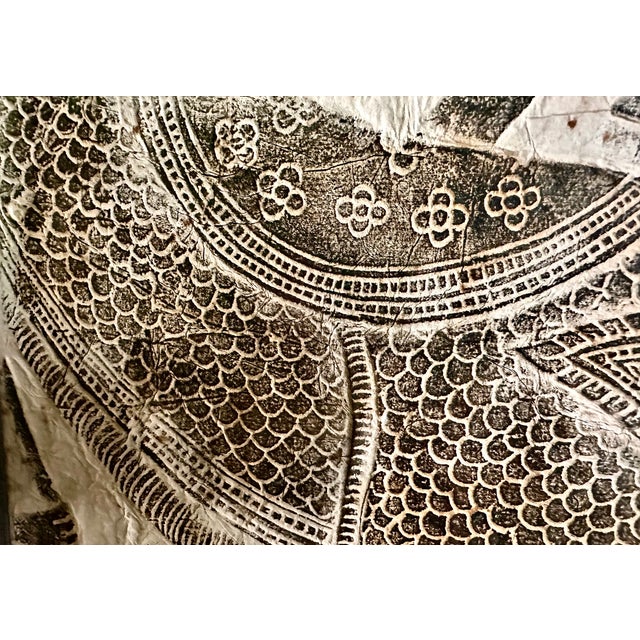
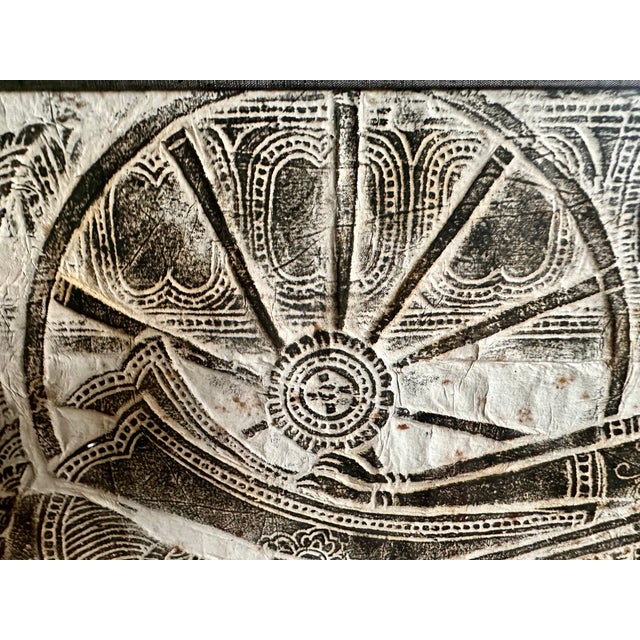
Among the work’s most compelling details is a monumental scaled mythical creature dominating the upper-left composition, recalling the fantastic guardian beasts of Southeast Asian sacred art. A prominently positioned, elaborately ornamented chariot wheel anchors the upper center of the scene, surrounded by densely arranged figures and complex decorative imagery. Individual warriors exhibit remarkable attention to facial expressions, ornamentation, textile patterns, and anatomical detail.
Executed in rich, charcoal-black pigment on creamy-white, fibrous handmade-style paper, the work displays the distinctive visual qualities of traditional hand-executed temple rubbings. The technique involves placing paper against carved architectural reliefs and applying pigment to transfer the sculptural imagery. This process captures minute details of the original carving, including incised decoration, architectural ornament, variations in stone texture, and the subtle irregularities of the relief surface.
Close examination reveals extraordinary intricacy in the impression, including delicate ornamental patterns, deeply textured paper fibers, fine decorative linework, and subtle variations in pigment application. The extensive photographic documentation accompanying this listing illustrates the remarkable craftsmanship and intricate character of the work.
Historical Significance and Rarity
Traditional Southeast Asian temple rubbings occupy an important position in the history of Asian art collecting and the documentation of historic architectural sculpture. These impressions preserve the imagery of carved temple reliefs through a specialized technique practiced long before modern digital reproduction methods.
The work is attributed to Thailand’s mid-century temple-rubbing tradition, possibly associated with the elaborate narrative reliefs of Bangkok’s historic Wat Pho temple complex. Its precise temple of origin has not been independently documented.
During the later twentieth century, conservation concerns surrounding the repeated physical rubbing of historic carved surfaces led to restrictions at important temple sites. The resulting limitations on direct-contact reproduction have contributed to the historical and collectible interest of surviving vintage temple rubbings. This example is attributed to the 1960s, although its precise production date and relationship to individual temple restrictions remain undocumented.
Historic Southeast Asian relief rubbings and related architectural works are important subjects of museum scholarship, including the study of Khmer and Thai sculptural traditions represented in institutions such as the Metropolitan Museum of Art in New York. Such institutional interest provides valuable historical context for appreciating these traditional impressions, although this example has no documented museum association.
Particularly noteworthy is the ambitious scale of the present work. Measuring 35 inches wide by 22 inches high within its original framing, the rubbing presents an extensive, complex narrative scene rather than an isolated decorative figure or individual architectural motif. The unusually intricate composition and substantial dimensions give the work exceptional visual presence.
Original Mid-Century Framing and Historical Presentation
Of particular importance is the survival of the artwork within its original mid-century framing assembly.
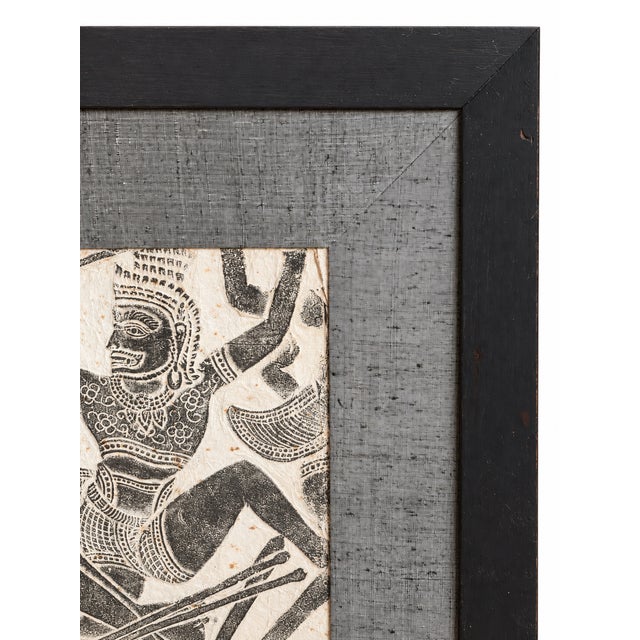
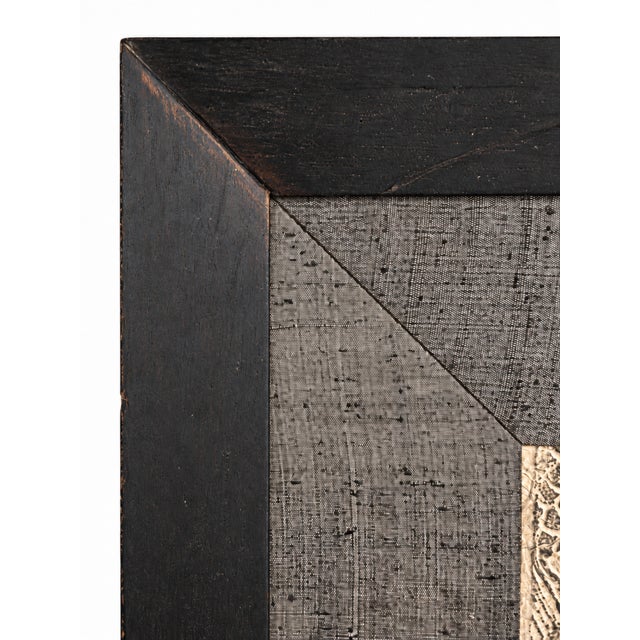
The rubbing remains housed in its substantial original black wooden frame, complemented by a generously proportioned, textured silver-gray linen mat. The restrained architectural framing creates an elegant contrast with the richly detailed monochromatic composition, while the wide textile border enhances the sense of depth and visual importance.
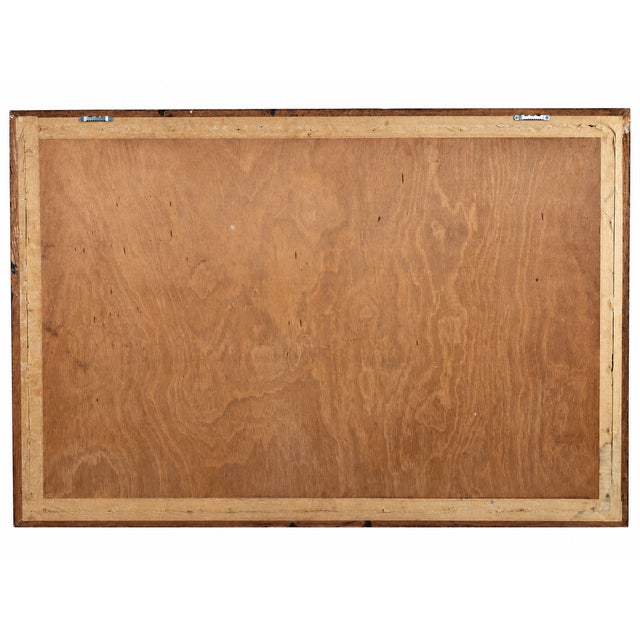
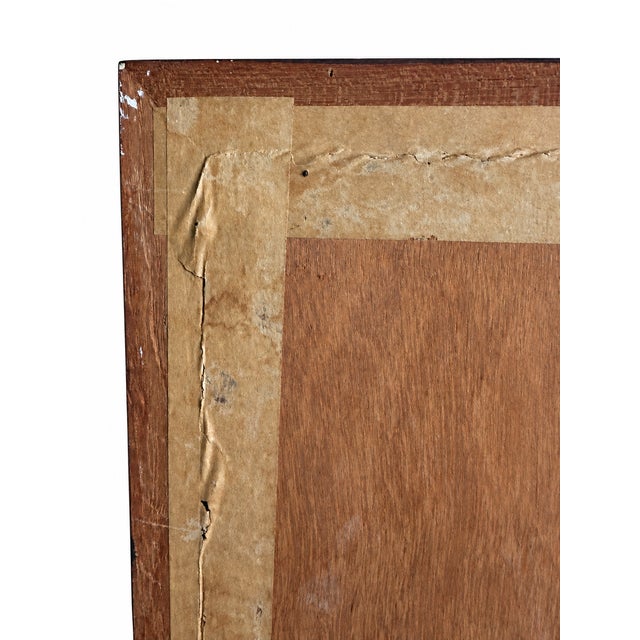
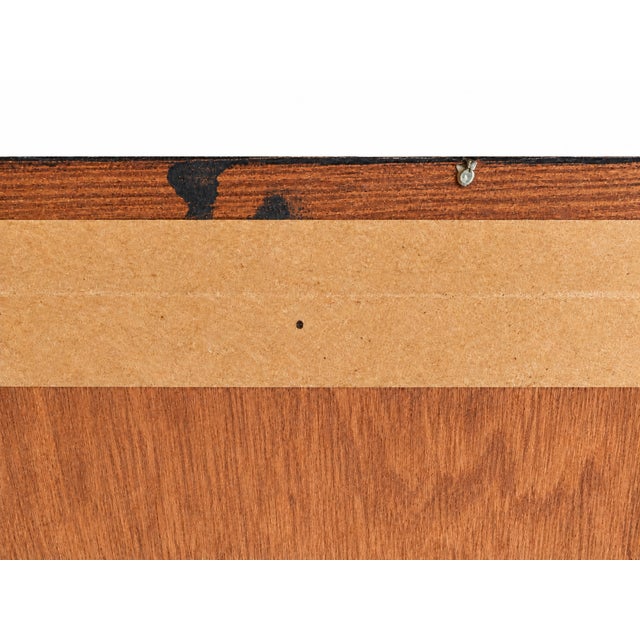
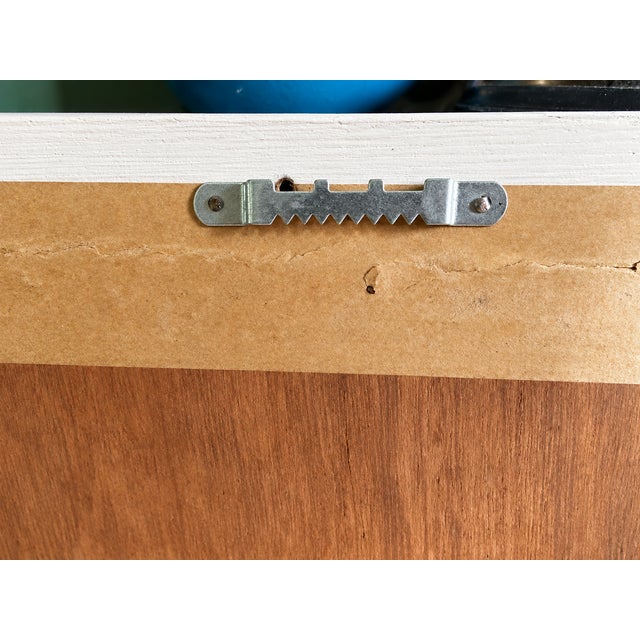
Equally significant is the original wood-panel backing, preserved with its aged paper sealing materials, original mounting configuration, and two metal sawtooth hanging fixtures.
The surviving wood backing is a particularly important element of this example. Unlike vintage works that have undergone contemporary reframing, this piece retains its original presentation, including the wood panel, period textile matting, aged paper sealing, and original framing hardware.
The naturally aged backing materials and their original arrangement provide important physical evidence of the work’s historic presentation. These elements have been retained rather than replaced, preserving the integrity, character, and historical interest of the framing assembly.
The combination of an intricate traditional rubbing, substantial physical dimensions, sophisticated original framing, and surviving period backing distinguishes this work as a compelling example of mid-century Southeast Asian decorative art.
At 44 inches wide and 30 inches high, the framed composition commands a substantial architectural presence. Ideally suited to an important gallery wall, private library, distinguished residential interior, or thoughtfully curated collection of Asian art, the piece bridges traditional Southeast Asian craftsmanship and sophisticated mid-century collecting.
An impressive intersection of mythology, cultural history, traditional artistic technique, and original period presentation, this remarkable Thai temple rubbing offers exceptional decorative impact and enduring historical character.
** This 1960s Thai temple rubbing is an unsigned piece with an unknown maker. It has been thoroughly inspected, and no artist signatures, stamps, or labels are present on the work, aligning with how these traditional Ramakien battle scene rubbings were commonly produced.
Dimensions
Overall Height: 30"
Overall Width: 44"
Frame Border Width: 1.5"
Visible Image: 22" H × 35" W
See less
- Dimensions
- 44ʺW × 1.5ʺD × 30ʺH
- Styles
- Asian
- Traditional
- Art Subjects
- Mythology
- Frame Type
- Framed
- Period
- 1960s
- Country of Origin
- Thailand
- Item Type
- Vintage, Antique or Pre-owned
- Materials
- Paper
- Wood
- Condition
- Good Condition, Original Condition Unaltered, Some Imperfections
- Color
- Black
- Condition Notes
- The artwork itself is in excellent, well-preserved condition, with no apparent tears, holes, missing sections, or physical damage to the … moreThe artwork itself is in excellent, well-preserved condition, with no apparent tears, holes, missing sections, or physical damage to the composition. The richly detailed black rubbing remains intact, displaying strong definition and exceptional clarity throughout its extensive narrative imagery. The natural fibrous texture, subtle surface undulations, and variations in pigment transfer are characteristic of the traditional rubbing process and contribute to the work’s authentic visual character. The original black wooden frame remains structurally intact and presents well overall. As expected with original mid-century framing, there are minor surface imperfections consistent with age and handling, including light abrasions, fine scratches, subtle rubbing along portions of the outer edges, and isolated small areas of finish wear. Minor irregularities are visible at certain frame corners and along the black painted surfaces. No substantial structural damage, major gouges, or significant losses to the frame are apparent in the supplied photographs. The original character and finish have been preserved rather than cosmetically refinished. The original wide silver-gray textile mat remains in place, retaining its woven texture, decorative appearance, and original configuration. Its natural textile variations are visible upon close examination. No significant physical damage to the mat is apparent in the photographs. The original wood-panel backing is particularly noteworthy and remains intact, displaying natural wood grain, minor surface marks, age-related discoloration, and variations in tone associated with its period construction. The wood panel retains its original position within the framing assembly, with no reported replacement or modernization. The original paper sealing tape around the reverse perimeter exhibits age-related discoloration, wrinkles, creasing, minor tears, small punctures, localized lifting, and separation along certain sections of the edges and corners. The most noticeable irregularities occur where the original paper tape overlaps at the corners and along portions of the upper perimeter. These characteristics are visible in the detailed photographs and have intentionally been retained as part of the original historic framing assembly. Two metal sawtooth hanging fixtures remain attached to the reverse, with the associated attachment points and hardware visible. The fittings exhibit surface characteristics consistent with age and remain part of the original presentation. The original backing, paper sealing, textile mat, and wooden frame have been preserved, maintaining the artwork’s historical presentation and avoiding the loss of period framing materials through unnecessary restoration or replacement. No restoration or reframing has been reported. The artwork has not been removed from its original frame for examination. Please review all photographs, including the detailed images of the artwork, framing, corners, hanging hardware, and original wood-panel backing, as they provide important documentation of its condition and construction. less
Questions about the item?
Returns & Cancellations
Return Policy - All sales are final 48 hours after delivery, unless otherwise specified in the description of the product.
Cancellation Policy - Prior to shipping or local pickup, buyers may cancel an order for up to 48 hours, unless otherwise specified.
Related Collections
- Jeff Slemmons Drawings
- Salvador Dalí Drawings
- Maison Jansen Drawings
- Leroy Neiman Drawings
- Guillaume Azoulay Drawings
- Piet Hein Eek Drawings
- Carl-Axel Acking Drawings
- Joseph Stella Drawings
- Erté Drawings
- Charcoal Drawings
- Fashion Drawings
- 1950s Fashion Drawings
- Pencil Drawings
- Ink Drawings
- Gustavian (Swedish) Drawings
- Tempera Drawings