

Details
Description
Jean-François Millet (1814–1875), after
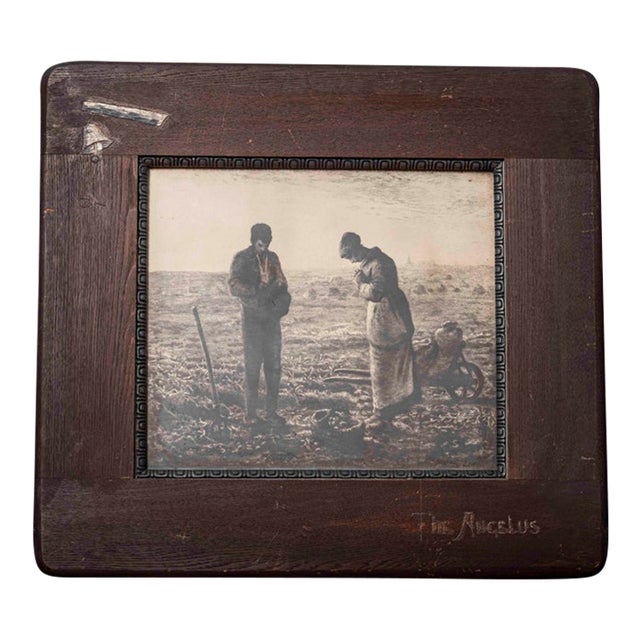
The Angelus
Antique monochrome reproduction
Late 19th to early 20th century
Presented under glass in a …
Read more
Jean-François Millet (1814–1875), after
The Angelus
Antique monochrome reproduction
Late 19th to early 20th century
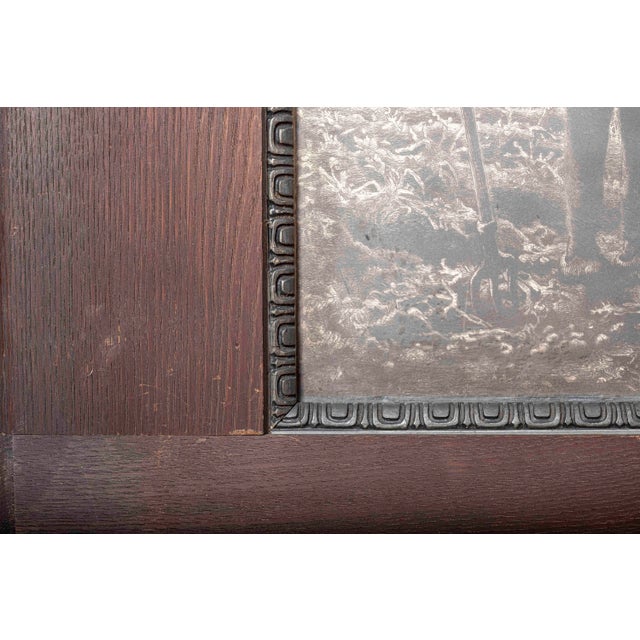
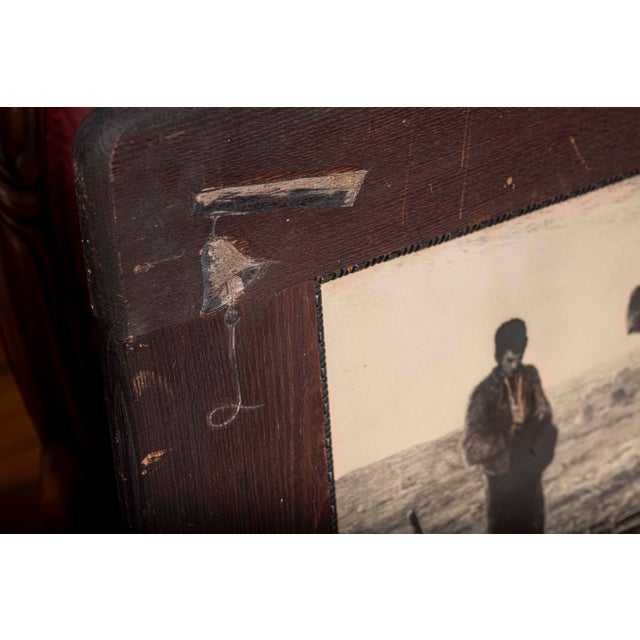
Presented under glass in a subject-specific carved wood frame
Artwork approximately 16 × 14 in.
Framed approximately 25 × 23.5 × 0.75 in.
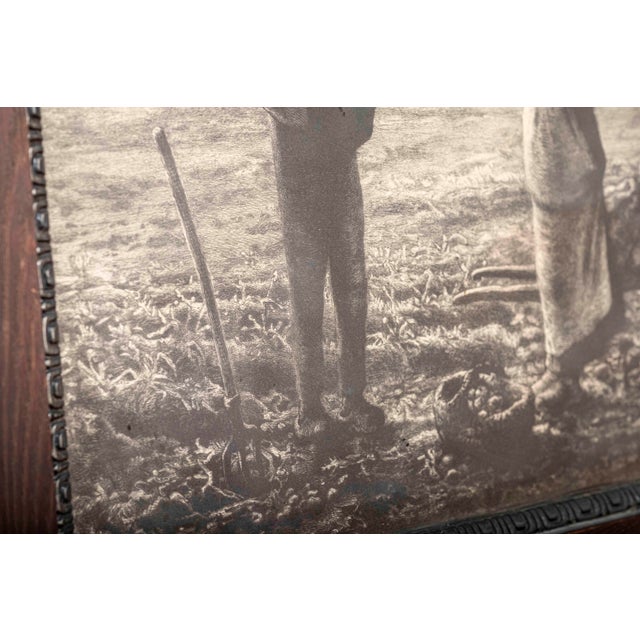
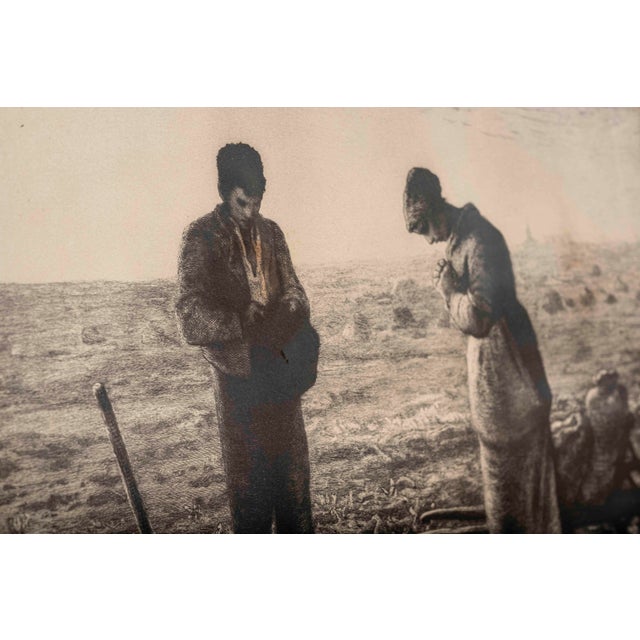
An evocative antique monochrome reproduction after Jean-François Millet’s celebrated The Angelus, presented in an unusually distinctive period wood frame created specifically for the subject.
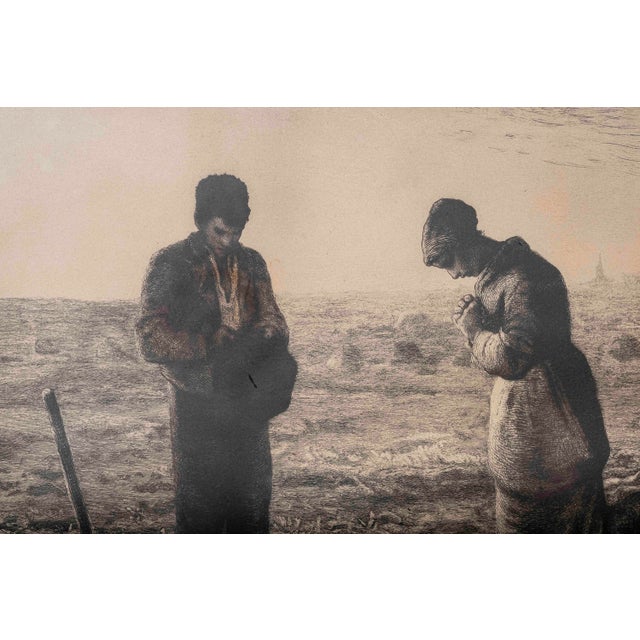
Millet painted The Angelus between 1857 and 1859, depicting two agricultural workers who have stopped their potato harvest and bowed their heads as the Angelus bell sounds in the distance. Millet later explained that the idea grew from a childhood memory of his grandmother stopping the family’s work in the fields when the church bell rang. In the finished painting, an ordinary interruption in the working day becomes a remarkably quiet image of labor, remembrance and contemplation.
About Jean-François Millet
Jean-François Millet (1814–1875) was one of the defining painters of 19th-century French rural life and a leading figure associated with the Barbizon school. After settling in Barbizon in 1849, Millet increasingly devoted himself to the farmers, shepherds and agricultural laborers of the French countryside. Rather than treating peasants merely as picturesque background figures, he gave them a monumentality and seriousness traditionally reserved for grander subjects. His paintings would become enormously influential, with Vincent van Gogh among the later artists who deeply admired and reinterpreted his work.
The Angelus, together with The Gleaners, became one of Millet’s defining images. Its reputation eventually extended far beyond museums and collectors. The Musée d’Orsay describes the two paintings as iconic works of Western art that have repeatedly reappeared in art, advertising and film. The Angelus itself became a worldwide cultural icon during the 20th century.
The Angelus as an Image in the Home
That extraordinary popularity is especially relevant to this particular object. Images such as The Angelus were reproduced for a much broader domestic audience, allowing celebrated works of art to enter ordinary interiors far removed from the original painting.
The subject was particularly suited to the home: two working people pausing together at the end of their labor, heads bowed as the distant bell marks a moment of reflection. Its appeal could encompass faith, family, humility, rural life and the dignity of work. By the turn of the 20th century, The Angelus had transcended its origins as a single French painting and become an immediately recognizable cultural image. The Musée d’Orsay notes the extraordinary public response the painting inspired as early as 1889 and its eventual status as an internationally famous icon.
This antique reproduction is an artifact of that history: an example of the way a celebrated museum image was transformed into an object intended to be lived with in the home.
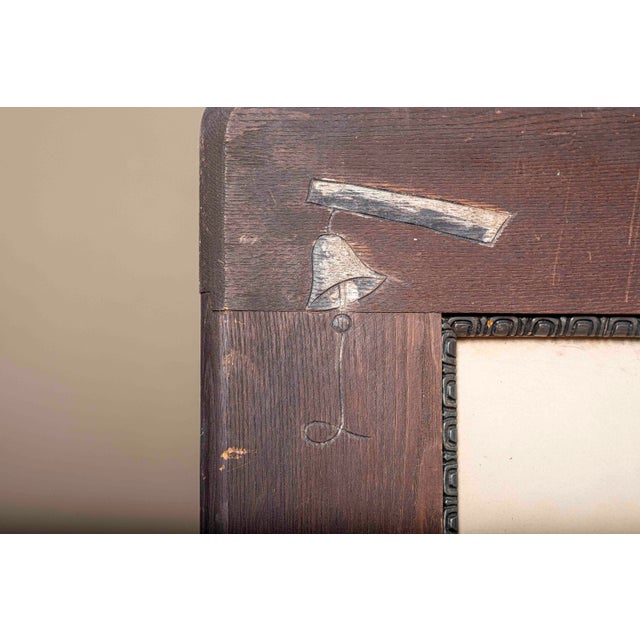
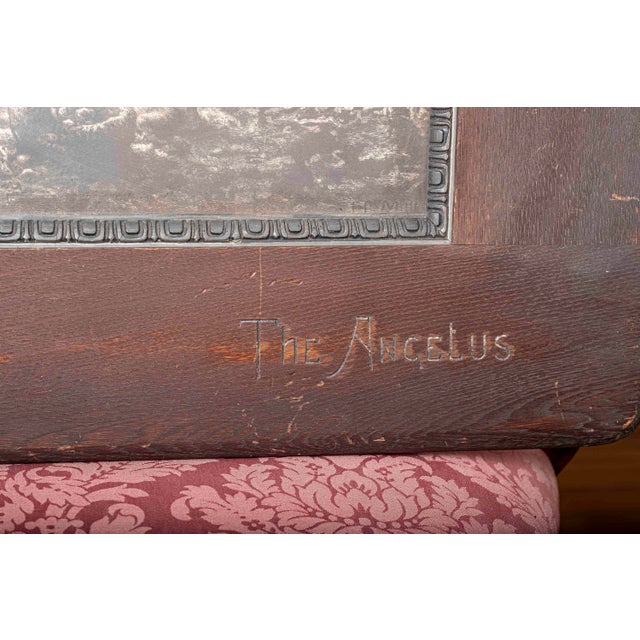
What makes this example particularly appealing is its presentation. The broad dark-stained wood frame is incised with “THE ANGELUS” and incorporates a small bell motif, directly referencing the unseen church bell to which Millet’s figures respond. Rather than serving merely as a surround, the frame was conceived specifically for the image and becomes part of the storytelling of the complete object.
The monochrome image is presented under glass with a decorative inner molding. Examination under magnification reveals a fine reproductive printing structure; however, the exact historical printing process and publisher have not been identified, so the work is conservatively described as an antique monochrome reproduction after Millet.
A signature-like or maker’s mark is visible within the image. Its origin has not been established, and no attribution is made from that mark.
The complete presentation appears consistent with the late 19th to early 20th century, although an exact date has not been established.
Measurements
Artwork: approximately 16 × 14 in.
Overall framed size: approximately 25 × 23.5 × 0.75 in.
See less
- Dimensions
- 23.5ʺW × 0.75ʺD × 25ʺH
- Frame Type
- Framed
- Period
- Early 20th Century
- Item Type
- Vintage, Antique or Pre-owned
- Materials
- Glass
- Paper
- Wood
- Condition
- Good Condition, Original Condition Unaltered, Some Imperfections
- Color
- Brown
- Condition Notes
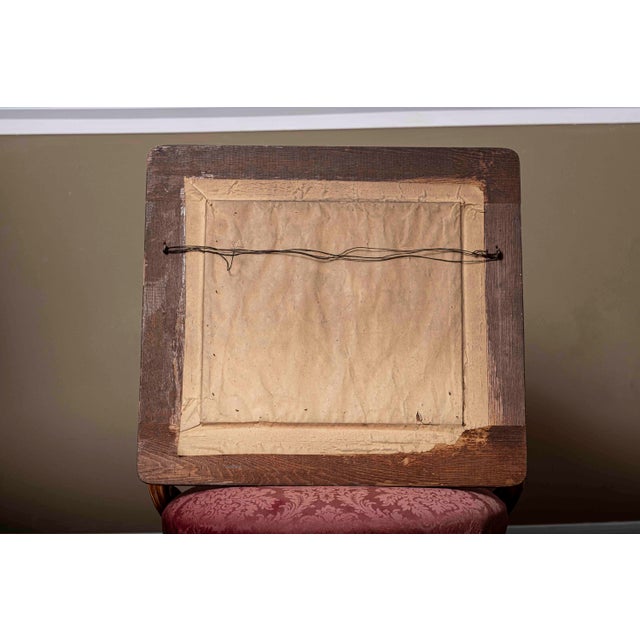
- Antique condition with visible age-related wear and evidence of previous display. The dark-stained wood frame shows scratches, abrasions, finish loss … moreAntique condition with visible age-related wear and evidence of previous display. The dark-stained wood frame shows scratches, abrasions, finish loss and surface wear, including wear and small losses around portions of the decorative bell motif. The print exhibits age-related toning and a small brown/reddish area of discoloration on the male figure. The reverse retains an old paper-covered presentation and hanging wire with considerable age and wear. The piece has been left in its existing presentation. Please review photographs for additional condition detail. less
Questions about the item?
Returns & Cancellations
Return Policy - All sales are final 48 hours after delivery, unless otherwise specified in the description of the product.
Cancellation Policy - Prior to shipping or local pickup, buyers may cancel an order for up to 48 hours, unless otherwise specified.
Related Collections
- Patrick Nagel Reproduction Prints
- Hable Reproduction Prints
- Reproduction Prints in Panama City, FL
- William Hogarth Reproduction Prints
- Lauren Ralph Lauren Reproduction Prints
- Jonathan Adler Reproduction Prints
- Sister Parish Reproduction Prints
- Leather Reproduction Prints
- Edward S. Curtis Reproduction Prints
- Mark D. Sikes Reproduction Prints
- Jute Reproduction Prints
- Sam Francis Reproduction Prints
- William Gropper Reproduction Prints
- Alvar Aalto Reproduction Prints
- Utagawa Kunisada (Toyokuni Iii) Reproduction Prints
- Daylight Dream Editions Reproduction Prints
- Reproduction Prints in Mobile
- Joshua Reynolds Reproduction Prints
- Port 68 Reproduction Prints
- Gold-Plate Reproduction Prints
- Polychrome Reproduction Prints
- Tuscan Reproduction Prints
- Restoration Hardware Reproduction Prints
- Bunny Williams Home Reproduction Prints
- Ralph Lauren Home Reproduction Prints