




Details
Description
Franz xaver hoch
1869 freiburg im breisgau - 1916 chtas
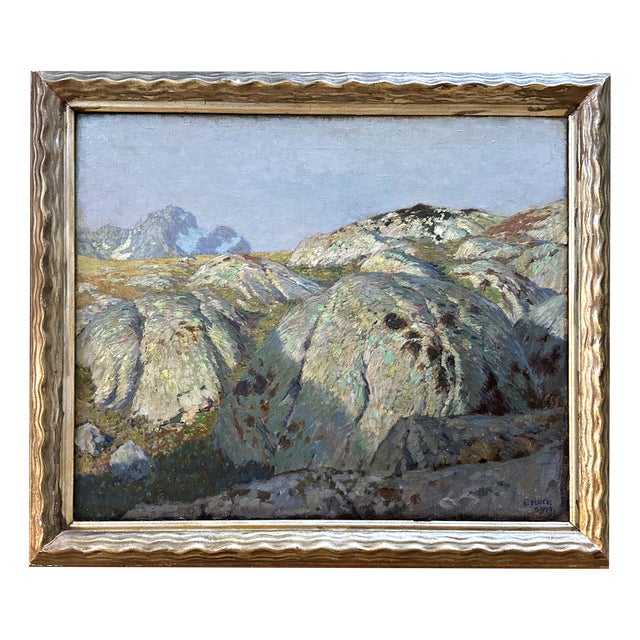
lichtes hoch, 1910
oil on canvas
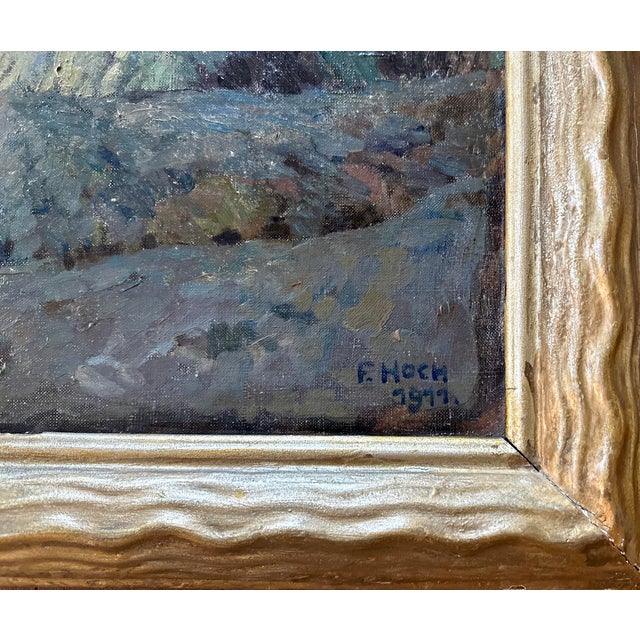
signed and dated lower …
Read more
Franz xaver hoch
1869 freiburg im breisgau - 1916 chtas
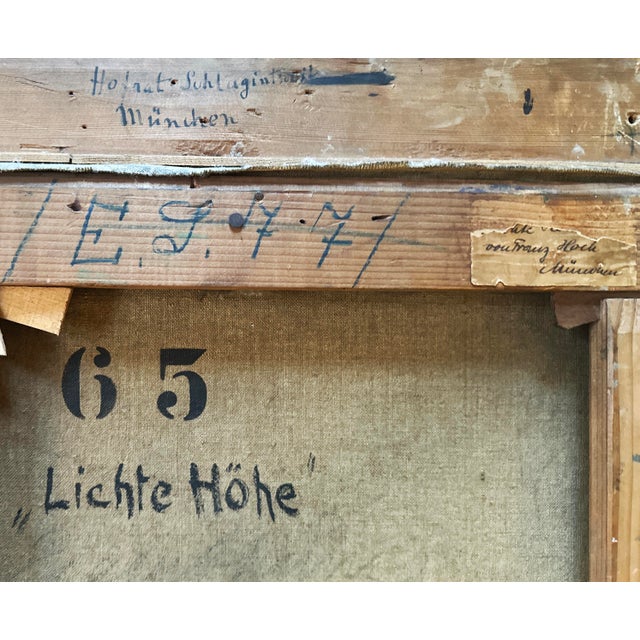
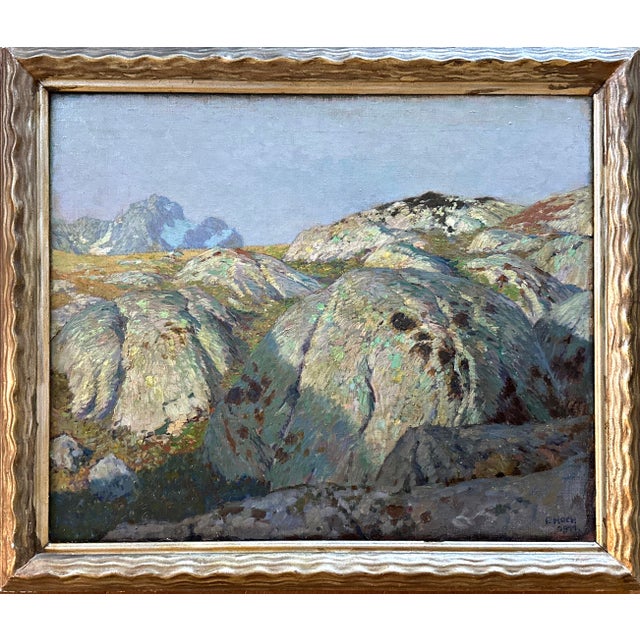
lichtes hoch, 1910
oil on canvas
signed and dated lower right
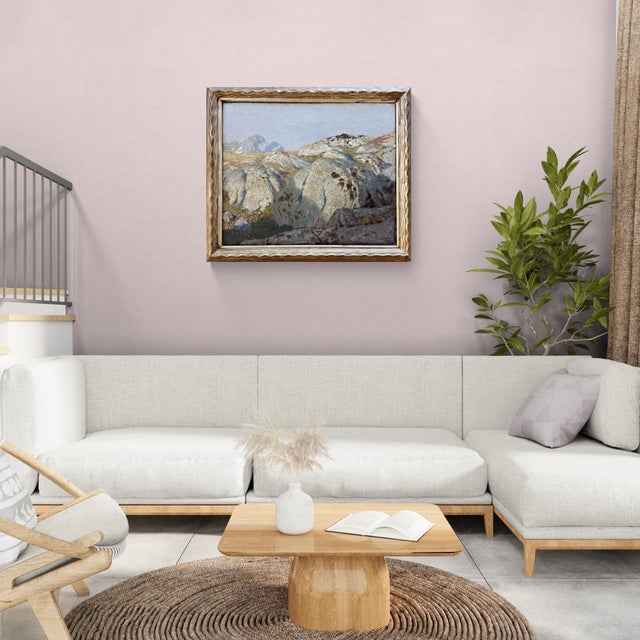
size: 70 x 85 cm
frame: 84.5 x 99.5 cm
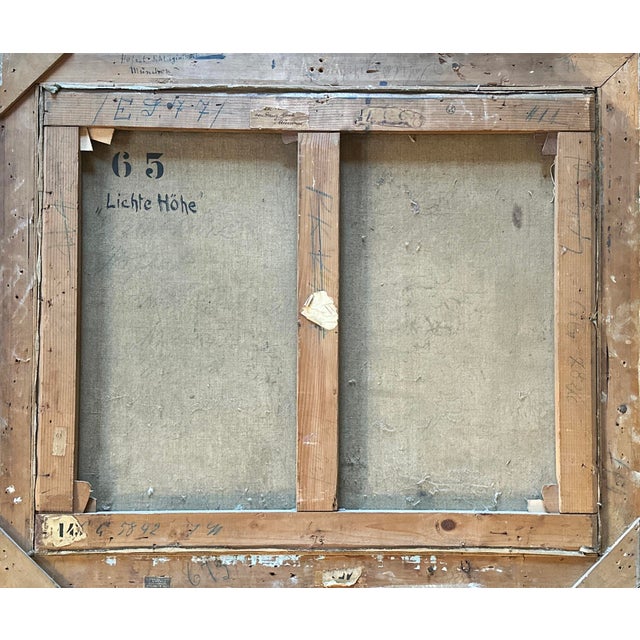
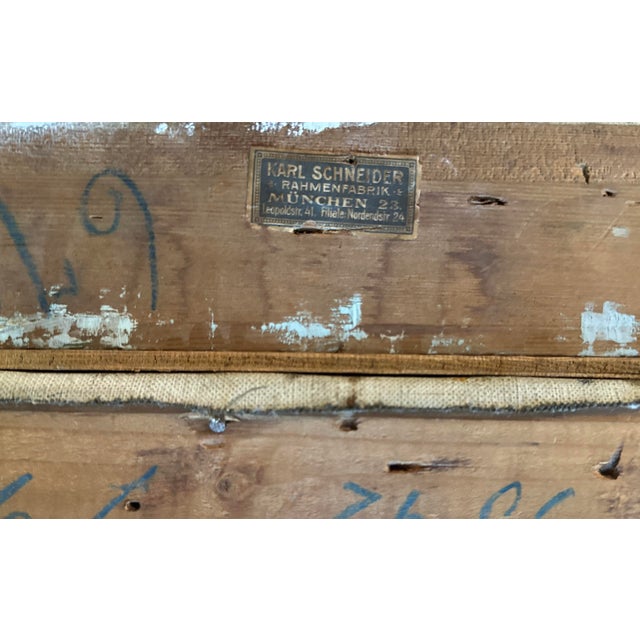
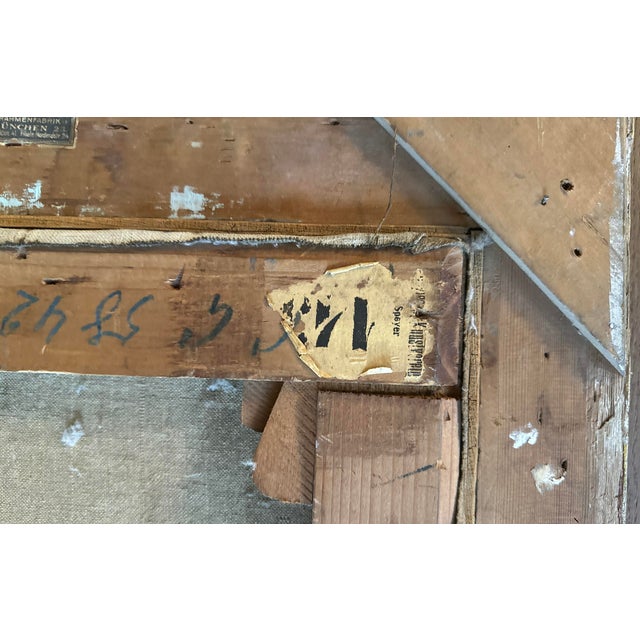
several exhibition labels on the reverse
provenance: speyer art exhibition, gerstenberger art salon
good original condition, frame slightly damaged (see photos)
authenticity will be confirmed in writing.
franz xaver hoch belongs to that generation of german artists who, around 1900, stood between the traditional concepts of academic landscape painting and the new artistic movements of modernism. Today, his name is less well-known than those of artists such as max liebermann, lovis corinth, max slevogt, or leo putz. However, hoch is of particular interest to art historians because his work combines various developments in german art around the turn of the century.
hoch was primarily a landscape painter and graphic artist. His artistic development progressed from initially naturalistic plein air painting, through an increasingly impressionistic approach, to a more simplified and stylized visual language. This shift is particularly evident in his prints, which exhibit elements of art nouveau and a flat, decorative style. The freiburg municipal museums accordingly described his work as influenced by impressionism and the barbizon school, while his prints were clearly more indebted to art nouveau.
franz xaver hoch's work thus exemplifies the transitional period around 1900: nature was no longer solely depicted with the greatest possible accuracy, but increasingly understood as mood, color harmony, surface, and formal symbol.
franz xaver hoch was born on may 15, 1869, in freiburg im breisgau. He received his initial artistic training from the freiburg landscape painter emil lugo. He subsequently studied at the karlsruhe academy of fine arts, where gustav schönleber was among his teachers. The influence of leopold von kalckreuth was also significant for his later development.
hoch's training in karlsruhe was important because it provided him with a solid academic foundation, while simultaneously exposing him to a conception of landscape painting that went beyond conventional studio painting.
schönleber was particularly known for his landscape depictions. His painting combined precise observation of nature with an increasingly atmospheric approach. This connection would later develop further in hoch's work.
from leopold von kalckreuth, hoch also adopted impulses for a stylized representation of nature. This aspect is crucial for understanding his later work: hoch became increasingly interested not only in what a landscape actually looked like, but also in how it could be artistically organized and simplified.
the landscape is the true focus of hoch's art.
he did not limit himself to a specific region. His preferred subjects included landscapes of the black forest, the eifel region, and upper bavaria, especially the area around lake wörthsee and dachau. In addition, he incorporated impressions from travels to italy, dalmatia, greece, alsace, and the alps.
it is noteworthy that hoch often did not choose spectacular landscape panoramas. Instead, he was interested in details, transitional zones, paths, groups of trees, bodies of water, villages, or stretches of coastline.
this concentration on a limited section of the landscape connects him to the modern landscape painting of the late 19th century.
for hoch, the landscape is not merely a "representation" of a particular place. It becomes the vehicle for a mood.
the so-called barbizon school is particularly important for hoch's development.
since the mid-19th century, the french landscape painters around barbizon had emphasized the importance of direct observation of nature and working outdoors. Artists such as théodore rousseau, jean-françois millet, and narcisse diaz de la peña turned away from idealized landscape compositions and were interested in the immediate effects of light, atmosphere, and weather.
hoch didn't simply adopt their style. Rather, he shares a similar approach to landscape.
nature often appears evocative and atmospheric. Weather, light, and time of day determine the effect of the painting. Particularly characteristic are his often rather muted color palettes, which are simultaneously contrasted with individual bright areas of light.
an exhibition in freiburg aptly characterized his landscapes as being marked by a frequently melancholic mood. Especially in his seascapes, surf, light reflections, and refractions play an important role.
light has a central function in hoch's work.
the focus is not on an isolated tree, house, or mountain. Rather, the interplay of the elements under specific atmospheric conditions is crucial.
a cloudy sky can make a landscape appear completely different than a sunny afternoon. Morning and evening light change the colors, while fog and mist dissolve the contours.
hoch is often interested in precisely these transitional states.
a title like "last glow" already expresses this attitude linguistically. Works such as "evening mood," "early spring sun," "glacier," and "morning at the simplon pass" demonstrate how strongly hoch defines landscapes through experiences of light and atmosphere. Numerous such landscape studies and mood paintings can be found in surviving catalogues of his works. Hoch's use of color is by no means merely decorative.
he often employs muted, subdued tones. These are, however, enlivened by accents of light. It is precisely this that creates his characteristic combination of melancholy and luminosity.
the freiburg museum's presentation of his work explicitly emphasized that hoch contrasts his mostly muted colors with a light "shining from the depths." this creates a yearning, melancholic effect.
this quality also distinguishes him from purely decorative art nouveau painting.
hoch's color is first and foremost atmospheric.
it does not merely describe the surface of an object, but conveys an emotional perception of the landscape.
hoch's development becomes particularly interesting where his impressionist observation of nature transitions into a greater simplification of form.
this marks the true transition to art nouveau.
the landscape is increasingly constructed from larger, cohesive forms. Groups of trees, houses, mountain slopes, or bodies of water can be more effectively combined. Details recede into the background.
a compositional order replaces detailed representation.
nature thus becomes, in a sense, a surface.
this development in hoch's work was not sudden, but rather arose from his engagement with graphic arts.
________________________________________
in 1898, hoch moved to munich and settled on lake wörth. There he came into contact with the munich art scene and was close to the artists' association "die scholle" (the soil). This group of artists emerged within the munich secession and was associated with artists such as leo putz.
the significance of this connection should not be overestimated, as hoch was not a typical representative of any single artistic group.
nevertheless, it explains some aspects of his stylistic development.
munich's art scene around 1900 was characterized by a pronounced pluralism of styles. Impressionism, symbolism, art nouveau, naturalism, and decorative painting existed side by side and influenced one another.
hoch's work is a prime example of this situation.
he was not a dogmatic proponent of any one artistic movement.
rather, he absorbed diverse modern influences and developed his own landscape language from them.
his engagement with the dachau artists' colony was also of particular importance.
between 1900 and 1914, hoch repeatedly stayed in the dachau artists' colony.
dachau and the upper bavarian landscape offered artists a combination of pristine nature, rural cultural landscape, and unique light conditions.
for hoch, this was an ideal working environment.
here, he could combine his impressionistic observation of nature with increasing simplification.
nature often appears less idyllic and more still, serious, and contemplative.
________________________________________
his travels took him to italy, dalmatia, and greece, among other places. The mediterranean landscape, in particular, opened up new possibilities for his exploration of light and color.
an early example is the "italian coastal landscape with monastery" from 1893. Works such as "gravosa, dalmatia" from 1895 also demonstrate his interest in southern landscapes.
the sea, in particular, was a fascinating subject for hoch.
the movement of the surf offered him the opportunity to examine light and color not only on solid objects but also on a constantly changing surface.
here, his impressionist leanings become especially clear.
hoch's life was abruptly cut short by the first world war.
he died in 1916 in the vosges mountains.
his death thus occurred during a time when european art had already undergone fundamental changes. Expressionism, cubism, and other avant-garde movements increasingly challenged traditional landscape painting.
hoch himself only partially witnessed this development.
his art remained connected to the landscape, but had already moved significantly away from academic depictions of nature.
franz xaver hoch can be considered a characteristic representative of the generation that, around 1900, transitioned from traditional landscape painting to modern art.
his early training with emil lugo and gustav schönleber provided him with a solid foundation in landscape painting. His engagement with leopold von kalckreuth led to a greater degree of stylization. In munich and within the circle of the artists' group "die scholle" (the soil), he encountered the new trends of the time. His exploration of the landscapes of upper bavaria, dachau, italy, dalmatia, and the alps ultimately resulted in a unique combination of natural observation, impressionism, and decorative simplification of form.
the distinct development of his paintings and graphic works is particularly noteworthy.
while his oil paintings are often characterized by light, atmosphere, and a melancholic mood, his color lithographs develop a significantly more stylized, planar, and linear visual language. Here, the affinity with art nouveau becomes especially evident.
hoch's true significance, therefore, perhaps lies less in being definitively assigned to a specific art movement. Rather, his position between movements is far more interesting.
he demonstrates how a new, modern visual language gradually emerged from the impressionist observation of nature—a visual language in which landscape is no longer merely seen, but felt, simplified, and shaped.
in this way, franz xaver hoch exemplifies the fascinating transitional phase between the late 19th century and modernism.
his art exemplifies that impressionism and art nouveau were not strictly separate worlds. In hoch's work, they converge in the landscape: impressionism focuses on the changing light and atmosphere, while art nouveau translates nature into line, plane, and decorative order.
it is precisely this connection that makes franz xaver hoch a remarkable artist of german art around 1900. This piece has an attribution mark,
i am sure that it is completely authentic and take full responsibility for any authenticity
issues arising from misattribution
See less
- Dimensions
- 38.98ʺW × 1.97ʺD × 33.07ʺH
- Period
- Early 20th Century
- Country of Origin
- Germany
- Item Type
- Vintage, Antique or Pre-owned
- Condition
- Good Condition, Unknown, Some Imperfections
- Color
- Condition Notes
- Very Good — This vintage item has no defects, but it may show slight traces of use. Very Good — This vintage item has no defects, but it may show slight traces of use. less
Returns & Cancellations
Return Policy - All sales are final 48 hours after delivery, unless otherwise specified in the description of the product.
Cancellation Policy - Prior to shipping or local pickup, buyers may cancel an order for up to 48 hours, unless otherwise specified.
Related Collections
- Photorealism Canvas Paintings
- Ed Ruscha Paintings
- Photorealism Paintings in New York
- Richard Serra Paintings
- Herman Miller Paintings
- BDDW Paintings
- Jo Baskerville Paintings
- Louise Nevelson Paintings
- Karen Offutt Paintings
- Nicola Simbari Paintings
- James McCray Paintings
- Carl-Axel Acking Paintings
- Joseph Stella Paintings
- Karl-Erik Ekselius Paintings
- Leroy Neiman Paintings
- Jaanika Peerna Paintings
- Cassina Paintings
- Lawson-Fenning Paintings
- Black Photorealism Paintings
- Jean-Paul Barray Paintings
- Hans Andersen Paintings
- Johannes Andersen Paintings
- Pedro Friedeberg Paintings
- Peter Behrens Paintings
- Piet Hein Eek Paintings