

Details
Description
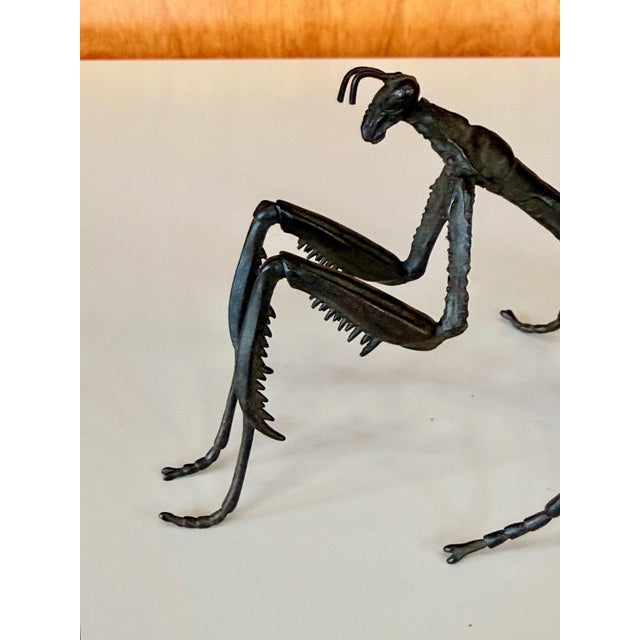
A bronze Japanese okimono cast in refined and realistic form of a praying mantis attributed to by Ryubundo Yasunosuke VI …
Read more
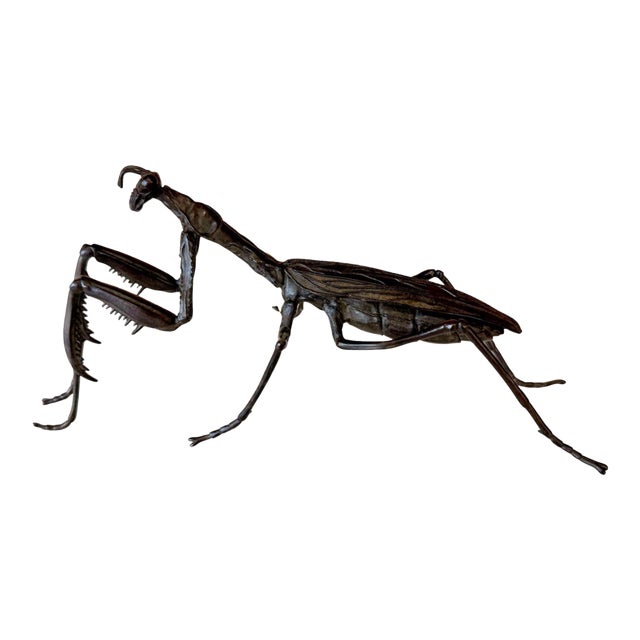
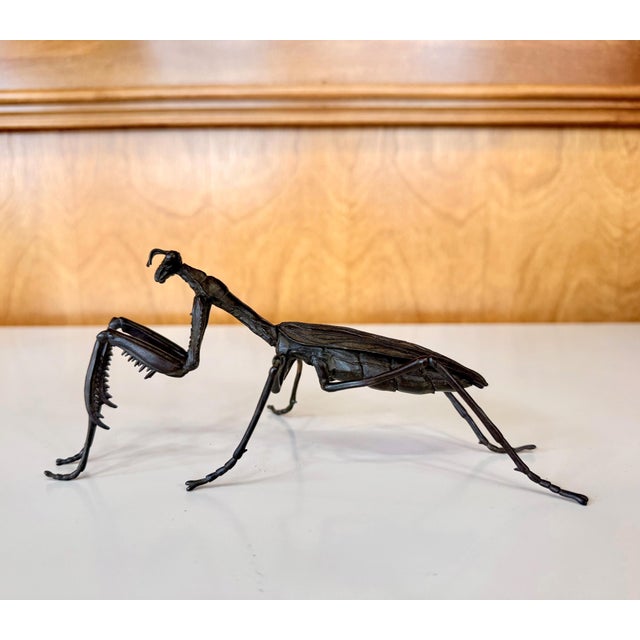
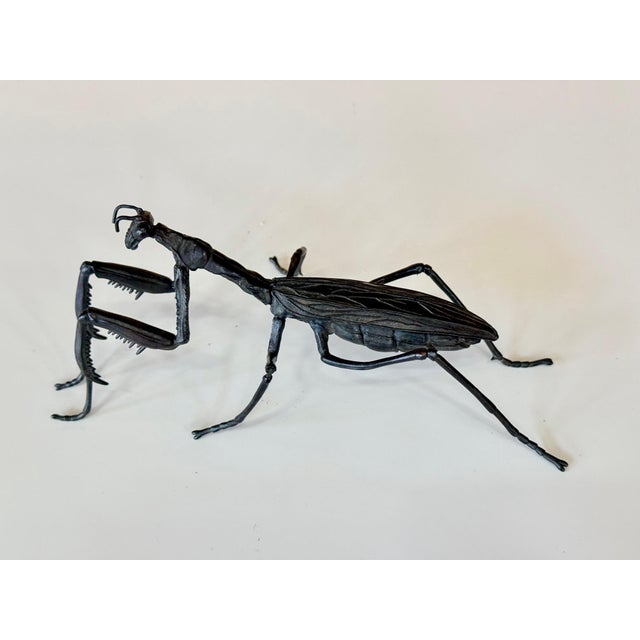
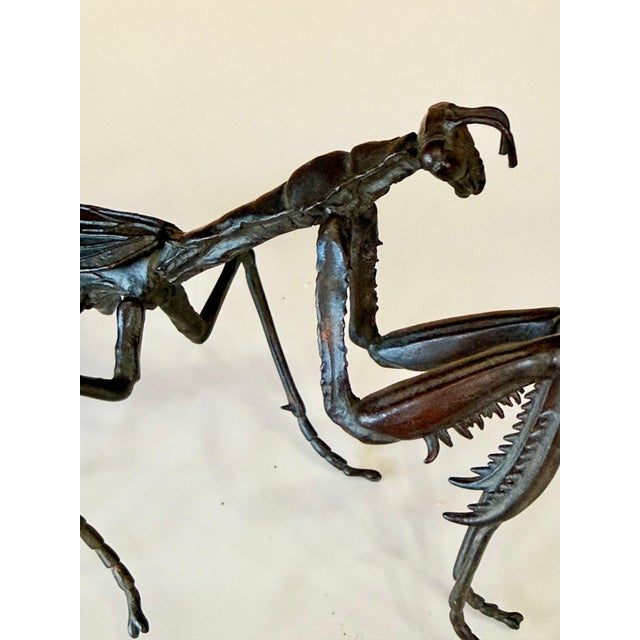
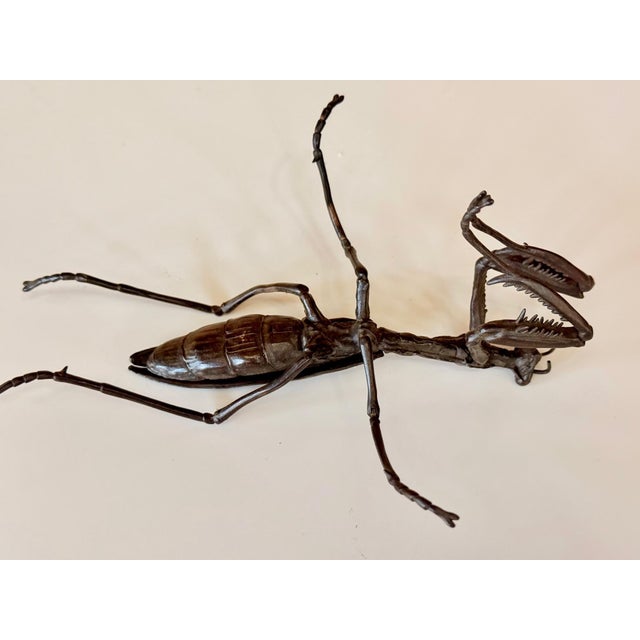
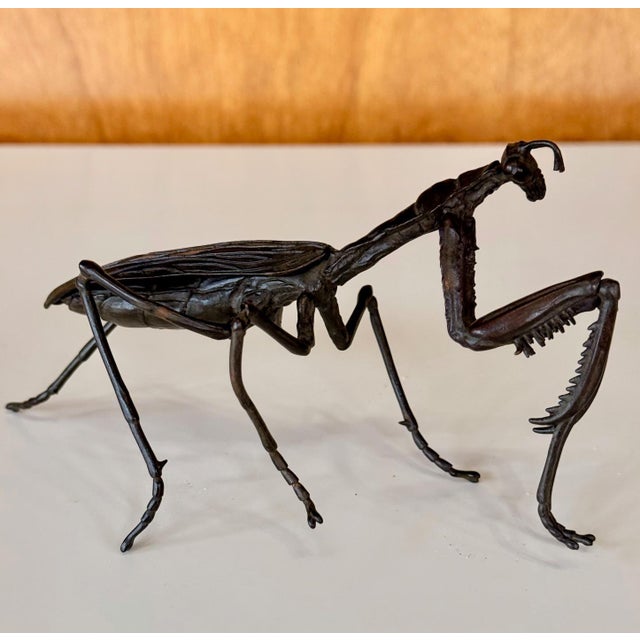
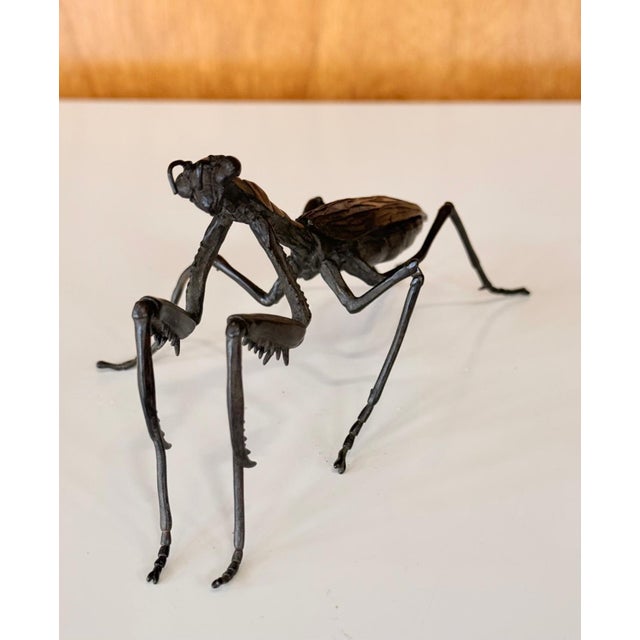
A bronze Japanese okimono cast in refined and realistic form of a praying mantis attributed to by Ryubundo Yasunosuke VI (1840-1921), a sixth generation of the Yasunosuke family active in Meiji and Taisho period.
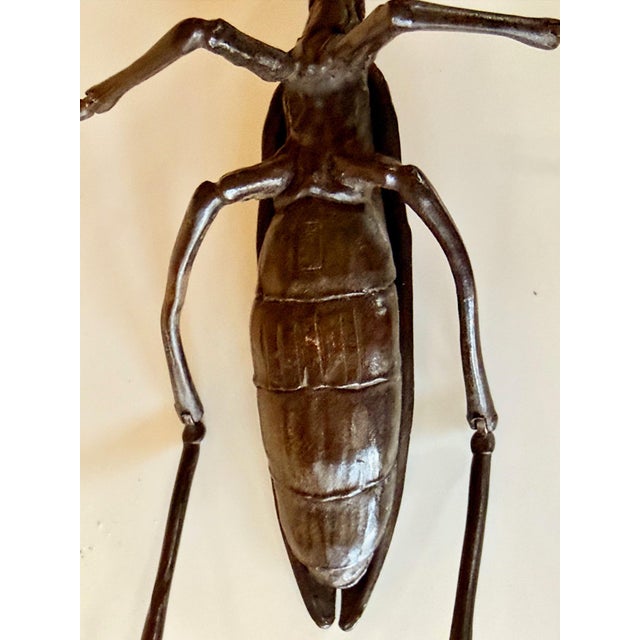
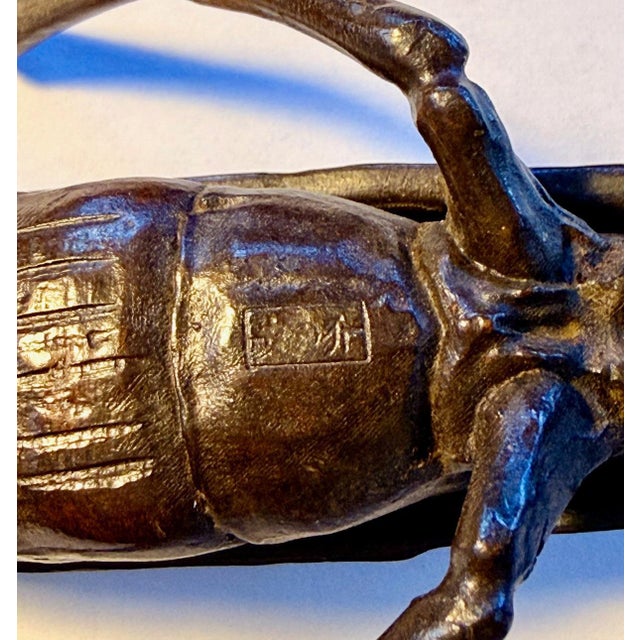
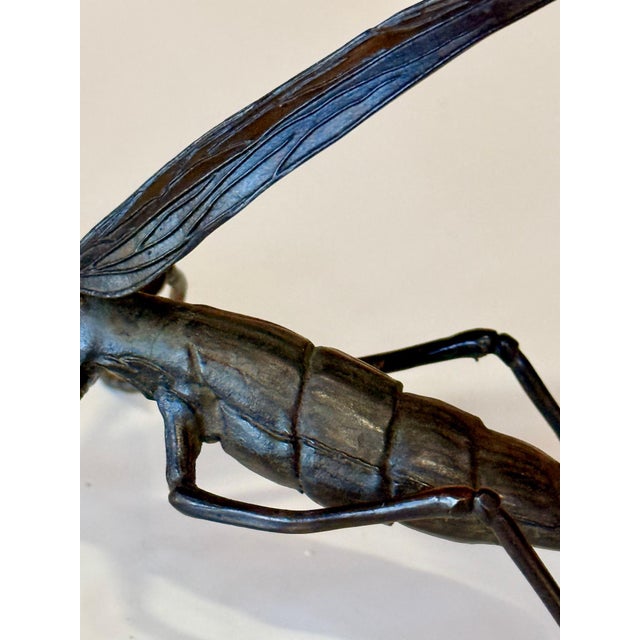
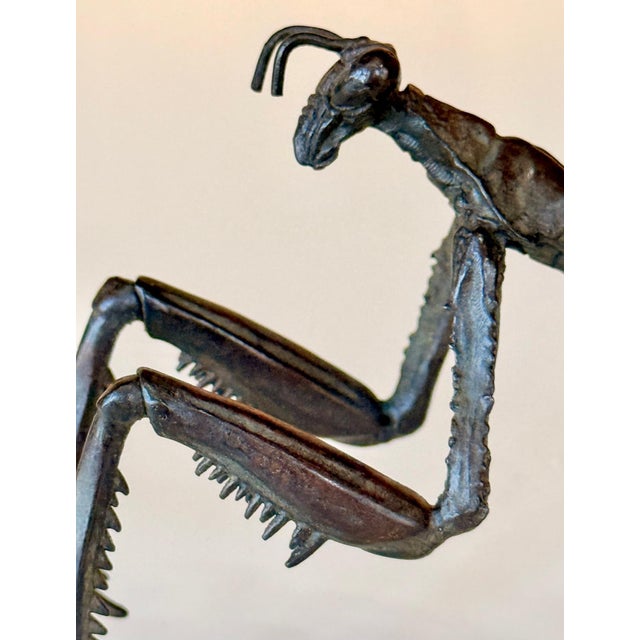
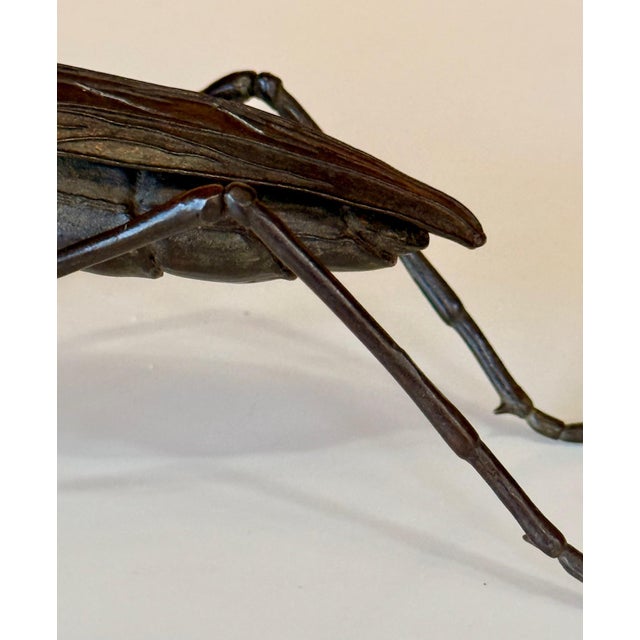
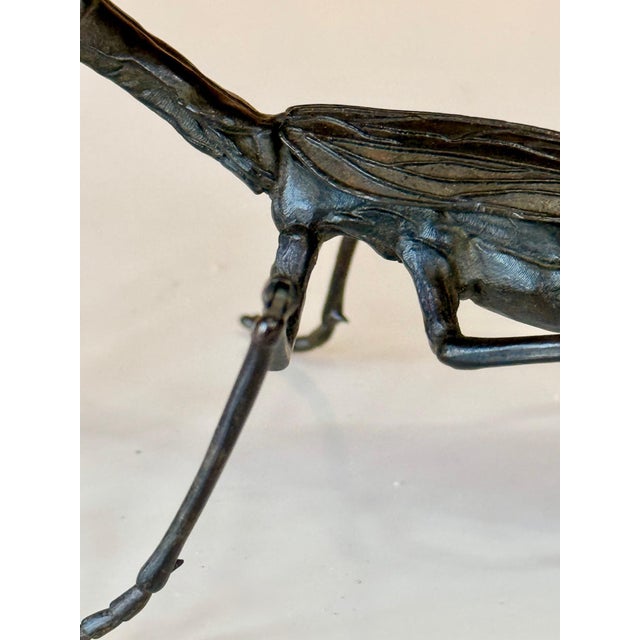
The insect was cast in a highly realistic fashion with anatomical details to the finest point. It features a segmented body with articulated wing that moves and flips up. All limbs are articulated on the second joints and can be positioned differently. As an ornamental display item, this type of item is known in Japanese as Jizai Okimono. Realistic casted with biological details such as the veins on the wings and textured husks on the lags, the piece is signed "Yasunosuke" under the belly as shown.
The metal okimono became popular in Meiji period, especially Jizai, the articulate animal figure that was painstakingly crafted, often by metal artists who made weaponry for Shoguns and Samurai, whose lineages were traced to pre-Edo period. As an ornamental display item, this type of small sculpture with articulated parts is known in Japanese as Jizai (meaning free moving). They became popular in late Edo to Meiji period. Due to the declined demand of the weapons starting in the peaceful Edo period under the Shogunate, many metalwork families including Ryubundo lineage switched from making weaponry to bronze artwork including statues and smaller okimono. They transferred their skills in metal work into a new art form that ultimately attracted the attention of the west audience as well.
The Ryubundo lineage spanned eight generations, operating from the end of the Edo period until 1958. It was founded by Ryubundo Yasunosuke I (Shikata Yasunosuke, 1786–1841). Ryubundo Yasunosuke VI (Mizoguchi Kihei, 1840–1921) was the most prominent master of the Meiji and Taisho eras. He is particularly celebrated for his intricate bronze work and articulated figures.
This is a wonderful large example with the finest details we have seen.
For a similar earlier praying mantis in the collection of British Museum with Museum see item number 1981,0808.249
See less
- Dimensions
- 8ʺW × 4ʺD × 3ʺH
- Styles
- Art Deco
- Art Subjects
- Animals
- Period
- Late 19th Century
- Country of Origin
- Japan
- Item Type
- Vintage, Antique or Pre-owned
- Materials
- Bronze
- Condition
- Good Condition, Original Condition Unaltered, Some Imperfections
- Color
- Black
- Condition Notes
- GoodWear consistent with age and use. Fine antique condition, no losses, all joins work well. Lovey piece. GoodWear consistent with age and use. Fine antique condition, no losses, all joins work well. Lovey piece. less
Questions about the item?
Returns & Cancellations
Return Policy - All sales are final 48 hours after delivery, unless otherwise specified in the description of the product.
Cancellation Policy - Prior to shipping or local pickup, buyers may cancel an order for up to 48 hours, unless otherwise specified.
Related Collections
- Straw Sculpture
- Louis XIV Sculpture
- Roman Bronze Works Sculpture
- Constantin Brancusi Sculpture
- Fernando Botero Sculpture
- Georgian Sculpture
- Bakelite Sculpture
- Antique Iron Finish Sculpture
- Gold-Plate Sculpture
- Medium-Density Fibreboard Sculpture
- Sculpture in Columbus
- Polished Brass Finish Sculpture
- Barovier and Toso Sculpture
- René Lalique Sculpture
- Albert Ernest Carrier-Belleuse Sculpture
- Sculpture in Panama City, FL
- Gourd Sculpture
- Recycled/Repurposed Sculpture
- Geode Sculpture
- Photography Sculpture
- Worlds Away Sculpture
- Far Pavilions Sculpture
- Maison Jansen Sculpture
- Flavio Poli Sculpture
- Austin Productions Sculpture