

Details
Description
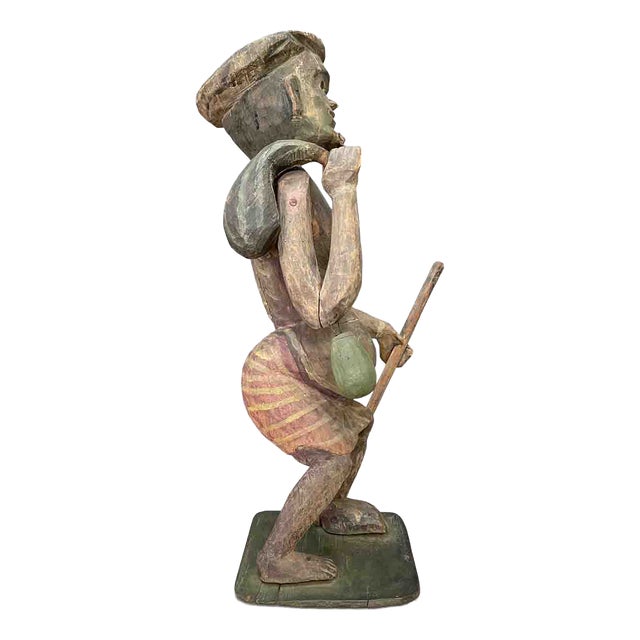
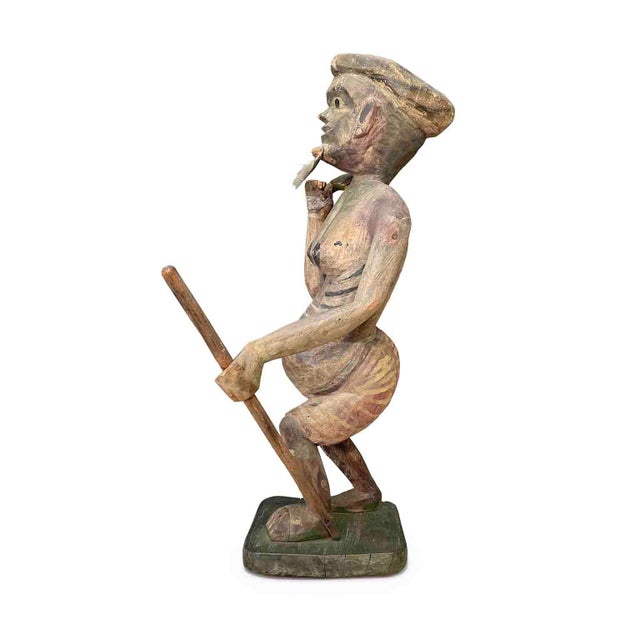
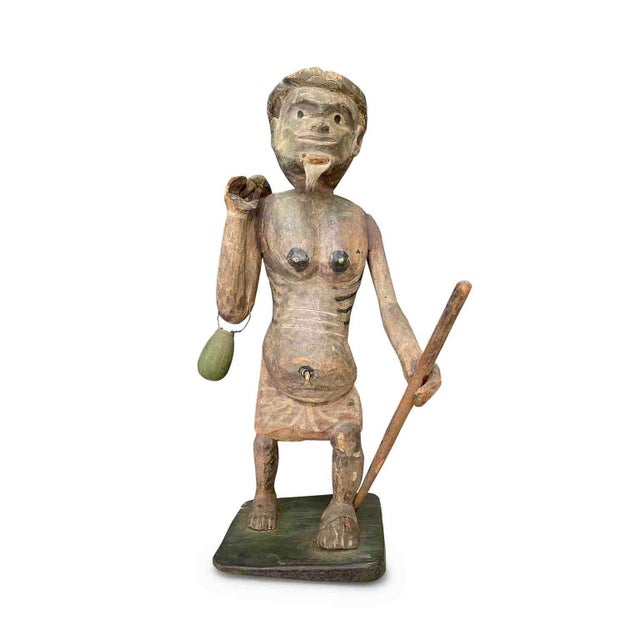
An antique Burmese shaman sculpture from the late 1800s, resting on a square base, is depicted standing with a staff …
Read more
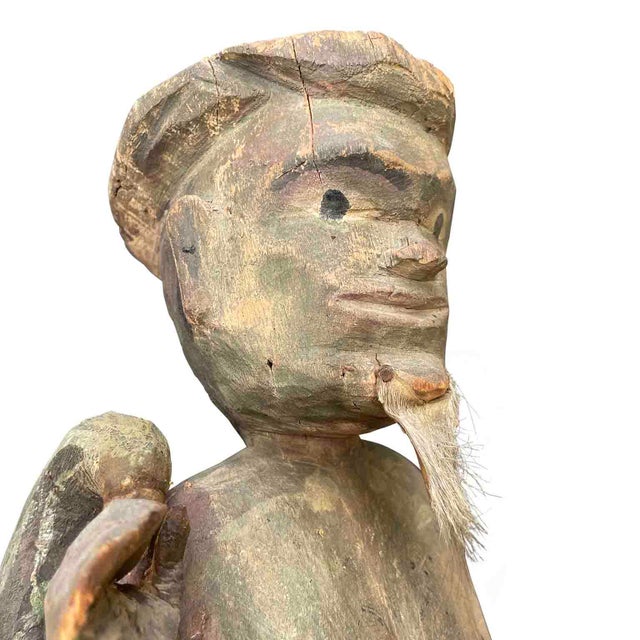
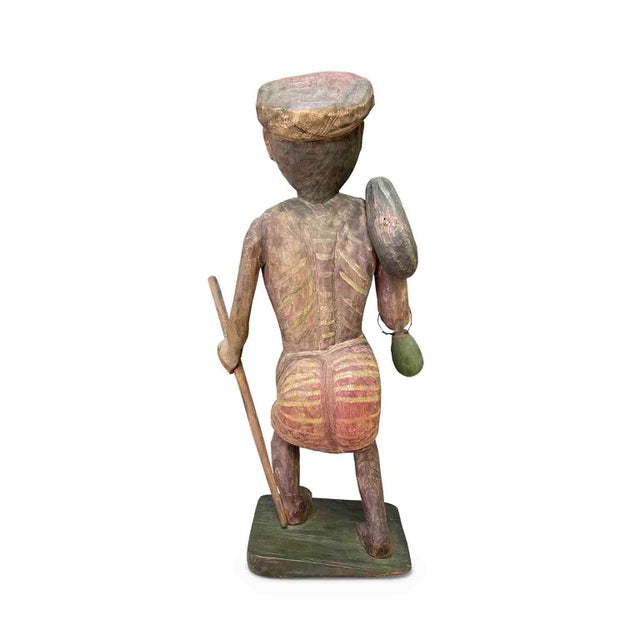
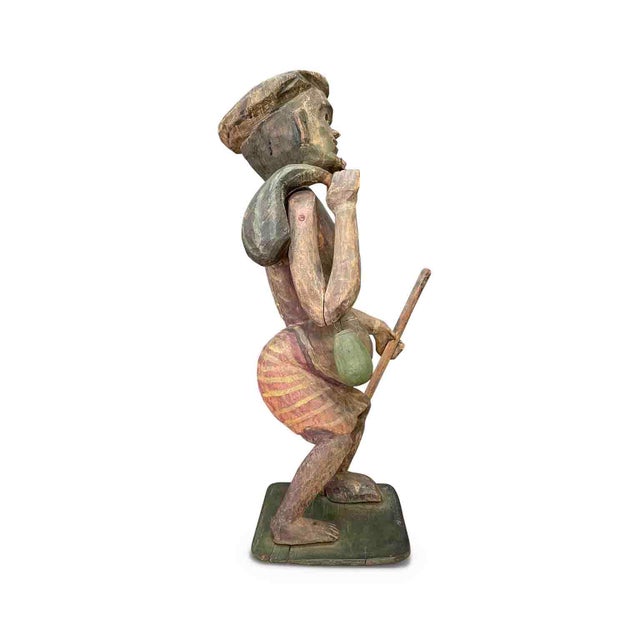
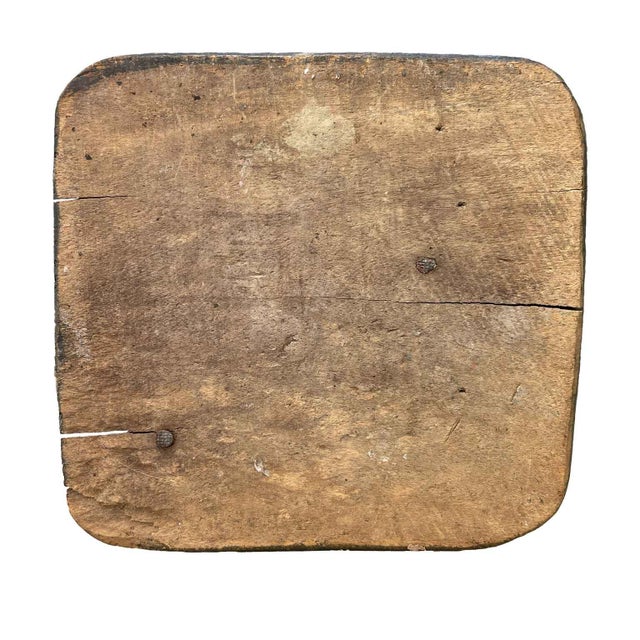
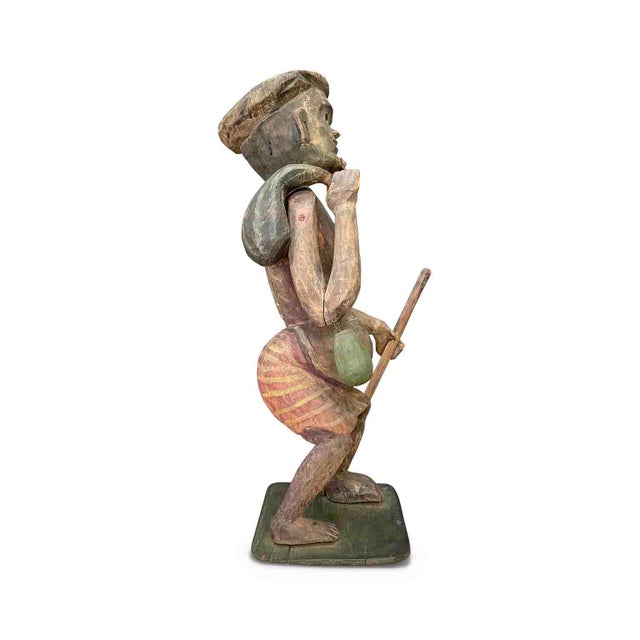
An antique Burmese shaman sculpture from the late 1800s, resting on a square base, is depicted standing with a staff in his left hand and a gourd-like object and a container in his right. He wears a red skirt decorated with yellow stripes, and his body, tattooed with black circles and stripes, suggests a female figure due to the prominent breasts, which, however, contrast with the false beard on his chin and the male headdress. The posture is also unusual, with his legs (disproportionately short compared to his torso) bent as if he were about to sit. Crafted from a single piece of wood, it is in good condition, except for the intact front of the left foot and a small loss at the end of the gourd.
The sculpture in question is an example of traditional Burmese art, specifically a polychrome sculptural figure of a Burmese shaman. These works generally date to the late 1800s, a period during which Burmese art reflected multiple cultural influences, including Buddhist and animist influences. They are often unique pieces with a strong spiritual and religious expression. In Burma, during this era, Buddhism was predominant, but animism also played an important role, so many sculptures were dedicated to deities, protective spirits, or religious figures.
Burmese shamans played a central role in the spiritual life of communities, being seen as intermediaries between the earthly and spirit worlds; they often assumed specific poses that evoked their power and connection with the invisible world. Their upright posture represents readiness, energy, and a connection between heaven and earth. The standing shaman is in the act of acting: he is not in passive meditation, but active in his role as a spiritual guide. He is likely performing a ritual or is depicted in a trance.
The staff is a powerful instrument. In many traditions, it represents spiritual authority and connection with the spirit world. The gourd was also used as a container for herbs, medicines, or sacred liquids, or as a sound instrument (sometimes like a maraca). It is also a symbol of abundance, healing and connection with nature.
See less
- Dimensions
- 8.66ʺW × 7.87ʺD × 16.54ʺH
- Art Subjects
- Figure
- Item Type
- Vintage, Antique or Pre-owned
- Materials
- Wood
- Condition
- Unknown, Some Imperfections
- Color
- Condition Notes
- Patina Consistent with Age and Use,Partially Restored Patina Consistent with Age and Use,Partially Restored less
Returns & Cancellations
Return Policy - All sales are final 48 hours after delivery, unless otherwise specified in the description of the product.
Cancellation Policy - Prior to shipping or local pickup, buyers may cancel an order for up to 48 hours, unless otherwise specified.
Related Collections
- Fernando Botero Sculpture
- Louis XIV Sculpture
- Bentwood Sculpture
- Worlds Away Sculpture
- Angela Chrusciaki Blehm Sculpture
- Barovier and Toso Sculpture
- Lime Sculpture
- Far Pavilions Sculpture
- Constantin Brancusi Sculpture
- Maison Jansen Sculpture
- Georgian Sculpture
- Bakelite Sculpture
- Witco Sculpture
- Gold-Plate Sculpture
- Recycled/Repurposed Sculpture
- Antique Iron Finish Sculpture
- Albert Ernest Carrier-Belleuse Sculpture
- Polished Brass Finish Sculpture
- Photography Sculpture
- Sculpture in Panama City, FL
- Sculpture in Columbus
- Austin Productions Sculpture
- Alabaster Sculpture
- Mid-Century Modern Sculpture
- Brutalist Sculpture