

Details
Description
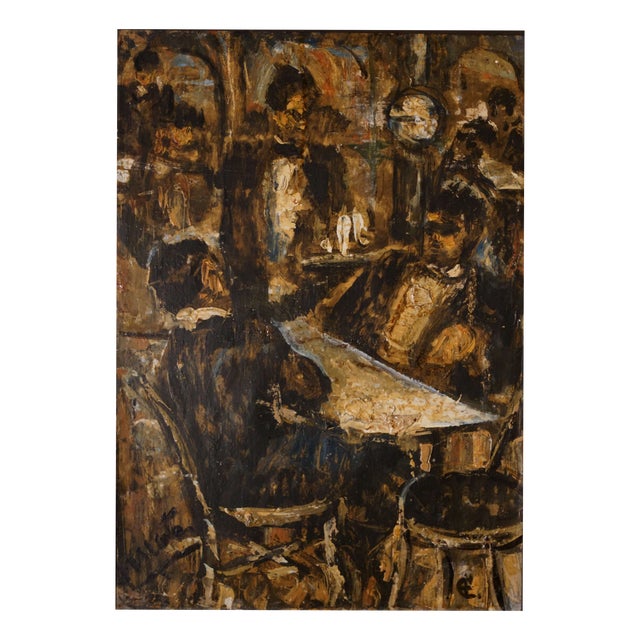
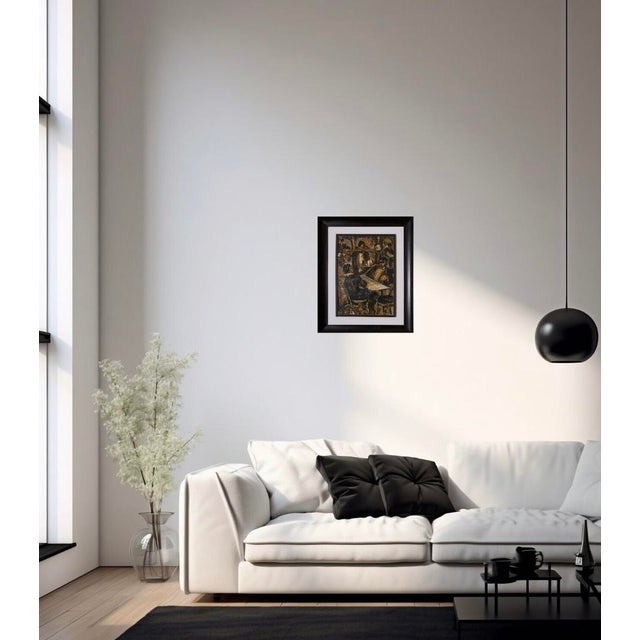
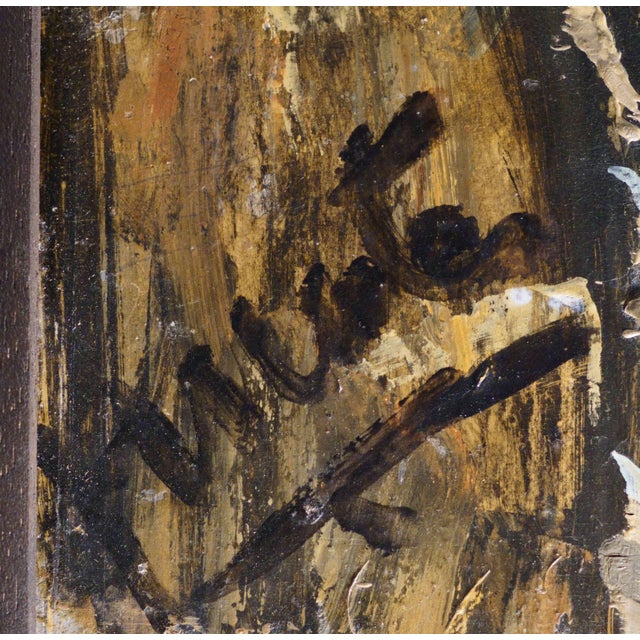
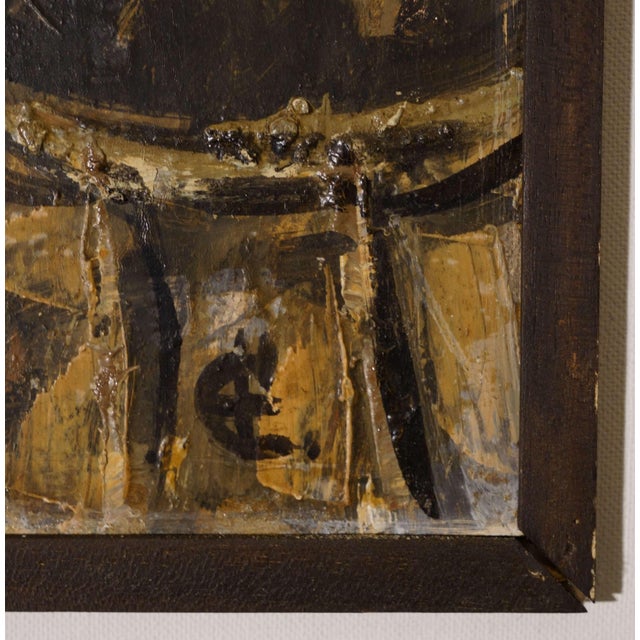
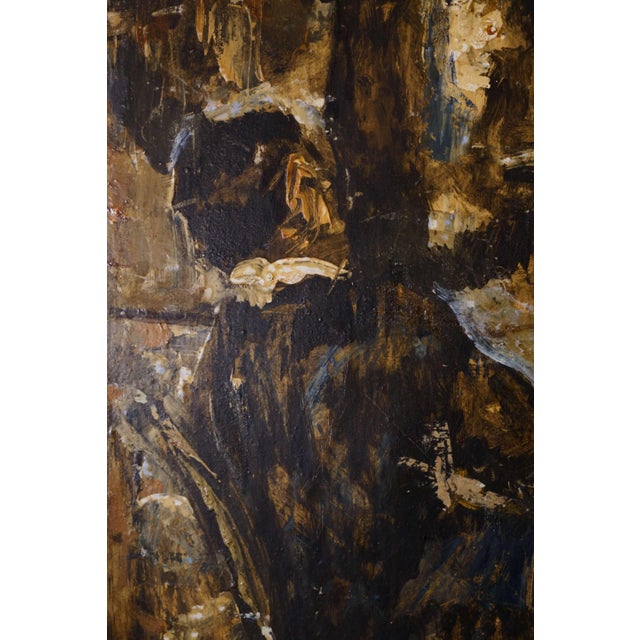
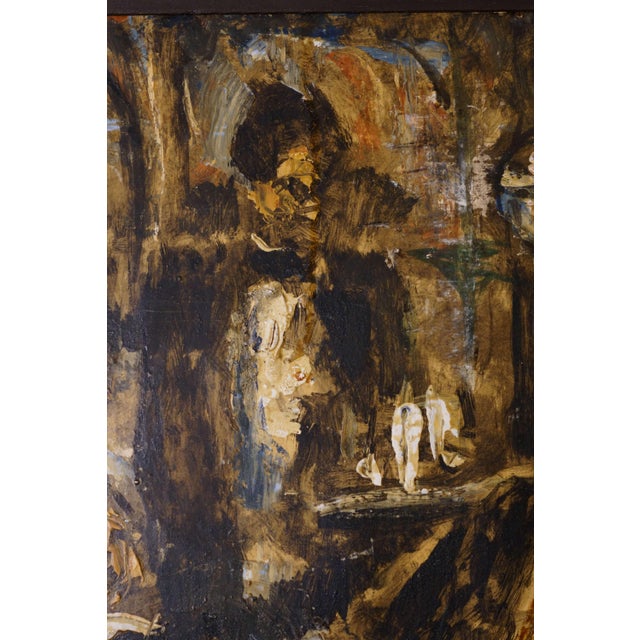
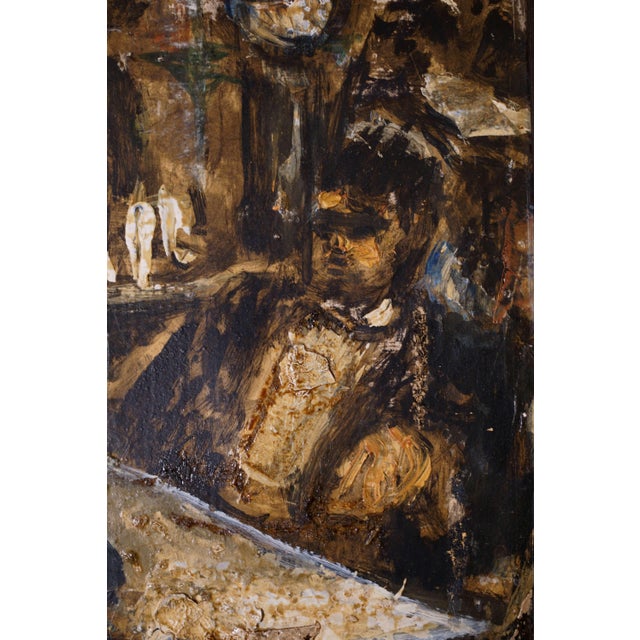
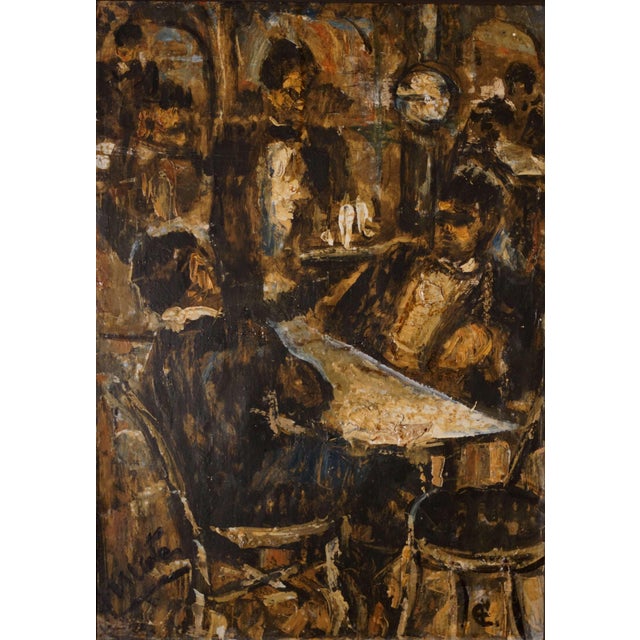
Antonio fuentes (tangier 1905 - 1995) "at the café". Oil on panel, signed lower left. A beautiful work by the …
Read more
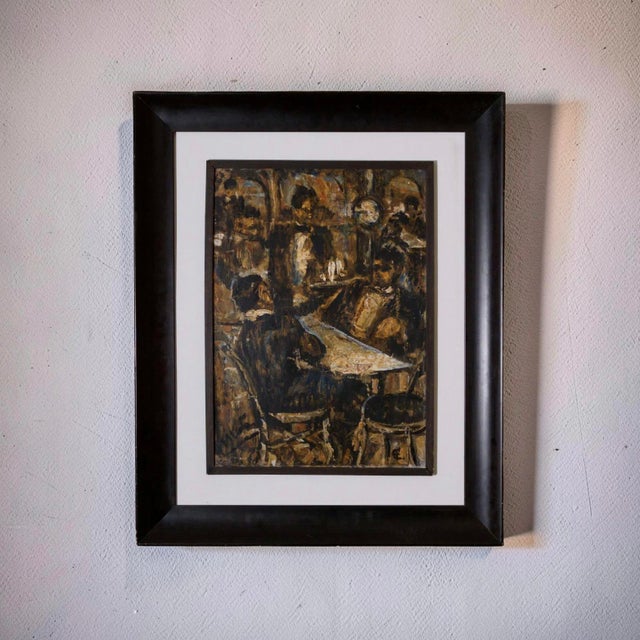
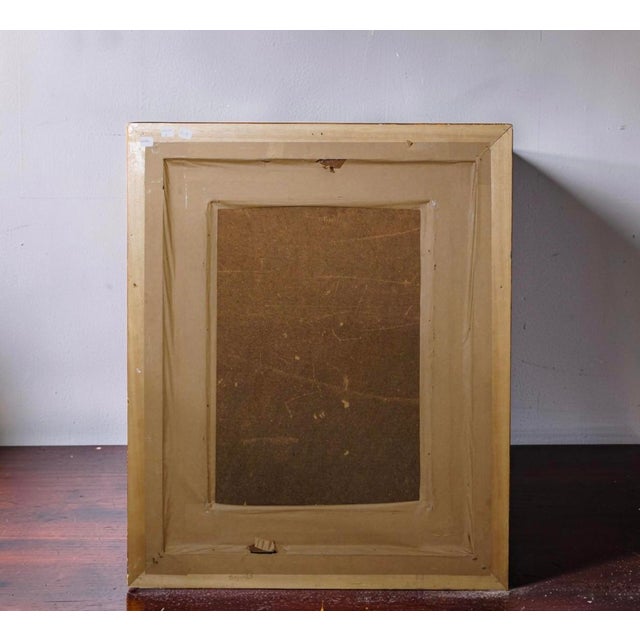
Antonio fuentes (tangier 1905 - 1995) "at the café". Oil on panel, signed lower left. A beautiful work by the great moroccan painter. Antonio fuentes was born on october 9, 1905, at the hotel fuentes in tangier, the same place where camille saint-saëns composed "dance macabre." in the same small souk where delacroix, fortuny, tapiró, van rysselberghe, iturrino, and matisse painted… as a child, antonio fuentes painted on the marble tables of the café fuentes. At thirteen, he created drawings for "l'héraut du maroc." at fourteen, he illustrated "la sphère" and "le nouveau monde." without knowing it, he became the toulouse-lautrec of tangier, as pierre gassier, the great french hispanist, would later call him. Encouraged by the spanish artists abascal and ortiz echagüe, he decided to devote himself to painting. He drew the world around him and painted it, distorting it in an ironic way. After completing his military service in cadiz in 1925, fuentes went to study in madrid, where he entered the royal academy of fine arts of san fernando. From this period, he painted a beautiful portrait of federico garcía-lorca, now deceased, but which we can see in some photographs of fuentes in his studio. The academicism of madrid did not suit him, and he decided to move to paris, to the montparnasse district of the time. In 1929, he painted all day at la grande chaumière, a huge, sprawling academy-studio where all the great names in contemporary painting had passed through. Fuentes drew with a brush, thus infusing his sketches with enormous strength and confidence. He became a great designer. In paris, he created caricatures for "la semaine de paris." thanks to these caricatures, he met all the spanish figures who visited paris: manuel de falla, encarnación lópez – “la argentinita,” vicente escudero, andrés segovia. The series of "bailaores" from the spanish ballets dates back to this period. In the evenings, he met in cafés with other spanish painters: souto, pelayos, and bores. However, as emilio sanz de soto cites, "fuentes was so absorbed in the spirit of the small souk of tangier, in the daily coexistence with arabs and jews, that the painters he befriended were the two jews, moïse kisling and chaïm soutine." he did not share the artistic opinion of most of his compatriots, since "they were all obsessed with picasso, which was natural, but what for picasso was a simple divinatory instinct, my compatriots converted into mental algebra." in 1934, he left for italy to continue his education. First in florence, as a student of felice carena (1879–1965), then in rome, where he entered the spanish academy of fine arts. His admission, signed by valle-inclán, director of the academy, has also been preserved. He continued to collaborate with the spanish press, sending his illustrations from italy. At the end of world war ii, fuentes returned to tangier and shut himself away in his home, a studio in the medina, on place des aissaouas. From then on, he exhibited rarely: only when close friends or institutions persuaded him. On these occasions, his exhibitions were publicized by major art and cultural critics. From 1973 onwards, antonio fuentes completely isolated himself, both socially and artistically. He spent all his time meditating, and his work focused on abstraction, culminating in the 1990 series of rubbings. Fuentes was already 85 years old. He enjoyed the freedom to devote himself exclusively to his work, undistracted by anything and without having to "market" it. He sold from his studio when "the buyer was sufficiently eager to own my work." buyers had to venture out to see if fuentes would receive them and, if so, to see if they could purchase works from him. In the 1990s, the spanish consulate general in tangier asked him to organize a retrospective exhibition of his work. Fuentes refused. Later, they proposed transforming his home into the fuentes museum and organizing a traveling anthology exhibition, accompanied by a general catalog of his work. The resulting photographic catalog, comprising more than 450 works, is distributed in important private collections around the world, from south america to the united states, from europe to saudi arabia. Fuentes rejected both proposals. In the last years of his life, he spent time disclosing, in an almost systematic way, all his memories. Fuentes recounts how he met picasso in the art shop next to the castelucho gallery and his subsequent visit to the master during the exhibition held at the gallery. During this visit, antonio fuentes suggested that picasso, so as not to cause any interference between them, walk through the exhibition in opposite directions and, upon exiting, comment on which work was the best. Both agreed on their assessment: "a gypsy" by nonell. During this meeting with picasso, fuentes also tells us how the gallery owner, who had a work of his in reserve, offered him a large sum for a painting she wanted to purchase from him. Fuentes had doubts about this sale. Picasso advised him not to hesitate and sell it to gain a clientele in paris. In this series of texts, fuentes describes picasso as an elderly man—antonio was then twenty-five and picasso fifty—with a bourgeois appearance, who wore a good english coat and a borsalino hat, and whom he considered his father for his humble demeanor. Antonio fuentes died in tangier on july 25, 1995, without ever having stopped working. Even in the last days of his life, he did not enjoy distractions. He agreed to leave his home-studio in the medina of tangier only the day before his death, which ultimately occurred at the spanish hospital in tangier. The painting presented here depicts a crowded parisian café, with two patrons seated at a table and a waiter standing in front of them. The painting was created during fuentes's stay in paris, between 1929 and 1934, during the evenings the painters spent in cafés: the setting is typical of parisian bars of the 1930s. Panel dimensions: 53 x 38 cm, frame: 80 x 65 cm. This piece has an attribution mark,
i am sure that it is completely authentic and take full responsibility for any authenticity
issues arising from misattribution
See less
- Dimensions
- 25.59ʺW × 1.97ʺD × 31.5ʺH
- Art Subjects
- Nude
- Period
- 1930s
- Country of Origin
- France
- Item Type
- Vintage, Antique or Pre-owned
- Condition
- Good Condition, Unknown, Some Imperfections
- Color
- Black
- Condition Notes
- Very Good — This vintage item has no defects, but it may show slight traces of use. Very Good — This vintage item has no defects, but it may show slight traces of use. less
Returns & Cancellations
Return Policy - All sales are final 48 hours after delivery, unless otherwise specified in the description of the product.
Cancellation Policy - Prior to shipping or local pickup, buyers may cancel an order for up to 48 hours, unless otherwise specified.
Related Collections
- Photorealism Canvas Paintings
- Ed Ruscha Paintings
- Photorealism Paintings in New York
- Richard Serra Paintings
- Herman Miller Paintings
- BDDW Paintings
- Louise Nevelson Paintings
- Karen Offutt Paintings
- Jo Baskerville Paintings
- Carl-Axel Acking Paintings
- Joseph Stella Paintings
- Karl-Erik Ekselius Paintings
- James McCray Paintings
- Milton Avery Paintings
- Jaanika Peerna Paintings
- Photorealism Paintings in Los Angeles
- Leroy Neiman Paintings
- Nicola Simbari Paintings
- Soicher Marin Paintings
- Cassina Paintings
- Black Photorealism Paintings
- Lawson-Fenning Paintings
- Vienna Secession Paintings
- Jean-Paul Barray Paintings
- Hans Andersen Paintings