

Details
Description
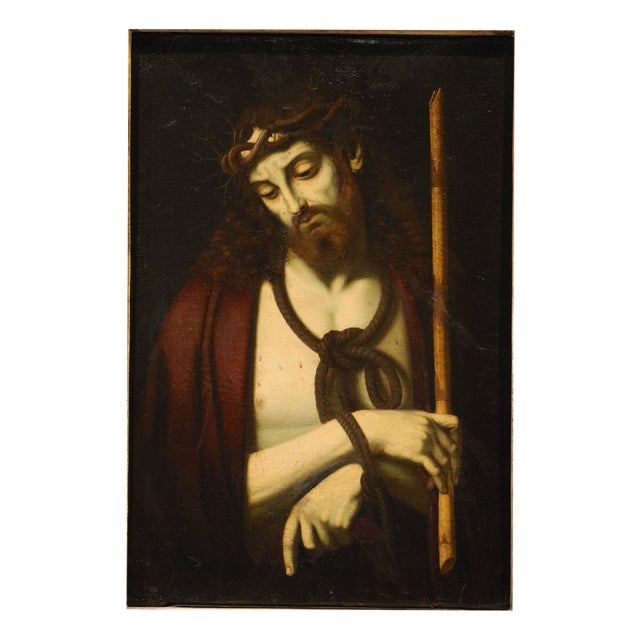
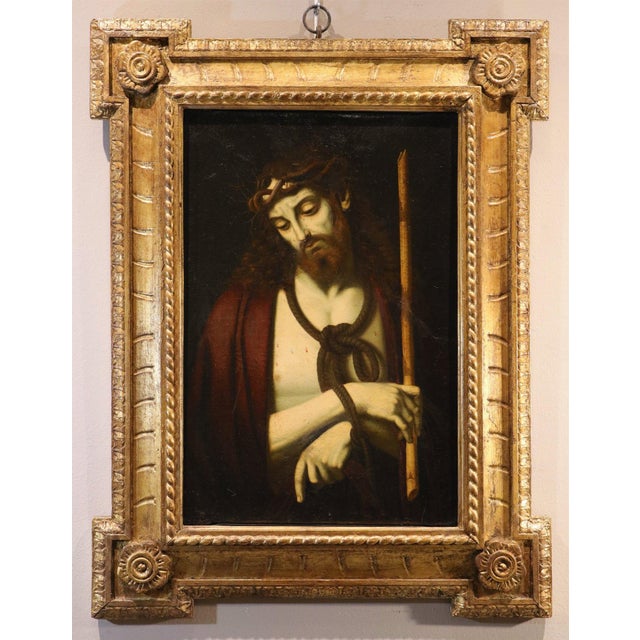
Andrea solario (milan, c. 1470 – milan, 1524) follower of ecce homo oil on canvas 64 x 45 cm. Framed …
Read more
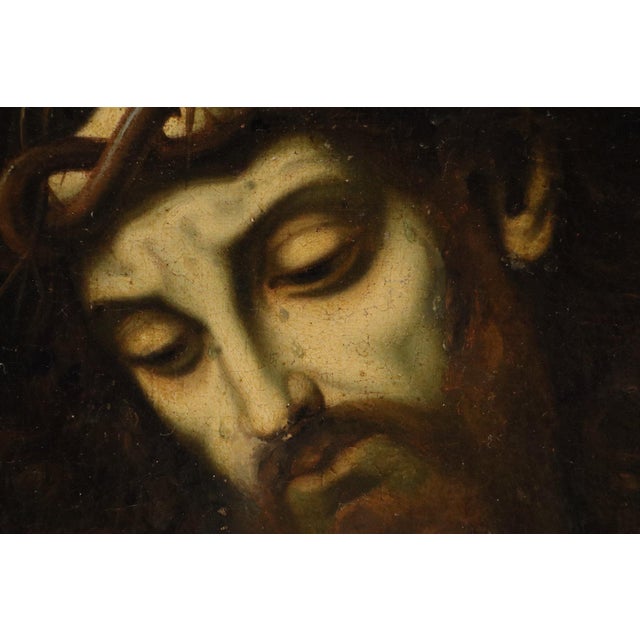
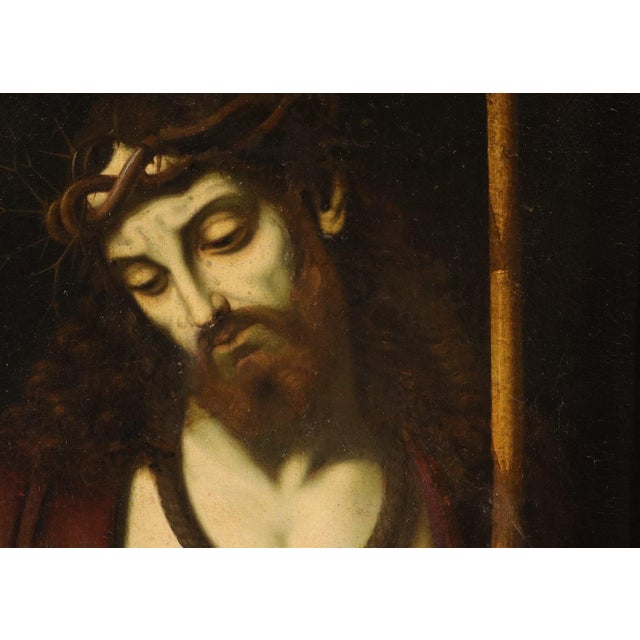
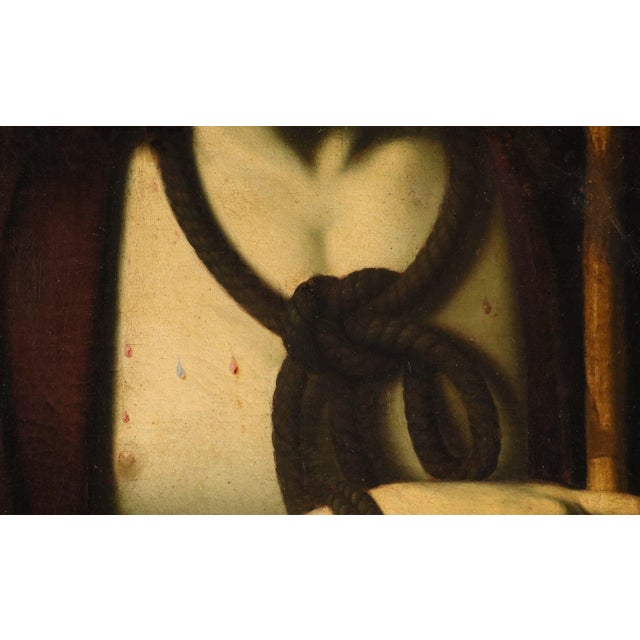
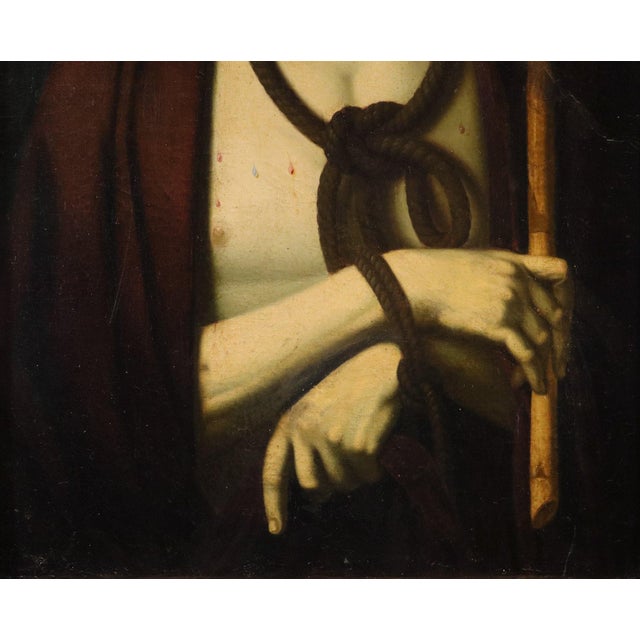
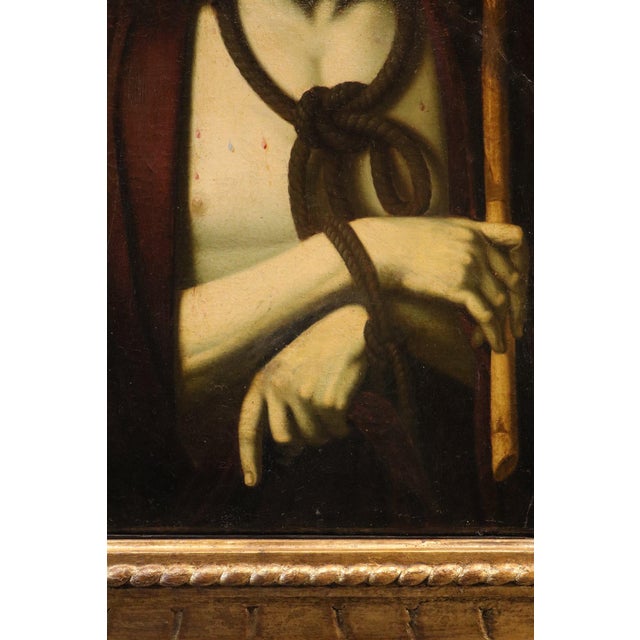
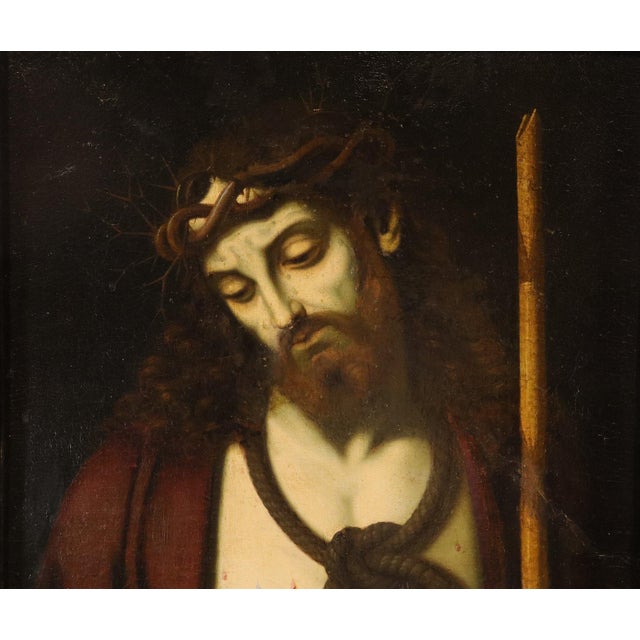
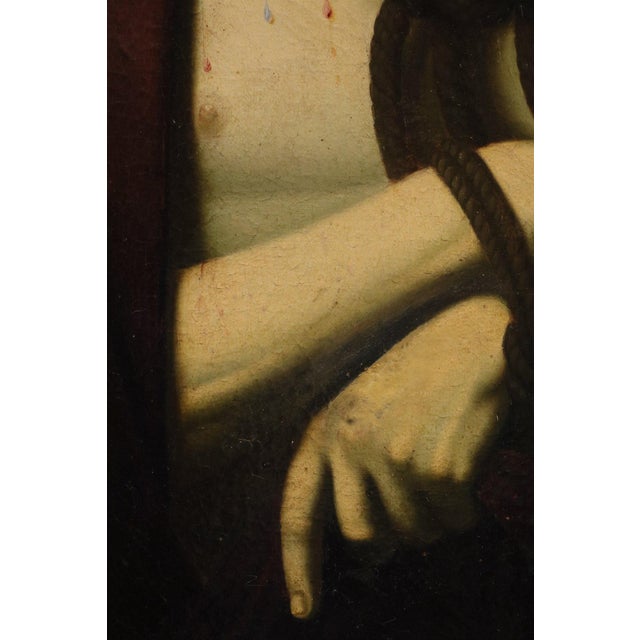
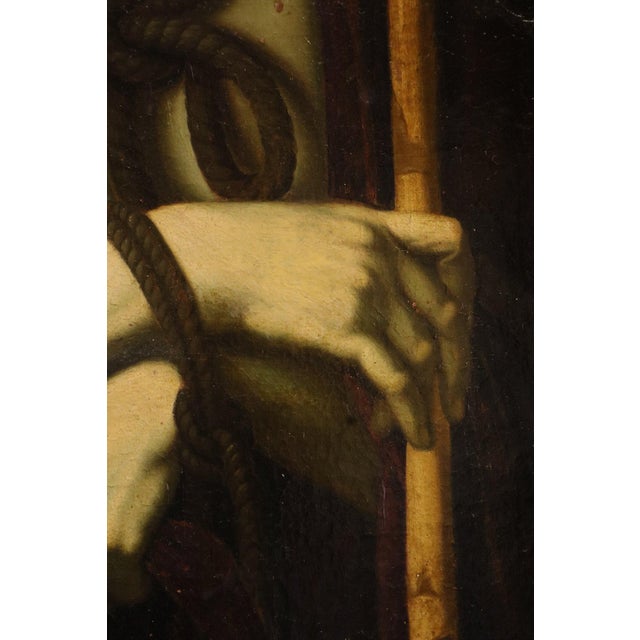
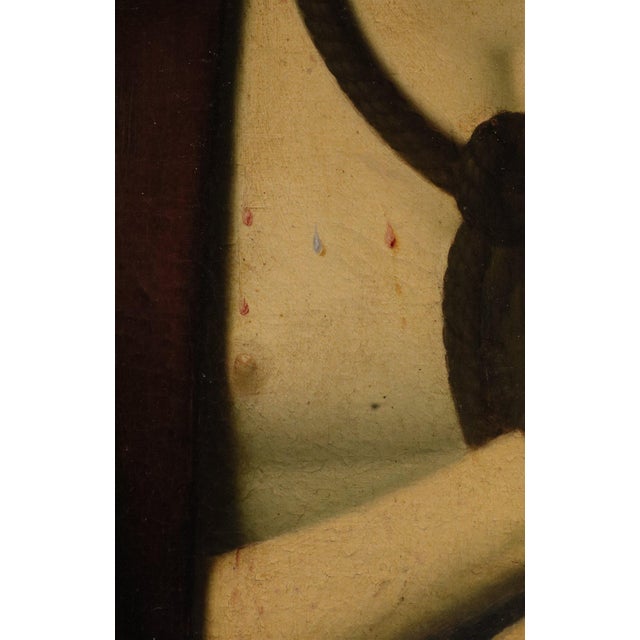
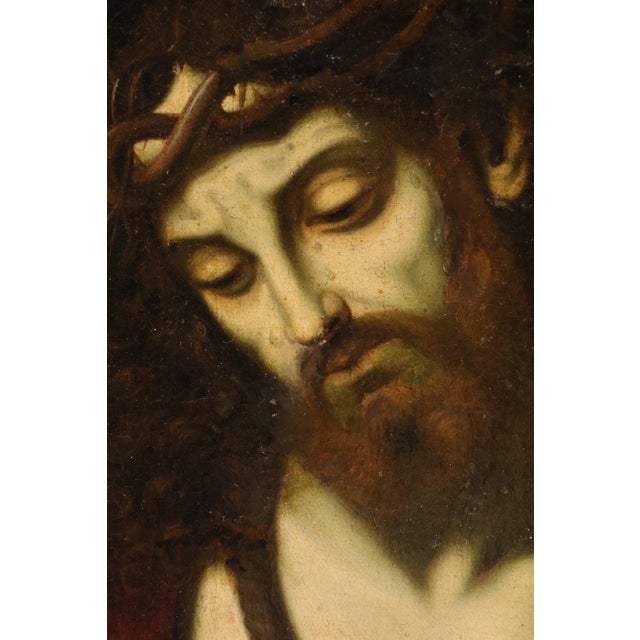
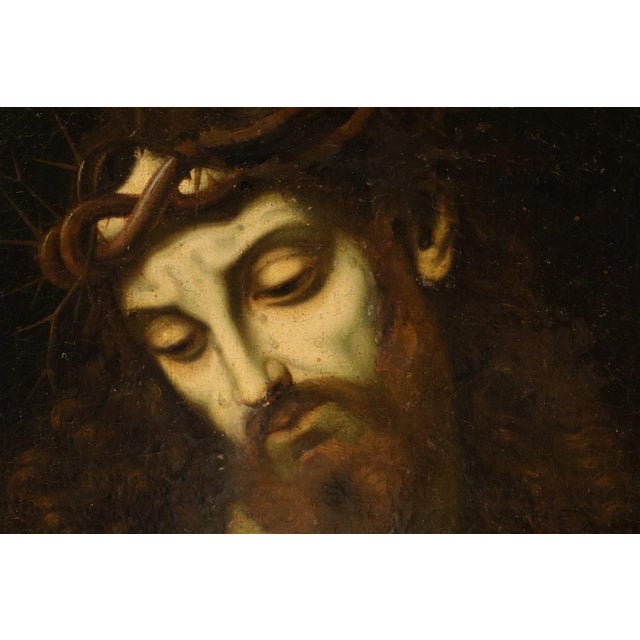
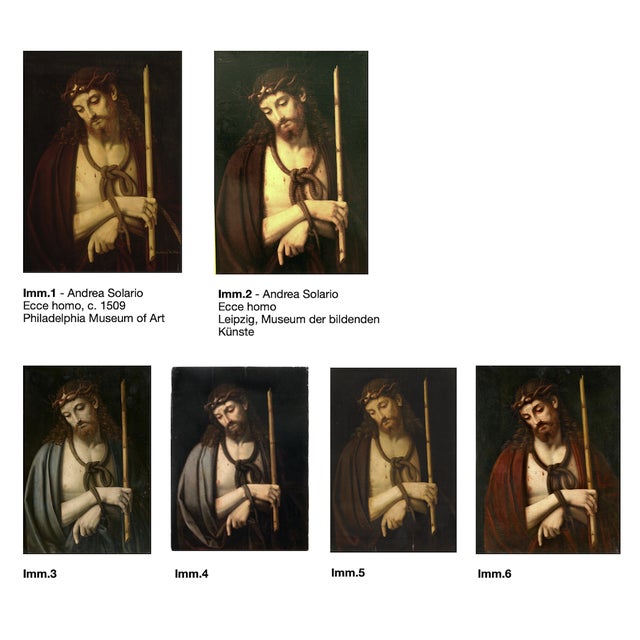
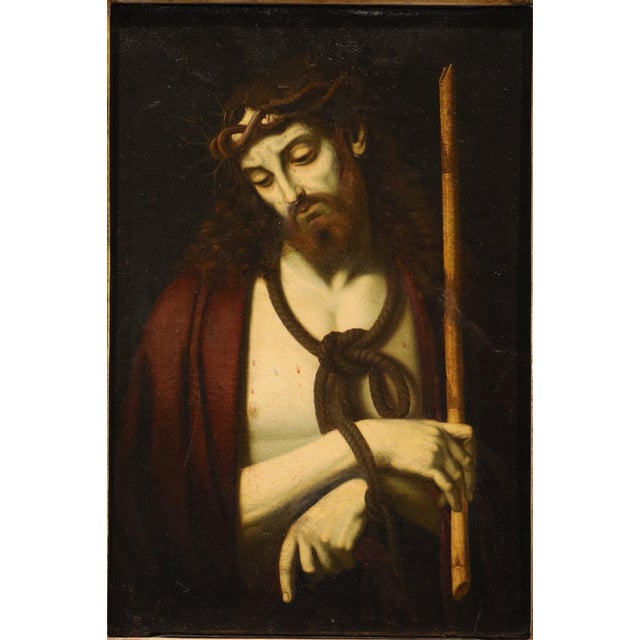
Andrea solario (milan, c. 1470 – milan, 1524) follower of ecce homo oil on canvas 64 x 45 cm. Framed 92 x 72 cm. Reference bibliography: david alan brown: andrea solario, milan 1987 the proposed work, depicting the intense image of christ crowned with thorns, takes up the iconography of the ecce homo conceived by andrea solario (milan, c. 1470 – milan, 1524), one of the protagonists of the most glorious period of the lombard renaissance: it is a theme much celebrated in the artist's career and then replicated by his workshop in numerous variations, with slight differences from one another, testifying to the enormous success it already achieved with contemporary collectors. In our case, christ is portrayed half-length against a monochrome background, wearing the crown of thorns and holding a reed scepter, both symbols of royalty bestowed upon him by the soldiers to mock him during his captivity. His hands are bound with a rope, and his shoulders are wrapped in a simple purple cloak. The great art historian david alan brown has defined andrea solario's ecce homo (ca. 1507–1509) as one of his most iconic compositions. In his catalogue raisonné dedicated to the artist, brown identified the two reference autograph versions, or rather the original prototypes, one at the philadelphia museum of art, the other at the museum der bildenden künste in leipzig (fig. 1 and fig. 2 *). There are also numerous "secondary" works of andrea solario's ecce homo (over fifteen versions recorded) which are divided between early prototypes and historical replicas made by his workshop or by followers active in the immediately subsequent period. In addition to the two reference points in leipzig and philadelphia, we can find the main ones of these other versions in the following locations: italian museums museo poldi pezzoli (milan): houses a splendid early version dating back to around 1505-1506. Accademia carrara (bergamo): houses a variant dated between 1500 and 1505, executed on paper mounted on wood. International museums ashmolean museum (oxford): a particular variant (1505-1507) in which christ holds the reed used to flagellate him. National museum (warsaw): unique version (1505-1510) in which the savior wears a purple cloak instead of a red one. There is also a large series of works held in private collections or sold at the most prestigious european auctions, often high-quality workshop replicas, which confirm the commercial success that this composition enjoyed as early as the 16th century. As an example, we can mention: imm.3 - a. Solario (attributed), ecce homo, lempertz cologne, auction 1185 of 20.11.202 a. Solario (workshop), ecce homo, vienna dorotheum, 10.11.2020 .5 - a. Solario (and workshop), ecce homo, sotheby’s london, 07.12.2011 .6 - a. Solario (follower), ecce homo, lempertz cologne, auction 1067 of 21.05.2016 the work's style blends sensitive yet powerful italian naturalism with the intense emotion of the northern masters. Leonardo da vinci's influence is profound and structural, absorbed by solario during his stay in milan and later reworked in a dramatic and devotional vein. For example, we see a well-balanced sfumato technique, reminiscent of leonardo, with the characteristic soft transitions of shadow and light, eliminating sharp edges to gently blend christ's body into the dark background. Jesus's face reflects an intimate and melancholic suffering, a characteristic drawn directly from leonardo's studies of the "motions of the soul" and human expressiveness, in addition to the detail of the crossed hands and the raised veins, which derive from the master's life studies. Leonardo's softness combines with a strong plasticity and sharp details, influenced by both flemish painting and northern italian classicism. Our version is a work executed with exceptional pictorial precision and extraordinary expressive force, easily comparable to solari's earlier prototypes. We can therefore deduce that the artist is one of the artists who gravitated around solari, or a follower active at a later time; many artists, as part of his group of students, necessarily came into contact with the prototypes of the works and had the opportunity to tackle this subject. Additional information: the work is beautifully framed and comes with a certificate of authenticity and a descriptive iconographic sheet. this piece is attributed to the mentioned designer/maker. It has no attribution mark and no
official proof of authenticity,
however it is well documented in design history. I take full responsibility for any authenticity
issues arising from misattribution
See less
- Dimensions
- 28.35ʺW × 4.72ʺD × 36.22ʺH
- Art Subjects
- Figure
- Period
- 17th Century
- Country of Origin
- Italy
- Item Type
- Vintage, Antique or Pre-owned
- Condition
- Good Condition, Unknown, Some Imperfections
- Color
- Condition Notes
- Patina Consistent with Age and Use,Reupholstered,Partially Restored Patina Consistent with Age and Use,Reupholstered,Partially Restored less
Returns & Cancellations
Return Policy - All sales are final 48 hours after delivery, unless otherwise specified in the description of the product.
Cancellation Policy - Prior to shipping or local pickup, buyers may cancel an order for up to 48 hours, unless otherwise specified.
Related Collections
- Photorealism Canvas Paintings
- Ed Ruscha Paintings
- Ralph Lauren Paintings
- Photorealism Paintings in New York
- Richard Serra Paintings
- Louise Nevelson Paintings
- Silk Velvet Paintings
- Herman Miller Paintings
- BDDW Paintings
- Jean-Paul Barray Paintings
- Johannes Andersen Paintings
- Peter Behrens Paintings
- James McCray Paintings
- Milton Avery Paintings
- Carl-Axel Acking Paintings
- Joseph Stella Paintings
- Karl-Erik Ekselius Paintings
- Pedro Friedeberg Paintings
- Piet Hein Eek Paintings
- Raphael Paintings
- Hans Andersen Paintings
- Leroy Neiman Paintings
- Red Abstract Paintings
- Black Photorealism Paintings
- Photorealism Paintings in Los Angeles