





Details
Description
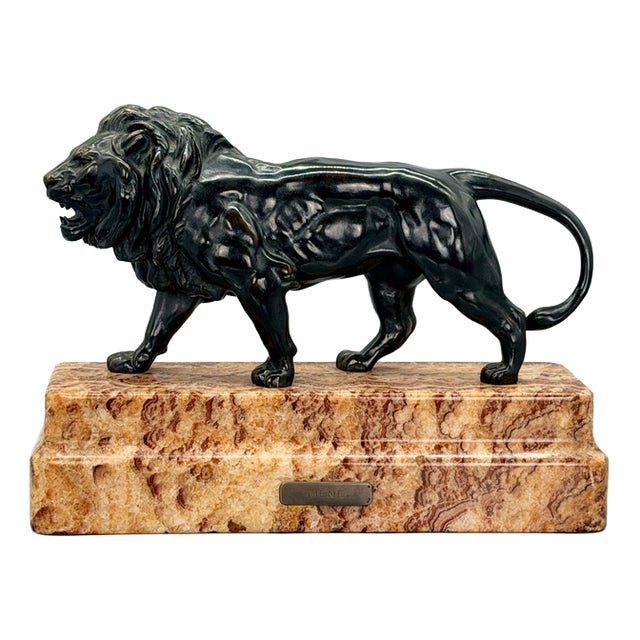
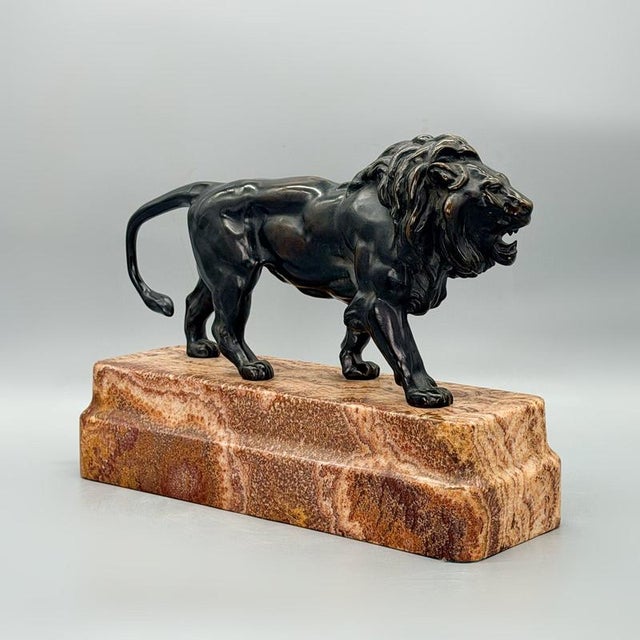
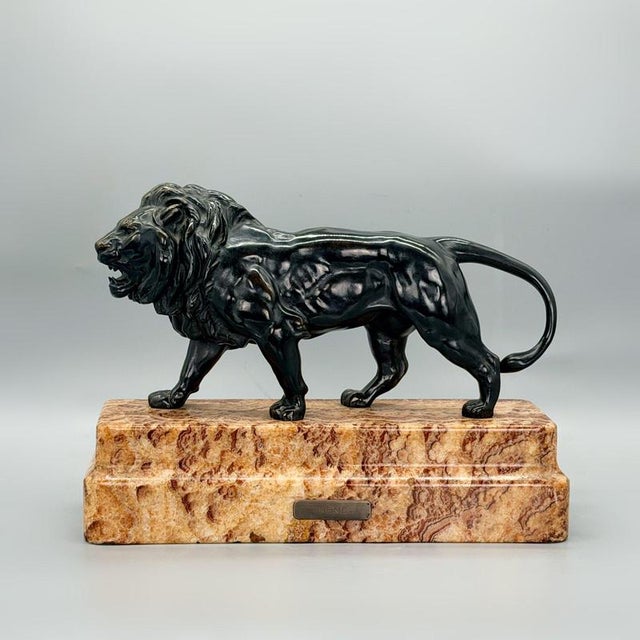
An early 20th century bronze sculpture cast after the original 'Lion Qui Marche' by Antoine Louis Barye. Set over a … Read more An early 20th century bronze sculpture cast after the original 'Lion Qui Marche' by Antoine Louis Barye. Set over a variegated marble base. This cast is particularly good quality given it came some forty years later than the original. Dimensions: H 32cm W 42cm D 14cm Origin: French Date: Circa 1920 Antoine--Louis Barye (1795 - 1875) was a premier French Romantic sculptor renowned as the father of the ' animalier ' school Born in Paris, Barye initially trained as a goldsmith and metal engraver. He worked under Martin-Guillaume Biennais, a master goldsmith to Napoleon. In 1816, he transitioned to fine arts, studying under neoclassical sculptor François-Joseph Bosio and painter Baron Antoine-Jean Gros before entering the École des Beaux-Arts in 1818. Barye rejected the rigid academic view that placed human subjects at the apex of art while disregarding animals. Alongside his friend and painter Eugène Delacroix, he spent countless hours at the Jardin des Plantes zoo in Paris. He meticulously sketched live predators and attended animal dissections at the Museum of Natural History to master underlying bone structures and musculature. He achieved fame at the 1831 Paris Salon with Tiger Devouring a Gavial . He won a subsequent government commission for his monumental Lion and Serpent (1833), which was installed in the Tuileries Gardens. Faced with occasional rejections from traditional art salons, Barye bypassed the establishment by opening his own foundry around 1845. He produced smaller, high-quality decorative bronzes that allowed the growing middle class to afford fine art. Despite lifetime financial instability, late-career accolades poured in. He served as a Professor of Drawings at the Museum of Natural History and was elected to the prestigious Académie des beaux-arts in 1868. His innovative style deeply influenced a generation of future sculptors, most notably his famous pupil, Auguste Rodin. See less
- Dimensions
- 16.54ʺW × 5.51ʺD × 12.6ʺH
- Styles
- Modern
- Art Subjects
- Animals
- Period
- 1920s
- Country of Origin
- France
- Item Type
- Vintage, Antique or Pre-owned
- Materials
- Bronze
- Condition
- Good Condition, Unknown, Some Imperfections
- Color
- Black
- Condition Notes
- Very Good — This vintage item has no defects, but it may show slight traces of use. Very Good — This vintage item has no defects, but it may show slight traces of use. less
Returns & Cancellations
Return Policy - All sales are final 48 hours after delivery, unless otherwise specified in the description of the product.
Cancellation Policy - Prior to shipping or local pickup, buyers may cancel an order for up to 48 hours, unless otherwise specified.
Related Collections
- Straw Sculpture
- Constantin Brancusi Sculpture
- Louis XIV Sculpture
- Fernando Botero Sculpture
- Roman Bronze Works Sculpture
- Recycled/Repurposed Sculpture
- Worlds Away Sculpture
- Flavio Poli Sculpture
- Bentwood Sculpture
- Far Pavilions Sculpture
- Georgian Sculpture
- Magenta Sculpture
- Photography Sculpture
- Antique Iron Finish Sculpture
- Medium-Density Fibreboard Sculpture
- Gold-Plate Sculpture
- Bakelite Sculpture
- Maison Jansen Sculpture
- Barovier and Toso Sculpture
- Sculpture in Columbus
- Polished Brass Finish Sculpture
- Geode Sculpture
- René Lalique Sculpture
- Albert Ernest Carrier-Belleuse Sculpture
- Sculpture in Panama City, FL