

Details
Description
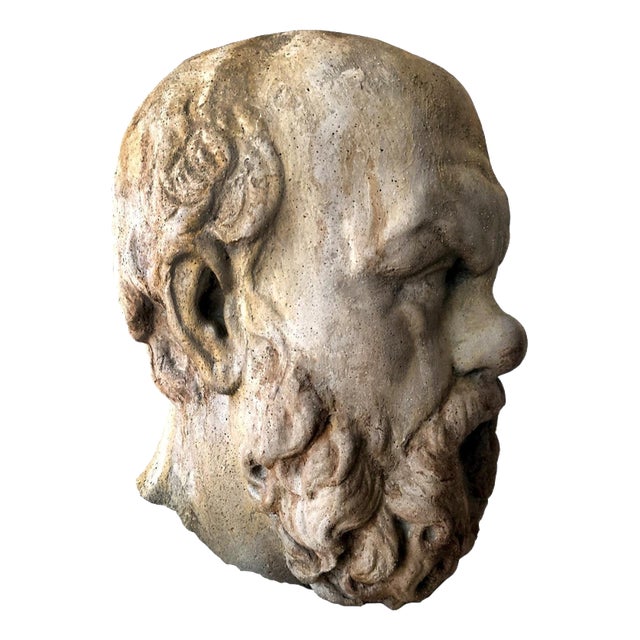
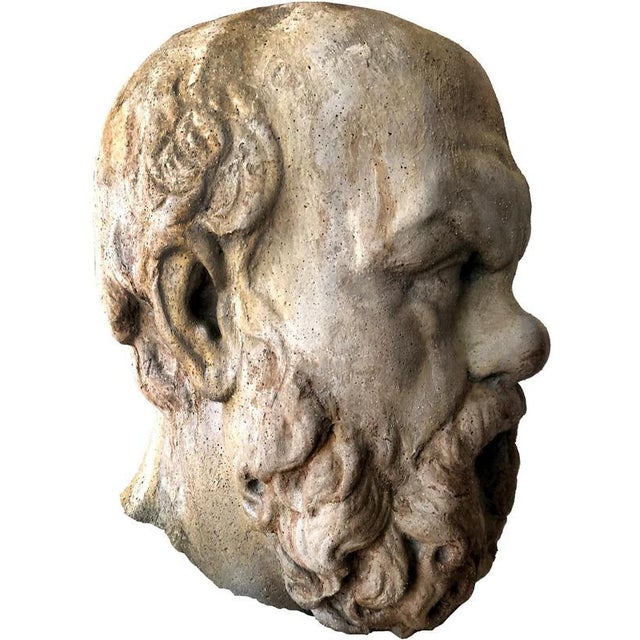
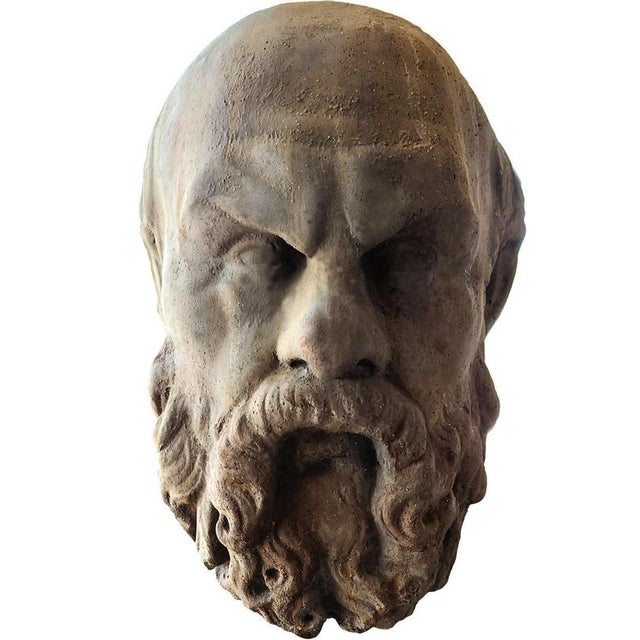
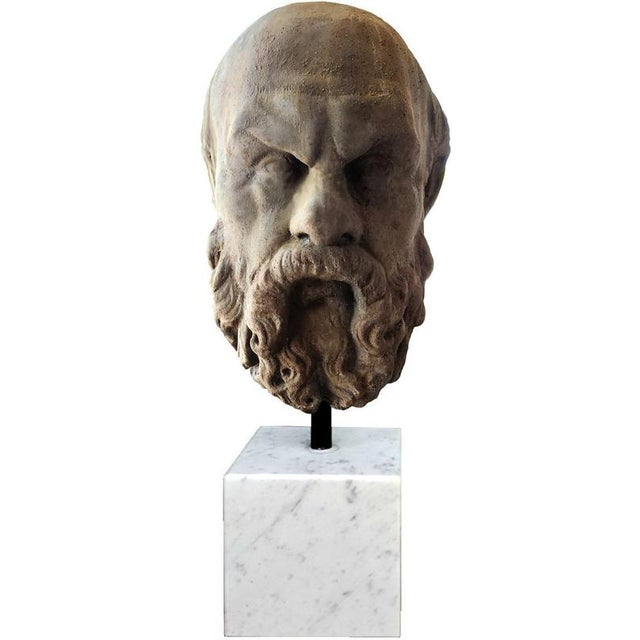
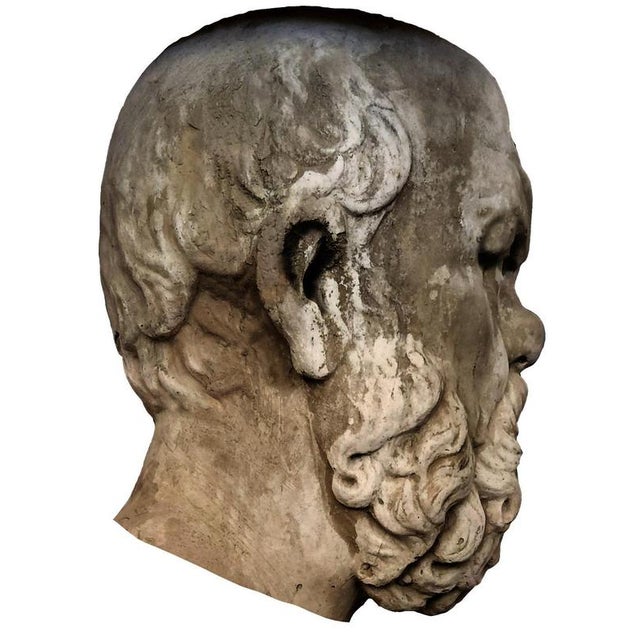
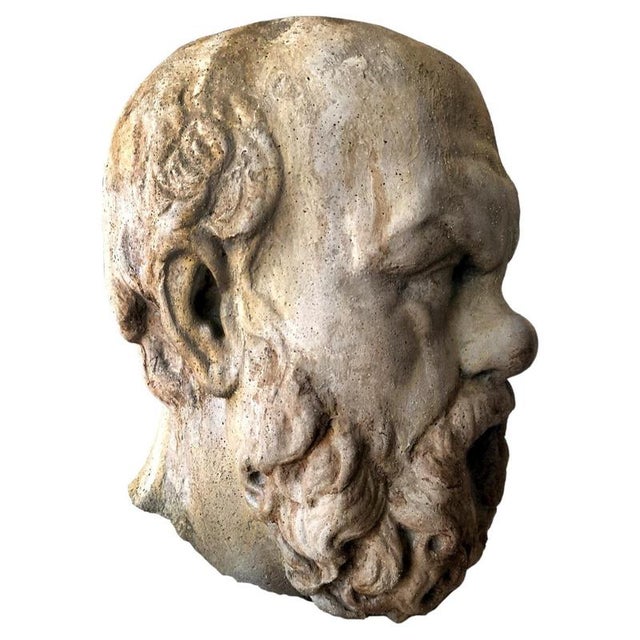
Socrates - philosopher - concrete head from the herm of villa alban 20th century socrates (470-399 bc) patinated concrete head. … Read more Socrates - philosopher - concrete head from the herm of villa alban 20th century socrates (470-399 bc) patinated concrete head. Copy of the original marble herm from villa albani, rome, inv. No. 1040. The signa manufactory produced this sculpture between the 800s and 900s. We are the only ones in the world to reproduce this bust in concrete; we listed it so we could sell it to formal garden enthusiasts in northern europe. Our concrete version can withstand temperature fluctuations of up to -25°c (-43°f). The marble base is included in the price. Socrates - athens, 470 bc/469 bc – athens, 399 bc) was an ancient greek philosopher, one of the most important exponents of the western philosophical tradition. The most important contribution that he gave to the history of philosophical thought consists in his method of investigation: the dialogue that used the critical tool of the elenchos, applying it mainly to the joint examination of fundamental moral concepts. For this reason socrates is recognized as the founding father of ethics or moral philosophy. He is considered the true father of western historical thought. Socrates' father, sophroniscus, was a sculptor from the deme of alopece, and it is possible that he passed this profession on to his young son, even if no testimony attributes any profession to him: in this sense, according to diogenes laertius (lives of the philosophers, ii, 19), the work of socrates would have been the dressed charites on the acropolis of athens. His mother, phenarete, who had already had a son named patrocles from a previous marriage with cheredemo, would have been a midwife. Socrates was probably from a wealthy family, of aristocratic origins: in the platonic dialogues it does not appear that he practiced any job and moreover we know that he fought when he was between 40 and 50 years old as a hoplite in the battle of potidaea, and in those of delius and of amphipolis. It is reported in plato's dialogue symposium that socrates was decorated for his courage. In one case, it is said, he remained at the side of the wounded alcibiades, probably saving his life. During these war campaigns he proved to be extraordinarily resistant, marching in winter without shoes or cloak; alcibiades attests thus: «first of all, in his efforts he was superior not only to me, but also to everyone else. When, remaining isolated somewhere, as happens in war, we were forced to remain without food, the others, in resisting hunger, were worth nothing compared to him [\.]. In his resistance, then, to the cold of winter, which is terrible there, he did wonderful things [\.]. When there was the battle in which the strategists gave me the prize for valor, no other man saved my life except this one, who did not want to abandon me wounded and managed to save myself and my weapons together. And i, socrates, already then urged the strategists to give the prize of valor to you [\.]. But the strategists, out of consideration for my social position, wanted to give it to me, the prize, and you took more care than the strategists to ensure that i received the prize and not you." socrates - athens, 470 bc/469 bc – athens, 399 bc) was an ancient greek philosopher, one of the most important exponents of the western philosophical tradition. The most important contribution that he gave to the history of philosophical thought consists in his method of investigation: the dialogue that used the critical tool of the elenchos, applying it mainly to the joint examination of fundamental moral concepts. For this reason socrates is recognized as the founding father of ethics or moral philosophy. He is considered the true father of western historical thought. Socrates' father, sophroniscus, was a sculptor from the deme of alopece, and it is possible that he passed this profession on to his young son, even if no testimony attributes any profession to him: in this sense, according to diogenes laertius (lives of the philosophers, ii, 19), the work of socrates would have been the dressed charites on the acropolis of athens. His mother, phenarete, who had already had a son named patrocles from a previous marriage with cheredemo, would have been a midwife. Socrates was probably from a wealthy family, of aristocratic origins: in the platonic dialogues it does not appear that he practiced any job and moreover we know that he fought when he was between 40 and 50 years old as a hoplite in the battle of potidaea, and in those of delius and of amphipolis. It is reported in plato's dialogue symposium that socrates was decorated for his courage. In one case, it is said, he remained at the side of the wounded alcibiades, probably saving his life. During these war campaigns he proved to be extraordinarily resistant, marching in winter without shoes or cloak; alcibiades attests thus: weight 15 kg base of the statue 15 x 15 x 15 historical period socrate (470- 399 b.c.) material cement mortar museum where the original is exhibited villa albani rome museum cataloging number term of socrates. Marble. Inv. No. 1040. Note 01 part of the signa manufacture collection note 02 base included See less
- Dimensions
- 9.84ʺW × 9.84ʺD × 16.54ʺH
- Period
- 2000 - 2009
- Country of Origin
- Italy
- Item Type
- Vintage, Antique or Pre-owned
- Materials
- Concrete
- Condition
- Good Condition, Unknown, Some Imperfections
- Color
- Gold
Returns & Cancellations
Return Policy - All sales are final 48 hours after delivery, unless otherwise specified in the description of the product.
Cancellation Policy - Prior to shipping or local pickup, buyers may cancel an order for up to 48 hours, unless otherwise specified.