


Details
Description
Like many paintings this oil painting from Sweden dating to the 1970s tells a story. This artwork is a textbook …
Read more
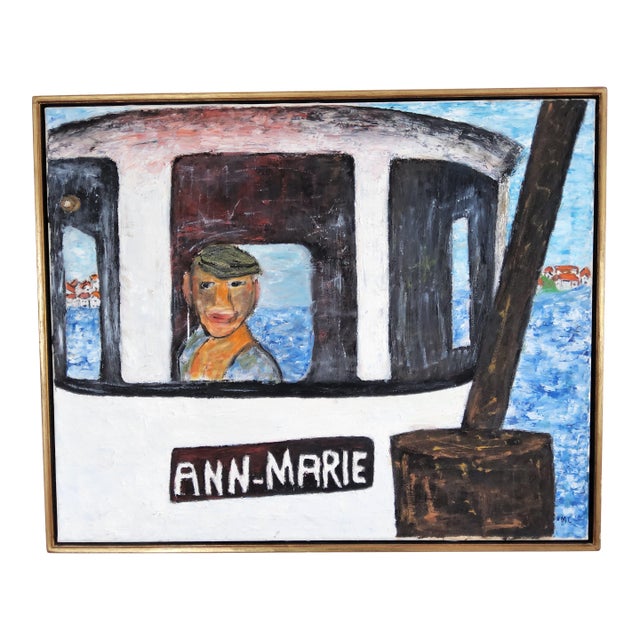
Like many paintings this oil painting from Sweden dating to the 1970s tells a story. This artwork is a textbook example of Swedish Naïve art (Naivism), a major artistic movement that developed in France in the late 19th to early Twentieth-century that broke away from strict academic rules to capture everyday life with pure, unrefined emotion.
Unlike major, institutionalized movements with strict manifestos (such as Cubism or Surrealism), Naivism is primarily a category for self-taught or informally trained artists who relied on intuitive expression rather than traditional rules. While once viewed merely as "outsider art," it achieved major art-historical significance in the late 19th and early 20th centuries. It heavily influenced the avant-garde, who admired its emotional directness and unpretentious style.
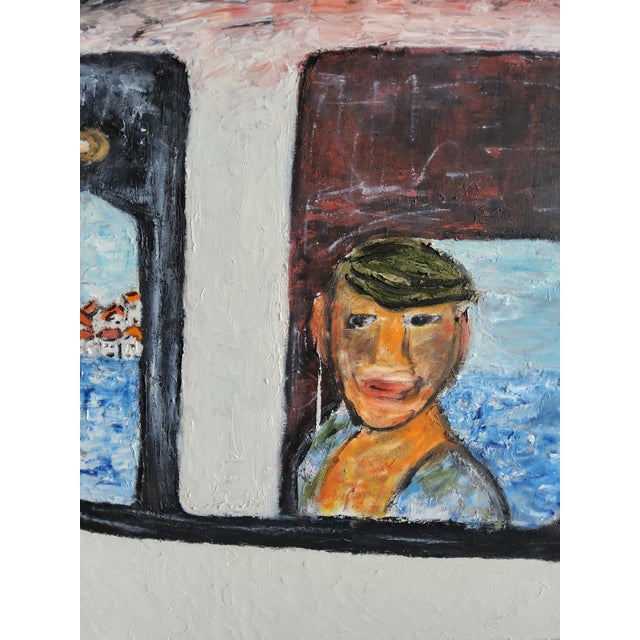
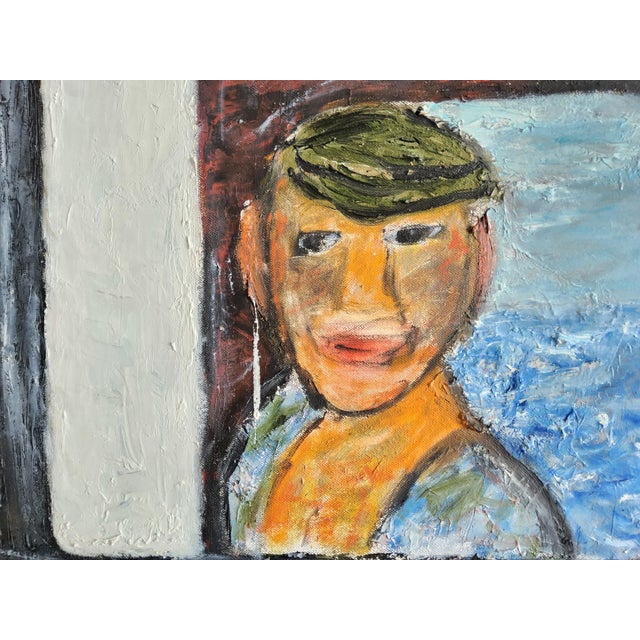
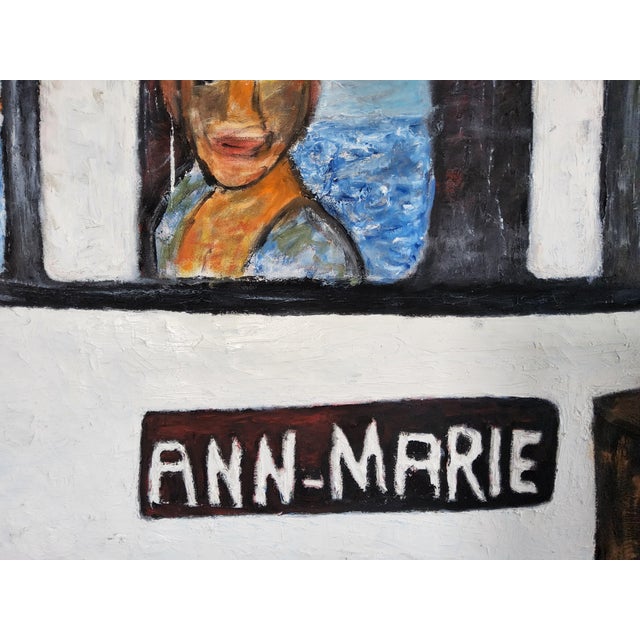
The central subject is a boatman framed within the cabin window of a white fishing vessel. His direct, widened gaze and highly stylized facial features are typical of self-taught portraiture. A long earring dangles from the fisherman's ear. Old Swedish and Nordic fishermen traditionally wore earrings as a form of burial insurance. If they drowned at sea and their bodies washed ashore, the gold or silver could be sold to pay for a proper Christian burial. This maritime tradition, shared broadly by sailors and pirates, also served other practical and superstitious purposes. In an era before modern banking, a long gold or silver earring was a universal, high-value asset that could not be easily lost or stolen while working on deck. Some specific coastal communities used the style, shape, or material of the earring as a way to identify a fisherman's home village if his body was recovered. Also, fishermen were superstitious. Many fishermen wore earrings as lucky charms, believing they could ward off evil spirits, prevent drowning, sea sickness, or even improve poor eyesight.
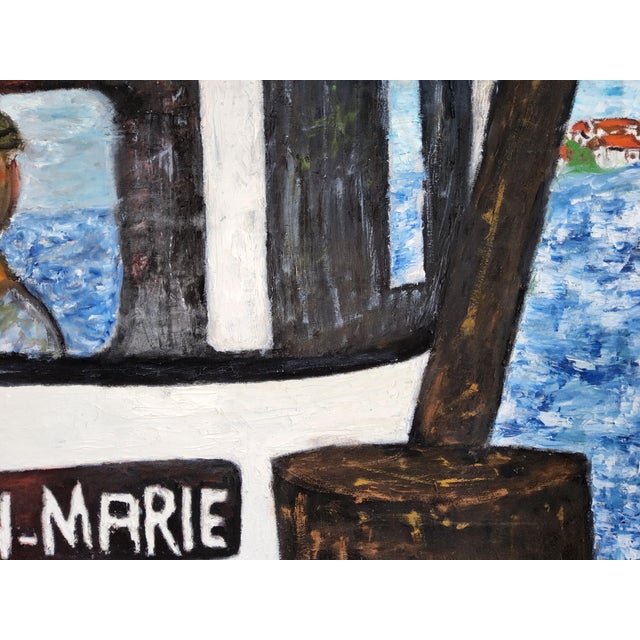
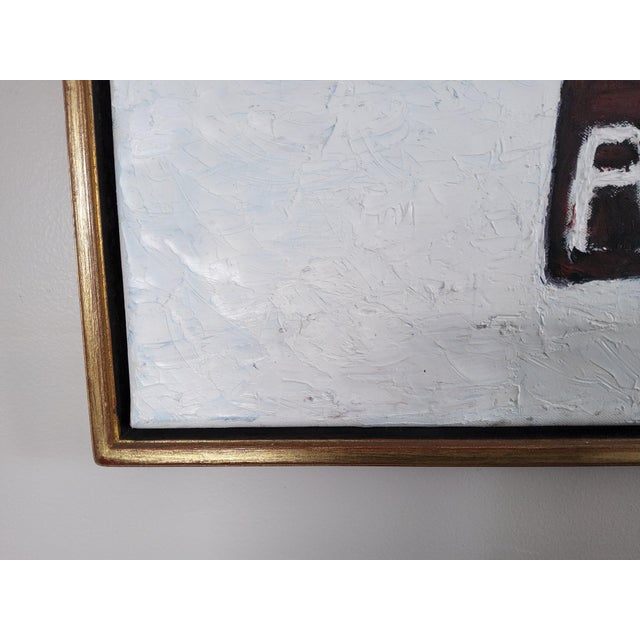
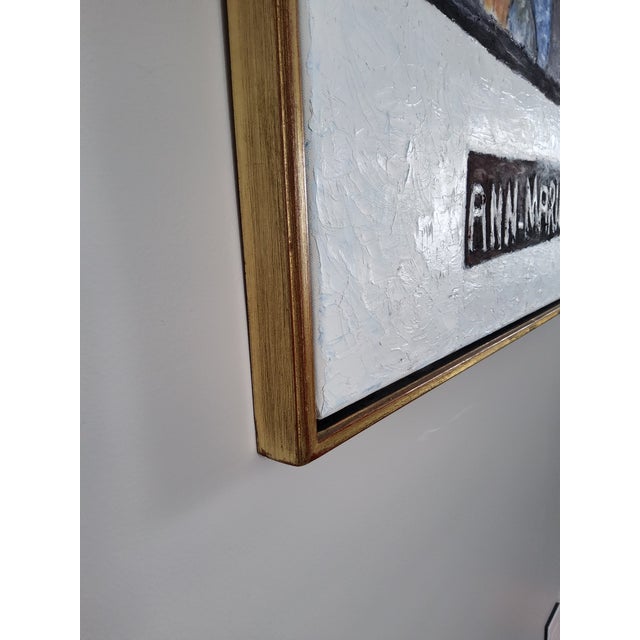
The "Ann-Marie" prominent nameplate on the hull serves a double purpose. In maritime culture, it names the vessel itself, but in the tradition of Naïve art, it frequently highlights the subject of the piece or pays homage to a loved one, a specific ship, or a memory close to the artist.
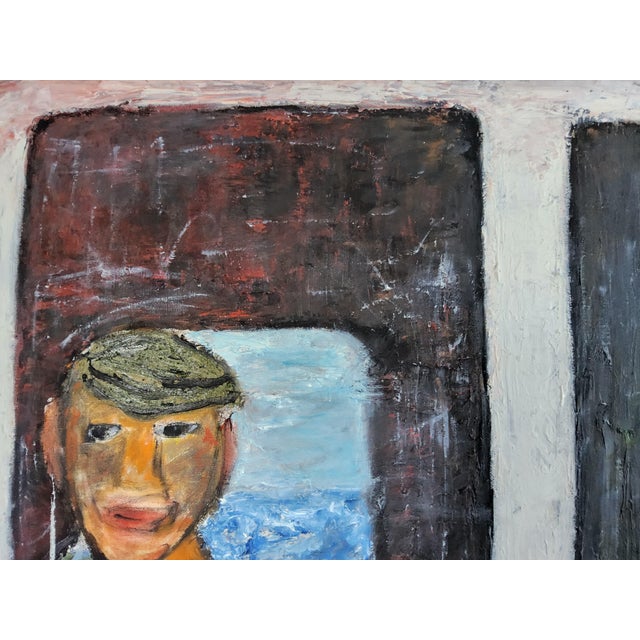
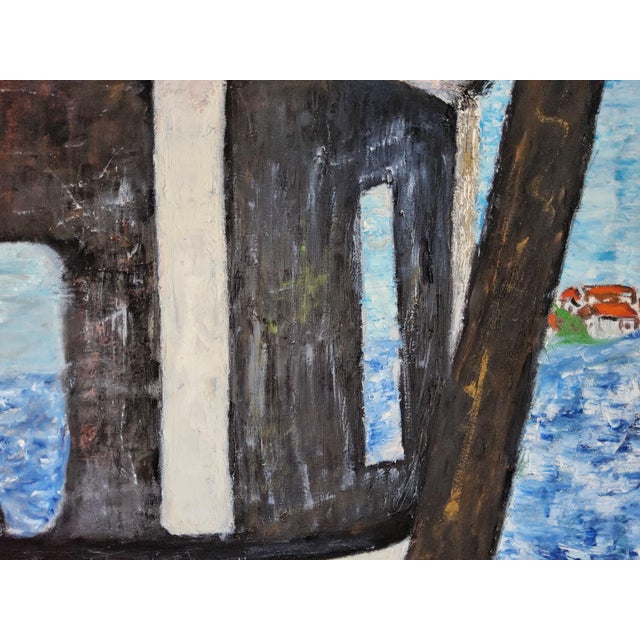
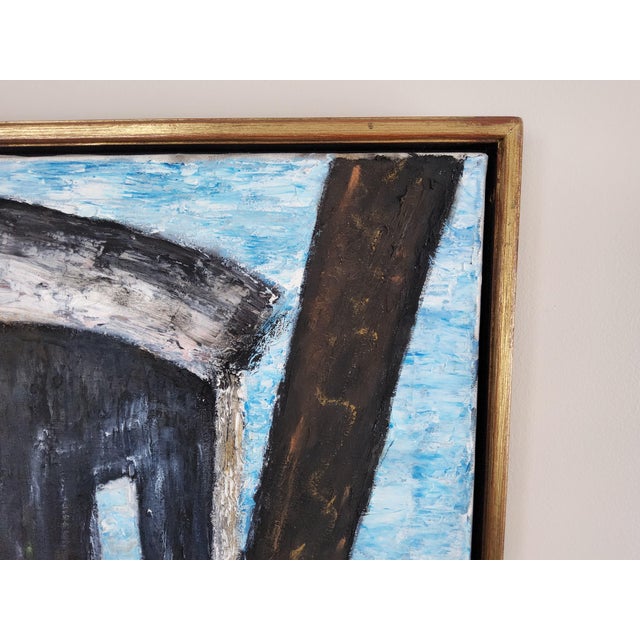
This painting embodies the core elements of the Naive style through its formal and thematic characteristics. Deliberately rejecting traditional rules of academic perspective, proportion, and shading in favor of childlike simplicity the fisherman is rendered with simplified, almost cartoonish features. Twentieth-century Swedish Naivism frequently incorporates raw, visible brushstrokes and heavily textured surfaces (impasto). The white hull of the boat, the dark windows, and the swirling blue and white sea are constructed with thick, layered paint that emphasizes the physical presence of the medium.
Like this artist, Naïve artists often use a limited color palette—or rely on unmixed, vivid primary colors—because they are self-taught and prioritize emotional storytelling over realistic shading. Without academic training in color theory, they rely on intuition to create strong, bold graphic impacts.
The artist focuses on regional and maritime life capturing the "periphery" of Swedish life on the coast or archipelago.
Depicting boats, fishermen, or coastal villages with red-roofed houses nestled in the background is highly characteristic of Swedish Naive artists who sought out peaceful, localized narratives. This style is often defined by heavy, dark outlines to separate forms, as seen around the boat’s structure, windows, and the nameplate. The color palette relies on bold, unblended fields of color—vibrant blues for the water, striking whites, and stark blacks—to evoke an emotional mood rather than literal replication.
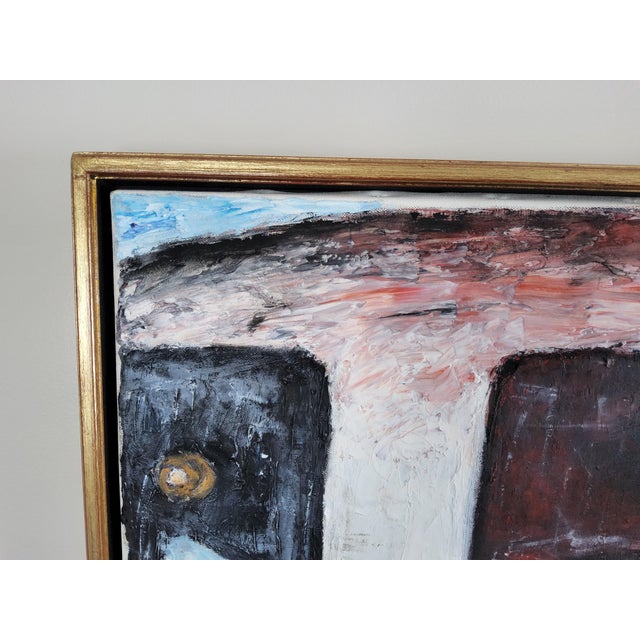
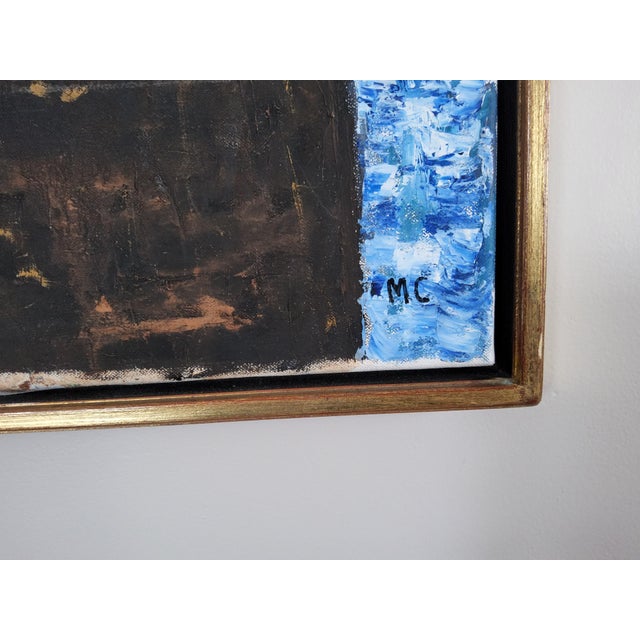
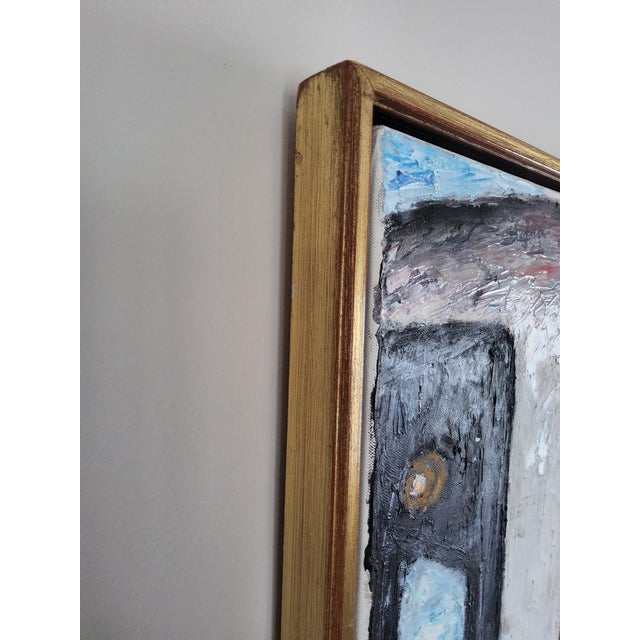
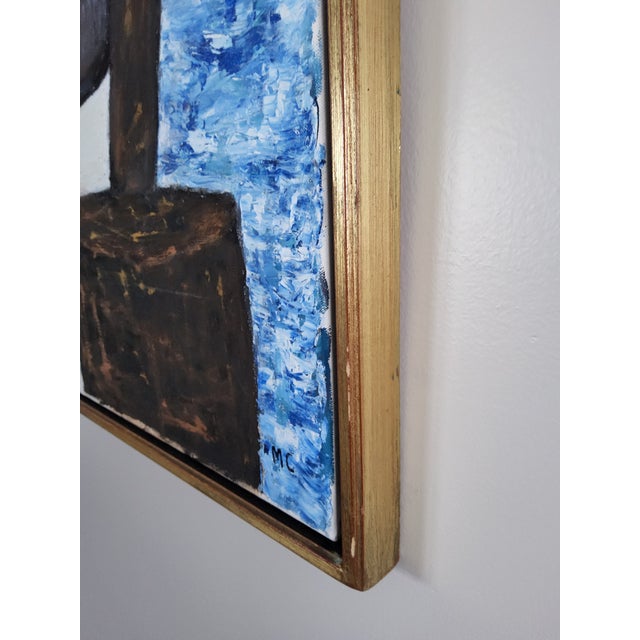
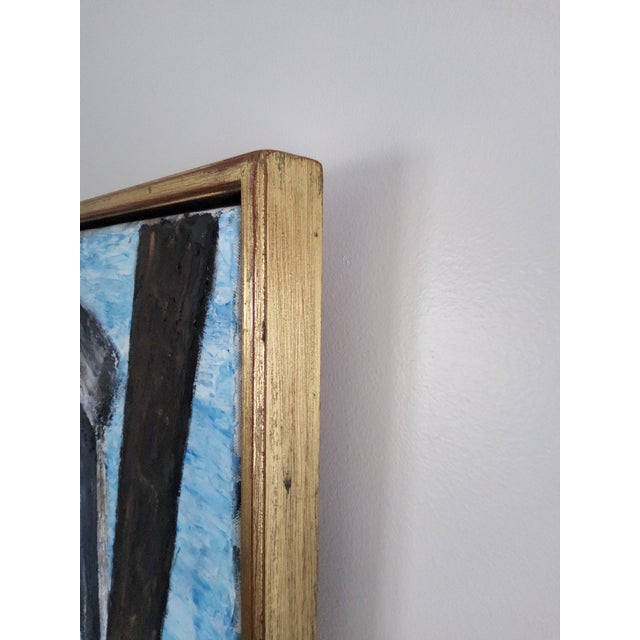
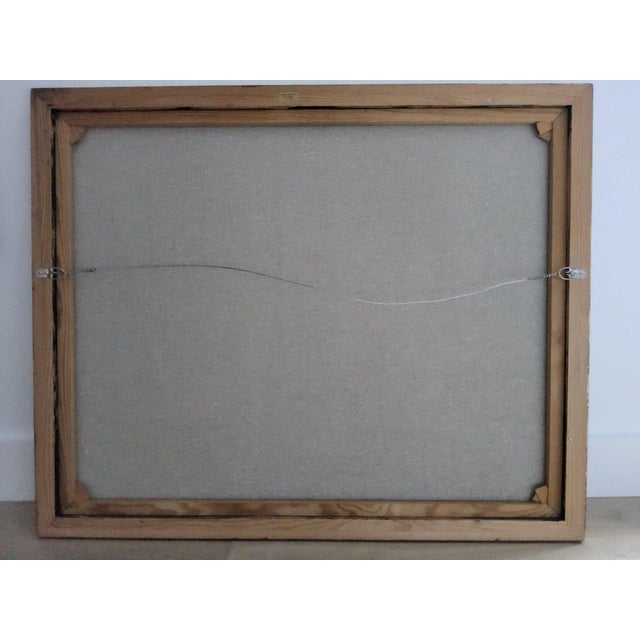
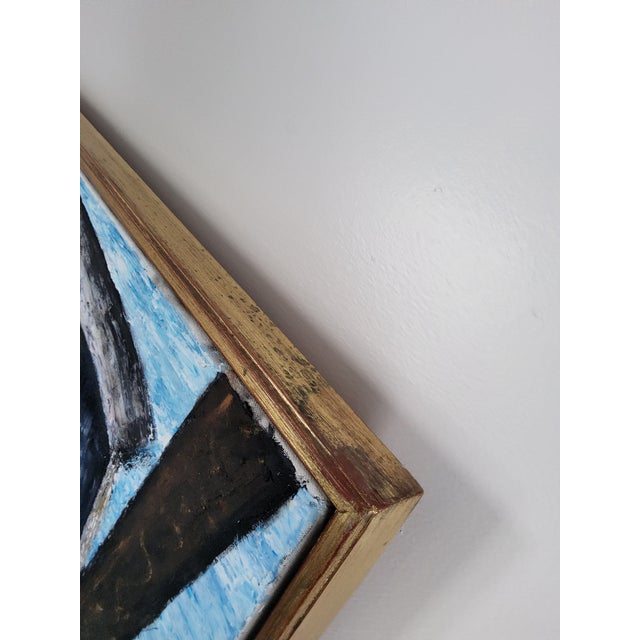
This oil painting on canvas measures 31 and 3/4 inches high by 39 and 1/4 inches wide framed to a dimension of 33 and 1/2 inches high by 41 and 1/8 inches wide. It is initialed M.C. on the front right bottom of the canvas. The painting is in very good condition with scattered wear consistent with age. The canvas is tight and intact and without repairs. It is floated in a gold tone wooden floater frame that has some vintage age appropriate wear. There are scattered blemishes and imperfections from handling wear as well as pitting in some areas to the gold paint. Please refer to the last photo to view the top corner of the frame that highlights pitting to the frame. Otherwise the frame is sturdy, heavy and intact. The frame has the original label attached from a very famous Swedish frame shop The Ulemo Rammakeri frame shop.
Ulemo Rammakeri is a historic frame shop in Göteborg, (Gothenburg) Sweden, that has been providing professional framing craftsmanship since the early 1930s. Master craftsman Herbert Ulemo opened the business in the early 1930s. He quickly earned a reputation for exceptionally well-crafted frames. The shop's primary patrons were local art associations and the prominent artists of Gothenburg, who deeply valued the small workshop's precision and attention to detail. In 1939, the workshop outgrew its initial space and relocated to its current address at Lagerbringsgatan 11. The shop has continuously built custom frames at this exact location for over 80 years.
Quirky paintings like this, that tell a story are sought after by designers wanting to infuse a home with natural charm.
Interior designers love naïve, folk, and outsider art paintings because they inject immediate character, warmth, and a curated feel into a space. Paintings that feature quirky characters, stylized locations, and specific details (like the boat name) feel personal and evoke an immediate sense of history. The playful unpredictability of the painting breaks up the rigid, straight lines of interior architecture making a space look intentional rather than staged.
See less
- Dimensions
- 33.5ʺW × 1ʺD × 41.13ʺH
- Styles
- Mid-Century Modern
- Frame Type
- Framed
- Period
- 1970s
- Country of Origin
- Sweden
- Item Type
- Vintage, Antique or Pre-owned
- Materials
- Canvas
- Condition
- Good Condition, Original Condition Unaltered, Some Imperfections
- Color
- Blue
- Condition Notes
- This oil painting on canvas measures 31 and 3/4 inches high by 39 and 1/4 inches wide framed to a … moreThis oil painting on canvas measures 31 and 3/4 inches high by 39 and 1/4 inches wide framed to a dimension of 33 and 1/2 inches high by 41 and 1/8 inches wide. It is initialed M.C. on the front right bottom of the canvas. The painting is in very good condition with scattered wear consistent with age. The canvas is tight and intact and without repairs. It is floated in a gold tone wooden floater frame that has some vintage age appropriate wear. There are scattered blemishes and imperfections from handling wear as well as pitting in some areas to the gold paint. Please refer to the last photo to view the top corner of the frame that highlights pitting to the frame. Otherwise the frame is sturdy, heavy and intact. The frame has the original label attached from a very famous Swedish frame shop The Ulemo Rammakeri frame shop. less
Questions about the item?
Returns & Cancellations
Return Policy - All sales are final 48 hours after delivery, unless otherwise specified in the description of the product.
Cancellation Policy - Prior to shipping or local pickup, buyers may cancel an order for up to 48 hours, unless otherwise specified.
Related Collections
- Photorealism Canvas Paintings
- Ed Ruscha Paintings
- Ralph Lauren Paintings
- Photorealism Paintings in New York
- Louise Nevelson Paintings
- Silk Velvet Paintings
- Richard Serra Paintings
- Herman Miller Paintings
- BDDW Paintings
- Jaanika Peerna Paintings
- Jo Baskerville Paintings
- Jean-Paul Barray Paintings
- Johannes Andersen Paintings
- Peter Behrens Paintings
- Karl-Erik Ekselius Paintings
- Carl-Axel Acking Paintings
- Joseph Stella Paintings
- Raphael Paintings
- Black Photorealism Paintings
- Pedro Friedeberg Paintings
- Piet Hein Eek Paintings
- James McCray Paintings
- Lawson-Fenning Paintings
- Milton Avery Paintings
- Hans Andersen Paintings