

Details
Description
Paul Brach (American, 1924-2007).
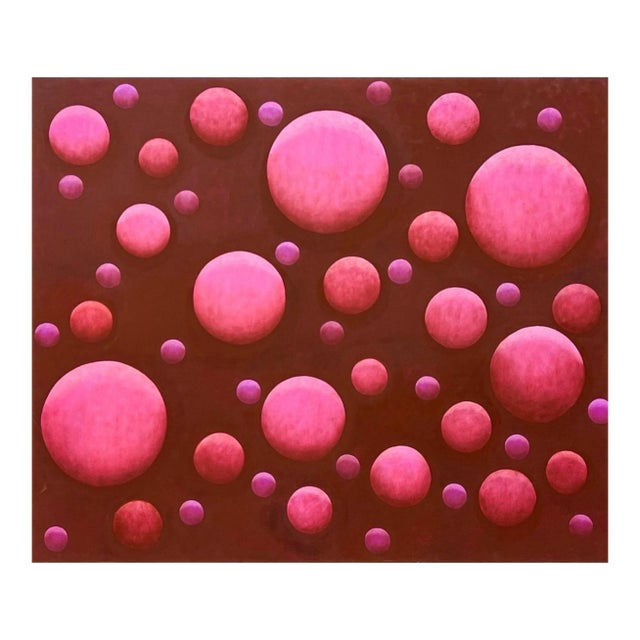
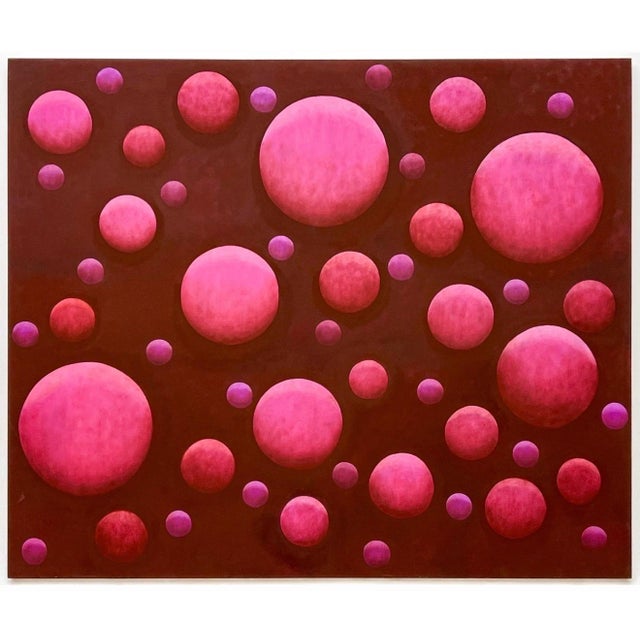
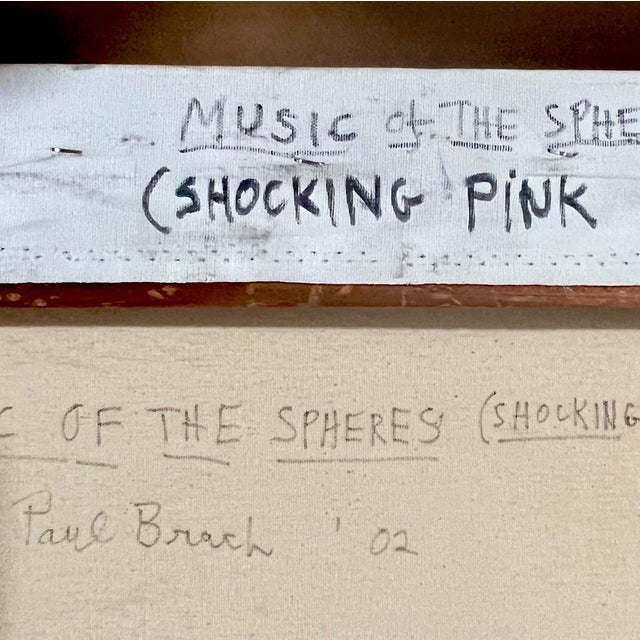
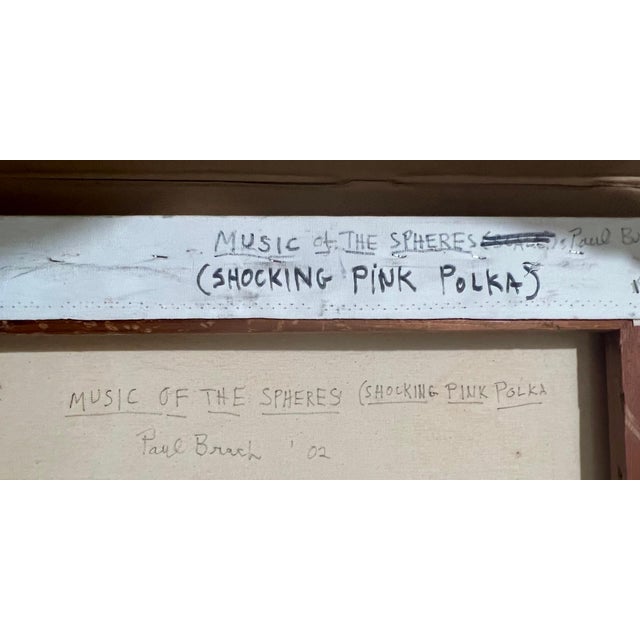
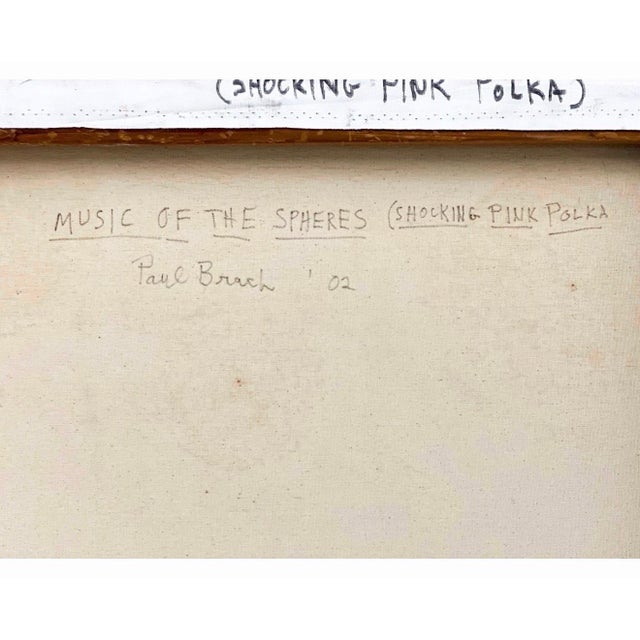
Music of the Spheres (Shocking Pink Polka)
2002
Oil on canvas
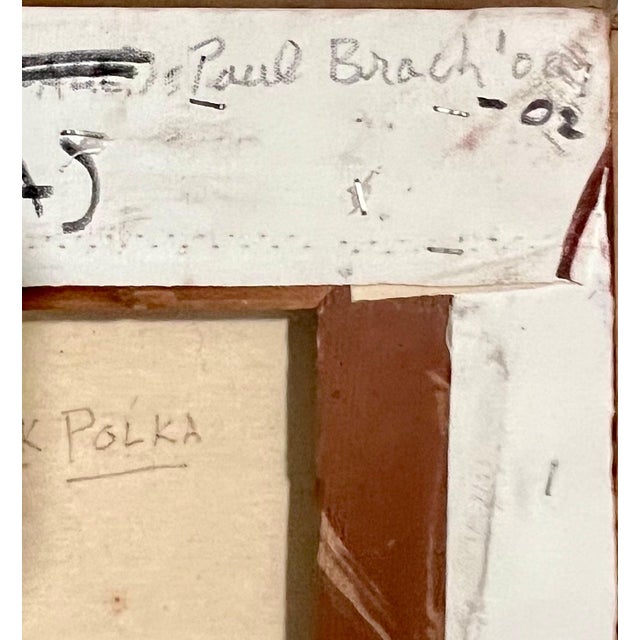
Hand signed verso
60 x …
Read more
Paul Brach (American, 1924-2007).
Music of the Spheres (Shocking Pink Polka)
2002
Oil on canvas
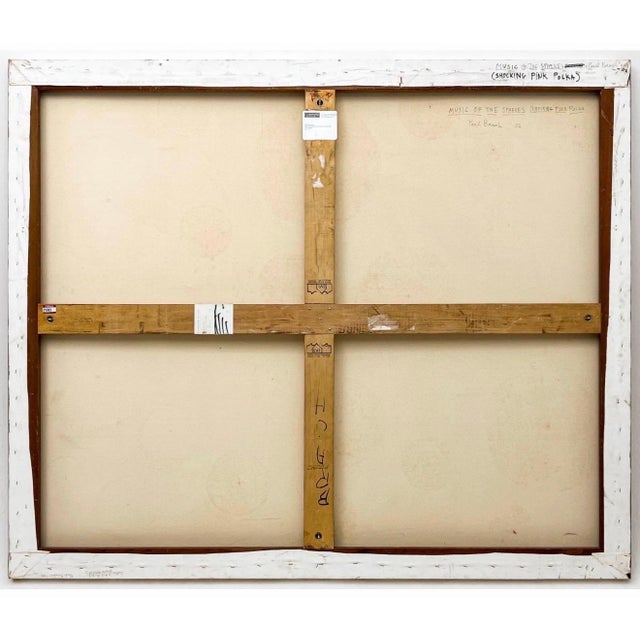
Hand signed verso
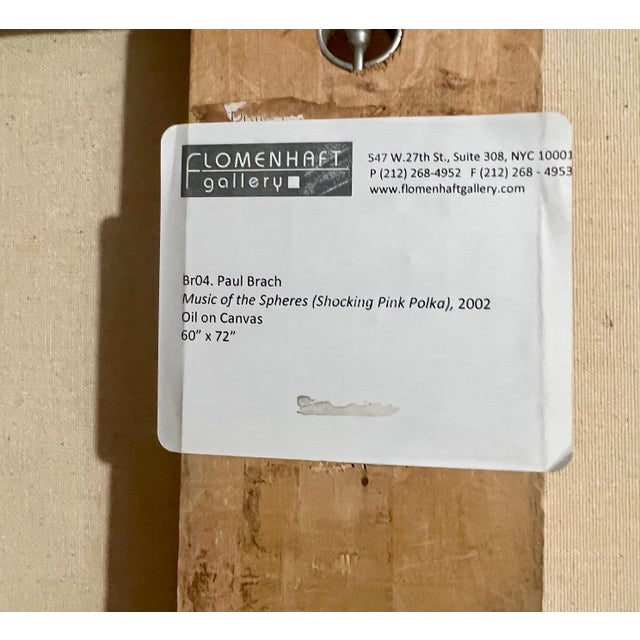
60 x 72 inches
unframed
Provenance:
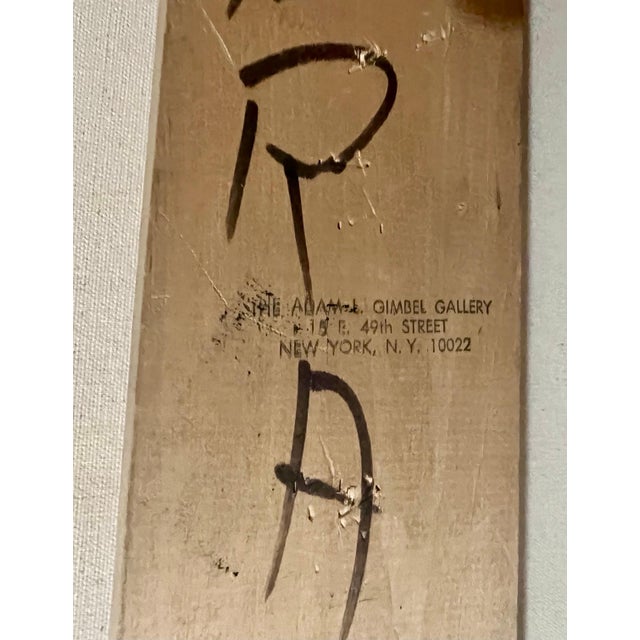
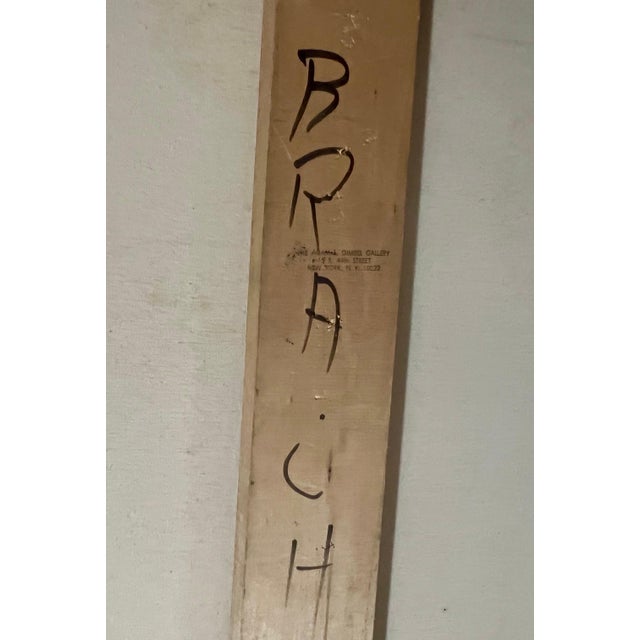
Flomenhaft Gallery, New York, NY label affixed to verso
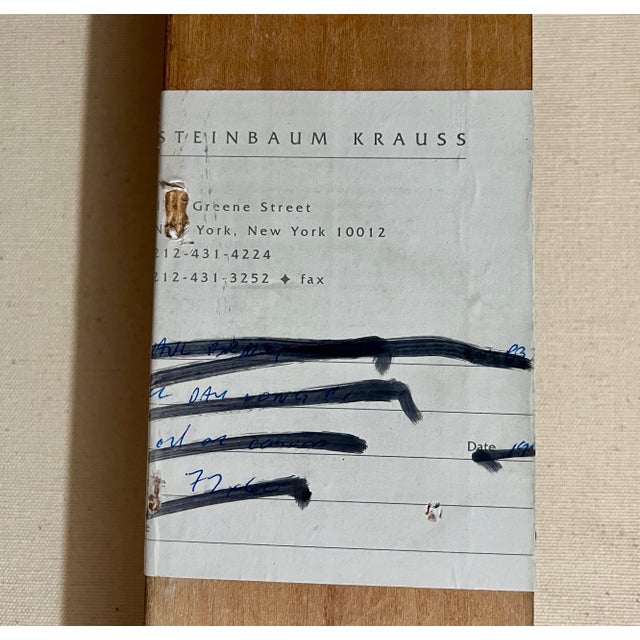
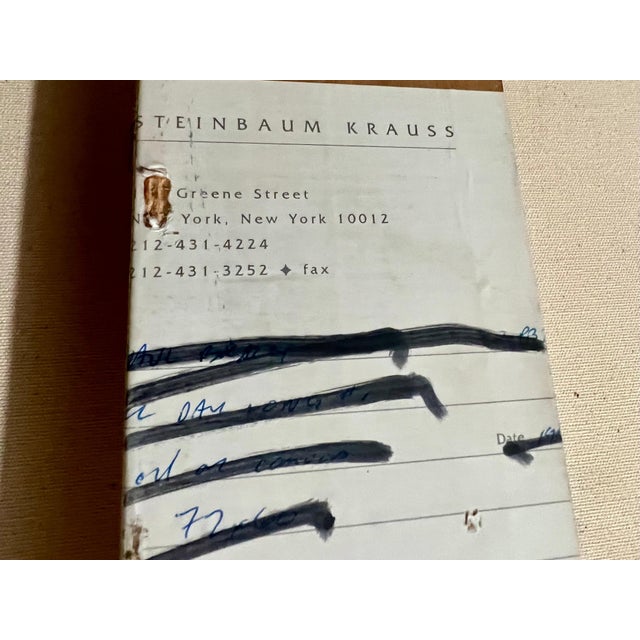
Steinbaum Krauss, New York, NY label affixed to verso
A magnificent and visually arresting large-scale oil on canvas by Paul Brach (1924–2007), one of the most significant figures in postwar American abstraction — a painter who exhibited at the Leo Castelli Gallery alongside Jasper Johns and Robert Rauschenberg, showed with the André Emmerich Gallery and Cordier & Eckstrom Gallery, and whose work is held in the permanent collections of the Museum of Modern Art (MoMA), the Whitney Museum of American Art, the Guggenheim Museum, the Art Institute of Chicago, and the Smithsonian American Art Museum.
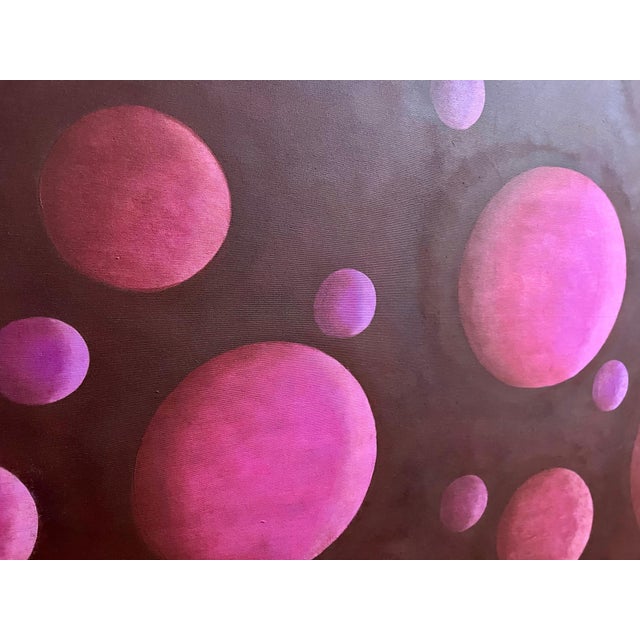
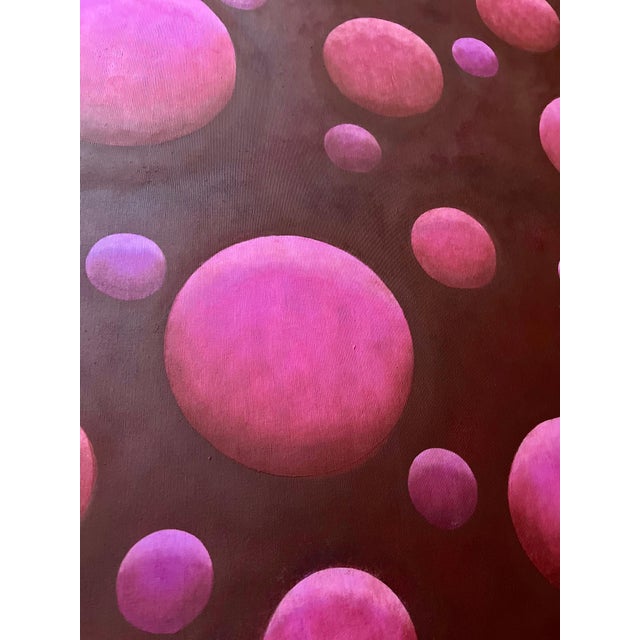
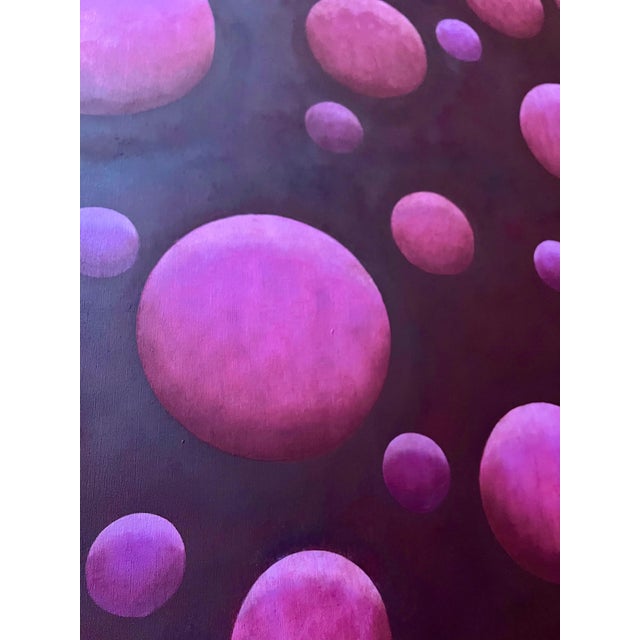
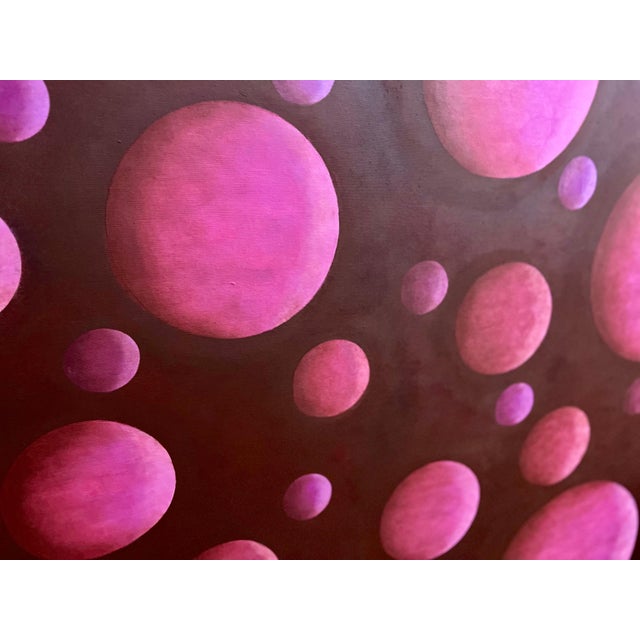
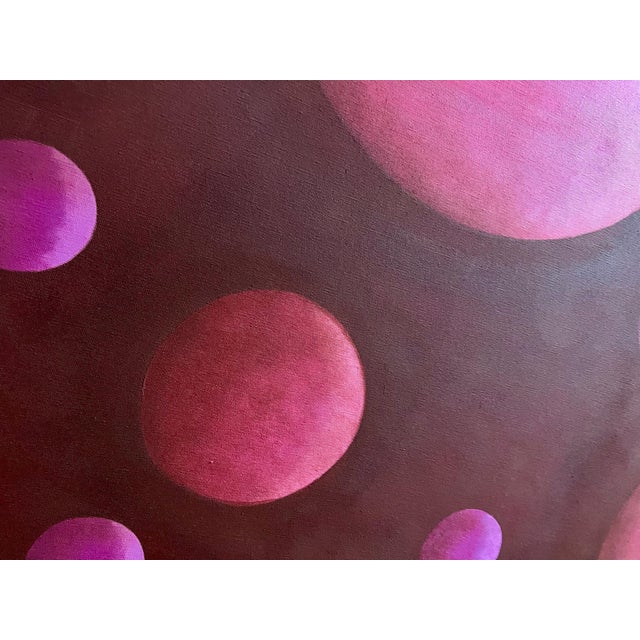
This exceptional painting presents a field of luminous pink, rose, and violet spheres of varying scale floating against a deep, velvety crimson ground. The spheres range from intimate, jewel-like orbs to large, softly radiant forms that dominate the picture plane, their surfaces rendered with subtle, almost atmospheric gradations of pigment that give each sphere a quietly glowing, three-dimensional presence. The deep burgundy-crimson background — warm yet mysterious — creates a saturated, enveloping field against which the pink and violet forms seem to hover, pulse, and breathe.
The composition is both meditative and exhilarating — rooted in the Minimalist and Color Field traditions that Brach moved toward following his early Abstract Expressionist years, while retaining a sensuous painterly warmth that distinguishes his mature work from harder-edged geometric abstraction. The work invites comparison to the late color investigations of Mark Rothko, the sphere paintings of Yayoi Kusama, and the Color Field luminosity of Helen Frankenthaler and Jules Olitski — while remaining entirely and recognizably Brach's own.
Paul Brach (1924–2007)
Abstract Expressionist Painter New York School Minimalism Color Field Leo Castelli Gallery CalArts
Paul Henry Brach (March 13, 1924 – November 16, 2007) was one of the most significant and wide-ranging figures in postwar American art — an Abstract Expressionist painter, Color Field pioneer, printmaker, and educator whose career places him at the center of the New York School and whose paintings are held in the permanent collections of the Museum of Modern Art (MoMA), the Whitney Museum of American Art, the Solomon R. Guggenheim Museum, the Art Institute of Chicago, and the Smithsonian American Art Museum. A peer of Joan Mitchell, Philip Guston, Robert Rauschenberg, and Jasper Johns, and a close friend and early exhibitor with Leo Castelli, Brach occupies a singular position in the history of American abstraction — as both a painter of extraordinary range and quiet power, and as one of the most consequential art educators of the twentieth century.
Early Life and Education
Born and raised in New York City — first in Brooklyn, then the Bronx — Brach came from an upper-middle-class Jewish New York family. As a teenager he spent his summers working on ranches in Arizona, an experience with the open landscape of the American West that would influence the spatial qualities of his painting throughout his career. He enrolled at the University of Iowa, where he studied painting under Grant Wood — the celebrated American Regionalist painter and creator of American Gothic — before his studies were interrupted by the draft. He served three years in the United States Army during World War II, seeing combat in Europe, before returning to Iowa on the GI Bill to complete his degree. At Iowa he also studied printmaking under Mauricio Lasansky, one of the most respected printmaking teachers in America, and it was in those classes that he met the painter Miriam Schapiro, whom he married in 1946.
The New York School: Cedar Bar, Leo Castelli, and Abstract Expressionism
In 1951, Brach and Schapiro returned to New York City, where they quickly embedded themselves in the most vital artistic community in the world. Brach became a regular at the Cedar Bar and the Artists' Club — the legendary gathering places of the New York School — alongside Joan Mitchell, Philip Guston, Larry Rivers, Michael Goldberg, Knox Martin, Robert Rauschenberg, and Willem de Kooning. He was associated with Atelier 17, the celebrated New York print studio run by Stanley William Hayter, which brought together the leading printmakers and painters of the postwar era including Jackson Pollock, Mark Rothko, and Louise Bourgeois.
Through his friendship with Leo Castelli, Brach became one of the first artists to exhibit at the Leo Castelli Gallery when it opened in 1957 — the gallery that would go on to define postwar American art, representing Jasper Johns, Robert Rauschenberg, Roy Lichtenstein, Frank Stella, and Cy Twombly. Brach's early paintings of this period are energetic, gestural Abstract Expressionist works in the tradition of the second-generation New York School. He subsequently exhibited with the Cordier & Eckstrom Gallery and the André Emmerich Gallery — two of the most prestigious venues for American abstraction in New York.
Evolution: From Abstract Expressionism to Minimalism and Color Field
By the late 1950s and early 1960s, Brach began moving away from the gestural energy of Abstract Expressionism toward a quieter, more meditative pictorial language — monochromatic, spare, and increasingly concerned with the subtle behavior of color, light, and form. His mature paintings — including his celebrated sphere and orb compositions — place him in dialogue with the Color Field painters Helen Frankenthaler, Jules Olitski, and Morris Louis, as well as with the atmospheric luminosity of Mark Rothko and the reductive formal investigations of American Minimalism. His sphere paintings in particular — fields of glowing, softly rendered orbs floating against saturated color grounds — are among the most quietly powerful and collectible works of his career, blending the sensuous warmth of Color Field painting with a meditative stillness entirely his own.
CalArts and a Generation of American Artists
In 1967, Brach was appointed chair of the new art department at the University of California, San Diego. Two years later he became the founding dean of the School of Art at the California Institute of the Arts (CalArts) in Los Angeles — one of the most consequential appointments in the history of American art education. As dean from 1969 to 1975, Brach assembled a legendary faculty that included John Baldessari, Allan Kaprow, Nam June Paik, and Miriam Schapiro, and created an experimental atmosphere from which emerged artists including David Salle, Eric Fischl, Barbara Bloom, and Jack Goldstein — eventual luminaries of the New York art world of the 1980s. Schapiro and Judy Chicago also established the Feminist Art Program at CalArts during this period, one of the most historically significant developments in American art of the era.
"In 1967 I was offered the chair of a new art department at the University of California at San Diego. After two years at UCSD, I became the founding dean of the School of Art at the California Institute of the Arts. I decided to come to [CalArts] because Los Angeles was more fun, and I could find my peers here. I mean there are artists like Bob Irwin, and Ed Kienholz, and Larry Bell, and people who I think are doing good work. And CalArts seems goofy enough. What really knocked me out was that the makers of Mary Poppins are inadvertently funding something that's going to make Easy Rider."
Teaching Career
Brach's teaching career spanned the full breadth of American art education. In the early 1960s he held positions at The New School, Cooper Union, the Parsons School of Design, and Cornell University's New York City program. After returning to New York from California in 1975, he served as chair of the Division of the Arts at Fordham University at Lincoln Center before eventually retiring from teaching entirely to devote himself full-time to painting. He was elected to the National Academy of Design in 1997.
Later Career and East Hampton
In his final decades, Brach worked from studios in New York City and East Hampton — the same community that had been home to Jackson Pollock, Lee Krasner, Willem de Kooning, Franz Kline, and the core of the Abstract Expressionist movement. His late paintings, including his sphere series, demonstrate a painter fully in command of his vision — meditative, color-saturated, and suffused with the quiet luminosity that defines his most sought-after work. As a painter based in New York, Mr. Brach evolved from Abstract Expressionism in the 1950s to monochromatic Minimalism in the ’60s. From the ’70s on he produced simplified landscapes of the American West with horses galloping through them. (Pop Art influenced) In recent paintings he blended geometric abstraction and spacey, new age, cosmic atmospheres. His oral history is preserved in the Archives of American Art at the Smithsonian Institution. His estate is represented exclusively by Eric Firestone Gallery, New York.
Museum Collections
Paul Brach's paintings and prints are held in the permanent collections of the Museum of Modern Art (MoMA), New York; the Whitney Museum of American Art, New York; the Solomon R. Guggenheim Museum, New York; the Art Institute of Chicago; and the Smithsonian American Art Museum, Washington, D.C., among others.
Legacy
Paul Brach died on November 16, 2007, at his home in East Hampton, New York, at the age of 83. A painter who moved with intellectual confidence from Abstract Expressionism through Minimalism and Color Field painting, and an educator who shaped the careers of an entire generation of American artists, Brach remains one of the most historically significant and underappreciated figures of postwar American art. His paintings — particularly his luminous sphere and orb compositions — are increasingly sought by collectors of New York School abstraction, Color Field painting, and mid-century American modernism.
Keywords: Paul Brach painting, Paul Brach abstract, Paul Brach sphere painting, Paul Brach oil on canvas, New York School painter, Abstract Expressionist painter, Color Field painting, American Minimalism, Leo Castelli Gallery, André Emmerich Gallery, Cordier Ekstrom Gallery, Eric Firestone Gallery, CalArts founding dean, Miriam Schapiro husband, Cedar Bar artists, Atelier 17, postwar American abstraction, MoMA collection, Whitney Museum collection, Guggenheim collection, American abstract painting for sale, East Hampton artists, second generation Abstract Expressionism.
See less
- Dimensions
- 72ʺW × 1ʺD × 60ʺH
- Styles
- Abstract
- Art Subjects
- Geometric
- Frame Type
- Unframed
- Period
- 2000 - 2009
- Country of Origin
- United States
- Item Type
- Vintage, Antique or Pre-owned
- Materials
- Canvas
- Oil Paint
- Condition
- Good Condition, Original Condition Unaltered, Some Imperfections
- Color
- Pink
- Condition Notes
- Good Good less
Questions about the item?
Returns & Cancellations
Return Policy - All sales are final 48 hours after delivery, unless otherwise specified in the description of the product.
Cancellation Policy - Prior to shipping or local pickup, buyers may cancel an order for up to 48 hours, unless otherwise specified.
Related Collections
- Ralph Lauren Paintings
- Ed Ruscha Paintings
- Photorealism Canvas Paintings
- Photorealism Paintings in New York
- Karen Offutt Paintings
- Richard Serra Paintings
- Jo Baskerville Paintings
- Silk Velvet Paintings
- Jeff Slemmons Paintings
- Black Photorealism Paintings
- BDDW Paintings
- Photorealism Paintings in Los Angeles
- Herman Miller Paintings
- Cassina Paintings
- Louise Nevelson Paintings
- Mark Lewis Paintings
- Mark Lewis Art Paintings
- Vienna Secession Paintings
- Lee Reynolds Paintings
- Mid-Century Modern Paintings
- Abstract Paintings
- Nautical Paintings
- Velvet Paintings
- Landscape Paintings
- 19th Century Oil Paintings