

Details
Description
Measurements:
height: 14.5 cm; width: 16.2 cm; depth: 15.8 cm; weight: 0.805 kg
item :
a magnificent ceramic cachepot vase, …
Read more
Measurements:
height: 14.5 cm; width: 16.2 cm; depth: 15.8 cm; weight: 0.805 kg
item :
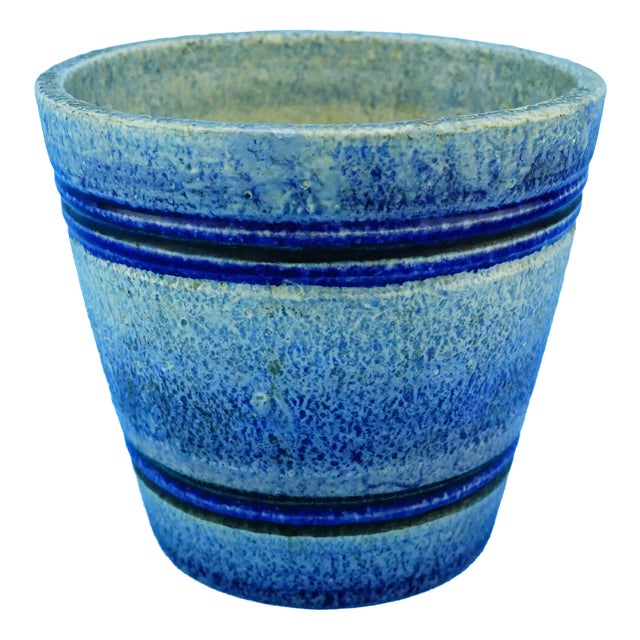
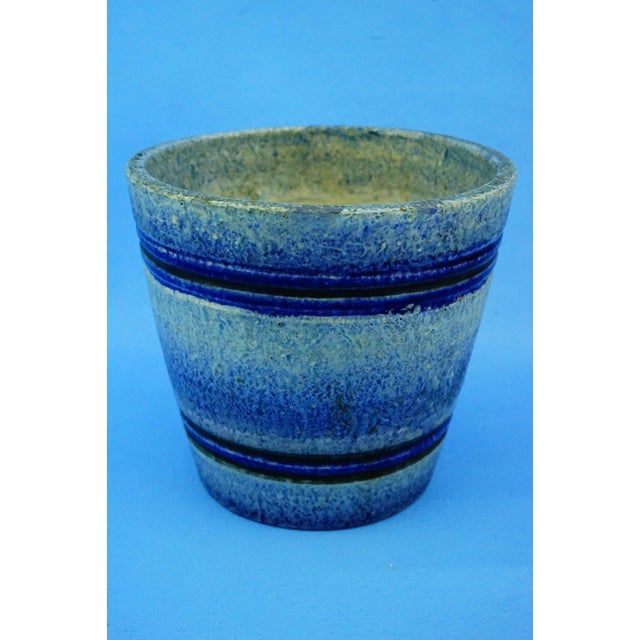
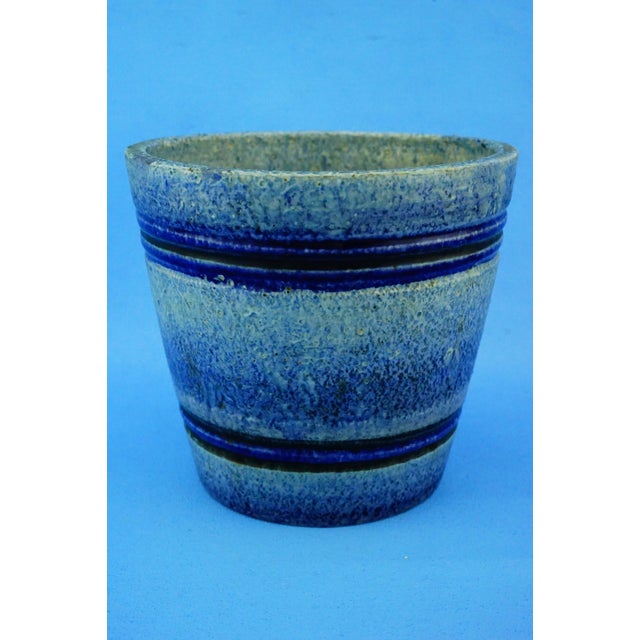
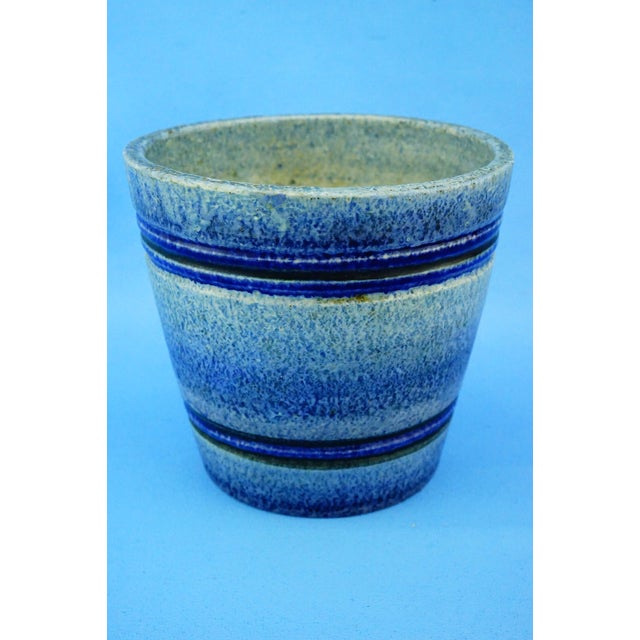
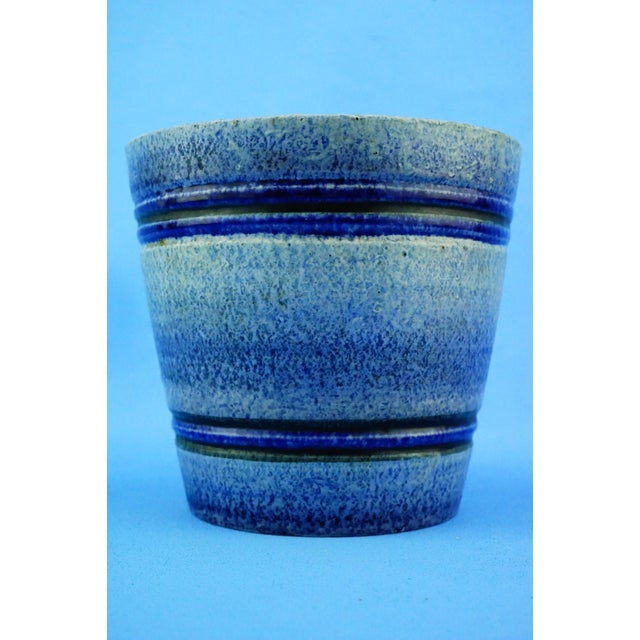
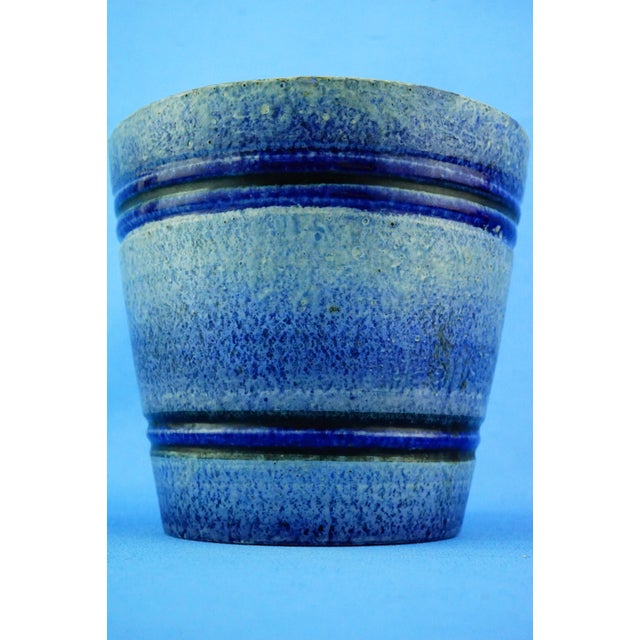
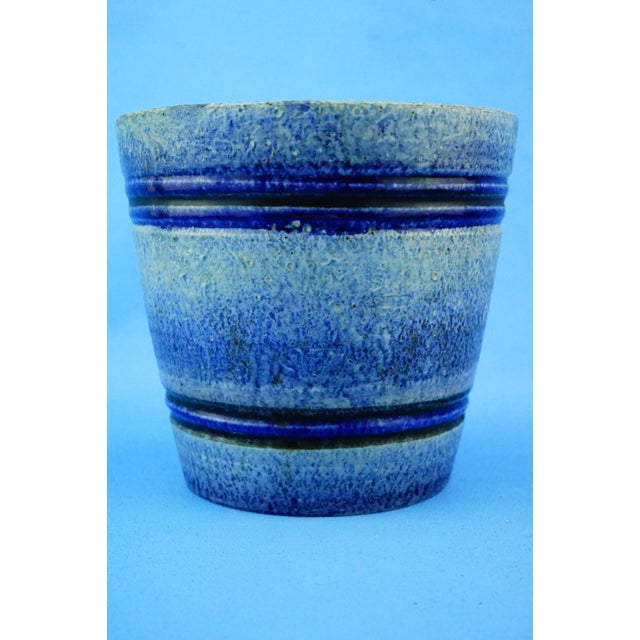
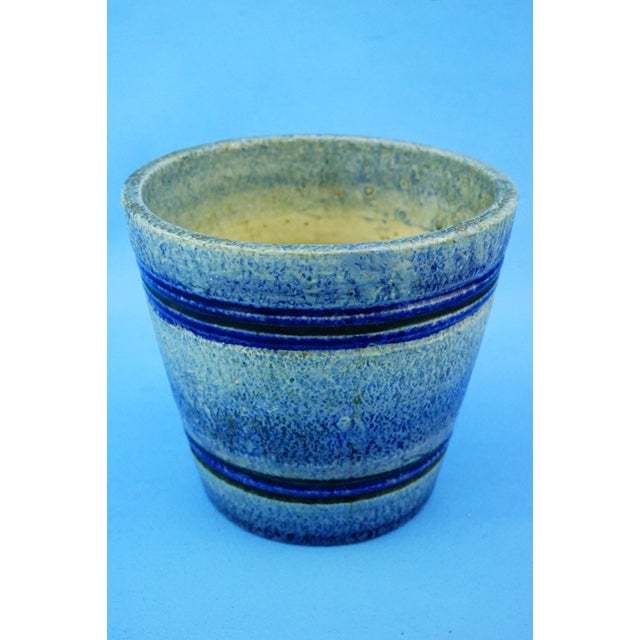
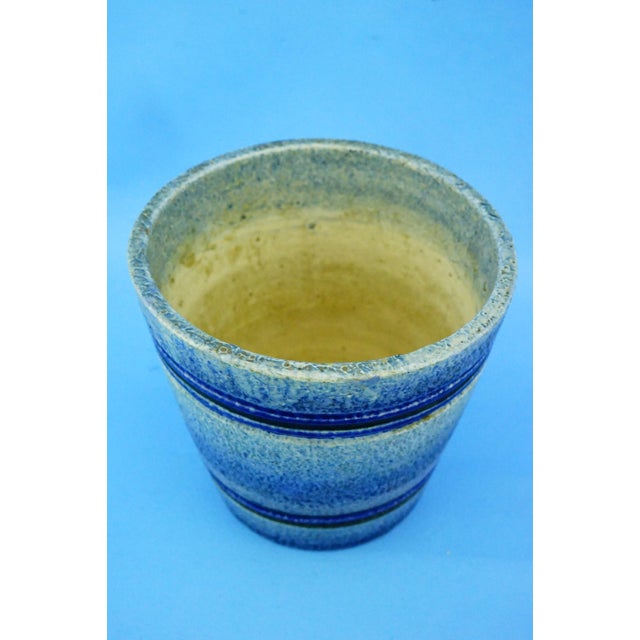
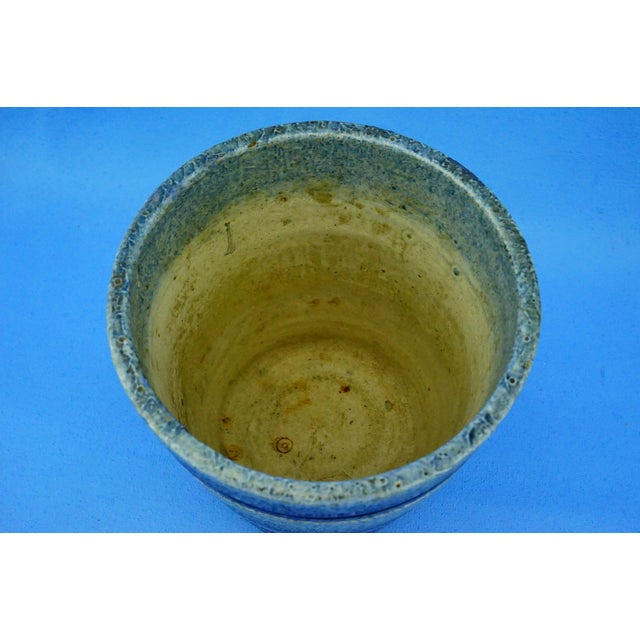
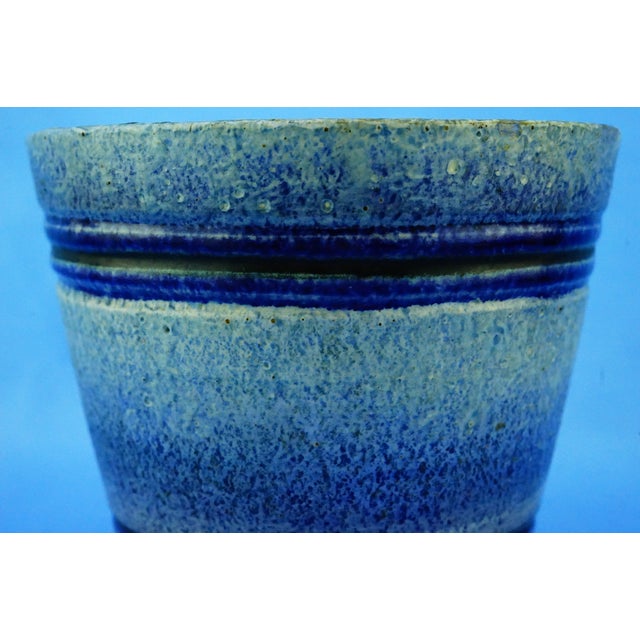
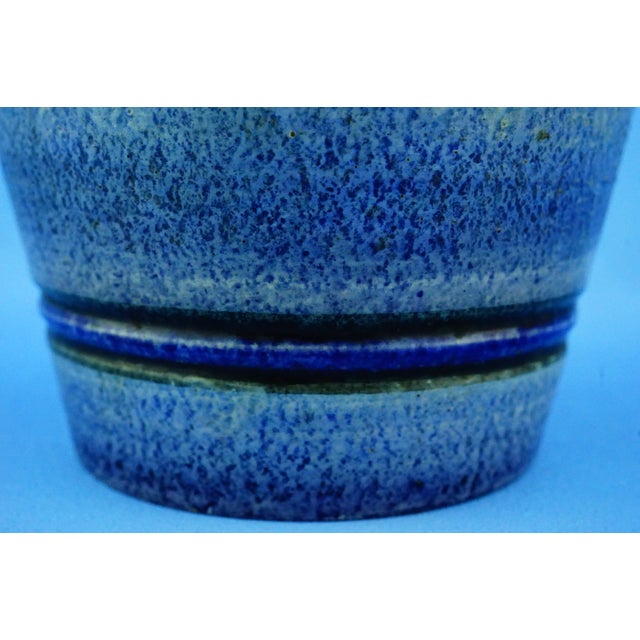
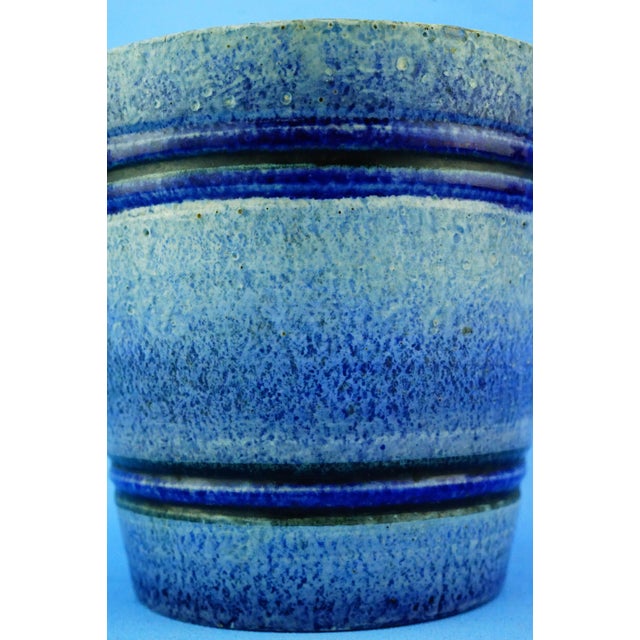
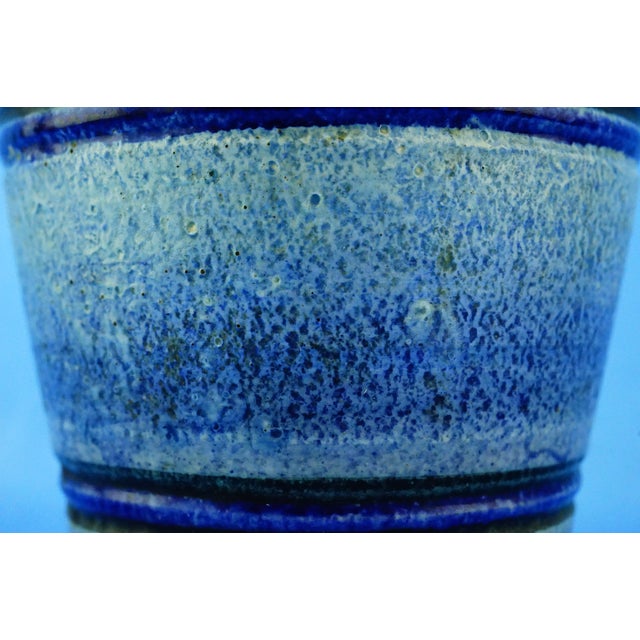
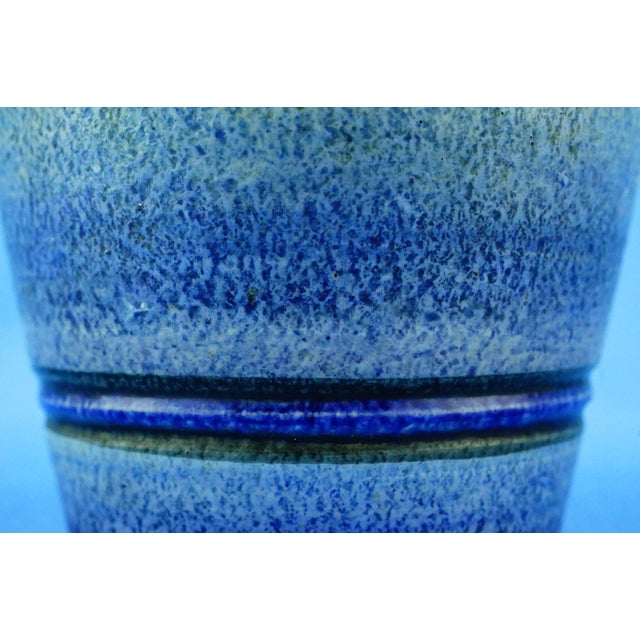
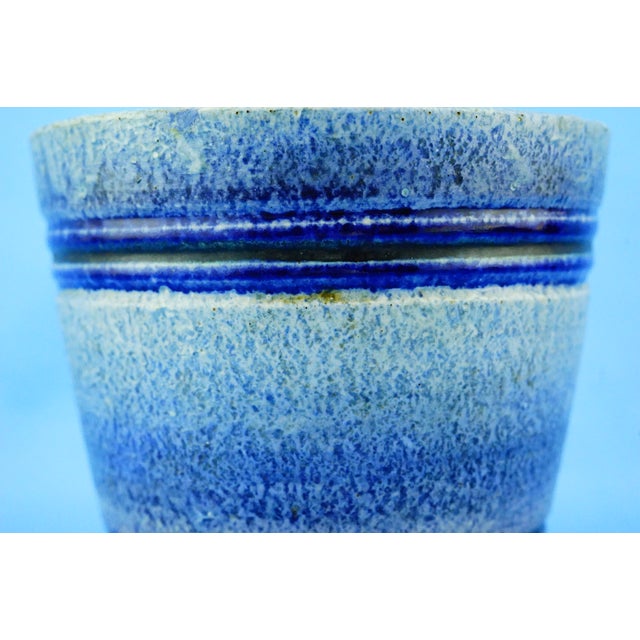
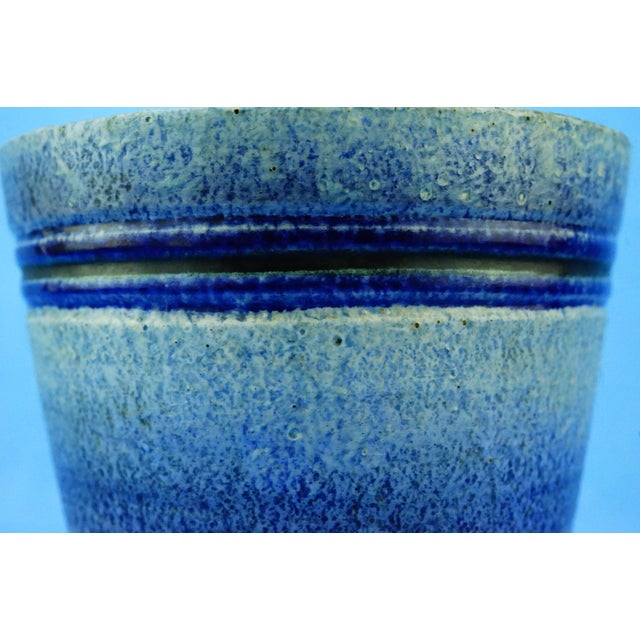
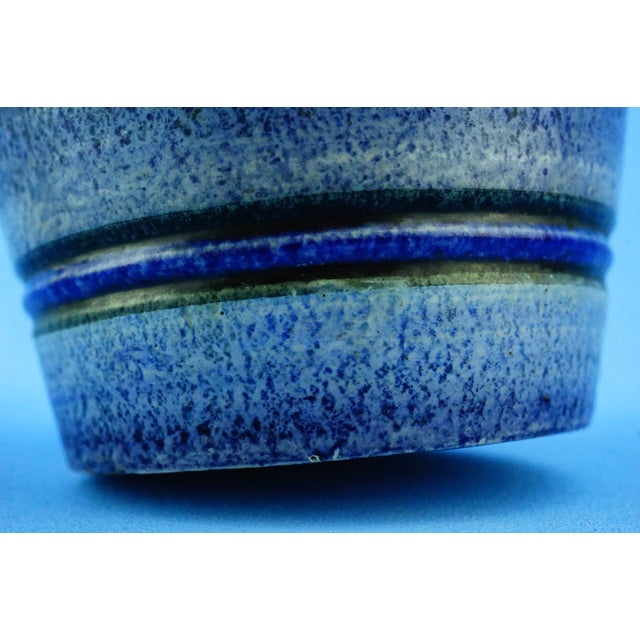
a magnificent ceramic cachepot vase, modeled on a wheel, entirely hand-decorated and finished with "mat" (orange peel) glazes, created by nicolaj diulgheroff for the renowned mga (mazzotti giuseppe albisola) factory. The glaze is signed under the base with the manufacturer's trademark. In the historic ceramics hub of albisola, the mat (or opaque) glaze is a special type of vitreous coating that, once fired in the kiln, is completely dull. Unlike traditional albisola majolica (characterized by reflective surfaces and bright glazes), the matte finish offers a silky, velvety feel, lending the sculptures and vases a modern and elegant look. This is further enhanced by the orange peel texture, which can only be achieved with matte glazes. This piece fully expresses the canons of futurism, highlighted by three concentric rings in cobalt blue relief (two below the mouth and one above the base), which articulate the geometric structure of the piece. The central body is finely decorated in a color palette that delicately blends between shades of light blue, white, and blue. The vase dates back to the early decades of the twentieth century. Diulgheroff typically marked his creations solely with the manufacturer's mark "m.g.a.", without adding his own full signature, a characteristic that is perfectly evident in this piece.
useful information for evaluating the item:
from an online search, we find that mga's futurist ceramics range in price from a minimum of €200-300 to several thousand euros, depending on their size, the complexity of the workmanship, the beauty of the decoration, and the artist who created them. All of these ceramics are highly valuable and highly sought after by collectors. The ceramics created by nicolaj diulgheroff consistently rank among the most sought-after by collectors of 20th-century decorative arts, on par with works by manlio trucco, tullio d'albisola, and romeo bevilacqua. In the latest photos, confirming this, we've included several auction quotes by the artist, all fairly dated, from 2004 to 2012, with ceramics similar in style and workmanship, of various sizes, all listed at very high prices. Please note that the prices listed are starting prices (figures regularly exceeded by bidding increases), plus the auction house's commission, which averages 25-30% (and should also be revalued for inflation).
information on the artist and/or manufacturer:
mga manufactory
the renowned mga factory was founded in 1903 in albisola by giuseppe mazzotti (known as bausin), a skilled potter trained between livorno and naples. Initially an artisan workshop, the business quickly evolved into the "fabbrica di ceramiche d'arte tradizionali e moderne giuseppe mazzotti," labeling its production with the acronym m.g.a. Thanks to the founder's talent and the collaboration of master craftsmen such as pietro rabbia and dario ravano, the factory won the gold medal at the 1906 savona exposition and began selling directly to the public. After world war i the company opened up to important external collaborations (including mario gambetta and virio da savona) and, under the direction of eldest son torido mazzotti, opened a second facility in albisola superiore in 1923. International success was confirmed at the 1925 paris international exhibition. The true avant-garde turning point came in 1928, when tullio mazzotti (known as tullio d'albisola) transformed the factory into the hub of ceramic futurism, attracting the greatest artists of the time to the m.g.a. Brand: from fortunato depero to fillia, from alf gaudenzi to farfa, all the way to bruno munari and tato. In 1932, the bulgarian architect and designer nicolaj diulgheroff designed the new, futuristic headquarters on via aurelia. In the same decade, the factory welcomed giants of italian art such as lucio fontana, aligi sassu, salvatore fancello, and agenore fabbri, winning the grand prix. In paris in 1937. After the war and the founder's death, his children torido, tullio, and vittoria relaunched the company in the 1950s, collaborating with masters of abstraction and the european avant-garde such as asger jorn, karel appel, piero manzoni, emilio scanavino, and roberto crippa. In 1950, m.g.a. Officially represented italian excellence at the brooklyn museum in new york. In 1959, the family decided to split the business: torido took over the historic original headquarters, renaming it "ceramiche e maioliche artistiche giuseppe mazzotti 1903," a brand of excellence that remains active in the field of high-quality artistic craftsmanship.
nicolaj diulgheroff
nicolaj diulgheroff, a bulgarian painter, designer, and architect, particularly associated with futurism, moved permanently to italy in 1926. It was during this period that he began his collaboration with mga, for which he produced small masterpieces. In 1929 he exhibited at the galleria pesaro in milan, at the futurist exhibition in mantua, at the first syndicate in turin, and at the international exhibitions in barcelona and paris. He participated in all the venice biennials from 1930 to 1938. In 1931 he was present at the second exhibition of italian rational architecture in rome, at the second futurist exhibition held at the galleria pesaro in milan and at the permanente in milan, in 1933 at the fifth triennial in milan, and in 1935 at the second quadriennale in rome. In 1932 he graduated in architecture from the accademia albertina and, at the invitation of tullio and torido mazzotti, designed the new "m.g.a." ceramics factory in albisola, which he defined as a "futurist workshop," the construction of which was completed in 1934. At the end of the 1930s, despite having long been interested in the rationalist results of his art, he created some ceramics. In the futurist style, again for the mazzotti factory. He exhibited again at the first exhibition of aeropainting in rome and at the exhibition of futurist painting and aeropainting in trieste. After the second world war, his works were included in numerous historic exhibitions dedicated to abstract art and futurism, and from 1972 onwards, he devoted himself primarily to painting. He died in turin in 1982. This piece has an attribution mark,
i am sure that it is completely authentic and take full responsibility for any authenticity
issues arising from misattribution
See less
- Dimensions
- 6.3ʺW × 5.91ʺD × 5.51ʺH
- Period
- 1920s
- Country of Origin
- Italy
- Item Type
- Vintage, Antique or Pre-owned
- Materials
- Ceramic
- Condition
- Good Condition, Original Condition Unaltered, Some Imperfections
- Color
- Blue
Returns & Cancellations
Return Policy - All sales are final 48 hours after delivery, unless otherwise specified in the description of the product.
Cancellation Policy - Prior to shipping or local pickup, buyers may cancel an order for up to 48 hours, unless otherwise specified.