


Details
Description
Measurements:
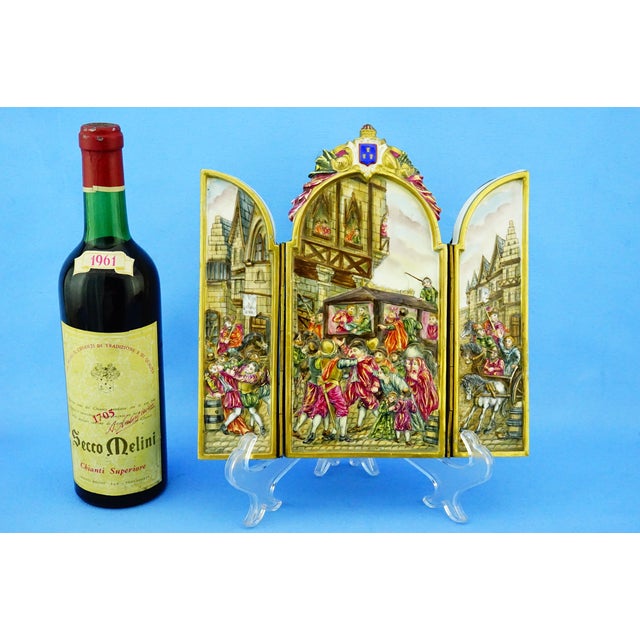
height: 26 cm; width: 26 cm; depth: 2 cm; weight: 0.977 kg
item :
spectacular and extremely rare vitrified …
Read more
Measurements:
height: 26 cm; width: 26 cm; depth: 2 cm; weight: 0.977 kg
item :
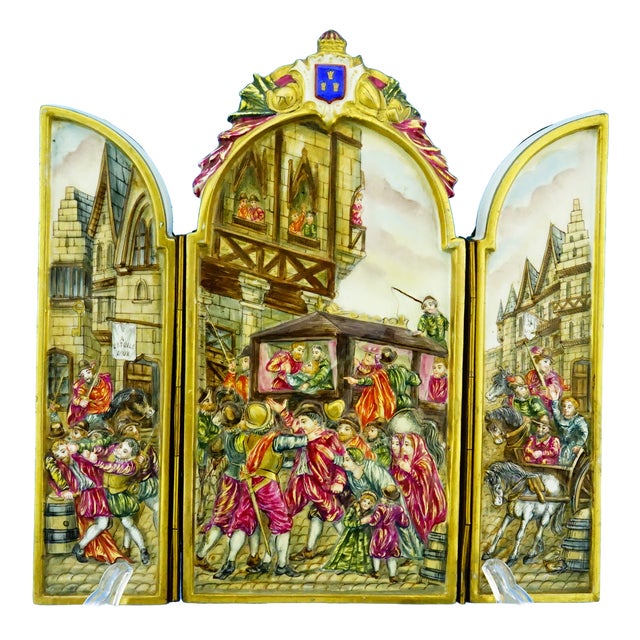
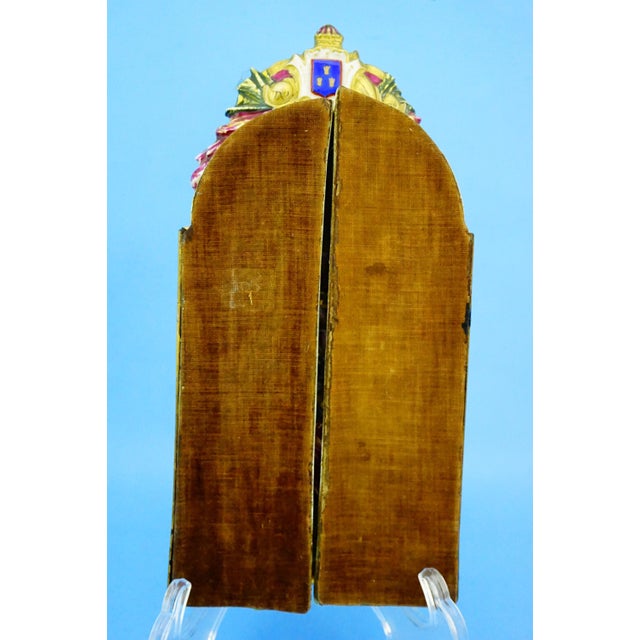
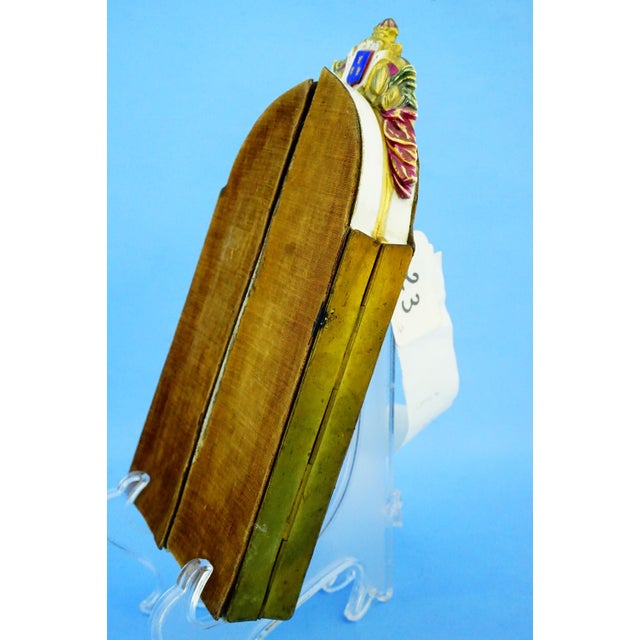
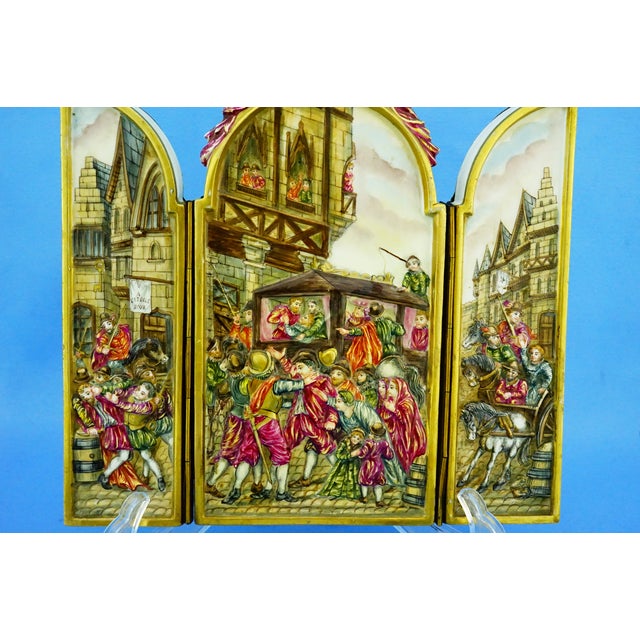
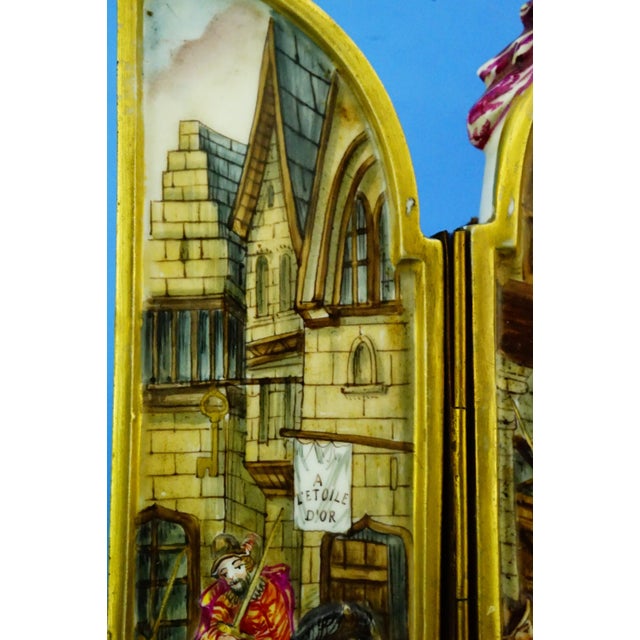
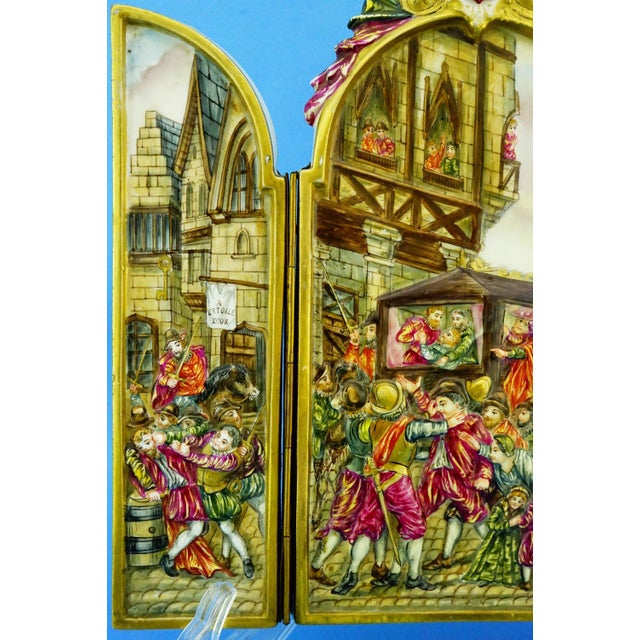
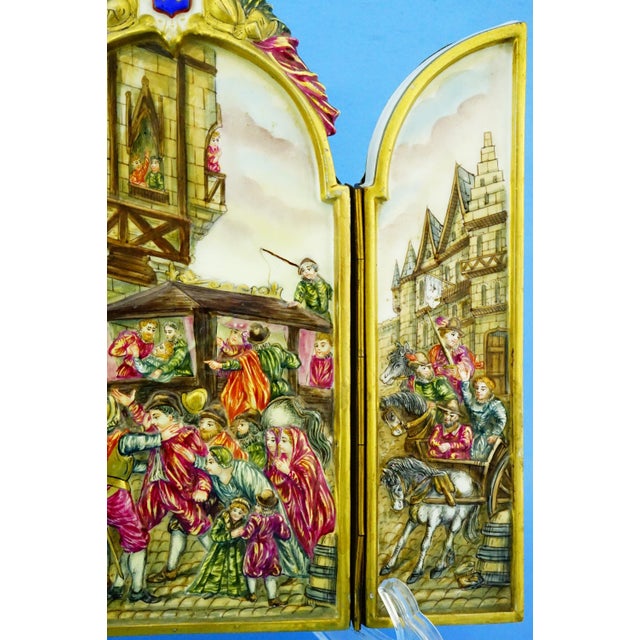
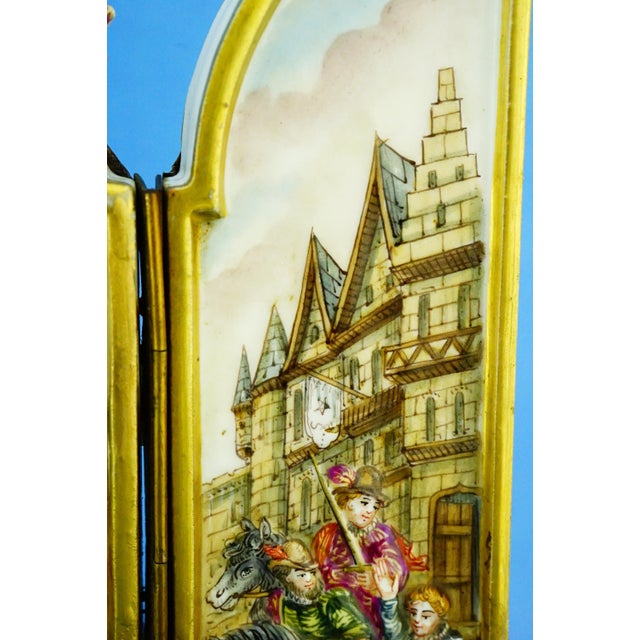
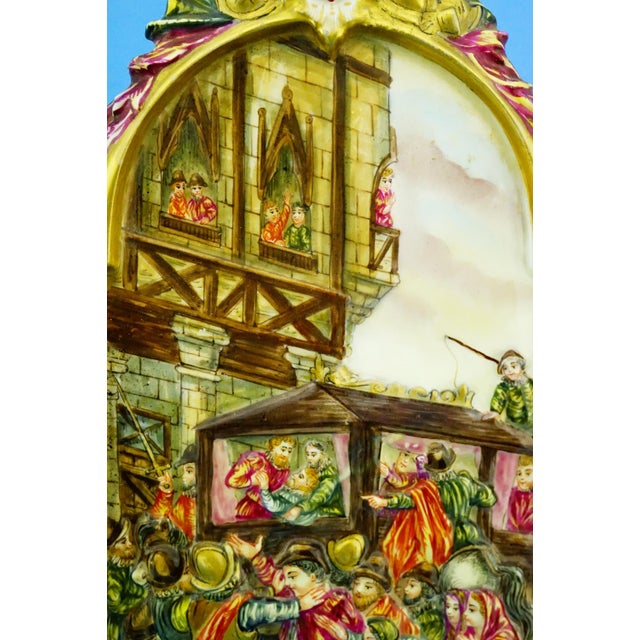
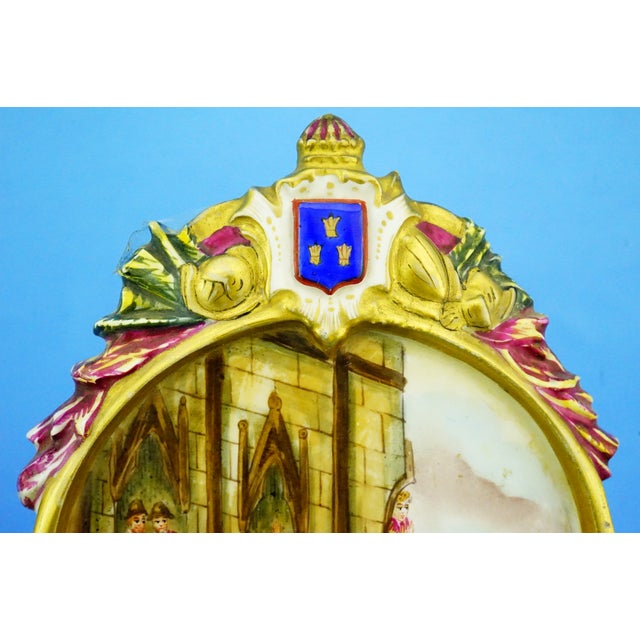
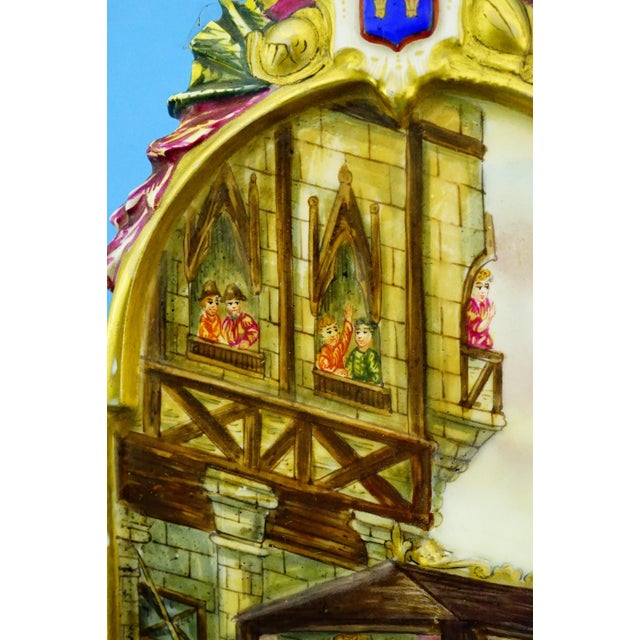
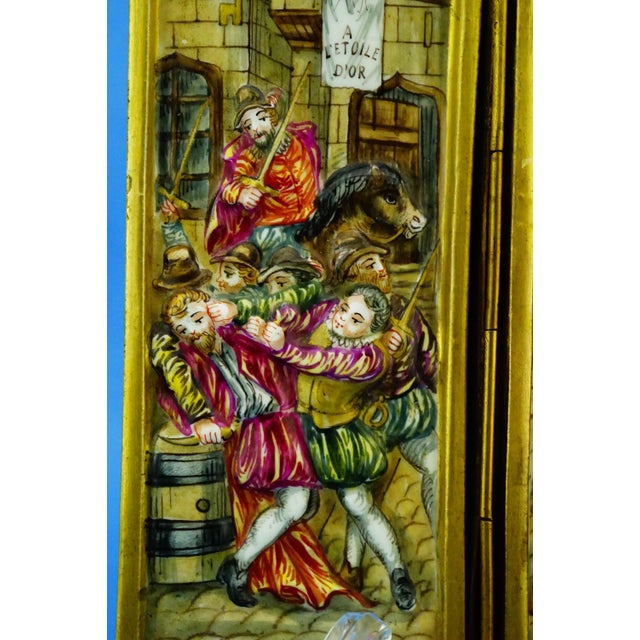
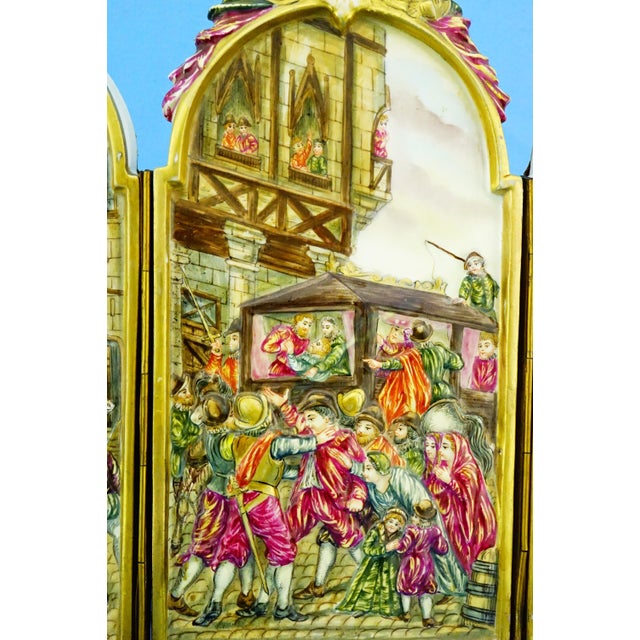
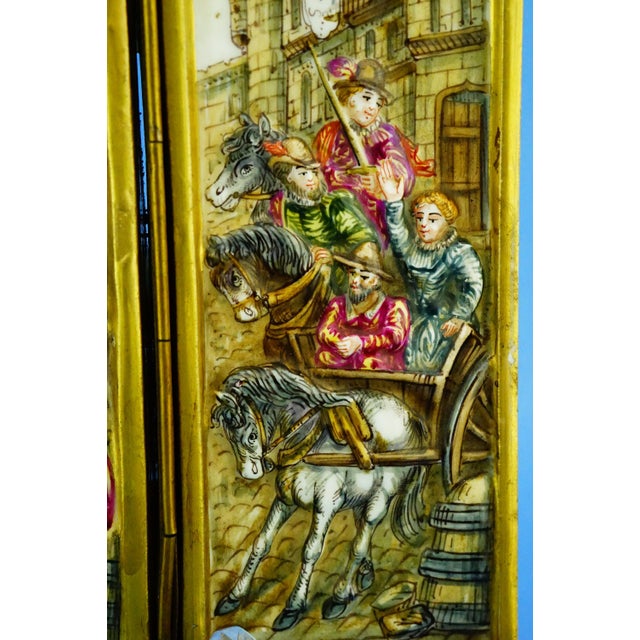
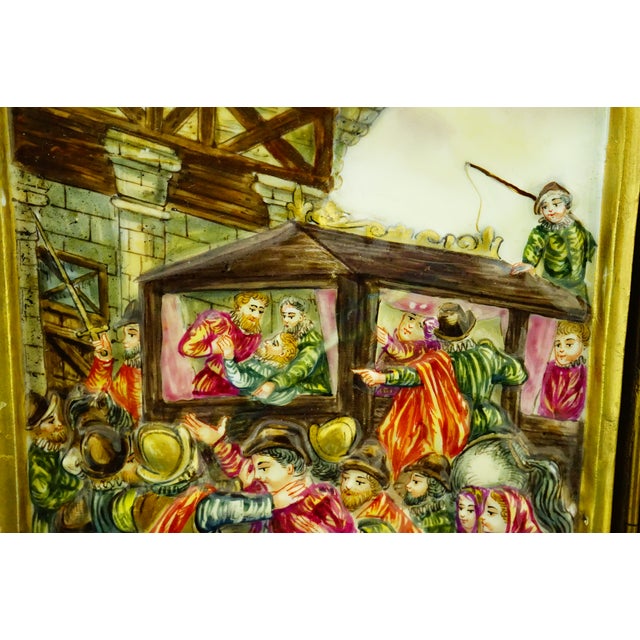
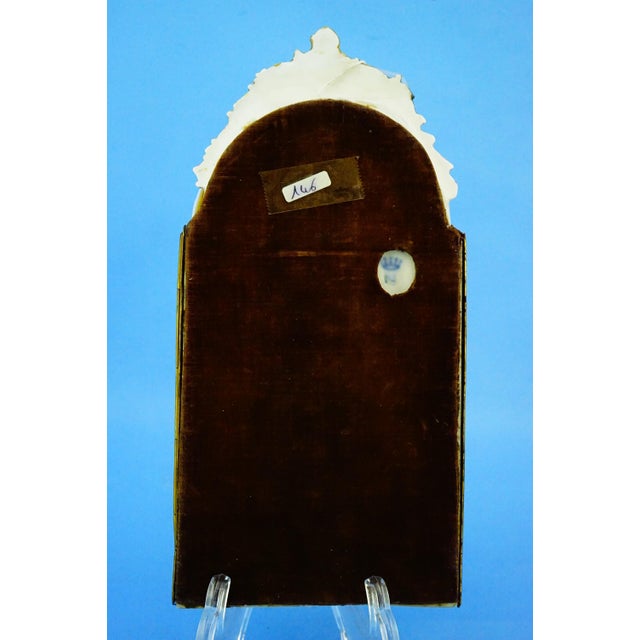
spectacular and extremely rare vitrified hard-paste porcelain plaque, entirely hand-decorated, finely crafted in bas-relief with a dynamic renaissance-style genre scene depicting a popular brawl filled with characters. The structure is conceived as a refined triptych composed of three elements joined by bronze hinges; a structural form explicitly reminiscent of the iconography of ancient wooden icons or period reliquaries, whose side doors closed to protect the central fulcrum. The central panel features an elegant drapery surmounted by a crown and a heraldic shield, likely the coat of arms of the noble family that commissioned the work. The back of the piece is embellished with a velvet covering, provided with a special window that leaves the brand visible: the famous five-pointed crowned "n", painted with a brush in blue under the glaze, one of the most prestigious and ancient brands used by the capodimonte factory (precisely the number 8, illustrated in the photos immediately below this ). Also on the back is the original paper label bearing the lot number of the auction in which the plaque was auctioned (lot 23), as well as the purchase certificate from the antonina auction house, dated december 1, 2001. On that occasion, the work, catalogued as "la rissa, triptych in porcelain," was sold for 900,000 lire (plus 162,000 lire in commission, for a total of 1,162,000 lire), a price which, adjusted for inflation and the purchasing power of today's currency, is estimated to be between 1,500 and 1,800 euros. It should be noted that antonina auction house is a smaller, little-known firm, catering primarily to a local audience in the city of rome; for this reason, the hammer price was quite advantageous for the buyer considering the true value of the work. Indeed, the quality of execution is superb, with meticulous attention to detail, establishing the object as an antique of exceptional rarity and artistic significance.
useful information for appraising the item:
our online research reveals established prices for capodimonte bas-relief plaques: they range from €800-1,200 for later examples dating to the 20th century, reaching peaks of €2,000-3,000 and over €4,000-5,000 for older works, with variations depending on size, complexity of decoration, and the density of the figures depicted. Despite its modest dimensions, the piece offered here is distinguished by its excellent execution, is one of the earliest and most valuable productions of the manufacturer, and is accompanied by a certificate of purchase from the auction house. Finally, the iconographic choice of the "popular brawl" represents a unique thematic choice of great rarity compared to more common mythological or pastoral subjects, significantly increasing the value, rarity, and interest of this specific piece on the market.
information on the artist and/or manufacturer:
founded in 1743 by king charles of bourbon and his wife maria amalia of saxony, the royal factory of capodimonte aspired to rival the famous german porcelain of meissen. The sovereign established the factory within the grounds of the hilltop palace in naples, giving rise to one of the most glorious periods of european decorative arts. Capodimonte's most unique element was the invention of soft-paste porcelain: a mixture free of kaolin but rich in local clays, which gave the works a milky, warm, and extraordinarily translucent appearance. This unique composition allowed for the imprint of minute details and pictorial nuances of incomparable delicacy, celebrated especially in the celebrated sculptural groups and floral motifs in relief. The pinnacle of this early period was the exceptional porcelain salon for queen maria amalia, an entire room covered in ceramic slabs, now a masterpiece in the capodimonte museum. In 1759, with the accession of charles to the throne of spain, the original factory was dismantled and moved to madrid. His son, ferdinand iv, reestablished the factory in naples in 1771, inaugurating production in the neoclassical style and introducing the famous trademark of the crowned n in blue. Today, capodimonte porcelain is synonymous worldwide with artisanal excellence and technical virtuosity, combining eighteenth-century sculptural mastery with a timeless elegance that continues to enchant international collectors. In the last photo, we've included historical information about the manufacture for those who wish to delve deeper, taken from one of our french volumes. Many of the marks used, including our own, specifically the number 8, were made, as noted in the notes, in underglaze blue and were used between the late 1700s and the early 1800s.
final considerations on the object:
from an iconographic perspective, the work does not depict a historical event, but rather a lively folkloristic genre scene, traditionally catalogued as "a brawl in front of the comedians' cart" or "a fight during a street play." the master modelers of capodimonte porcelain did not intend to celebrate a specific news event, but rather interpreted a classic theme from ancient painting. The flemish tradition, characterized by chaotic and playful atmospheres, derives directly from 16th- and 17th-century northern european paintings and engravings, inspired by the masterpieces of masters such as pieter bruegel the elder and david vinckboons. At the center of the triptych, the wooden cart that served as a mobile stage for traveling troupes of actors, such as the comedians of the art or the poets of northern european guilds, is clearly visible. The brawl breaks out right at the foot of the stage, involving spectators who vigorously strike each other with sticks. At ancient village fairs (the historic kermesse), open-air theatrical performances and the inevitable alcohol abuse regularly led to furious brawls among the audience, here masterfully crystallized in the whiteness of porcelain. This piece has an attribution mark,
i am sure that it is completely authentic and take full responsibility for any authenticity
issues arising from misattribution
See less
- Dimensions
- 10.24ʺW × 0.79ʺD × 10.24ʺH
- Art Subjects
- Nude
- Period
- 19th Century
- Country of Origin
- Italy
- Item Type
- Vintage, Antique or Pre-owned
- Materials
- Porcelain
- Condition
- Good Condition, Original Condition Unaltered, Some Imperfections
- Color
Returns & Cancellations
Return Policy - All sales are final 48 hours after delivery, unless otherwise specified in the description of the product.
Cancellation Policy - Prior to shipping or local pickup, buyers may cancel an order for up to 48 hours, unless otherwise specified.
Related Collections
- Straw Sculpture
- Roman Bronze Works Sculpture
- Constantin Brancusi Sculpture
- Louis XIV Sculpture
- Fernando Botero Sculpture
- Sculpture in Panama City, FL
- Gourd Sculpture
- Recycled/Repurposed Sculpture
- Barovier and Toso Sculpture
- Far Pavilions Sculpture
- Emmanuel Villanis Sculpture
- Maison Jansen Sculpture
- Flavio Poli Sculpture
- Georgian Sculpture
- Antique Iron Finish Sculpture
- Worlds Away Sculpture
- Photography Sculpture
- Jute Sculpture
- Blenko Sculpture
- Satinwood Sculpture
- Sculpture in Columbus
- Bakelite Sculpture
- Medium-Density Fibreboard Sculpture
- Geode Sculpture
- René Lalique Sculpture