

Details
Description
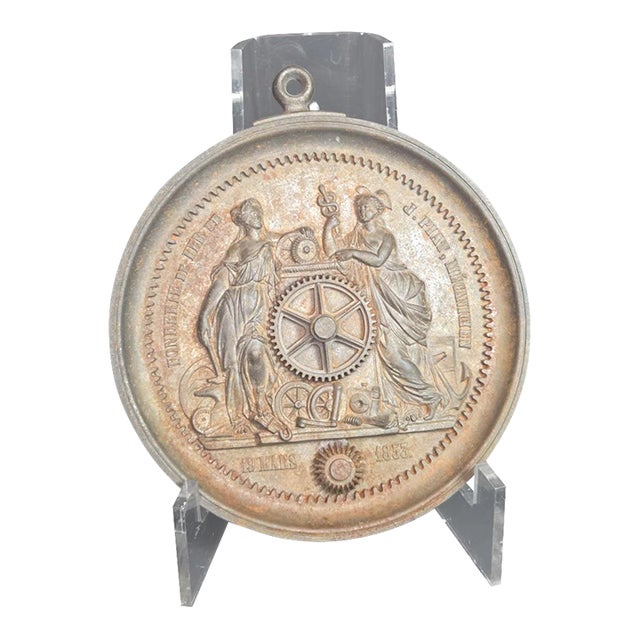
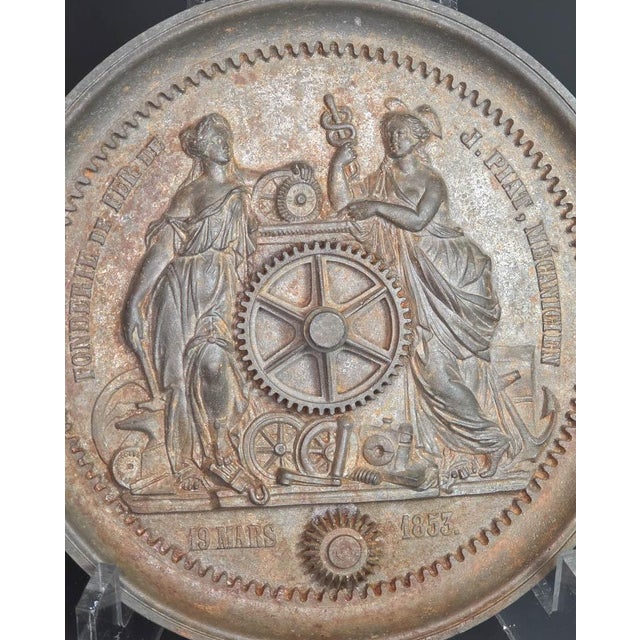
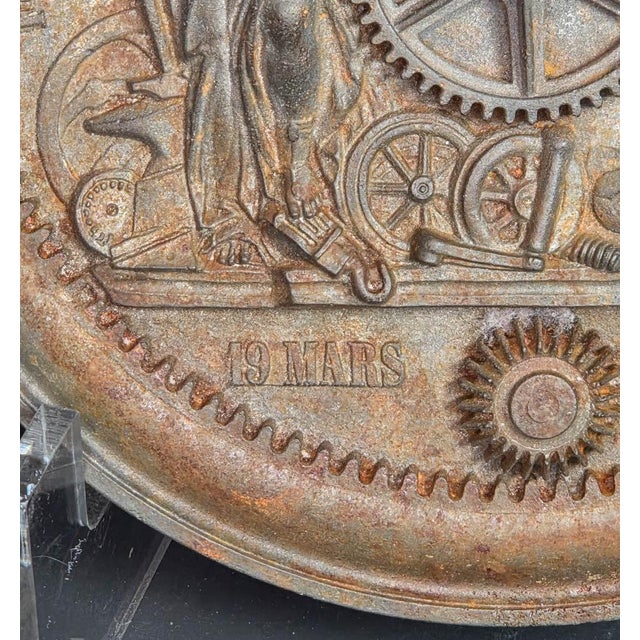
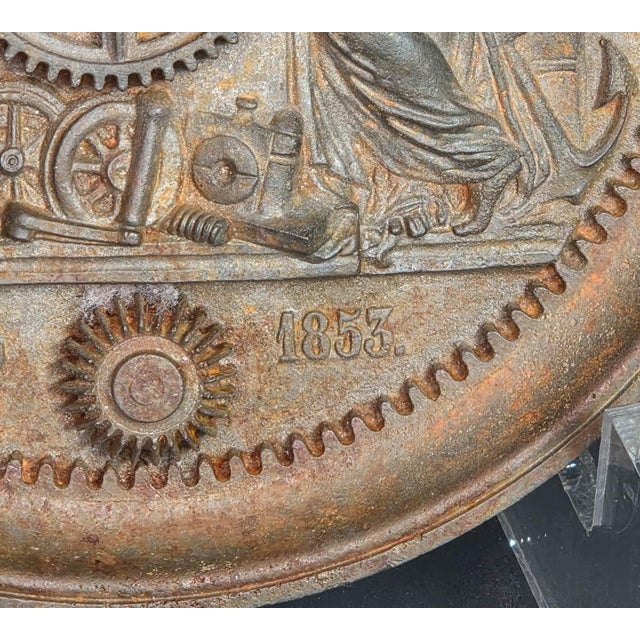
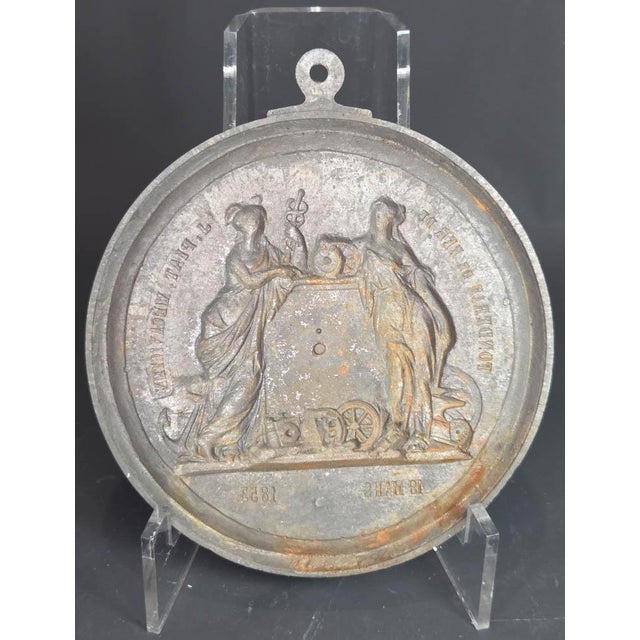
I’m selling a mid-1800's cast iron allegorical plaque shaped like a cog or moulded gear, dated March 19th 1853 and …
Read more
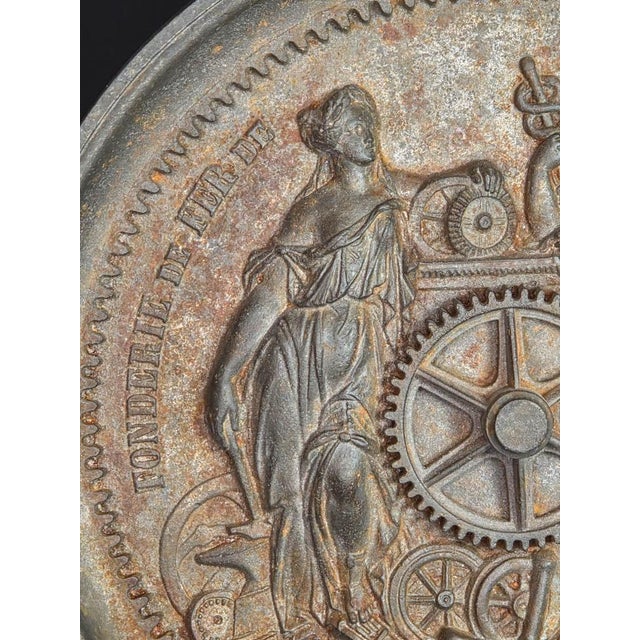
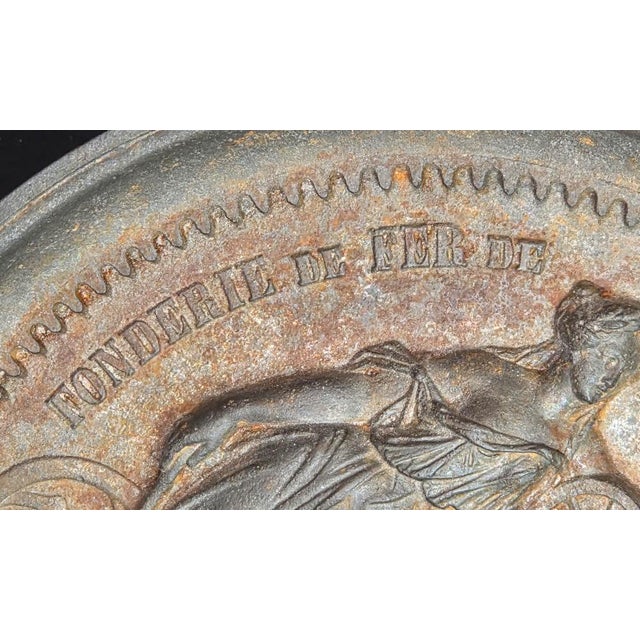
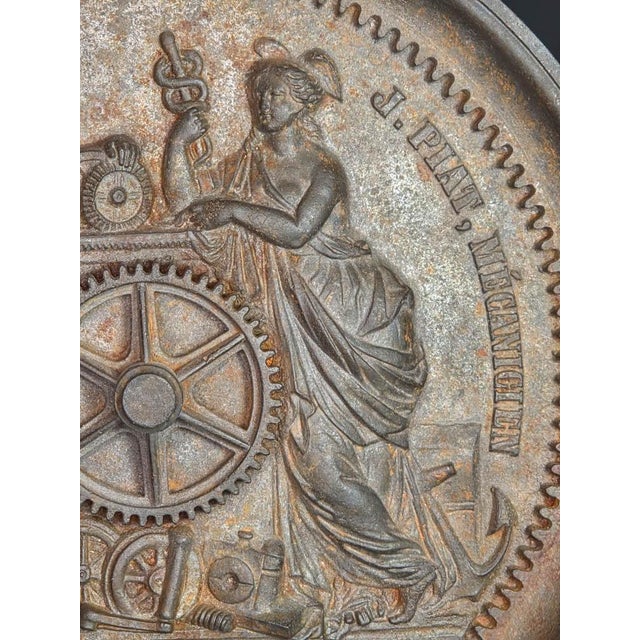
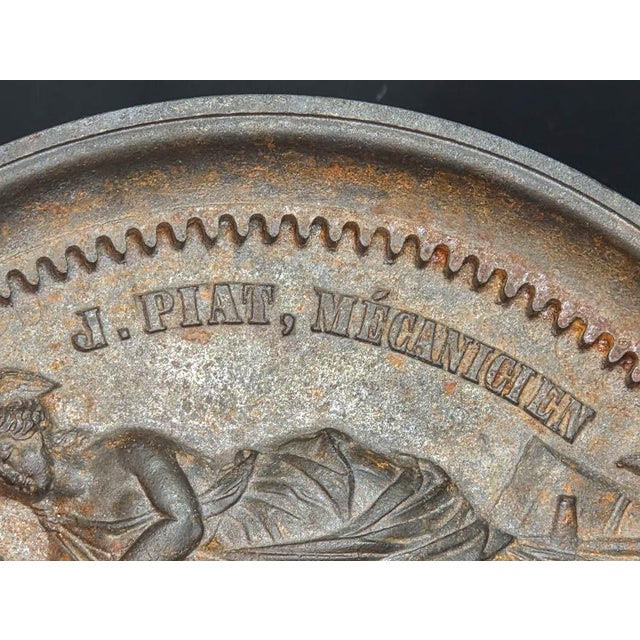
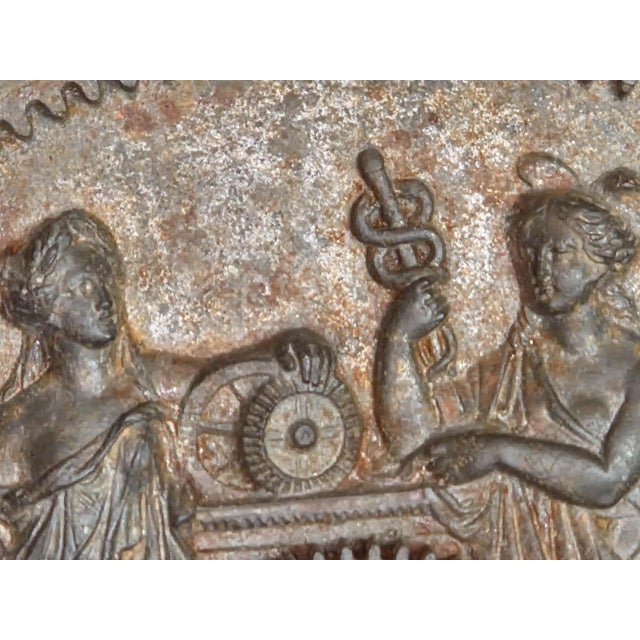
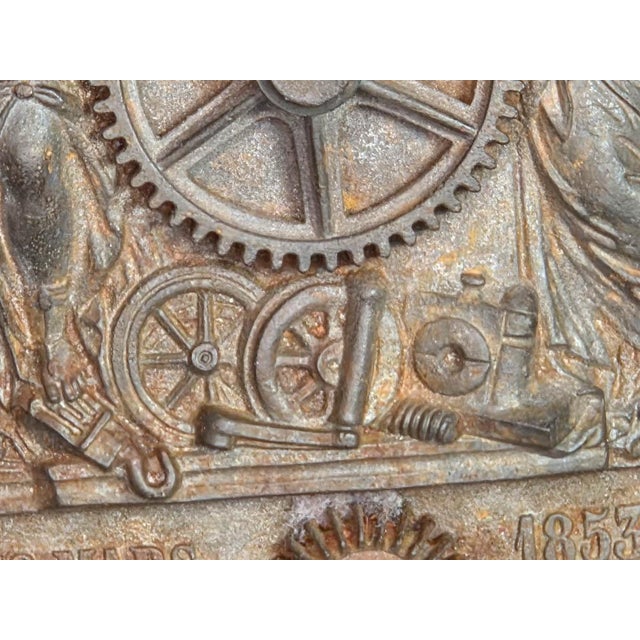
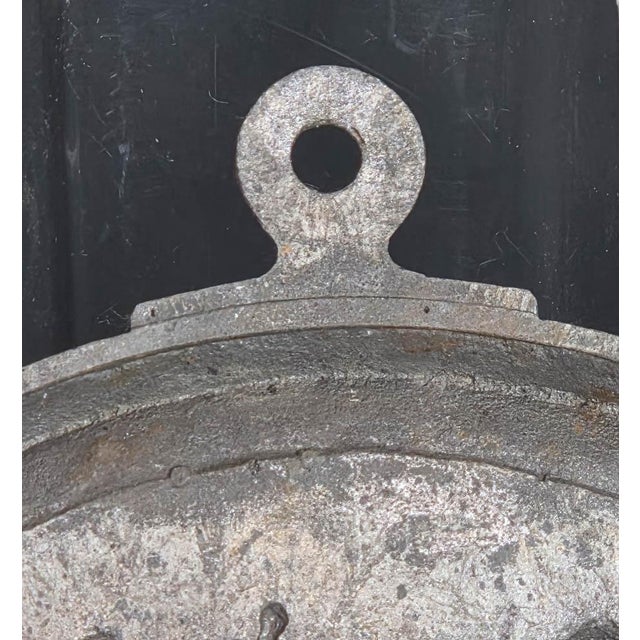
I’m selling a mid-1800's cast iron allegorical plaque shaped like a cog or moulded gear, dated March 19th 1853 and made by J. Piat’s Foundry, who was a mechanic (see close-ups of the text around the top edge). The text is in French and the center depicts two women clad in Roman or Grecian style robes and a plethora of objects like a Rod of Asclepius, multiple gears, an anchor, tools including a hammer, a coiled spring, a hook and a blacksmith’s anvil. There is an eyelet hook attached to the top for wall hanging.
Condition: minor surface rust, to be expected with age. Structurally sound and ready to hang or display.
Dimensions: about 8" diameter, not including the hook.
Pick-up at Yardley Antiques in Pennsburg PA 18073, or let Chairish handle shipping arrangements for you.
Thanks for looking,
Nessa, owner of Yardley Antiques
Information from online search:
“The history of allegorical plaques is rooted in the industrial boom of 19th-century France, specifically during the Golden Age of French decorative cast iron.
The Maker: J. Piot, Mechanician.
The inscription on your plaque identifies the foundry owner and engineer responsible for its creation. In 19th-century Europe, the term mécanicien referred not just to a vehicle repairer, but to a skilled mechanical engineer, machinist, or builder of industrial machinery. J. Piot operated a specialized iron foundry (fonderie de fer) that handled both utilitarian industrial machinery and artistic cast ironwork
Historical Context and Origin.
Smaller industrial workshops and foundries regularly commissioned or cast complex, high-relief allegorical plaques to display at World's Fairs (Expositions Universelles) or to hang in corporate offices. This showcased their technical precision, metallurgy skills, and artistic capabilities to prospective clients.
Meaning of the "Allegorical" Design.
In the 19th century, foundries did not just cast abstract patterns; they utilized classical iconography to tell a story: Roman or Greek deities (such as Vulcan, the god of the forge; Athena, representing wisdom and industry; or personifications of Progress, Commerce, and Science). The combination of classical figures with industrial tools (like cogs, anvils, or hammers) symbolized the triumph of human ingenuity, industry, and mechanical progress over raw nature.”
See less
- Dimensions
- 8ʺW × 1ʺD × 8ʺH
- Styles
- Industrial
- Period
- Mid 19th Century
- Country of Origin
- France
- Item Type
- Vintage, Antique or Pre-owned
- Materials
- Cast Iron
- Condition
- Good Condition, Original Condition Unaltered, Some Imperfections
- Color
- Slate Gray
- Condition Notes
- Minor surface rust, to be expected with age. Structurally sound and ready to hang or display. Minor surface rust, to be expected with age. Structurally sound and ready to hang or display. less
Questions about the item?
Returns & Cancellations
Return Policy - All sales are final 48 hours after delivery, unless otherwise specified in the description of the product.
Cancellation Policy - Prior to shipping or local pickup, buyers may cancel an order for up to 48 hours, unless otherwise specified.
Related Collections
- Nicolette Mayer Collection Signs
- Kenneth Ludwig Chicago Signs
- Medium-Density Fibreboard Signs
- Bottle Green Signs
- Neoclassical Signs
- Antique Steel Signs
- Burnt Orange Signs
- Lithograph Signs
- Street Signs
- Chinese Signs
- Coca-Cola Signs
- Restaurant Signs
- Antique Signs
- French Signs
- Industrial Signs
- Antique Wood Advertising Signs
- Signs in Los Angeles
- Mid-Century Modern Signs
- American Classical Signs