










Details
Description
GRAND TOUR MODEL OF THE PYTHIAN APOLLO BELVEDERE
Probably Italian, possibly French, circa 1860 to 1890
Unmarked
Patinated sand-cast bronze
…
Read more
GRAND TOUR MODEL OF THE PYTHIAN APOLLO BELVEDERE
Probably Italian, possibly French, circa 1860 to 1890
Unmarked
Patinated sand-cast bronze
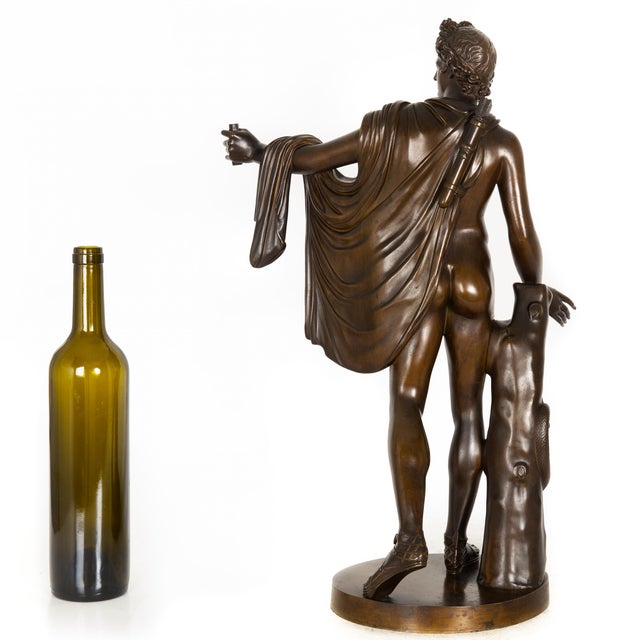
21 3/8" H x 13 1/4" W x 8" D
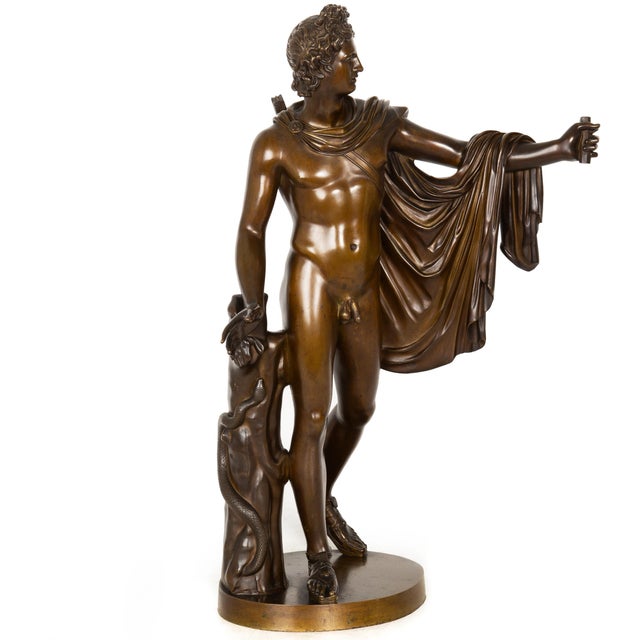
This bronze is a reduced cast after the celebrated Apollo Belvedere in the Vatican Museums, one of the most widely admired sculptures of antiquity from the Renaissance through the nineteenth century. The Vatican marble, now in the Museo Pio Clementino, is generally dated to the Hadrianic period, circa 130 to 140 A.D. Since around 1892, the sculpture has been frequently identified as being a copy of the long-lost Greek bronze statue of Apollo executed by Leochares in the fourth century B.C.
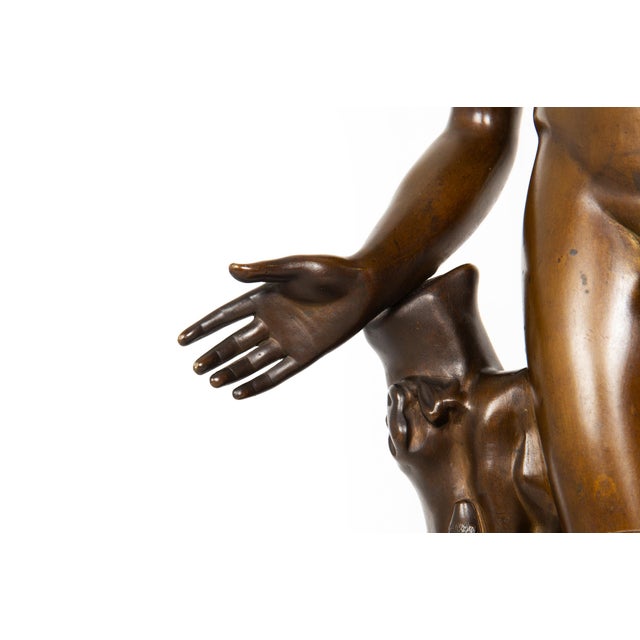
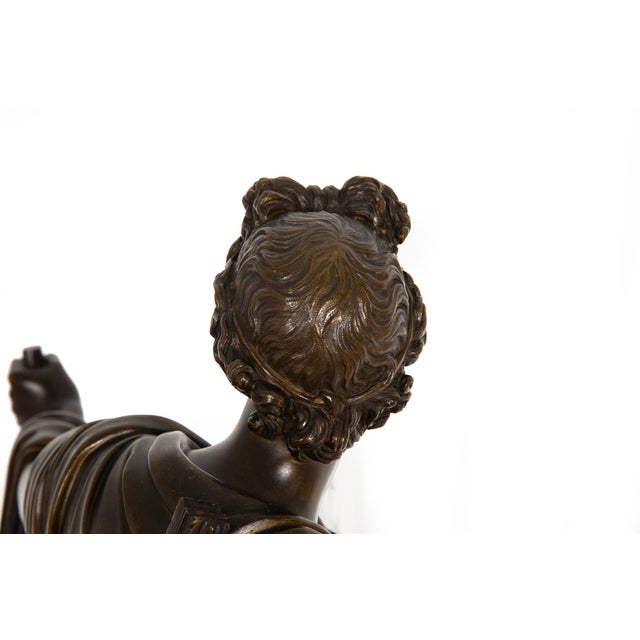
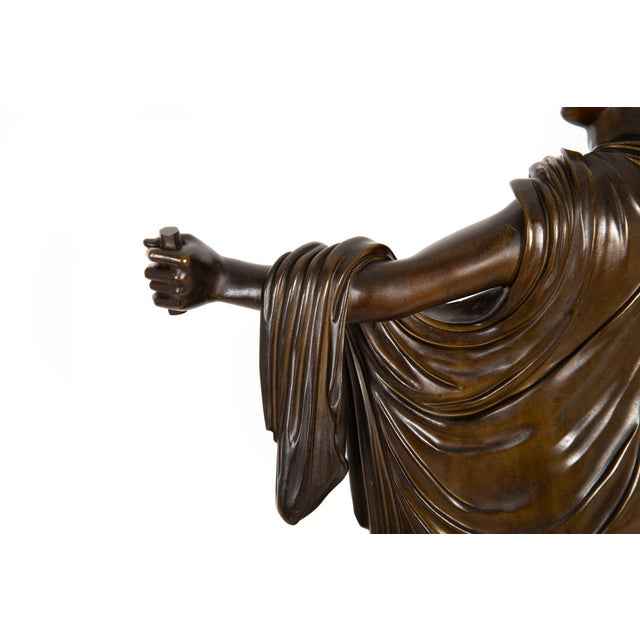
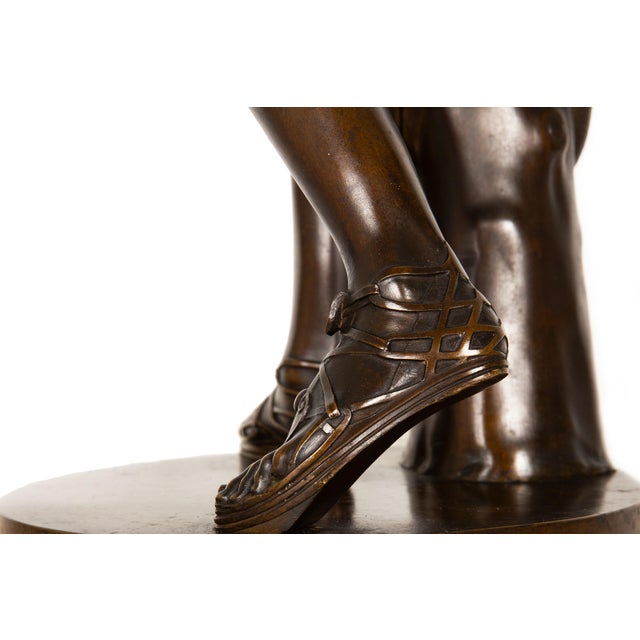
Apollo is shown as a youthful hunter, advancing with the body in motion, the head turned to the side and the left arm extended in a gesture that almost certainly raised a bow originally. The god wears a cloak drawn across the shoulder and arm, a baldric across the torso while his feet are strapped with thong sandals. A tree trunk supports the figure, touching his wrist and hip, while a serpent slithers up the trunk towards his open wrist.
The Apollo Belvedere was rediscovered in central Italy in the late fifteenth century and was probably in the collection of Cardinal Giuliano della Rovere, later Pope Julius II. It was moved to the Vatican in 1509 and installed in the Cortile del Belvedere in 1511, from which the sculpture takes its modern name. Its reputation made it one of the defining models of ideal male beauty in European art and a standard subject for bronze reductions in the nineteenth century. When the young American painter Benjamin West arrived in Rome in the summer of 1760, he stood in the Belvedere courtyard and upon seeing Apollo was said to exclaim "My God, how like it is to a young Mohawk warrior."
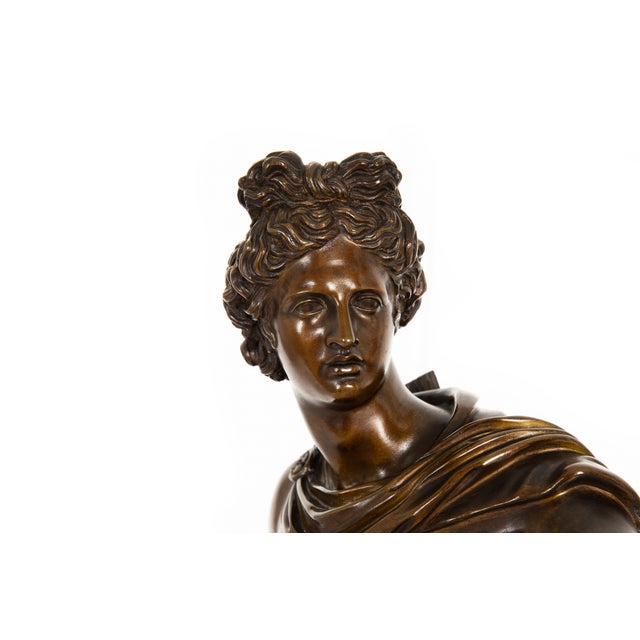
The present cast belongs to the Grand Tour era when the best art foundries produced reductions of the most important works of antiquity for discerning collectors and patrons. The cast features exquisite attention to detail, articulation of the scales of the snake, nails of the figure and chiseling and texturing to his hair to juxtapose perfectly smooth and chased flesh. The patination is together chemical and lacquer enhanced, much of the surface appearing to be quite early and likely original. Careful attention has been shown to the details, while the surface of the flesh models itself after the soft translucent bokeh of white marble in the original, an effect that subtly removes the figure from reality.
For a lengthy discussion of the model of antiquity, see Taste and the Antique, Haskell & Penny, 1981, p. 148-151.
Condition: Discoloration and staining to patination, as expected. A very fine presentation. Typical seam visibility in the joints between the individual elements of the casting. Ready to place.
ref. GRAND TOUR MODEL OF THE PYTHIAN APOLLO BELVEDERE
Probably Italian, possibly French, circa 1860 to 1890
Unmarked
Patinated sand-cast bronze
21 3/8" H x 13 1/4" W x 8" D
This bronze is a reduced cast after the celebrated Apollo Belvedere in the Vatican Museums, one of the most widely admired sculptures of antiquity from the Renaissance through the nineteenth century. The Vatican marble, now in the Museo Pio Clementino, is generally dated to the Hadrianic period, circa 130 to 140 A.D. Since around 1892, the sculpture has been frequently identified as being a copy of the long-lost Greek bronze statue of Apollo executed by Leochares in the fourth century B.C.
Apollo is shown as a youthful hunter, advancing with the body in motion, the head turned to the side and the left arm extended in a gesture that almost certainly raised a bow originally. The god wears a cloak drawn across the shoulder and arm, a baldric across the torso while his feet are strapped with thong sandals. A tree trunk supports the figure, touching his wrist and hip, while a serpent slithers up the trunk towards his open wrist.
The Apollo Belvedere was rediscovered in central Italy in the late fifteenth century and was probably in the collection of Cardinal Giuliano della Rovere, later Pope Julius II. It was moved to the Vatican in 1509 and installed in the Cortile del Belvedere in 1511, from which the sculpture takes its modern name. Its reputation made it one of the defining models of ideal male beauty in European art and a standard subject for bronze reductions in the nineteenth century. When the young American painter Benjamin West arrived in Rome in the summer of 1760, he stood in the Belvedere courtyard and upon seeing Apollo was said to exclaim "My God, how like it is to a young Mohawk warrior."
The present cast belongs to the Grand Tour era when the best art foundries produced reductions of the most important works of antiquity for discerning collectors and patrons. The cast features exquisite attention to detail, articulation of the scales of the snake, nails of the figure and chiseling and texturing to his hair to juxtapose perfectly smooth and chased flesh. The patination is together chemical and lacquer enhanced, much of the surface appearing to be quite early and likely original. Careful attention has been shown to the details, while the surface of the flesh models itself after the soft translucent bokeh of white marble in the original, an effect that subtly removes the figure from reality.
For a lengthy discussion of the model of antiquity, see Taste and the Antique, Haskell & Penny, 1981, p. 148-151.
Condition: Discoloration and staining to patination, as expected. A very fine presentation. Typical seam visibility in the joints between the individual elements of the casting. Ready to place.
ref. 603PRP31X
See less
- Dimensions
- 13.25ʺW × 8ʺD × 21.38ʺH
- Styles
- Grand Tour
- Art Subjects
- Figure
- Period
- 19th Century
- Item Type
- Vintage, Antique or Pre-owned
- Materials
- Bronze
- Condition
- Good Condition, Original Condition Unaltered, Some Imperfections
- Color
- Brown
- Condition Notes
- Discoloration and staining to patination, as expected. A very fine presentation. Typical seam visibility in the joints between the individual … moreDiscoloration and staining to patination, as expected. A very fine presentation. Typical seam visibility in the joints between the individual elements of the casting. Ready to place. Discoloration and staining to patination, as expected. A very fine presentation. Typical seam visibility in the joints between the individual elements of the casting. Ready to place. less
Questions about the item?
Returns & Cancellations
Return Policy - All sales are final 48 hours after delivery, unless otherwise specified in the description of the product.
Cancellation Policy - Prior to shipping or local pickup, buyers may cancel an order for up to 48 hours, unless otherwise specified.
Related Collections
- Straw Sculpture
- Louis XIV Sculpture
- Fernando Botero Sculpture
- Constantin Brancusi Sculpture
- Roman Bronze Works Sculpture
- Worlds Away Sculpture
- Flavio Poli Sculpture
- Far Pavilions Sculpture
- Georgian Sculpture
- Maison Jansen Sculpture
- Bakelite Sculpture
- Magenta Sculpture
- Antique Iron Finish Sculpture
- Gold-Plate Sculpture
- Medium-Density Fibreboard Sculpture
- Sculpture in Columbus
- Polished Brass Finish Sculpture
- Barovier and Toso Sculpture
- René Lalique Sculpture
- Albert Ernest Carrier-Belleuse Sculpture
- Sculpture in Panama City, FL
- Gourd Sculpture
- Recycled/Repurposed Sculpture
- Geode Sculpture
- Photography Sculpture