



Details
Description
This sculpture is a profound realisation of the "Sick Man," one of the pivotal Four Sights from the Buddhacharita, the …
Read more
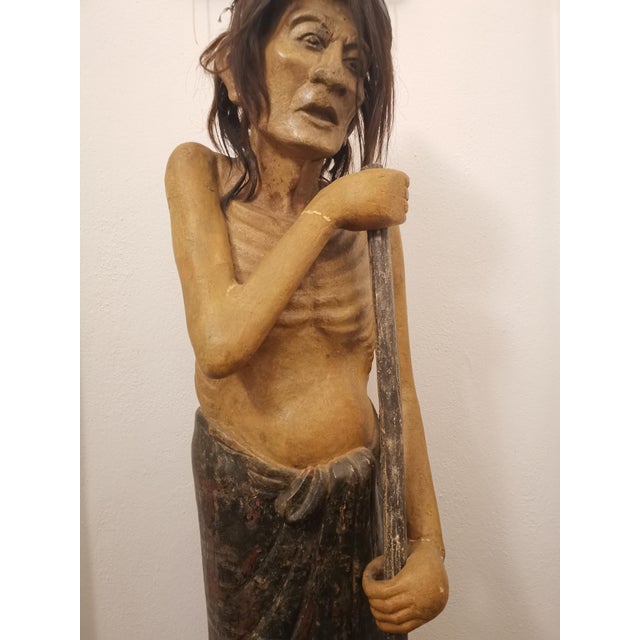
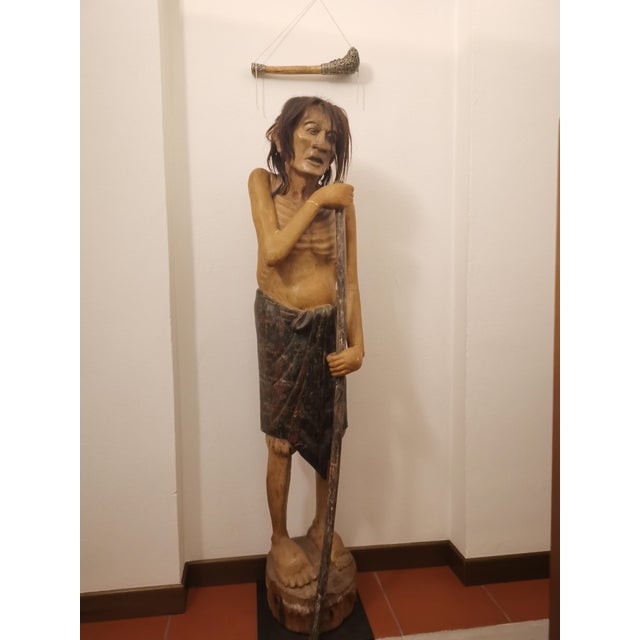
This sculpture is a profound realisation of the "Sick Man," one of the pivotal Four Sights from the Buddhacharita, the biography of Prince Siddhartha. In this narrative, the young prince, shielded from the world's harshness by his father, ventures outside his palace walls and encounters four figures - an old man, a sick man, a corpse, and an ascetic monk. These encounters shattered his illusions of permanent luxury, leading him to abandon his crown to seek an end to human suffering. This specific figure, originating from Myanmar (Burma) in the 19th century, serves as a visceral, pedagogical tool designed to provoke the same realisation of Dukkha (suffering) in the observer.
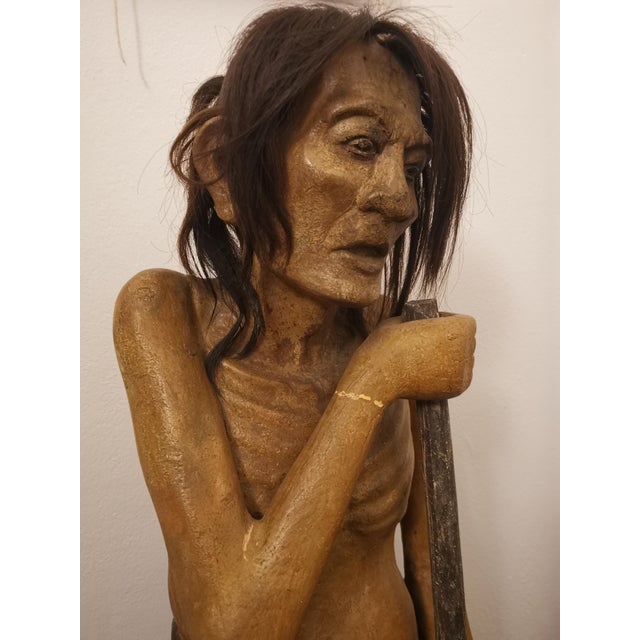
Standing approximately 135 cm high, this life-sized carving is a masterwork of sacred realism. Unlike the Old Man figure of the same legend, who represents the inevitable decay of time, the Sick Man is a study in acute physical distress. The sculptor has employed a dramatic, skeletal aesthetic to convey the toll of illness.
The ribs are sharply delineated against a sunken chest, creating a rhythmic, skeletal pattern that emphasises the loss of muscle mass. Interestingly, the figure possesses a slight paunch, a common iconographic choice in Burmese art to contrast the wasting of the limbs with a distended abdomen, often associated with specific ailments.
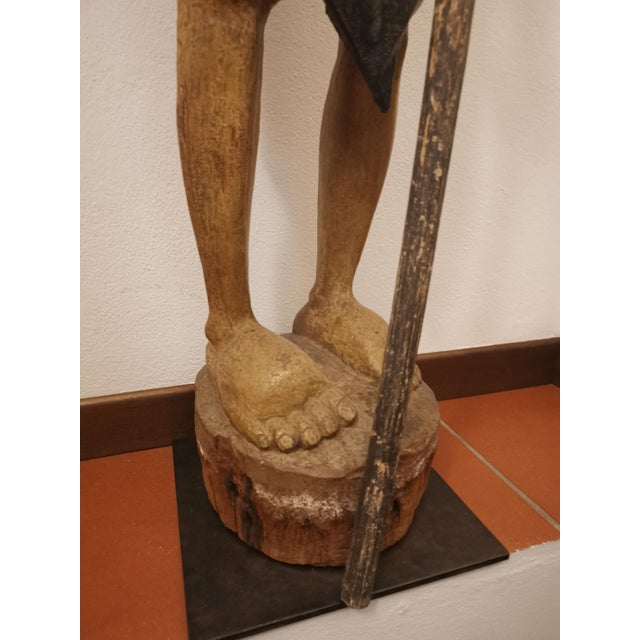
Below the simple, dark-patterned waist cloth, the sculpture reveals large, painful-looking knees. The artist has captured the structural fragility of the joints, making the weight-bearing act of standing appear arduous.
The gaunt face, with its deep-set eyes and hollow cheeks, reflects a soul weary from affliction. The inclusion of sparse, real hair—a rare and haunting addition—provides a tactile connection to the living world, making the representation of illness feel uncomfortably personal rather than merely symbolic.
The figure’s hunched back and his heavy reliance on a tall, rugged cane communicate a loss of autonomy. While the Old Man in the same iconography might carry the umbrella of a wanderer, the Sick Man carries only his own weight. His upward-reaching gaze and slightly parted mouth suggest a silent plea or a gasp for air, capturing the reality of pain that ultimately drove Siddhartha toward Enlightenment.
The materiality of the piece adds to its spiritual weight. Carved from Pyinkado wood and mounted on a metal base, the sculpture has achieved a deep, honeyed patina over the centuries.
For a devotee, looking upon this Sick Man was not merely an aesthetic experience; it was a meditative exercise. By confronting the frailty of the wooden body, the viewer was reminded of the frailty of their own, encouraging a path toward the spiritual liberation the Buddha eventually found. This figure remains a rare, high-quality survivor of a tradition that transformed the grit of human suffering into the grace of religious art.
See less
Returns & Cancellations
Return Policy - All sales are final 48 hours after delivery, unless otherwise specified in the description of the product.
Cancellation Policy - Prior to shipping or local pickup, buyers may cancel an order for up to 48 hours, unless otherwise specified.
Related Collections
- Lime Sculpture
- Mathurin Moreau Sculpture
- Roman Bronze Works Sculpture
- Loredano Rosin Sculpture
- Straw Sculpture
- Oil-Rubbed Bronze Finish Sculpture
- Albert Ernest Carrier-Belleuse Sculpture
- Far Pavilions Sculpture
- Bakelite Sculpture
- Polycarbonate Sculpture
- Constantin Brancusi Sculpture
- Maison Jansen Sculpture
- Peter Shire Sculpture
- Chaim Gross Sculpture
- Boris Lovet-Lorski Sculpture
- David Palombo Sculpture
- Gourd Sculpture
- Recycled/Repurposed Sculpture
- Fernando Botero Sculpture
- Worlds Away Sculpture
- Sculpture in Panama City, FL
- Georgian Sculpture
- Austin Productions Sculpture
- Mid-Century Modern Sculpture
- Brutalist Sculpture