

Details
Description
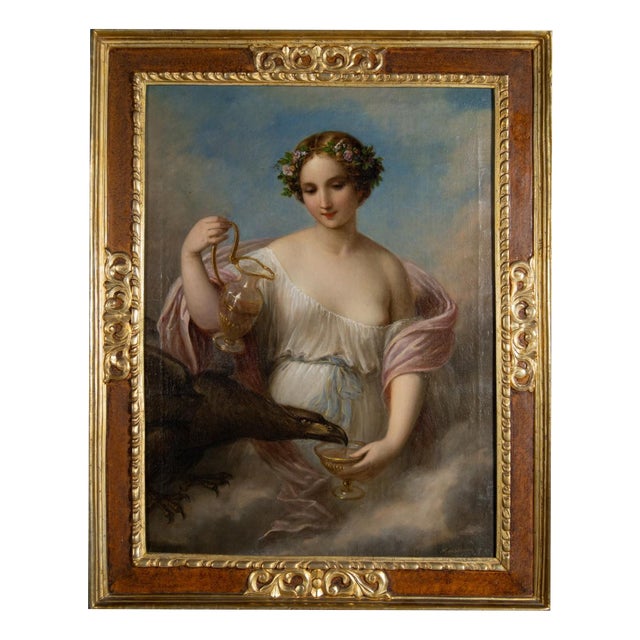
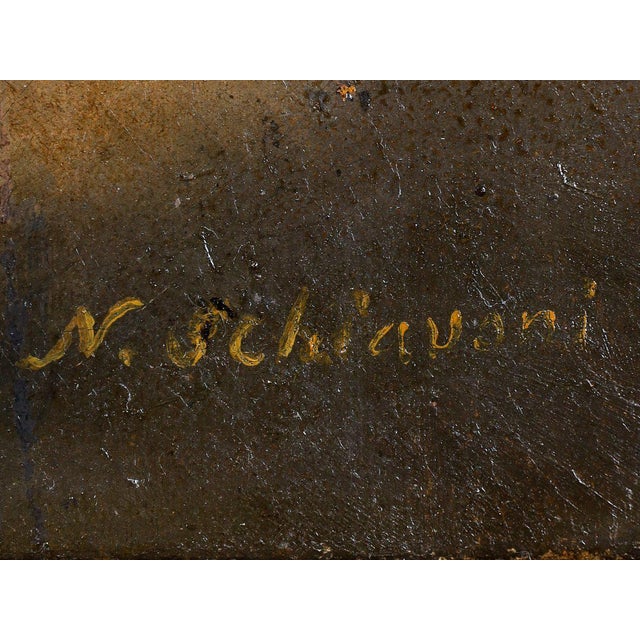
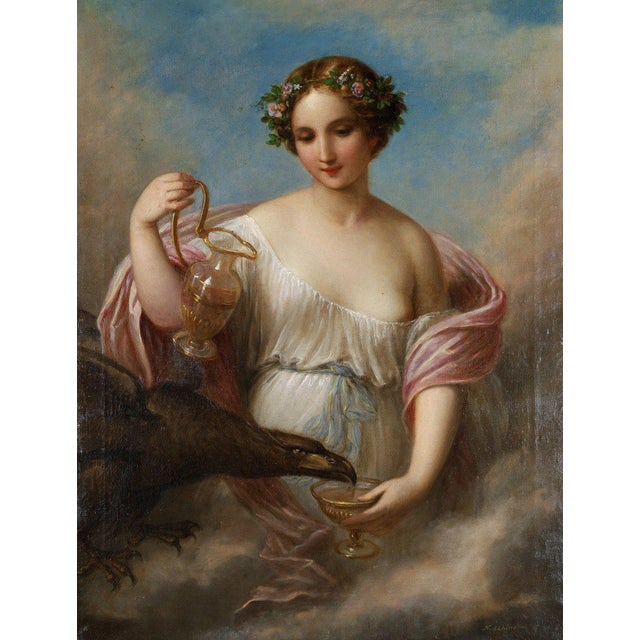
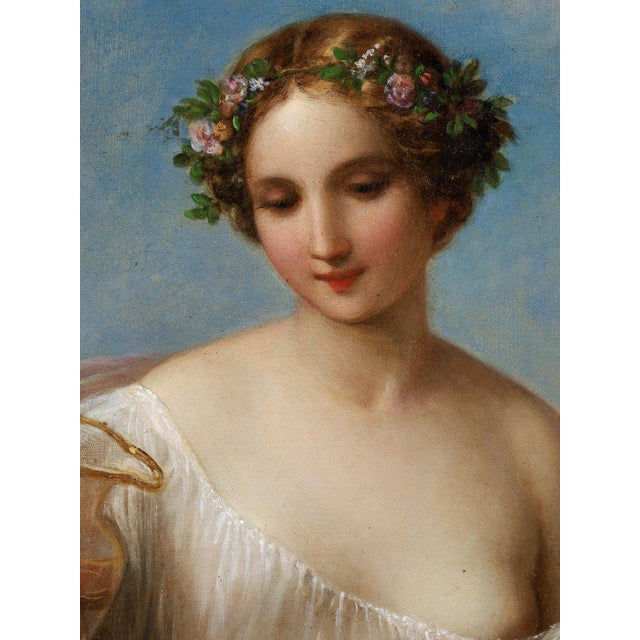
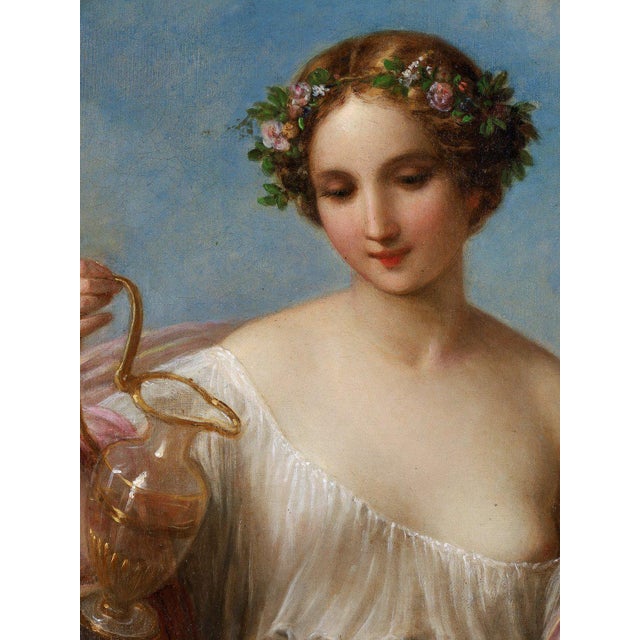
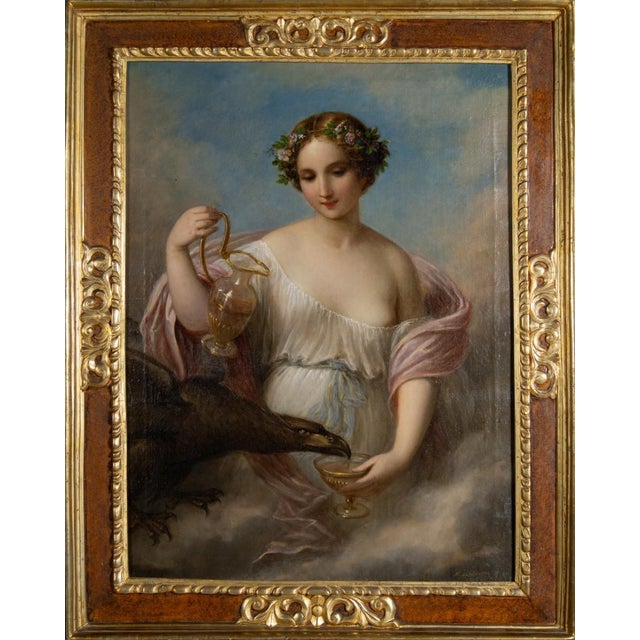
The beautiful painting "Ebe Quenching Jupiter's Drink in the Form of an Eagle" is one of the most emblematic examples … Read more The beautiful painting "Ebe Quenching Jupiter's Drink in the Form of an Eagle" is one of the most emblematic examples of the art of Natale Schiavoni, a prominent artist of the first half of the 19th century, a period in which the influences of Canova's Neoclassicism began to merge with a softer, more atmospheric sensibility, a prelude to the taste for Romanticism. Natale Schiavoni (Chioggia 1777 - Venice 1858), celebrated by his contemporaries as the "painter of graces," expressed in this canvas a profound understanding of the aesthetic canons that dominated European courts, from Vienna to Milan. The painting presents itself as an ethereal vision: the Goddess of Youth is portrayed in an elegant pose, emerging from a background of soft clouds that recall the influence of the great masters of 16th-century Veneto. She wears a classically styled white robe that falls in flowing, transparent folds, depicted with a mastery that reveals the artist's ability to render the material textures of fabrics through skillful brushstrokes. The goddess's right arm is raised in a graceful gesture as she holds a crystal ampoule, whose transparency and luminous reflections are masterfully rendered. With her left hand, she offers a golden bowl to the eagle, which, with partially spread wings and its brown plumage depicted with naturalistic meticulousness, bends to drink the ambrosia, divine nectar. The light of the scene seems to emanate from the goddess's very body, accentuating her divine and ideal nature. The iconographic subject chosen by Schiavoni is among the most famous in classical mythology and enjoyed uninterrupted popularity from the Renaissance until the 19th century: Ebe, daughter of Zeus and Hera, is the personification of Youth, and her primary role in Olympus was as cupbearer to the gods, charged with distributing the nectar and ambrosia that granted immortality to the inhabitants of the heavens. In the painting, the act of quenching the eagle's thirst takes on a profoundly symbolic meaning: the eagle is not only an attribute of Jupiter, but the god himself, receiving vital nourishment from the personified Youth. Beyond the mythological narrative, the painting is full of allegorical meanings that reflect the culture of the Restoration: in a Europe struggling to regain order after the storms of Napoleon, the figure of Hebe became the symbol of the return to purity and stability. During this period, the allegorical portrait in the guise of Hebe became a real fashion among noblewomen, who loved to be identified with the goddess to ennoble their image through the values of grace and purity, and Natale Schiavoni masterfully intercepted this trend throughout his European career. See less
- Dimensions
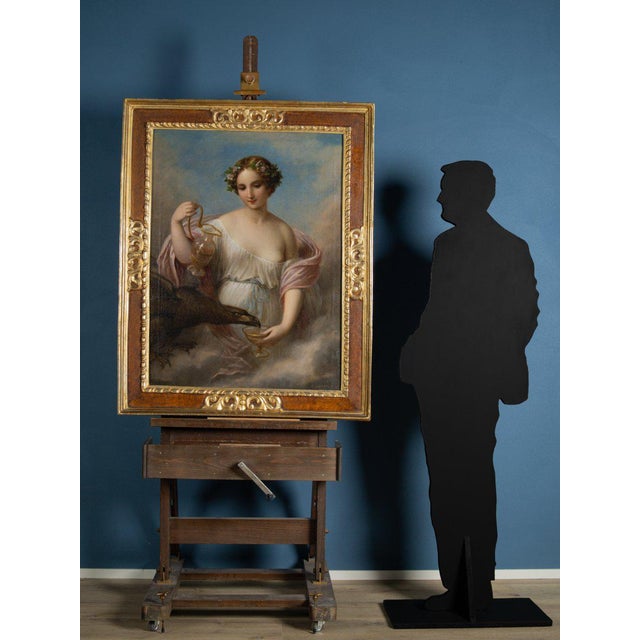
- 31.5ʺW × 2.36ʺD × 40.16ʺH
- Art Subjects
- Figure
- Period
- 19th Century
- Country of Origin
- Italy
- Item Type
- Vintage, Antique or Pre-owned
- Condition
- Good Condition, Unknown, Some Imperfections
- Color
- Brown
- Condition Notes
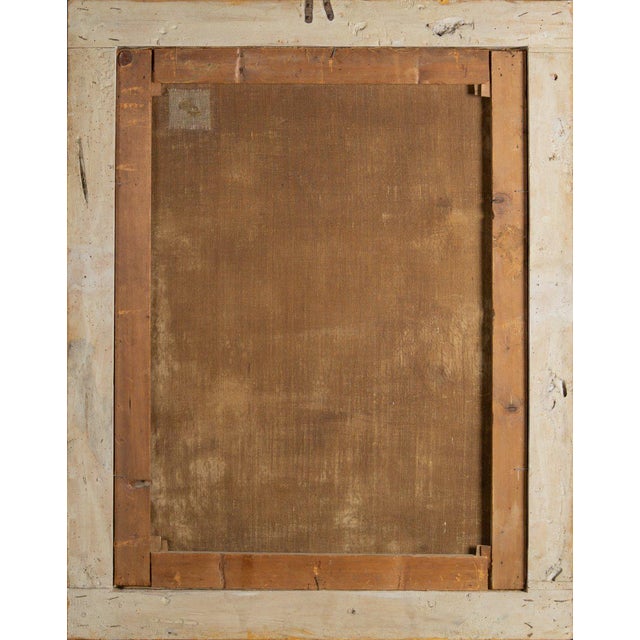
- Patina Consistent with Age and Use Patina Consistent with Age and Use less
Returns & Cancellations
Return Policy - All sales are final 48 hours after delivery, unless otherwise specified in the description of the product.
Cancellation Policy - Prior to shipping or local pickup, buyers may cancel an order for up to 48 hours, unless otherwise specified.
Related Collections
- Photorealism Canvas Paintings
- Ed Ruscha Paintings
- Ralph Lauren Paintings
- Photorealism Paintings in New York
- Richard Serra Paintings
- Louise Nevelson Paintings
- Silk Velvet Paintings
- Herman Miller Paintings
- BDDW Paintings
- Jean-Paul Barray Paintings
- Johannes Andersen Paintings
- Peter Behrens Paintings
- Karl-Erik Ekselius Paintings
- Carl-Axel Acking Paintings
- Joseph Stella Paintings
- Raphael Paintings
- Pedro Friedeberg Paintings
- Piet Hein Eek Paintings
- James McCray Paintings
- Milton Avery Paintings
- Hans Andersen Paintings
- Photorealism Paintings in Los Angeles
- Leroy Neiman Paintings
- Jaanika Peerna Paintings
- Black Photorealism Paintings