

Details
Description
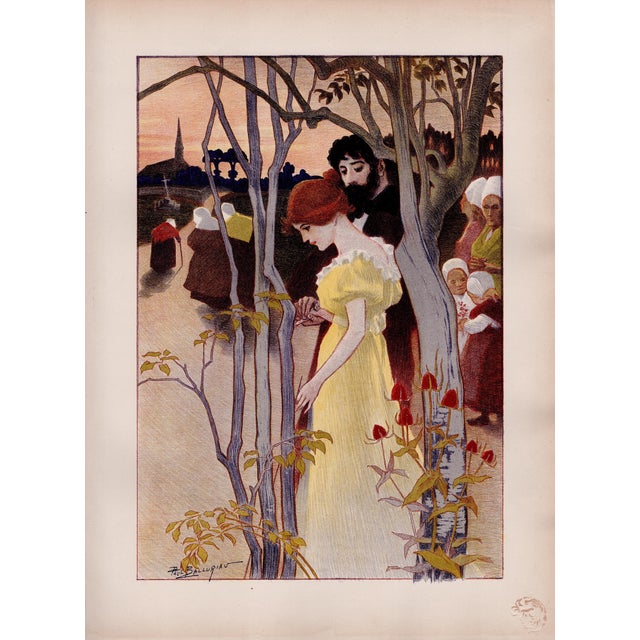
Paul balluriau (1860-1917)
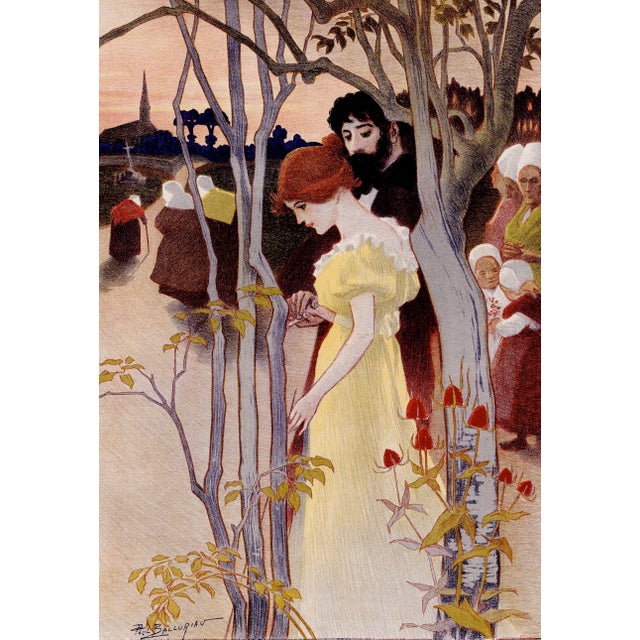
crépuscule
(twilight)
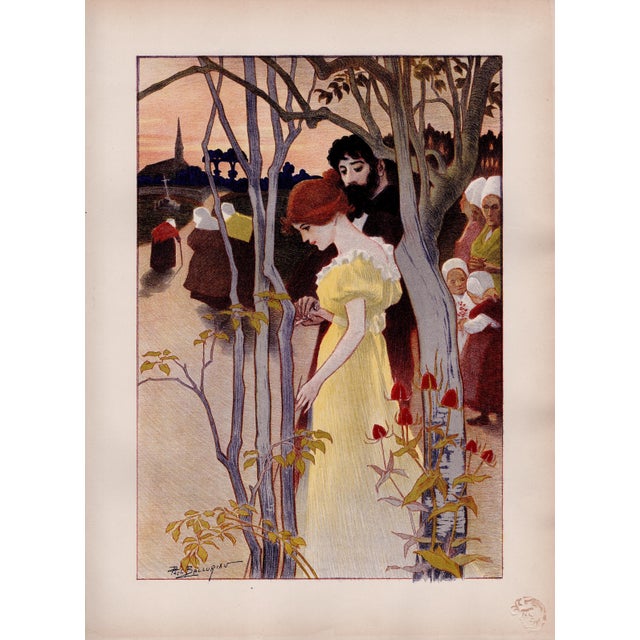
original lithograph from the glorious portfolio "l'estampe moderne", issue #3 (july 1897)
on wove paper
…
Read more
Paul balluriau (1860-1917)
crépuscule
(twilight)
original lithograph from the glorious portfolio "l'estampe moderne", issue #3 (july 1897)
on wove paper
year: 1897
size (sheet): 405 x 305 mm
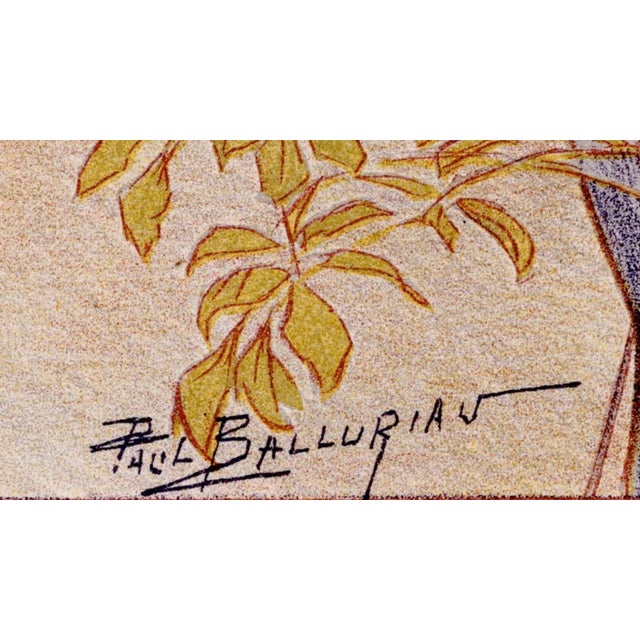
signed on the plate "paul balluriau", lower left
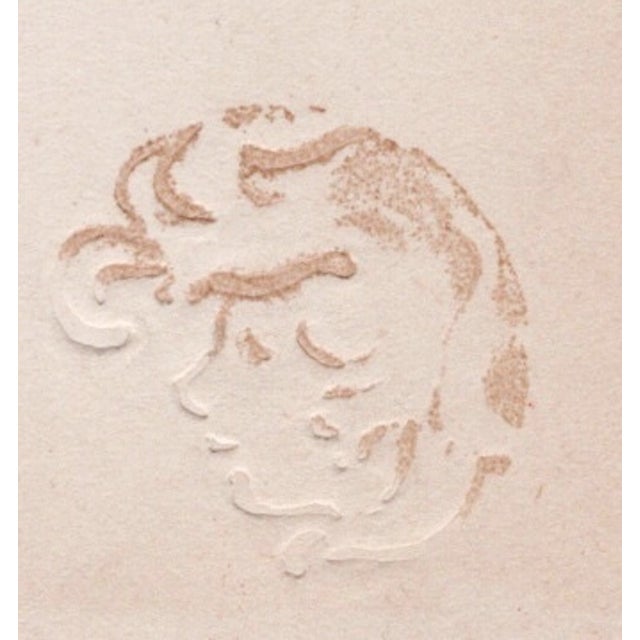
blind stamp of the publisher, lower right
excellent condition: minor signs of age and handling
full margins (not cropped, not trimmed)
this lithograph is in the collection of several important museums, including the museum of modern art (moma) in new york.
___
about the collection (l'estampe moderne)
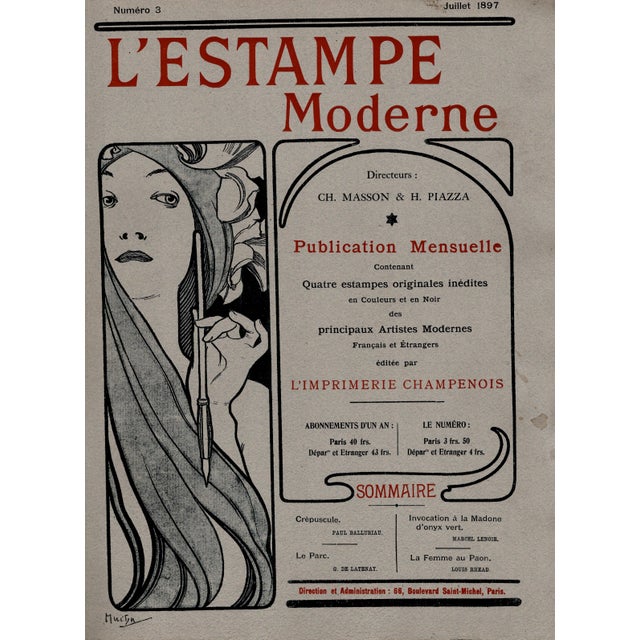
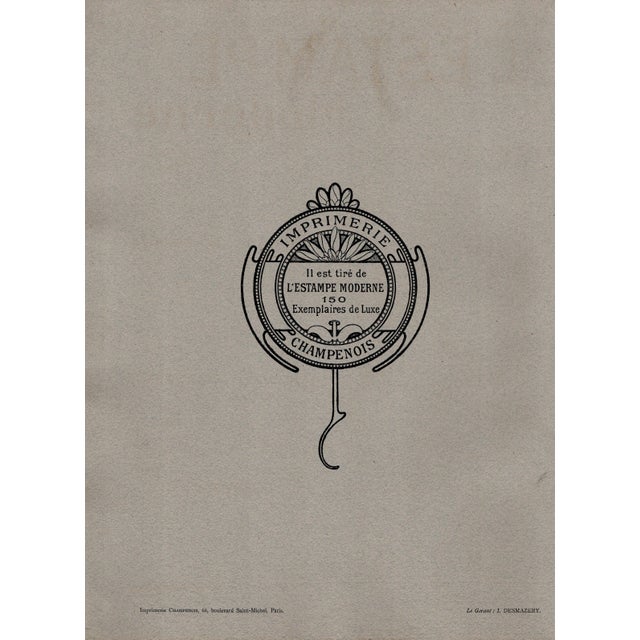
l'estampe moderne appeared in 1897-1899 as a series of 24 monthly fascicles, each containing 4 original lithographs, printed by parisian imprimerie champenois. Many accomplished european art nouveau painters contributed works to this publication, which contained only original prints invented and produced especially for this collection. The publication was edited by charles masson and h. Piazza. Each issue came in a paper cover bearing an original lithograph by alphonse mucha.
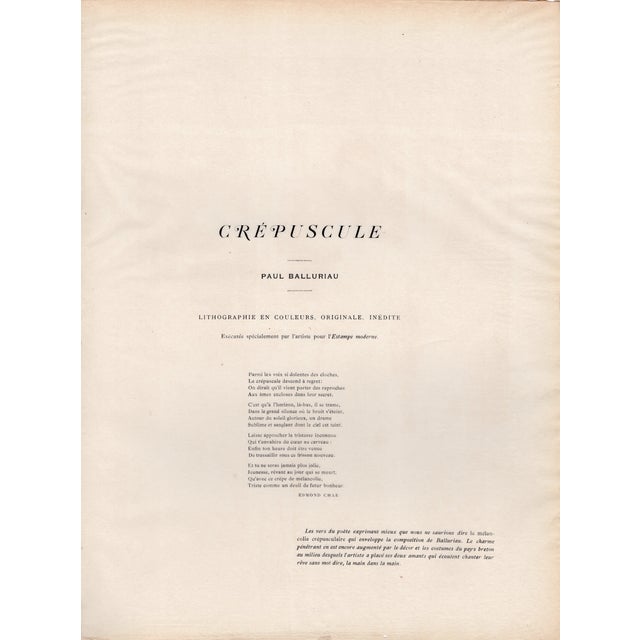
each lithograph was accompanied by a tissue containing the details (title of the artwork, name of the artist, etc.) and a short text by a well-known author who inspired the artist.
___
the artist
paul balluriau (1860–1917) was a prominent french illustrator and painter who became a leading figure of the belle époque's vibrant graphic arts scene. Best known for his contributions to iconic satirical journals such as le rire and gil blas illustré, his work captured the essence of parisian street life and the social nuances of the fin de siècle. His style, often categorized under art nouveau, utilized bold outlines and a sophisticated use of flat color reminiscent of japanese woodblock prints. Balluriau’s art frequently focused on the human condition, ranging from lighthearted caricatures to poignant, atmospheric scenes of everyday intimacy.
today, his works are preserved in major institutions, including: musée d'orsay, paris; the museum of modern art (moma), new york; the metropolitan museum of art, new york; musée carnavalet, paris; the victoria and albert museum, london.
___
from the text on the tissue paper by edmond char:
"parmi les voix si dolentes des cloches,
le crépuscule descend à regret:
on dirait qu'il vient porter des reproches
aux âmes encloses dans leur secret.
c'est qu'à l'horizon, là-bas, il se trame, dans le grand silence où le bruit s'éteint, autour du soleil glorieux, un drame
sublime et sanglant dont le ciel est teint.
laisse approcher la tristesse inconnue
qui t'envahira du cœur au cerveau :
enfin ton heure doit être venue
de tressaillir sous ce frisson nouveau.
et tu ne seras jamais plus jolie,
jeunesse, rêvant au jour qui se meurt,
qu'avec ce crêpe de mélancolie,
triste comme un deuil de futur bonheur.
edmond char
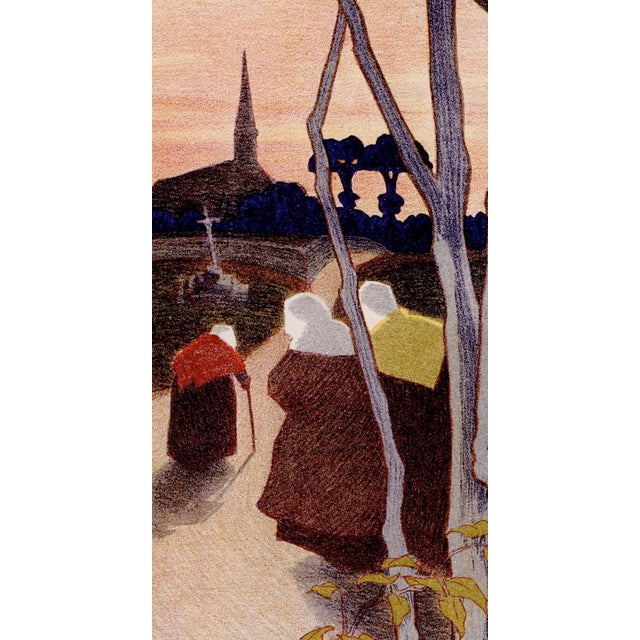
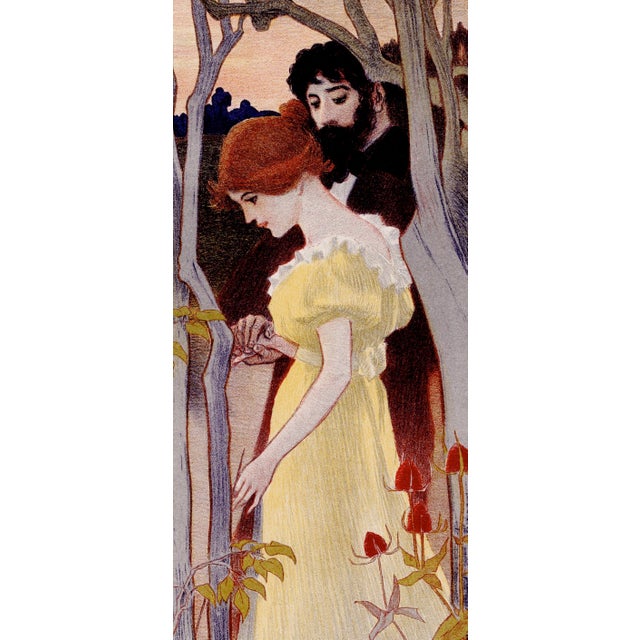
les vers du poète expriment mieux que nous ne saurions dire la mélancolie crépusculaire qui enveloppe la composition de balluriau. Le charme pénétrant en est encore augmenté par le décor et les costumes du pays breton au milieu desquels l'artiste a placé ses deux amants qui écoutent chanter leur rêve sans mot dire, la main dans la main."
english translation:
among the dolent voices of the bells,
the twilight descends with regret:
it seems to come to bring reproaches
to souls enclosed within their secret.
for on the horizon, down there, a drama unfolds,
in the great silence where noise is extinguished,
around the glorious sun,
sublime and bloody, with which the sky is stained.
let the unknown sadness approach
that will invade you from heart to brain:
at last your hour must have come
to tremble under this new shiver.
and you will never be more beautiful,
youth, dreaming of the dying day,
than with this veil of melancholy,
sad as a mourning for future happiness.
edmond char
the poet's verses express better than we could say the twilight melancholy that envelops balluriau’s composition. The penetrating charm is further heightened by the scenery and costumes of the breton countryside, in the midst of which the artist has placed his two lovers, who listen to their dream singing without saying a word, hand in hand.
___
important:
. The listing is for the original print, in the above mentioned excellent condition.
. The original tissue paper introduction will be given to the buyer as a gift
. The cover by mucha and the edition (back of the cover) are shown as a reference and proof of authenticity and edition this piece has an attribution mark,
i am sure that it is completely authentic and take full responsibility for any authenticity
issues arising from misattribution
See less
- Dimensions
- 11.81ʺW × 15.75ʺH
- Art Subjects
- Nude
- Period
- Late 19th Century
- Country of Origin
- France
- Item Type
- Vintage, Antique or Pre-owned
- Materials
- Paper
- Condition
- Good Condition, Original Condition Unaltered, Some Imperfections
- Color
Returns & Cancellations
Return Policy - All sales are final 48 hours after delivery, unless otherwise specified in the description of the product.
Cancellation Policy - Prior to shipping or local pickup, buyers may cancel an order for up to 48 hours, unless otherwise specified.
Related Collections
- Patrick Nagel Reproduction Prints
- Reproduction Prints in Panama City, FL
- Qing Reproduction Prints
- William Hogarth Reproduction Prints
- Classical Greek Reproduction Prints
- Monotype Reproduction Prints
- Sol LeWitt Reproduction Prints
- Utagawa Kunisada (Toyokuni Iii) Reproduction Prints
- Reproduction Prints in Mobile
- William Gropper Reproduction Prints
- Ethan Allen Reproduction Prints
- Paule Marrot Reproduction Prints