

Details
Description
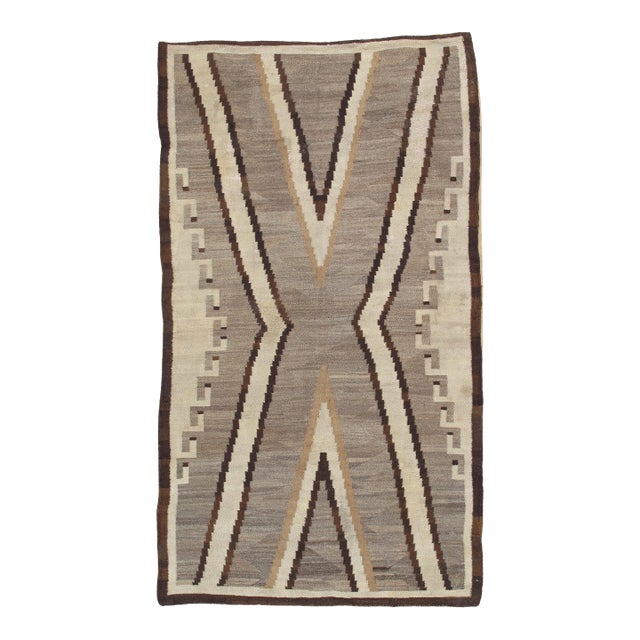
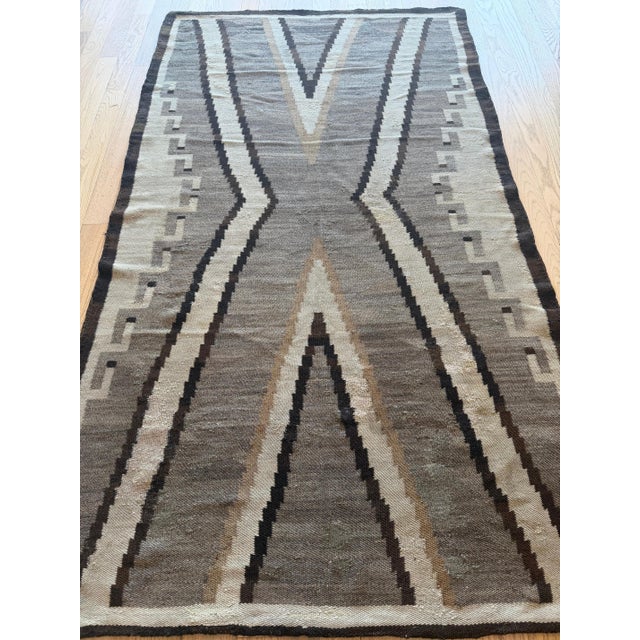
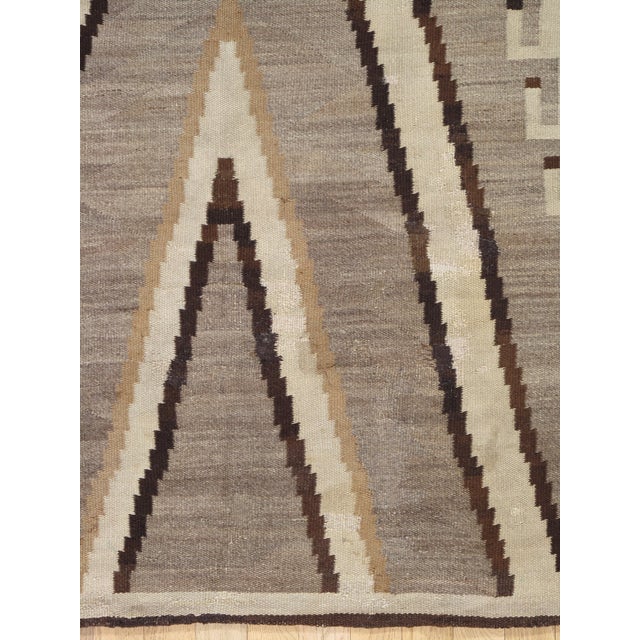
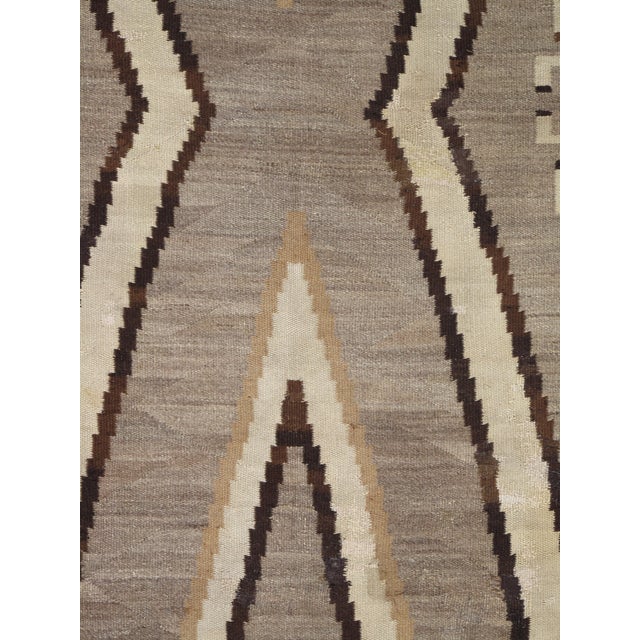
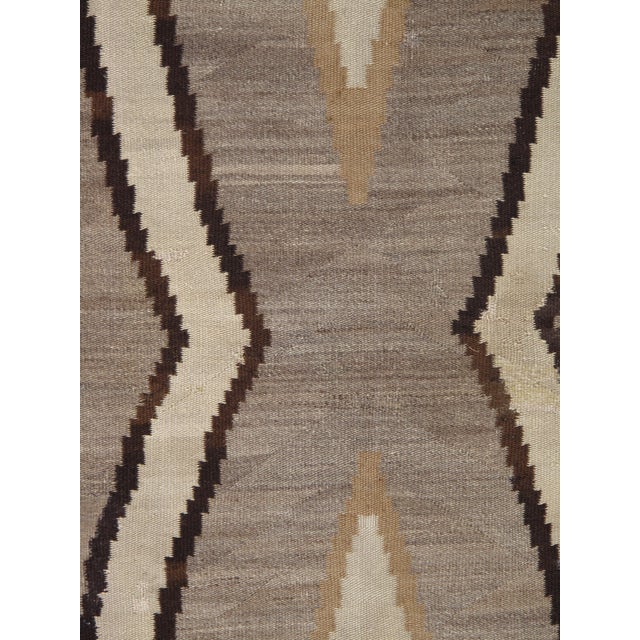
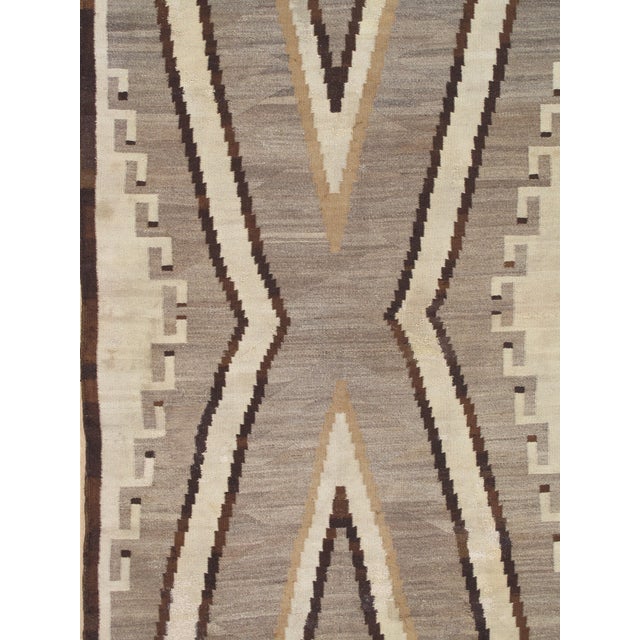
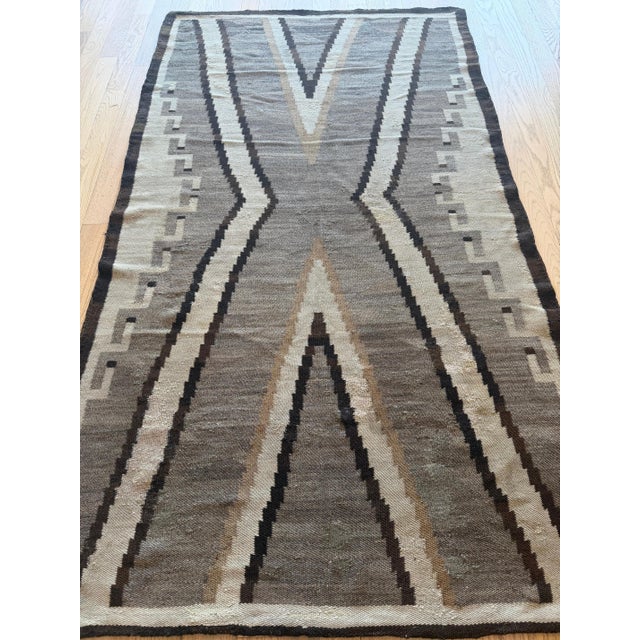
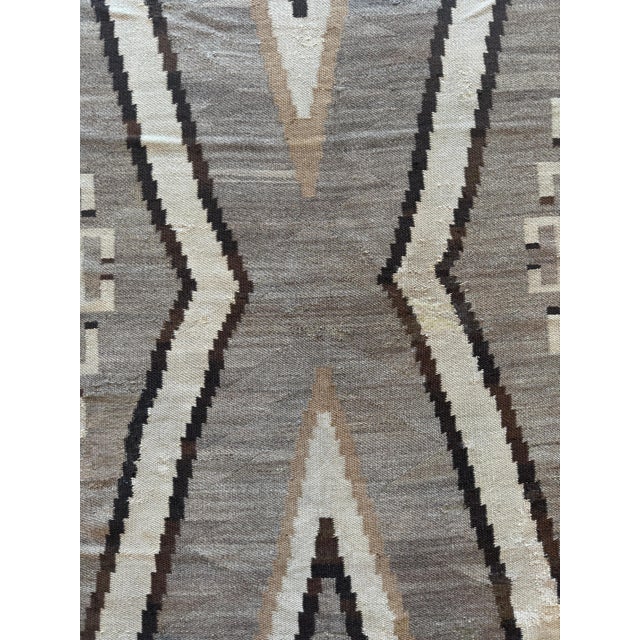
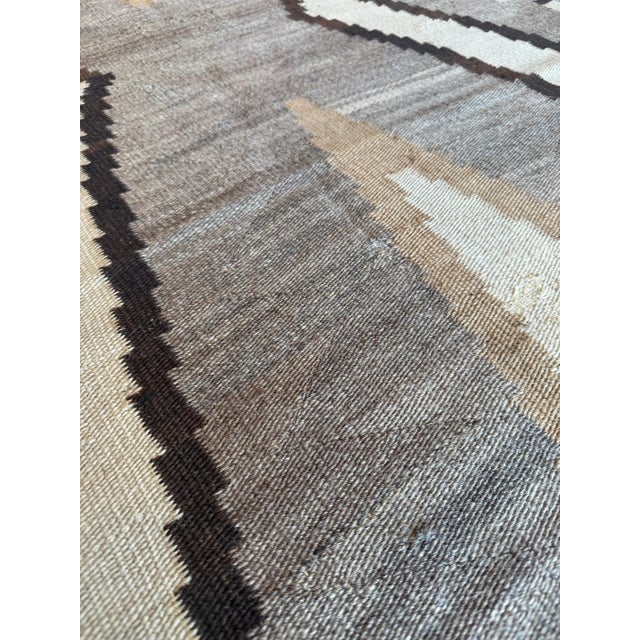
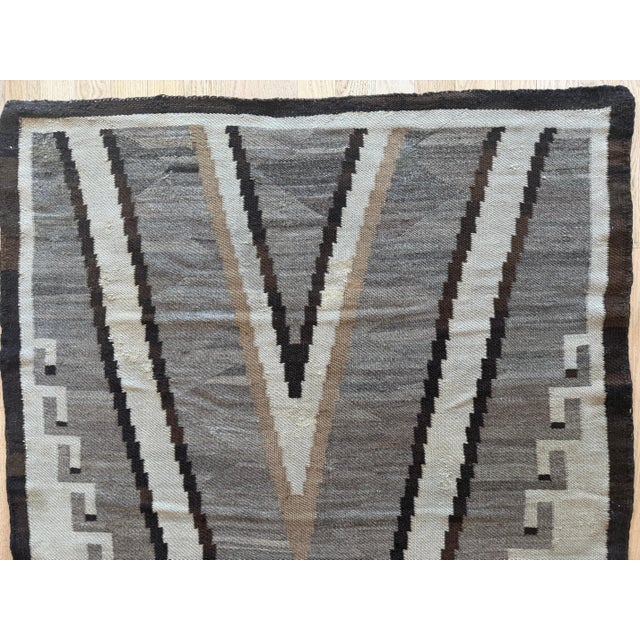
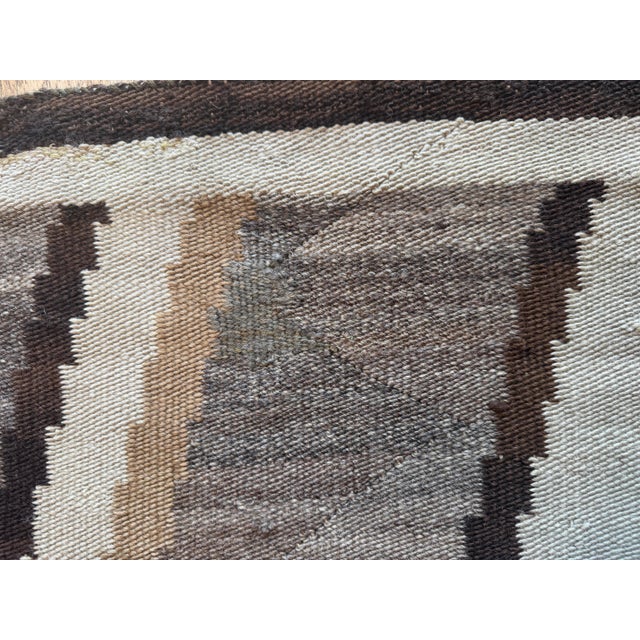
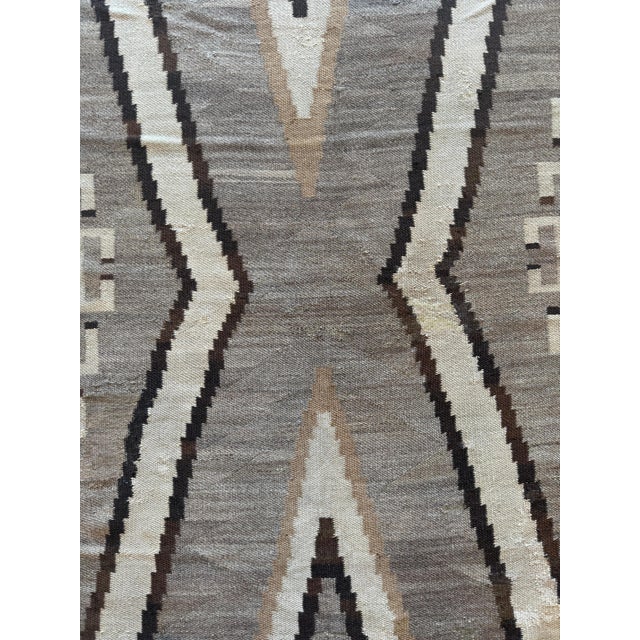
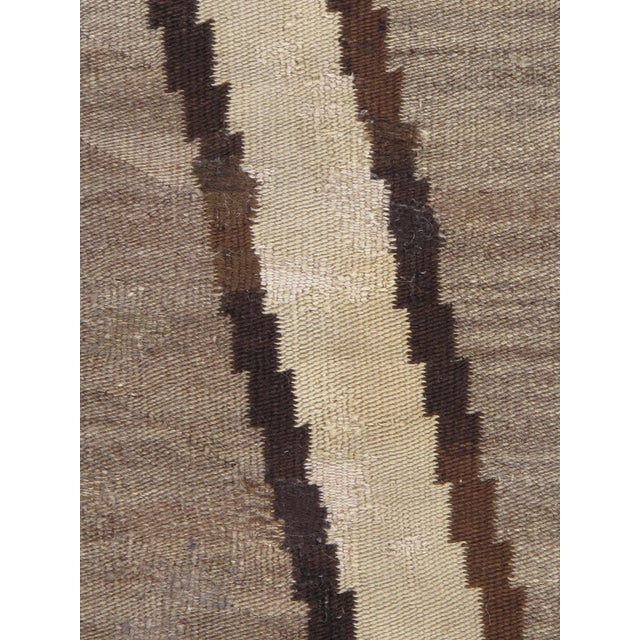
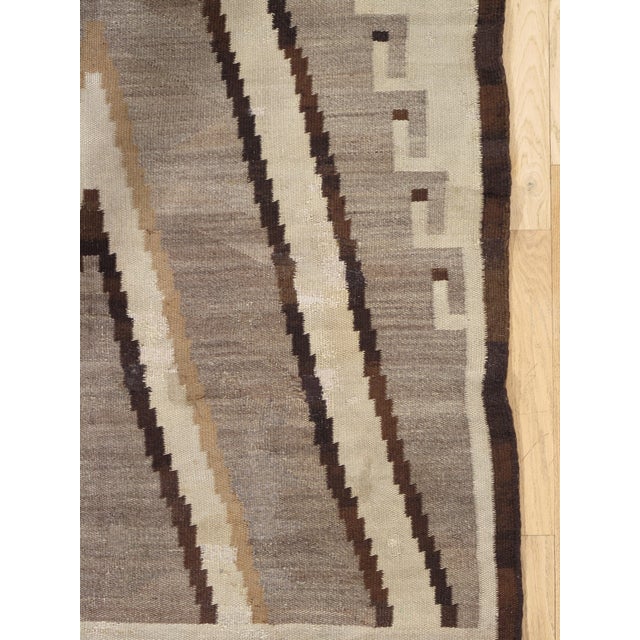
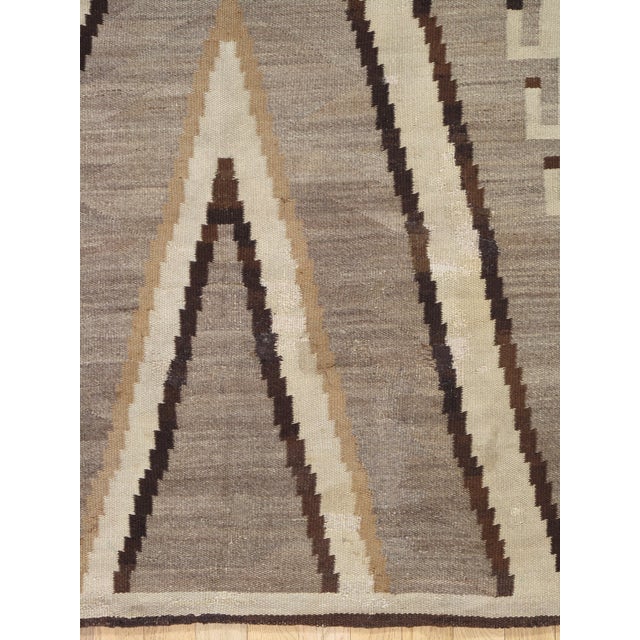
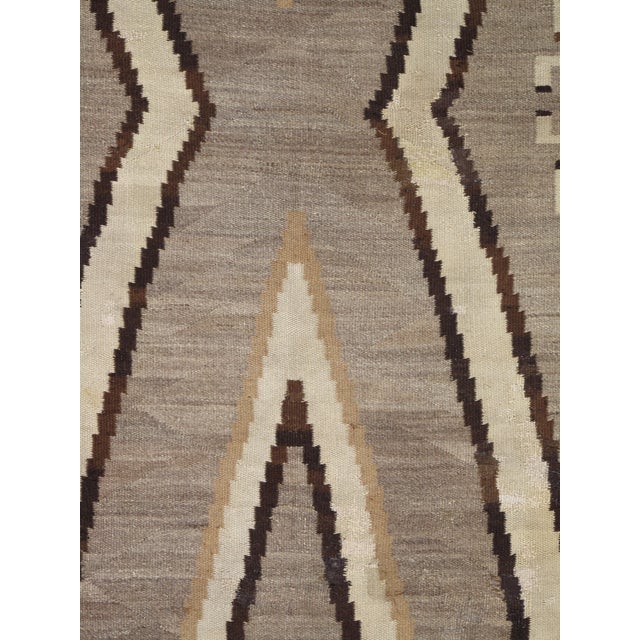
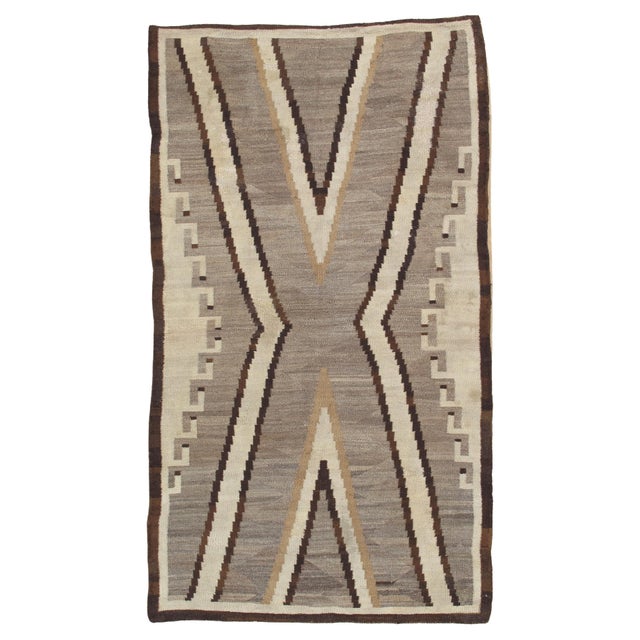
This exceptional Navajo rug, woven circa 1890, represents the pivotal Transitional Period in Navajo textile history—when centuries-old Diné weaving traditions … Read more This exceptional Navajo rug, woven circa 1890, represents the pivotal Transitional Period in Navajo textile history—when centuries-old Diné weaving traditions began to subtly adapt to new materials and market influences while retaining deep cultural symbolism and technical mastery. The composition is dominated by a bold elongated X-form central motif, flanked by stepped geometric elements along the borders. The restrained palette of natural ivory, soft grays, and deep brown outlines reflects the continued use of hand-spun wool and vegetal or early aniline dyes, resulting in a sophisticated, earthy harmony that is both graphic and timeless. Woven in a tightly balanced plain weave, the textile displays excellent structural integrity and clarity of design, hallmarks of skilled Diné weavers working at the height of their tradition. By the late 19th century, Navajo weaving had already achieved international recognition. The period following the Long Walk (1864–1868) marked a cultural and artistic resurgence for the Diné people. Weaving became not only a means of survival, but a powerful expression of resilience, identity, and continuity. During this era, Navajo textiles transitioned from earlier Chief’s Blankets—woven primarily for Indigenous use and trade among Plains tribes—toward rugs intended for Anglo and regional markets. However, the strongest examples from this time, such as this piece, retain the monumentality, balance, and spiritual symmetry of earlier traditions. Textiles such as this were woven entirely by hand—often without written patterns—passed down through generations of Navajo women. Each rug represents countless hours of labor and embodies both artistic intuition and cultural knowledge. By 1890, collectors and institutions had begun to recognize Navajo rugs not merely as utilitarian objects, but as fine art. Today, well-preserved examples from this period are increasingly scarce and highly sought after by museums and advanced collectors. See less
- Dimensions
- 4′3″ × 7′8″ and 0.5″ thick
- Styles
- Native American
- Pattern
- Geometric
- Rug Construction
- Flatweave
- Period
- Late 19th Century
- Country of Origin
- United States
- Item Type
- Vintage, Antique or Pre-owned
- Materials
- Wool
- Condition
- Good Condition, Original Condition Unaltered, Some Imperfections
- Color
- Cream
- Condition Notes
- Good Good less
Questions about the item?
Returns & Cancellations
Return Policy - All sales are final 48 hours after delivery, unless otherwise specified in the description of the product.
Cancellation Policy - Prior to shipping or local pickup, buyers may cancel an order for up to 48 hours, unless otherwise specified.
Related Collections
- Seagrass Rugs
- Classical Greek Rugs
- Bamboo Fabric Rugs
- Cashmere Rugs
- Josef Albers Rugs
- Beaux-Arts Rugs
- Rugs in Chicago
- Moroccan Rugs
- Scandinavian Rugs
- Persian Rugs
- Rugs in New York
- Art Nouveau Rugs
- Spanish Rugs
- Rugs in Dallas
- Early American Rugs
- Rugs in Los Angeles
- Khotan Rugs
- Rugs in Washington DC
- Rugs in San Francisco
- Karastan Rugs
- Chinese Rugs
- Art Deco Rugs
- Rya Rugs
- Wool Rugs
- Turkish Rugs