

Details
Description
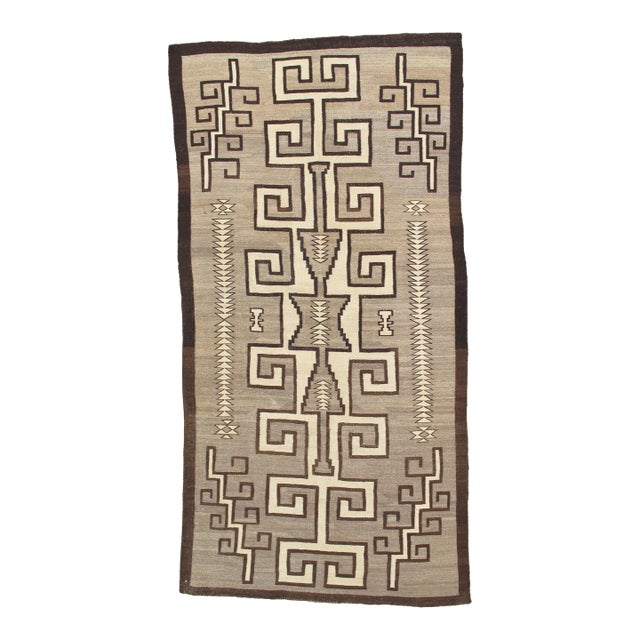
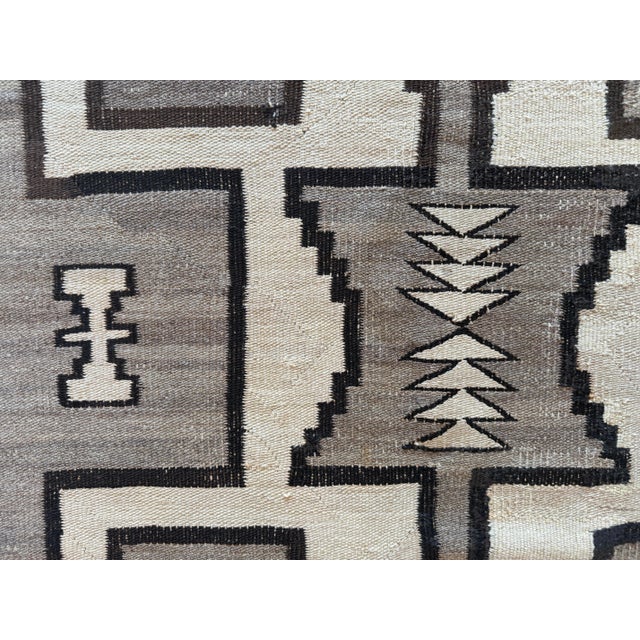
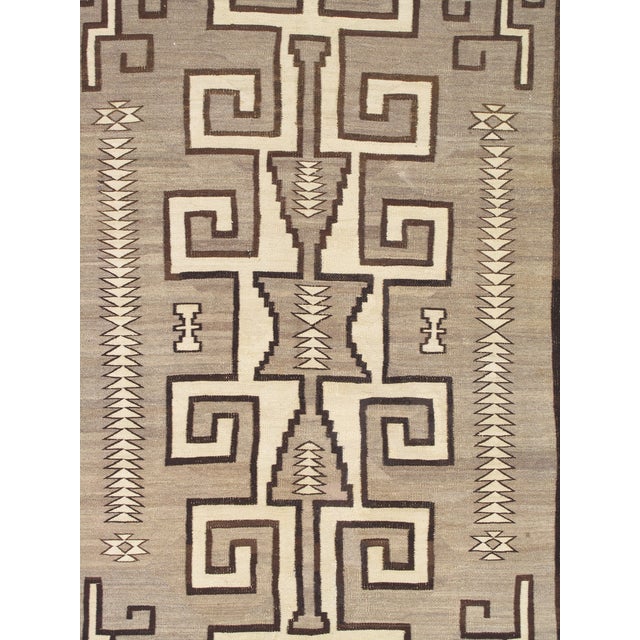
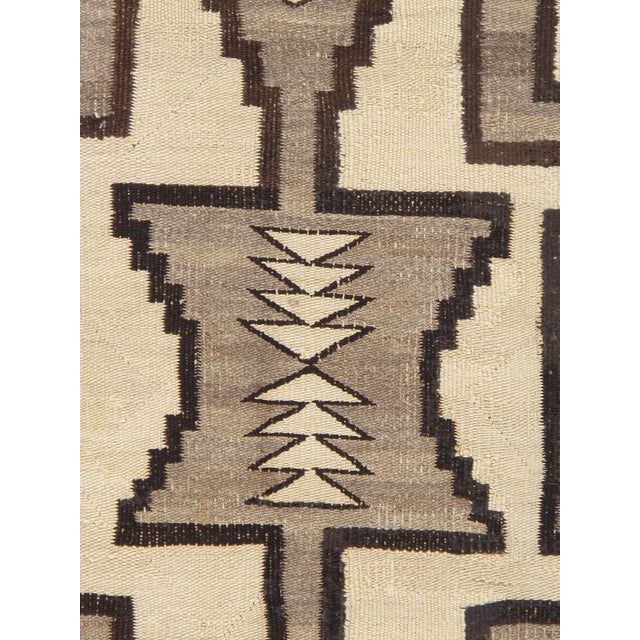
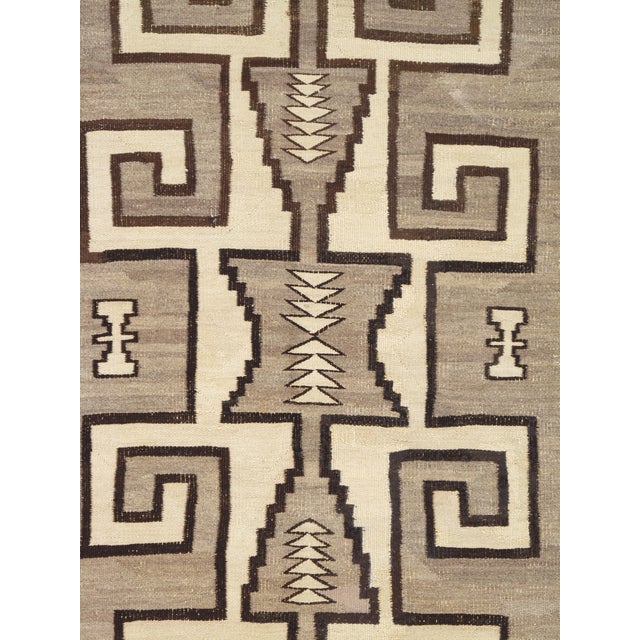
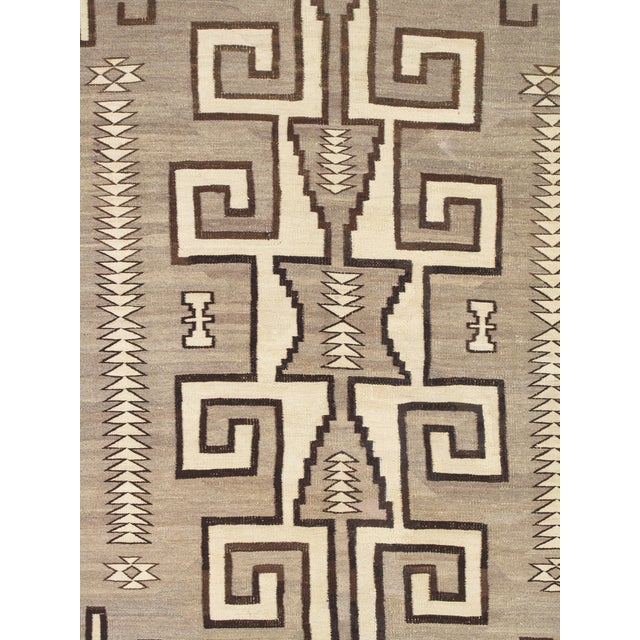
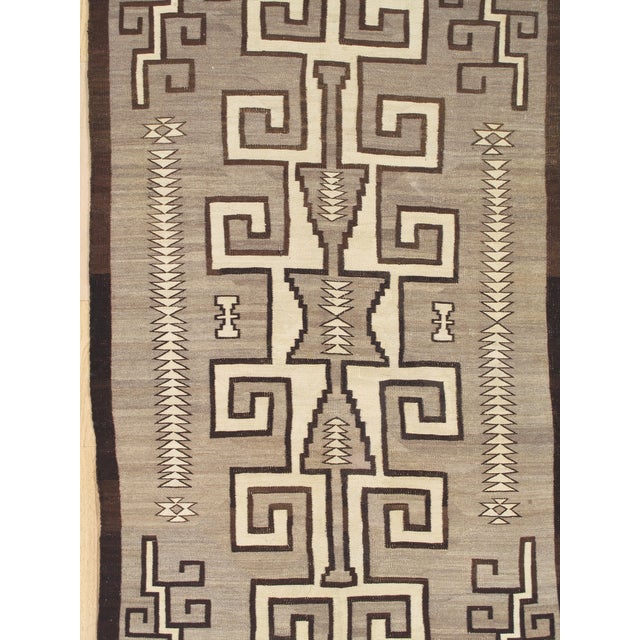
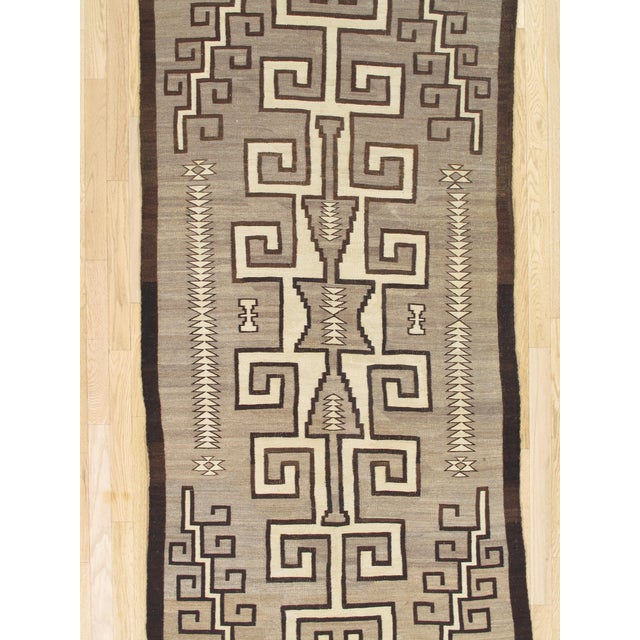
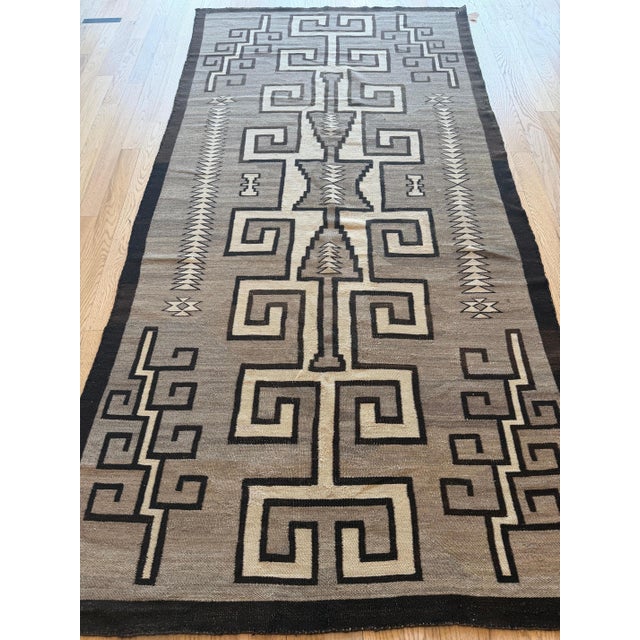
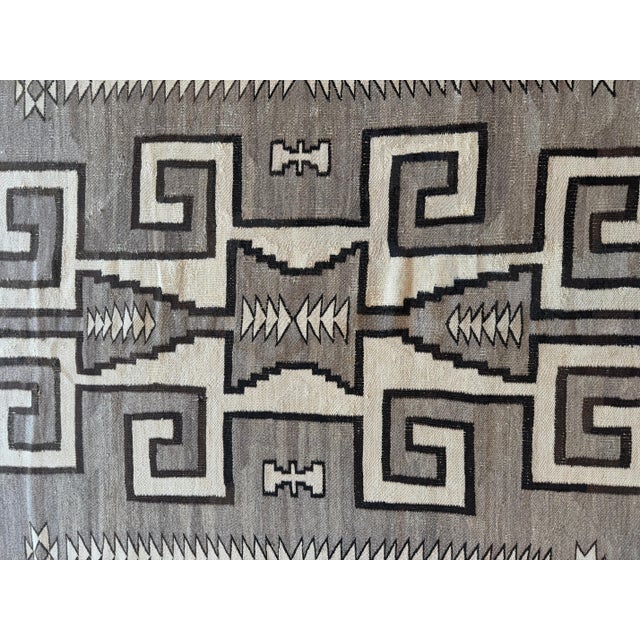
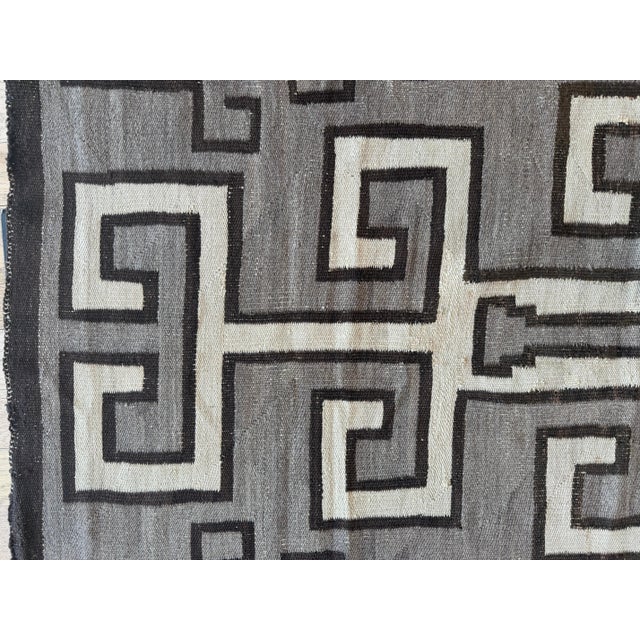
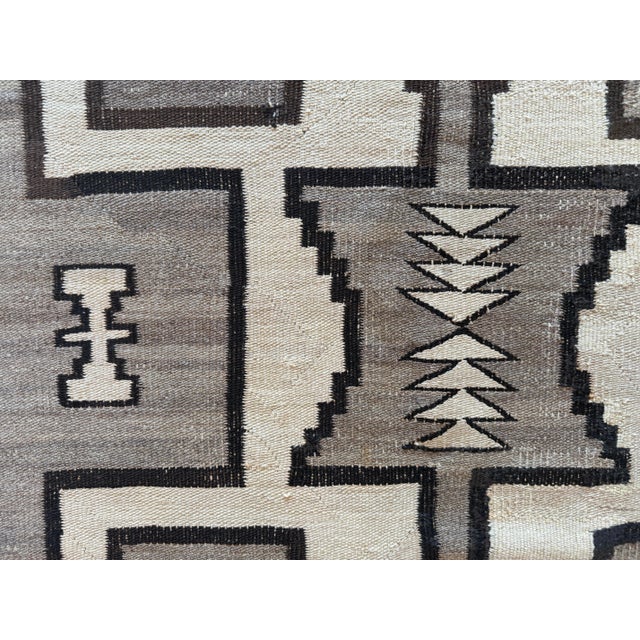
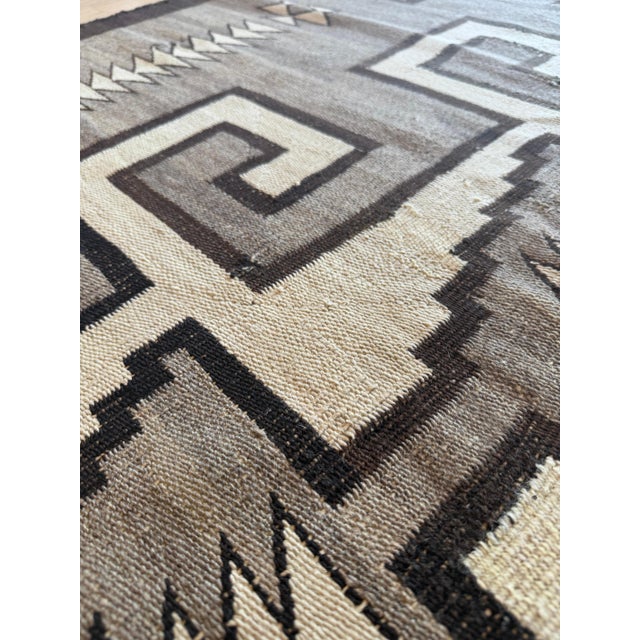
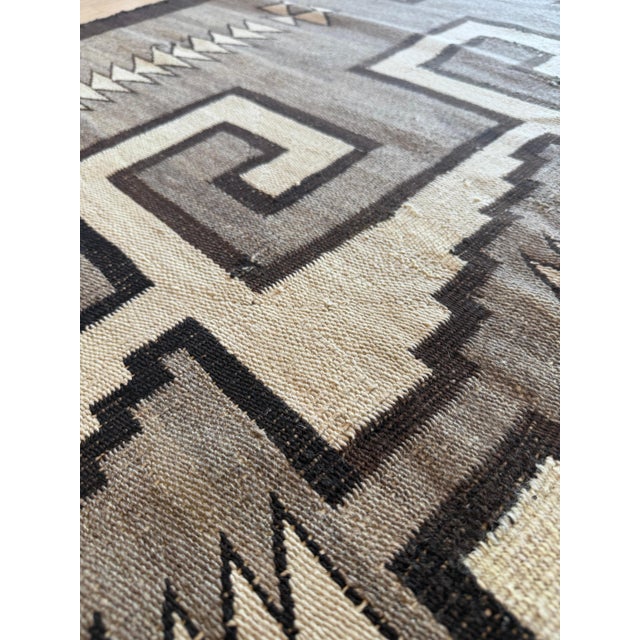
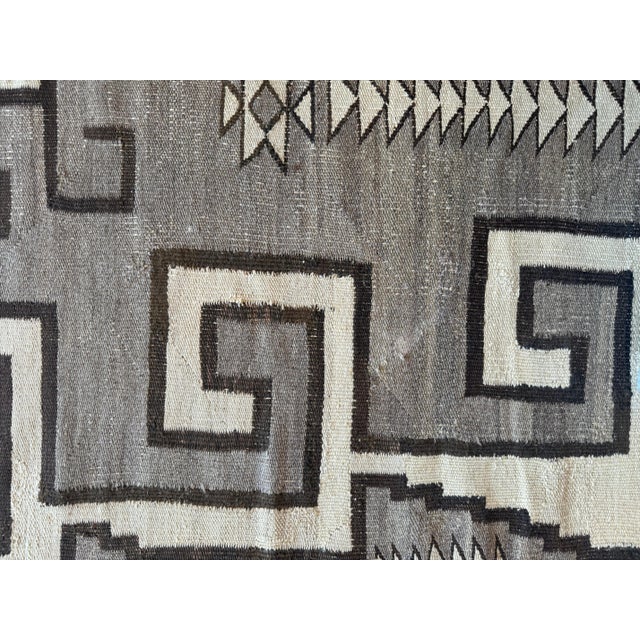
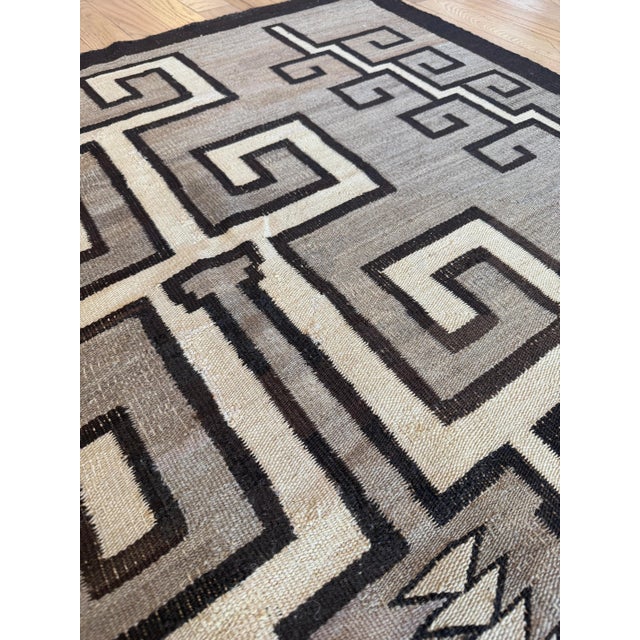
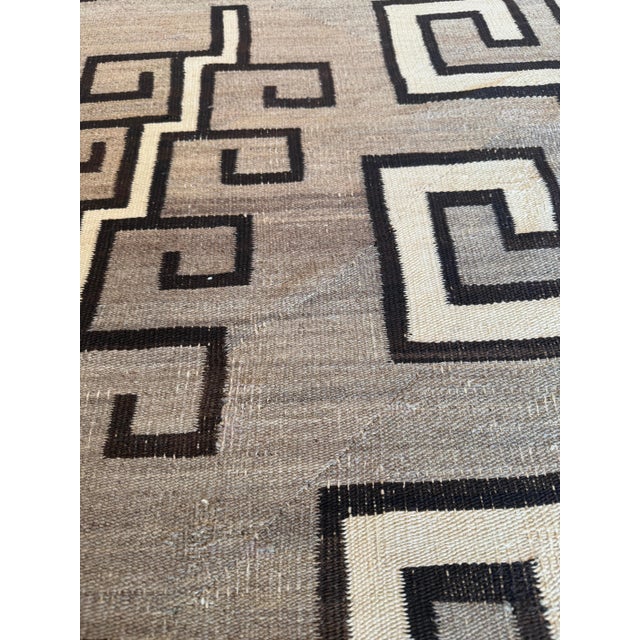
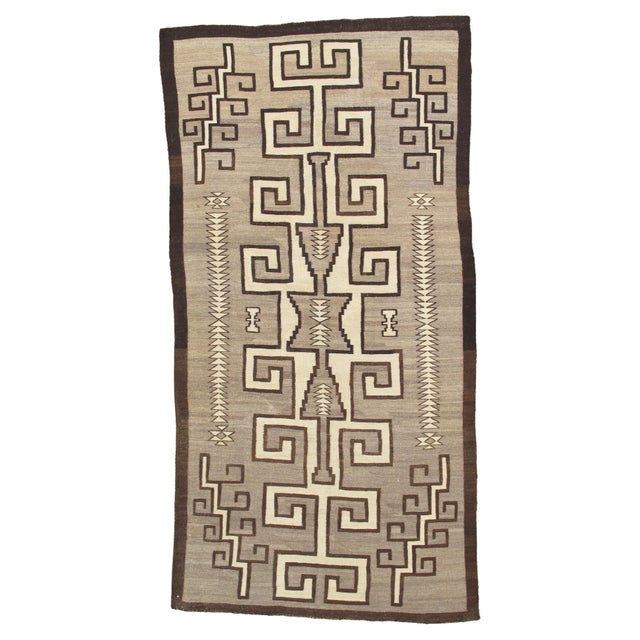
This antique Navajo rug, circa 1890, is a striking example from the Transitional Period (roughly 1880–1910) in Navajo weaving history. … Read more This antique Navajo rug, circa 1890, is a striking example from the Transitional Period (roughly 1880–1910) in Navajo weaving history. During this era, Navajo weavers (Diné) shifted from creating primarily wearing blankets to producing floor rugs for commercial sale, influenced by the arrival of the railroad in the Southwest (around 1881), Anglo traders, and the decline in demand for traditional blankets due to mass-produced alternatives like Pendleton blankets. The rug features a large rectangular format with a sophisticated all-over geometric composition in a restrained palette of natural wool tones: creamy beige/white, soft gray-tan, and deep brown/black. The design centers on bold, interconnected meander (Greek key or fret) patterns, stepped geometric forms, and elongated diamond/lozenge shapes arranged symmetrically. These include repeating hooked or labyrinthine motifs, zigzag lines, serrated edges, small cross-like elements, arrowhead or feather-like details, and linear "lightning" or serrated bands running horizontally. The overall layout suggests bilateral symmetry with a central "hourglass" or bow-tie-like focal area flanked by mirrored sections, bordered by darker brown bands at the ends and sides. This style draws influence from earlier Classic Period Chief's blankets (particularly Third Phase, 1860s–1880s), which featured stepped diamonds and bold geometric elements on striped fields, but adapts them into a more rug-oriented format without the traditional striped background. The meander and fret motifs evoke continuous, flowing paths—sometimes interpreted in Navajo weaving as symbolizing life's journey, interconnectedness, or natural forces like rivers and lightning—though Navajo designs are typically abstract and personal rather than strictly symbolic. The use of handspun wool in natural undyed or minimally dyed shades (brown from dark sheep wool, cream from white, with possible carded grays) is characteristic of late 19th-century pieces before brighter aniline dyes became dominant in regional styles like Ganado (red-heavy) or Crystal. Circa 1890 places this rug at the height of the Transitional era, when traders like Lorenzo Hubbell (Ganado) and J.B. Moore (Crystal) encouraged larger, durable weavings for non-Native buyers while preserving traditional techniques. Such pieces are highly collectible today for their rarity, fine handwoven craftsmanship (tight tapestry weave with wool warp and weft), and historical significance as a bridge between sacred blanket traditions and the vibrant rug-making era that followed. See less
- Dimensions
- 4′8″ × 8′11″ and 0.5″ thick
- Styles
- Native American
- Pattern
- Geometric
- Rug Construction
- Flatweave
- Period
- Late 19th Century
- Country of Origin
- United States
- Item Type
- Vintage, Antique or Pre-owned
- Materials
- Wool
- Condition
- Good Condition, Original Condition Unaltered, Some Imperfections
- Color
- Brown
- Condition Notes
- Good Good less
Questions about the item?
Returns & Cancellations
Return Policy - All sales are final 48 hours after delivery, unless otherwise specified in the description of the product.
Cancellation Policy - Prior to shipping or local pickup, buyers may cancel an order for up to 48 hours, unless otherwise specified.
Related Collections
- Seagrass Rugs
- Bamboo Fabric Rugs
- Cashmere Rugs
- Classical Greek Rugs
- Josef Albers Rugs
- Beaux-Arts Rugs
- Cream Moroccan Rugs
- Beige Moroccan Rugs
- Tan Moroccan Rugs
- Brown Moroccan Rugs
- Blue Moroccan Rugs
- White Moroccan Rugs
- Ivory Moroccan Rugs
- Rugs in Chicago
- Moroccan Rugs
- Scandinavian Rugs
- Persian Rugs
- Art Nouveau Rugs
- Rugs in Dallas
- Spanish Rugs
- Rugs in New York
- Early American Rugs
- Khotan Rugs
- Rugs in Washington DC
- Rugs in Los Angeles