

Details
Description
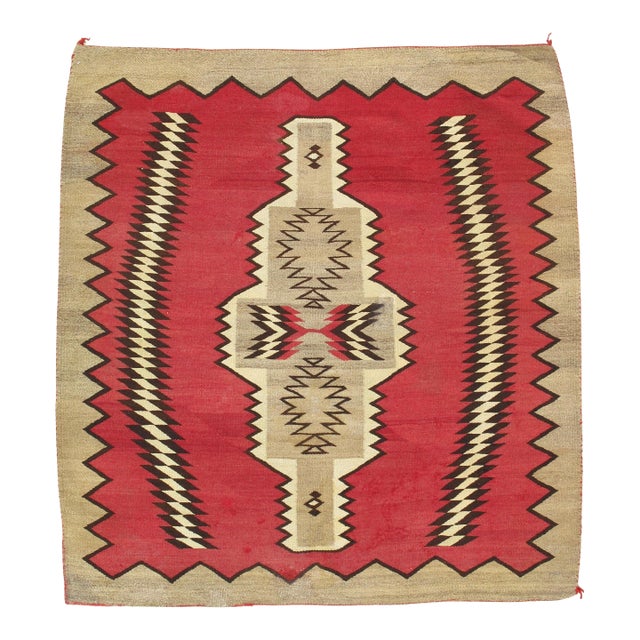
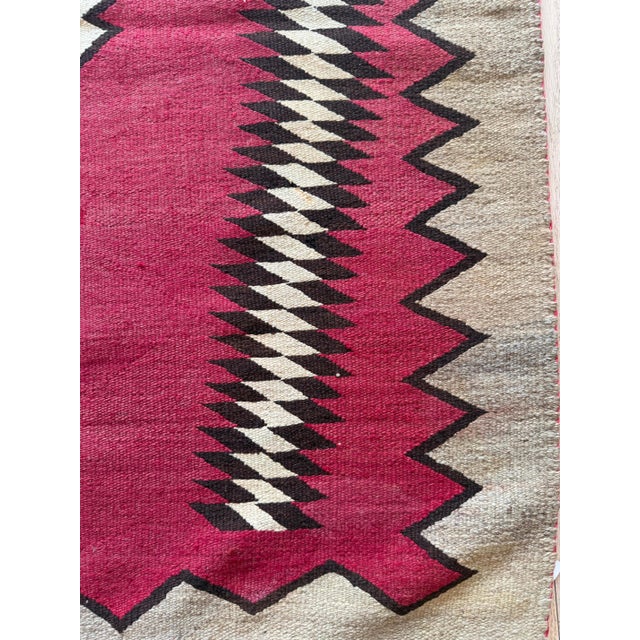
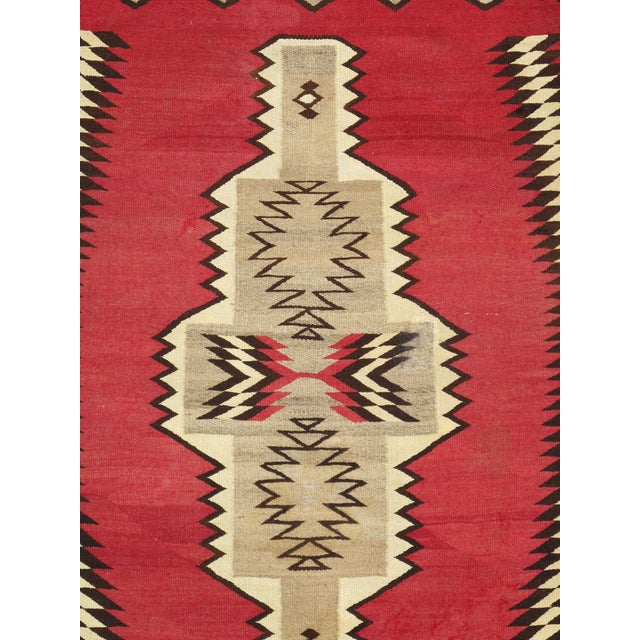
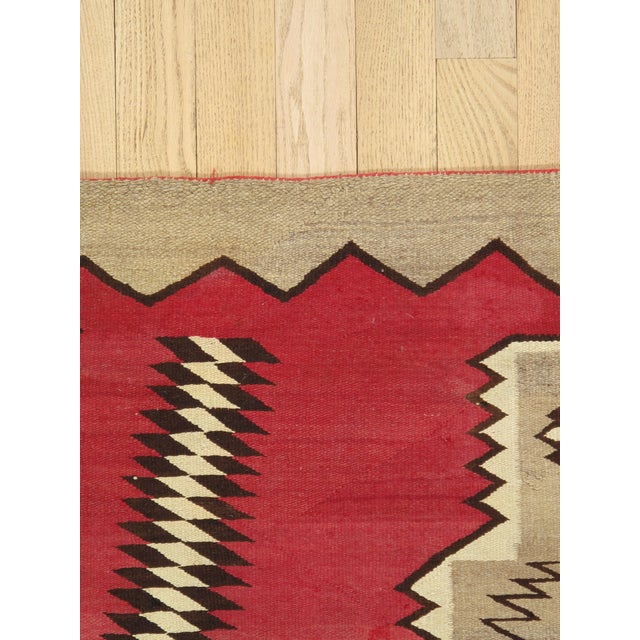
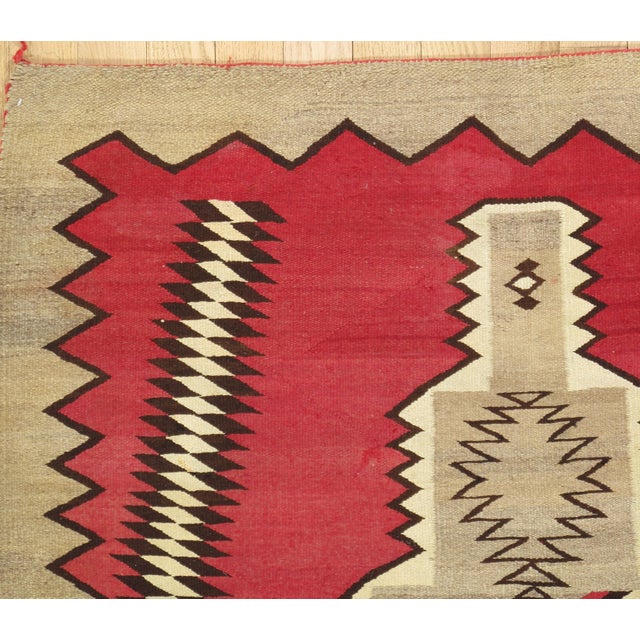
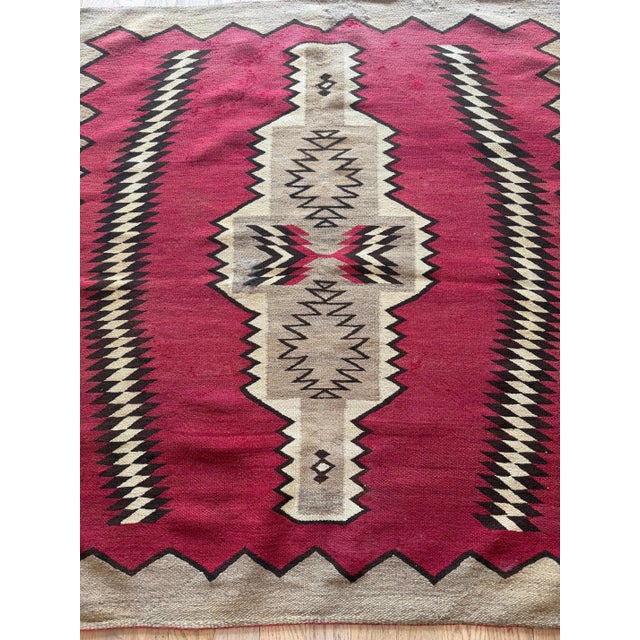
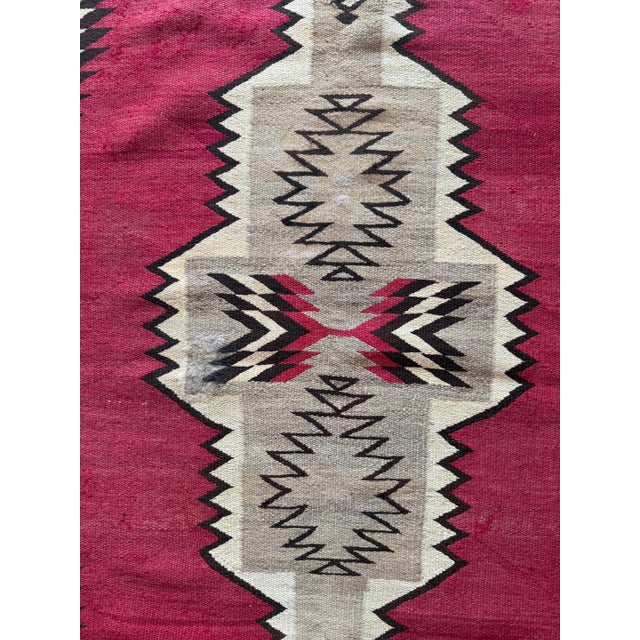
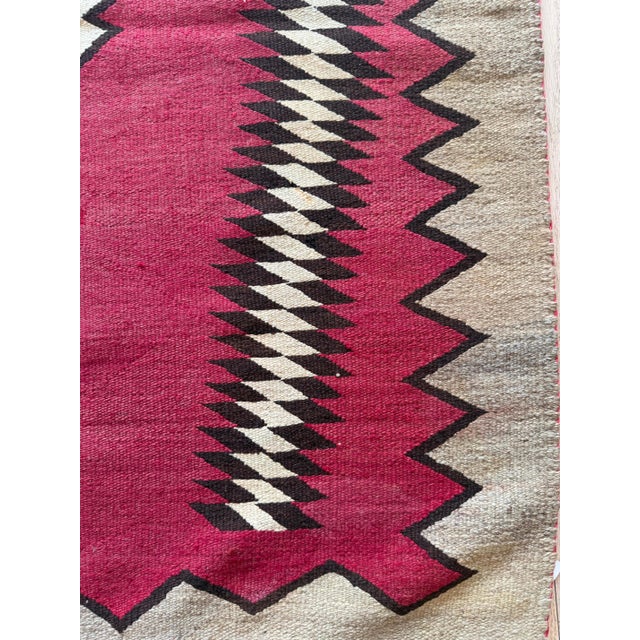
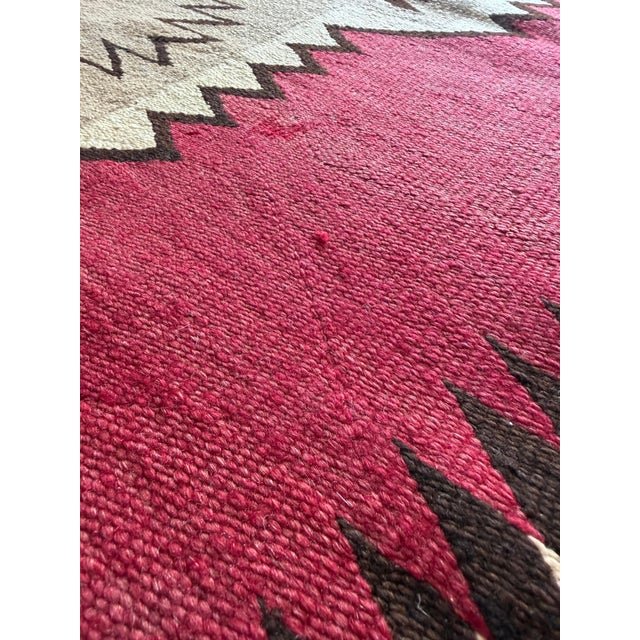
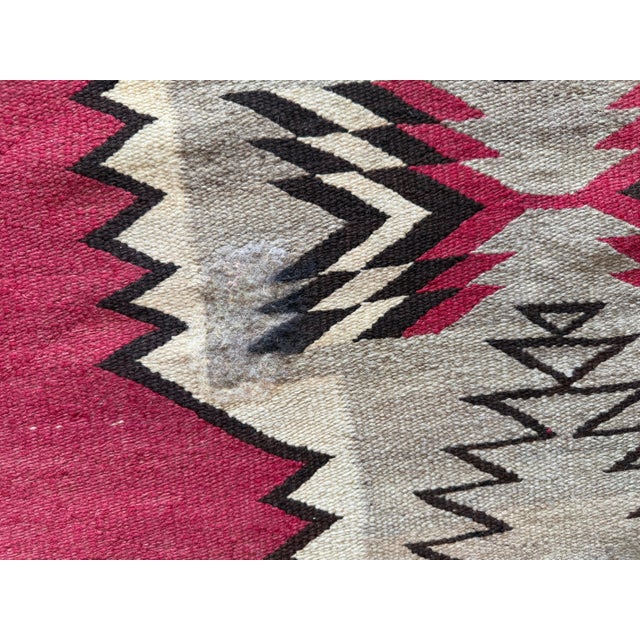
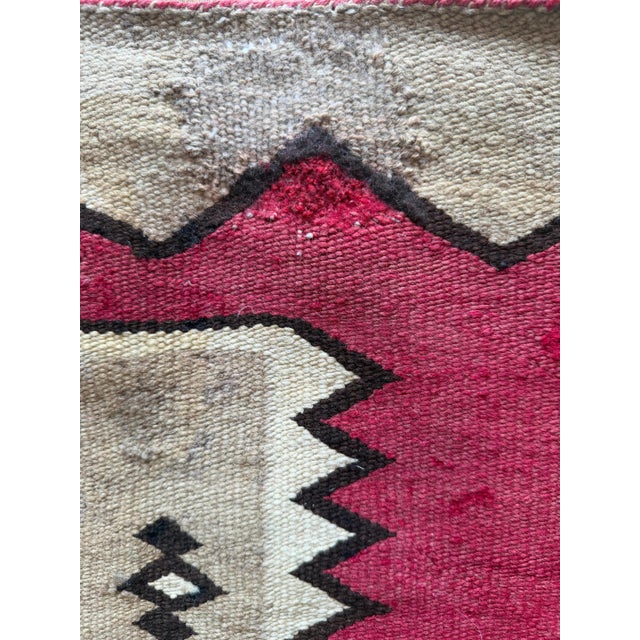
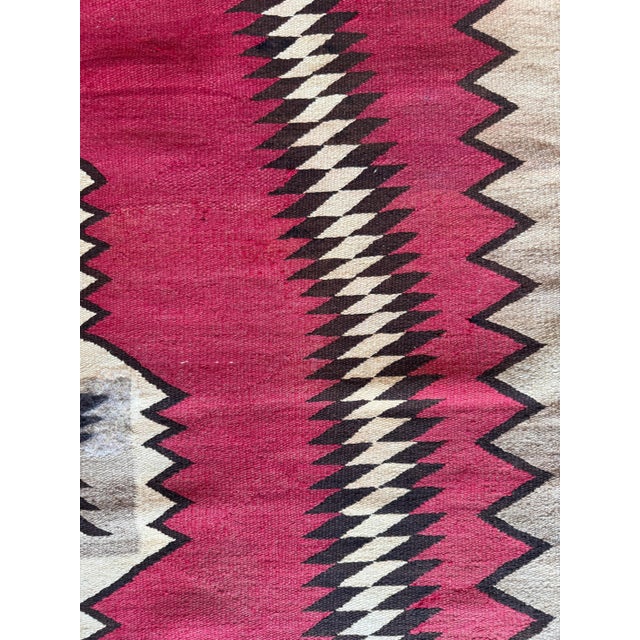
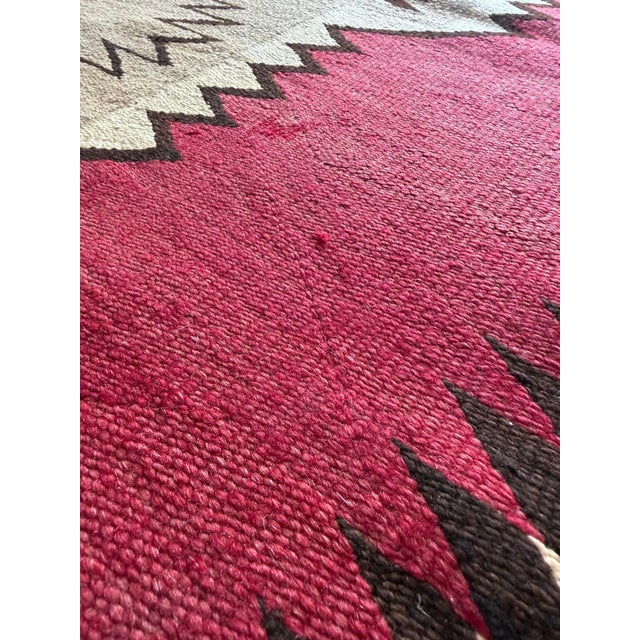
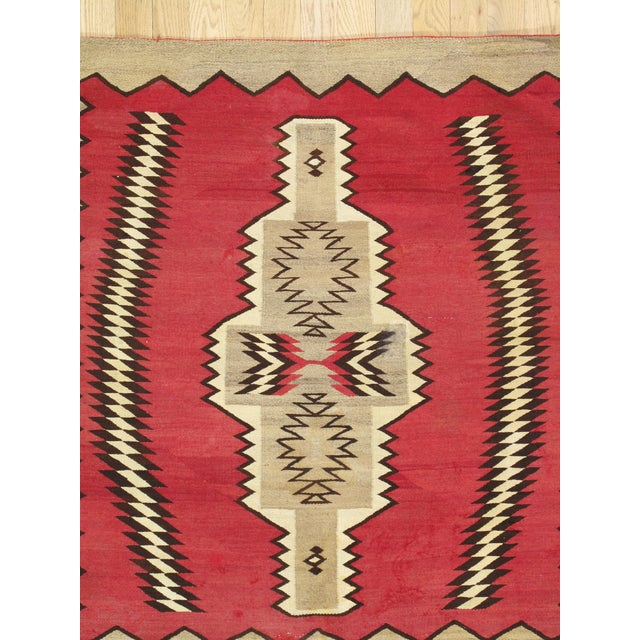
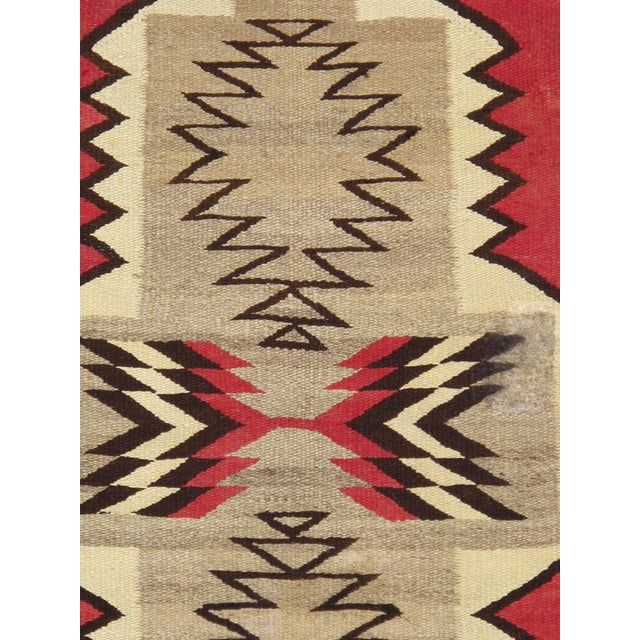
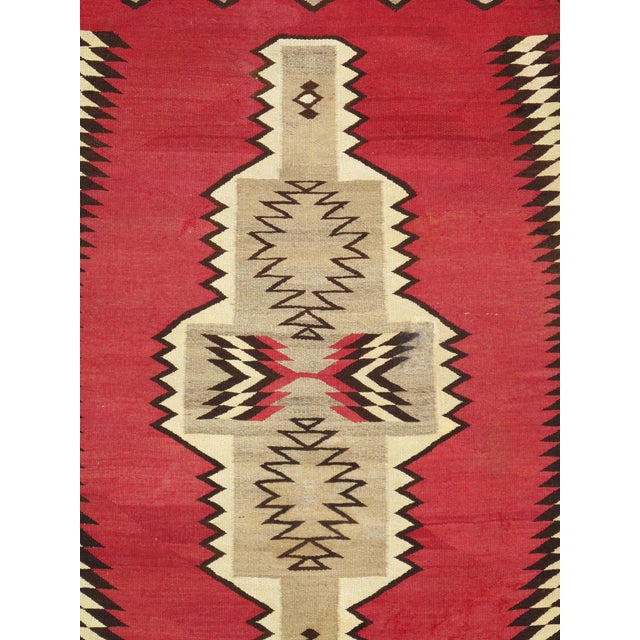
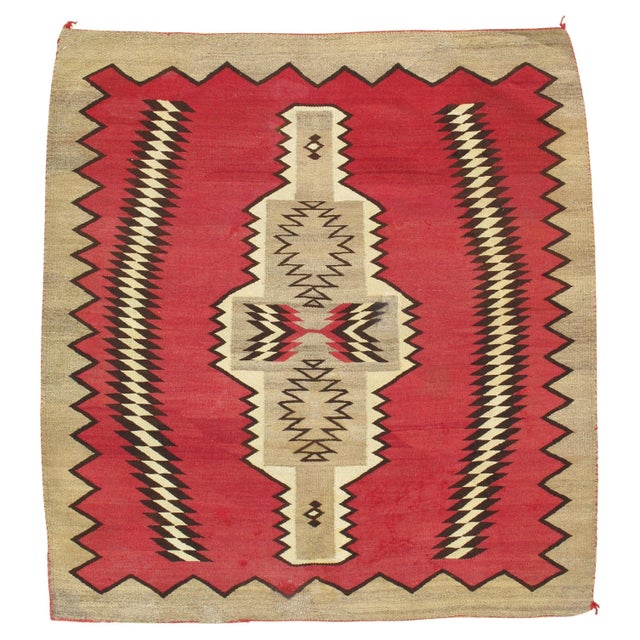
This exceptional 1920s Navajo rug features a bold red field framed by dramatic serrated (zigzag) borders and anchored by a … Read more This exceptional 1920s Navajo rug features a bold red field framed by dramatic serrated (zigzag) borders and anchored by a central diamond medallion motif — and notably comes in a rare square format measuring approximately 4'5" x 4'7". Square Navajo rugs from this period are far less common than standard rectangular formats. Most early 20th-century weavings were produced in elongated or runner proportions to suit Anglo market demand. A near-square example like this is highly desirable for collectors and interior designers alike, offering versatility for placement beneath a table, in a seating vignette, or as a wall-mounted textile. During this period, Navajo weaving had entered what collectors call the Trading Post Era. During this period, regional trading posts encouraged specific aesthetics that appealed to non-Native buyers, while Diné (Navajo) weavers maintained traditional technical mastery and symbolic design language. This rug represents a dynamic period of adaptation and artistic refinement within Diné (Navajo) weaving tradition. After the introduction of Churro sheep by the Spanish centuries earlier, wool became central to Navajo life and artistry, and by the early 20th century weaving had shifted from chief’s blankets and wearing blankets to rugs made primarily for trade. The 1920s were shaped by increased railroad access and tourism in the American Southwest, which expanded demand for bold, graphic textiles with strong central medallions and saturated colors—especially the vivid aniline reds seen here. While traders influenced size, palette, and composition to suit non-Native buyers, the technical mastery remained entirely Navajo: handspun wool, tightly executed tapestry weave on a vertical loom, and carefully balanced geometric symbolism reflecting harmony and protection. This rug was created during a time of economic hardship following livestock reductions and federal policy changes, when weaving became an essential source of household income. As such, it stands not only as a decorative object but also as a testament to cultural continuity, innovation, and resilience within the Navajo Nation during a transformative chapter of Southwestern history. By the early 20th century, weaving had become a primary source of income for many Navajo families, especially following livestock reductions and economic hardship. See less
- Dimensions
- 4′5″ × 4′7″ and 0.5″ thick
- Styles
- Native American
- Pattern
- Geometric
- Rug Construction
- Flatweave
- Period
- Early 20th Century
- Country of Origin
- United States
- Item Type
- Vintage, Antique or Pre-owned
- Materials
- Wool
- Condition
- Good Condition, Original Condition Unaltered, Some Imperfections
- Color
- Red
- Condition Notes
- Good Good less
Questions about the item?
Returns & Cancellations
Return Policy - All sales are final 48 hours after delivery, unless otherwise specified in the description of the product.
Cancellation Policy - Prior to shipping or local pickup, buyers may cancel an order for up to 48 hours, unless otherwise specified.
Related Collections
- Seagrass Rugs
- Bamboo Fabric Rugs
- Cashmere Rugs
- Beaux-Arts Rugs
- Josef Albers Rugs
- Classical Greek Rugs
- Rugs in Chicago
- Moroccan Rugs
- Rugs in New York
- Scandinavian Rugs
- Persian Rugs
- Art Nouveau Rugs
- Rugs in Dallas
- Spanish Rugs
- Early American Rugs
- Rugs in Los Angeles
- Rugs in Washington DC
- Khotan Rugs
- Rugs in San Francisco
- Karastan Rugs
- Art Deco Rugs
- Chinese Rugs
- Rya Rugs
- Wool Rugs
- Rugs in Philadelphia