

Details
Description
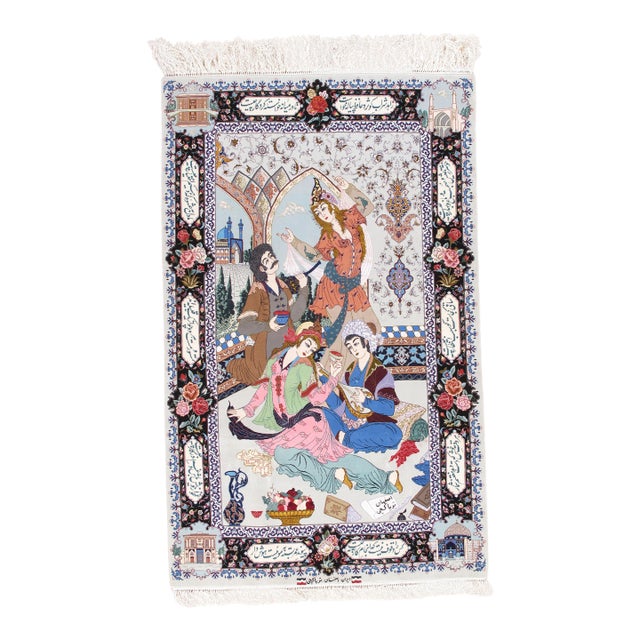
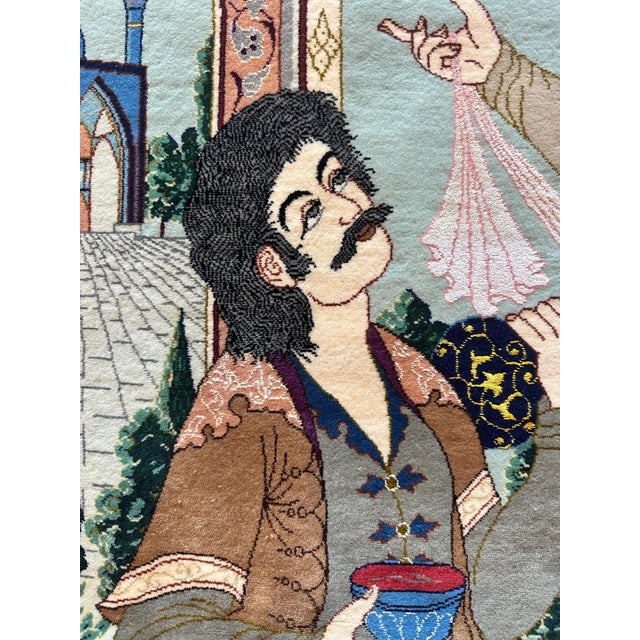
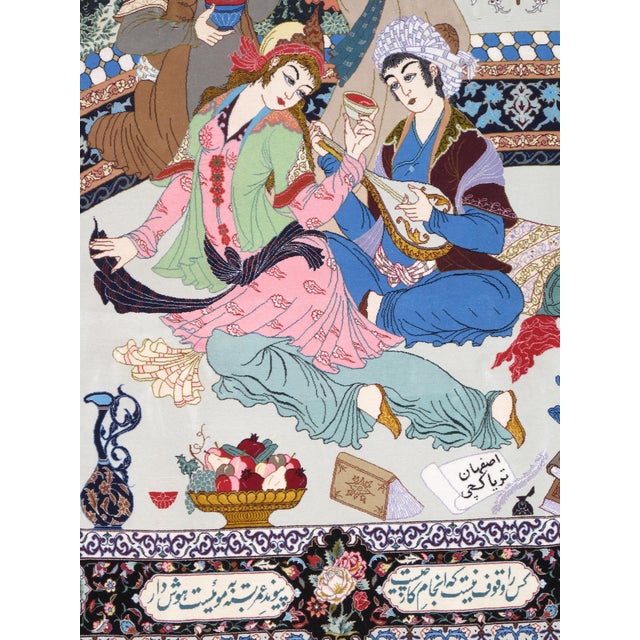
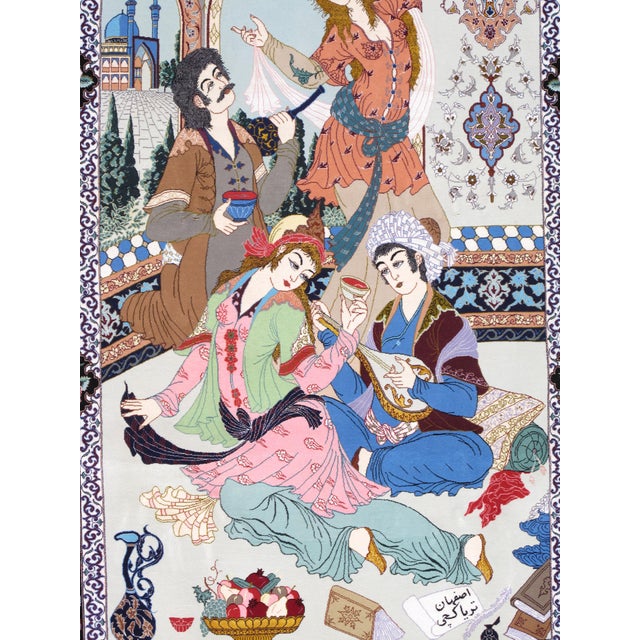
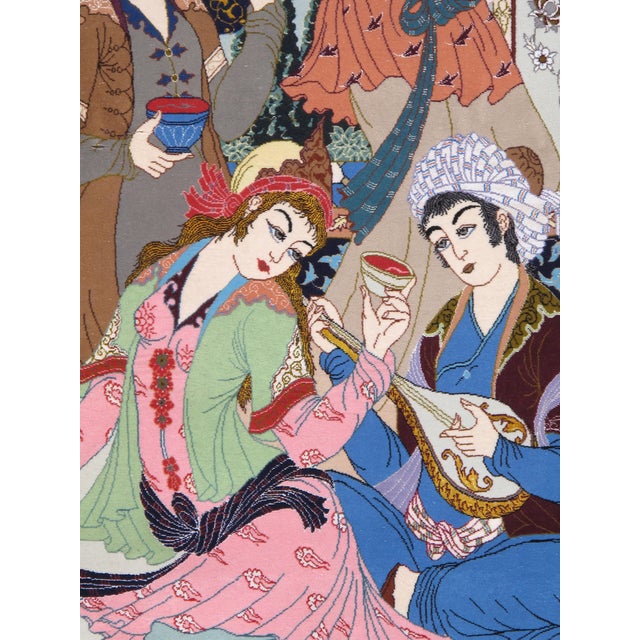
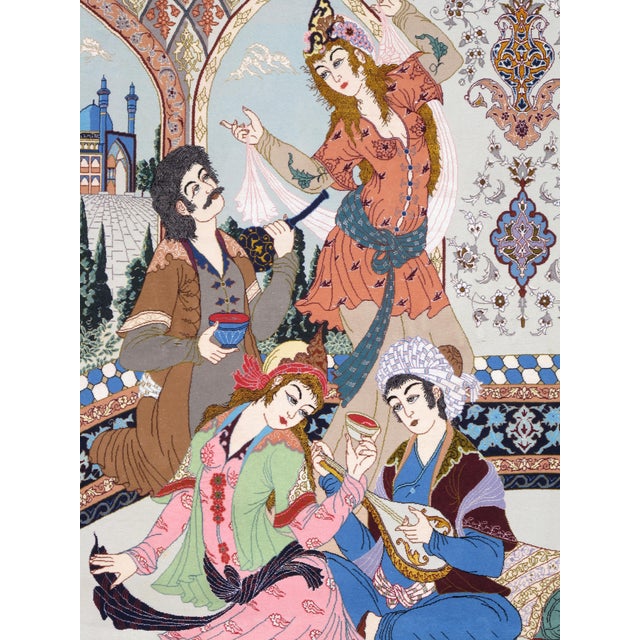
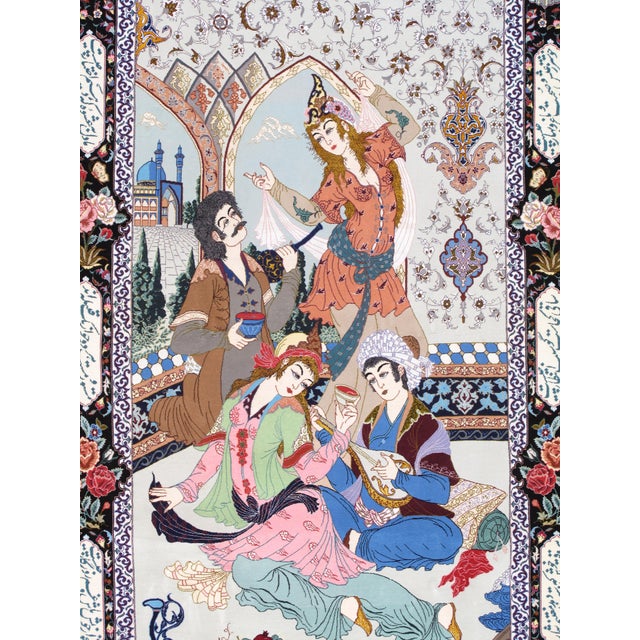
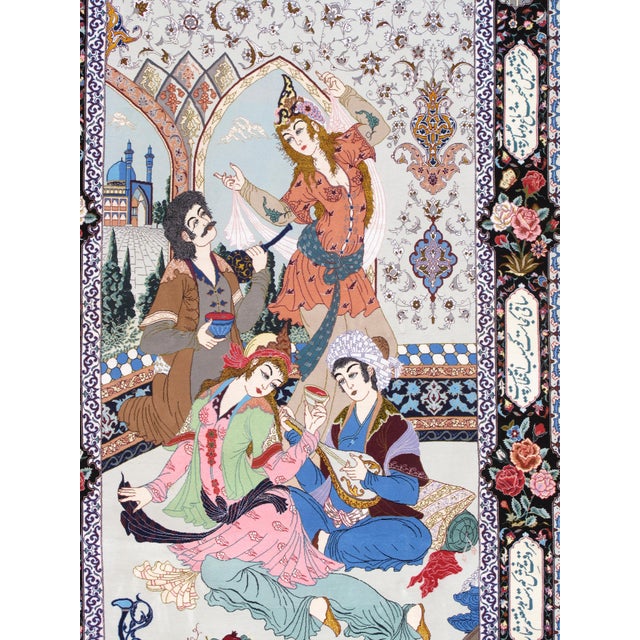
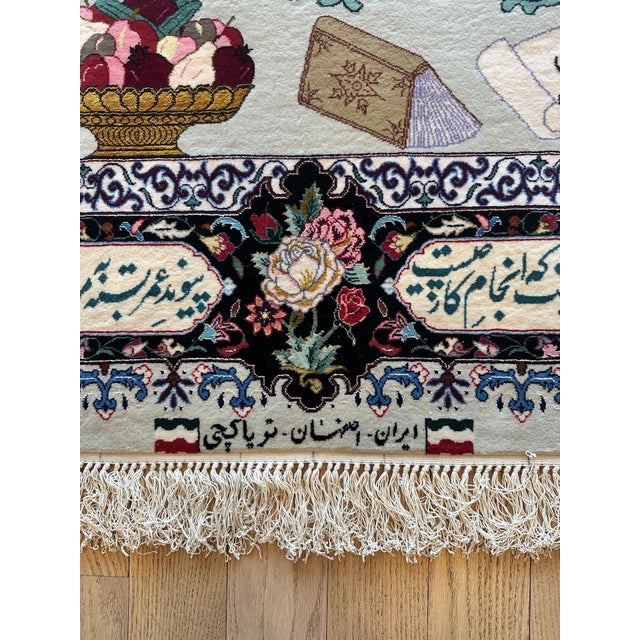
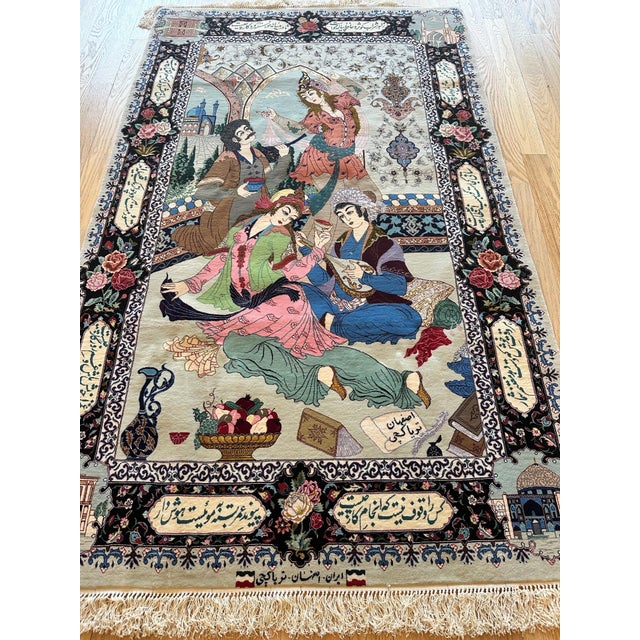
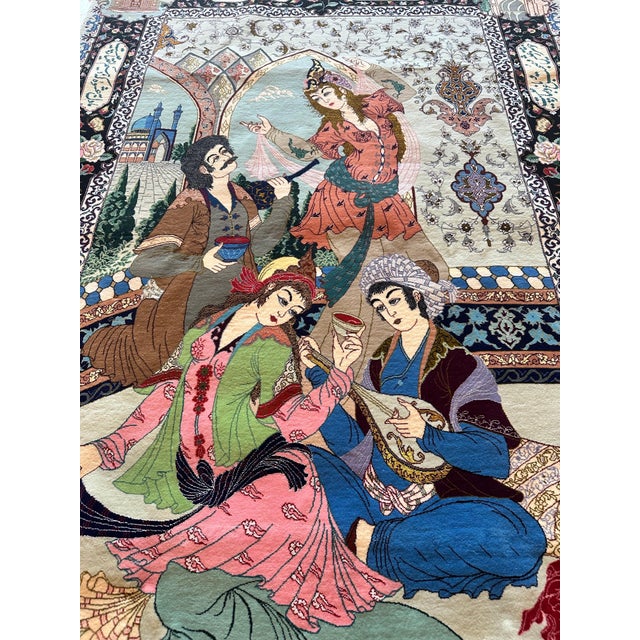
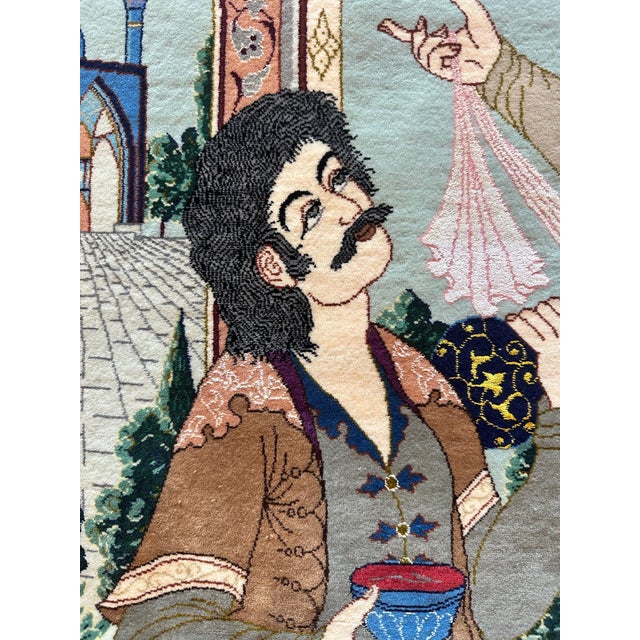
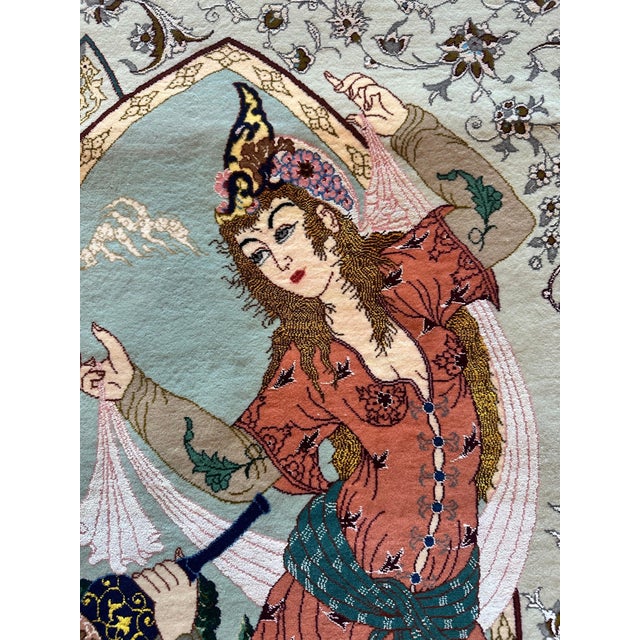
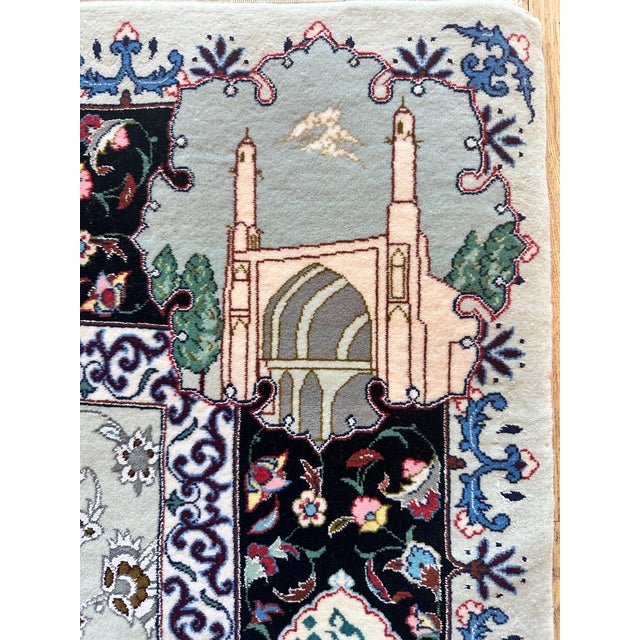
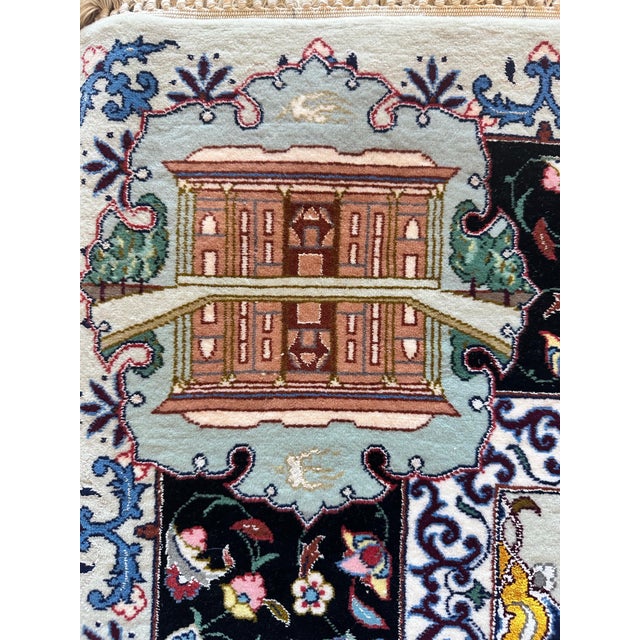
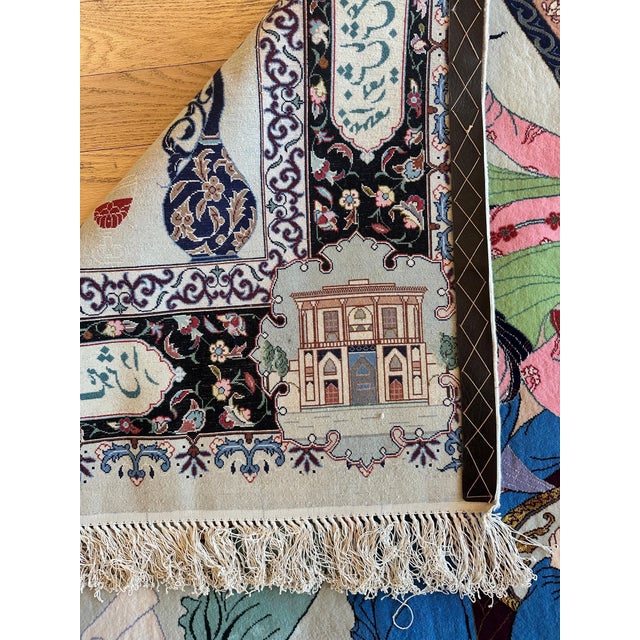
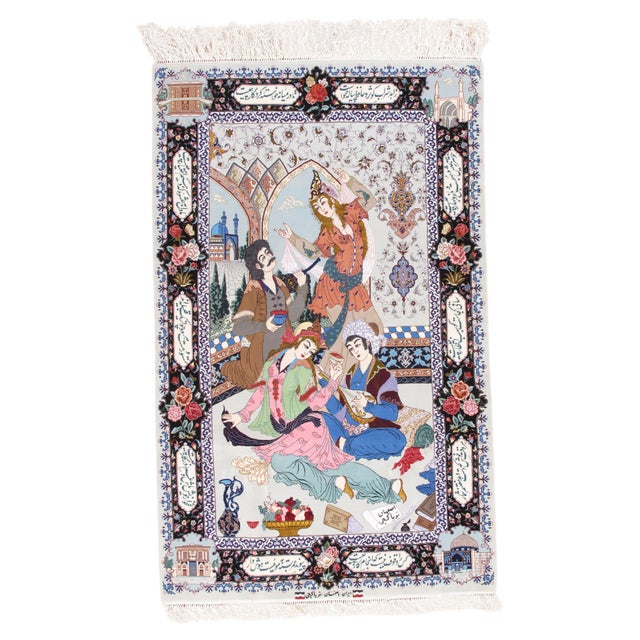
This exquisite mid-20th-century Tabriz pictorial rug is a true masterwork of Persian narrative weaving—an artful fusion of poetry, history, and … Read more This exquisite mid-20th-century Tabriz pictorial rug is a true masterwork of Persian narrative weaving—an artful fusion of poetry, history, and visual storytelling. Woven in one of Iran’s most prestigious weaving cities, this piece captures the spirit of classical Persian romance and miniature painting. Preserved in mint condition, it stands today not simply as a rug, but as a woven painting created for beauty, admiration, and cultural expression. Tabriz, located in northwest Iran, has been a celebrated center of textile art for over 500 years. During the Safavid era, the city’s workshops became famous for producing some of the most sophisticated figurative textiles and manuscript-inspired designs in the Persian world. By the mid-20th century, Tabriz had revived this tradition with exceptional skill, producing pictorial rugs that echoed the romance, symbolism, and elegance of classical Persian literature and miniature paintings. This rug belongs to that lineage—an artistic tribute to centuries of Tabriz craftsmanship. A Scene Inspired by Classical Persian Literature The imagery draws from the poetic universe of Persia’s great literary masters: Hafez, poet of wine, love, and spiritual ecstasy Sa’di, whose lyrical verses celebrate beauty and human connection Nizami and Jami, whose romantic epics shaped Persian miniature painting The garden setting, wine cups, musical instruments, and intimate gathering are all emblematic of Persian poetic symbolism, where earthly delight becomes a metaphor for inner joy and spiritual transcendence. The Figures: Symbolism, Beauty & Storytelling The four central figures are rendered with expressive faces and graceful movement—classic hallmarks of Tabriz pictorial weaving. 1. The Lovers The seated man and reclining woman embody the timeless theme of lovers in a garden, one of the most cherished motifs in Persian art. Their clothing in soft pinks, blues, and greens represents: Beauty Spring and renewal Emotional harmony Intellectual refinement Their wine cups are not merely decorative—they symbolize joy, enlightenment, and the “wine of divine love” often referenced by Hafez. 2. The Dancer Above them, the dancer extends her arms in a fluid, captivating pose. This figure may represent: A courtly entertainer A symbol of ecstatic movement in Sufi philosophy The personification of joy and celebration Her golden headpiece and patterned garments showcase the weaver’s meticulous attention to color. 3. The Attendant or Musician The figure on the left participates in the revelry, perhaps offering music or companionship. In Persian poetry, the musician represents emotional harmony and the blending of art forms. Together, these characters form a dense tapestry of romance, music, beauty, and poetic symbolism—true to Tabriz’s artistic heritage. The Border: Poetry, Architecture & Cultural Identity The outer border blends Persian calligraphy with architectural vignettes, a hallmark of mid-20th-century Tabriz pictorial rugs. Calligraphy Panels The script panels typically contain lines of romantic or philosophical verse—often from Hafez or Sa’di—celebrating: Love Wine and joy Wisdom The beloved’s beauty These poems echo the emotional and symbolic narrative of the central scene. Architectural Elements The corners depict iconic Persian structures: domed mosques, ornate gateways, and historic palaces reminiscent of Tabriz and other cultural centers. These vignettes ground the piece in Persian artistic tradition and memory. Color Palette: Symbolism and Technical Mastery Tabriz weavers are known for their sophisticated dye work, and this rug is an exceptional example: Sky blue evokes serenity and spiritual aspiration Rose and crimson represent love, vitality, and sensuality Ivory highlights fine drawing and creates a luminous field Black detailing reflects the linework of miniature painting Gold and ochre add richness and royal undertones The harmony and complexity of these colors reveal a master dyer’s skill. Mint Condition – A Rare Collector’s Piece A Woven Masterpiece of Persian Art This mid-20th-century Tabriz pictorial rug combines the finest traditions of Persian poetry, miniature painting, and textile craftsmanship. With its romantic imagery, expressive figures, intricate calligraphy, and superb condition, it offers: A museum-quality work of Persian cultural history A visually stunning art piece for display A rare example of Tabriz’s narrative weaving tradition It is both a storytelling masterpiece and a testament to the enduring beauty of Persian artistic expression. See less
- Dimensions
- 4′2″ × 6′9″ and 0.5″ thick
- Styles
- Persian
- Rug Construction
- Hand Knotted
- Pattern
- Geometric
- Period
- Mid 20th Century
- Item Type
- Vintage, Antique or Pre-owned
- Materials
- Wool
- Condition
- Good Condition, Original Condition Unaltered, Some Imperfections
- Color
- Pink
- Condition Notes
- Excellent Excellent less
Questions about the item?
Returns & Cancellations
Return Policy - All sales are final 48 hours after delivery, unless otherwise specified in the description of the product.
Cancellation Policy - Prior to shipping or local pickup, buyers may cancel an order for up to 48 hours, unless otherwise specified.
Related Collections
- Bamboo Fabric Rugs
- Louis XVI Rugs
- Seagrass Rugs
- Cashmere Rugs
- Josef Albers Rugs
- Beaux-Arts Rugs
- Classical Greek Rugs
- Rugs in New York
- Rugs in Chicago
- Persian Rugs
- Moroccan Rugs
- Scandinavian Rugs
- Rugs in Los Angeles
- Art Nouveau Rugs
- Karastan Rugs
- Rugs in Dallas
- Spanish Rugs
- Art Deco Rugs
- Rugs in Washington DC
- Rugs in San Francisco
- Early American Rugs
- French Rugs
- Rugs in Philadelphia
- Southwestern Rugs
- Khotan Rugs