


Details
Description
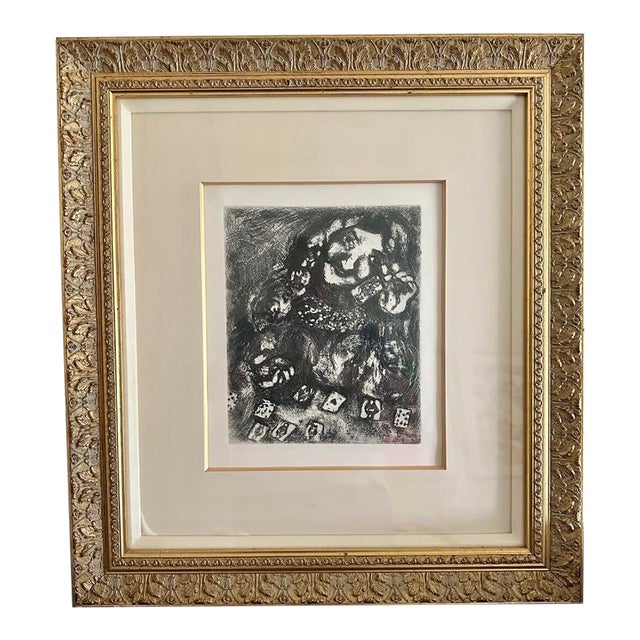
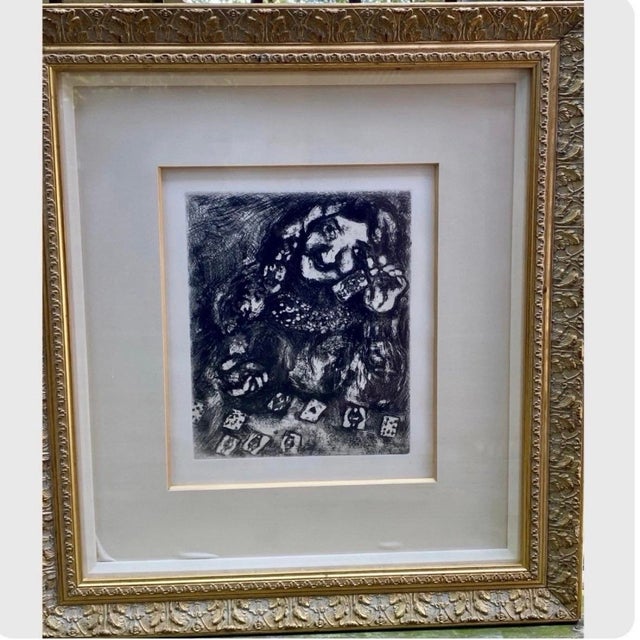
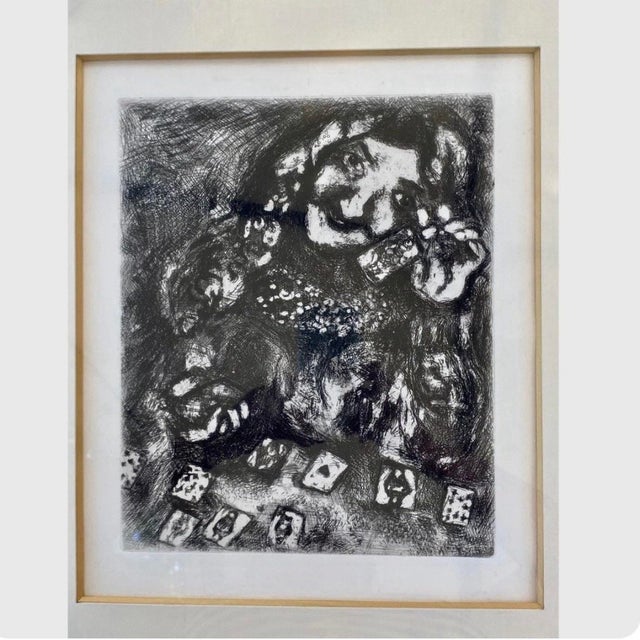
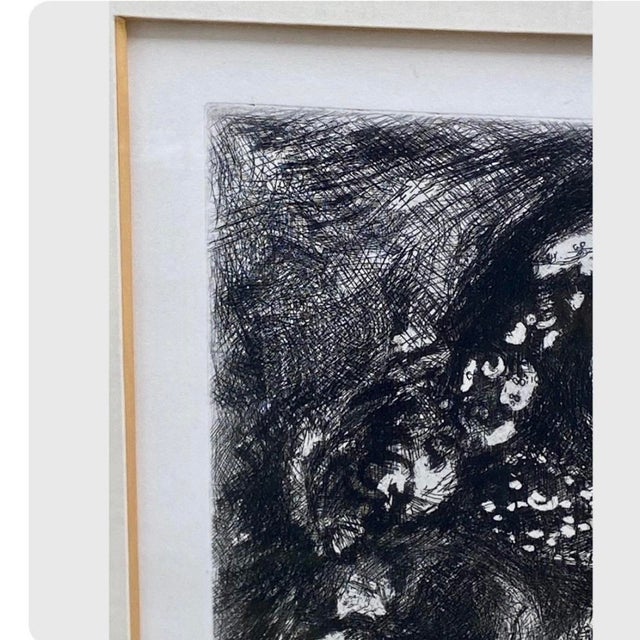
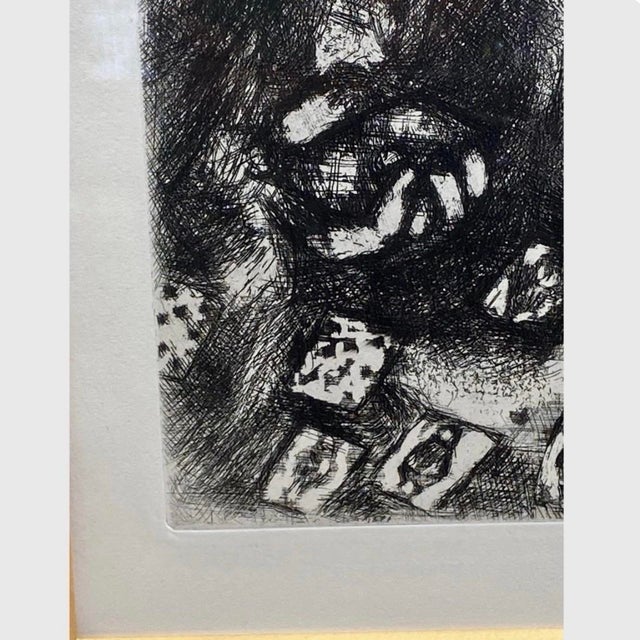
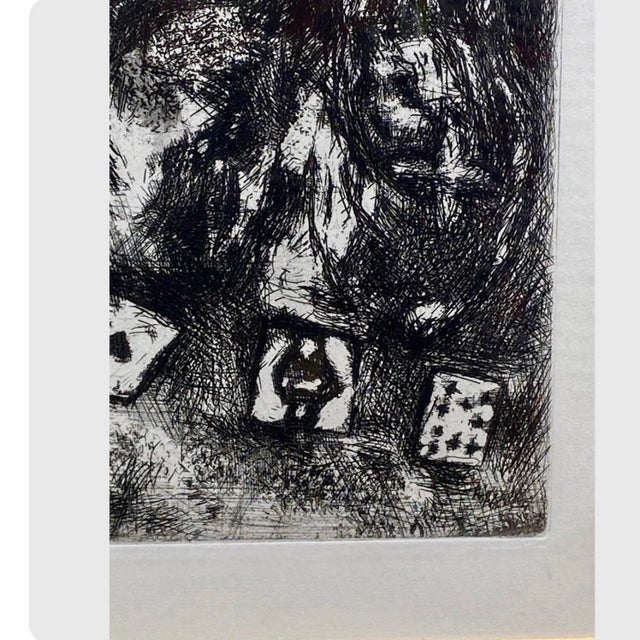
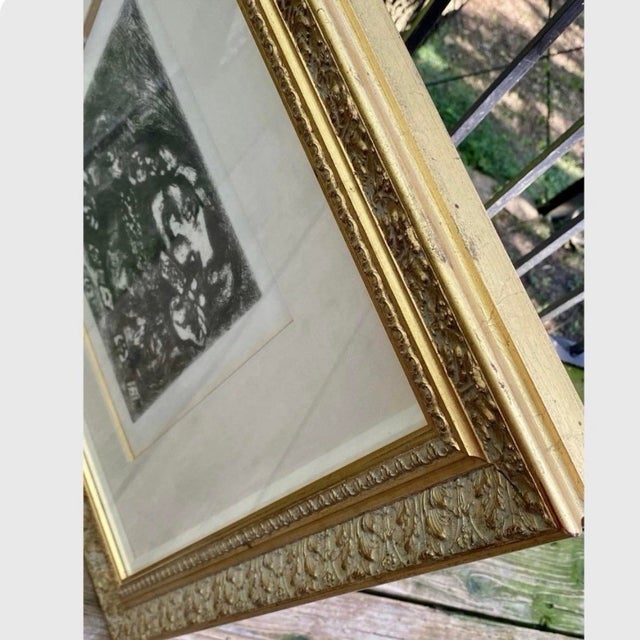
The Fortune Tellers (Les Devineresses)
by Marc Chagall (Russian/French 1887-1985)
Etching printed on wove paper (no foxing, stains, creases or …
Read more
The Fortune Tellers (Les Devineresses)
by Marc Chagall (Russian/French 1887-1985)
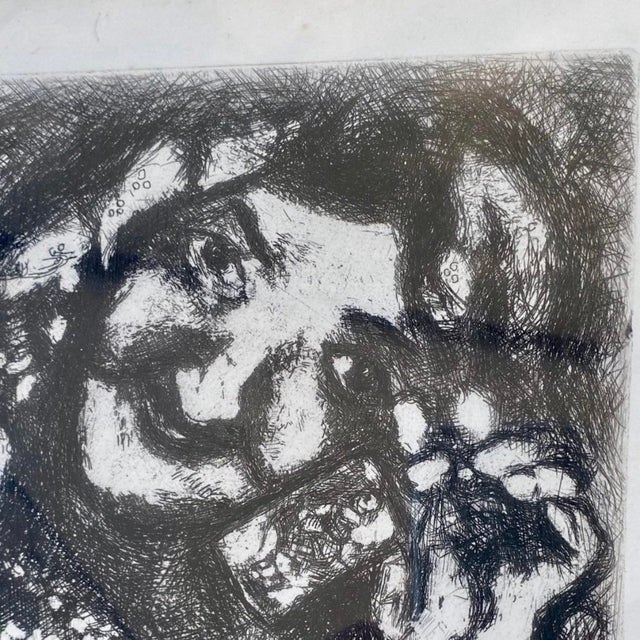
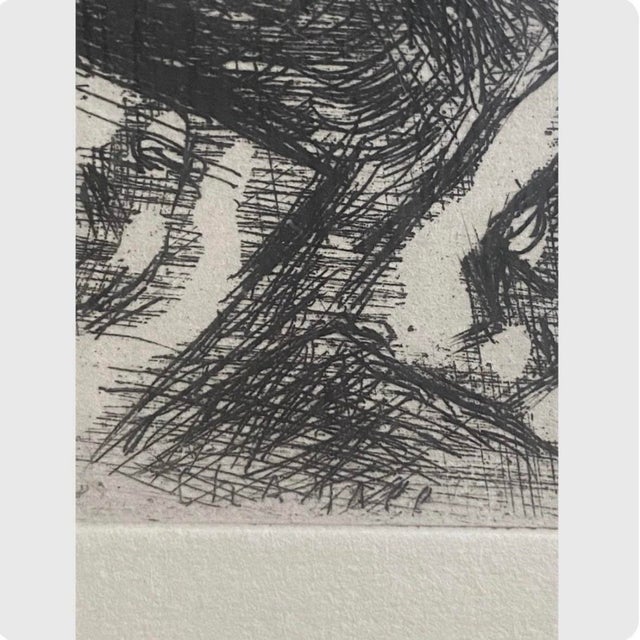
Etching printed on wove paper (no foxing, stains, creases or other issues)
Total printing edition of 200, 115 of which are monochromatic
From La Fables de la Fontaine suite
Image dimensions 11.5 inches x 9.5 inches (29 x 24 cm)
Frame dimensions 26.5 inches x 24.2 inches (67 x 61 cm)
This work features Chagall’s signature in the plate, lower left of center
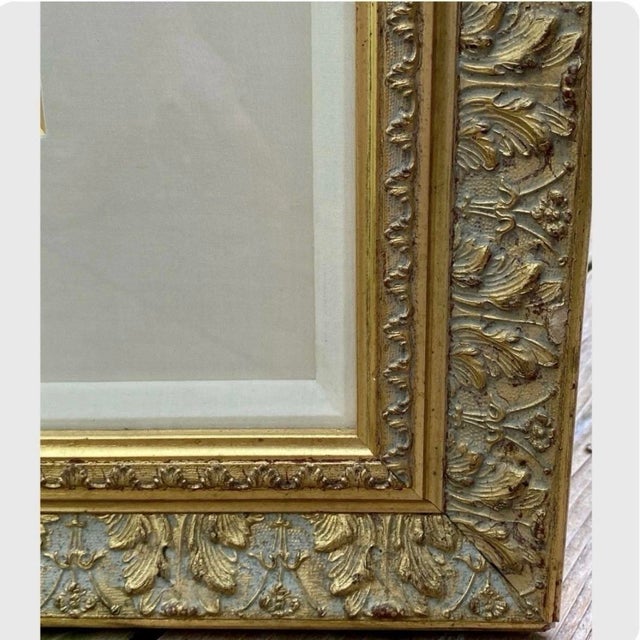
Frame is wooden, ornate gold gilt, with plexiglas
Linen mat has some bubbling/wrinkling at lower edge
Purchased from Timothy Yarger Fine Art Beverly Hills, CA, in the 1990’s
Marc Chagall’s Fables are among the very best illustrations of La Fontaine’s moral tales.
Published in 1952, the naive imagery and extraordinary breadth of tones achieved in each etching convey the simple power of La Fontaine’s text, a mixture of cautionary allegories from the ancient Greek fabulist Aesop and La Fontaine’s own invented fables.
By the late 1920s, Ambroise Vollard – dealer, collector, publisher and defender of French avant-garde artists – had become one of the most famous figures in the contemporary art world. Having published, marketed or publically supported the likes of Picasso, Matisse, Gauguin and Van Gogh, artists whose innovative works pushed against the conservative cultural values of their time, Vollard’s opinion was deemed both important and controversial by French arbiters of taste.
Vollard commissioned Chagall’s etchings to accompany La Fontaine’s Fables after meeting the young artist for the first time at his studio on the Avenue d’Orléans in 1923. Vollard’s first commission – illustrations for Gogol’s Dead Souls – established a close working relationship between the pair which would last until his sudden death in a car accident before the start of World War II. Work on the Fables began just a few years after their first acquaintance, though it would be decades before they were released to the public.
Chagall – being both a ‘romantic’ and a Jew – was deemed by conservative critics an inappropriate choice to illustrate this comparatively ‘classical’ work, Vollard’s personal endorsement coming under intense fire from staunch traditionalists in an ongoing debate that ended up in the Chamber of Deputies.
When asked by the clamouring chamber Why Chagall?, Vollard’s response was short and direct: Simply because his aesthetic seems to me in a certain sense akin to La Fontaine’s, at once sound and delicate, realistic and fantastic.
Chagall began by painting preparatory gouaches which were to be translated to the etching plates for printing. Upon realising that even the master printers charged with the task could not match the gradations of tone he desired, Chagall elected to prepare the etchings himself, using a drypoint technique to work his designs directly into the metal plates.
Work continued on the etchings from 1927-30, more than twenty years before they were issued. Vollard was often difficult to work with, juggling multiple projects with other artists at once, and through correspondences with friends Chagall betrayed his frustration with the delay in publication: I finished the books, Dead Souls and La Fontaine long ago, but Vollard, of course, procrastinates; such is his nature… He’s very difficult, Vollard. But nevertheless I hope.
The variety of images in the illustrations for the Fables is astonishing, as is the range of tones brought out by Chagall’s thickly bitten lines. Throughout the suite, scenes rarely share direct parallels with the text, Chagall instead choosing to try and capture the essence of each moral tale, with an emotional range that reveals the cruelty and the melancholy as much as the ease and the joy of La Fontaine’s stories
Widely regarded as one of the great print suites of the 20th century, Chagall’s Fables etchings were finally published in 1952 in an edition of just 200, with 85 special sets which were hand-painted by Chagall himself. An enduring series which embodies the humanity and the humility that is so typical of his work, the Fables remain one of Chagall’s – and indeed Vollard’s – most treasured endeavors.
They are considered one of the great suites of the 20th century.
This work will be shipped framed and insured
See less
- Dimensions
- 25ʺW × 4ʺD × 27ʺH
- Frame Type
- Framed
- Artist
- Marc Chagall
- Period
- 1950s
- Country of Origin
- France
- Item Type
- Vintage, Antique or Pre-owned
- Materials
- Etching
- Glass
- Wood
- Condition
- Good Condition, Original Condition Unaltered, Some Imperfections
- Color
- Black
- Condition Notes
- No foxing, stains, creases, or other issues No foxing, stains, creases, or other issues less
Questions about the item?
Returns & Cancellations
Return Policy - All sales are final 48 hours after delivery, unless otherwise specified in the description of the product.
Cancellation Policy - Prior to shipping or local pickup, buyers may cancel an order for up to 48 hours, unless otherwise specified.
Related Collections
- Patrick Nagel Reproduction Prints
- Hable Reproduction Prints
- Reproduction Prints in Panama City, FL
- William Hogarth Reproduction Prints
- Lauren Ralph Lauren Reproduction Prints
- Jonathan Adler Reproduction Prints
- Sister Parish Reproduction Prints
- Leather Reproduction Prints
- Edward S. Curtis Reproduction Prints
- Mark D. Sikes Reproduction Prints
- Jute Reproduction Prints
- Sam Francis Reproduction Prints
- William Gropper Reproduction Prints
- Daylight Dream Editions Reproduction Prints
- Reproduction Prints in Mobile
- Alvar Aalto Reproduction Prints
- Utagawa Kunisada (Toyokuni Iii) Reproduction Prints
- Joshua Reynolds Reproduction Prints
- Port 68 Reproduction Prints
- Tuscan Reproduction Prints
- Gold-Plate Reproduction Prints
- Polychrome Reproduction Prints
- Restoration Hardware Reproduction Prints
- Bunny Williams Home Reproduction Prints
- Ralph Lauren Home Reproduction Prints