

Details
Description
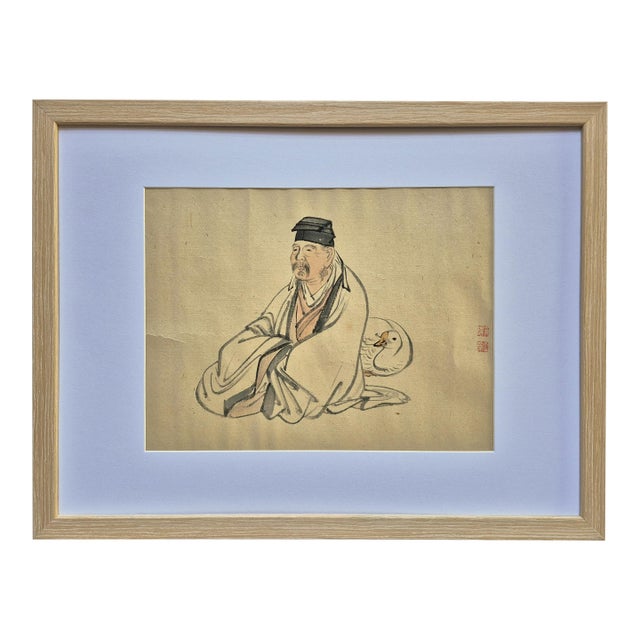
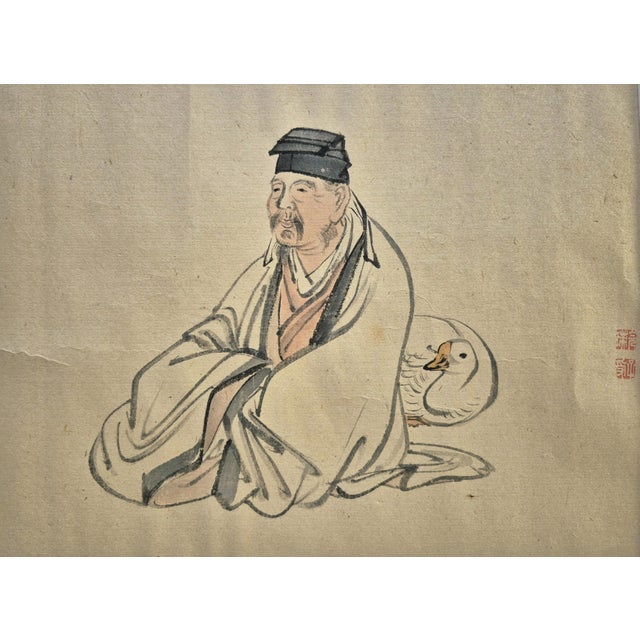
Antique Japanese Meiji era painting of Zen Monk and Goose. The combination of the monk and the goose signifies the …
Read more
Antique Japanese Meiji era painting of Zen Monk and Goose. The combination of the monk and the goose signifies the core principles of Zen Buddhism, specifically the harmony between humanity and nature, and the beauty of a quiet, unassuming existence, free from worldly constraints and seeking higher truths. Geese represent aspects of monastic life, including meditation, community, and the beauty of a mundane existence. The goose is also a traditional symbol of longevity and peace in old age or a comfortable, safe existence.
This painting has been recovered (cut) from an antique hanging scroll, folding screen, fusuma door or album leaf and has been newly framed.
CONDITION: Good condition for age. Please note that antique and vintage artworks may have traces of time, stains and creases due to age, so please review all photos.
PERIOD: Meiji
SIZE: Frame size 13” x 13”.
ARTIST: Unknown
See less
Questions about the item?
Returns & Cancellations
Return Policy - All sales are final 48 hours after delivery, unless otherwise specified in the description of the product.
Cancellation Policy - Prior to shipping or local pickup, buyers may cancel an order for up to 48 hours, unless otherwise specified.
Related Collections
- Ed Ruscha Paintings
- Photorealism Canvas Paintings
- Ralph Lauren Paintings
- Photorealism Paintings in New York
- Louise Nevelson Paintings
- Richard Serra Paintings
- Silk Velvet Paintings
- Herman Miller Paintings
- BDDW Paintings
- Jo Baskerville Paintings
- Jean-Paul Barray Paintings
- Johannes Andersen Paintings
- Peter Behrens Paintings
- Carl-Axel Acking Paintings
- Joseph Stella Paintings
- Karl-Erik Ekselius Paintings
- Pedro Friedeberg Paintings
- Piet Hein Eek Paintings
- Black Photorealism Paintings
- James McCray Paintings
- Lawson-Fenning Paintings
- Milton Avery Paintings
- Raphael Paintings
- Hans Andersen Paintings
- Cassina Paintings