






Details
Description
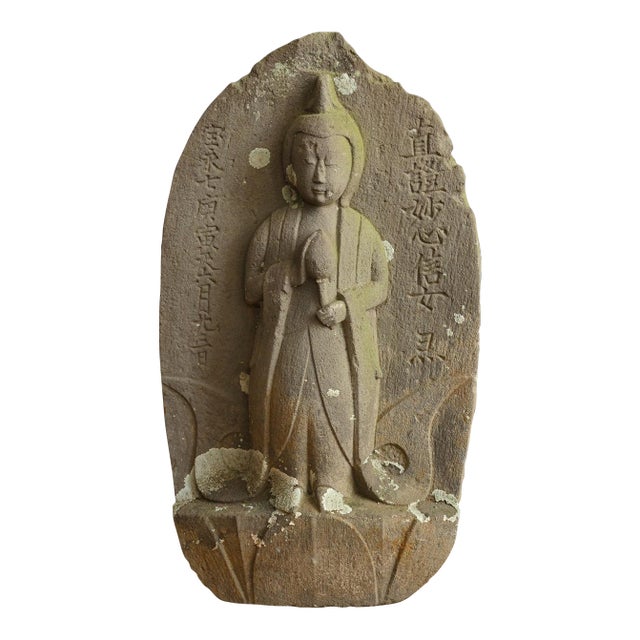
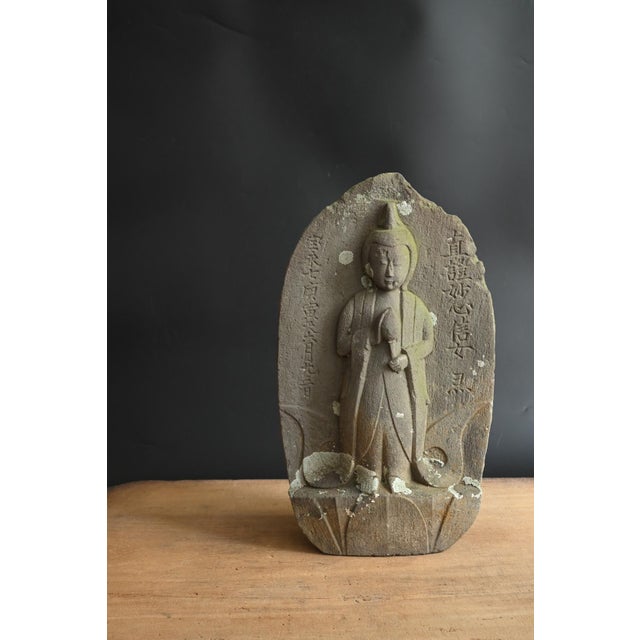
This work is a stone statue of Kannon Bosatsu (Avalokiteshvara), believed to have been created during the middle Edo period.
…
Read more
This work is a stone statue of Kannon Bosatsu (Avalokiteshvara), believed to have been created during the middle Edo period.
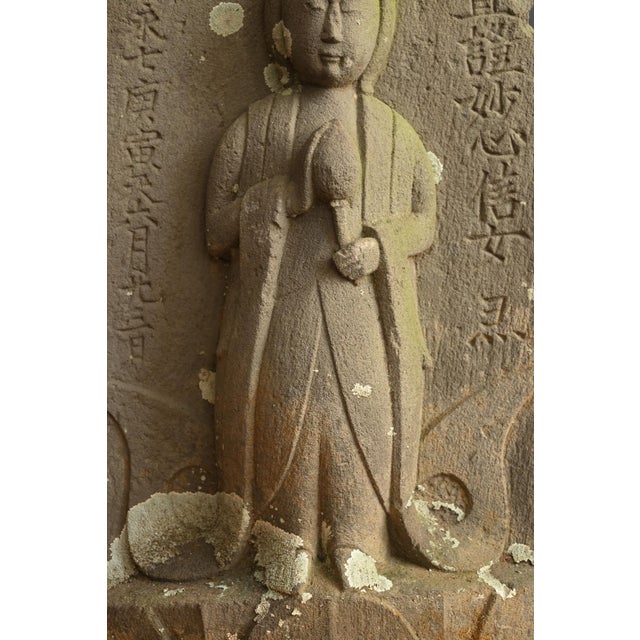
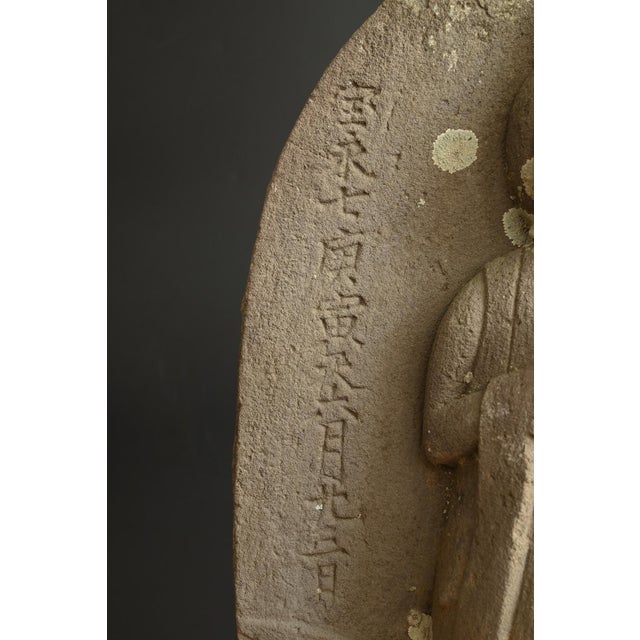
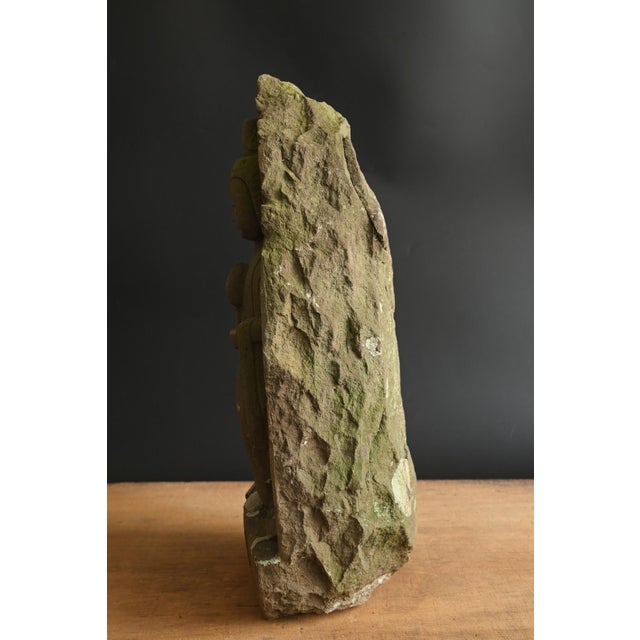
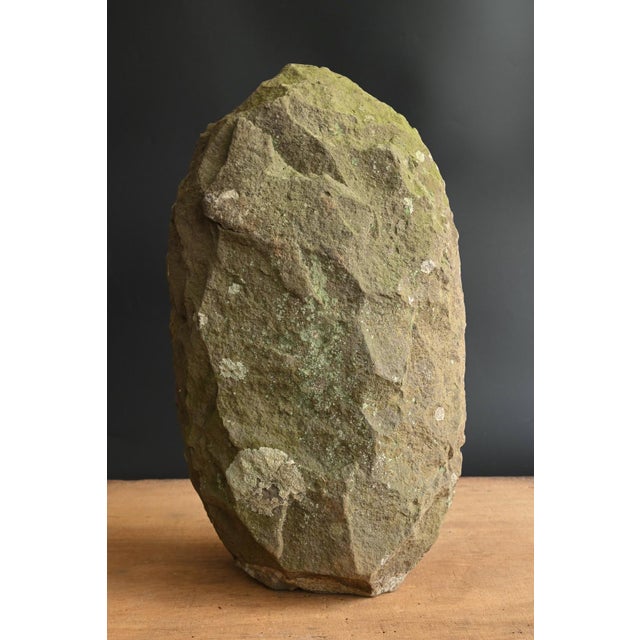
An inscription on the back reads “Hoei 7,” corresponding to the year 1710. In addition, the date “June 23” is also carved, indicating that this statue was erected more than 300 years ago, making it a valuable historical example.
Kannon Bosatsu is widely revered in Buddhism as a compassionate being who listens to the suffering and worries of people and offers salvation through boundless mercy. In Japan, Kannon has long been regarded as a familiar and approachable Buddhist figure, and statues have been enshrined in many places such as temples, village shrines, and along old roads and pilgrimage routes.
This statue was likely enshrined in a temple, a small roadside shrine, or possibly within a cemetery setting, where it quietly served as an object of prayer and remembrance.
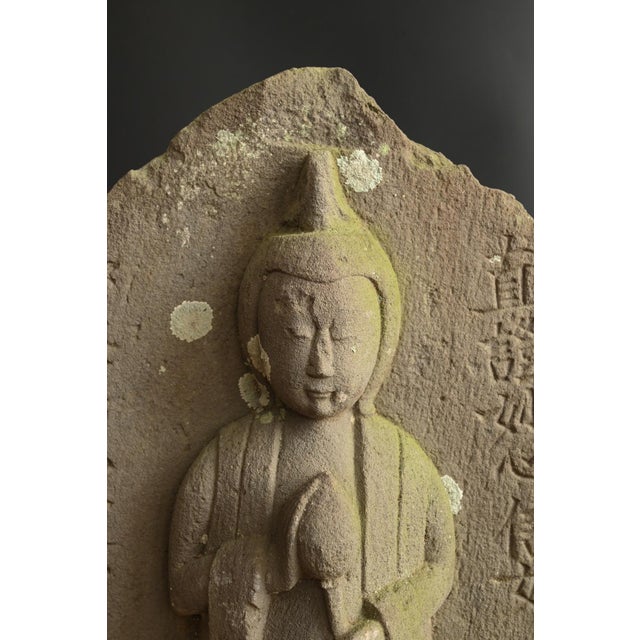
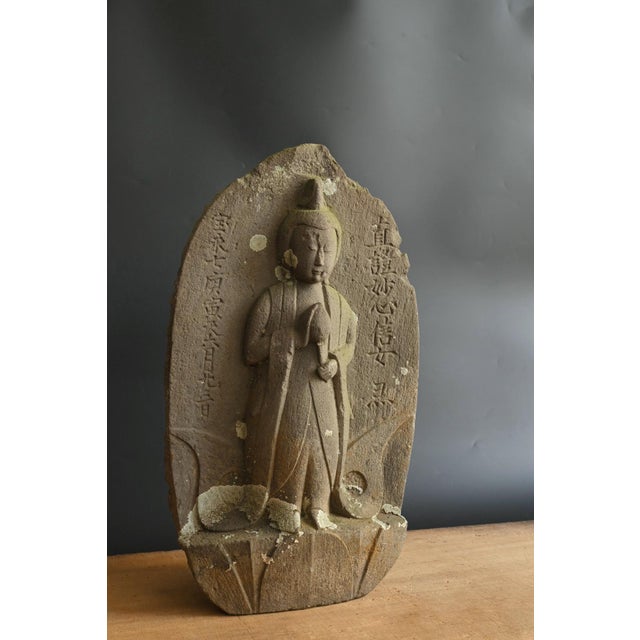
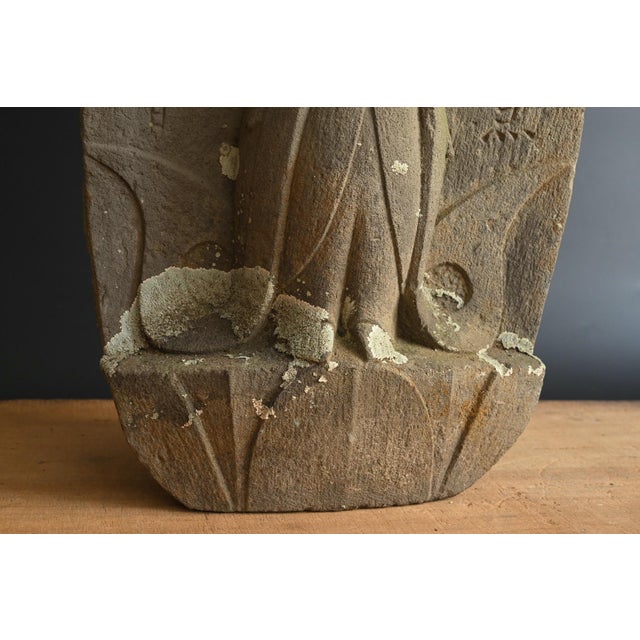
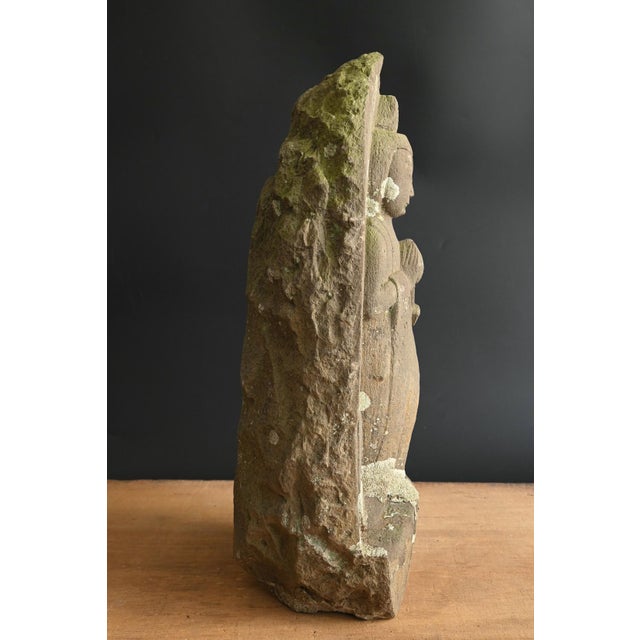
With a height of approximately 53 cm and a weight of about 28.95 kg, it has a balanced and dignified presence as a stone Buddha. The standing figure of Kannon is carved within a boat-shaped halo formed from the natural slab of stone behind it. The expression is exceptionally calm and serene, evoking a quiet atmosphere of prayer. The figure holds a lotus bud in its hand, a symbol closely associated with Kannon representing purity and rebirth.
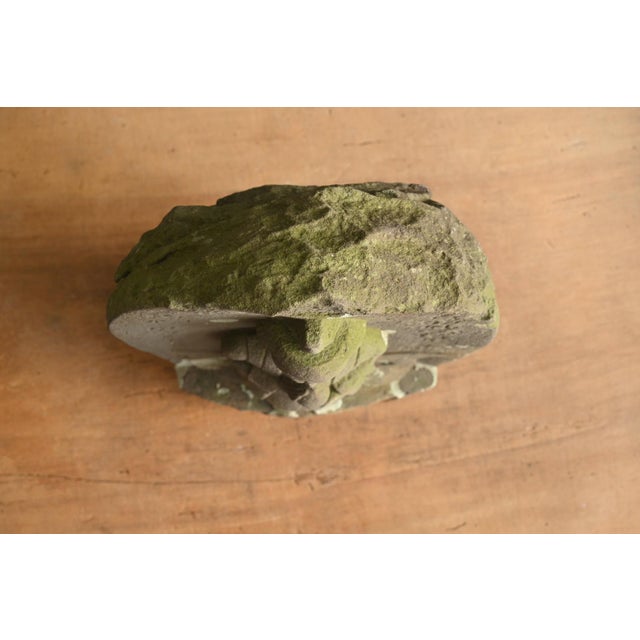
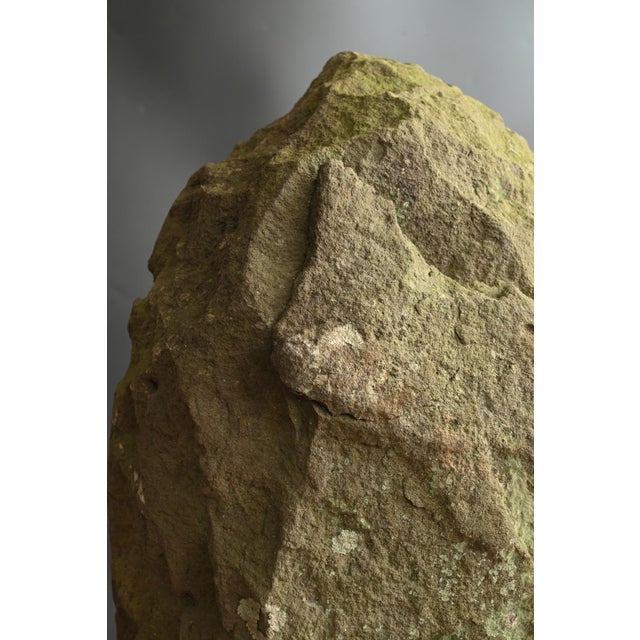
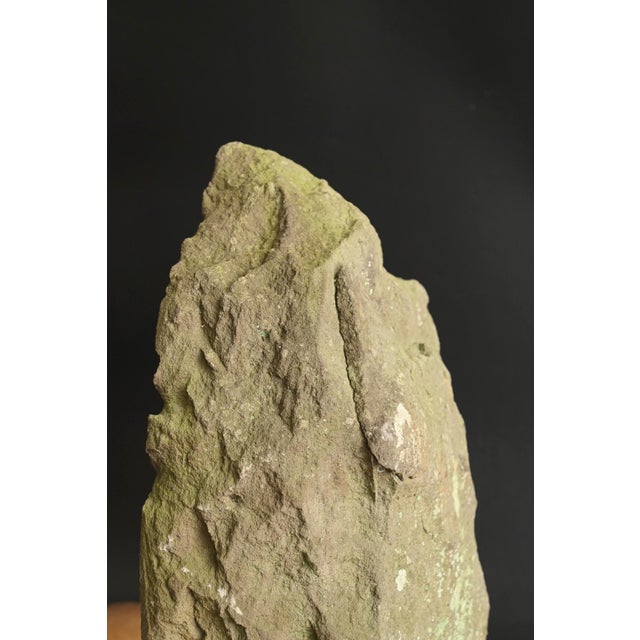
The stone surface shows the natural weathering that comes with long passage of time, and moss and lichen have formed naturally on the surface. These traces of nature are characteristic of stone Buddhist statues that have spent many years outdoors, adding depth and historical character to the piece.
Regarding condition, there is a small chip at the upper tip of the stone. Aside from this, there are no major damages, and the carving remains very well preserved. The outlines of the sculpture and the gentle facial expression are still clearly visible, maintaining the soft and peaceful style typical of Edo-period stone Buddhas. The statue stands securely on its own.
During the Meiji period’s anti-Buddhist movement (Haibutsu Kishaku), as well as later periods of urban development and road construction, many temples and small roadside shrines were relocated, and stone Buddhist statues were sometimes released into private hands. This piece may also have been passed down through such historical circumstances. Today, Edo-period stone Buddhas are often collected and preserved by enthusiasts, and they attract considerable interest internationally as well.
Placed in a corner of a garden, beneath the eaves, or near an entranceway, this statue will bring a quiet spiritual presence to its surroundings. Beyond its religious significance, it can also be appreciated as a sculptural work of stone carrying centuries of history.
*Please note:* The photographs were taken under slightly warm natural light, so the stone surface may appear somewhat orange in some images. Depending on the lighting conditions, it may also appear slightly bluish. Please understand that the actual color tone may vary slightly under different light.
Size: W30 × D18.9 × H53 cm
Weight: 28.95 kg
Period: Hoei 7 (1710)
Item No.:SC158
See less
- Dimensions
- 11.81ʺW × 7.44ʺD × 20.87ʺH
- Styles
- Religious
- Period
- Early 18th Century
- Country of Origin
- Japan
- Item Type
- Vintage, Antique or Pre-owned
- Materials
- Stone
- Condition
- Good Condition, Original Condition Unaltered, Some Imperfections
- Color
- Gray
- Condition Notes
- It is stated in the description. It is stated in the description. less
Questions about the item?
Returns & Cancellations
Return Policy - All sales are final 48 hours after delivery, unless otherwise specified in the description of the product.
Cancellation Policy - Prior to shipping or local pickup, buyers may cancel an order for up to 48 hours, unless otherwise specified.
Related Collections
- Lead Statues
- Verdigris Bronze Finish Statues
- Wrought Iron Statues
- Carrara Marble Statues
- Hellenistic Statues
- Slate Gray Statues
- Concrete Statues
- Foo Dog Statues
- Cast Iron Statues
- Bronze Statues
- Dog Statues
- Chinese Statues
- Lion Statues
- Marble Statues
- Statues in Los Angeles
- Plaster Statues
- Wood Statues
- Italian Statues
- Classical Roman Statues
- Buddha Statues
- Fiberglass Statues
- Asian Statues
- Outdoor Statues
- Deer Garden Statues
- Classical Greek Statues