

Details
Description
Salvador Dali (Spanish, 1904-1989)
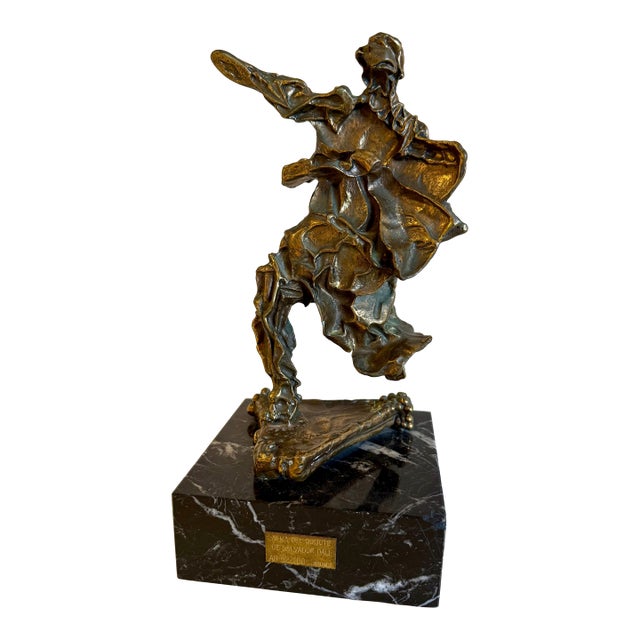
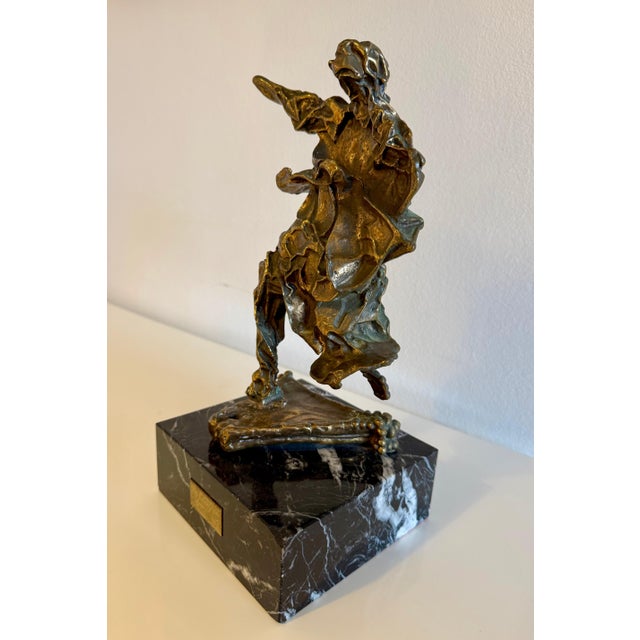
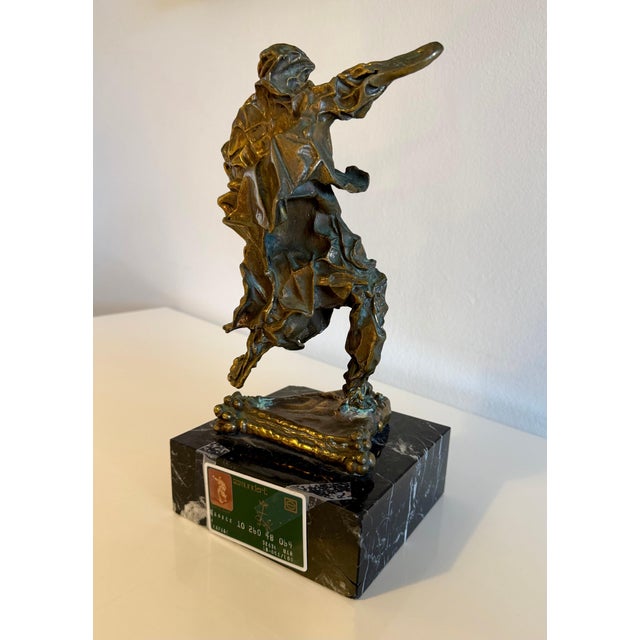
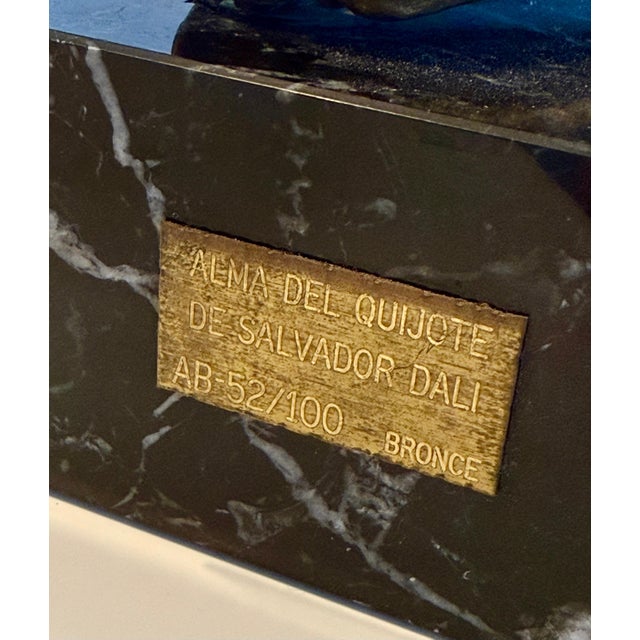
Alma del Quijote
Bronze with marble base
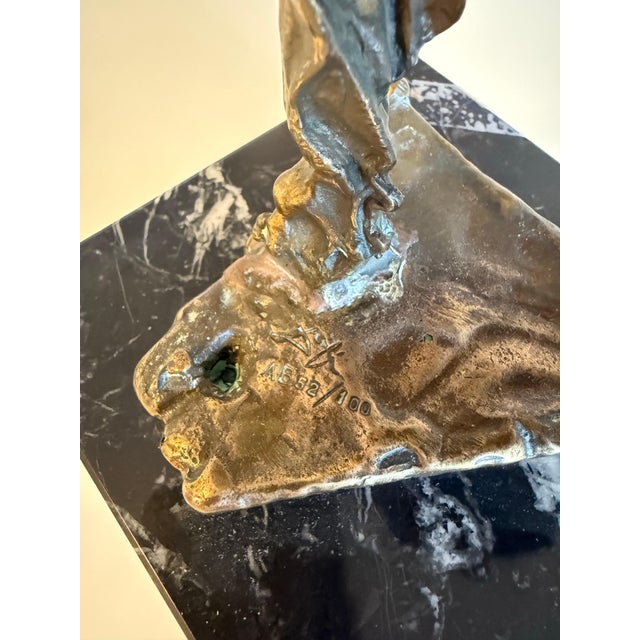
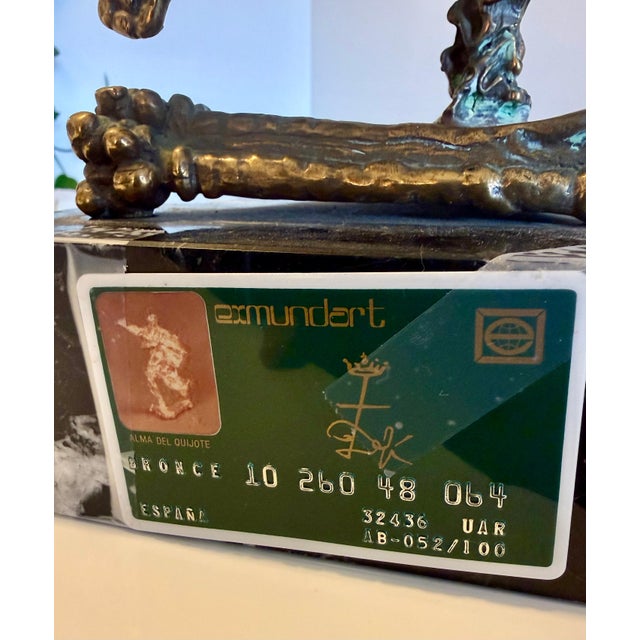
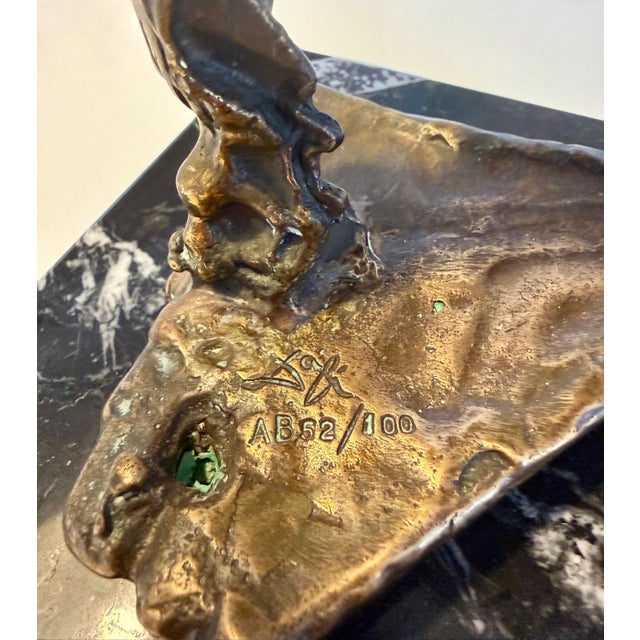
Edition: AB 52/100
Signed by Dalí
This Surrealist sculpture …
Read more
Salvador Dali (Spanish, 1904-1989)
Alma del Quijote
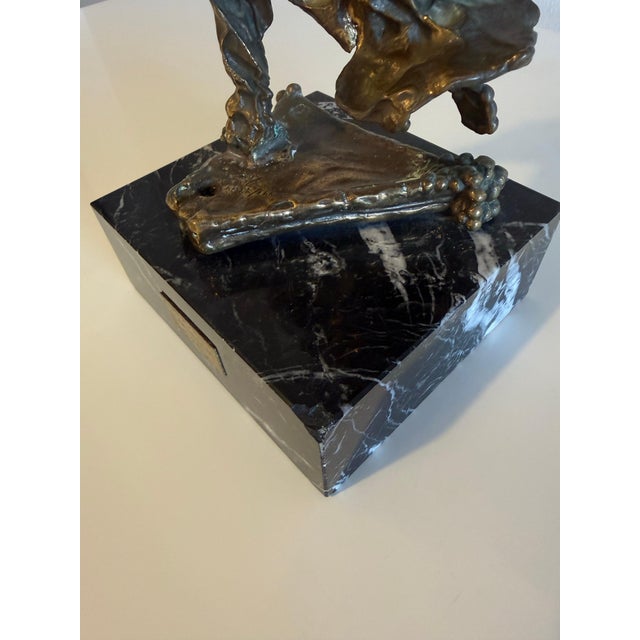
Bronze with marble base
Edition: AB 52/100
Signed by Dalí
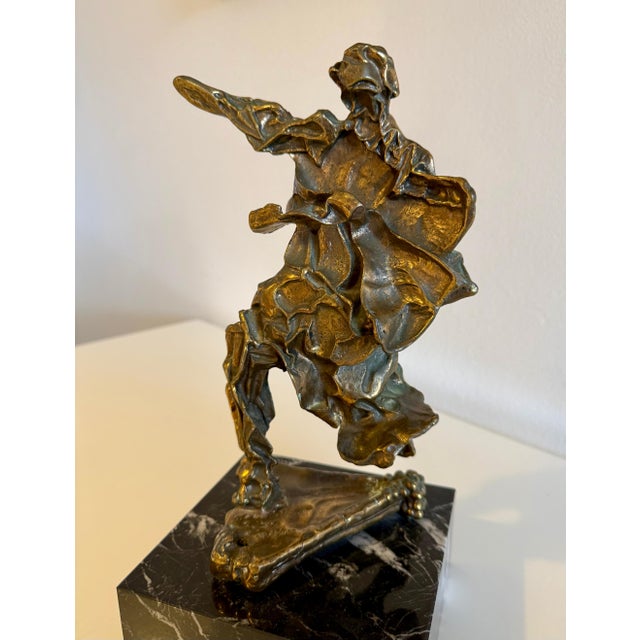
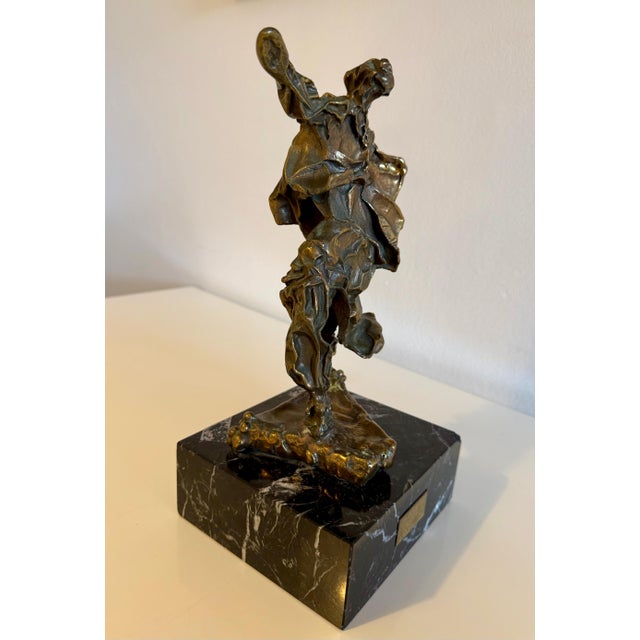
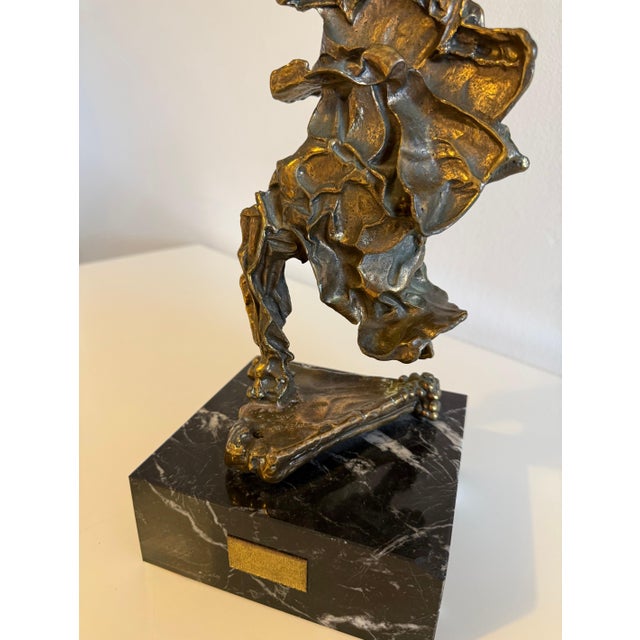
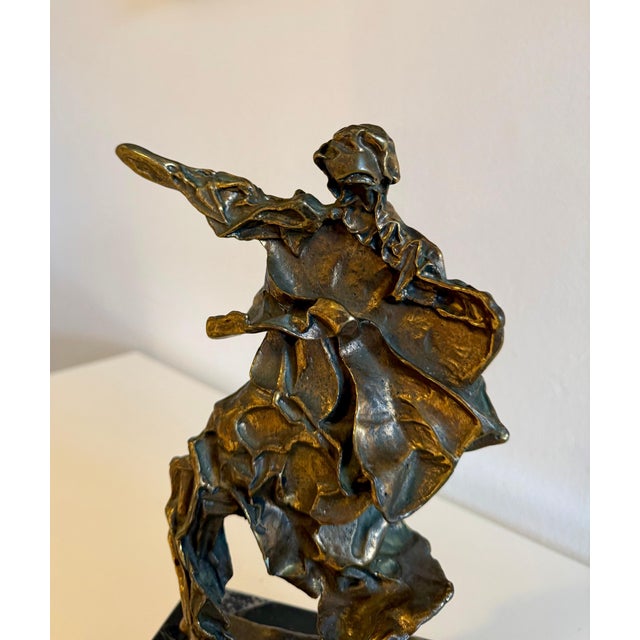
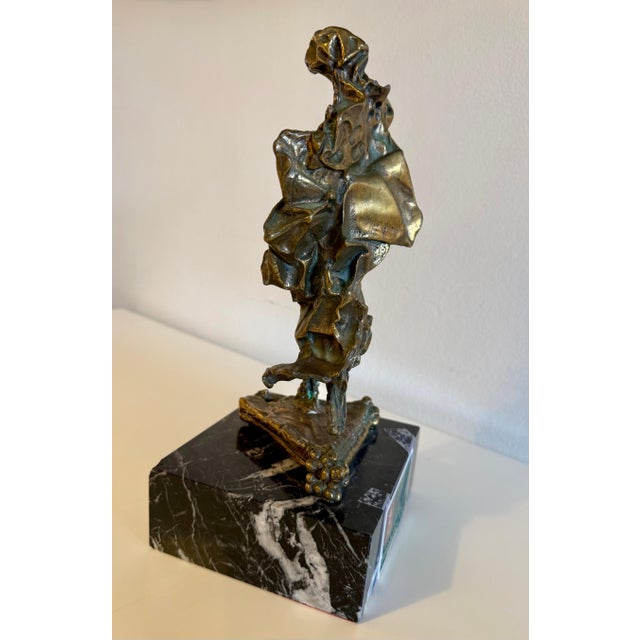
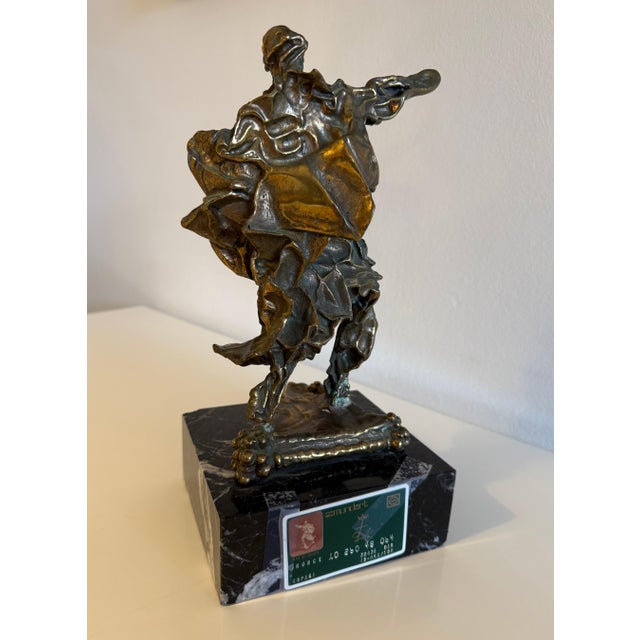
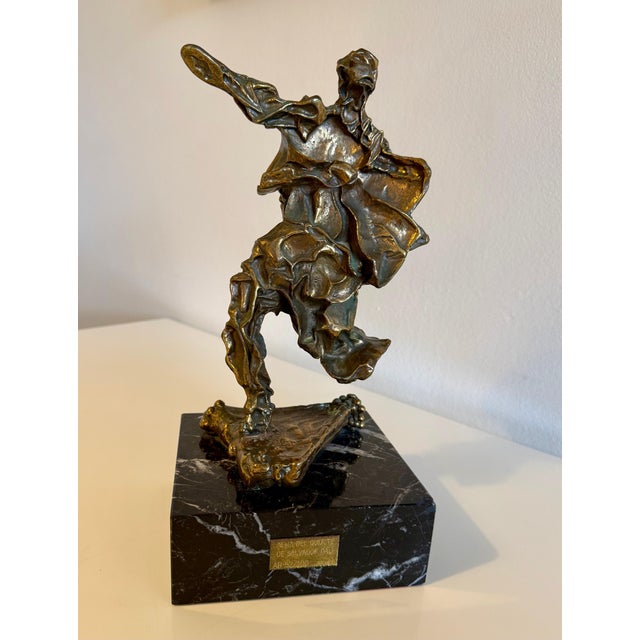
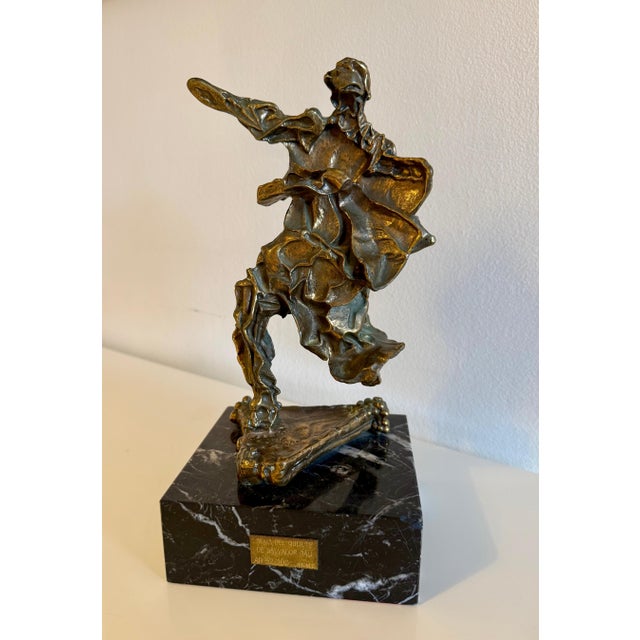
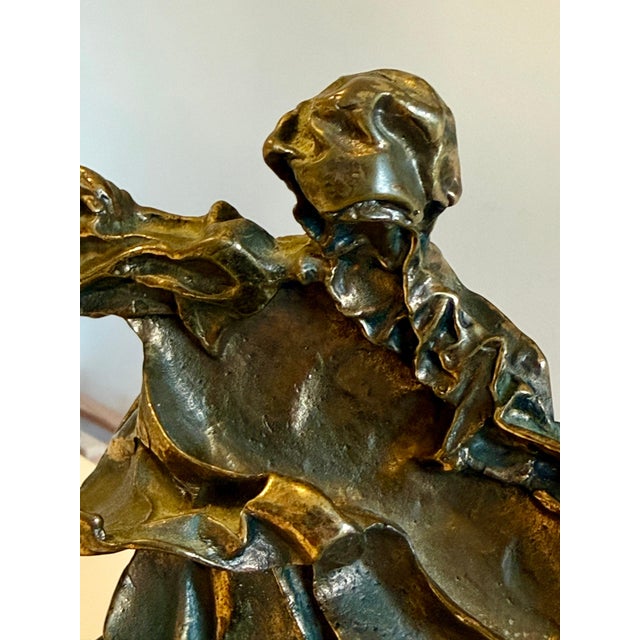
This Surrealist sculpture depicts a dynamic and fragmented Don Quixote, executed in bronze with a marble base. The sculpture is hand-signed by Dali and numbered AB 52/100
Dimensions: Height: 18" × Width: 7" × Depth: 7"
Sculpture with certificate of authenticity, published by Exmundart (Spain)
Surrealist bronze sculpture by Salvador Dalí depicting an interpretation of the soul of Don Quixote. The sculpture is mounted on a black, marble stone base.
Salvador Dalí (Spanish, 1904-1989)
A leading proponent of Surrealism, Salvador Dalí is perhaps as well-known for his flamboyant personality as his superb technical skill. Dalí became acquainted with André Breton, a key figure of the Surrealist movement, in 1929. “The Persistence of Memory” is often cited as the most important work of this style. The Museum of Modern Art, New York, held a retrospective of the artist’s work in 1941. The next year, he began a more classical series of paintings, incorporating history, science and religion. In addition to painting, Dalí also made prints, photographs, films, jewelry and sculpture. His works can be found in collections worldwide, including the National Gallery, Washington, DC and the Salvador Dalí Museum. Dalí created fantastical prints, paintings, sculptures, films, and writings which helped cement the movement’s identity. Dalí exhibited widely in his lifetime, and his works belong in the collections of institutions including the Tate, the Museum of Modern Art, the Art Institute of Chicago, and others. In 1928 Dali went to Paris where he met the Spanish painters Pablo Picasso and Joan Miro. He established himself as the principal figure of a group of surrealist artists grouped around Andre Breton, who was something like the theoretical "schoolmaster" of surrealism.
He was of the original group that included Hans Jean Arp, Rene Magritte, Max Ernst, Joan Miro, Frida Kahlo, Man Ray, Yves Tanguy and Leonora Carrington. Years later Breton turned away from Dali accusing him of support of fascism, excessive self-presentation and financial greediness.
By 1929 Dali had found his personal style that should make him famous - the world of the unconscious that is recalled during our dreams. The surrealist theory is based on the theories of the psychologist Dr. Sigmund Freud. Recurring images of burning giraffes and melting watches became the artist's surrealist trademarks. His great craftsmanship allowed him to execute his paintings in a nearly photorealistic style. No wonder that the artist was a great admirer of the vintage Italian Renaissance painter Raphael.
Meeting Gala was the most important event in the artist's life and decisive for his future career. She was a Russian immigrant and ten years older than Dali. When he met her, she was married to Paul Eluard.
In 1933 Salvador Dali had his first one-man show in New York. One year later he visited the U.S. for the first time supported by a loan of US$500 from Pablo Picasso. To evade World War II, Dali chose the U.S.A. as his permanent residence in 1940. He had a series of spectacular exhibitions, among others a great retrospective at the Museum of Modern Art in New York.
Besides creating a number of great paintings, Dali caused the attention of the media by playing the role of a surrealist clown. He made a lot of money from his limited edition work and was contemptuously nicknamed Avida Dollars (greedy for dollars) by Andre Breton.
Dali became the darling of the American High Society. Celebrities like Jack Warner or Helena Rubinstein gave him commissions for portraits. His artworks became a popular trademark and besides painting he pursued other activities - jewelry and dated clothing designs for Coco Chanel or film making with Alfred Hitchcock.
In 1948 Dali and Gala returned to Europe, spending most of their time either in their residence in Lligat/Spain or in Paris/France or in New York. Dali developed a lively interest in science, religion and history. He integrated things into his art that he had picked up from popular science magazines. Another source of inspiration were the great classical masters of painting like Raphael, Velasquez or the French painter Ingres. Don Quixote was a recurring theme in his work.
The Dali Museum in St. Petersburg in Florida/U.S.A.
This art museum was founded in 1971 by the Dali collector A. Reynolds Morse and his wife Eleanor. Dali Museum-Theater in Figueres, Spain
The Museum was the former Municipal Theater of Figueres.
Since 1970 the artist had dedicated his energy to transform the former Municipal Theater into a museum and art gallery. In 1974 the Teatro Museo Dali was officially opened.
See less
- Dimensions
- 7ʺW × 7ʺD × 18ʺH
- Styles
- Surrealism
- Art Subjects
- Figure
- Period
- 1970s
- Country of Origin
- United States
- Item Type
- Vintage, Antique or Pre-owned
- Materials
- Bronze
- Marble
- Condition
- Good Condition, Original Condition Unaltered, Some Imperfections
- Color
- Bronze
- Condition Notes
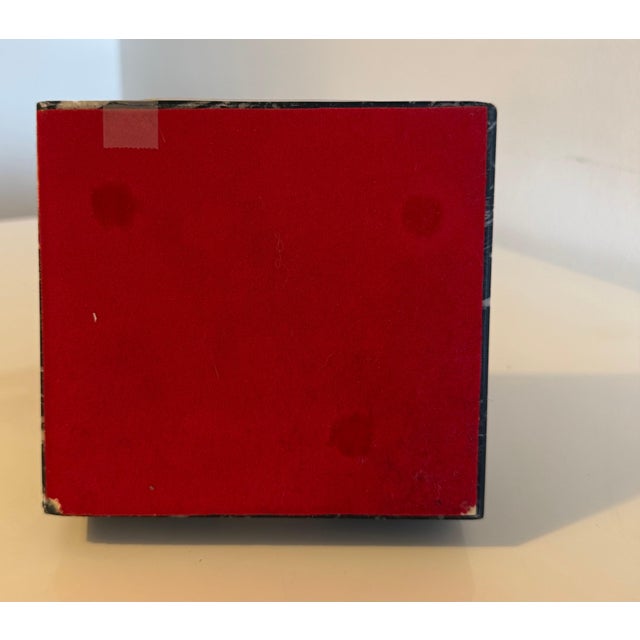
- Good minor age commensurate wear. please see photos corner rough on marble base with minor chipping. Good minor age commensurate wear. please see photos corner rough on marble base with minor chipping. less
Questions about the item?
Returns & Cancellations
Return Policy - All sales are final 48 hours after delivery, unless otherwise specified in the description of the product.
Cancellation Policy - Prior to shipping or local pickup, buyers may cancel an order for up to 48 hours, unless otherwise specified.
Related Collections
- Mathurin Moreau Sculpture
- Lime Sculpture
- Loredano Rosin Sculpture
- Oil-Rubbed Bronze Finish Sculpture
- Roman Bronze Works Sculpture
- Albert Ernest Carrier-Belleuse Sculpture
- Polycarbonate Sculpture
- Constantin Brancusi Sculpture
- Peter Shire Sculpture
- Chaim Gross Sculpture
- Boris Lovet-Lorski Sculpture
- Gourd Sculpture
- Recycled/Repurposed Sculpture
- Sculpture in Panama City, FL
- Straw Sculpture
- Maison Jansen Sculpture
- Georgian Sculpture
- Worlds Away Sculpture
- Far Pavilions Sculpture
- David Palombo Sculpture
- Fernando Botero Sculpture
- Photography Sculpture
- Gold-Plate Sculpture
- Pierre Giraudon Sculpture
- Austin Productions Sculpture