

Details
Description
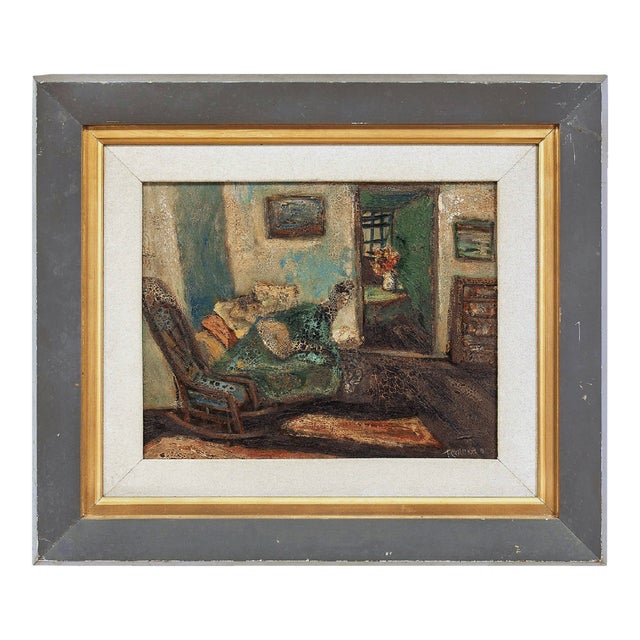
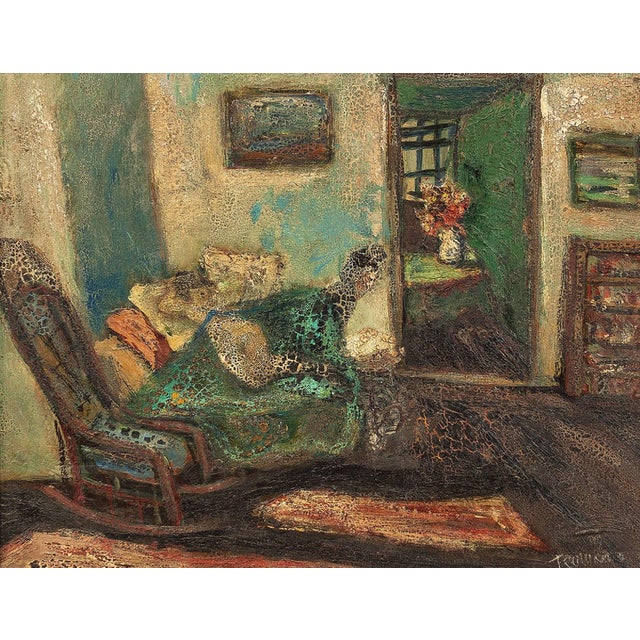
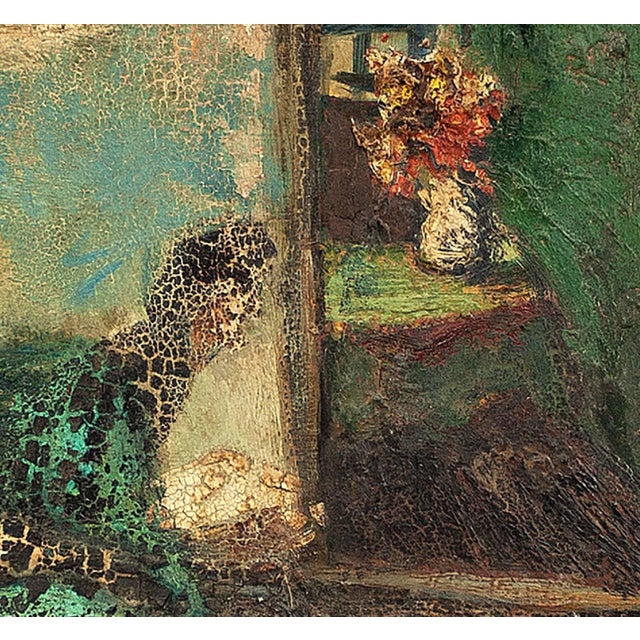
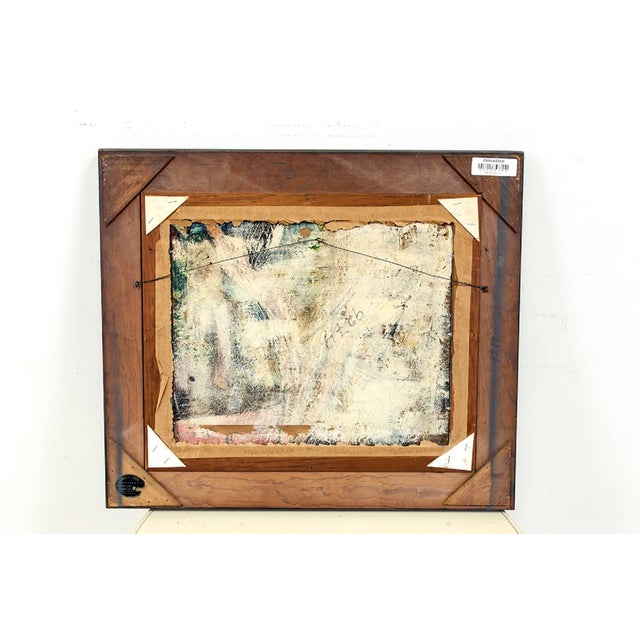
Measures 16.5 X 20 without frame. heavy craquelure. it seems like some sort of experimental technique the artist used. paint …
Read more
Measures 16.5 X 20 without frame. heavy craquelure. it seems like some sort of experimental technique the artist used. paint is stable. please see photos Abram Tromka was born May 1, 1896 in Poland. At the age of seven he immigrated with his family to the United States, settling in New York City. It was on the boat coming to New York where Tromka first became interested in art. Fascinated by a woman who was painting, he decided that he wanted to become an artist. Upon arrival at immigration headquarters, Tromka’s family adopted the surname “Phillips,” which he kept until 1930. Hence the artist’s early works bear the signature — ‘A. Phillips.’
Having a rough childhood, Tromka left home at 15 and spent the remainder of his teenage years living at the Henry Street Settlement. Lilian D. Wald, founder and head of the settlement, was so impressed by young Tromka’s talent for art that the settlement began offering art classes. In 1915, she used his drawings and etchings to illustrate her book, The House on Henry Street. That same year, Tromka began his schooling at the Ferrer School, where he studied under Ashcan artists Robert Henri (1865-1929) and George Bellows (1882-1925) until 1922. Tromka was very impressed by the Ashcan style, and Henri and Bellows especially influenced his artistic development.
In 1927, Tromka befriended the curator of painting at the Brooklyn Museum, Herbert Tschudy who organized Tromka’s first solo exhibition at the museum in 1932. As a resident of Brooklyn, Tromka contributed to the New York arts throughout the rest of his artistic career, participating in many shows and exhibitions in galleries and museums, including the Metropolitan Museum of Art. Tromka’s work was most frequently shown at the ACA Gallery in New York City beginning in 1933. Following the success of his first Brooklyn Museum exhibition, his art was also shown throughout the country, and a traveling exhibition of serigraphs including his work was shown in the U.S.S.R.
As a member of the New York branch of the American Artists Congress, Tromka participated in membership exhibitions and served on the exhibition committee. He also participated in the Federal Art Project throughout its entire duration from 1935 to 1943. Rather than joining out of necessity, Tromka was invited to the WPA program to offer prestige to the Depression-era program. The industrial subject matter and style of his art during the Art Project continued to resonate with that of Henri’s and Bellows’ realist approach.
In 1946 and again in 1952, the Brooklyn Museum awarded Tromka for his merits in the visual arts. He continued working as an artist in New York City until his death in June of 1954.stable. Abram Tromka was born May 1, 1896 in Poland. At the age of seven he immigrated with his family to the United States, settling in New York City. It was on the boat coming to New York where Tromka first became interested in art. Fascinated by a woman who was painting, he decided that he wanted to become an artist. Upon arrival at immigration headquarters, Tromka’s family adopted the surname “Phillips,” which he kept until 1930. Hence the artist’s early works bear the signature — ‘A. Phillips.’
Having a rough childhood, Tromka left home at 15 and spent the remainder of his teenage years living at the Henry Street Settlement. Lilian D. Wald, founder and head of the settlement, was so impressed by young Tromka’s talent for art that the settlement began offering art classes. In 1915, she used his drawings and etchings to illustrate her book, The House on Henry Street. That same year, Tromka began his schooling at the Ferrer School, where he studied under Ashcan artists Robert Henri (1865-1929) and George Bellows (1882-1925) until 1922. Tromka was very impressed by the Ashcan style, and Henri and Bellows especially influenced his artistic development.
In 1927, Tromka befriended the curator of painting at the Brooklyn Museum, Herbert Tschudy who organized Tromka’s first solo exhibition at the museum in 1932. As a resident of Brooklyn, Tromka contributed to the New York arts throughout the rest of his artistic career, participating in many shows and exhibitions in galleries and museums, including the Metropolitan Museum of Art. Tromka’s work was most frequently shown at the ACA Gallery in New York City beginning in 1933. Following the success of his first Brooklyn Museum exhibition, his art was also shown throughout the country, and a traveling exhibition of serigraphs including his work was shown in the U.S.S.R.
As a member of the New York branch of the American Artists Congress, Tromka participated in membership exhibitions and served on the exhibition committee. He also participated in the Federal Art Project throughout its entire duration from 1935 to 1943. Rather than joining out of necessity, Tromka was invited to the WPA program to offer prestige to the Depression-era program. The industrial subject matter and style of his art during the Art Project continued to resonate with that of Henri’s and Bellows’ realist approach.
In 1946 and again in 1952, the Brooklyn Museum awarded Tromka for his merits in the visual arts. He continued working as an artist in New York City until his death in June of 1954.
See less
- Dimensions
- 25.5ʺW × 1ʺD × 22ʺH
- Styles
- Modern
- Frame Type
- Framed
- Art Subjects
- Abstract
- Period
- Mid 20th Century
- Country of Origin
- United States
- Item Type
- Vintage, Antique or Pre-owned
- Materials
- Oil Paint
- Condition
- Good Condition, Original Condition Unaltered, Some Imperfections
- Color
- Green
- Condition Notes
- Good please see photos. heavy craquelure. I believe original to the piece. Good please see photos. heavy craquelure. I believe original to the piece. less
Questions about the item?
Returns & Cancellations
Return Policy - All sales are final 48 hours after delivery, unless otherwise specified in the description of the product.
Cancellation Policy - Prior to shipping or local pickup, buyers may cancel an order for up to 48 hours, unless otherwise specified.
Related Collections
- Ed Ruscha Paintings
- Ralph Lauren Paintings
- Photorealism Canvas Paintings
- Photorealism Paintings in New York
- Karen Offutt Paintings
- Richard Serra Paintings
- Mark Lewis Art Paintings
- Mark Lewis Paintings
- FM Mobler Paintings
- Jo Baskerville Paintings
- Vienna Secession Paintings
- Silk Velvet Paintings
- Jeff Slemmons Paintings
- Photorealism Paintings in Los Angeles
- Michelle Arnold Paine Paintings
- BDDW Paintings
- Black Photorealism Paintings
- Herman Miller Paintings
- Cassina Paintings
- Louise Nevelson Paintings
- Lee Reynolds Paintings
- Mid-Century Modern Paintings
- Abstract Paintings
- Nautical Paintings
- Velvet Paintings